New York Court Holds Stun Gun Ban is Not Unconstitutional, in Contravention of Caetano

Herschel Smith · 30 Mar 2025 · 2 Comments

Dean Weingarten has a good find at Ammoland. Judge Eduardo Ramos, the U.S. District Judge for the Southern District of New York,  has issued an Opinion & Order that a ban on stun guns is constitutional. A New York State law prohibits the private possession of stun guns and tasers; a New York City law prohibits the possession and selling of stun guns. Judge Ramos has ruled these laws do not infringe on rights protected by the Second Amendment of the United States Constitution. Let's briefly…… [read more]

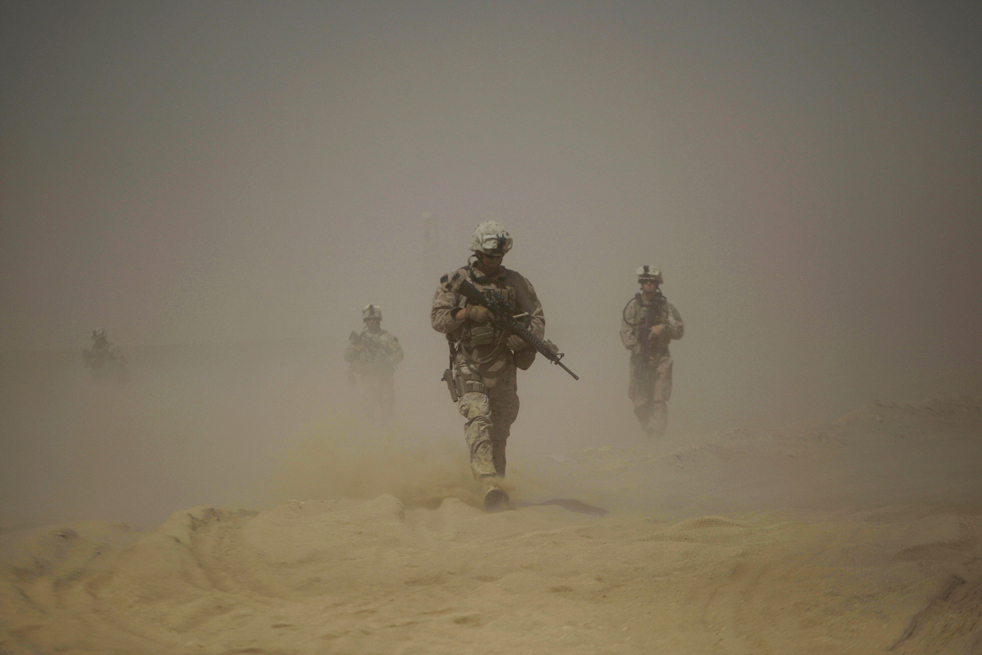
Taliban Tactics: Massing of Troops

BY Herschel Smith
16 years, 11 months ago

Chairman of the Joint Chiefs of Staff criticizes air strikes:

The United States cannot succeed in Afghanistan if the American military keeps killing Afghan civilians, Adm. Mike Mullen, the chairman of the Joint Chiefs of Staff, said on Monday.

In remarks to scholars, national security experts and the media at the Brookings Institution, Admiral Mullen said that the American air strikes that killed an undetermined number of civilians in Afghanistan’s Farah Province two weeks ago had put the U.S. strategy in the country in jeopardy.

“We cannot succeed in Afghanistan or anywhere else, but let’s talk specifically about Afghanistan, by killing Afghan civilians,” Admiral Mullen said, adding that “we can’t keep going through incidents like this and expect the strategy to work.”

At the same time, Admiral Mullen said, “we can’t tie our troops’ hands behind their backs.”

Admiral Mullen’s comments on the civilian casualties from the Farah air strikes, which have caused an uproar in Afghanistan, reflect deep concern within the Pentagon about the intensifying criticism from Kabul against the American military. Admiral Mullen, who noted that commanders in the region had in recent months imposed more restrictive rules on air strikes to avoid civilian casualties, offered no new solutions in his remarks. He only said that “we’ve got to be very, very focused on making sure that we proceed deliberately, that we know who the enemy is.”

By midafternoon on May 4, after a battle between Afghan police and army forces and Taliban fighters had raged for hours, Marines Special Operations forces called in air strikes.

Three F-18 fighter-bombers, flying in succession over several hours, dropped a total of five laser-guided and satellite guided bombs against Taliban fighters who were firing at the American and Afghan forces, said the official, Col. Gregory Julian, in an email message late Sunday.

Villagers, however, have reported that an even heavier bombardment came after 8 p.m. when they said the fighting appeared to be over and the Taliban had left the village.

The military has disputed this version of events, saying the Taliban fighters continued to fire at American and Afghan troops, requiring additional air strikes. These came from a B-1 bomber, which dropped three 500-pound satellite-guided bombs on a tree grove, four 500-pound and 2,000-pound satellite-guided bombs on one building, and one 2,000-pound satellite-guided bomb on a second building, Colonel Julian said. Villagers have said they sought safety from the initial air strikes in a compound of buildings, but it was not clear whether these were the same buildings the American aircraft later bombed. Villagers said the bombings were so powerful that people were ripped to shreds. Survivors said they collected only pieces of bodies.

In all, Colonel Julian said, eight targets were attacked over a seven-hour period, but he denied reports from villagers that a mosque had been damaged in the strikes. Colonel Julian and other American military officials have said that the Taliban deliberately fired at American and Afghan forces from the rooftops of buildings where civilians, including women and children, had sought shelter, to provoke a heavy American military response.

Colonel Julian said at the peak of the fighting that day, some 150 Afghan soldiers and 60 Afghan police, along with their 30 American trainers, as well as two Marine Special Operations teams that made up a quick-reaction force, were battling about 300 militants, including a large number of foreign fighters.

Afghan government officials have accepted handwritten lists compiled by the villagers of 147 dead civilians. An independent Afghan human rights group said it had accounts from interviews of 117 dead. American officials say that even 100 is an exaggeration but have yet to issue their own count.

Analysis & Commentary

There remains an uproar over this incident because of noncombatant casualties, and some of it even over military analysis web sites.  The focus of much of the discussion is on how counterinsurgency cannot succeed with noncombatant casualties, and that successful counterinsurgency must be population centric.  True enough within context, this point misses the mark by a wide margin and succeeds only in parroting doctrinal talking points without a true understanding of what this incident can tell us about the campaign.

Regular readers of The Captain’s Journal can do better.  Be circumspect, smart and deliberate, and consider the question of what we might learn from this incident?  Considering the recent few months of the campaign, what information may we cobble together to place this incident within its proper context?  How can we avoid the traps into which most apparatchiks fall, of advocating either bombing them into submission or implementing procedures to avoid noncombatant casualties altogether because it isn’t “population centric?”

First of all, there is no doubt that fathers and mothers of children who have perished, or children of fathers or mothers or siblings who have perished at the hands of U.S. military action, intentional or not, will forever be our enemies.  It is understandable, and would be the same with most readers.  Noncombatant casualties makes enemies.

Of course, many things make enemies, including promises to stop the Taliban and failing to meet those promises.  But in this case there is something deeper going on, something that requires a bit of thought and trending.

In the Battle of Wanat where nine U.S. Soldiers perished and twenty seven were wounded, the Taliban massed some 300 or more fighters at one time in the area.  Were it not for Close Combat Aviation (CCA) and Close Air Support (CAS), the casualty rate would have been even higher.  Vehicle Patrol Base Wanat and Observation Post Top Side were what one might consider “far flung.”  It was an area of operation that had heretofore not seen U.S. troops, but in which the Taliban were numerous and Taliban control unquestioned.

When the 26th Marine Expeditionary Unit was deployed to the Garmser region of the Helmand Province in 2008, they killed approximately 400 Taliban who had massed in Garmser, at times calling their fire fights “full bore reloading.”

In Marines, Taliban and Tactics, Techniques and Procedures, we covered the exploits of one Force Recon platoon who documented the fact that in their engagements with the Taliban the enemy fighters swelled to over 400 during ambushes and even during Taliban attacks on Forward Operating Bases.  This is remarkable.  This is basically half a Battalion of Taliban forces conducting what Force Recon called very good infantry tactics, including enfilade and interlocking fires, combined arms, and all of the other infantry tactics on which most good infantry is trained.

Finally, in Trouble in the Afghan Army: The Battle of Bari Alai we discussed the probable treachery of the Afghan Army during a Taliban attack on Observation Post Bari Alai in which three U.S. Soldiers perished along with two Latvian Soldiers.  More than 100 Taliban fighters massed for the attack on the Observation Post.

Now go back and study the report above that has Admiral Mullen so concerned.  The Taliban massed approximately 300 fighters for the fire fight with what turns out to be a fairly small U.S. force.  They had Afghan troops alongside, but as we learned at Wanat, no Afghan troops perished that fateful night.  The Afghan Army is shot through with drug abuse, and during the fight for Observation Post Bari Ala, it is believed that the Afghan troops laid down their weapons in a pre-arranged agreement with the Taliban.

Actually, a bit of study yields the conclusion that the Taliban have always wanted to mass troops (2005 report):

As the Taliban start shooting, O’Neal’s platoon scurries for cover. But there’s no panic. “They think, without a doubt, they have us outnumbered,” recalls O’Neal, a native of Jeannette, Pa., and leader of 2nd Platoon, Chosen Company. “We’ve got only 23 people on the ground, and I would say the Taliban had over 150 before the day was over” …

Taliban fighters, meanwhile, appear to gain courage from numbers, the ability to swarm a smaller enemy unit. A sense of safety in numbers, however, is often the Taliban’s undoing if a US platoon can fix an enemy’s position long enough for aircraft or other infantry units to arrive. This is the backbone of US military strategy in Zabul, and one reason why the Taliban have lost so many fighters this year.

It is fairly well known now that the additional troops deployed to Afghanistan are going to the population centers around Kabul and Kandahar – of course, in a tip of the hat to population centric counterinsurgency doctrine.  So the balance of Afghanistan is left to the Taliban to raise revenue, recruit fighters, train, interdict our logistics lines, implement their governance and basically control as they see fit.

Then, since the U.S. is massing troops in and around the population centers, far fewer are left for the rural terrain.  The most that can usually be accomplished is squad, platoon and company-sized engagements, or even smaller units to embed with the Afghan forces.  This is very close to what is considered distributed operations.  Few patrols in Taliban-controlled areas, no ensuring that the Taliban feel the strong presence of forces, just bare minimum to “train” the Afghan forces.

Yet when the Taliban are able to mass forces of as much as half a Battalion, the expectation is that much smaller units of U.S. forces will engage them without causing noncombatant casualties, while at the same time, the Taliban are clearly using human shields.

Clearly, we are asking the impossible of U.S. troops.  The Obama administration doesn’t want to deploy more than about 68,000 U.S. troops to the theater, and as long as this small footprint obtains, heavy use of air power will be necessary to keep smaller units from being completely overrun when the Taliban mass troops.

There is a solution to this dilemma, but it requires more troops to disengage the Taliban from the population.  The number of troops we have at the moment is not enough to do this mission.  Hence, while noncombatant casualties are a sad thing and certainly counterproductive, the answer is not to inform the smaller units of U.S. forces that they cannot use air support.  As much as The Captain’s Journal hates to see noncombatant casualties, more Marines and Soldiers in coffins would be much worse.

Trouble in the Afghan Army: The Battle of Bari Alai

BY Herschel Smith
16 years, 11 months ago

The Strategy Page gives us an account of an ambush by Taliban on a U.S. convoy in which both U.S. SOF and elements of the Afghan Army fought back.  Concluding the account:

The quick reaction force called for air support, but the warplanes scanned the area with their targeting pods and reported that the Taliban had collected most of the local civilians and were holding them at gunpoint, as human shields.

The Afghan commandos of the quick reaction force then crossed the river and forced the Taliban out of the village, and away from their human shields. The villagers, once free of their captors, told the Afghan troops where the Taliban had set up more fighting positions, and the Afghan soldiers soon chased the Taliban away. Meanwhile, other Afghan and U.S. troops of the Quick Reaction force went ahead to where the supply convoy was still pinned down. The Afghans, and a team of U.S. Special Forces troops, outmaneuvered the ambush force, killed five of the Taliban, and captured six of those they had wounded. Several other Taliban got away.

As the supply went on, they hit two roadside bombs. One vehicle was destroyed, But no one was hurt. Throughout the entire action, no troops (American or Afghan) or civilians were killed. It was the training and leadership of the Afghan troops, and the use of air power (for reconnaissance, not smart bombs) that played a major role in the success of the operation.

Afghan “commandos.”  This report makes it sound as if these troopers can fastrope, perform room clearing operations with stacks, do squad rushes, perform fire and maneuver warfare, lay down enfilade or interlocking fires, and hump a pack and body armor 30 – 40 kilometers.  Maybe they can even do HALO jumps.  “Commandos.”

As is sometimes the case with the Strategy Page, this report also sounds as if it could be an ISAF or U.S. press release by Public Affairs Officers.  Whether this report is exaggerated, there is another side to the Afghan Army.  We have discussed the drug abuse and addiction in the Afghan Army, and also linked very informative but depressing video of attempts to train the Afghan Army.  There is an even more recent report of treachery within the Afghan Army, costing the lives of three American warriors.

A pre-dawn attack by the Taliban that killed three American soldiers and six other coalition troops earlier this month is raising new questions about many of the Afghan soldiers who were supposed to be fighting shoulder-to-shoulder with them.

Officials are investigating whether the Afghan troops may have colluded with the Taliban in the brazen assault on the remote coalition outpost along the mountainous Afghanistan-Pakistan border. Their findings could complicate further the already difficult challenges U.S. trainers are having with the Afghan Army.

American officials have questioned 11 Afghan Army soldiers and one Afghan interpreter who were taken prisoner after the battle and later released. Many U.S. troops in the area suspect that the Afghan POWs may have passively helped their Taliban attackers by laying down their arms, or even actively colluded with the enemy in the attack.

Details of the battle have been sketchy, since all three Americans at Observation Post Bari Alai were killed in the fight. Of the four Latvian NATO soldiers who were also defending the post, two were killed and a third was badly wounded and evacuated to Landstuhl Army Medical Center in Germany. According to a U.S. official, the remaining Latvian soldier was “shellshocked” by the attack and has been flown back to Latvia for treatment.  Three Afghan National Army troops also were killed.

U.S. officials are declining to comment on specifics until their investigation is complete. But conversations with American troops familiar with the situation reveal that in the early morning hours of May 1, more than 100 Taliban fighters launched a coordinated uphill attack on Bari Alai, a tactically critical, fortified mountaintop outpost that overlooks the convergence of the Hel Gal, Durin, Marin, and Kunar River Valleys, as well as a bridge that spans the Kunar River.

While Taliban fighters pinned down coalition troops with machine gun fire, their comrades scaled the mountainsides and advanced on the post. Coalition troops killed 19 Taliban fighters, according to U.S. officials.

U.S. Army Staff Sgt. William D. Vile, 27, who was wounded, continued to return fire as he called on his radio for reinforcements and artillery support. He was killed by an explosion and has been posthumously recommended for the Silver Star Medal, the Army’s third highest decoration for battlefield valor.

The blast breached the perimeter of the post, and the Taliban poured inside. Sgt. James D. Pirtle, 21, and Specialist Ryan C. King, 22, were killed defending the base and were both posthumously awarded the Bronze Star Medal.

After overrunning the post, the Taliban fighters captured 11 Afghan soldiers and one Afghan interpreter and transported them into the Hel Gal Valley, where they were held captive.

In the days following, U.S., Afghan, and Latvian forces embarked on joint operations to recover the dozen POWs. On May 6, approximately 400 coalition troops made a forceful push toward the Hel Gal Valley, where the POWs were believed to be held. But the mission was halted two hours after it began when the Taliban freed all 12 POWs after coalition forces broadcast radio messages demanding their return.

When asked what kind of condition the freed Afghan troops were in, Marine Lt. Col. Ted Adams replied, “Good condition. Too good, actually,” — a sentiment echoed by other officers, which has led many to suspect that the POWs were complicit in the enemy attack.

This battle is moderately less costly than the Battle of Wanat (in which nine U.S. soldiers perished and fifteen were wounded), but similar in that it shows both the massing of large numbers of Taliban fighters, and the lack of effectiveness of the Afghan Army.  In this battle only three Afghan soldiers perished, and at Wanat, none did.

The going forward strategy in Afghanistan seems to be similar to the Iraq strategy in 2004 and 2005 – train the indigenous forces.  It didn’t work in Iraq, and Iraq has a much stronger governmental institutional skeleton than does Afghanistan.  The U.S. administration is loath to increase troop strength beyond 68,000, but standing up the Afghan Army is bound to be a problematic and troublesome affair.  They are not only shot through with corruption and drug abuse, they are apparently guilty of treachery as well.  Finally, based on the casualties we have seen at both Wanat and Bari Alai, they simply can’t be trusted in battle.

Prior:

Analysis of the Battle of Wanat

On the Front Lines in Afghanistan

Where the Taliban Roam

BY Herschel Smith
16 years, 11 months ago

From the Australian.

When Hamid Karzai drove to Kabul airport to fly to the US last week, the centre of the Afghan capital was closed down by well-armed security officers, soldiers and police. While in Washington, Afghanistan’s President delivered a speech on ways of fighting terrorism. The title of his lecture shows a certain cheek. Karzai’s seven years in power since the overthrow of the Taliban in 2001 have been notable for his failure to prevent their resurgence.

If his motorcade out of Kabul had taken a different route and headed south, he soon would have experienced the limits of his Government’s authority. It ends at a beleaguered police post within a few minutes’ drive of the capital.

Drivers heading for the southern cities of Ghazni, Qalat and Kandahar check their pockets to make sure they are not carrying documents linking them to the Government. They do so because they know they will not have travelled far down the road before they are stopped and their identity checked by black-turbaned Taliban. On their motorcycles, squads of six to eight men set up checkpoints along the road. Sometimes they even take a traveller’s mobile phone and redial numbers recently called. If the call is answered by a government ministry or a foreigner, then the phone’s owner may be executed on the spot.

The jibe that Karzai is only mayor of Kabul has some truth to it. It is not only when travelling south that the Taliban is in control. I wanted to go to Bamyan in central Afghanistan, which is inhabited by the Hazara, an ethnic group that was savagely persecuted by fundamentalist Taliban during its years in power.

But it turned out that I could no longer travel there by road. Mohammed Sarwar Jawadi, a member of the Afghan parliament representing Bamyan, who spent two years in a Taliban prison before escaping, tells me that Bamyan is safe enough. The problem is the route.

“There are two roads going there, but do not take the southern one because it is controlled by the Taliban,” Jawadi says. There is an alternative, safe enough so long as “you bring plenty of armed guards”.

The best experts on the dangers of the road in most countries are not the police or the army but the truckers, whose lives and livelihoods depend on correctly assessing the risks. The situation deteriorated 18 months ago, says Abdul Bayan, owner of a transport company in Kabul called Nawe Aryana. His trucks carry goods across the country, but they face ever increasing danger, particularly if they are carrying supplies for NATO or foreign forces.

The reader can read the entire report for themselves.  This brief introduction shows what The Captain’s Journal has been saying all along concerning logistics routes, et. al.  There has been robust debate among counterinsurgency experts over where to deploy the additional troops, or even what justification to use for more troops.

Here is the justification.  Until we deploy the right number of troops in the places where the Taliban have sanctuary, rest, recruit, raise their revenue, and interdict our lines of logistics, we will not bring this campaign to a satisfactory outcome.  Deployment of additional troops to ensure that Hamid Karzai continues to be the mayor of Kabul doesn’t help anything.

There is a huge and time sensitive problem with force size and lines of logistics.  But despite what the counterinsurgency experts are saying, until and unless we deploy enough troops in the places where the Taliban roam, we will not succeed.

Betraying the Sons of Iraq

BY Herschel Smith
16 years, 11 months ago

Professor W Andrew Terrill, Research Professor of National Security Affairs, Strategic Studies Institute, US Army War College, has a good history of the Sons of Iraq program, including the near and present danger that Iraq faces by refusing to make good on the promises to the Sons of Iraq.  The Washington Post gives us an even more personal account of the evolution of this fated program.  After cataloging the exploits of one particularly powerful and renowned insurgent, the fall from grace hits hard.

They were polite but insistent; he, the wounded Yasser and another brother had to come with them. Khalil asked to change into a clean gown known as a dishdasha, then sent word to another brother, Shaker, to tell militiamen loyal to him not to start trouble.

He was taken to neighboring Balad, where, Khalil said, cheering members of the Iraqi security forces began shouting slogans for Moqtada al-Sadr, a Shiite cleric.

Loyalties in Thuluyah are mercurial and suspicions entrenched, even more so since the arrest of Khalil, whose absence has emboldened his rivals and confused his supporters. Maliki, in no uncertain terms, said that Khalil “will be released.” But as Jabbouri, a critic of Khalil, pointed out, the future tense can be rather indefinite.

In the town, residents once too fearful to speak have begun airing their resentment of Khalil’s past. Some suggested that Osama bin Laden had bought Khalil the Nissan Armada parked in his driveway. Others, even his fellow tribesmen, blame him for hundreds of deaths in 2006 and 2007. As a way of explanation, they contend that he was al-Qaeda in Iraq’s fifth-ranking leader. Only that much bloodshed, they insist, would have delivered him that much power.

To Khalil’s supporters, his arrest was simply motivated by politics, prompted by Sunni rivals fearful of his promised run for parliament in elections to be held by January. Even Hammoud acknowledged as much. Hammoud’s brother sits on the new provincial council, and the new governor belongs to the same party.

“Now with the situation in Iraq, everyone wants to win, everyone wants to prepare for the next elections. Every party — how do you put it? — is already challenging the other,” said Shaalan Mohammed, a friend of Khalil’s, sitting at his house.

Khalil’s brothers Shaker and Maher nodded their heads in agreement.

“But I still have a question,” Shaker said. “Why did the Americans take part?”

Just months ago, Lt. Col. David Doherty, a U.S. military spokesman in northern Iraq, praised Khalil’s role in the battle against the insurgency. “He has helped maintain peace and stability in the region,” Doherty said, “while supporting the populace’s need for the same.”

Hammoud said the town’s mayor had warned him not to file charges against Khalil because the U.S. military last year had declared Khalil “a red line” — untouchable.

In the interview from detention, Khalil still called himself “America’s man and one of its most important supporters in the fight against al-Qaeda and other armed groups.”

But these days, U.S. military officials are less generous. Another spokesman denied that the military had ever given him an amnesty, as Khalil claimed. Military officials now say he played no role in the Sons of Iraq, even as fighters in Thuluyah maintain that he is still their leader.

“We do believe Mullah Nadhim’s arrest is a matter for the government of Iraq and are confident he will be treated fairly under Iraqi law,” Maj. Derrick Cheng said.

“Citizens here are treated fairly under Iraqi law,” he added …

At the city council, long considered as corrupt as it was impotent, some members once too meek to offer anything but praise for Khalil have assumed a newfound swagger. Jabbouri, a lawyer and former general who was one of the few to speak out about Khalil, sat under a lazy fan, exuding the sense of someone proved right.

Asked if he was happy about Khalil’s arrest, he paused for a long moment.

“Definitely,” he finally said.

“He forgot that the Americans are going to leave one day,” he said. “It’s like a fiancee and her groom. Before he marries her, he promises her a lot. After the marriage, he forgets everything. The Americans have pulled the carpet from under his feet.”

The opinion expressed by the Major Cheng is stolid and dangerous.  It’s stolid because not even citizens in the U.S. are always treated fairly under the law.  No one believes that all citizens of any country are always treated fairly and with justice.  It’s dangerous because if the Iraqi people hear and believe the idea that we believe that all jurisprudence in Iraq is fair and just, then we’re in the pocket of the Iraqi administration and have lost all power and authority.  It would have been better to say nothing at all.

A whole host of bad decisions has led up to this point.  Professor Terrill believes that the worst decision in the campaign was the dismissal of the Iraqi Army.  I strongly disagree.  Moqtada al Sadr was actually in the custody of the 3/2 Marines in 2004 and released because command pressed for it.  Sectarianism is alive and well in Iraq, and leaving Sadr alive was, without any competition, the worst mistake of Operation Iraqi Freedom.  It may yet cost us the campaign.

Second, I worry about the cost to our souls of the betrayal of the Sons of Iraq.  We have too easily amended the public discourse in America to fret over the moral fidelity of enhanced interrogation techniques that were applied only to a handful of terrorists.  That promises were made to the thousands of Sons of Iraq is not important to us, and yet it says something very profound and deep about our honesty, integrity and continued support for an administration in Iraq that is as sectarian as is the culture.  It says something when we are able so quickly to dismiss and betray those who fought alongside us against al Qaeda.

Finally, the Anbaris and Sunnis in other parts of Iraq will not forget, and since this is probably not the last counterinsurgency campaign we will fight in the twenty first century, we had better hope that the balance of the world forgets our broken promises.  The next “awakening” may be much harder coming.

One way to fix the DoD procurement problems

BY Herschel Smith
16 years, 11 months ago

In Pentagon Plans Huge New Bureaucracy we discussed the addition of 20,000 new government jobs in the Department of Defense to set up yet more bureaucracy regarding weapons and systems procurement.  The Telegraph gives us a nice counterexample – a bright moment in an otherwise apoplectic organization that has too much inertia to be innovative.

The devices have been embraced by the military because they are relatively easy to use, can safely carry secure software and are far cheaper than manufacturing a version specifically for the army.

Capable of holding more than 30,000 programmes, Apple’s best-sellers are being used for everything from translating to working out the trajectories of snipers.

The military is also working on how they can be used as guidance systems for bomb disposal robots and to receive aerial footage from unmanned drone aircraft, according to the Independent.

The US Marine Corps is currently funding an application that would allow soldiers to upload photographs of detained suspects, along with written reports, into a biometric database. The software would match faces, in theory making it easier to track suspects after they’re released.

While members of the British military who have seen the Apple instruments in action are envious, the Ministry of Defence remains wary of security implications and has “no plans” at present to go down the American path.

But Lieutenant Colonel Jim Ross, the director of the US Army’s intelligence, electronic warfare and sensors operation, believes the iPod “may be all that the personnel need”.

“What gives it added advantage is that a lot of them have their own personal ones so they are familiar with them,” he told the paper.

Another advantage is the price. The iPod touch (which soldiers can use over a secure WiFi network) retails for around $230 (£150) and the iPhone for $600. Bulk orders placed by the Pentagon bring further savings.

This kind of latitude and flexibility is usually threatening to a chain of command that wants to control every little detail and ensure uniformity.  But uniformity is not the goal here, and this example ought to be emulated throughout all four branches of the service.  The best way to begin to hold the Department of Defense bureaucracy accountable for timeliness and results is to bypass them.  In order to play the game, they will have to adapt to the more flexible chain of command which is entrusting its officers and NCOs with more responsibility and authority.  In the end, everyone will be a winner.

Terrible, Horrible, No Good, Very Bad Counterinsurgency

BY Herschel Smith
16 years, 11 months ago

The Wall Street Journal gives us an account of several terrible, horrible, no good, very bad days in Afghanistan that bear our attention.  But before that, a few preliminaries.

As best as I can determine, the U.S. Army is on a mission to find itself, or self actualize, or something else like that.  So is the Corps, just in a different way.  The Corps is trying to figure out this whole Expeditionary concept with very expensive amphibious fighting vehicles that would never be used except for an amphibious assault (an assault the target of which we simply can’t fathom at the moment).

But the Army mission is entirely different.  The Army is trying to divide itself into Thomas P.M. Barnett’s Leviathan and Sysadmin, with the SF / SOF being the Leviathan and the balance of the forces being the softer side.  The Leviathan does direct action kinetics.  They don’t participate in the softer side of counterinsurgency; they play offense, while the general purpose forces play defense.

The Marines have no such division of labor (except perhaps the division of infantry and otherwise).  I have weighed in explaining my opposition to this model.  It is almost as bad an idea to separate the SOF from COIN as it is to separate general purpose forces from direct action kinetics.  Both are profoundly misguided, still-born notions.

Naturally, I objected when the narrative concerning General McKiernan began to devolve into nay saying and charges of incompetence.  I strongly supported McKiernan, and then even more so.  My reaction to General Stanley McChrystal was that the Afghanistan campaign will turn into even more of a SOF direct action program against high value targets, in which case I believe that it’s better to leave Afghanistan entirely and deploy back to the states (for both SOF and GPF).  It won’t work.

I also had not seen any valid objection or problematic instance concerning General McKiernan’s leadership – at least, not until now.  But a few more words before we dive into the terrible, horrible, no good, very bad counterinsurgency.  To be sure, while there were many instances of direct action kinetics by the Marines in Anbar, Iraq (after all, they are Marines), all counterinsurgency is not kinetics.  Sometimes the methods are soft.  Other times, the methods may follow Edward Luttwak and Ralph Peters more so than Nagl and Petraeus.

There are many examples of things that can make families and particularly heads of households very uncomfortable, such as aggressive raids in the middle of the night, cordon and knock doors down and root around homes for weapons caches rather than cordon and knock, and other tactics that don’t bear discussion in a forum like this one.

But no matter how hard or soft a tactic or set of tactics, they all have one thing in common: behavior modification.  No tactic is applied in a vacuum.  They all have as their goal reliance on the government, information sharing, development of intelligence, and other such things as are conducive to the campaign.

So it’s valid to ignore the wishes of the people as long as there is a good reason for it and there is some remedy of amelioration.  Does the local population not respond to tribal Sheiks?  Do they respond better to block captains, or Mukhtars?  Fine.  Then use this to your advantage and set up gated communities and Mukhtars in responsible charge.  One understands the human terrain and works with what he has been given.

Now to the terrible, horrible, no good, very bad counterinsurgency in Afghanistan.

The karez originated in southwest Persia around 1000 B.C. The hand-dug underground canals carry water from aquifers in the hills to villages and fields. The system irrigates about 75% of Zabul’s grapes, wheat and almonds.  Villagers and soldiers uncovered a vertical maintenance shaft for canals near the base.

By MICHAEL M. PHILLIPS

Karezgay, Afghanistan

Deep beneath the desolate landscape here are miles of canals that have watered wheat fields and vineyards for untold generations. They’re also at the center of a dispute that handed the Taliban a propaganda victory and angered the very people the U.S. military hopes to win over through its troop surge.

Rushing to expand a base to fit the new forces, American commanders seized farmland and built on top of these ancient underground-irrigation systems. The blunder is an indication of how fragile the effort to win public backing for the U.S.-led war can be. In some cases, the tension is over civilian casualties; in others, it’s about the corruption of U.S. allies in the Afghan government. Here, it’s an accidental clash of infrastructure technologies separated by a few yards of dirt and 3,000 years.

Rahmatullah, an elder from near Forward Operating Base Wolverine in Zabul province, complains about the U.S. base’s expansion.

Now American and Afghan officials are scrambling to mend relations with the farmers, dispatching a mullah to pray with them, a lawyer to pay them and engineers to redesign the base to accommodate them.

“If before we put the first U.S. soldier on the ground, we alienate the closest village to the…base, we’re putting the thing in reverse before we even get started,” says Lt. Col. William “Clete” Schaper, lead engineer on the expansion of Forward Operating Base Wolverine, one of more than two dozen U.S. posts being enlarged.

The underground canals, called karez, originated in southwest Persia around 1,000 B.C. before migrating to Afghanistan. When Genghis Khan invaded in 1221 A.D., locals took shelter there. They did the same after the Soviets invaded in 1979. In some parts of Afghanistan today, insurgent fighters use the tunnels to ambush coalition troops and escape unseen.

Karezgay is in Zabul Province, or “Talibanistan,” as U.S. officers here joke. Zabul is an ideal candidate for some of the 21,000 new troops that President Barack Obama has directed to Afghanistan. Entire districts of the province are insurgent-controlled, and coalition forces here are barely sufficient to protect the highway that passes through Zabul.

The goal is for new troops to clear out insurgents, allowing Afghan authorities to win local allegiance with education, health care, security and other services. But the troops will need a place to stay, so last fall the Army started planning to expand FOB Wolverine, now a small post, to accommodate 1,000 soldiers, a helicopter battalion and a 6,000-foot runway. The base perimeter has expanded to two miles around; engineers expect that to triple in the near future. “It was an engineer looking at a map and saying, ‘We need this much room,’ and drawing a box,” says Lt. Col. Schaper.

The Army didn’t take into account the karez, which consist of hand-dug underground canals that carry water from aquifers in the hills to villages and fields. Every 50 or so feet is a vertical shaft used for maintenance. The system irrigates about 75% of Zabul’s grapes, wheat and almonds.

The karez “are the linchpin of their entire civilization here,” says Capt. Paul Tanghe, who advises the Afghan National Army battalion in Karezgay.

In December, Capt. Tanghe and other U.S. advisers noticed surveying work under way, figured out the Army had big plans and realized locals would be in an uproar. They emailed Lt. Col. Schaper, warning of the expansion’s likely impact. U.S. and Afghan officials then invited village elders to Karezgay for a meeting, called a shura, to discuss the plans.

The Taliban were a step ahead. They hosted their own shura at the mosque, where they preached an anti-U.S. message, according to Capt. Tanghe.

The elders left the mosque and walked to the district center for the government shura. Coalition officials touted the benefits of jobs and an airfield, to little effect. One by one, each elder mouthed the Taliban-approved line: The U.S. Army is here to steal land, destroy the karez and force the locals to move. One mullah charged that airplanes would cause pregnant women to lose their babies, Capt. Tanghe says.

Just one village, Bao Kala, spoke in support of the expansion, an act defying the Taliban. One night last fall, Taliban militants burst into the home of a Bao Kala elder and schoolteacher, Bismillah Amin, 42. They frog-marched him barefoot for more than a mile to a gathering of armed fighters, who ordered him to stop teaching. To reinforce the warning, they sliced off his left ear.

After the shura, the coalition sent a veterinarian to de-worm livestock in Bao Kala and funded a project to clean out its tunnels.

In late February, with the surge approaching, crews began expanding FOB Wolverine’s boundaries, absorbing neighboring fields and vertical openings of the karez system.

In March, the Army sent a hydrologist to study the impact that construction was having on water supplies in one village. “The resulting water production loss experienced by Bowragay Village karez system supports Taliban claims of base expansion negatively impacting the community and confounds counterinsurgency operations,” the hydrologist’s internal report said.

Last month, U.S. Gen. David McKiernan, the top allied commander in Afghanistan until he was ousted earlier this week, visited Zabul and found himself buttonholed by angry elders. The expansion, they said, was destroying their livelihoods. Gen. McKiernan ordered a coalition lawyer, Col. Jody Prescott, to Karezgay and arrange compensation.

Afghan officials called another shura late last month. An Afghan army mullah opened the event by reciting verses from the Koran. Soldiers posted a blue banner that read, “Islam unifies our nation.”

Lt. Col. Schaper took the podium. “Once we establish security, we’ll be able to grow the district both economically and with our education programs,” he said. “We realize it does us no good to expand the base and bring security, if we ruin your crops.”

Salamuddin, a 48-year-old farmer with a black turban and a fierce black gaze, swept to the podium to speak. U.S. barbed wire now crosses his property, he said, and 160 acres of it are on the other side. “The karez is the main source of water for the village, but the Army has taken our karez and now it’s inside the base,” he said. “The village is nothing without our karez.” He shouted to the other elders: “Do you want your rights?”

“Yes!” they yelled back.

Lt. Col. Schaper pleaded for patience. “If we can avoid karezes and orchards, we will do that,” he promised. “We are not going to come in and take anyone’s land without compensation.”

Col. Prescott spent two weeks walking property lines and assessing damage claims, while Army engineers modified the base design. The original plan, for instance, put a waste-water treatment plant on top of a karez. The new plan puts it where it won’t disturb anything.

The Army realizes it stumbled with FOB Wolverine, and that if it fails to assuage local concerns, it risks confirming the Taliban message. Commanders also see an upside. Resolving the issue could strengthen the government’s weak position in Talibanistan.

“We’re fighting a counterinsurgency, and it’s all about narratives,” Capt. Tanghe said after the shura. “It doesn’t matter what really happened. It matters what they think happened.”

Well, let’s see.  “The linchpin of their entire civilization,” and brass was aware of this.  I’ll tell you what.  Had I been in charge, the orders would have been as follows (without the many expletives): “Find the local commander of the Army Corps of Engineers, and get him on the phone now.  This base is going to be moved.  I don’t care what it takes or how long, or how much trouble it creates for the engineers.  We won’t alienate the entire province of Zabul before we even get started here.  If we have to turn this into a dozen smaller FOBs, I don’t care.  Tell the men they can walk back and forth – tell them to talk to the locals on their way.  It’ll be good for the campaign.  Find a solution, and find it now, but tell the engineers that we’ll string ’em up if they don’t do this without destroying the aquification works.”

At any rate, trying to control the narrative is useless and an indicator of the stupidity of our presuppositions going into the campaign.  We are losing the information war, and shuting down the aquification systems that sustained their forefathers and which will sustain their children’s children won’t do.

This is just terrible, horrible, no good, very bad counterinsurgency.  No amount of money, hand shaking, talking, narrative-making, direct action kinetics, or anything else can undo such stolid interaction with the people.  SOF, general purpose forces, it doesn’t matter.  We must do better.  We simply must do better.

Update: Thanks to Dave at the Small Wars Journal Blog for picking us for quote of the day.

Questions for Mr. Obama

BY Jim Spiri
16 years, 11 months ago

PRESIDENT OBAMA’S VISIT TO RIO RANCHO, NM

Today is May 14, 2009.  President Obama came to visit Rio Rancho, NM and hold a kind of “town hall meeting” of sorts.  I did not vote for Mr. Obama, however, I felt compelled to go and be present at his visit.  There was no way I could obtain a ticket so I contacted the Governor’s office and explained that my son is currently on his fifth deployment to the war zone and that we had lost our older son, eight years ago, who was a US Marine.  In short order, I received two tickets to attend.  I wanted to speak directly to the Governor and the President, but, that would not happen on this day.  Maybe some day in the future it will, we’ll see.

As for my take on the so called “town hall” meeting, I have some comments to make.  Let me firstly say, Mr. Obama is all of our Commander in Chief, so, no matter what we think politically, left or right, Mr. Obama is the one who now controls my son’s destiny at war.  My son has now served under three Presidents in his nine year career as an Army aviator.  So I have a stake in what the current Commander in Chief has to say.  But what did this new Commander in Chief have to say today here in New Mexico…?

Observing the crowd, and listening to what was being said both verbally and non-verbally (body language), it seemed as though all I heard from the crowd was, “Mr. Obama, please pay off my credit card bills and please pay off my house mortgage.  We’ve been too irresponsible to do it ourselves and you promised to give us all this free stuff….”  That is what it sounded like to me.  But I kept my mouth shut.  I am always considerate of my surroundings, wherever I am at any given moment.

In all fairness to Mr. Obama, he said one thing I agreed with.  Credit cards are not free money.  Duh……However, for some reason the people in the audience today, almost 3000 of them, seemed to think it is the governments’ job to pay their credit card bills.  No wonder they think that, we’ve seen the current administration bail out big time bankers to the tune of trillions of dollars and rising, so, perhaps it is only fitting that the average dumbed-down New Mexican should think the same about their personal credit card debt…..What a country…!

I find it really tough to be in the crowd of 3000 whiny New Mexicans complaining about how deep in debt they got themselves in while at the same time I have to worry about my son flying combat helicopter missions in Iraq, again, protecting the rights of these New Mexicans to ask for more free money from Mr. Obama.  I remember back, exactly eight years ago to the day, when my other son, 2nd Lt. Jesse James Spiri, USMC was operated on for a serious medical situation and was told he would die and that his government would not spend one dime to help him.  And he was a United States Marine Officer.  I think there is something wrong with this picture.  Now granted, this did not happen on Mr. Obama’s watch, but what is currently happening on Mr. Obama’s watch is this.  Our nation is even the more so at war now in the middle east and my younger son is there again.  And he would go another five times if called upon.  He, like is father, is a true patriot.  If the Commander in Chief says, “jump”, we both say “how high?”.

But…Mr. Obama wanted to talk about New Mexican’s credit card debt, not my son at war, today.  I was almost called upon, but Mr. Obama chose his questioners carefully.  He did not call upon anyone that looked like me.  Rather he chose to call on people that were in unions, worked for the Congressman’s office from district 3, etc.  He should have called on me.  I would have asked him this question…

“Mr. Obama, when you are finished paying off the credit card debts of all these irresponsible New Mexicans, and bailing out all those fat cats on Wall Street and their banker friends,  will there be any money left to continue the maintaining of the CH47 helicopter fleet the Army is using whose funds you have scheduled to cut?  My son has served his country on five deployments in the war zones of the middle east and there is talk that cuts in the Chinook helicopter community is imminent.  You have asked my son to fight the country’s wars and he has done so valiantly, but now, you have his helicopters on the chopping blocks so these irresponsible New Mexicans who cannot seem to stay away from Wal-Mart and Best Buy, want you to take care of them, while they scream against those fighting for our freedom and safety…What’s up with that..?” I would ask.

But, Mr. Obama did not call upon me.  Maybe he knew who I was.  Maybe he knew what I would ask.  I’m not sure.  But I know this, when he asks my son to go to war, as my son has just done, two weeks ago, I am forced to say, “Amen”, again.

Today, I saw Mr. Obama and heard him speak.  Many say how smart he is, how intellectual he is.  I found him rather boring today.  Oh, he knew a little about how to talk to a crowd, but, on this day, there was nothing really earth shattering that he said that struck a chord with me.  He is still my Commander in Chief.  I respect his position.  But I am not impressed with his talk today.  He didn’t say anything relevant to things I’m concerned about.  Once before, my government told me there was not enough money to take care of my son, a Marine.  Now, my government is telling me there is plenty of money to bail out bankers and New Mexicans that cannot pay their credit card bill from Wal Mart.  But my government is not saying anything about taking care of the helicopters my younger son is flying in war to give these irresponsible New Mexicans the freedom to ask the current Commander in Chief for some money to pay their credit cards off.

I’m not impressed.  But I will still salute the current Commander in Chief and pray that my son will be safe in his helicopter while at war.

Sincerely,

Jim Spiri

jimspiri@yahoo.com   505-898-1680

Marines in Bakwa, Afghanistan

BY Herschel Smith
16 years, 11 months ago

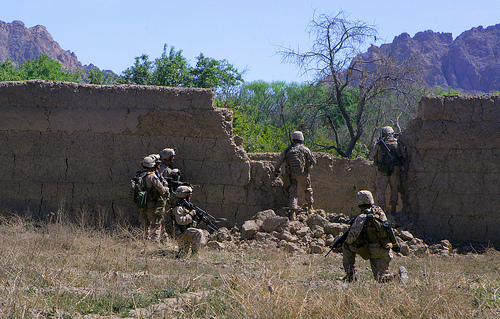
Marines on patrol make their way toward a village in Bakwa, Farah province, Islamic Republic of Afghanistan, May 1. The Marines of Company I, 3rd Battalion, 8th Marine Regiment (Reinforced), the ground combat element of Special Purpose Marine Air Ground Task Force – Afghanistan, are operating in Bakwa to maintain security in the rural area. U.S. Marines are in Afghanistan to reinforce success and sustain the momentum of the ongoing progress by alliance forces. Company I’s mission is to conduct counterinsurgency operations while training and mentoring the Afghan national police.

The Coming War in the Caucasus

BY Herschel Smith
16 years, 11 months ago

In It’s Time to Engage the Caucasus we described a potential logistics route through the Caucasus region in lieu of the problematic and troublesome Pakistan routes (especially through Khyber).  The recommended route involved transit from the Mediterranean Sea through the Bosporus Strait in Turkey, and from there into the Black Sea.  From the Black Sea the supplies would go through Georgia to neighboring Azerbaijan.  From here the supplies would transit across the Caspian Sea to Turkmenistan, and from there South to Afghanistan.

In addition to this region being a potential viable alternative to Pakistan, we noted this region as being an up-and-coming economic power due in part to the massive quantities of energy buried beneath its soil.  The engagement of the Caucasus region would potentially lead not only to logistics routes, but political and energy partnership as well.  But the darker truth that accompanies this potential is that Russia is also interested.

Russia is interest for several reasons, including the fact that Russian bases in Armenia have no viable land resupply and logistics route except through Georgia.  Recent NATO exercises in Georgia infuriated the Russian administration, causing the Russian ambassador to say that “Differences between Russia and U.S. on a number of issues still persist. The most recent example is NATO maneuvers in Georgia. It disappoints us as it assures Georgian government that regardless of what it did towards Russia, it will gain NATO membership. Unfortunately, no lesson was drawn from August events,” referring to their 2008 invasion of Georgia.

This is the first admission of the real reason behind the invasion of Georgia, veiled though it was.  It was all about “lessons” for the U.S. and Georgia.  The most recent warnings are less veiled.

A Kremlin policy paper says international relations will be shaped by battles over energy resources, which may trigger military conflicts on Russia’s borders.

The National Security Strategy also said that Russia will seek an equal “partnership” with the United States, but named U.S. missile defense plans in Europe among top threats to the national security.

The document, which has been signed by President Dmitry Medvedev, listed top challenges to national security and outlined government priorities through 2020.

“The international policy in the long run will be focused on getting hold of energy sources, including in the Middle East, the Barents Sea shelf and other Arctic regions, the Caspian and Central Asia,” said the strategy paper that was posted on the presidential Security Council’s Web site.

“Amid competitive struggle for resources, attempts to use military force to solve emerging problems can’t be excluded,” it added. “The existing balance of forces near the borders of the Russian Federation and its allies can be violated.”

Medvedev’s predecessor Vladimir Putin, who is now Russia’s powerful prime minister, often accused the West in the past of trying to expand its clout in the ex-Soviet nations and push Russia out of its traditional sphere of influence. The Kremlin has fiercely opposed NATO’s plans to incorporate its ex-Soviet neighbors, Ukraine and Georgia.

Russia currently controls most natural gas export routes out of the former Soviet region, but that grip is coming under growing pressure from China and the West.

The European Union, which depends on Russia for about one-quarter of its gas needs, has sought alternate supply routes, including the prospective Nabucco pipeline that would carry the Caspian and Central Asian gas to Europe but skirt Russia.

Intensifying rivalry for influence in the ex-Soviet region fomented tensions and helped stage the ground for last August’s war between Russia and Georgia, which sits astride a key export pipeline carrying Caspian oil to Western markets.

The war erupted when the U.S.-allied Georgian President Mikhail Saakashvili sent troops to regain control over the separatist province of South Ossetia, which had close links with Russia. After routing the Georgian army in five days of fighting, Russia recognized both South Ossetia and another Georgian rebel province of Abkhazia as independent nations and permanently stationed nearly 8,000 troops there.

President Barack Obama’s administration has sought to rebuild ties with Moscow, which plummeted to a post-Cold War low under his predecessor and focus on negotiating a new nuclear arms control deal. Medvedev and other Russian officials have hailed what they called the new administration’s constructive approach and voiced hope that Washington will drop plans to deploy missile defense sites in Poland and the Czech Republic — a top irritant in U.S.-Russian relations.

Reflecting the Kremlin’s hope for better ties with Washington, the strategy paper said Russia will seek “equal and full-fledged strategic partnership with the United States on the basis of coinciding interests.”

But it warned that missile defense plans and prospects to develop space-based weapons remain a top threat to Russia’s security, and said Russia will seek to maintain a nuclear parity with the United States. However, it added that Russia’s policy will be pragmatic and will exclude a new arms race.

The Captain’s Journal has recommended engaging the Caucasus by means of friendship, assistance and special dispensation for business partnerships.  This remarkable admission by Russia, signed by Medvedev, directly admits that war is possible over energy.

The romantic notions of influence in its so-called near abroad has been dropped in favor of more honest but crass verbal bullying and threats, targeted at an administration which wants to press the “reset” button with them.  The team of Putin and Medvedev intend to bloat the cash flow directly into Russia in payment for energy, this very energy being extorted by force if necessary.

Given the predisposition of the current administration to negotiate, talk, bargain and expect only the best of our supposedly erstwhile enemies, it isn’t apparent that Georgia, the Ukraine and other regional countries have any hope of continued sovereignty as it currently exists.  If extortion and threats don’t pave the way towards a re-emergence of the old Soviet style government, then they have made their only other option clear.  War is coming to the Caucasus.

Prior:

Mutiny in Georgia

Obama, Russia and the Future of Georgia

It’s Time to Engage the Caucasus

Rapidly Collapsing U.S. Foreign Policy

More on General David McKiernan

BY Herschel Smith
16 years, 11 months ago

There continues to be robust conversation in e-mail, comments, articles and discussion threads over the replacement of General David McKiernan with General Stanley McChrystal.  Look.  Let’s cover a couple of details about this that we may have missed the first time around.  Every report about General McChrystal is positive, and if Petraeus had wanted him because of familiarity, then so be it.  It’s his call.  My concern is that it portends a larger sea change in Afghanistan, one that relies not on boots on the ground, but a much smaller footprint relying on a high value target scheme.  The small footprint is one thing that got us here to begin with.  But there is a narrative developing concerning this move that really seems to miss the point.  An example of it comes from Michael Goldfarb.

Earlier today, Defense Secretary Bob Gates unexpectedly announced that he had asked for the resignation of General David McKiernan, the top commander in Afghanistan. For most Afghan policy insiders, this came as cause for quiet relief. By all accounts, McKiernan is an honorable soldier who, to his everlasting credit, campaigned vigorously for the additional U.S. troops that are needed to turn the tide in Afghanistan, and that President Obama has begun to provide. But McKiernan also left a great deal to be desired. He was, in fact, an uncreative and conventional thinker who was failing palpably at figuring out how to adapt the principles of counterinsurgency into the specific operational context of Afghanistan — the kind of military art that made the surge a success. Indeed, many visitors to McKiernan’s Kabul headquarters walked away with the nagging feeling that he didn’t really have a plan to defeat the insurgency at all — just a vague commitment to keep on slogging, ideally with more resources.

The departure of McKiernan thus opens the door to a host of long-delayed reforms, including an expansion of the Afghan National Security Forces, a reform of the command structure, and the development of a joint civil-military campaign plan. Let’s hope that Generals McChrystal and Rodriguez prove up to the task.

Oh horseshit!  The Afghan forces are expanding as fast as they can possibly go, growing beyond what some analysts believe can be sustained by the Afghanistan economy or culture when the U.S. pulls out.  Additionally, the Afghan National Army is shot through with drug abuse, as is the Afghan police shot through with both drug abuse and corruption.  Required  viewing for all those who believe that rapid turnover to the Afghan Army is in the cards or can be a major part of the strategy at the present: Afghanistan’s Failing Army.  View it and then tell me about needed reforms concerning expansion of the Afghan National Army.

We’ve had MiTT teams for months and even years, the State Department has been begged to engage the campaign, and the U.S. Marines are in Now Zad while elements of the U.S. Army are in the Korangal Valley, both engaged in fierce fights with hard core Taliban.  We have Green Berets training the Afghan National Army recruits, and female Marines embedded with infantry to ensure cultural sensitivities aren’t violated when talking to the women of households (which under other circumstances is a violation of protocol since females aren’t allowed in infantry in the Corps).

What was McKiernan supposed to do with an under-resourced campaign and a drug-addicted medieval society?  Does General McChrystal have a magic wand that General McKiernan doesn’t?

There may be elements of truth to the reports, such as McKiernan was too comfortable with incompetent NATO allies, but since I have no direct knowledge of this I will leave it to those who do.  But when leveling accusations and charges, insults and charges of long-delayed reforms, we should be direct, honest, comprehensive, and our prose should be based on evidence.

I have evidence as to the incompetence of General Rodriguez, at least in terms of his judgment.  Most of the narrative coming out now is based on emotion rather than evidence.  To my knowledge there are no long-delayed reforms in the campaign except [a] too many troops stationed on large bases, and [b] NATO red tape.  These problems are fixable regardless of the chain of command, and the problem of troops on large FOBs is being fixed as we write.

The more likely scenario? “General McKiernan asked for 30,000 more troops in 2008 when he took over from the NATO mission which had essentially failed. Bush gave him 6,000 of those troops. Obama has given him, will have given him 21,000 by the end of this year and they’re considering another 10,000 next year. And it’s a fine old military tradition that you sack the guy who asked for reasonable resources and then give those resources to his successor who is then successful” (h/t Richard at Defence of the Realm).

Prior: General McKiernan Out in Afghanistan


26th MEU (10)
Abu Muqawama (12)
ACOG (2)
ACOGs (1)
Afghan National Army (36)
Afghan National Police (17)
Afghanistan (704)
Afghanistan SOFA (4)
Agriculture in COIN (3)
AGW (1)
Air Force (42)
Air Power (10)
al Qaeda (83)
Ali al-Sistani (1)
America (23)
Ammunition (305)
Animals (327)
Ansar al Sunna (15)
Anthropology (3)
Antonin Scalia (1)
AR-15s (394)
Arghandab River Valley (1)
Arlington Cemetery (2)
Army (91)
Assassinations (2)
Assault Weapon Ban (29)
Australian Army (7)
Azerbaijan (4)
Backpacking (4)
Badr Organization (8)
Baitullah Mehsud (21)
Basra (17)
BATFE (247)
Battle of Bari Alai (2)
Battle of Wanat (18)
Battle Space Weight (3)
Bin Laden (7)
Blogroll (3)
Blogs (24)
Body Armor (23)
Books (3)
Border War (18)
Brady Campaign (1)
Britain (39)
British Army (36)
Camping (5)
Canada (20)
Castle Doctrine (1)
Caucasus (6)
CENTCOM (7)
Center For a New American Security (8)
Charity (3)
China (19)
Christmas (18)
CIA (30)
Civilian National Security Force (3)
Col. Gian Gentile (9)
Combat Outposts (3)
Combat Video (2)
Concerned Citizens (6)
Constabulary Actions (3)
Coolness Factor (3)
COP Keating (4)
Corruption in COIN (4)
Council on Foreign Relations (1)
Counterinsurgency (218)
DADT (2)
David Rohde (1)
Defense Contractors (2)
Department of Defense (220)
Department of Homeland Security (26)
Disaster Preparedness (5)
Distributed Operations (5)
Dogs (15)
Donald Trump (27)
Drone Campaign (4)
EFV (3)
Egypt (12)
El Salvador (1)
Embassy Security (1)
Enemy Spotters (1)
Expeditionary Warfare (18)
F-22 (2)
F-35 (1)
Fallujah (17)
Far East (3)
Fathers and Sons (2)
Favorite (1)
Fazlullah (3)
FBI (39)
Featured (192)
Federal Firearms Laws (18)
Financing the Taliban (2)
Firearms (1,873)
Football (1)
Force Projection (35)
Force Protection (4)
Force Transformation (1)
Foreign Policy (27)
Fukushima Reactor Accident (6)
Ganjgal (1)
Garmsir (1)
general (15)
General Amos (1)
General James Mattis (1)
General McChrystal (44)
General McKiernan (6)
General Rodriguez (3)
General Suleimani (9)
Georgia (19)
GITMO (2)
Google (1)
Gulbuddin Hekmatyar (1)
Gun Control (1,722)
Guns (2,412)
Guns In National Parks (3)
Haditha Roundup (10)
Haiti (2)
HAMAS (7)
Haqqani Network (9)
Hate Mail (8)
Hekmatyar (1)
Heroism (5)
Hezbollah (12)
High Capacity Magazines (16)
High Value Targets (9)
Homecoming (1)
Homeland Security (3)
Horses (2)
Humor (72)
Hunting (62)
ICOS (1)
IEDs (7)
Immigration (123)
India (10)
Infantry (4)
Information Warfare (4)
Infrastructure (4)
Intelligence (23)
Intelligence Bulletin (6)
Iran (171)
Iraq (379)
Iraq SOFA (23)
Islamic Facism (64)
Islamists (98)
Israel (19)
Jaish al Mahdi (21)
Jalalabad (1)
Japan (3)
Jihadists (82)
John Nagl (5)
Joint Intelligence Centers (1)
JRTN (1)
Kabul (1)
Kajaki Dam (1)
Kamdesh (9)
Kandahar (12)
Karachi (7)
Kashmir (2)
Khost Province (1)
Khyber (11)
Knife Blogging (7)
Korea (4)
Korengal Valley (3)
Kunar Province (20)
Kurdistan (3)
Language in COIN (5)
Language in Statecraft (1)
Language Interpreters (2)
Lashkar-e-Taiba (2)
Law Enforcement (6)
Lawfare (14)
Leadership (6)
Lebanon (6)
Leon Panetta (2)
Let Them Fight (2)
Libya (14)
Lines of Effort (3)
Littoral Combat (8)
Logistics (50)
Long Guns (1)
Lt. Col. Allen West (2)
Marine Corps (281)
Marines in Bakwa (1)
Marines in Helmand (67)
Marjah (4)
MEDEVAC (2)
Media (68)
Medical (146)
Memorial Day (6)
Mexican Cartels (47)
Mexico (71)
Michael Yon (6)
Micromanaging the Military (7)
Middle East (1)
Military Blogging (26)
Military Contractors (5)
Military Equipment (25)
Militia (9)
Mitt Romney (3)
Monetary Policy (1)
Moqtada al Sadr (2)
Mosul (4)
Mountains (25)
MRAPs (1)
Mullah Baradar (1)
Mullah Fazlullah (1)
Mullah Omar (3)
Musa Qala (4)
Music (25)
Muslim Brotherhood (6)
Nation Building (2)
National Internet IDs (1)
National Rifle Association (97)
NATO (15)
Navy (31)
Navy Corpsman (1)
NCOs (3)
News (1)
NGOs (3)
Nicholas Schmidle (2)
Now Zad (19)
NSA (3)
NSA James L. Jones (6)
Nuclear (63)
Nuristan (8)
Obama Administration (222)
Offshore Balancing (1)
Operation Alljah (7)
Operation Khanjar (14)
Ossetia (7)
Pakistan (165)
Paktya Province (1)
Palestine (5)
Patriotism (7)
Patrolling (1)
Pech River Valley (11)
Personal (77)
Petraeus (14)
Pictures (1)
Piracy (13)
Pistol (4)
Pizzagate (21)
Police (672)
Police in COIN (3)
Policy (15)
Politics (999)
Poppy (2)
PPEs (1)
Prisons in Counterinsurgency (12)
Project Gunrunner (20)
PRTs (1)
Qatar (1)
Quadrennial Defense Review (2)
Quds Force (13)
Quetta Shura (1)
RAND (3)
Recommended Reading (14)
Refueling Tanker (1)
Religion (501)
Religion and Insurgency (19)
Reuters (1)
Rick Perry (4)
Rifles (1)
Roads (4)
Rolling Stone (1)
Ron Paul (1)
ROTC (1)
Rules of Engagement (76)
Rumsfeld (1)
Russia (37)
Sabbatical (1)
Sangin (1)
Saqlawiyah (1)
Satellite Patrols (2)
Saudi Arabia (4)
Scenes from Iraq (1)
Second Amendment (713)
Second Amendment Quick Hits (2)
Secretary Gates (9)
Sharia Law (3)
Shura Ittehad-ul-Mujahiden (1)
SIIC (2)
Sirajuddin Haqqani (1)
Small Wars (72)
Snipers (9)
Sniveling Lackeys (2)
Soft Power (4)
Somalia (8)
Sons of Afghanistan (1)
Sons of Iraq (2)
Special Forces (28)
Squad Rushes (1)
State Department (23)
Statistics (1)
Sunni Insurgency (10)
Support to Infantry Ratio (1)
Supreme Court (81)
Survival (216)
SWAT Raids (58)
Syria (38)
Tactical Drills (38)
Tactical Gear (17)
Taliban (168)
Taliban Massing of Forces (4)
Tarmiyah (1)
TBI (1)
Technology (21)
Tehrik-i-Taliban (78)
Terrain in Combat (1)
Terrorism (96)
Thanksgiving (13)
The Anbar Narrative (23)
The Art of War (5)
The Fallen (1)
The Long War (20)
The Surge (3)
The Wounded (13)
Thomas Barnett (1)
Transnational Insurgencies (5)
Tribes (5)
TSA (25)
TSA Ineptitude (14)
TTPs (4)
U.S. Border Patrol (8)
U.S. Border Security (22)
U.S. Sovereignty (29)
UAVs (2)
UBL (4)
Ukraine (10)
Uncategorized (105)
Universal Background Check (3)
Unrestricted Warfare (4)
USS Iwo Jima (2)
USS San Antonio (1)
Uzbekistan (1)
V-22 Osprey (4)
Veterans (3)
Vietnam (1)
War & Warfare (435)
War & Warfare (41)
War Movies (4)
War Reporting (21)
Wardak Province (1)
Warriors (6)
Waziristan (1)
Weapons and Tactics (80)
West Point (1)
Winter Operations (1)
Women in Combat (21)
WTF? (1)
Yemen (1)

April 2026
March 2026
February 2026
January 2026
December 2025
November 2025
October 2025
September 2025
August 2025
July 2025
June 2025
May 2025
April 2025
March 2025
February 2025
January 2025
December 2024
November 2024
October 2024
September 2024
August 2024
July 2024
June 2024
May 2024
April 2024
March 2024
February 2024
January 2024
December 2023
November 2023
October 2023
September 2023
August 2023
July 2023
June 2023
May 2023
April 2023
March 2023
February 2023
January 2023
December 2022
November 2022
October 2022
September 2022
August 2022
July 2022
June 2022
May 2022
April 2022
March 2022
February 2022
January 2022
December 2021
November 2021
October 2021
September 2021
August 2021
July 2021
June 2021
May 2021
April 2021
March 2021
February 2021
January 2021
December 2020
November 2020
October 2020
September 2020
August 2020
July 2020
June 2020
May 2020
April 2020
March 2020
February 2020
January 2020
December 2019
November 2019
October 2019
September 2019
August 2019
July 2019
June 2019
May 2019
April 2019
March 2019
February 2019
January 2019
December 2018
November 2018
October 2018
September 2018
August 2018
July 2018
June 2018
May 2018
April 2018
March 2018
February 2018
January 2018
December 2017
November 2017
October 2017
September 2017
August 2017
July 2017
June 2017
May 2017
April 2017
March 2017
February 2017
January 2017
December 2016
November 2016
October 2016
September 2016
August 2016
July 2016
June 2016
May 2016
April 2016
March 2016
February 2016
January 2016
December 2015
November 2015
October 2015
September 2015
August 2015
July 2015
June 2015
May 2015
April 2015
March 2015
February 2015
January 2015
December 2014
November 2014
October 2014
September 2014
August 2014
July 2014
June 2014
May 2014
April 2014
March 2014
February 2014
January 2014
December 2013
November 2013
October 2013
September 2013
August 2013
July 2013
June 2013
May 2013
April 2013
March 2013
February 2013
January 2013
December 2012
November 2012
October 2012
September 2012
August 2012
July 2012
June 2012
May 2012
April 2012
March 2012
February 2012
January 2012
December 2011
November 2011
October 2011
September 2011
August 2011
July 2011
June 2011
May 2011
April 2011
March 2011
February 2011
January 2011
December 2010
November 2010
October 2010
September 2010
August 2010
July 2010
June 2010
May 2010
April 2010
March 2010
February 2010
January 2010
December 2009
November 2009
October 2009
September 2009
August 2009
July 2009
June 2009
May 2009
April 2009
March 2009
February 2009
January 2009
December 2008
November 2008
October 2008
September 2008
August 2008
July 2008
June 2008
May 2008
April 2008
March 2008
February 2008
January 2008
December 2007
November 2007
October 2007
September 2007
August 2007
July 2007
June 2007
May 2007
April 2007
March 2007
February 2007
January 2007
December 2006
November 2006
October 2006
September 2006
August 2006
July 2006
June 2006
May 2006

about · archives · contact · register

Copyright © 2006-2026 Captain's Journal. All rights reserved.