Michael Yon has written a short note entitled Time To Leave Afghanistan. I concur, but for somewhat different reasons, or at least, I will state my reasons somewhat differently. I had been pondering going public with my counsel to withdraw from Afghanistan, and then I read possibly the most depressing entry on Afghanistan I have ever seen, from Tim Lynch. Some of it is repeated below.
Ten years ago, Afghans were [read more]
The Pentagon is planning to create a new military command to focus on cyberspace and protect its computer networks from cyber attacks, U.S. officials said Wednesday.
The move comes as the White House is poised to release a broader study on the nation’s cyber security. Officials in recent months have increasingly warned that the nation’s networks are at risk and repeatedly are being probed by foreign governments, criminals or other groups.
The Pentagon has been reviewing for at least a year just how it needs to reorganize military efforts on cyber issues, one official said on condition of anonymity because he was not authorized to speak on the record. Another official said that under the new plan, being finalized now, a sub-command could be set up under the U.S. Strategic Command.
Located at Offutt Air Force Base just south of Omaha, Neb., the command oversees space issues and is responsible for protecting and monitoring the military’s information grid, as well as coordinating any offensive cyber warfare on behalf of the country.
Defense Department networks are probed repeatedly every day and the number of intrusion attempts have more than doubled recently, officials have said. Military leaders said earlier this month that the Pentagon spent more than $100 million in the last six months responding to and repairing damage from cyber attacks and other computer network problems.
In the Pentagon’s budget request submitted last week, Defense Secretary Robert Gates said the Pentagon will increase the number of cyberexperts it can train each year from 80 to 250 by 2011.
It’s the right move. It may result in draconian new rules and regulations on IT practices and data fidelity and security, but the defense contractors should remember that their own sloppy IT practices in part led to this. It’s about time we fully engaged China in their Unrestricted Warfare against the U.S.
Well known and well-traveled independent journalist Philip Smucker has written an article in the Asia Times Online that warrants our utmost attention. But first, here is Philip’s take on the road situation in Afghanistan and its significance to successful counterinsurgency. This is required listening for anyone who really wants to understand the current counterinsurgency situation in Afghanistan.
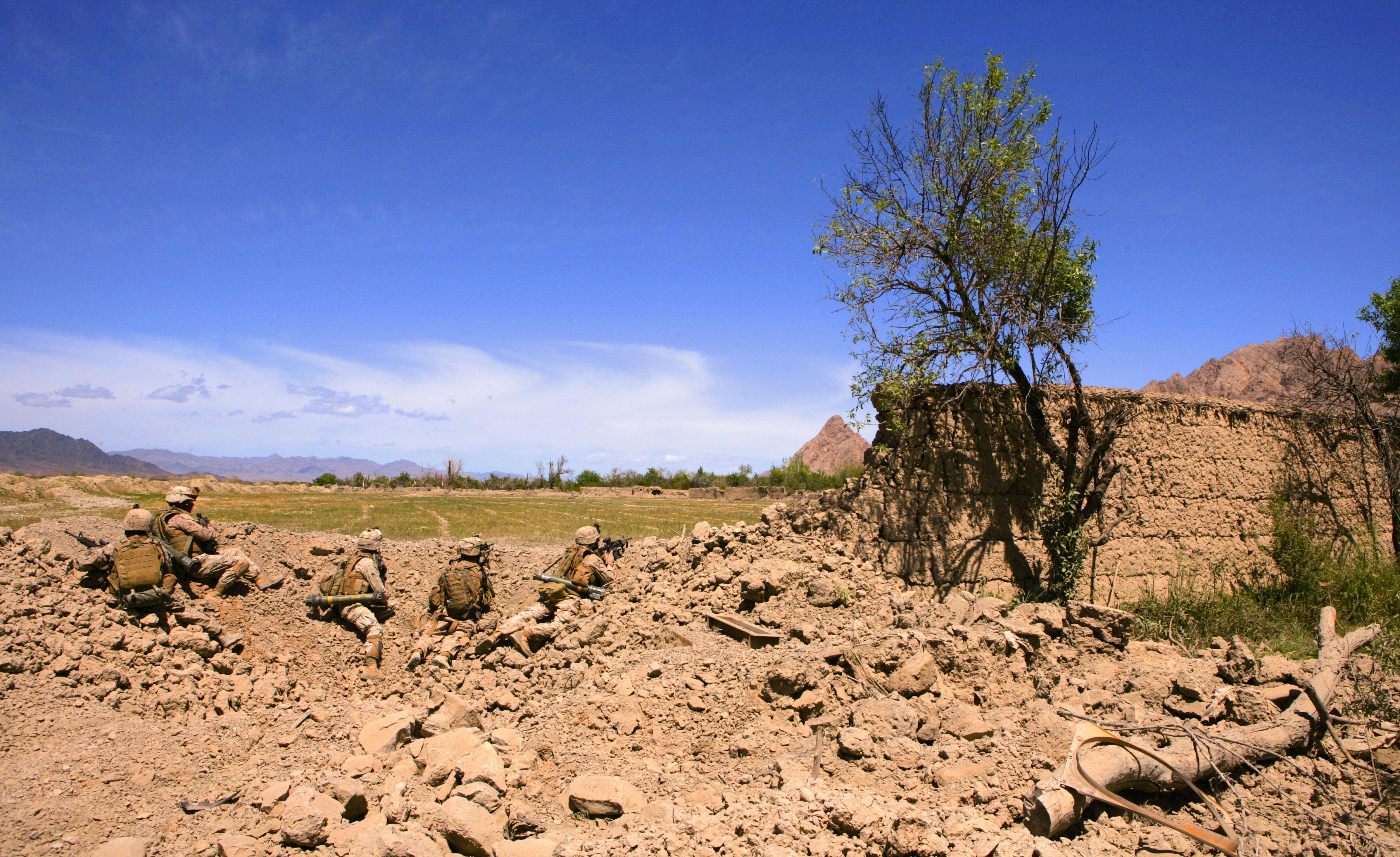
In an instant … the mountainside above the rocky town of Doab erupted in muzzle flashes. For the next several hours, American soldiers in a convoy of 18 vehicles scrambled for cover as rockets and mortars rained down from the mountainsides and US helicopters swept in to evacuate the injured. Along with several of his best soldiers out of Fort Hood, Texas, Lieutenant Dashielle Ballarta, 24, displayed composure in the face of fire as his mortar team fell to Taliban bullets. Indeed, over the next five hours, three insurgent commanders with an estimated four dozen fighters would ambush the American soldiers at three different locations along a road with sheer drop-offs of 300 meters.
Only the fast reactions of US soldiers and medics would avert what commanders said could well have been a “slaughter” of American and Afghan forces. In the end, the Americans would boast that “we kicked some ass up there”, but the insurgents would also claim victory; dancing on the splintered remains of an abandoned US Humvee and vowing to keep the Americans from establishing a foothold north of their base in Kalagush, Nuristan.
This province, with its jagged peaks that rise two kilometers high into the blue skies above Pakistan, is known as Afghanistan’s “forgotten province”. But the intensity of the March 30 attack on a US military humanitarian aid convoy suggests that al-Qaeda and the Taliban have designated northern Nuristan as a key infiltration route and supply line for a growing insurgency.
Though Washington officials have castigated Pakistan for allowing al-Qaeda and Taliban “safe havens” to thrive along its own western borders, which abut Nuristan, this province’s vast terrain provides a similarly strong enemy sanctuary.
“The Taliban and al-Qaeda are moving through Nuristan at will,” said Lieutenant Colonel Larry Pickett, 46, a resident of McComb, Illinois, who dove for cover and took aim at the Taliban attackers in Doab, who had signaled their intentions a night earlier. “The north of the province is wide open and there is nothing to stop them.”
Some Western intelligence officers and Pakistani officials believe that the insurgents in Nuristan are part and parcel of a global guerrilla movement and may be protecting important al-Qaeda figures, possibly Osama bin Laden himself. “We can’t prove that Osama bin Laden is not there,” said Robin Whitley, 33, a US military intelligence officer in Kalagush. “A lot of people are on the lookout for a six-foot-four Arab, but when you don’t have anybody up there, you just don’t know.”
The convoy of 16 US Humvees and four Afghan trucks filled with security guards, left Kalagush on March 29 for a road convoy into the Doab district of Nuristan province. Leading the American contingent was naval commander Caleb Kerr, 37, who heads up Nuristan’s Provincial Reconstruction Team, Lieutenant Colonel Sal Petrovia, 37, and Lieutenant Colonel Pickett. Also along for the ride were Pentagon intelligence agents, including an unarmed member of the Human Terrain Team. The overnight mission intended to meet with local Nuristani officials, look at larger development projects and assess the possibility for more assistance …
The American strategy in Nuristan reverses the old US Marine Corps version of counter-insurgency; “clear, hold and build”. It stresses building first, with the hope that Nuristanis will eventually “see the light” and side with the Afghan government.
“There is a ton of bad guys in Nuristan, but we don’t have the resources to go after them all right now,” said Kerr. “We will not win by killing more people.”
The overnight development survey to Doab appeared to be going well until midnight when translators, who were listening to three distinct languages on radio intercepts, picked up chatter that indicated “the enemy” was planning to ambush US forces.
In the morning, meetings with senior officials continued and American engineers surveyed a new hospital and several schools.
Despite the presence of US-funded police in the town, dozens of insurgents managed to converge on the Americans from neighboring valleys, without being detected even by aerial drones specifically tasked with monitoring such movements. After seven years of careful observation, Taliban and al-Qaeda insurgents have learned to attack US forces when they are in remote terrain, far from their home base and short on air power.
At 11:15 am, just when the US air cover pulled off the scene to refuel, insurgents, holed up in hidden bunkers, began to fire rockets, mortars and small arms at the largest American patrol position; a circle of jeeps with guns pointing out. Sergeant Mathews, 24, from Chicago, quickly unpacked his mortar system, but enemy fire blasted his legs out from under him.
Platoon leader Lieutenant Dashielle Ballarta sprinted over. As medics assisted two wounded soldiers, the young lieutenant grabbed the mortar and pointed it towards muzzle flashes on the mountain. “It was pretty much ‘grab-and-point’ as the insurgents were so close he couldn’t calibrate their distance,” said Lieutenant Colonel Sal Petrovia, who had raced down to join the patrol team. “Our medics were treating the wounded, Specialist Shane McMath and Sergeant Mike Mathews, for 15 minutes behind a Humvee when the opposite mountainside opened up with muzzle flashes. They had snipers and I think they had been waiting for us to move to one side of the Humvees.”
After stabilizing the injured, the convoy moved down the road towards a pre-designated helicopter landing zone. A huge boulder blocked their exit. The Americans had to settle for a make-shift landing zone on a terraced wheat field, where a chopper could only send down a rope and harness.
“As we were preparing the wounded to be lifted out, we started taking fire again, this time on the retaining wall above the heads of the wounded soldiers,” said Lieutenant Colonel Petrovia. “The medics, Kurt Willen, 25 and David Myers, 23, covered the bodies of the two wounded soldiers and the rescue chopper had to back away as we called in two Apaches to suppress the enemy fire.”
Fighting continued as the US convoy snaked away, jeeps limping along with blown-out tires and dragging another disabled vehicle.
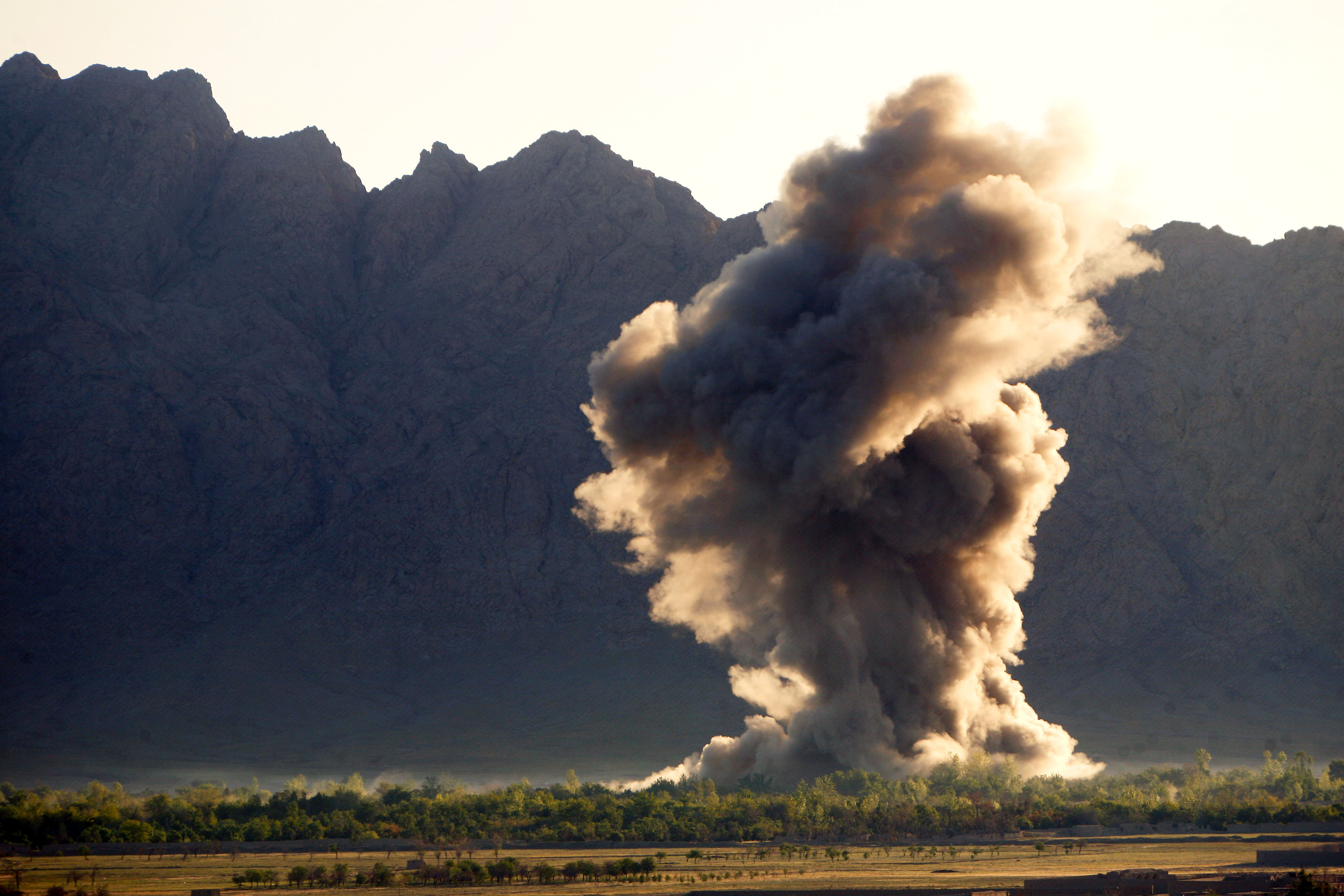
As the convoy negotiated switch-backs above cliff faces some four kilometers forward, insurgents launched yet another assault, rocketing the disabled vehicle, which still had four soldiers in it. Three-inch thick glass windows shattered and rockets bounced off the metal armor. “I looked around the bend and I could see Captain Tino Gonzales trying to keep his rear covered, ducking and dodging behind a tiny boulder as bullets pinged off the rock,” said Petrovia, who finally decided to abandon the disabled vehicle. An Apache was ordered to destroy it to prevent the Taliban or al-Qaeda from gaining access to sensitive military information.
At 8 pm, well after sunset, the US convoy puttered back into its base at Kalagush. Commanders said they had been taken aback by both the weaponry and the number of insurgents that had attacked them in Doab.
This is important and compelling journalism. Take particular note of the comment that the plan reverses the clear-hold-build strategy “with the hope that Nuristanis will eventually “see the light” and side with the Afghan government.”
Sadly, I believe that it won’t work. The force projection must first be implemented to ensure that the road-builders have safety, the aid workers have security, the infrastructure doesn’t go to financing the Taliban, and the soft counterinsurgency doesn’t in effect work directly against the kinetic operations at which the U.S. Army is working so hard.
Philip also reviewed David Kilcullen’s book Accidental Guerrilla. At the end of his review, he asks:
It may be that the imminent American surge in forces (at least 20,000 more troops on the way) could provide some of the answer, but if the US military goes in hard, particularly into the indomitable terrain of Nuristan, will it just end up creating more “accidental guerrillas?” One wonders what the Australian expert would advise on this point, just as US intelligence on al-Qaeda movements in Nuristan is increasing. As Kilcullen notes, “Our too-willing and heavy-handed interventions in the so-called ‘war on terror’ to date have largely played into the hands of this al-Qaeda exhaustion strategy.”
I think that this issue is largely a nonstarter. This issue may in fact be salient for some international engagements, but we were far from it in Iraq, and are extremely far from in in Afghanistan. On the contrary. We may have found the hornets nest, and the hornets must be eradicated. Reader and commenter TSAlfabet recently asked the following question.
Assuming that more than the 21,000 additional troops will not be forthcoming and, further assuming that the U.S. will apply some kind of cordon & secure strategy as discussed, where would you focus those efforts, at least initially? Kandahar? Helmand? In other words, since it is highly unlikely that the Administration is going to invest the necessary forces to secure all of the desired areas, what, in your view … are the most critical areas of A-stan that must be pacified and held in order to have a shot at prevailing long-term?
Great question. The Marines are obviously needed for the major combat operations in Now Zad. But more Marines are on the way, and they should be deployed to the Nuristan and Kunar Provinces (where the Korangal Valley is).
Firebase Phoenix overlooking the Korengal Valley
These are adjacent provinces, in the East area of responsibility, very near the Pakistan border and subject not only to indigenous Taliban fighters, but an influx of Taliban from Pakistan. We’ve struck the motherload.
Computer spies have broken into the Pentagon’s $300 billion Joint Strike Fighter project — the Defense Department’s costliest weapons program ever — according to current and former government officials familiar with the attacks.
Similar incidents have also breached the Air Force’s air-traffic-control system in recent months, these people say. In the case of the fighter-jet program, the intruders were able to copy and siphon off several terabytes of data related to design and electronics systems, officials say, potentially making it easier to defend against the craft.
The latest intrusions provide new evidence that a battle is heating up between the U.S. and potential adversaries over the data networks that tie the world together. The revelations follow a recent Wall Street Journal report that computers used to control the U.S. electrical-distribution system, as well as other infrastructure, have also been infiltrated by spies abroad.
Attacks like these — or U.S. awareness of them — appear to have escalated in the past six months, said one former official briefed on the matter. “There’s never been anything like it,” this person said, adding that other military and civilian agencies as well as private companies are affected. “It’s everything that keeps this country going.”
Many details couldn’t be learned, including the specific identity of the attackers, and the scope of the damage to the U.S. defense program, either in financial or security terms. In addition, while the spies were able to download sizable amounts of data related to the jet-fighter, they weren’t able to access the most sensitive material, which is stored on computers not connected to the Internet.
Former U.S. officials say the attacks appear to have originated in China. However it can be extremely difficult to determine the true origin because it is easy to mask identities online.
A Pentagon report issued last month said that the Chinese military has made “steady progress” in developing online-warfare techniques. China hopes its computer skills can help it compensate for an underdeveloped military, the report said.
The Chinese Embassy said in a statement that China “opposes and forbids all forms of cyber crimes.” It called the Pentagon’s report “a product of the Cold War mentality” and said the allegations of cyber espionage are “intentionally fabricated to fan up China threat sensations.”
The U.S. has no single government or military office responsible for cyber security. The Obama administration is likely to soon propose creating a senior White House computer-security post to coordinate policy and a new military command that would take the lead in protecting key computer networks from intrusions, according to senior officials.
The Bush administration planned to spend about $17 billion over several years on a new online-security initiative and the Obama administration has indicated it could expand on that. Spending on this scale would represent a potential windfall for government agencies and private contractors at a time of falling budgets. While specialists broadly agree that the threat is growing, there is debate about how much to spend in defending against attacks.
The Joint Strike Fighter, also known as the F-35 Lightning II, is the costliest and most technically challenging weapons program the Pentagon has ever attempted. The plane, led by Lockheed Martin Corp., relies on 7.5 million lines of computer code, which the Government Accountability Office said is more than triple the amount used in the current top Air Force fighter.
Six current and former officials familiar with the matter confirmed that the fighter program had been repeatedly broken into. The Air Force has launched an investigation.
Pentagon officials declined to comment directly on the Joint Strike Fighter compromises. Pentagon systems “are probed daily,” said Air Force Lt. Col. Eric Butterbaugh, a Pentagon spokesman. “We aggressively monitor our networks for intrusions and have appropriate procedures to address these threats.” U.S. counterintelligence chief Joel Brenner, speaking earlier this month to a business audience in Austin, Texas, warned that fighter-jet programs have been compromised.
Foreign allies are helping develop the aircraft, which opens up other avenues of attack for spies online. At least one breach appears to have occurred in Turkey and another country that is a U.S. ally, according to people familiar with the matter.
Joint Strike Fighter test aircraft are already flying, and money to build the jet is included in the Pentagon’s budget for this year and next.
Computer systems involved with the program appear to have been infiltrated at least as far back as 2007, according to people familiar with the matter. Evidence of penetrations continued to be discovered at least into 2008. The intruders appear to have been interested in data about the design of the plane, its performance statistics and its electronic systems, former officials said.
The intruders compromised the system responsible for diagnosing a plane’s maintenance problems during flight, according to officials familiar with the matter. However, the plane’s most vital systems — such as flight controls and sensors — are physically isolated from the publicly accessible Internet, they said.
The intruders entered through vulnerabilities in the networks of two or three contractors helping to build the high-tech fighter jet, according to people who have been briefed on the matter. Lockheed Martin is the lead contractor on the program, and Northrop Grumman Corp. and BAE Systems PLC also play major roles in its development.
Lockheed Martin and BAE declined to comment. Northrop referred questions to Lockheed. Cyberspies have penetrated the U.S. electrical grid and left behind software programs that could be used to disrupt the system, according to current and former national-security officials.
The spies came from China, Russia and other countries, these officials said, and were believed to be on a mission to navigate the U.S. electrical system and its controls. The intruders haven’t sought to damage the power grid or other key infrastructure, but officials warned they could try during a crisis or war.
“The Chinese have attempted to map our infrastructure, such as the electrical grid,” said a senior intelligence official. “So have the Russians.”
The espionage appeared pervasive across the U.S. and doesn’t target a particular company or region, said a former Department of Homeland Security official. “There are intrusions, and they are growing,” the former official said, referring to electrical systems. “There were a lot last year.”
Shame on Northrop Grumman and Lockheed for their lack of control over their IT systems, and the Pentagon response is lousy as well. Sure the Pentagon systems are probed daily. That’s not the point. China is currently in unrestricted warfare against the U.S.. and this aggresive pattern requires a robust response. How long will we continue to make technology available to China, either through system vulnerabilities or intentional commercial technology transfer?
I want to touch on several issues in this post. First, Galrahn at Information Dissemination authors yet another interesting post on Navy strategy, or the lack of it. It should be required reading for all of my readers. His discussion of Navy strategy and issues surrounding the Navy is second to none. He says that the Navy has proven that they are unable tactically to solve piracy. But while I agree with his dismissal of the Littoral Combat Ship as being the answer, I don’t agree with this assessment.
I have said before that the things required of us to defeat the pirates are less attractive to 21st century America that the alternative of having pirates, and thus we have chosen for piracy to exist. The tools exist: Amphibious Assault Docks, LCACs, Harriers, Helicopters associated with ESG, etc. And just to make it clear, if we really wanted to be effective, we could deploy the newer generation of Riverine Command Boats along with the Amphibious Assault Docks, or some smaller water craft (with assault capability). Hanging pirates on the high seas, videotaping the events and posting it to YouTube would end piracy, and it is given to the Congress of the U.S. in the Constitution to make such laws. Finally, such laws would supersede all ambiguous treaties in this matter. In followup to previous posts on piracy, Navy SEAL teams are not an answer. There aren’t enough, it is too expensive, and it isn’t logistically sustainable.
Donald Sensing makes the point in the comments section that piracy isn’t a national security issue for the U.S. Perhaps so, right now, but as the pirates continue to give honorariums to al Qaeda which is currently in control of most of Somalia, it might be in the near future. As the problem continues it grows worse.
The Navy is breaking up the deployments of amphibious ships and surface combatants formerly known as expeditionary strike groups, part of a top-down review that could have far-reaching consequences for how sailors and Marines spend time at sea.
For the past six years, ESGs paired a big-deck amphib and two small-deck gators with two or three surface combatant escorts. Now, the gators and warships will go separately.
As of March 9, the gator groups were renamed “amphibious ready groups,” reviving a term that was shelved several years ago, and combined with the name of their accompanying Marine expeditionary unit, said Lt. Cmdr. Phil Rosi, a spokesman for Fleet Forces Command. Although these were the first changes to come from a joint Navy-Marine ESG working group, they won’t be the last, he said.
“The name change and the deployment construct is the first step in the process — we have, in conjunction with the Marine Corps and [the] ESG working group, been working through roles, missions, capability, training … there’s a lot more that still is being worked out.”
For example, the Navy would have called the amphibious assault ship Boxer’s group the “Boxer ESG,” but now it’s called the “Boxer ARG/13th MEU.”
But ESG isn’t going away entirely. An ARG/MEU still can be called an ESG, Rosi said, if it’s being commanded by an admiral or general officer.
Under normal circumstances, a Navy captain will command the ships and a Marine colonel will be in charge of the leathernecks.
Rosi said Fleet Forces Command and the ESG working group still are determining who will decide when an ARG/MEU’s mission requires a one-star officer and elevates the unit to ESG status.
The Navy decided to break up the previous ESGs because the amphibs and combatants usually didn’t work closely enough on their deployments to justify sailing together, Rosi said.
So surface combatants will begin sailing separately as “surface action groups” — another older term — although officials don’t yet know how that could affect their deployments. He also said it wasn’t clear yet whether the surface groups would include set numbers of ships — a certain number of cruisers, destroyers or frigates — or how their missions could change.
“There’s no definite cookie-cutter construct,” Rosi said.
Rosi said ARG/MEUs and surface groups will retain their ability to operate together when needed, but they won’t sail in groups as they have since 2003.
Retired Capt. Jan van Tol said it’s “unfortunate” that the Navy is returning to an older style of surface deployments, but he said he wasn’t surprised because top commanders never fully realized a strategy to deploy amphibs with warships.
“It’s completely back to the future. I guess ESGs weren’t as useful as we thought,” said van Tol, who commanded three ships, including the amphibious assault ship Essex, before becoming an analyst for the Center for Strategic and Budgetary Assessments.
ESGs were ideal groups for handling low-intensity missions such as the international campaign against piracy off Somalia, he said, because they combine the speed and firepower of surface ships with many “lily pads” for helicopters on the gators. The amphibious assault ship Boxer, for example, is operating with the destroyer Bainbridge and frigate Halyburton off the Horn of Africa.
What’s more, ESGs were a way to overcome the “artificial divorce” in the surface force between amphib and “cru/des” sailors, van Tol said. He recalled a time when he was the captain of the Essex and his ship participated in a missile-launching exercise with the destroyer John S. McCain, giving the ships’ crews a chance to work together.
Then-Chief of Naval Operations Adm. Vern Clark pushed for ARGs to become ESGs in the early 2000s, based on an earlier concept from the 1990s called an Expeditionary Task Force.
But with Clark retired, few top-level Navy and Marine Corps leaders stayed committed to pairing amphibs and combatants.
“It’s dying due to lack of interest, which is a pity,” van Tol said.
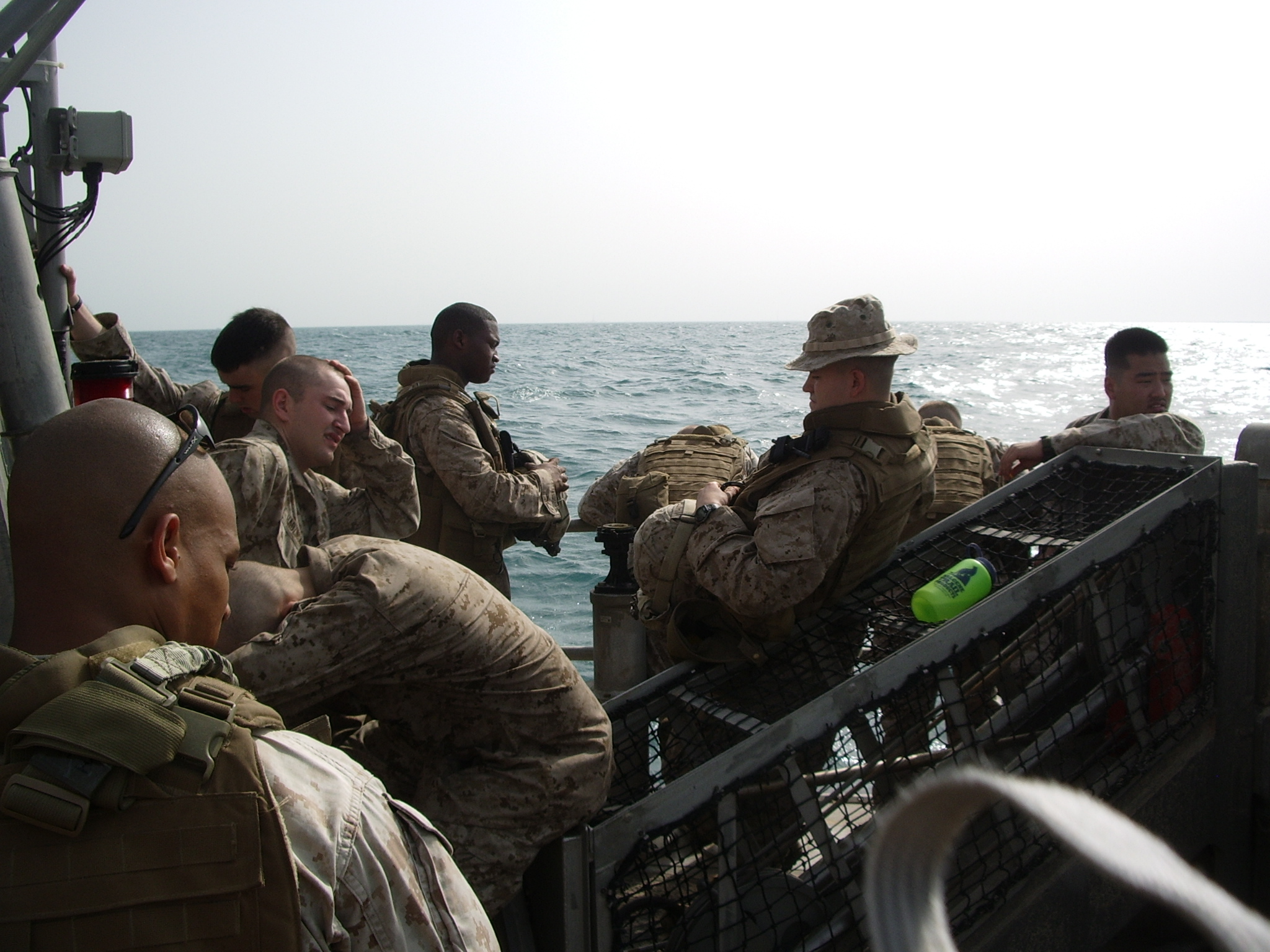
Several fairly brief observations. I will reserve comment for now on the extreme expense of deploying an entire Battalion of Marine infantry on board an Amphibious Assault Dock and floating around the Persian Gulf for seven months as “ready reserve” for CENTCOM or “force in readiness.” It deserves fuller analysis, much more than I can provide here. The public has absolutely no idea how expensive this endeavor is.
But this account above is about as strange as it gets. We’re bored, says the Navy, or something thereabouts. We learn nothing useful about any paradigmatic change in strategy that caused this divorce, or some new boundary condition or external pressure that is causing the need to separate larger warships from ESGs. It’s about personalities, or some such foolishness. Maybe. We don’t know. We just learn that it’s going to happen.
Finally, as I stated in Concerning U.S. Defense Cuts, “The Captain’s Journal agrees with Galrahn and the importance of force projection – whether hard or soft power – with the Marines Expeditionary Units (including the “combined arms” concept of multiple naval vessels with various defensive and offensive capabilities … Concerning Galrahn’s warning on the need for fuel, this highlights all the more the need for ports and air superiority for refueling tankers. Concerning overall air superiority, if the sole focus of our national defense dollars is in counterinsurgency, littoral combat and small wars, the MEUs will be left to the slaughter once the ordnance begins raining down from the sky.”
I am continually re-evaluating the need for MEUs, especially when there is such dire need for Marine infantry in Afghanistan. I am only softly committed to MEUs. Someone can try to convince me, but it may be a tall task. But if we are going to do MEUs and ESGs, we had better consider the danger and risk of deploying Amphibious Assault Docks (AAD) without the accompanying Naval force protection.
I normally assume that the detection and defeater systems for surface-to-surface missiles on board the Navy vessels would add to the force protection for the AADs. I also assume that an Aircraft Carrier fleet is not too distant from the AADs to provide air superiority in the case of air attack. I am also assuming that the Navy wouldn’t hesitate to use its power to protect the Marines.
Your assignment: Think hard. An entire Battalion of Marine infantry sitting on an Amphibious Assault Dock in the middle of the Persian Gulf like sitting ducks, with little Naval force protection, and the likely to come reduction in the Carrier battle groups by at least one. The Navy won’t deploy with the Marines. Can you justify this? Seriously? Wouldn’t it be better to deploy the Navy or find another way to use the Marines? Why have the ESG to begin with? What is the Navy thinking? We don’t know – it seems as if they’re bored. Oh wait! As I re-read the above, there is an “ESG working group.” Good. I feel better already.
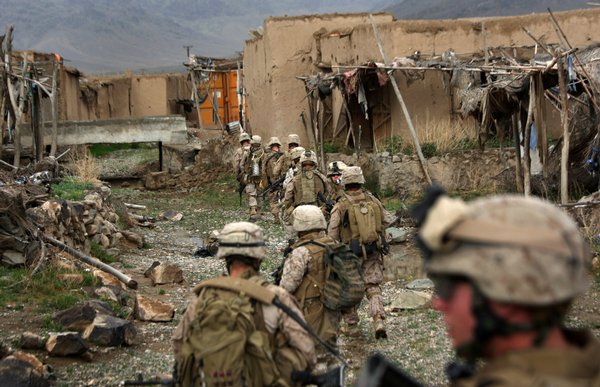
Following up Counterinsurgency Successes in Afghanistan, C. J. Chivers and Tyler Hicks bring us another compelling acccount of combat in the Korangal Valley, Afghanistan.
Specialist Robert Soto ran for cover last week as his platoon was ambushed in Afghanistan. Across the river, two comrades crouched behind a rock.
The Taliban opened fire. The ambush was on.
Lieutenant Smith asked Sergeant Tanner for a report. The blast had blown the sergeant off his feet, spinning him around and throwing him down. He was disoriented. He said he thought he had all of his men.
As the firing neared its peak, Lieutenant Smith ordered the men around him to disperse so they could not all be struck by a single burst of fire. Then he provided covering fire so the artillery observer and a machine gun team could run back across the first bridge, gain elevation in Aliabad and cover the squad in the field.
A soldier caught in an ambush — looking for safety while returning fire, with ears ringing and skin pouring sweat — can feel utterly alone, trapped in a box of crisscrossing lead and terrifying sound, with death an instant away.
He is actually part of something more complicated. Bullets flew down into the riverbed from three sides. But as the lieutenants worked their radios, soldiers outside the kill zone were trying to erode the Taliban’s opening advantage.
Within the platoon, the squad in the rear of the column set up its machine guns and was firing on several of the Taliban shooting positions. A group of Afghan National Army soldiers, directed by a Marine corporal, was also firing.
In American firebases on ridges along the valley, soldiers with heavier machine guns and automatic grenade launchers focused on Afghan buildings in three villages — Donga, Laneyal and Darbart — from where the trapped platoon was taking fire.
Farther back, at Company B’s outpost, a pair of Air Force noncommissioned officers was directing aircraft into position, while two 120-millimeter mortars were firing high-explosive and white phosphorus rounds at targets the platoon had identified.
Alternately crouched and standing on the open rock spur, the lieutenants rushed to influence the fight and plan an escape from the trap. Once the American response began to build and the Taliban firing subsided, Lieutenant Rodriguez told Lieutenant Smith, they would throw smoke grenades along the river bank and pull back.
This is extremely compelling reporting. Read the entire article at the New York Times. There are many observations to be made, but perhaps at a later time.