New York Court Holds Stun Gun Ban is Not Unconstitutional, in Contravention of Caetano

Herschel Smith · 30 Mar 2025 · 2 Comments

Dean Weingarten has a good find at Ammoland. Judge Eduardo Ramos, the U.S. District Judge for the Southern District of New York,  has issued an Opinion & Order that a ban on stun guns is constitutional. A New York State law prohibits the private possession of stun guns and tasers; a New York City law prohibits the possession and selling of stun guns. Judge Ramos has ruled these laws do not infringe on rights protected by the Second Amendment of the United States Constitution. Let's briefly…… [read more]

Bin Laden’s December 2007 Audio

BY Herschel Smith
18 years, 4 months ago

Osama Bin Laden has released an audio that has some interesting content regarding the campaign in Iraq.  From Al Jazeera, here is a partial transcript of his communication.

“I advise myself and all the Muslims, particularly brethren in the al-Qaeda organisation everywhere, to avoid fanaticism.

“The interest of the Islamic nation surpasses that of a group. 

“The strength of faith is in the strength of the bond between Muslims and not that of a tribe or nationalism.

“The strength of faith is not in the affiliation to the tribe, the country or the organisation.

“The interest of the group should be given priority over the interest of the individual, the interest of the Islamic state should be given priority over the interest of the group, and the interest of the Umma [Muslim community] should be given priority over the interest of the state.

“These indications must be practical realities in our life.

“I advise myself and my brethren to be pious and patient as they [these qualities] are the weapon of those who seek victory.

“My brethren, be careful of your enemies, particularly the hypocrites who penetrate into your ranks to spark strife among the mujahidin [Muslim fighters] groups. Those should be referred to trial.”

“[Committing] mistakes is of mankind’s nature. When mistakes occur, disputes emerge among people, and mistakes have occurred.

“But the ill-hearted people pursue the mistakes of the mujahidin, and they may attribute these mistakes to the ritual of jihad, under the name of violence and terrorism.

“The mujahidin are the children of this nation; they do right things and wrong things. Those who are accused of violating of God’s commandments should face trial.

“Scholars, emirs of the mujahidin, and tribal leaders should make efforts to reconcile every two conflicting sects and should rule between them according to the sharia [law] of Allah. And the two conflicting sects should act in response to the scholars.”

“Unite your ranks in one rank.

“My brethren, the emirs of the mujahidin, Muslims wait for you to unite under one banner to enforce that which is right. 

“When you perform this obedience, the nation would soon be blessed by the Jamaa year through your own efforts.

“Honest scholars should make efforts to unify the ranks of the mujahidin, and I hope that they would not feel bored of going along the path that would lead to it [unity].”

What is important here is what al Jazeera didn’t transcribe from his recording.  Al Jazeera has included only the soft words, and these words lack context, so this context will be supplied here – at least in broad strokes.

OBL speaks of “mistakes” and “uniting ranks” for very specific reasons.  He knows that al Qaeda has been guilty of unspeakable atrocities in Anbar and other places in Iraq.  Not too long ago I published Hope and Brutality in Anbar in which I discussed some of the torture tactics and rooms of horror used by AQI.  The same tactics were used in the Diyala province when AQI was run out of the Anbar Province, leading the coalition forces to discover what they termed an al Qaeda torture complex that was recently found and shut down.  OBL also knows that the unintended consequence of this has been loss of the heart and cooperation of the population.  So he wants to soften the message: al Qaeda, says OBL, has made mistakes, like all people, but this shouldn’t reflect poorly on jihad.

But on to the harder words from the audio recording.  OBL takes direct aim at the leader of the Anbar “awakening.”

In the audiotape, bin Laden denounces Abdul-Sattar Abu Risha, the former leader of the Anbar Awakening Council, who was killed in a September bombing claimed by al-Qa’ida.

“The most evil of the traitors are those who trade away their religion for the sake of their mortal life,” he said.

Bin Laden said US and Iraqi officials were trying to set up a “national unity government” joining the Sunnis, Shi’ites and Kurds. “Our duty is to foil these dangerous schemes, which try to prevent the establishment of an Islamic state in Iraq, which would be a wall of resistance against US schemes to divide Iraq,” he said.

OBL warns the Sunnis in Anbar against joining the coalition, and goes further to say just exactly what is in store, according to him, for those who join against AQI:

He also urged Iraqis not to join the Awakening Councils which are predominantly Sunni tribal police funded by the US military to fight al-Qaeda and reduce violence.

“I advise those who follow the path of temptation should wash out this disgrace by repentance,” he said in the 56-minute recording posted on the internet on Saturday.

“This participation [in the Awakening Councils] is a great apostasy and sedition that will lead them to Hell.”

The Multinational Force was quick to trot out a rebuttal to OBL’s claims:

An audio tape released by Osama bin Laden yesterday purports that al Qaeda does not kill innocent civilians, but the terrorist network’s actions contradict this claim, a coalition spokesman said yesterday.

During a news conference in Baghdad yesterday, Navy Rear Adm. Gregory J. Smith, director of communications for Multinational Corps Iraq, told reporters that al Qaeda car bombings, suicide attacks and torture houses are evidence that the network targets innocent civilians, and belie conflicting messages the group avows.

“Al Qaeda’s extreme, Taliban-like ideology and deliberate disregard for human life has led to its rejection by the Iraqi people,” Smith said.

While true, this rebuttal misses the point.  The definition of “innocent” includes almost everyone to the Multinational Force.  But it includes almost no one to OBL and al Qaeda.  Notice again the caveats and qualifiers OBL has given us.  Anyone who participates in the new Iraqi government is guilty of great apostasy and sedition, and Sheikh Risha is a “traitor.”  Thus, while to the U.S. those who are not fighting the U.S. ( and some who are, as shown by payment to “concerned citizens”) are all innocent, to al Qaeda only those who are fighting alongside them are innocent.  All others are guilty.

It is a matter of definitions.  Thus OBL can claim that the innocent are spared, while apologizing for a few “mistakes” here and there, and still preach his sermons about hellfire for those who side with the coalition.  Everyone knows the game.  A more effective Multinational Force rebuttal might have gone something like this:

We have read the worthless screed published by the terrorist OBL, and conclude that he and his outlaw organization are the same duplicitous, murderous liars that they have always been.  Al Qaeda’s message is basically that if you side with them they will refrain from drilling holes in your ribcage with a power drill.  Otherwise, if you help the coaliton at all, or even if you withdraw from the struggle and try to live in peace, you side with the evil attempt to stop a fundamentalist Islamic state in Iraq.  Al Qaeda, they claim, are the ultimate arbiters of all truth, and will decide your fate as their whims dictate.  You will die if they want you to die, and if they want you to live, they will use you and your children for their own ends.  Al Qaeda has shown in actions, and now tries to justify in words, that they do not harm innocents, but then they surreptitiously define the term innocent to meet their own criteria as if the people are too stupid to see their Sophistry and tricks.  Al Qaeda, you are a loser on the field of battle, and now you are losing the war of ideas.  Your end in Iraq is surely near.

At any rate, this kind of communication would couple well with the hard fought gains on the ground in Iraq.  It’s time to take the gloves off of the Multinational Force communications.  Finally, what we learn from OBL’s audio is that nothing has changed.  We should continue to expect that AQI will use torture, brutality and other atrocities as they see fit and are able.

Fates of Afghanistan and Pakistan Inextricably Tied

BY Herschel Smith
18 years, 4 months ago

With some time having elapsed since Bhutto’s assassination where we can consider the implications of Pakistani politics, it is good to rehearse where the U.S. stands in the global war on extremist militants.  Regarding Benazir Bhutto’s assassination, I commented:

I have said before that ”counterinsurgency in Pakistan begins in Afghanistan and along the Pakistan / Afghanistan border. Unless and until we devote the troops and effect the force projection to let the people in these AOs know that we are serious about the campaign, there will be no success.”  I have advocated more troops in the Afghanistan campaign for the simple reason that not only must we win in Afghanistan, we have an unmitigated opportunity to kill Taliban and al Qaeda fighters in Afghanistan where we are not dealing with issues of sovereignty of Pakistan.  In other words, we have the best of all possible worlds in the current campaign in Afghanistan (similar to the campaign in Iraq, although this is waning somewhat due to Iraqi sovereignty).  We can fight international jihadists with the full approval of the administration and for the most part without the overhead of issues of national sovereignty.

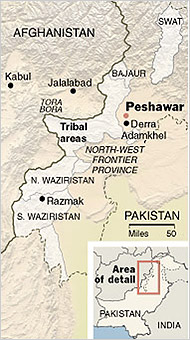
This campaign, once shown to be successful, can then be expanded into Pakistan with the tacit approval of the Pakistani government (i.e., small incursions and concealed operations, expanded to larger operations if the need and approval were forthcoming).  Here is where the administration of Pakistan is important.  Musharraf is likely an American ally only to the extent that he believed Richard Armitage when it was said to him that the U.S. would enjoy his cooperation or Pakistan would be “bombed back to the stone age” (the words as reported by Musharraf himself).  Bhutto, on the other hand, would have been a willing participant in the global war on religious militancy, and is said to have desired international assistance in the Pakistan counterinsurgency campaign: “If Bhutto returns to power this week, Gauhar predicts the U.S. will finally get what Musharraf has refused it: “She will allow NATO boots on the ground in our tribal areas and a chance to neuter our nuclear weapons.”

In the days following the assassination, many have weighed in on Bhutto’s financial indiscretions and other examples of malfeasance as Prime Minister.  One of the most significant critiques has come from the always interesting Ralph Peters at the New York Post.  He is even more frank and forthcoming on his feelings in a recent commentary for The Australian.

For the next several days you’re going to read and hear a great deal of pious nonsense in the wake of the assassination of Pakistan’s former prime minister Benazir Bhutto.

Her country is better off without her. She may serve Pakistan better after her death than she did in life.

We don’t need to have sympathy with her Islamist assassin and the extremists behind him to recognise that Bhutto was corrupt, divisive, dishonest and utterly devoid of genuine concern for her country.

She was a splendid con, persuading otherwise cynical Western politicians and hard-headed journalists that she was not only a brave woman crusading in the Islamic wilderness but also a thoroughbred democrat.

In fact, Bhutto was a frivolously wealthy feudal landlord amid bleak poverty. The scion of a thieving political dynasty, she was always more concerned with power than with the wellbeing of the average Pakistani.

Her program remained one of old-school patronage, not increased productivity or social decency.

Educated in expensive Western schools, she permitted Pakistan’s feeble education system to rot, opening the door to Islamists and their religious schools.

During her years as prime minister, Pakistan went backwards, not forwards. Her husband looted shamelessly and ended up fleeing the country, pursued by the courts. The Islamist threat, which she artfully played both ways, spread like cancer.

Peters ends his scathing rebuke of Bhutto and those who lament her passing by observing that “A creature of insatiable ambition, Bhutto will become a martyr. In death, she may pay back some of the enormous debt she owes her country.”

Perhaps.  But a careful reading of my analysis proves that it is entirely pragmatic.  I have long said regarding the parliamentary system in Iraq that one serious flaw in the preliminary stages of Operation Iraqi Freedom was the naive belief in the healing powers of democracy.  Democracy is itself produced by a society, and produces nothing.  It is a deliverance of people and their value system, not vice versa.  Said in another way, it cannot effect change.  It is itself an affect or product.  Given Iraqi history and culture, there might have been no good options, but democracy does not seem to have helped.

This same belief in the powers of democracy has caused the U.S. administration to support Bhutto, and Ralph Peters is correct in his diagnosis of her abilities to conjure up an image of peace and stability in Pakistan with the American elite.  However, involvement in the politics of Pakistan should not cloud the analysis, and has not entered into mine.  From the perspective of an American commentator and analyst, the primary concern should be the strategic interests of America, both short term and long term.  Democracy should be supported in Pakistan only to the extent that it is a catalyst of peace and stability and thus in the strategic interests of the U.S.  As to its benefits to long term stability, I have my doubts, but there is no short term advantage.

For my previous analysis, democracy in Pakistan and malfeasance of previous administrations didn’t fit into the equation.  Bhutto, it seems, would have allowed incursions of U.S. troops into Pakistan, and even further – NATO boots on the ground, formally and officially.  It seems difficult to fake this, as it was a major plank in her platform.  The situation in Pakistan is difficult and tenuous, and may devolve into chaos.  But assuming the restoration of stability at some point, the U.S. administration should see this as a gracious and providential warning shot over the bow.

The campaign in Afghanistan remains the first front of the counterinsurgency campaign in Pakistan.  Karachi, with a population of over 14 million people, and Lahore, with a population of over 10 million people, are larger than Fallujah by a factor 20 to 30.  Counterinsurgency in these cities would cost the U.S. armed forces on the order of tens of thousands of dead and more than one hundred thousand wounded – prohibitive to say the least.  But given that Pakistan is a nuclear state with assets that could fall into jihadist hands, the salient question is how to proceed short of such an awful campaign.

Again, the answer is in Afghanistan, where the campaign there is inextricably tied to counterinsurgency in Pakistan.

President Bush held an emergency meeting of his top foreign policy aides yesterday to discuss the deepening crisis in Pakistan, as administration officials and others explored whether Thursday’s assassination of opposition leader Benazir Bhutto marks the beginning of a new Islamic extremist offensive that could spread beyond Pakistan and undermine the U.S. war effort in neighboring Afghanistan.

U.S. officials fear that a renewed campaign by Islamic militants aimed at the Pakistani government, and based along the border with Afghanistan, would complicate U.S. policy in the region by effectively merging the six-year-old war in Afghanistan with Pakistan’s growing turbulence.

“The fates of Afghanistan and Pakistan are inextricably tied,” said J. Alexander Thier, a former United Nations official in Afghanistan who is now at the U.S. Institute for Peace.

U.S. military officers and other defense experts do not anticipate an immediate impact on U.S. operations in Afghanistan. But they are concerned that continued instability eventually will spill over and intensify the fighting in Afghanistan, which has spiked in recent months as the Taliban has strengthened and expanded its operations.

Unrest in Pakistan and increasing fuel prices have already boosted the cost of food in Afghanistan, making it more likely that hungry Afghans will be lured by payments from the Taliban to participate in attacks, a U.S. Army officer in Afghanistan said.

In a secure videoconference yesterday linking officials in Washington, Islamabad and Crawford, Tex., Bush received briefings from CIA Director Michael V. Hayden and U.S. Ambassador to Pakistan Anne W. Patterson, said National Security Council spokesman Gordon Johndroe. Bush then discussed Bhutto’s assassination and U.S. efforts to stabilize Pakistan with his top foreign policy advisers, including Vice President Cheney, Secretary of State Condoleezza Rice, Defense Secretary Robert M. Gates and national security adviser Stephen J. Hadley, as well as Adm. William J. Fallon of Central Command and Marine Gen. James E. Cartwright, vice chairman of the Joint Chiefs of Staff.

U.S. intelligence and Defense Department sources said there is increasing evidence that the assassination of Bhutto, a former Pakistani prime minister, was carried out by al-Qaeda or its allies inside Pakistan. The intelligence officials said that in recent weeks their colleagues had passed along warnings to the Pakistani government that al-Qaeda-related groups were planning suicide attacks on Pakistani politicians.

The U.S. and Pakistani governments are focusing on Baitullah Mehsud, leader of the Taliban Movement of Pakistan, as a possible suspect. A senior U.S. official said that the Bush administration is paying attention to a list provided by Pakistan’s interior ministry indicating that Mehsud’s targets include former prime minister Nawaz Sharif, former interior minister Aftab Khan Sherpao, and several other cabinet officials and moderate Islamist leaders. “I wouldn’t exactly call it a hit list, but we take it very seriously,” the official said. “All moderates [in Pakistan] are now under threat from this terrorism.”

Mehsud told the BBC earlier this month that the Pakistani government’s actions forced him to react with a “defensive jihad.”

After signing a condolence book for Bhutto at the Pakistani Embassy in Washington, Rice said the United States is in contact with “all” of the parties in Pakistan and stressed that the Jan. 8 elections should not be postponed. “Obviously, it’s just very important that the democratic process go forward,” she told reporters.

The U.S. Embassy in Pakistan warned U.S. citizens Thursday to keep a low profile and avoid public gatherings. A Pentagon official said plans to evacuate Americans from the country are being reviewed.

“We’ve really got a new situation here in western Pakistan,” said Army Col. Thomas F. Lynch III, who has served in Afghanistan and with Central Command, the U.S. military headquarters for Pakistan and the Middle East. He said the assassination marks a “critical new phase” in jihadist operations in Pakistan and predicted that the coming months would bring concentrated attacks on other prominent Pakistanis.

“The Taliban . . . are indeed a growing element of the domestic political stew” in Pakistan, said John Blackton, who served as a U.S. official in Afghanistan in the 1970s and again 20 years later. He noted that Pakistani military intelligence created the Taliban in Afghanistan.

How the United States responds will hinge largely on the actions of Pakistani President Pervez Musharraf, in whom U.S. officials have mixed confidence. If there is indeed a new challenge by Islamic militants emerging in Pakistan, then the United States will have to do whatever it can to support Musharraf, the U.S. Army officer in Afghanistan said.

“Pakistan must take drastic action against the Taliban in its midst or we will face the prospect of a nuclear weapon falling into the hands of al-Qaeda — a threat far more dangerous and real than Hussein’s arsenal ever was,” he said, referring to the deposed Saddam Hussein.

U.S. officials are concerned about the affect of Pakistan on the campaign in Afghanistan, but seeing things clearly requires looking in the opposite direction.  Settling scores with al Qaeda and Taliban fighters in Afghanistan is much easier than it will be in Pakistan.  The stakes are huge, and the notion of incorporating the Taliban into the government in Afghanistan (as the British advocate in order to create ‘peace’) seems so far removed from realistic regional needs that it is incredible that the idea was ever proffered.  The British want to make peace with the jihadists, but when reality strikes an ugly chord with the assassination of an opponent of jihad in Pakistan, we are reminded of the specter of nuclear weapons in major American cities, and the smoke clears and the room of mirrors is broken – along with our illusions of peace with the jihadists.

Thoughts on the Assassination of Benazir Bhutto

BY Herschel Smith
18 years, 4 months ago

I wanted to put out some preliminary thoughts on current news – the assassination of former (and likely future) Pakistani Prime Minister Benazir Bhutto – but to do this, I will neglect the sweeping, link-laden and highly sourced analyses that I try to provide.  Instead, my thoughts will be in the ‘stream of consciousness’ style.

It is a sad day for the global war on terror, and the American left, always anxious to lay blame, hasn’t yet solidified its talking points.  Peter Beinart believes that the U.S. administration is somehow to blame because we didn’t push President Pervez Musharraf far and fast enough towards democracy.  Alan Colmes believes that the U.S. administration is somehow to blame because we pushed democracy on a country not ready for it.  Presidential candidate Mike Huckabee inexplicably apologized for the incident, expressing “our sincere concern and apologies for what has happened in Pakistan.”  Inexplicably, that is, unless along with the American left he also feels that the U.S. is somehow to blame for Islamic militancy in Pakistan.

I won’t engage in the omniscient blame game.  But Ambassador Bolton’s concerns are salient when he takes the position that in encouraging Bhutto’s re-emergence on the political scene in Pakistan we “helped to precipitate” the unfortunate events of today, and further remarks that of utmost strategic interest is the safety of the nuclear weapons under Pakistan’s care.  Bolton fails to see how any of this helps the strategic interests of the U.S.

Bolton is not part of the political left, and while I usually agree with him, I take issue with his characterization of these events.  I too, am concerned about the strategic interests of the U.S., and more could have been done after the first assassination attempt on Bhutto’s life (the first day that she returned to Pakistan) to protect her and provide more security.  Bhutto is said to have desired and requested this additional security (and in fact from the U.S. FBI and other assets), and Pakistan is said to have denied this request.  If this fact had been known, then the U.S. administration shares a little of the blame for not pushing hard enough on Musharraf for this protection (and of course, Musharraf is primarily to blame).

However, Bolton is ignoring the long term strategic interests in having Bhutto involved in Pakistani politics.  I have said before that “counterinsurgency in Pakistan begins in Afghanistan and along the Pakistan / Afghanistan border. Unless and until we devote the troops and effect the force projection to let the people in these AOs know that we are serious about the campaign, there will be no success.”  I have advocated more troops in the Afghanistan campaign for the simple reason that not only must we win in Afghanistan, we have an unmitigated opportunity to kill Taliban and al Qaeda fighters in Afghanistan where we are not dealing with issues of sovereignty of Pakistan.  In other words, we have the best of all possible worlds in the current campaign in Afghanistan (similar to the campaign in Iraq, although this is waning somewhat due to Iraqi sovereignty).  We can fight international jihadists with the full approval of the administration and for the most part without the overhead of issues of national sovereignty.

This campaign, once shown to be successful, can then be expanded into Pakistan with the tacit approval of the Pakistani government (i.e., small incursions and concealed operations, expanded to larger operations if the need and approval were forthcoming).  Here is where the administration of Pakistan is important.  Musharraf is likely an American ally only to the extent that he believed Richard Armitage when it was said to him that the U.S. would enjoy his cooperation or Pakistan would be “bombed back to the stone age” (the words as reported by Musharraf himself).  Bhutto, on the other hand, would have been a willing participant in the global war on religious militancy, and is said to have desired international assistance in the Pakistan counterinsurgency campaign: “If Bhutto returns to power this week, Gauhar predicts the U.S. will finally get what Musharraf has refused it: “She will allow NATO boots on the ground in our tribal areas and a chance to neuter our nuclear weapons.”

While Secretary of Defense Robert Gates is said to favor an addition of only 7500 troops to the Afghanistan campaign, hope springs eternal that strategic interests would be seriously evaluated around the globe (e.g., Germany and South Korea) and troop realignments would occur to support both the Iraq and Afghanistan counterinsurgency campaigns.

We must think long term, and Bhutto, because she was a clear thinker, was a long term ally of the United States.  It is a sad day for the U.S. and the global war on terror.  Only time will tell how serious this setback is.  My sense is that it’s very serious.

British in Negotiations with Taliban

BY Herschel Smith
18 years, 4 months ago

The Telegraph is reporting that there are ongoing secret negotiations between British intelligence and the Taliban.

Agents from MI6 entered secret talks with Taliban leaders despite Gordon Brown’s pledge that Britain would not negotiate with terrorists, The Daily Telegraph can disclose.

Officers from the Secret Intelligence Service staged discussions, known as “jirgas”, with senior insurgents on several occasions over the summer.

An intelligence source said: “The SIS officers were understood to have sought peace directly with the Taliban with them coming across as some sort of armed militia. The British would also provide ‘mentoring’ for the Taliban.”

The disclosure comes only a fortnight after the Prime Minister told the House of Commons: “We will not enter into any negotiations with these people.”

Opposition leaders said that Mr Brown had “some explaining to do”.

The Government was apparently prepared to admit that the talks had taken place but Gordon Brown was thought to have “bottled out” just before Prime Minister’s Questions on Dec 12, when he made his denial instead.

It is thought that the Americans were extremely unhappy with the news becoming public that an ally was negotiating with terrorists who supported the September 11 attackers.

This is further confirmation,  but to be precise, this is not news.  We have previously discussed the fact that British officials believed the Taliban to be too deeply rooted to be eradicated by military means, and had intended to court the alleged more “moderate” members of the Taliban to attempt to divide their organization.  We have also discussed the fact that Britain does support negotiations with the Taliban and sees a role for them to play in the new Afghanistan.

“Britain will support deals with Taliban insurgents to give them places in Afghanistan’s new government and military, British Prime Minister Gordon Brown announced yesterday, distancing himself from the Canadian and U.S. strategy of refusing to sit down with the Taliban.  In a speech to the House of Commons announcing a new Afghanistan strategy, Mr. Brown said that Britain will join Afghan President Hamid Karzai in making money and job offers to “former insurgents.”

Brown is referring to an effort underway by Hamid Karzai to obtain the loyalties of the lieutenants of Mullah Omar and thus split the organization.  The price for this loyalty is a place at the table in the new Afghanistan.  So Prime Minister Brown will likely continue to play politics before the House of Commons and explain that Britain really doesn’t negotiate with the Taliban, but supports settling with the more ‘moderate’ Lieutenants of the senior leadership in order to fragment the Taliban.

He is taking this position because not a single country currently engaged in Afghanistan is willing to send more troops into the theater except the U.S., and Gates himself is only willing to commit an additional 7500 troops despite the ongoing review of the Afghanistan counterinsurgency campaign.  The British position is based on the American experience in Anbar of co-opting the enemy, or settling with erstwhile insurgents with the concerned citizens program. Or so they think.

Sadly, this is to mistake the Anbar narrative.  In Anbar, the U.S. Marines gave the U.S. the upper hand from three hard years of kinetic operations, and negotiations with the tribes took place from the perspective of strength.  Further, the Anbari tribes were not, for the most part, fighting from a perspective of religious fervor.  It is one thing to settle with insurgents who need jobs to feed their families.  It is quite another to settle with men who desire your death because of religious beliefs – like the Taliban.  The Brits are involved in a dirty game, indeed.

12/25/07 Air Power Summary

BY Herschel Smith
18 years, 4 months ago

From the U.S. Air Force:

12/26/2007 – SOUTHWEST ASIA (AFPN) — Coalition airpower integrated with coalition ground forces in Iraq and the International Security Assistance Force in Afghanistan during operations Dec. 25, according to Combined Air and Space Operations Center officials here.

In Afghanistan, an Air Force F-15E Strike Eagle performed a show of force with flares to deter enemy activities in Gereshk. The mission was reported as successful by an on-scene joint terminal attack controller.

F-15Es performed multiple shows of force in Kandahar and a show of force in Kajaki Dam. The shows of force, including the use of flares, were performed to deter enemy actions. All of the missions were reported as a success by a JTAC.

Air Force A-10 Thunderbolt IIs conducted shows of force with flares to deter enemy activities in Orgune. The shows of force were reported as successful by a JTAC.

In Khowst and Kajaki Dam, multiple shows of force were performed by F-15Es to deter enemy activities in the area. JTACs reported the missions achieved the desired effects.

In total, 39 close-air-support missions were flown in support of the ISAF and Afghan security forces, reconstruction activities and route patrols.

These shows of force have become routine in both Iraq and Afghanistan.  In the best of all possible worlds, they can prevent the need for force by intimidating the enemy.  If this fails, they are available to effect force.  The two taken together are “force projection.”

Gates Sets Pretext for Review of Afghanistan Campaign

BY Herschel Smith
18 years, 4 months ago

In Review and Analysis of Afghanistan Counterinsurgency Campaign, we noted that the first quarter of 2008 should see the results of a department-wide review of the Afghanistan COIN campaign strategy, and previously we have strongly suggested the needs for more troops.  Secretary of Defense Robert Gates sets the pretext for this review and essentially tells us what he expects to see as a result of the review.

Gates said a small number of additional troops are needed in Afghanistan, but ruled out a broad surge of American forces. Commanders in Afghanistan are asking for smaller numbers of combat troops and support personnel who could train Afghan forces, but do not see the need for an Iraq-style troop buildup.

“You’re talking about probably somewhere in the neighborhood of 7,500 troops. So it’s not like moving 100,000 troops from one place to the other or something like that,” Gates said. “But there is clearly, in the view even of the commander in the field, no requirement for a substantial plus-up of forces in Afghanistan to accomplish his mission.”

Those additional 7,500 troops could be drawn from American forces. Gates had been pressing the NATO allies for more troops. Though U.S. officials do want to maintain pressure on allied nations to send more troops, Gates noted there is little reason to press countries with a weak minority government for whom it is politically impossible to send more troops.

“Continuing to publicly go after our allies for things — to do things that politically are just impossible for them is probably not very productive,” he said.

Gates said the challenge of the year ahead in Afghanistan is to build on military progress, maintain control of newly recaptured areas and start to push ahead on some economic progress.

“There is no doubt … that there has been an increase in violence over the past year,” Gates said. “But in part it has been due to much more aggressive actions on the part of the NATO alliance and the U.S. forces that are there. The spring offensive we expected from the Taliban became NATO’s spring offensive.”

This seems overly optimistic to me, and 7500 additional troops still doesn’t provide either the ability to conduct operations in a country the size of Afghanistan or to supply border security.

Attacking the Enemy’s Strategy in Iraq

BY Herschel Smith
18 years, 4 months ago

“Thus, what is of supreme importance in war is to attack the enemy’s strategy.  Next best is to disrupt his alliances.  The next best is to attack his army.”  Sun Tzu, The Art of War, III.4 – III.6

The role of Syria – at least tacitly – in the suicide bombings in Iraq and other foreign terrorist activities is well known.  Yet only recently is the United States diplomatic corps said to have lost patience with Syria.  Despite reports to the contrary, Iran continues to fund, arm, train and supply terrorists in Iraq in an effort to destabilize the country.  The foreign origins of the violence in Iraq could have been (and could be) better addressed than it has been.  The EFP (explosively formed projectile) factories in Iran should have been enemy targets as much as insurgent domiciles, and the Syrian Imams who recruited and supplied suicide bombers into Iraq should have been considered enemy fighters as much as those holding a weapon in Fallujah or Baghdad.  While the U.S. has conducted robust kinetic operations against the foreign fighters in Iraq with huge success, the strategy could still have been completed with so-called black operations against rogue elements in Syria and more visible operations against EFP factories in Iran (or at least diplomatic pressure against Iran, something the State Department seems loath to do).

However, in the area of the indigenous insurgents, the U.S. strategy has been more lucid.  The goal in counterinsurgency is to disrupt the allegiance of the people to the insurgents and then to ameliorate the conditions that led to the insurgency.  Kinetic operations against foreign fighters were necessary because they fight mainly due to religious motivation.  However, for the indigenous fighters, for months we have advocated both settling with the erstwhile insurgents and payment to the concerned citizens as both effective and anthropologically sound.  It has become in vogue, especially among the political left, to level very specific criticisms at this approach.  Kevin Drum gives us the template for this strategy bashing.

I’ve mentioned a few times before that our “bottoms up” strategy of supporting Sunni tribes in the provinces surrounding Baghdad carries a number of risks. The biggest risk, I suppose, is that once the tribes finally feel safe from the threat of al-Qaeda in Iraq, they’ll relaunch their insurgency and start shooting at American soldiers again. The second biggest risk is that the Shiite central government understands perfectly well that “competing armed interest groups” in the provinces are — well, competing armed interest groups.

That phrase comes from Australian Lt. Col. David Kilcullen (here), and a week ago I linked to a quote from a U.S. Army officer who was fairly candid about the effect that arming the tribes is likely to have on the balance of power in Iraq. “The grass-roots level will force change at the top,” he suggested, “because if they do not act on it, they will get overrun.”

Quite so. And does the Maliki government understand this threat? Via Cernig, AP reporter Diaa Hadid makes it clear that they do indeed:

Iraq’s Shiite-led government declared Saturday that after restive areas are calmed it will disband Sunni groups battling Islamic extremists because it does not want them to become a separate military force.

….The statement from Defense Minister Abdul-Qadir al-Obaidi was the government’s most explicit declaration yet of its intent to eventually dismantle the groups backed and funded by the United States as a vital tool for reducing violence.

“We completely, absolutely reject the [Sunni] Awakening becoming a third military organization,” al-Obaidi said at a news conference.

He added that the groups would also not be allowed to have any infrastructure, such as a headquarters building, that would give them long-term legitimacy. “We absolutely reject that,” al-Obaidi said.

The Maliki government has made similar noises in the past, but this is by far the most unequivocal they’ve ever been about it. And needless to say, the Sunni leaders are having none of it. There’s exactly zero chance that they will ever voluntarily disband their “Concerned Local Citizens” groups.

Who knows? Maybe this is posturing more than anything else. Maybe Petraeus and Crocker can work some magic that will defuse all this. But a year from now, if the Iraqi civil war is raging once again, this is where it will have started.

UPDATE: In the New York Times, Alissa Rubin and Damien Cave have a long overview piece on the current status of the Awakening. Money quote: “The Americans are haunted by the possibility that Iraq could go the way of Afghanistan, where Americans initially bought the loyalty of tribal leaders only to have some of them gravitate back to the Taliban when the money stopped.” The whole thing is worth a read.

Surely, with the Sunni leaders warning against sidelining the auxiliary police and concerned citizens, the Maliki administration should listen carefully.  Furthermore, Major General Rick Lynch has been clear on U.S. expectations for the administration.

A top U.S. commander warned that Sunnis who fight al-Qaida in Iraq must be rewarded and recognized as legitimate members of Iraqi society – or else the hard-fought security gains of the past six months could be lost.

Lynch has credited these groups for much of the improvement in security in the region he commands, an area that stretches to the Iranian and Saudi Arabian borders …

The people say security is good now, but we need jobs. It’s all about jobs and we have to create them,» he told The Associated Press as he flew into patrol base Salie, just south of Baghdad – where U.S. troops fund about 150 members of the tribal groups.  We are in a tenuous situation. We need to give jobs to the citizens (groups) or they will go back to fighting.

Lynch, who leads the 3rd Infantry Division, said he had 26,000 members of the groups in the area he controls and that they have given U.S. and Iraqi forces a key advantage in seeking to clear extremist-held pockets. They number about 70,000 countrywide, and are expected to grow by another 45,000 in coming months …

The U.S. military now funds the groups, known as Awakening Councils, Concerned Citizens and other names. But these Sunni groups expect to be rewarded for their efforts with jobs, either in the Iraqi security forces or elsewhere.

Having been militarily defeated by U.S. forces, we consider it to be unlikely that the Sunnis would take up the fight once again with the U.S.  More likely, however, is an escalation in the low intensity civil war that was ongoing for much of the previous two years.  This all makes it critical that political progress take root in the wake of the military successes.  But Kevin Drum’s concluding comment is absurd: ” … a year from now, if the Iraqi civil war is raging once again, this is where it will have started.”

Rather than an observation of the necessity for political progress, this statement follows the template of criticism set out by the left, and it has been followed with religious fervor.  Note carefully what Drum charges.  Rather than the seeds of violence being one thousand years of religious bigotry between Shi’a and Sunni, or recent history under Saddam’s rule, or the temptations of oil revenue in a land that has not ever seen the largesse of its natural resources due to corruption, the cause is said to be the “concerned local citizens” groups, i.e., U.S. strategy.

This outlandish claim betrays the presuppositions behind it – specifically, that it would be somehow better to continue the fighting than to, as they charge, buy peace with money.  But for the hundreds of thousands of disaffected Sunni workers who have no means to support their families, this criticism is impotent and offers no alternative to working for the insurgency to feed their children.  It ignores basic daily needs, and thus is a barren and unworkable view when considering the human condition.

The strategy all along has been one of ground-up counterinsurgency.  The statements by military leadership in Iraq, far from hiding the fact that political progress must follow on the heels of military progress, show not only a knowledge of this fact, but demonstrate that it is this way by design.  The intent from the beginning has been one of providing the window of opportunity for political reconciliation, at least insofar as the provision of basic human needs is concerned.  In this way, command in Iraq has attacked the enemy’s strategy, and has done so with remarkable success.

To the chattering class, success of the preparatory stages (the counterinsurgency proper), doesn’t provide a reason to hail the successes of the campaign.  Rather, it provides a reason to level the a priori charge that we caused a civil war, if in fact one ensues.  To the more sensible thinker, it should remind us of the fact that we are not finished, and more work needs to be done to complete the campaign.

Christmas

BY Herschel Smith
18 years, 4 months ago

The Holidays are certainly a time to remember those who serve us, especially those in the way of harm.  It is quite appropriate for a Military blog to convey love, deep gratitude and sincere appreciation for the hard service of being in combat in Iraq and Afghanistan any time, but so much more during the holiday season.  This is an especially hard time for the troops who wish more than anything else to be with loved ones.

But the purest love is given to us by God in His son, Jesus Christ, the Word incarnate, and this is what we celebrate during the Christmas season.  When so many are confused about what true religion means, it should be remembered that the message is not that mankind needs the perfect example, although the life of Christ was perfect.  Rather, it is that mankind needs a savior, and this was the reason He came to earth.

” … and she will bear a Son, and you shall call His name Jesus, for it is He who will save His people from their sins … Behold, the virgin shall be with child, and shall bear a Son, and they shall call His name Immanuel, which translated means, ‘God with us’.”  Matthew 1:21-23.

I wish all of my readers a very merry Christmas this holiday season, and leave you with a video of beautiful music.  May you be joyful and with family.

Dogs to the Rescue

BY Herschel Smith
18 years, 4 months ago

The health affects of pet ownership have long been known, from reduced blood pressure to higher survival rate after serious illnesses.  Dogs have been used in wars before, but a new emphasis in the utilization of dogs by the Department of Defense has become apparent, and it’s about time.  Dogs will soon be providing therapy to soldiers in Iraq.

Sgts. First Class Budge and Boe are headed to Iraq.

Budge and Boe don’t have last names: They’re dogs. But the pups are now officially enlisted as the Army’s first therapy dogs for soldiers in combat.

The two black Labrador retrievers will be stationed with the Army’s combat stress units in Tikrit and Mosul. Their role? To help soldiers deal with the stress of fighting overseas.

On Sunday, two (human) sergeants from the 85th Medical Detachment flew to Long Island to meet the two dogs at the Guide Dog Foundation for the Blind in Smithtown, which trained Budge and Boe.

“Our hope is that it brings some normalcy to the soldiers,” said Sgt. Mike Calaway, an occupational therapist based in Tikrit, who will handle Boe. “The human-animal bond will help relax them.”

And the dogs won’t just be playmates for the troops, said Sgt. Jack Greene, another occupational therapist who will take Budge back with him to Mosul.

“The major thing is, they are going to help us knock down the stigma around mental health,” he said.

But before heading off to Iraq, the dogs needed to get used to sights and sounds similar to those they will encounter in Iraq.

This week, the soldiers, the dogs and foundation officials visited the shooting range at Brookhaven National Laboratory, where the dogs were exposed to the sounds of submachine guns and handguns.

The dogs went to Long Island MacArthur Airport, standing by as Suffolk County police hovered in a helicopter, the wind whipping at the dogs’ fur.

And the dogs braved perhaps one of the toughest tests of all: a jaunt through Smithhaven Mall during holiday season, designed to test their reaction to the chaos of crowds.

The dogs have been in training for months, and each has learned simple tricks as well as how to respond to voice commands such as sit, stay and play.

Now Budge and Boe must bond with Calaway and Greene, their handlers until the spring, when the men are scheduled to return from Iraq.

Then, Maj. Arthur Yeager, an occupational therapist based at Walter Reed Army Medical Center, takes over. Yeager, who is to deploy to Iraq next year, said therapy dogs are used at Walter Reed to help soldiers deal with treatment and recovery. He said he expects it to work on the battlefield as well.

“This is very touchy-feely, no doubt about it, but this works,” Yeager said. “I know it works. I’ve seen it work. These dogs are stress sponges.”

Soldiers in Iraq visit the combat stress unit when they become overwhelmed with the rigors of battle or by problems their families face at home.

But not every soldier welcomes the idea of going to the unit. Some have difficulty asking for help with stress, Yeager said. That’s where Budge and Boe come in.

“To have a dog come up and nudge your hand — I have yet to see even the hardest soldier refuse that,” Yeager said.

The sergeants and dogs plan to leave Long Island on Saturday for Fort Hood, Texas, where the 85th Medical Detachment is stationed. There, Budge and Boe will be examined by a veterinarian for medical issues before deploying to Iraq.

Boe and Budge also will be given the new rank of sergeant first class. No one has to salute them, though. The rank is set higher than that of their human handlers to prevent possible abuse of the dogs, because the Army looks severely at any service member who abuses a higher-up.

Mike Sergeant, chief training officer with the foundation and a Vietnam-era veteran, said the Army’s program is a good step toward meeting the mental health needs of its soldiers.

“Dogs are not going to be the sole answer, but they certainly will be an icebreaker,” he said.

There are other uses being made with dogs for U.S. warriors.  “Starting in February, Stevi, a 17-month-old golden Labrador retriever, will be by Bill Campbell’s side at all times as his specially trained assistant, protector and companion.  Campbell, 46, lives with traumatic brain injuries and post-traumatic stress disorder. He will be the first service member diagnosed with PTSD to receive a dog under a new program started by Puppies Behind Bars, a New York-based nonprofit that trains inmates to raise service dogs.”

There are still further uses for dogs, helping not warriors, but bringing closure to the families of fallen warriors.

Lex attended the funeral of his best friend in March, playing with the 20-year-old Marine’s younger brother away from the crowd. He was beside Cpl. Dustin Lee when Lee was killed in a mortar attack in Falluja.

Wounded himself, Lex didn’t want to leave Lee’s side after the attack — fellow Marines had to pull him away from the young man’s body so medics could do their work.

Although some shrapnel remains in his body, Lex recovered from his wounds and returned to duty at the Marines’ Logistics Base in Albany, Georgia, to await a new assignment.

On Friday, Lex gets that new assignment — retirement to Lee’s family home in Quitman, Mississippi, where the 8-year-old bomb-sniffing German Shepherd will live out the rest of his life.

Jerome Lee, the young Marine’s father, lobbied the Marines hard for months to adopt the dog. Marine officials initially told Lee that it would be no problem to get the dog. But persuading the service to give up Lex before the dog’s mandatory retirement at age 10 proved to be a challenge. Watch Dustin’s father describe how the family struggled to adopt their son’s dog »

“Since Dustin’s death we’ve been trying to get his dog, Lex, from the Marine Corps, and needless to say we’ve had some difficulty there,” said Lee, a Mississippi Highway Patrol officer. “This thing went from colonels to generals all the way up to the commandant of the Marine Corps, and it almost went to the secretary of defense.”

One of the issues was making sure the dog was not “overly aggressive.” His behavior with the Lee youngsters — Lex played tug-o-war with 13-year-old Camryn at Dustin’s funeral — seemed to assure that wouldn’t be a problem. Marine officials also said the request had to go through the Air Force, which is the approving authority for all military dogs.

Finally, on December 13, the Marines agreed to let Lex live with Lee’s family. It was the first time the Marines have released a dog before its retirement to a former handler’s family.

“Lex has had two tours in Iraq,” said Jerome Lee. “He’s been through a lot, and we just want to get Lex home to our family, and let him have a happy life.”

Well before joining the Marines, Dustin Lee was known by all for his devotion to his country. A member of Quitman High School’s cross-country track team, Lee and three teammates participated in the Americans United: Flag Across America Run after the September 11, 2001, terror attacks on New York and Washington.

So it was no surprise when the young man joined the Marines out of high school in 2004, nor was it a surprise when he went to Albany to train military police dogs, inspired by his mother’s work with the county’s search and rescue team dogs when he was a boy.

Dustin, an animal lover who also rode horses, played hide and seek with his mother’s canine companion as a child, Jerome Lee said.

“He would let the dog get a sniff of his clothing and then go hide to see if the dog could find him,” the elder Lee said.

At the logistics base in Albany, Lee said, Dustin “worked with all the dogs and became the kennel master.”

Dustin and Lex had been stationed in Falluja for nearly five months before the fatal attack. When the Marine’s body was returned to Quitman in late March, hundreds lined the streets waving American flags to say a tearful goodbye. And Lex was there.

In Albany on Thursday, current kennel master Mike Reynolds led Lex through his paces for the last time in his military career. Now it’s time for the old pro to learn some new civilian tricks. In a ceremony on Friday, Lex will join the family of his best friend.

Jerome Lee hopes his other two children will feel closer to their missing older brother.

“There’s always going to be that missing link with Dusty gone,” he said. “But part of Dusty is here with Lex.”Lex attended the funeral of his best friend in March, playing with the 20-year-old Marine’s younger brother away from the crowd. He was beside Cpl. Dustin Lee when Lee was killed in a mortar attack in Falluja.

See also Family Adopts Slain Son’s Military Dog, and U.S. Troops in Iraq to Get Some Doggie Love.  With no apologies to cat lovers, “man’s best friend” is proving itself once again as good for the soul.

First Video of V-22 Osprey in Operation in Anbar

BY Herschel Smith
18 years, 4 months ago

It’s brief, but the USMC has released the first video of the V-22 Osprey in operation in Anbar.

The context: The footage of the tiltrotors appeared briefly as part of a USMC news story focusing on preparations in Western Iraq for the Haj, an annual religious pilgrammage. The two MV-22s were filmed clearing a landing zone along the route.


26th MEU (10)
Abu Muqawama (12)
ACOG (2)
ACOGs (1)
Afghan National Army (36)
Afghan National Police (17)
Afghanistan (704)
Afghanistan SOFA (4)
Agriculture in COIN (3)
AGW (1)
Air Force (42)
Air Power (10)
al Qaeda (83)
Ali al-Sistani (1)
America (23)
Ammunition (305)
Animals (328)
Ansar al Sunna (15)
Anthropology (3)
Antonin Scalia (1)
AR-15s (395)
Arghandab River Valley (1)
Arlington Cemetery (2)
Army (91)
Assassinations (2)
Assault Weapon Ban (29)
Australian Army (7)
Azerbaijan (4)
Backpacking (4)
Badr Organization (8)
Baitullah Mehsud (21)
Basra (17)
BATFE (247)
Battle of Bari Alai (2)
Battle of Wanat (18)
Battle Space Weight (3)
Bin Laden (7)
Blogroll (3)
Blogs (24)
Body Armor (23)
Books (3)
Border War (18)
Brady Campaign (1)
Britain (39)
British Army (36)
Camping (5)
Canada (20)
Castle Doctrine (1)
Caucasus (6)
CENTCOM (7)
Center For a New American Security (8)
Charity (3)
China (19)
Christmas (18)
CIA (30)
Civilian National Security Force (3)
Col. Gian Gentile (9)
Combat Outposts (3)
Combat Video (2)
Concerned Citizens (6)
Constabulary Actions (3)
Coolness Factor (3)
COP Keating (4)
Corruption in COIN (4)
Council on Foreign Relations (1)
Counterinsurgency (218)
DADT (2)
David Rohde (1)
Defense Contractors (2)
Department of Defense (220)
Department of Homeland Security (26)
Disaster Preparedness (5)
Distributed Operations (5)
Dogs (15)
Donald Trump (27)
Drone Campaign (4)
EFV (3)
Egypt (12)
El Salvador (1)
Embassy Security (1)
Enemy Spotters (1)
Expeditionary Warfare (18)
F-22 (2)
F-35 (1)
Fallujah (17)
Far East (3)
Fathers and Sons (2)
Favorite (1)
Fazlullah (3)
FBI (39)
Featured (192)
Federal Firearms Laws (18)
Financing the Taliban (2)
Firearms (1,873)
Football (1)
Force Projection (35)
Force Protection (4)
Force Transformation (1)
Foreign Policy (27)
Fukushima Reactor Accident (6)
Ganjgal (1)
Garmsir (1)
general (15)
General Amos (1)
General James Mattis (1)
General McChrystal (44)
General McKiernan (6)
General Rodriguez (3)
General Suleimani (9)
Georgia (19)
GITMO (2)
Google (1)
Gulbuddin Hekmatyar (1)
Gun Control (1,724)
Guns (2,412)
Guns In National Parks (3)
Haditha Roundup (10)
Haiti (2)
HAMAS (7)
Haqqani Network (9)
Hate Mail (8)
Hekmatyar (1)
Heroism (5)
Hezbollah (12)
High Capacity Magazines (16)
High Value Targets (9)
Homecoming (1)
Homeland Security (3)
Horses (2)
Humor (72)
Hunting (62)
ICOS (1)
IEDs (7)
Immigration (123)
India (10)
Infantry (4)
Information Warfare (4)
Infrastructure (4)
Intelligence (23)
Intelligence Bulletin (6)
Iran (171)
Iraq (379)
Iraq SOFA (23)
Islamic Facism (64)
Islamists (98)
Israel (19)
Jaish al Mahdi (21)
Jalalabad (1)
Japan (3)
Jihadists (82)
John Nagl (5)
Joint Intelligence Centers (1)
JRTN (1)
Kabul (1)
Kajaki Dam (1)
Kamdesh (9)
Kandahar (12)
Karachi (7)
Kashmir (2)
Khost Province (1)
Khyber (11)
Knife Blogging (7)
Korea (4)
Korengal Valley (3)
Kunar Province (20)
Kurdistan (3)
Language in COIN (5)
Language in Statecraft (1)
Language Interpreters (2)
Lashkar-e-Taiba (2)
Law Enforcement (6)
Lawfare (14)
Leadership (6)
Lebanon (6)
Leon Panetta (2)
Let Them Fight (2)
Libya (14)
Lines of Effort (3)
Littoral Combat (8)
Logistics (50)
Long Guns (1)
Lt. Col. Allen West (2)
Marine Corps (281)
Marines in Bakwa (1)
Marines in Helmand (67)
Marjah (4)
MEDEVAC (2)
Media (68)
Medical (146)
Memorial Day (6)
Mexican Cartels (47)
Mexico (71)
Michael Yon (6)
Micromanaging the Military (7)
Middle East (1)
Military Blogging (26)
Military Contractors (5)
Military Equipment (25)
Militia (9)
Mitt Romney (3)
Monetary Policy (1)
Moqtada al Sadr (2)
Mosul (4)
Mountains (25)
MRAPs (1)
Mullah Baradar (1)
Mullah Fazlullah (1)
Mullah Omar (3)
Musa Qala (4)
Music (25)
Muslim Brotherhood (6)
Nation Building (2)
National Internet IDs (1)
National Rifle Association (97)
NATO (15)
Navy (31)
Navy Corpsman (1)
NCOs (3)
News (1)
NGOs (3)
Nicholas Schmidle (2)
Now Zad (19)
NSA (3)
NSA James L. Jones (6)
Nuclear (63)
Nuristan (8)
Obama Administration (222)
Offshore Balancing (1)
Operation Alljah (7)
Operation Khanjar (14)
Ossetia (7)
Pakistan (165)
Paktya Province (1)
Palestine (5)
Patriotism (7)
Patrolling (1)
Pech River Valley (11)
Personal (77)
Petraeus (14)
Pictures (1)
Piracy (13)
Pistol (4)
Pizzagate (21)
Police (672)
Police in COIN (3)
Policy (15)
Politics (999)
Poppy (2)
PPEs (1)
Prisons in Counterinsurgency (12)
Project Gunrunner (20)
PRTs (1)
Qatar (1)
Quadrennial Defense Review (2)
Quds Force (13)
Quetta Shura (1)
RAND (3)
Recommended Reading (14)
Refueling Tanker (1)
Religion (501)
Religion and Insurgency (19)
Reuters (1)
Rick Perry (4)
Rifles (1)
Roads (4)
Rolling Stone (1)
Ron Paul (1)
ROTC (1)
Rules of Engagement (76)
Rumsfeld (1)
Russia (37)
Sabbatical (1)
Sangin (1)
Saqlawiyah (1)
Satellite Patrols (2)
Saudi Arabia (4)
Scenes from Iraq (1)
Second Amendment (713)
Second Amendment Quick Hits (2)
Secretary Gates (9)
Sharia Law (3)
Shura Ittehad-ul-Mujahiden (1)
SIIC (2)
Sirajuddin Haqqani (1)
Small Wars (72)
Snipers (9)
Sniveling Lackeys (2)
Soft Power (4)
Somalia (8)
Sons of Afghanistan (1)
Sons of Iraq (2)
Special Forces (28)
Squad Rushes (1)
State Department (23)
Statistics (1)
Sunni Insurgency (10)
Support to Infantry Ratio (1)
Supreme Court (82)
Survival (216)
SWAT Raids (58)
Syria (38)
Tactical Drills (38)
Tactical Gear (17)
Taliban (168)
Taliban Massing of Forces (4)
Tarmiyah (1)
TBI (1)
Technology (21)
Tehrik-i-Taliban (78)
Terrain in Combat (1)
Terrorism (96)
Thanksgiving (13)
The Anbar Narrative (23)
The Art of War (5)
The Fallen (1)
The Long War (20)
The Surge (3)
The Wounded (13)
Thomas Barnett (1)
Transnational Insurgencies (5)
Tribes (5)
TSA (25)
TSA Ineptitude (14)
TTPs (4)
U.S. Border Patrol (8)
U.S. Border Security (22)
U.S. Sovereignty (29)
UAVs (2)
UBL (4)
Ukraine (10)
Uncategorized (105)
Universal Background Check (3)
Unrestricted Warfare (4)
USS Iwo Jima (2)
USS San Antonio (1)
Uzbekistan (1)
V-22 Osprey (4)
Veterans (3)
Vietnam (1)
War & Warfare (435)
War & Warfare (41)
War Movies (4)
War Reporting (21)
Wardak Province (1)
Warriors (6)
Waziristan (1)
Weapons and Tactics (80)
West Point (1)
Winter Operations (1)
Women in Combat (21)
WTF? (1)
Yemen (1)

May 2026
April 2026
March 2026
February 2026
January 2026
December 2025
November 2025
October 2025
September 2025
August 2025
July 2025
June 2025
May 2025
April 2025
March 2025
February 2025
January 2025
December 2024
November 2024
October 2024
September 2024
August 2024
July 2024
June 2024
May 2024
April 2024
March 2024
February 2024
January 2024
December 2023
November 2023
October 2023
September 2023
August 2023
July 2023
June 2023
May 2023
April 2023
March 2023
February 2023
January 2023
December 2022
November 2022
October 2022
September 2022
August 2022
July 2022
June 2022
May 2022
April 2022
March 2022
February 2022
January 2022
December 2021
November 2021
October 2021
September 2021
August 2021
July 2021
June 2021
May 2021
April 2021
March 2021
February 2021
January 2021
December 2020
November 2020
October 2020
September 2020
August 2020
July 2020
June 2020
May 2020
April 2020
March 2020
February 2020
January 2020
December 2019
November 2019
October 2019
September 2019
August 2019
July 2019
June 2019
May 2019
April 2019
March 2019
February 2019
January 2019
December 2018
November 2018
October 2018
September 2018
August 2018
July 2018
June 2018
May 2018
April 2018
March 2018
February 2018
January 2018
December 2017
November 2017
October 2017
September 2017
August 2017
July 2017
June 2017
May 2017
April 2017
March 2017
February 2017
January 2017
December 2016
November 2016
October 2016
September 2016
August 2016
July 2016
June 2016
May 2016
April 2016
March 2016
February 2016
January 2016
December 2015
November 2015
October 2015
September 2015
August 2015
July 2015
June 2015
May 2015
April 2015
March 2015
February 2015
January 2015
December 2014
November 2014
October 2014
September 2014
August 2014
July 2014
June 2014
May 2014
April 2014
March 2014
February 2014
January 2014
December 2013
November 2013
October 2013
September 2013
August 2013
July 2013
June 2013
May 2013
April 2013
March 2013
February 2013
January 2013
December 2012
November 2012
October 2012
September 2012
August 2012
July 2012
June 2012
May 2012
April 2012
March 2012
February 2012
January 2012
December 2011
November 2011
October 2011
September 2011
August 2011
July 2011
June 2011
May 2011
April 2011
March 2011
February 2011
January 2011
December 2010
November 2010
October 2010
September 2010
August 2010
July 2010
June 2010
May 2010
April 2010
March 2010
February 2010
January 2010
December 2009
November 2009
October 2009
September 2009
August 2009
July 2009
June 2009
May 2009
April 2009
March 2009
February 2009
January 2009
December 2008
November 2008
October 2008
September 2008
August 2008
July 2008
June 2008
May 2008
April 2008
March 2008
February 2008
January 2008
December 2007
November 2007
October 2007
September 2007
August 2007
July 2007
June 2007
May 2007
April 2007
March 2007
February 2007
January 2007
December 2006
November 2006
October 2006
September 2006
August 2006
July 2006
June 2006
May 2006

about · archives · contact · register

Copyright © 2006-2026 Captain's Journal. All rights reserved.