New York Court Holds Stun Gun Ban is Not Unconstitutional, in Contravention of Caetano

Herschel Smith · 30 Mar 2025 · 2 Comments

Dean Weingarten has a good find at Ammoland. Judge Eduardo Ramos, the U.S. District Judge for the Southern District of New York,  has issued an Opinion & Order that a ban on stun guns is constitutional. A New York State law prohibits the private possession of stun guns and tasers; a New York City law prohibits the possession and selling of stun guns. Judge Ramos has ruled these laws do not infringe on rights protected by the Second Amendment of the United States Constitution. Let's briefly…… [read more]

The New Battle for Iraq

BY Herschel Smith
16 years, 9 months ago

Amir Taheri recently had a commentary in the New York Post which shouldn’t be passed over.

The next general election is three months away, but Iraq is already in high gear for what promises to be a hard-fought campaign over the future of the newly liberated nation. The outcome could determine the course of politics in the Middle East and the future US role in that turbulent region.

Three camps are emerging.

The first is a bloc of 40 groups led by Prime Minister Nouri al-Maliki. Known as The State of the Law, the coalition promises a modern democracy transcending ethnic and sectarian divides.

Maliki quit his Islamist party, Dawa (The Call), precisely because of its Shiite sectarian nature. His new coalition includes both Arab Sunni and ethnic Kurdish groups. Yet he hopes to still attract many Shiites — who, after all, are the majority of the population.

The second camp is known as “the party of Iran.” Its hard core consists of the remnants of the Mahdi Army (Jaish Al-Mahdi) of the maverick mullah Muqtada Sadr and splinter groups from Dawa led by former Prime Minister Ibrahim al-Jaafari. A third Shiite group, the Supreme Islamic Assembly of Iraq — led by Ammar al-Hakim, a junior mullah — provides the remaining leg of the pro-Iranian triangle.

Jaafari is emerging as Iran’s candidate for prime minister — if his bloc, known as the Iraqi National Alliance, wins control of the National Assembly (parliament). Last week, Jaafari visited Iran to be feted by “Supreme Guide” Ali Khamenei and President Mahmoud Ahmadinejad.

“The American era is ending,” Iran’s official news agency quoted Jaafari as saying. “We must prepare for a new era in which Islamic forces set the agenda.”

The third camp is formed by secular Shiite groups, led by ex-Prime Minister Iyad Allawi, plus Arab Sunni parties led by Saleh Mutlak and the remnants of the Ba’ath party.

This camp enjoys support from such Arab states as Egypt, Jordan and Saudi Arabia. Its principal theme: With the US embarked on a strategic retreat under President Obama, Arab states must do all they can to prevent Iran from dominating Iraq and emerging as the regional “superpower.”

Iraq’s Kurdish community, some 20 percent of the population, is also split. Massoud Barzani’s Kurdish Democratic Party has indicated it might support Maliki’s bloc in a common bid to preserve Iraq’s independence from Iran and Arab states. The new Change (Goran) bloc, which made spectacular gains in the last Kurdish local elections, also opposes Iranian domination.

Yet the other longtime Kurdish party — the Patriotic Union of Kurdistan, led by President Jalal Talabani — argues that, with the US unwilling to provide leadership, Kurds must look to Iran as their protector against Arab nationalism. The Kurdish branch of the Hezbollah also supports the Iranian option.

Behind all this are Obama’s hints that he might speed up the withdrawal of US forces before 2011, short-circuiting the Status of Forces Agreement signed by the Bush administration. The American president’s obvious attitude has hurt Iraqi politicians who advocate strategic alliance with Washington.

“Obama is not interested in Iraq,” says analyst Ma’ad Fayyad. “This is because, if Iraq succeeds as the first Arab democracy, it might look as if Bush was right after all.”

Obama’s tepid, not to say hostile, attitude toward Iraq’s new democracy has some Iraqi politicians recasting themselves as anti-Americans …

“If Obama wants to run away, no Iraqi can afford to appear more pro-American than the US president,” says a political advisor to Maliki.

Meanwhile, Iran is throwing in everything to defeat Maliki and seize control of Iraq’s government …

Commentary & Analysis

Taheri’s analysis is cogent and well formulated until it goes off track into considerations of the Status of Forces Agreement.  Confined to a training role, and with no patrols allowed, much less kinetic operations, and also having to inform the Iraqi Security Forces upon troop movement of any sort for any reason whatsoever, the SOFA has left the U.S. forces powerless and ineffectual in their role.  There is no reason for them to be in Iraq.  This is not Obama’s fault.  The blame lies at the feet of both Bush and the Iraqis.

But if the SOFA is in Bush’s court, the lack of interest in Iraq lies with Obama, and the current regional empowering of Iran has continued from the Bush to the Obama administration.  The Obama administration, however, took a giant leap into morally dubious (and also stupid) territory when they released Iranian Quds members expecting to get anything in return.  They have also shamefully abandoned the MEK.

Given the situation as it exists, the war now is both covert and political.  We are losing on the political front, but it doesn’t have to be this way.  Omar at Iraq the Model has information about a significant escalation in the covert war.

Unknown gunmen assassinated 30 Mahdi Army commanders in the Syrian capital Damascus. The killings, made in the past few weeks, were all made “quietly, inside the victims apartments”, said an unnamed source in the Sadr movement. The source added that among those assassinated was Laith al-Ka’bi, who commanded the Mahdi Army in the Palestine Street neighborhood in eastern Baghdad. The report adds that large numbers of Mahdi Army operatives left to Iran out of fear the assassinations wave could expand to target them.

This is a positive move, but given one view of things (from one Army intelligence officer) in the war on the CIA conducted by the Obama administration, it’s doubtful that the CIA was involved.

I would never compare my few years as an Army Intelligence Special Agent to the careers of committed CIA operatives, but I harbor no doubt that if I were one of them, I would be looking for a way out.  My immediate focus would be on protecting myself, my family and the identities of the foreign nationals with whom I worked.  I would be operating as if secrets no longer exist.  Risk taking would cease.  My reports would be gleaned from newspaper articles.

Indeed.  Much less would targeted killings be conducted by the CIA.  As both an intelligence-gathering and covert warfare organization, the CIA is effectively finished until and unless a framework is put into place that protects their agents and until an administration which is intelligence-friendly is elected.  Whomever is responsible for this (Mossad, Ba’athists in Syria?) did both America and Iraq a favor.  Obama would do well to pay Iraq a visit and express the urgent need for Iraq to abandon hopes of ties with Iran.  The war in Iraq has now taken a different turn, and we will adjust and adapt or lose to the Iranians.

Department of Defense to End Preemptive Military Strike Doctrine

BY Herschel Smith
16 years, 9 months ago

From Bloomberg:

The Pentagon is reviewing the Bush administration’s doctrine of preemptive military strikes with an eye to modifying or possibly ending it.

The international environment is “more complex” than when President George W. Bush announced the policy in 2002, Kathleen Hicks, the Defense Department’s deputy undersecretary for strategy, said in an interview. “We’d really like to update our use-of-force doctrine to start to take account for that.”

The Sept. 11 terrorist strikes prompted Bush to alter U.S. policy by stressing the option of preemptive military action against groups or countries that threaten the U.S. Critics said that breached international norms and set a dangerous precedent for other nations to adopt a similar policy.

The doctrine is being reassessed as part of the Pentagon’s Quadrennial Defense Review of strategy, force structure and weapons programs. Hicks is overseeing the review.

Commentary & Analysis

Kathleen Hicks is currently Deputy Under Secretary of Defense for Strategy, Plans, and Forces.  She is a major actor in the ongoing Quadrennial Defense Review 2010.  When referring to the co-called Bush doctrine of preemptive military force (or otherwise anticipatory self defense), she is referring to the doctrine outlined in a Bush speech at West Point in 2002.

For much of the last century America’s defense relied on the cold war doctrines of deterrence and containment. In some cases those strategies still apply. But new threats also require new thinking.

Deterrence, the promise of massive retaliation against nations, means nothing against shadowy terrorist networks with no nation or citizens to defend. Containment is not possible when unbalanced dictators with weapons of mass destruction can deliver those weapons on missiles or secretly provide them to terrorist allies.

We cannot defend America and our friends by hoping for the best. We cannot put our faith in the word of tyrants who solemnly sign nonproliferation treaties and then systematically break them. If we wait for threats to fully materialize we will have waited too long.

Homeland defense and missile defense are part of a stronger security. They’re essential priorities for America.

Yet the war on terror will not be won on the defensive. We must take the battle to the enemy, disrupt his plans and confront the worst threats before they emerge.

Ms. Hicks is no neutral observer in the DoD deliberations going on to set strategy, decide force size, select weapons systems and allocate dollars.  Her position has been made clear.

The election of Senator Obama fewer than twelve hours ago has already elicited an outpouring of good will from throughout Africa, Europe, and South Asia, and in Afghanistan. In defense and security circles, we’ve spent the last five years arguing over how to win the War of Ideas against radical Islamists.

I think the answer to that debate is now at hand. The election of Barak Obama is the most profound American idea since the onset of the so-called Global War on Terror. We are indeed at a crossroads. The Obama team must seize on the momentum of this day in crafting its national security policies, freeing the terms justice, freedom, and democracy from their association with preemption, hegemony, and hubris. Ideas, after all, can only be sustained through action.

This is a well worn theme, and Senator Byrd in his pre—Iraqi war resolution address to Congress quoted from a Congressional Research Service September 18, 2002 report that said “The historical record indicates that the United States has never, to date, engaged in a ‘preemptive military’ attack against another nation.  Nor has the United States ever attacked another nation militarily prior to its first having been attacked or prior to U.S. citizens or interests first having been attacked, with the singular exception of the Spanish—American War.”

But such a position is remarkable for its ignorance of American history.  When Continental Congress formed (then two Battalions of) the U.S. Marine Corps on 10 November, 1775, they knew exactly what they were doing.  They had the British model throughout their very own history from which to learn, and that model was entirely imperialistic.

From the first attack on Tripoli in 1805, to the 1871 attack on the Han River forts in Korea, to the 1899 attack on Filipino insurgents at Novaleta (and further engagement of the insurgents in 1901 on Samar), to the 1914 landing in Mexico at Veracruz over an issue with German weapons, to the 1915 engagement in Haiti, to World War I and World War II, and so on and on the list goes, America has a robust history of intervention, anticipation and preemption.

Whatever position is taken on Operation Iraqi Freedom or any other campaign, the question is one of agreement or lack of it for a particular action.  The paradigmatic actions of the Corps is not in question.  Their use was set into motion before the declaration of independence.  Max Boot argues that:

… we have often sought out battle, not waited for it to come to us. Many such interventions have been undertaken as part of America’s long-standing commitment to act as a global policeman. Between 1800 and 1934 Marines staged 180 landings abroad. Some were in response to attacks on United States citizens or property but many were launched before such attacks had occurred.

In the 20th century, these interventions often became quite prolonged. Woodrow Wilson sent Marines to occupy Haiti and the Dominican Republic in 1915 and 1916, respectively. They wound up staying for 19 years in the former, 8 years in the latter. In neither case had there been a direct attack on the United States. Wilson acted for a variety of motives, but probably uppermost in his mind was a concern that Germany might exploit the political instability on Hispaniola to establish a naval presence that might threaten the Panama Canal.

Are these pre-emptive interventions a relic of bygone imperial days? Not quite. Witness the United States landings in the Dominican Republic in 1965 and Grenada in 1983. What were these if not pre-emptive assaults? In the former case, President Johnson feared that Communism might take root in the Dominican Republic; in the latter, President Ronald Reagan, regardless of what he said about imperiled medical students, feared that the Soviets might make use of an airfield being built on Grenada.

The Cuban missile crisis fits a similar mold. President Kennedy resisted calls to invade Cuba but he did not stand idly by waiting for Soviet missiles to be activated. He sent the Navy to quarantine Cuba, an act that easily could have sparked World War III. Kennedy acted even though there was no immediate or likely threat the missiles would have been used against the United States.

Robert Kaplan’s magnificent book Imperial Grunts has a stunning introduction entitled “Injun Country” (one cannot claim to understand the global war on terror before reading this volume). It’s a very erudite discussion of the roots of imperial defense of the homeland, and not just for Great Britain. Its orientation is America, and her defense began soon after she was a country by ensuring that her battles were on the periphery of the domain in the West between the U.S. Army and the Indian nations.

The turn of the century found the United States with bases and base rights in fifty-nine countries and overseas territories, with troops on deployments from Greenland to Nigeria, and from Norway to Singapore. Even before the 9/11 attacks, special operations command was conducting operations in 170 counties per year. Defense of the realm is not a new phenomenon in American history.

But regardless of the position one takes on imperial defense of the homeland, the troubling aspect of the news about the QDR is that a Deputy Under Secretary of Defense is deciding on issues of strategy, funding, force alignment and weapons with at least one purpose of removing the doctrine of anticipatory military action.  Once the doctrine is removed, the capabilities are sure to follow.  After all, that is the purpose of the Quadrennial Defense Review.  This administration’s presence may very well be felt in the military for many administrations to come.

Obama Administration Allows Russian Inspections of Nuclear Sites

BY Herschel Smith
16 years, 9 months ago

Russia gets to count U.S. missiles and warheads according to a recent agreement sponsored by the Obama administration.

Russia and the United States have tentatively agreed to a weapons inspection program that would allow Russians to visit nuclear sites in America to count missiles and warheads.

The plan, which Fox News has learned was agreed to in principle during negotiations, would constitute the most intrusive weapons inspection program the U.S. has ever accepted.

Foreign Minister Sergey Lavrov, who met with Secretary of State Hillary Clinton, said publicly Tuesday that the two nations have made “considerable” progress toward reaching agreement on a new strategic arms treaty.

The 1991 Strategic Arms Reduction Treaty, or START, expires in December and negotiators have been racing to reach agreement on a successor.

Clinton said the U.S. would be as transparent as possible.

“We want to ensure that every question that the Russian military or Russian government asks is answered,” she said, calling missile defense “another area for deep cooperation between our countries.”

While we’re at it, let’s go ahead and give them our miniaturized nuclear weapons technology from Lawrence Livermore and Los Alamos National Laboratories.  Let’s allow them access to Oak Ridge National Laboratory so that they can see how we cascade our enrichment of weapons grade material.  In fact, let’s just give them some of our weapons so that Russian scientists and engineers can study our material purity and weapons designs.

Talk about OPSEC (operational security) violations, this must be the mother of all offenses.  The Marines ban twitter, Facebook and MySpace because of just such issues, but Obama lets the Russians investigate and inspect the most significant deterrence to all out conventional war in the last half century.  Is there a problem with this picture?

A Strange New Respect for our Afghan Policy?

BY Herschel Smith
16 years, 9 months ago

I’m sorry to steal Paul’s Mirengoff’s thunder (i.e., post title), but it’s too good to pass up.

Fareed Zakaria contends that a troop surge is not necessary in Afghanistan because we’re succeeding there. Our central objective, he notes, is to deny al Qaeda the means to reconstitute, to train, and to plan major terrorist attacks. In this, says Zakaria, we have been successful for the past eight years.

Zakaria’s position is a plausible one and we have flirted with it on Power Line. But was Zakaria this sanguine about Afghanistan when Barack Obama and other opportunistic leftists were attacking President Bush for allowing the situation there to become “dire” while the U.S. focused on Iraq? Or does Zakaria’s assessment depend on which party occupies the White House?

In either case, Zakaria’s analysis, though plausible, is not terribly persuasive. He assumes the situation in Afghanistan is sufficiently static that the status quo will be maintained if the U.S. simply maintains present troops level. But war tends not to work that way. The U.S. may elect to stand still in Afghanistan but it’s unlikely that the other players will. For example, tribes and their leaders surely are trying to determine whether the U.S. is committed to defeating the Taliban and protecting local populations. If they conclude we are not, they are likely to gravitate towards the Taliban, to the detriment of the U.S.

Al Qaeda is also watching from across the border in Pakistan. If Zakaria is correct that the Pakistanis are stepping up their efforts against al Qaeda, then we can expect that elements of that terrorist outfit will gravitate back to Afghanistan if the U.S. is unwilling to surge and the situation contines to deteriorate. Worse, a weakened U.S. position in Afghanistan might well produce gains for al Qaeda in both Afghanistan and Pakistan. For, as the Washington Post concluded after interviewing Pakistan’s foreign minister, the Pakistanis are unlikely to persevere against al Qaeda if they see the U.S. falter.

Fareed Zakaria is little more than a court jester, a clown in a funny costume performing funny antics.  It has always been this way.  Paul’s brief analysis is the only thing that is plausible – that is, that this is all politically motivated.  The Captain’s Journal hates it when war is politicized at home when real leadership is needed and the lives of our warriors is at stake.  Paul is wrong.  It is wholly implausible that what Zakaria says is correct.

Having been said so many times before it probably doesn’t bear repeating, but it will be anyway by quoting Bruce Riedel.

One more thing: the view that you can win the war against al-Qaeda by just bombing al-Qaeda targets in Pakistan–you don’t think that can work, do you?

No.

That’s part of the fairy tale?

That’s part of the fairy tale. We are doing a brilliant tactical job in degrading al-Qaeda today in Pakistan. It depends upon an intricate network of intelligence sources. At any time that network could start to dry up. At any time al-Qaeda could change operational procedures which would make it harder. Al-Qaeda operates in a syndicate of terror in Pakistan and Afghanistan. It swims among these groups: the Afghan Taliban, the Pak Taliban, Lashkar-e-Taiba, and others. And for eight years now, it has been able to successfully operate there by swimming in this environment. The notion that you can somehow selectively resolve the al-Qaeda problem while ignoring the larger jihadist sea in which [al-Qaeda] swims has failed in the past and will fail in the future. That’s what President Pervez Musharraf tried to do in Pakistan and it failed utterly. That, in many ways, is what [former President George W.] Bush and [former Vice President Dick] Cheney tried to do and it failed utterly. It’s a fairy tale, and it’s a prescription for disaster.

Speaking of swimming in the environment of the Pashtun region, commenter rrk3 observes:

I love the way the adminstration is now saying we can seperate the Taliban from al-Qaeda when the evidence to the contrary is right in front of everyone to see. The Taliban are actually laughing at at impudence because they know exactly how to exploit our tactical and now strategic policies.

It does look like that Pakistanis are going into South Wazeristan. We need to prepare for an influx of fighters from the FATA and hopefully meet some of the coming across the border.

Kinetic operations are a precourser to a successful COIN strategy not the other way around. It is better to have fewer insurgents to protect the people from. The only way to do this is to meet the insurgents in the field.

rrk3 and Bruce Riedel know what The Captain’s Journal knows.  There is no border, and AQ swims freely amongst the Taliban everywhere, stolid claims to the contrary.`

John Bernard in the news

BY Herschel Smith
16 years, 9 months ago

Good friend of The Captain’s Journal John Bernard is in the news.

NEW PORTLAND, Maine — It was the last way John Bernard would have wanted his voice to gain prominence in the national debate over the war in Afghanistan. The retired Marine had been writing to lawmakers for weeks complaining of the new rules of engagement he believed put U.S. troops at unacceptable risk in the insurgency-wracked country. He got little response.

Then Bernard’s only son, 21-year-old Lance Cpl. Joshua Bernard — a Marine like his dad — was killed in an insurgent ambush in Afghanistan’s volatile Helmand province, the latest victim of a surge in U.S. combat deaths.

Three weeks later, Joshua became the face of that toll when The Associated Press published photos of the dying Marine against his father’s wishes and John Bernard was thrust into a national debate about the role of the press in wartime.

Suddenly, for all the worst reasons, John Bernard’s voice was being heard.

The loss of his son and the furor over the photo have given new resonance to his view that changes must be made in how the war is fought before President Barack Obama sends any more troops to battle the Taliban and al-Qaida.

“For better or for worse, I may be the face of this. That’s fine,” said Bernard, sitting on his porch as he drank coffee from a Marine Corps mug. “As soon as someone bigger can run with it, they can have the whole thing.”

Bernard’s criticism is aimed at new rules of engagement imposed by Gen. Stanley McChrystal, the senior American commander in Afghanistan, five weeks before Joshua Bernard was killed. They limit the use of airstrikes and require troops to break off combat when civilians are present, even if it means letting the enemy escape. They also call for greater cooperation with the Afghan National Army.

Under those rules, John Bernard said, Marines and soldiers are being denied artillery and air support for fear of killing civilians, and the Taliban is using that to its tactical advantage. In a letter to his congressman and Maine’s U.S. senators, Bernard condemned “the insanity of the current situation and the suicidal position this administration has placed these warriors in.”

“We’ve abandoned them in this Catch-22 where we’re supposed to defend the population, but we can’t defend them because we can’t engage the enemy that is supposed to be the problem,” he said in an interview with the AP …

The Taliban “are tenacious and you have to fight them with the same level of tenacity,” Bernard said. “If you’re going to try to go over there as a peacekeeper, you’re going to get your butt handed to you, and that’s what’s going on right now.”

[ … ]

It’s been a little more than a month since Joshua was buried in a small cemetery about five miles from their 1865 farmhouse in the rolling hills of western Maine, where the leaves of maples, oak, birch and poplars are turning fiery red, orange and yellow.

Bernard has accepted the loss, but his grief is obvious. He pauses from time to time to take deep breaths as he speaks of his son. Several times, he closes his eyes, as if remembering …

Bernard, 55, joined the Marines in 1972 and served 26 years on active and reserve duty, leading a platoon as a scout sniper in the first Gulf War in 1991. Physically fit, with closely cropped hair and a Marine Corps tattoo on his arm, the retired first sergeant remains a competitive shooter.

He and his wife, Sharon, raised Joshua and their daughter, Katie, 25, in New Portland, population 800. The family attended Crossroads Bible Church in nearby Madison.

Father and son shared the same philosophy: service to God, family, country and Marines — in that order, Bernard said.

Joshua was quiet, polite and determined. He led a Bible study in Afghanistan and earned the call sign “Holy Man.”

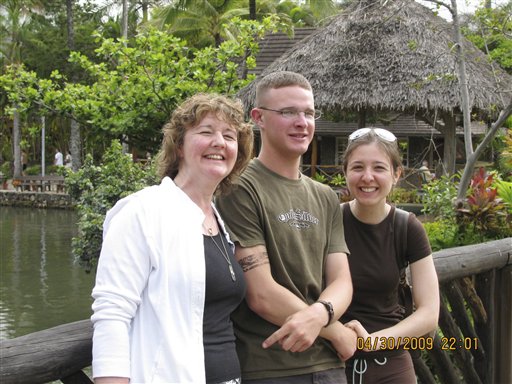
Fallen Marines father

It looks as if the family is happy and having fun, Josh is physically fit and has a medium-reg haircut.  This is good.  It’s the way he should be remembered.  Visit John at Let Them Fight.

Prior:

Concerning Lance Corporal Joshua Bernard

Publishing the Marine Photo: Remember the Words of Christ

The Slow Fall of Kandahar

BY Herschel Smith
16 years, 9 months ago

In recently released article Why are we in the Helmand Province? I a argued for the legitimacy of the Marines’ presence in the Helmand Province, contra the pronouncements of the population-centric counterinsurgency proponents who wish to deploy U.S. troops to population centers such as Kabul, Kandahar, Herat and Jalalabad.  We must go where the insurgents recruit, train, raise their largesse and take safe haven.

Greyhawk at the Mudville Gazette later discussed the fact that we mustn’t let Kandahar become like the cities in Anbar, Iraq, controlled by the insurgents, before we take action (to which I responded on one issue raised by Greyhawk in Insufficient Numbers of Marines).  But the fall of Kandahar is proceeding apace, and my arguments for deploying U.S. Marines in the Helmand Province are not to be construed as arguments against deploying them in Kandahar, as sufficient numbers of Marines are available to accomplish both.

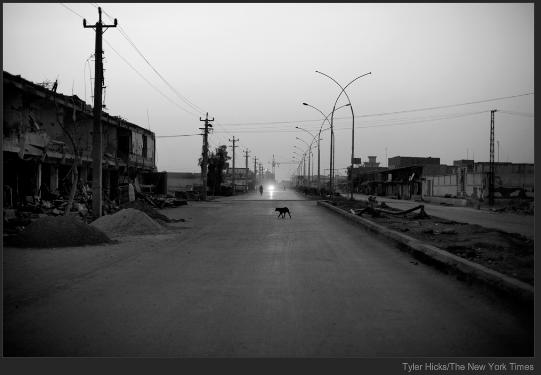
Tyler Hicks is reporting from Kandahar, and the streets are anything but secure and bustling with trade.

Street_in_Kandahar

Tyler Hicks has three rules when photographing in a dangerous, unstable city like Kandahar, Afghanistan. Keep moving, watch the crowd and always listen to your translator and driver.

“It doesn’t matter where you are in the city — there’s always a possibility that you’re moments away from being killed,” said Mr. Hicks, 40, who has been working in Afghanistan for The New York Times since 2001. “So you shave off risk anywhere you can. It’s that bad.”

Kandahar, in southern Afghanistan, was the Taliban’s headquarters from the mid-1990s until its overthrow in 2001. Today, Islamic militants are once again operating inside the city, planting roadside bombs, almost daily, and carrying out a number of suicide attacks.

Mr. Hicks prefers working early in the morning when there are fewer people on the street, dressed in traditional clothing and traveling in a car. He often photographs from the window or limits his time on the street to just minutes, but is still able to create images with a startling intimate feel.

“Working is very difficult because no matter how much you try to fit in, once you get out of the car with your cameras, you’re identified and faced with a lot of unfriendly stares,” Mr. Hicks said.

Kandahar doesn’t see or interact with many foreign troops.  In fact, Michael Yon also reports from Kandahar on just what happens with the troops based around Kandahar.

Slowly, surely, the city is being strangled.  Signaling the depth of our commitment, security forces are thinner in Kandahar than the Himalayan air.  During the days and evenings, there were the sounds of occasional bombs—some caused by suicide attackers, and others by firefights.  The windows in my room had been blown out recently and now were replaced.  We came here to kill our enemies, but today we want to make a country from scratch …

An American convoy of MRAPs approached from the front and a soldier in the lead vehicle shot a pen-flare, causing everyone to pull off the road.  The convoys are more menacing from the outside and in fact I kept the camera down and this is exactly why Secretary of Defense Robert Gates is concerned about adding too many troops.  Can’t argue with his reasoning; convoys and troops truly are menacing despite that U.S. and British soldiers are very disciplined.  It must look far worse to Afghans.  Most Afghans never talk with foreign soldiers and those who do normally only see us in passing.  In fact, most soldiers never leave base.  Our forces at KAF (Kandahar Airfield) have a base so large that this commercial jet is about to land there after flying dangerously over this unsecured road.

It isn’t the number of troops that’s the problem, it’s what they are doing.  More correctly, the number of troops is the problem in that there aren’t enough of them to secure Afghanistan, but the ones who are there are doing the wrong things.  So there are two large  problems, and both need to be fixed in order to be successful.

Kandahar is badly in need of two or three U.S. Marine Regimental Combat Teams with Air Task Force support.  There is a need for Army mechanized troops – perhaps in other parts of Afghanistan, but the debate between mechanized and foot-borne (or dismounted) soldiering is more than merely academic.  Kandahar badly needs to see troops.  Afghans in Kandahar need aggressive policing.  They need to speak with troops, observe them patrol every day, and feel the protection afforded by Marines with rifles who will fire them at the Taliban.  They need to see the Afghan National Police teamed up with the Marines and interacting with the people rather than tearing out through the city aboard trucks like Yon observed.

Kandahar needs to be a dismounted campaign.  Living on large mega-bases and patrolling in vehicles just won’t do.  No protection from the Taliban is afforded by Soldiers in MRAPs, and no policing and population control can be conducted from the seat of a vehicle, any more than intelligence can be gleaned from mounted patrols.  Kandahar is slowly falling to the Taliban, and the only alternative to ceding this human and physical terrain to the enemy is aggressive, large scale troop presence conducting dismounted patrols.  But for the patrols to be effective, General McChrystal’s tactical directive limiting fires in certain situations must be rescinded.  The Marines and smart and adaptable, and don’t need McChrystal’s advice, as they have been doing and winning counterinsurgencies longer than has McChrystal.  The good general is trying to teach his granny to suck eggs.

Armed Social Work and Rules of Engagement in Garmsir Afghanistan

BY Herschel Smith
16 years, 10 months ago

Lt. Col. Christian Cabannis fully adheres to and advocates the doctrines of population-centric counterinsurgency.

Christian Cabannis met a social worker before deploying to Afghanistan. Not for his own wellbeing, but to better understand the task at hand. It was his mother’s idea.

Her son is a lieutenant colonel in the US marines and the commanding officer of the 2nd Battalion 8th Marine Regiment.

He is in charge of perhaps the most dangerous part of Afghanistan and also one of the poorest. So his mother wanted him to better understand what it is that motivates the poor and how to win their support.

He describes this mission as “armed social work”; providing hope for the needy and defence against the Taliban …

It is pure, modern counter-insurgency strategy (Coin) and what American and British generals believe is the key to winning this war. Lt Col Cabannis says that until recently the mission lacked the right focus.

Three years ago, Garmsir market was shot up and abandoned; the scene of pitched battles between British forces and the Taliban. But today UK and US troops have driven them away from the town and Garmsir is held up as a success story.

In the past three months, US marines have built on British efforts to establish meaningful local government …

He believes that many insurgents can be persuaded to put down their weapons and re-join society and there are discussions under way as to how to achieve this.

The marines’ success is in part due to sheer size; having the force strength to push into new areas, to stay there and to engage in what they call “consent-winning activities” on a much larger scale than Britain has been able to.

There is much left out of this account of the battle for Garmsir, Afghanistan.  The facts left out of the account actually causes this account to skew the interpretation and may change the context the reader places around the events, thus affecting the import of the story.

The British were unable to take and hold Garmsir, and so in 2008 the U.S. Marines 24th MEU initiated large scale operations to take it from the Taliban.  The operations relied on heavy kinetics, but was welcomed by the people of Garmsir.  The drive against the Taliban continued in such heavy military operations that the fire fights were at times described as full bore reloading by the Marines.  As if speaking to population-centric counterinsurgency experts who believe that they must win the population by nonkinetic means, town elder Abdul Nabi told the Marines “We are grateful for the security.  We don’t need your help, just security.”  The 24th MEU killed some 400 Taliban during their deployment.

In 2008 the Marines were doing the right things – they certainly didn’t lack focus.  But the 24th MEU had to leave, and they turned over to the British, who once again couldn’t hold the terrain, either physical or human.  Thus more U.S. Marine Corps operations had to be initiated in the Helmand Province in 2009.

Accompanying the fantasy-narrative that the lack of focus in the past has given way to a brilliant new strategy to win Afghanistan is a robust defense of the rules of engagement by Lt. Col. Cabannis.


Watch CBS News Videos Online

This is a big change since the spring. All U.S. forces in Afghanistan are now being told to protect civilians even if the enemy gets away. Over the last eight years, Afghans have been outraged by civilian deaths and it’s a big reason the U.S. is not winning.

“Killing a 1000 Taliban is great but if I kill two civilians in the process, it’s a loss,” Lt. Col. Cabaniss said.

Asked how many enemies have been killed so far, Cabaniss said, “I have no idea and it’s really irrelevant.”

“Body counts not something that you track?” Pelley asked.

“It doesn’t tell me that I’m being successful. It doesn’t tell me that at all. The number of tips that I receive from the local population about IED’s in the area, Taliban in the area, that is a measure of effectiveness,” Cabaniss explained.

This is an important exchange, and we should spend some time dissecting and analyzing it.  The reason the U.S. is not winning is force projection, or lack thereof.  There aren’t enough troops, as we saw with the 2008 campaign for Garmsir in the Helmand Province.  The ANP and ANA cannot possibly hold the terrain once it has been taken and won’t be ready for quite some time.  In fact, there is some indication that the locals themselves are a bit disgusted by the ROE.

But even for population-centric counterinsurgency advocates, this exchange is full of nonsense.  To be sure, the population may be one means of marginalizing the insurgents, getting intelligence on them, and then conducting intelligence-driven raids, killing or capturing them.  This was done en masse in Iraq, especially in 2007.  But in the interview Cabannis makes a leap from an enabling feature of counterinsurgency to the end or purpose of it.

If a Province has 1000 Taliban and the U.S. Marines kill them all, and along with them the Marines inadvertently kill two noncombatants, it’s preposterous to suggest that this is a loss.  This suggestion is tantamount to saying that for every noncombatant we kill greater than five hundred pop up in his place.

Further, why did Cabannis use the values of 1000 and 2?  Would it have been acceptable to have killed a single noncombatant if we had killed 1000 Taliban?  If so, is he suggesting that the ratio of generation to kill rate of insurgents is greater than 500: 1 but less than 1000:1?  Or perhaps if these suggestions sound a bit pedantic, it’s more likely that he is simply using theatrics and hyperbole to make a point.  But if one has to use theatrics, the point itself suffers from lack of credibility.

Finally, why is killing Taliban great?  If it’s great because it assures the population that they are protected, then we should endeavor to do more of it.  Killing noncombatants is never a good thing, but giving the insurgents safe haven amongst the domiciles of villages sends the opposite message than we intend.  It gives them operating space, and it tells the villagers that we won’t pursue the insurgents on their own terrain, and thus there is no protection from them once they come into your homes and villages.  The very time you need the protection is precisely the time we will abandon you to the enemy.

Obama and the Taliban

BY Herschel Smith
16 years, 10 months ago

By now it’s old news that Obama has hearted the Taliban.

President Obama is prepared to accept some Taleban involvement in Afghanistan’s political future and is unlikely to favour a large influx of new American troops being demanded by his ground commander, a senior official said last night.

Mr Obama appears to have been swayed in recent days by arguments from some advisers, led by Vice-President Joe Biden, that the Taleban do not pose a direct threat to the US and that there should be greater focus on tackling al-Qaeda inside Pakistan.

Mr Obama’s developing strategy on the Taleban will “not tolerate their return to power”, the senior official said. However, the US would only fight to keep the Taleban from retaking control of the central government — something the official said it is now far from capable of — and from giving renewed sanctuary to al-Qaeda.

Bowing to the reality that the fundamentalist movement is too ingrained in national culture, the Administration is prepared, as it has been for some time, to accept some Taleban role in parts of Afghanistan, the official said.

That could mean paving the way for insurgents willing to renounce violence to participate in a central government, and even ceding some regions of the country to the Taleban.

Mr Obama, the official said, is now inclined to send only as many more troops to Afghanistan as are needed to keep al-Qaeda at bay. Downing Street said that the US President had discussed Afghanistan with Gordon Brown yesterday during a 40-minute video conference call.

Sending far fewer troops than the 40,000 being demanded by General Stanley McChrystal would mean that Mr Obama is willing to ignore the wishes of his ground commander.

General McChrystal, along with the US military’s other top officials, insist that only a classic, well-resourced counter-insurgency strategy has a chance of staving off defeat in Afghanistan. Losing the war, they further argue, would provide al-Qaeda with new safe havens from which to mount attacks on the US and elsewhere.

After two days of meetings in the White House Situation Room with his war Cabinet, Mr Obama, according to the official, kept returning to one central question: who is our adversary?

The answer was, repeatedly, al-Qaeda, with advisers arguing that the terror network was distinct from the Taleban and that the US military was fighting the Taleban even though it posed no direct threat to America.

Ah.  And there is the crux of the issue, isn’t it?  An unstated assumption, it is.  The Taliban pose no direct threat to America, or in other words, they won’t harbor al Qaeda in the future.  They aren’t globalists, and they won’t befriend those who would be globalists or who would participate in the transnational insurgency they call jihad.

Well, I have argued that the burden of proof is on those who claim that the Taliban are no threat at all since they have proven otherwise in their history.  I have further argued that their claims to being innocuous are dubious given their previous devotion to AQ and their recent statements.

But putting that issue aside for a moment, there is something very troubling that stands out in this report.  The administration has elsewhere argued that AQ is primarily (or completely) in Pakistan and is preparing to focus major assets and attention on the Pakistani effort at routing AQ.  They have now signed on to the notion that the Taliban won’t harbor AQ and are even prepared to offer them a place in the seat of government.

Yet instead of sending McChrystal his requested troops for the campaign, they are preparing to send only those troops needed to “keep AQ at bay.”  Keep them at bay where?  In Afghanistan?  But we’ve signed on to the notion that the Taliban will route them from Afghanistan, not harbor them.  If this is true, then not only will no more troops be needed, the ones currently there can come home.  The Taliban can combine with the Afghan National Army and Afghan National Police to do our work for us.

Alas, it is such simple logic, and it’s sad that the administration couldn’t see through the greatest weakness of its own argument.  They don’t even believe it.

Now Zad Video From 2/7 Marines

BY Herschel Smith
16 years, 10 months ago

Here at The Captain’s Journal, in keeping with the best coverage and clearinghouse of information on the Marines in Now Zad, here is a fairly recently posted video.  I recognize it to be some new spliced in with some previous video.  God bless the Marines in Now Zad.  Thanks to Lance Corporal Mckellips for editing and posting the video.

What kind of counterinsurgency for Afghanistan?

BY Herschel Smith
16 years, 10 months ago

Amid robust public debate concerning counterinsurgency and whether it works – and if so, what brand works – two successful counterinsurgency campaigns may be briefly studied to ascertain the common elements.  At the recommendation of Professor Gian Gentile I have studied a paper by Karl Hack entitled “The Malayan Emergency as Counter-Insurgency Paradigm,” The Journal of Strategic Studies Vol. 32, No. 3, 383-414, June 2009.  Hack argues (quite persuasively) that during the Malayan emergency (1948 – 1960, repeatedly cited for COIN examples) Britain applied distinct elements to different phases of the campaign, with the notion of winning hearts and minds coming after a phase of aggressive patrols, population control, etc.  It is naive, argues Hack, to believe that the blend of policies found at the optimization phase will work at the outset of the conflict.  This is important to remember as we ramp up reconstruction teams for Afghanistan in unsecured areas.

The next successful example is the campaign for Anbar.  The much heralded tribal awakening (lead by Sheik Abdul Sattar Abu Risha) unique to Ramadi followed on the heels of significant kinetics to shut down the smuggling lines of Sheik Risha and even kill his tribal members in noteworthy gunfights.  In Haditha it required sand berms surrounding the city (to keep fighters from infiltrating from Syria) along with a police strong man, Deputy Commander Lt. Col. Muhada Mahzir.  In Al Qaim it required heavy kinetics by the U.S. Marines followed on by a police chief strong man named Abu Ahmed.  In Fallujah it required heavy kinetics by the U.S. Marines followed on by biometrics, aggressive policing and patrols, gated communities, payment to the Sons of Iraq, and aggressive Iraqi police (and this in 2007 following even heavier kinetics during al Fajr in 2004).

Creation of utopia or comprehensive state-building wasn’t in the stable of features brought to bear on either campaign discussed above, and yet they were more than marginally successful.  But creation of the circumstances necessary for population control wasn’t quick or easy, and there are no magical formulae to incant in order to effect these conditions.  That’s why Gentile has argued that the center of gravity may not be the population, and it must be discovered by the forces involved in the conflict.  I have gone further and argued that a campaign may not (and in many cases probably doesn’t) have a center of gravity, necessitating multiple lines of effort.

In all cases of successful counterinsurgency there have been enough troops (and the necessary tactics) to effect population control, and thus the idea of small units in forbidding human and physical terrain such as Wanat and Kamdesh are a profoundly bad idea, leading in the end to dead U.S. troops and ruined national reputation before the population we wish to control.

Andy McCarthy argues that McChrystal should be granted his troops for the campaign in Afghanistan (while also strangely arguing that the strategy isn’t clear – why would we sacrifice troops if the strategy isn’t clear?), and then later argues against the practice of counterinsurgency.  More correctly, he is arguing against the practice of state building and population-centric counterinsurgency.  The opposing view is expressed by Joshua Foust when he expresses doubt about the fact that the Marines can successfully occupy Garmsir but haven’t brought enough ANA and ANP forces or good Afghan governance with them for any kind of staying power.  The Marines “thought” they had it right each time they swept through Garmsir.

But the facts are suitable to another narrative.  The British could never hold Garmsir, which is why the U.S. Marine Corps 24th MEU was deployed there in 2008.  They subsequently turned over to the British, who then could not hold the terrain.  Hence, Operation Khanjar was necessary to once again retake Garmsir.  The problem is not that the basic schema was wrong.  The problem is that there have never been enough troops implementing the right tactics to hold the terrain once it has been taken.  The 24th MEU had to leave.  More U.S. Marines should have been deployed because creating good governance and population control – and killing the enemy – don’t happen overnight (as if we can wave a magic wand and deploy good governors and policemen).

McCarthy is right in that creating a utopia is neither a possibility nor a necessity in Afghanistan, but wrong in the implicit presupposition that counterinsurgency done right cannot work.  Foust is right in that there needs to be follow-on stability, but as we have pointed out the ANA and ANP cannot now provide that security and population control.  We have much less with which to work in Afghanistan than we did in Iraq.  That’s why General Petraeus said that of the “long war,” Afghanistan would be the longest campaign.

Poverty doesn’t create radical Islamic insurgencies, since Bangladesh is among the most impoverished countries on earth but doesn’t suffer from the transnational actors that afflict Pakistan and Afghanistan.  Raising Afghanistan from its impoverishment to a nation of relative wealth may be an impossible task, but may be unnecessary (contra the population-centric COIN advocates).  The Taliban continue their propaganda campaign, lately by telling us effectively that they won’t allow al Qaeda back in (or at least that they have no global aspirations).  This is a dubious claim given the mutual admiration, respect and even love between UBL and Mullah Omar. Hakimullah Mehsud, new head of Pakistan’s Tehrik-i-Taliban (and who may be much worse than the deceased Baitullah Mehsud), has said that the relationship between al Qaeda and the TTP is one of love and affection.

As for Garmsir, there are fighters that simply must be killed.

CAMP DELHI, Afghanistan, Oct 3 (Reuters) – On the frontline of Washington’s counter-insurgency in Afghanistan, intelligence officer Hajji Mir Hamzai stands before a map and tells a young Marine where the Taliban are next likely to strike.

“I know here and here, I have heard they want to place bombs,” Hamzai, an Afghan who works for the National Directorate of Security points to a wall and tells Captain Trevor Hunt through a translator.

Hunt wants to know if any of the Taliban in Garmsir district can be turned into allies.

“All Taliban are the same,” said Hamzai, whose three brothers were killed in two separate suicide attacks by the Taliban.

“There is another type which is also called Taliban. They are simple. They are not politicians, they are just locals … But the ones that fight, the only way is to kill them,” said Hamzai, who uses a network of undercover agents to gather information.

As there is in every insurgency, there are locals who will put away their weapons when they learn that the costs are too high to continue – but the corollary is that until they are persuaded of this fact they will not put away their weapons.  But there is a hard core element that must be killed.  This requires troops, as does long term securing and controlling the population.

We needn’t create a utopia, any more than we need to impose Western-style democracy.  The religious and social underpinnings aren’t even in place to support such framework.  But we must kill the globalists and we must control the population until such time as a reliable security apparatus is prepared to fill in behind us once we leave.  This will be a long-duration effort.  At one and the same time, this is the maximum and minimum we can hope to accomplish in this campaign.  We don’t have the national resources or staying power to do more, but if we do less we will likely suffer having to repeat Operation Enduring Freedom because of the mistakes made the first time around.  This is the nexus which defines success.


26th MEU (10)
Abu Muqawama (12)
ACOG (2)
ACOGs (1)
Afghan National Army (36)
Afghan National Police (17)
Afghanistan (704)
Afghanistan SOFA (4)
Agriculture in COIN (3)
AGW (1)
Air Force (42)
Air Power (10)
al Qaeda (83)
Ali al-Sistani (1)
America (23)
Ammunition (305)
Animals (336)
Ansar al Sunna (15)
Anthropology (3)
Antonin Scalia (1)
AR-15s (397)
Arghandab River Valley (1)
Arlington Cemetery (2)
Army (91)
Assassinations (2)
Assault Weapon Ban (29)
Australian Army (7)
Azerbaijan (4)
Backpacking (4)
Badr Organization (8)
Baitullah Mehsud (21)
Basra (17)
BATFE (247)
Battle of Bari Alai (2)
Battle of Wanat (18)
Battle Space Weight (3)
Bin Laden (7)
Blogroll (3)
Blogs (24)
Body Armor (23)
Books (3)
Border War (18)
Brady Campaign (1)
Britain (39)
British Army (36)
Camping (5)
Canada (20)
Castle Doctrine (1)
Caucasus (6)
CENTCOM (7)
Center For a New American Security (8)
Charity (3)
China (19)
Christmas (18)
CIA (30)
Civilian National Security Force (3)
Col. Gian Gentile (9)
Combat Outposts (3)
Combat Video (2)
Concerned Citizens (6)
Constabulary Actions (3)
Coolness Factor (3)
COP Keating (4)
Corruption in COIN (4)
Council on Foreign Relations (1)
Counterinsurgency (218)
DADT (2)
David Rohde (1)
Defense Contractors (2)
Department of Defense (220)
Department of Homeland Security (26)
Disaster Preparedness (5)
Distributed Operations (5)
Dogs (15)
Donald Trump (27)
Drone Campaign (4)
EFV (3)
Egypt (12)
El Salvador (1)
Embassy Security (1)
Enemy Spotters (1)
Expeditionary Warfare (18)
F-22 (2)
F-35 (1)
Fallujah (17)
Far East (3)
Fathers and Sons (2)
Favorite (1)
Fazlullah (3)
FBI (39)
Featured (192)
Federal Firearms Laws (18)
Financing the Taliban (2)
Firearms (1,876)
Football (1)
Force Projection (35)
Force Protection (4)
Force Transformation (1)
Foreign Policy (27)
Fukushima Reactor Accident (6)
Ganjgal (1)
Garmsir (1)
general (15)
General Amos (1)
General James Mattis (1)
General McChrystal (44)
General McKiernan (6)
General Rodriguez (3)
General Suleimani (9)
Georgia (19)
GITMO (2)
Google (1)
Gulbuddin Hekmatyar (1)
Gun Control (1,730)
Guns (2,416)
Guns In National Parks (3)
Haditha Roundup (10)
Haiti (2)
HAMAS (7)
Haqqani Network (9)
Hate Mail (8)
Hekmatyar (1)
Heroism (5)
Hezbollah (12)
High Capacity Magazines (16)
High Value Targets (9)
Homecoming (1)
Homeland Security (3)
Horses (2)
Humor (72)
Hunting (65)
ICOS (1)
IEDs (7)
Immigration (123)
India (10)
Infantry (4)
Information Warfare (4)
Infrastructure (4)
Intelligence (23)
Intelligence Bulletin (6)
Iran (171)
Iraq (379)
Iraq SOFA (23)
Islamic Facism (64)
Islamists (98)
Israel (19)
Jaish al Mahdi (21)
Jalalabad (1)
Japan (3)
Jihadists (82)
John Nagl (5)
Joint Intelligence Centers (1)
JRTN (1)
Kabul (1)
Kajaki Dam (1)
Kamdesh (9)
Kandahar (12)
Karachi (7)
Kashmir (2)
Khost Province (1)
Khyber (11)
Knife Blogging (7)
Korea (4)
Korengal Valley (3)
Kunar Province (20)
Kurdistan (3)
Language in COIN (5)
Language in Statecraft (1)
Language Interpreters (2)
Lashkar-e-Taiba (2)
Law Enforcement (6)
Lawfare (14)
Leadership (6)
Lebanon (6)
Leon Panetta (2)
Let Them Fight (2)
Libya (14)
Lines of Effort (3)
Littoral Combat (8)
Logistics (50)
Long Guns (1)
Lt. Col. Allen West (2)
Marine Corps (281)
Marines in Bakwa (1)
Marines in Helmand (67)
Marjah (4)
MEDEVAC (2)
Media (68)
Medical (146)
Memorial Day (6)
Mexican Cartels (48)
Mexico (72)
Michael Yon (6)
Micromanaging the Military (7)
Middle East (1)
Military Blogging (26)
Military Contractors (5)
Military Equipment (25)
Militia (9)
Mitt Romney (3)
Monetary Policy (1)
Moqtada al Sadr (2)
Mosul (4)
Mountains (25)
MRAPs (1)
Mullah Baradar (1)
Mullah Fazlullah (1)
Mullah Omar (3)
Musa Qala (4)
Music (25)
Muslim Brotherhood (6)
Nation Building (2)
National Internet IDs (1)
National Rifle Association (97)
NATO (15)
Navy (31)
Navy Corpsman (1)
NCOs (3)
News (1)
NGOs (3)
Nicholas Schmidle (2)
Now Zad (19)
NSA (3)
NSA James L. Jones (6)
Nuclear (63)
Nuristan (8)
Obama Administration (222)
Offshore Balancing (1)
Operation Alljah (7)
Operation Khanjar (14)
Ossetia (7)
Pakistan (165)
Paktya Province (1)
Palestine (5)
Patriotism (7)
Patrolling (1)
Pech River Valley (11)
Personal (77)
Petraeus (14)
Pictures (1)
Piracy (13)
Pistol (4)
Pizzagate (21)
Police (673)
Police in COIN (3)
Policy (15)
Politics (999)
Poppy (2)
PPEs (1)
Prisons in Counterinsurgency (12)
Project Gunrunner (20)
PRTs (1)
Qatar (1)
Quadrennial Defense Review (2)
Quds Force (13)
Quetta Shura (1)
RAND (3)
Recommended Reading (14)
Refueling Tanker (1)
Religion (501)
Religion and Insurgency (19)
Reuters (1)
Rick Perry (4)
Rifles (1)
Roads (4)
Rolling Stone (1)
Ron Paul (1)
ROTC (1)
Rules of Engagement (76)
Rumsfeld (1)
Russia (37)
Sabbatical (1)
Sangin (1)
Saqlawiyah (1)
Satellite Patrols (2)
Saudi Arabia (4)
Scenes from Iraq (1)
Second Amendment (715)
Second Amendment Quick Hits (2)
Secretary Gates (9)
Sharia Law (3)
Shura Ittehad-ul-Mujahiden (1)
SIIC (2)
Sirajuddin Haqqani (1)
Small Wars (72)
Snipers (9)
Sniveling Lackeys (2)
Soft Power (4)
Somalia (8)
Sons of Afghanistan (1)
Sons of Iraq (2)
Special Forces (28)
Squad Rushes (1)
State Department (23)
Statistics (1)
Sunni Insurgency (10)
Support to Infantry Ratio (1)
Supreme Court (84)
Survival (216)
SWAT Raids (58)
Syria (38)
Tactical Drills (38)
Tactical Gear (17)
Taliban (168)
Taliban Massing of Forces (4)
Tarmiyah (1)
TBI (1)
Technology (21)
Tehrik-i-Taliban (78)
Terrain in Combat (1)
Terrorism (96)
Thanksgiving (13)
The Anbar Narrative (23)
The Art of War (5)
The Fallen (1)
The Long War (20)
The Surge (3)
The Wounded (13)
Thomas Barnett (1)
Transnational Insurgencies (5)
Tribes (5)
TSA (25)
TSA Ineptitude (14)
TTPs (4)
U.S. Border Patrol (8)
U.S. Border Security (22)
U.S. Sovereignty (29)
UAVs (2)
UBL (4)
Ukraine (10)
Uncategorized (107)
Universal Background Check (3)
Unrestricted Warfare (4)
USS Iwo Jima (2)
USS San Antonio (1)
Uzbekistan (1)
V-22 Osprey (4)
Veterans (3)
Vietnam (1)
War & Warfare (435)
War & Warfare (41)
War Movies (4)
War Reporting (21)
Wardak Province (1)
Warriors (6)
Waziristan (1)
Weapons and Tactics (80)
West Point (1)
Winter Operations (1)
Women in Combat (21)
WTF? (1)
Yemen (1)

August 2026
July 2026
June 2026
May 2026
April 2026
March 2026
February 2026
January 2026
December 2025
November 2025
October 2025
September 2025
August 2025
July 2025
June 2025
May 2025
April 2025
March 2025
February 2025
January 2025
December 2024
November 2024
October 2024
September 2024
August 2024
July 2024
June 2024
May 2024
April 2024
March 2024
February 2024
January 2024
December 2023
November 2023
October 2023
September 2023
August 2023
July 2023
June 2023
May 2023
April 2023
March 2023
February 2023
January 2023
December 2022
November 2022
October 2022
September 2022
August 2022
July 2022
June 2022
May 2022
April 2022
March 2022
February 2022
January 2022
December 2021
November 2021
October 2021
September 2021
August 2021
July 2021
June 2021
May 2021
April 2021
March 2021
February 2021
January 2021
December 2020
November 2020
October 2020
September 2020
August 2020
July 2020
June 2020
May 2020
April 2020
March 2020
February 2020
January 2020
December 2019
November 2019
October 2019
September 2019
August 2019
July 2019
June 2019
May 2019
April 2019
March 2019
February 2019
January 2019
December 2018
November 2018
October 2018
September 2018
August 2018
July 2018
June 2018
May 2018
April 2018
March 2018
February 2018
January 2018
December 2017
November 2017
October 2017
September 2017
August 2017
July 2017
June 2017
May 2017
April 2017
March 2017
February 2017
January 2017
December 2016
November 2016
October 2016
September 2016
August 2016
July 2016
June 2016
May 2016
April 2016
March 2016
February 2016
January 2016
December 2015
November 2015
October 2015
September 2015
August 2015
July 2015
June 2015
May 2015
April 2015
March 2015
February 2015
January 2015
December 2014
November 2014
October 2014
September 2014
August 2014
July 2014
June 2014
May 2014
April 2014
March 2014
February 2014
January 2014
December 2013
November 2013
October 2013
September 2013
August 2013
July 2013
June 2013
May 2013
April 2013
March 2013
February 2013
January 2013
December 2012
November 2012
October 2012
September 2012
August 2012
July 2012
June 2012
May 2012
April 2012
March 2012
February 2012
January 2012
December 2011
November 2011
October 2011
September 2011
August 2011
July 2011
June 2011
May 2011
April 2011
March 2011
February 2011
January 2011
December 2010
November 2010
October 2010
September 2010
August 2010
July 2010
June 2010
May 2010
April 2010
March 2010
February 2010
January 2010
December 2009
November 2009
October 2009
September 2009
August 2009
July 2009
June 2009
May 2009
April 2009
March 2009
February 2009
January 2009
December 2008
November 2008
October 2008
September 2008
August 2008
July 2008
June 2008
May 2008
April 2008
March 2008
February 2008
January 2008
December 2007
November 2007
October 2007
September 2007
August 2007
July 2007
June 2007
May 2007
April 2007
March 2007
February 2007
January 2007
December 2006
November 2006
October 2006
September 2006
August 2006
July 2006
June 2006
May 2006

about · archives · contact · register

Copyright © 2006-2026 Captain's Journal. All rights reserved.