New York Court Holds Stun Gun Ban is Not Unconstitutional, in Contravention of Caetano

Herschel Smith · 30 Mar 2025 · 2 Comments

Dean Weingarten has a good find at Ammoland. Judge Eduardo Ramos, the U.S. District Judge for the Southern District of New York,  has issued an Opinion & Order that a ban on stun guns is constitutional. A New York State law prohibits the private possession of stun guns and tasers; a New York City law prohibits the possession and selling of stun guns. Judge Ramos has ruled these laws do not infringe on rights protected by the Second Amendment of the United States Constitution. Let's briefly…… [read more]

Will Kurdistan Save Iraq?

BY Herschel Smith
16 years, 2 months ago

Omar Fadhil sees the Maliki-Hakim-Sadr alliance as shaky.  Perhaps he is right, and while he sees Maliki as being at a crossroads, I still have serious doubts as to the future security and independence of Iraq (independence from Iran).  Maliki’s “Hail Mary” pass on the vote recount has found no fraud.

In an embarrassing rejection of Prime Minister Nouri Maliki’s efforts to overturn his rival’s lead in Iraq’s inconclusive parliamentary election, a laborious manual recount of votes in Baghdad has turned up no evidence of electoral fraud and will not change the final outcome, officials said Friday.

The recount was ordered nearly a month ago after Maliki’s Shiite-dominated electoral slate alleged that as many as 750,000 ballots had been manipulated, with the worst violations occurring in Baghdad.

Had the allegations been upheld, the recount could have eroded the two-seat lead of former Prime Minister Iyad Allawi’s faction. Allawi, a secular Shiite supported by Sunni Arabs, is claiming the right to form the next government as the head of the largest, if not majority, bloc in parliament.

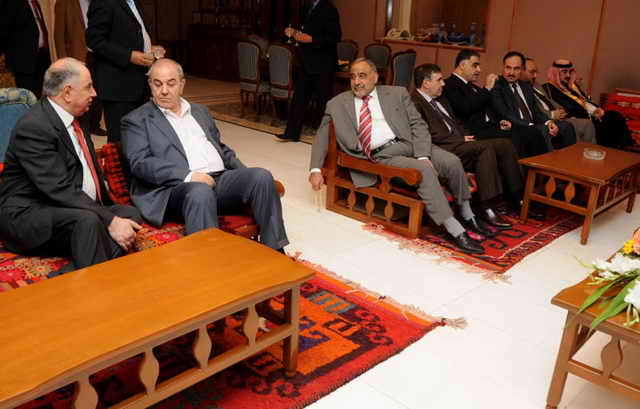
Not finished yet, the duplicitous, lying and treacherous Ahmad Chalabi and the so-called Iraq “Justice Commission” intend to keep pursuing their political opponents in spite of being shut down by a panel of Iraqi judges.  Whether they  continue down this path or not, the entire effort is a front for Iranian interests, and everyone knows it.

The U.S. Marines are no longer in Anbar, and the balance of the U.S. forces are no longer effective in Iraq, because of the Status of Forces Agreement.  Confined to their bases with requirements to ask permission even to move outside the wire, they cannot assess atmospherics or gain intelligence.  They are effectively shut down except for training or assistance when requested by the ISF.  Security has degraded, and the ISF still relies on the U.S. for logistics, supplies, transportation and maintenance.  We are in the strange position of being Santa Claus without any authority over any aspect of the situation on the ground, both preventing the ISF evolution and maturity to a legitimate military force and watching as things unravel.

Abe Greenwald (h/t Michael Totten blogging at Instapundit) gives us a more optimistic picture in Kurdistan, a necessary read for anyone interested in Iraq.

The Kurds of the area known as the Kurdish Regional Government want to secure a free, democratic, and thriving Kurdistan. They are on their way to pulling it off. Personal safety here (where I am a guest of the KRG) is a given, so that most of the time, you forget you’re in Iraq. Parts of Erbil resemble Miami, Florida. There are rows of manicured palm trees, bustling retail strips, car dealerships, and everywhere the organized rubble of construction …

Praise for America is ubiquitous. The Kurdish foreign minister told my group matter-of-factly, “It was your men and women, in uniform who shed blood, who overthrew Saddam.” I heard a group of smart Kurdish students cite chapter and verse on American exceptionalism.

The Kurdish nation is bound to America like few others. Kurdish hopes for autonomy — after a history of being the victims of ethnic cleansing and mass slaughter — first became a precarious reality when George H.W. Bush instituted the northern no-fly zone over Iraq in 1991, three years after Saddam Hussein’s Anfal campaign wiped out up to 100,000 Kurds with chemical weapons. With American protection in place, the Kurds began building infrastructure and honing their political vision. When George W. Bush toppled Saddam’s regime in 2003, the Kurds, who make up about 20 percent of the Iraqi population, began building what they promote as “the other Iraq” in earnest.

Nibras Kazimi sees what is happening in Iraq as merely political bickering.  Strangely, he offers us several pictures, one of Ahmad Chalabi (on the very left) with Ayad Allawi.

And this proves what?  That Allawi has to sit with the criminal Chalabi at the same table?  If it is an attempt at an exoneration of the situation in Iraq at this present, then in reality it becomes more a reflection of Kazimi’s previous service to Chalabi.

With the likes of Sadr, Maliki, Hakim and Chalabi driving the ship, Iraq is set up for a long, difficult voyage.  Abe Greenwald closes his commentary with this observation.

In discussing the achievements of the Iraq war, those of us who support the Iraqi liberation have developed a journalistic tic whereby we must attach the disclaimers fragile and reversible to every positive development. This is probably wise, but in the effort to shed the “triumphalist” label, we’ve neglected to emphasize something else about achievements in Iraq. They are precious. Nowhere is this more achingly obvious than in Iraqi Kurdistan. There is a population of 4 million overwhelmingly Muslim, pro-American, pro-democracy political and cultural reformers in an oil-rich, strategically critical location in the Middle East. Somehow, the current U.S. administration sees no significant U.S. interest in this treasure, won with the blood of the American soldier. For a White House and a State Department that tout engagement as a panacea, the neglect to engage Baghdad leadership and keep the Iraqi experiment on a positive course is egregious.

Egregious indeed.  It was so when President Bush confirmed the Status of Forces Agreement, and it is so as President Obama continues down the path of appeasement of Iran.  In order to stop Iranian hegemony, the SOFA would have to be undone, U.S. basing rights would have to be permanently confirmed in Kurdistan, and a covert war engaged to undermine the Iranian regime and foment an insurgency inside of Iran.  This is the only option to avoiding a large and bloody confrontation with the radical Mullahs who see things in an eschatological context.  Ironically, what the American political left cannot see is that strong action now is the only alternative to horrible actions later.

Sadly though, Iran may become the only winner in Iraq.  All of this has precisely a zero percent chance of happening with this current cowardly and confused administration.  With the report that Greenwald gives us above, Kurdistan gives us the only shining beacon of light available in the region.  Will it be enough without increased U.S. involvement?

Richard Blumenthal Falsifies Vietnam Record

BY Herschel Smith
16 years, 2 months ago

As it is common news by now, I will only mention in passing that Richard Blumenthal has falsified his Vietnam record, alleging that he was there when he wasn’t.  There is a current debate over whether the words “in” instead of “during” mean anything.  Silly debate.  It’s like saying something like this: “I recall serving as an engineering forensics expert at the time of the Hyatt Regency walkway collapse …”  The average listener takes it that I was a forensics expert studying the engineering disaster.  One can have plausible deniability based on the poor and unclear construction of the sentence … but that’s the point, isn’t it?

He misled the public with plausible deniability, just as he intended.   Do the people of Connecticut really want him as a Senator?  Haven’t they had enough politics?

The Blond Talib

BY Herschel Smith
16 years, 2 months ago

I don’t know how long this video will stay published, but for those who catch it before it is pulled, check it out at 42:21 through 42:29 (h/t to Bill Roggio, source SpyTalk).

Folks, this is no ordinary fellow just out for a leisurely stroll or walkabout to see the countryside.  His presence is obviously no issue for the fighters around him.  He is known by those around him, but obviously this Talib is a young, Western jihadist.  The blond Talib.  How did he get there?  Who convinced the rank and file to trust him?  Where did he come from?  Why is he there in the Nuristan Province of Afghanistan?

Marine Corps Prepares for Budget Cuts

BY Herschel Smith
16 years, 2 months ago

When it comes to defense spending generally, I have pointed out before that the percentage of defense budget versus GDP has shrunk over time for the U.S.  The notion of defense spending that is out of control is a perception created by a liberal administration bent of printing and spending trillions of dollars on entitlements and redistribution of wealth rather than defense .  Little more needs to be said about that because of the obvious disparity in interests of this administration.

However, that doesn’t mean that any particular branch of the service has spent money wisely.  Regarding the concept of expeditionary warfare floated by Commandant Conway, I have pointed out how inherently contradictory it is.  Conway believes that the Corps is getting too heavy, yet he invests an incredible amount of money in the Expeditionary Fighting Vehicle.  He believes that the Corps needs to be capable of many kinds of warfare with its equipment, but invests in implements of warfare intended to perform only one task: forcible entry under conditions of heavy fire from numerous opposing forces.

The EFV is designed for a near peer state (or close to it), and its presupposition is active enemy fire while ferrying troops ashore while providing covering fire.  It is a reversion to 65-year old amphibious warfare doctrine with updated equipment.  But if the state upon which we intend to conduct forcible entry is capable of rocket fire against navy vessels (positioned 25 miles offshore over the horizon in order to increase the likelihood of survival), the EFVs will become deadly transport vehicles for Marines.  If the nation-state is in fact not capable of such opposing fire, then the EFV is not needed.

The U.S. will never again conduct a major, large scale, amphibious-based forcible entry that relies upon sea-based approach for the initial assault.  I have recommended an alternative, namely amphibious-based forcible entry via air based on a new Marine Corps helicopter fleet.  After securing the beach head, Naval assets can ferry heavier equipment to shore if necessary.  Air-based entry, including transport (helicopter and V-22 Osprey) and attack helicopter is the way to go, and would address even the example of the synthesized nation-state / terrorist entity, namely Hezbollah in Lebanon who is presumed to have such rockets due to Iranian assistance.

But the Marines are preparing for major cuts, and if it comes down to it, it appears that the wasteful billions spent on large scale amphibious assaults will be addressed by cutting the very things needed in the twenty first century.  Troops are needed, and a replacement for the M16 is needed, and we need an end to the so-called Terminal Lance problem.  Many of the well trained infantry who took Iraq in 2004 – 2007 have left the Corps, and the most of the Marines who are in Afghanistan have not seen combat.

But in the end, ambitious programs get the dollars and the grunts pay for the wishful 65-year old thinking of outdated officers who cannot abandon their doctrinaire ideas.

For a sneak peek into the Marine Corps’ future needs, one can look at the recent past. As 4,000 marines in January were amassing for a large-scale attack on Marja, Afghanistan, another 4,000 marines were sailing to Haiti to assist in relief operations in the earthquake-devastated nation. Thousands more were carrying out other missions around the globe.

Marine officials say that the force in the coming decades will be just as busy, but it will have to do the job with fewer resources.

“We have an expression in the Corps: ‘We sometimes have to do more with less,’ and I honestly think that’s what we face in the not-so-distant future,” said Gen. James T. Conway, commandant of the Marine Corps.

Flexibility in equipment, organization and training will be critical, Lt. Gen. George Flynn, commanding general of the Marine Corps Combat Development Command, told industry representatives at a National Defense Industrial Association conference. Marines can expect to prepare for irregular warfare, conventional warfare and terrorism. “We will never know which one we’re facing until the game is called,” he said.

The Defense Department has adjusted doctrine and strategies to reflect this new “hybrid” reality. Operations in Iraq and Afghanistan have helped to expedite changes in force structure and equipment, but they also have drained the treasury.

“As monies get tight, we’re going to have to look at equipment sets that are entirely interoperable, lighter, cheaper ideally, but that will nevertheless get the job done to defend this great country,” said Conway in remarks at the NDIA annual dinner in McLean, Va.

Though its budget request for fiscal 2011 totals $26.6 billion with an additional $7 billion in supplemental war funding, the Marine Corps is fast approaching a crossroads that will force its leaders to make some difficult decisions. Anticipating smaller budgets in the coming decade, officials will have to determine how to modernize war-torn gear while pursuing advanced technologies.

“We will have to balance investment between current and future challenges,” Flynn said.

Marine leaders said they remain focused on supporting operations in Afghanistan, and they are planning to stay the course through 2015. But doing so may be compromising the Corps’ preparedness for future contingencies.

“It may well be that we don’t have everything we want but only what we have to have. And we will have to cut away some capability and do without some things that we think are absolutely essential to the various missions that are out there,” Conway said.

To reduce that risk, the Corps is seeking gear that will have applicability across the full spectrum of warfare. All new equipment will have to have utility in high- and low-intensity conflict, counterterrorism and disaster relief operations.

“If you have something that operates across all four of those mission tasks, we’re really going to be interested,” Flynn said.

Officials insist that vehicles need to be lighter to allow the force to get to the fight and also enhance the Marine Corps’ amphibious capability to maneuver from the sea to the shore. In addition, weapon systems must be affordable and help the service decrease its dependence on fossil fuels.

That wish list is a tall order, officials acknowledged, especially given the exponential growth in the cost of military hardware.

“They have to come in at the amount that we have budgeted, on the schedule we have allotted, with the performance that we have been promised, because there isn’t going to be a second bite of the apple,” warned Brig. Gen. Michael Brogan, commander of Marine Corps Systems Command.

Marine officials are still uncertain whether recent acquisition reforms will help reduce costs.

President Obama last year signed the Weapon Systems Acquisition Reform Act of 2009 into law. The legislation is meant to fix the Pentagon’s troubled procurement system by giving officials increased oversight of major defense programs.

“It demands more reports going to the Hill,” said Brogan. “A lot of burden flows down to program managers.”

The new law puts more pressure on procurement officials to keep programs on budget, agreed Bill Taylor, program executive officer for land systems, which is the Marine Corps’ largest acquisition portfolio.

“Historically, it’s a fact that our programs come in over budget and years late. Report after report has indicated that the key to successful acquisition programs is getting things right at program inception with sound systems engineering, cost estimation and legitimate developmental testing,” said Taylor.

Burden.  That’s the way reportability to Congress is being described.  Burden.  As for the Obama administration, they need to stop printing money and giving it away on entitlement programs.  As for the DoD, they need to create a viable procurement program.  As for the Marine Corps, they need to develop doctrine that represents and reflects twenty first century concerns – and be able to explain it to the taxpayers.  That is not a burden.

Security in Mazar-i-Sharif?

BY Herschel Smith
16 years, 2 months ago

A report on Mazar-i-Sharif from The New York Times.

In a country still gripped by war, the families picnicking around the azure-domed shrine in the central square here are perhaps the clearest sign that this northern provincial city has distinguished itself as one of the most secure places in the country. An estimated one million people visited Mazar-i-Sharif for Afghan New Year celebrations in March and in the weeks after without incident.

It helps, of course, that Mazar-i-Sharif and the surrounding Balkh Province lie far from the Pakistani border and the heartland of the Taliban insurgency in southern and eastern Afghanistan. But there is something else that sets Mazar-i-Sharif apart, almost everyone here agrees, and that is the leadership of the provincial governor, Atta Muhammad Noor.

Some regard Mr. Noor, 46, a former mujahedeen commander and an ethnic Tajik, as a thinly disguised warlord who still exercises an unhealthy degree of control across much of the north and who has used that influence to grow rich through business deals during his time in power since 2001.

But there is little doubt that Mr. Noor has also managed to do in his corner what President Hamid Karzai has failed to achieve in other parts of Afghanistan: bring development and security, with a good measure of public support, to regions divided by ethnic and political rivalries.

For that, Mr. Noor has slowly gained the attention and support of Western donors and become something of a study in what kind of governing, imperfect as it is, produces results in Afghanistan.

Since 2001, American and other Western officials have tried to buttress the central government under Mr. Karzai as a means of securing Afghanistan by weakening powerful regional warlords and bringing lucrative customs revenues into the state coffers. Mr. Karzai has installed political allies as governors around the country, yet many have failed to provide security or services and have indulged in corruption, alienating Afghans from the government at all levels.

Supporters of Mr. Noor say he has made the transition from bearded guerrilla fighter to business-suited manager. Though many presume he has used his position of power to make money, Mr. Noor speaks out against corruption and has apparently checked it enough to maintain public support. That support has enhanced security, and the security has allowed others to prosper, too, another important reason that he has maintained popular backing.

Such is his support that Mr. Noor is the one governor whom President Karzai has been unable to replace, or has chosen not to, even after Mr. Noor campaigned against him in the presidential election last year.

A skillful politician, Mr. Noor has also gained the upper hand over some formidable political rivals, solidifying his power in the region as they left to take up posts in Kabul, including even Mr. Karzai’s ally, the Uzbek militia leader Abdul Rashid Dostum.

In an interview in his lavish party offices, Mr. Noor denied rumors that he takes a cut of every investment that flows through the region and said he made his money legally — he has interests in oil, wood trading, fertilizer and construction, among other things. “In legal ways, I did do a lot of work,” he said. “I did my own business.”

Instead, he criticized Mr. Karzai’s management of the country and said the president never followed through on plans to regulate revenue collection, policing and relations between the central government and the provinces. He derided Mr. Karzai’s efforts to curb corruption, saying the president should not appoint corrupt people in the first place.

Mr. Karzai had also failed to act as the Taliban insurgency spread into the north in recent years, he said.

“If we don’t have the cooperation of the people, you cannot stop it,” he said of the insurgency. “There has to be a deep contact between the people and the government. If officials are not embezzling or taking bribes, then definitely the people will trust the government.”

It isn’t clear whether Noor’s scolding of Karzai is an instance of the pot calling the kettle black.  This is also very far to the North – in Northern Alliance territory (and the Taliban aren’t likely to be able to take the area, especially with Abdul Rashid Dostum still there).  But there is one thing that is becoming more apparent with the passage of time.  Our alignment with Karzai is more than just an alignment with corruption.  It’s an alignment with incompetent corruption.

Karzai is showing himself more and more as a man who cannot govern, a man who cannot accomplish even the basic things necessary to make a state function, and a man who cannot be taken seriously.  Without U.S. forces present, his government would likely become chaotic and fall within months.  Afghanistan (or parts of it) can be governed, but Hamid Karzai cannot do it.

Counterinsurgency: Can it be something other than Population-Centric?

BY Herschel Smith
16 years, 3 months ago

Regular readers know about my advocacy of the idea of lines of effort versus the idea of a strict, unchanging center of gravity (usually taken to be the population in counterinsurgency).  Recall also the corruption in Afghanistan we have recently discussed in the context of Wali Karzai, Hamid Karzai’s gangster brother in Kandahar.  Someone else is thinking outside the box and questioning religiously-dictated COIN dogma, the impetus being the corruption in Afghanistan.  Spencer Ackerman (h/t SWJ) gives us the observations of an unnamed CIA operative.

Ask a person in Afghanistan, “Who are you?” and they will tell you about their tribe, ethnicity or sect –but not nationality. Deployed to Afghanistan and Pakistan as an operator for a CIA CT codeword program, I remember asking a local about himself whether he considered himself “Afghan.” He laughed and said, “Afghanistan is a line on a map — drawn by the British. There are no Afghan people,” he continued, “except in Kabul but only because it pays so well.”

One contributing factor toward this lack of understanding is how most cultural advisors to high-level US decision makers, as I learned from personal experience at Defense Department Forward Operating Bases, State Department Embassies and CIA Stations, come from a Kabul-centric background. After all, each proved educated and wealthy enough to leave Afghanistan, learn English, acquire a security clearance and secure lucrative western government employment.

Nonetheless, a vast majority of people in Afghanistan do not view as legitimate any national authority from Kabul. Further, Afghanistan lacks the infrastructure of commerce, transport and communication that facilitate the development of national identity. Finally, people throughout Afghanistan do not view Hamid Karzai as a legitimate leader, and that sentiment has hardened in the aftermath of the massive fraud uncovered in connection with the recent election.

Instead—and this is vital for policy makers to understand—the very tribal leaders we seek to influence in our efforts against the Taliban are actually threatened by our support of Karzai. Regardless of our intent, they perceive our actions as empowering his tribe and their tribal allies to dominate the other tribes via the Afghanistan National Army (ANA) and National Police (ANP) once the coalition eventually withdrawals its forces.

He recommends a system of tribal engagement similar to Major Jim Gant.  Ralph Peters also believes that Hamid Karzai is doomed – destined to be relegated to the dustbin of history (he would be smart if this happens to flee the country, as it is deadly at the top in Afghanistan).

I am and have been no particular proponent of one strategy versus another, except the hot pursuit of the enemy.  If tribal engagement works to our advantage, then so be it.  I am no admirer of the corruption among the elite and powerful in Afghanistan, or anywhere else for that matter.  It might also be educational to recall the counsel of Lt. Col. Allen West.

You will find many of the elements we have discussed here, including zones of hot pursuit of the enemy, ROE hindering our efforts, and many others.  Population-centric counterinsurgency obviously won’t work in Afghanistan.  Truth be told, our efforts weren’t exclusively population-centric in the Anbar Province of Iraq either.  That’s only a popular myth for the masses.

Marines Refused Service at Eatery?

BY Herschel Smith
16 years, 3 months ago

From KCRA:

Web postings claim a Stockton sandwich shop refused to serve Marines at lunch on Monday, and the talk has led to a boycott of the eatery.

Calls for the boycott were posted on Facebook pages for the Department of Defense and other sites across the Web.

Posters claim that that Marine recruiters in Stockton were refused service at this Charley’s Grilled Subs in Weberstown Mall.

Franchise store owner Jian Ortman said she’s scared. Phone calls have been coming in nonstop from across the country, some with threats.

Ortman said this in a statement:

Military recruiters came to our restaurant and had a long conversation with our employee. We asked them to take their conversation outside of the restaurant because our employee was working. We did not refuse to serve the soldiers. We told the soldiers that we support our troops, but do not support the war. I meant no insult to the men and women that put their lives in harm’s way to protect our freedom.

The owners of the sub shop said they never refused to serve the military, in fact, they say the recruiters have been there before and not only that they offer the military a discount.

Employees at the restaurant said their boss did nothing wrong.

“We give 10 percent to them, and we serve everybody, we have no hate toward anybody,” employee Sondy Nguyen said.

The two Marine recruiters declined to comment on camera. A Marine representative said in a statement that, “As Marine recruiters, we enjoy discussing the Marine Corps opportunities with anyone who would like information.”

Charley’s is a national chain with hundreds of restaurants and known for its troops support.

“Whatever happened, I think they took it too far and overexaggerated,” Nguyen said.

So far, there are no boycott signs springing up, but the phone has been taken off the hook.

Contrary to Nguyen, whatever else did or didn’t happen, the statement issued by the store owner is prima facie absurd.  It would have been unnecessary to tell the Marines to leave because of a conversation they were having with an employee.  All the owner had to do was tell the employee to go back to work.

The rest of the statement is more enlightening: “We told the soldiers (sic) that we support our troops, but we do not support the war.”  Well, it would appear that they don’t support the troops well enough to know whether the troops they evicted were Soldiers or Marines.

The White House on Karzai and Afghanistan

BY Herschel Smith
16 years, 3 months ago

From NYDailyNews.com.

President Obama and Afghan leader Hamid Karzai praised each other Wednesday and insisted the tenuous relationship between the U.S. and Afghanistan has never been stronger, but they didn’t erase significant differences over how to govern the patchwork nation.

“There are days that we are happy. There are days that we are not happy. It’s a mutual relationship towards a common objective,” Karzai said at a joint East Room press conference. “The bottom line is that we are much more strongly related to each other today than we ever were before in this relationship.”

When the two leaders met more than a month ago in Kabul, Obama was frank and insisted Karzai crack down on corruption in his government, which the U.S. believes has hurt military and diplomatic efforts. Karzai publicly squawked about the tone of that meeting.

There are even bigger differences to be resolved. The U.S. is particularly concerned about peace talks Karzai would like to open with Taliban leaders and regional warlords while U.S. troops are in the midst of a campaign in the Helmand Valley region.

Even though the issue remains prickly for both leaders, they used the occasion to try to cast a more positive image of friendship and solidarity. Though not a full-fledged state visit, Obama even gave Karzai the red carpet treatment.

Of their differences, Obama said, “A lot of them were simply overstated,” adding, “I am very comfortable with the strong efforts that President Karzai has made thus far and I think we both agree that we’re going to have to make more efforts in the future.”

TCJ three days prior concerning Ahmed Wali Karzai, Hamid Karzai’s criminal brother who runs Kandahar like a mobster.

“The plan is to incorporate him, to shape him. Unless you eliminate him, you have to [do this],” said a senior coalition official involved in planning what is viewed as this summer’s make-or-break military operation in Kandahar. “You can’t ignore him,” he added. “He’s the proverbial 800lb gorilla and he’s in the middle of a lot of rooms. He’s the mafia don, the family fixer, the troubleshooter.”

“ISAF faces a number of political challenges as well. A majority of Afghan watchers point to Ahmed Wali Karzai as one of the biggest barriers to smooth operations in the city—he demands a cut of most commerce that takes place in the area, and the DEA alleges he has ties to the illegal narcotics industry. However, because he is the President’s brother, there is no chance of removing him from power. Similarly, Kandahar is, in effect, run by a group of families organized into mafia-style crime rings. They skim profits off almost all reconstruction projects in the city, and have developed a lucrative trade ripping off ISAF initiatives. They sometimes violently clash with each other.”

From the Guardian.

Barack Obama warned today that coalition forces in Afghanistan faced months of hard fighting, but said they had started to “reverse the momentum of the insurgency” by taking the fight to the Taliban.

From the Air Force Times.

The Taliban no longer run and hide when they see a fighter jet overhead, brazenness that airmen attribute to the nearly year-old directive to limit close-air support.

Joint terminal attack controllers, airmen on the ground who call in airstrikes, and fighter pilots report that insurgents are encouraging each other to continue firing because they know the Air Force’s F-16s and A-10s are dropping far fewer bombs now than this time last year.

Keep fighting; [coalition forces] won’t shoot” is the order that enemy leaders are giving — in Pashtun and Dari, words that the JTACs have heard over their radios.

One is almost persuaded to believe that the White House is spewing forth propaganda.

On the Proper Utilization of Resources in Afghanistan

BY Herschel Smith
16 years, 3 months ago

This report comes from the AP.

GHUNDY GHAR, Afghanistan — As night falls on this small hilltop base in the heart of Taliban country in southern Afghanistan, U.S. Army soldiers break out their knives and flashlights and go hunting for some of the country’s deadliest inhabitants: snakes and scorpions.

Tracking down the “creepy crawlies” that lurk in the nooks and crannies of the countryside is a favorite pastime, providing education, some entertainment — arachnid fight night! — or even a quick meal.

The expeditions help break the monotony of 10-day rotations the soldiers do once or twice a month at this rugged outpost in Kandahar province. Other than patrolling for a few hours a day, there is little for troops to do except watch movies or lift weights at a makeshift gym.

“Deployments are always 99 percent extreme boredom and one percent sheer terror,” said Spc. Chris Stoughton, a 28-year-old machine gunner with the platoon currently based at Strong Point Ghundy Ghar in Zhari district.

Staff Sgt. Aaron Christensen, a self-described reptile nut who grew up exploring the woods and coastlines of Oregon, leads the charge at night. Unlike most soldiers on their first deployment, he was just as fired up about the wildlife in the Afghan countryside as he was about potentially battling Taliban insurgents.

“I knew we had our job to do, but I was thinking in the back of my mind that I hope to see some of the cool things I have only seen in pictures or at exotic reptile shows,” said Christensen, who has owned cobras, rattlesnakes, lizards and a small alligator as pets. He even has two of his pet snakes tattooed on his left biceps.

The 30-year-old native of Portland, Oregon, has not been disappointed with what he and his fellow soldiers have found around the 200-foot (60- meter) rock and mud hill where their base is located. It is teeming with a wealth of snakes, scorpions, spiders and other wildlife.

This is a good human interest story from the AP reporter (Sabastion Abbot) that raises an issue entirely different from the one he intended.  Why are soldiers bored with little to do except look for reptiles, work out and watch movies?  I don’t want to start another round of internecine rivalry, but the Marines in Helmand aren’t so bored.

“We set out the combat patrol anticipating contact,” said Capt. E.A. Meador from Laurel, Miss., the company commander. “They always try to hit us in that area.”

After moving only about one mile from their combat outpost, the Marines received a heavy volley of enemy gunfire from multiple directions. Without hesitation, the Marines and ANA returned fire to suppress the enemy positions, began to maneuver on the insurgents and call for fire support.

Within minutes, an AH-1W Super Cobra and a UH-1N Huey were on station overhead to help suppress and engage enemy targets. The Cobra fired several five-inch Zuni rockets into one of the compounds from which the patrol was receiving sustained fire.

During the engagement, the squad leaders were encouraging and directing their Marines to ensure they were doing everything they could to stay effective and in the fight. No matter how tired they became as time wore on, the voice of experience could be heard across the battlefield.

“Push forward. Keep your dispersion,” called out Sgt. Jonathon Delgado, a squad leader from Kissimmee, Fla., as his Marines pressed through the corn field to maneuver on one of the compounds hiding the enemy.

The Marines and ANA eventually maneuvered up to and cleared the insurgent positions initially used to launch the ambush. One moment they were fighting in open fields, and the next they were clearing rooms the insurgents had used as fighting positions – two very different and challenging combat techniques. One squad, expecting to encounter some resistance, went to clear the western compound where the patrol had initially taken heavy fire. As they entered the compound, the only thing that was they found were brass casings and links from the enemy’s machine guns.

“It was tense going through the compound,” Daughtry commented. “You never know exactly what is coming around the corner.”

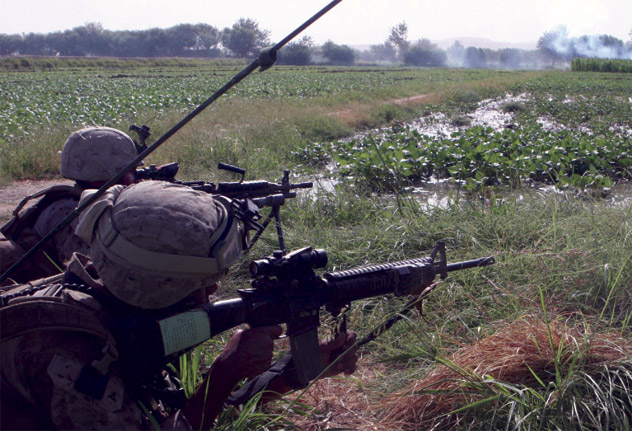
Marines with Company E, 2nd Battalion, 8th Marine Regiment, suppress enemy positions to protect the landing zone for a casualty evacuation helicopter in the middle of a six-hour firefight with Taliban insurgents.

This was a six-hour firefight.  Terry McCarthy has written about a four hour and fifteen minute patrol conducted by the 3/1 Marines.  This isn’t about branches of the military.  The Army in the Kunar and Nuristan Provinces is taking heat from the Taliban, and needs help on their many combat outposts.  It’s an issue of expectations and utilization of resources.  The question is why the Marines in Helmand and the Army is Kunar is suffering while the Army in other parts of the battlespace is bored?

Something is wrong with the management of the campaign.

Maliki Threatens Iraq Stability

BY Herschel Smith
16 years, 3 months ago

Max Boot on Maliki and the recent Iraqi elections.

Maliki, a sectarian Shiite, won’t accept the possibility that Allawi, a secular Shiite who enjoys overwhelming support among Sunnis, could displace him as prime minister. To prevent this from happening, Maliki is making common cause with the Iraqi National Alliance, a group of religious Shiites close to Iran that includes his archenemies, the followers of Muqtada Sadr.

Maliki has also counterattacked in the courts. First he pressured a three-judge election court into ordering a recount in Baghdad that could take weeks to finish but that isn’t expected to alter the outcome. Second, and more serious, he has endorsed what are, according to Army Gen. Ray T. Odierno, Iranian-orchestrated attempts by Iraq’s Accountability and Justice Commission to disqualify winning Sunni candidates for alleged ties to Sadam Hussein’s Baath Party.

With Maliki’s support, the commission has already disqualified 52 parliamentary candidates, including one who won a seat as part of the Iraqiya list. At least eight more winning Iraqiya candidates could be disqualified. That would give Maliki more seats than Allawi and fundamentally undermine the legitimacy of the vote.

A victory for Maliki (or a Shiite ally) that is achieved through postelection manipulations would make it extremely difficult for the new government to reach out to Sunnis either in Iraq or in the broader region. It might even reignite civil war if Sunnis feel that they are being disenfranchised.

Senior officials in the Obama administration are reportedly becoming more involved behind the scenes to avert such a disaster, but so far they have made limited progress despite a visit to Baghdad earlier this year by Vice President Joe Biden, the administration’s point man on Iraq. Diplomats at the U.S. Embassy in Baghdad put the emphasis on “transition” and “drawdown” rather than on ensuring the long-term success of Iraqi “democracy” (a word avoided by the administration).

That should be no surprise considering that President bama’s overriding objective is to pull U.S. troops out of Iraq. The Iraqi-American security accord negotiated by the George W. Bush administration called for the departure of all our soldiers by the end of 2011. Obama added a new twist by ordering that troop strength be cut from the current 95,000 to 50,000 by September.

The presumption was that the drawdown would occur after Iraq had installed a new government. American officials expected that postelection jockeying would end by June at the latest. But Iraqi politicians now expect that no government will emerge before the fall. Thus the Iraqi and American timelines are dangerously out of sync. Large troop reductions at a time of such political uncertainty will send a dangerous signal of disengagement and lessen America’s ability to preserve the integrity of the elections.

The delay in seating a government also endangers the possible negotiation of a fresh accord to govern Iraqi-American relations after 2011. It is vital to have a continuing American military presence to train and advise Iraqi security forces, which have grown in size and competence but still aren’t capable of defending their airspace or performing other vital functions.

U.S. troops also play a vital peacekeeping role, patrolling with Iraqi troops and the Kurdish peshmerga along the disputed Green Line separating Iraq proper from the Kurdish regional government. Kurdish politicians I met in Irbil warned that if Iraqi-Kurdish land disputes aren’t resolved by the end of 2011 (and odds are they won’t be), there is a serious danger of war breaking out once American troops leave. The possibility of miscalculation will grow once the Iraqi armed forces acquire the M-1 tanks and F-16 fighters that we have agreed to sell them. It is all the more important that an American buffer — say 10,000 to 15,000 troops — remain to ensure that those weapons are never used against our Kurdish allies.

Boot hits on some common themes we have already covered in:

Bad Developments in Iraq

Iraqi Elections

Whence Goeth Iraq?

To say that Maliki is bad for Iraq is redundant.  Chalibi is a treacherous liar, cheat and rogue.  He is out for the Shi’ite powers in Iran and Iraq, but first of all himself.  His “Justice Commission” is a front for the Iranians.  He is a scumbag in the superlative degree.  The Maliki-Hakim-Sadr alliance will only end, if it does, as it suffers under the weight of the collective pride, self worship and disdain for the common Iraqi.

It may also be true that U.S. presence is a good thing for tamping down internal sectarian violence.  But there is a very important element of the current situation that Boot is missing, and it must be incorporated into our framework in order to understand the degree of U.S. inability to change the situation.

The Status of Forces Agreement has lead to intelligence ambiguity in Iraq due to the fact that patrols are no longer conducted.  Our once powerful and productive information and intelligence campaign has all but dried up.  It’s difficult to assess atmospherics when you can’t go on patrol and talk with the population.  The SOFA has caused U.S. troops to withdraw from Iraqi cities to the countryside because they cannot even ensure force protection in the cities.  The Marines are entirely gone from the Anbar Province because they couldn’t even move outside of their bases without an Iraqi escort and without giving 72 hours notice.  The Marine Corps Commandant will not leave Marines in a situation in which they cannot ensure force protection.

The U.S. Army is under virtual house arrest in Iraq.  Said Colonel Ali Fadhil of the ISF, “the American soldiers are in prison-like bases as if they are under house-arrest.”  They have been given times that they cannot leave their bases, stipulations for permissions, and requirements for escorts.

I have been brutal on the Obama administration on everything from health care to the  handling of the campaign in Afghanistan.  Additionally, Obama could actually put Iraq under the charge of someone who is competent rather than Biden.  But the hand was dealt long before the Obama administration, even if Obama would have fled the country anyway.  There is little to nothing that U.S. forces can do under the current SOFA, and that is the fault of the previous administration, like it or not.

We failed to confront Iran in the regional war it has been waging more than 40 years (and for the eight years we have been in Iraq), and then we tied the hands of our warriors so that they couldn’t effect change in the situation.  They are busying themselves with lifting weights, playing ping pong and going to classes.  They have nothing else to do because we made it that way for them.


26th MEU (10)
Abu Muqawama (12)
ACOG (2)
ACOGs (1)
Afghan National Army (36)
Afghan National Police (17)
Afghanistan (704)
Afghanistan SOFA (4)
Agriculture in COIN (3)
AGW (1)
Air Force (42)
Air Power (10)
al Qaeda (83)
Ali al-Sistani (1)
America (23)
Ammunition (305)
Animals (337)
Ansar al Sunna (15)
Anthropology (3)
Antonin Scalia (1)
AR-15s (397)
Arghandab River Valley (1)
Arlington Cemetery (2)
Army (91)
Assassinations (2)
Assault Weapon Ban (29)
Australian Army (7)
Azerbaijan (4)
Backpacking (4)
Badr Organization (8)
Baitullah Mehsud (21)
Basra (17)
BATFE (247)
Battle of Bari Alai (2)
Battle of Wanat (18)
Battle Space Weight (3)
Bin Laden (7)
Blogroll (3)
Blogs (24)
Body Armor (23)
Books (3)
Border War (18)
Brady Campaign (1)
Britain (39)
British Army (36)
Camping (5)
Canada (20)
Castle Doctrine (1)
Caucasus (6)
CENTCOM (7)
Center For a New American Security (8)
Charity (3)
China (19)
Christmas (18)
CIA (30)
Civilian National Security Force (3)
Col. Gian Gentile (9)
Combat Outposts (3)
Combat Video (2)
Concerned Citizens (6)
Constabulary Actions (3)
Coolness Factor (3)
COP Keating (4)
Corruption in COIN (4)
Council on Foreign Relations (1)
Counterinsurgency (218)
DADT (2)
David Rohde (1)
Defense Contractors (2)
Department of Defense (220)
Department of Homeland Security (26)
Disaster Preparedness (5)
Distributed Operations (5)
Dogs (15)
Donald Trump (27)
Drone Campaign (4)
EFV (3)
Egypt (12)
El Salvador (1)
Embassy Security (1)
Enemy Spotters (1)
Expeditionary Warfare (18)
F-22 (2)
F-35 (1)
Fallujah (17)
Far East (3)
Fathers and Sons (2)
Favorite (1)
Fazlullah (3)
FBI (39)
Featured (192)
Federal Firearms Laws (18)
Financing the Taliban (2)
Firearms (1,876)
Football (1)
Force Projection (35)
Force Protection (4)
Force Transformation (1)
Foreign Policy (27)
Fukushima Reactor Accident (6)
Ganjgal (1)
Garmsir (1)
general (15)
General Amos (1)
General James Mattis (1)
General McChrystal (44)
General McKiernan (6)
General Rodriguez (3)
General Suleimani (9)
Georgia (19)
GITMO (2)
Google (1)
Gulbuddin Hekmatyar (1)
Gun Control (1,731)
Guns (2,416)
Guns In National Parks (3)
Haditha Roundup (10)
Haiti (2)
HAMAS (7)
Haqqani Network (9)
Hate Mail (8)
Hekmatyar (1)
Heroism (5)
Hezbollah (12)
High Capacity Magazines (16)
High Value Targets (9)
Homecoming (1)
Homeland Security (3)
Horses (2)
Humor (72)
Hunting (65)
ICOS (1)
IEDs (7)
Immigration (123)
India (10)
Infantry (4)
Information Warfare (4)
Infrastructure (4)
Intelligence (23)
Intelligence Bulletin (6)
Iran (171)
Iraq (379)
Iraq SOFA (23)
Islamic Facism (64)
Islamists (98)
Israel (19)
Jaish al Mahdi (21)
Jalalabad (1)
Japan (3)
Jihadists (82)
John Nagl (5)
Joint Intelligence Centers (1)
JRTN (1)
Kabul (1)
Kajaki Dam (1)
Kamdesh (9)
Kandahar (12)
Karachi (7)
Kashmir (2)
Khost Province (1)
Khyber (11)
Knife Blogging (7)
Korea (4)
Korengal Valley (3)
Kunar Province (20)
Kurdistan (3)
Language in COIN (5)
Language in Statecraft (1)
Language Interpreters (2)
Lashkar-e-Taiba (2)
Law Enforcement (6)
Lawfare (14)
Leadership (6)
Lebanon (6)
Leon Panetta (2)
Let Them Fight (2)
Libya (14)
Lines of Effort (3)
Littoral Combat (8)
Logistics (50)
Long Guns (1)
Lt. Col. Allen West (2)
Marine Corps (281)
Marines in Bakwa (1)
Marines in Helmand (67)
Marjah (4)
MEDEVAC (2)
Media (68)
Medical (146)
Memorial Day (6)
Mexican Cartels (48)
Mexico (72)
Michael Yon (6)
Micromanaging the Military (7)
Middle East (1)
Military Blogging (26)
Military Contractors (5)
Military Equipment (25)
Militia (9)
Mitt Romney (3)
Monetary Policy (1)
Moqtada al Sadr (2)
Mosul (4)
Mountains (25)
MRAPs (1)
Mullah Baradar (1)
Mullah Fazlullah (1)
Mullah Omar (3)
Musa Qala (4)
Music (25)
Muslim Brotherhood (6)
Nation Building (2)
National Internet IDs (1)
National Rifle Association (97)
NATO (15)
Navy (31)
Navy Corpsman (1)
NCOs (3)
News (1)
NGOs (3)
Nicholas Schmidle (2)
Now Zad (19)
NSA (3)
NSA James L. Jones (6)
Nuclear (63)
Nuristan (8)
Obama Administration (222)
Offshore Balancing (1)
Operation Alljah (7)
Operation Khanjar (14)
Ossetia (7)
Pakistan (165)
Paktya Province (1)
Palestine (5)
Patriotism (7)
Patrolling (1)
Pech River Valley (11)
Personal (77)
Petraeus (14)
Pictures (1)
Piracy (13)
Pistol (4)
Pizzagate (21)
Police (673)
Police in COIN (3)
Policy (15)
Politics (999)
Poppy (2)
PPEs (1)
Prisons in Counterinsurgency (12)
Project Gunrunner (20)
PRTs (1)
Qatar (1)
Quadrennial Defense Review (2)
Quds Force (13)
Quetta Shura (1)
RAND (3)
Recommended Reading (14)
Refueling Tanker (1)
Religion (501)
Religion and Insurgency (19)
Reuters (1)
Rick Perry (4)
Rifles (1)
Roads (4)
Rolling Stone (1)
Ron Paul (1)
ROTC (1)
Rules of Engagement (76)
Rumsfeld (1)
Russia (37)
Sabbatical (1)
Sangin (1)
Saqlawiyah (1)
Satellite Patrols (2)
Saudi Arabia (4)
Scenes from Iraq (1)
Second Amendment (715)
Second Amendment Quick Hits (2)
Secretary Gates (9)
Sharia Law (3)
Shura Ittehad-ul-Mujahiden (1)
SIIC (2)
Sirajuddin Haqqani (1)
Small Wars (72)
Snipers (9)
Sniveling Lackeys (2)
Soft Power (4)
Somalia (8)
Sons of Afghanistan (1)
Sons of Iraq (2)
Special Forces (28)
Squad Rushes (1)
State Department (23)
Statistics (1)
Sunni Insurgency (10)
Support to Infantry Ratio (1)
Supreme Court (84)
Survival (216)
SWAT Raids (58)
Syria (38)
Tactical Drills (38)
Tactical Gear (17)
Taliban (168)
Taliban Massing of Forces (4)
Tarmiyah (1)
TBI (1)
Technology (21)
Tehrik-i-Taliban (78)
Terrain in Combat (1)
Terrorism (96)
Thanksgiving (13)
The Anbar Narrative (23)
The Art of War (5)
The Fallen (1)
The Long War (20)
The Surge (3)
The Wounded (13)
Thomas Barnett (1)
Transnational Insurgencies (5)
Tribes (5)
TSA (25)
TSA Ineptitude (14)
TTPs (4)
U.S. Border Patrol (8)
U.S. Border Security (22)
U.S. Sovereignty (29)
UAVs (2)
UBL (4)
Ukraine (10)
Uncategorized (107)
Universal Background Check (3)
Unrestricted Warfare (4)
USS Iwo Jima (2)
USS San Antonio (1)
Uzbekistan (1)
V-22 Osprey (4)
Veterans (3)
Vietnam (1)
War & Warfare (435)
War & Warfare (41)
War Movies (4)
War Reporting (21)
Wardak Province (1)
Warriors (6)
Waziristan (1)
Weapons and Tactics (80)
West Point (1)
Winter Operations (1)
Women in Combat (21)
WTF? (1)
Yemen (1)

August 2026
July 2026
June 2026
May 2026
April 2026
March 2026
February 2026
January 2026
December 2025
November 2025
October 2025
September 2025
August 2025
July 2025
June 2025
May 2025
April 2025
March 2025
February 2025
January 2025
December 2024
November 2024
October 2024
September 2024
August 2024
July 2024
June 2024
May 2024
April 2024
March 2024
February 2024
January 2024
December 2023
November 2023
October 2023
September 2023
August 2023
July 2023
June 2023
May 2023
April 2023
March 2023
February 2023
January 2023
December 2022
November 2022
October 2022
September 2022
August 2022
July 2022
June 2022
May 2022
April 2022
March 2022
February 2022
January 2022
December 2021
November 2021
October 2021
September 2021
August 2021
July 2021
June 2021
May 2021
April 2021
March 2021
February 2021
January 2021
December 2020
November 2020
October 2020
September 2020
August 2020
July 2020
June 2020
May 2020
April 2020
March 2020
February 2020
January 2020
December 2019
November 2019
October 2019
September 2019
August 2019
July 2019
June 2019
May 2019
April 2019
March 2019
February 2019
January 2019
December 2018
November 2018
October 2018
September 2018
August 2018
July 2018
June 2018
May 2018
April 2018
March 2018
February 2018
January 2018
December 2017
November 2017
October 2017
September 2017
August 2017
July 2017
June 2017
May 2017
April 2017
March 2017
February 2017
January 2017
December 2016
November 2016
October 2016
September 2016
August 2016
July 2016
June 2016
May 2016
April 2016
March 2016
February 2016
January 2016
December 2015
November 2015
October 2015
September 2015
August 2015
July 2015
June 2015
May 2015
April 2015
March 2015
February 2015
January 2015
December 2014
November 2014
October 2014
September 2014
August 2014
July 2014
June 2014
May 2014
April 2014
March 2014
February 2014
January 2014
December 2013
November 2013
October 2013
September 2013
August 2013
July 2013
June 2013
May 2013
April 2013
March 2013
February 2013
January 2013
December 2012
November 2012
October 2012
September 2012
August 2012
July 2012
June 2012
May 2012
April 2012
March 2012
February 2012
January 2012
December 2011
November 2011
October 2011
September 2011
August 2011
July 2011
June 2011
May 2011
April 2011
March 2011
February 2011
January 2011
December 2010
November 2010
October 2010
September 2010
August 2010
July 2010
June 2010
May 2010
April 2010
March 2010
February 2010
January 2010
December 2009
November 2009
October 2009
September 2009
August 2009
July 2009
June 2009
May 2009
April 2009
March 2009
February 2009
January 2009
December 2008
November 2008
October 2008
September 2008
August 2008
July 2008
June 2008
May 2008
April 2008
March 2008
February 2008
January 2008
December 2007
November 2007
October 2007
September 2007
August 2007
July 2007
June 2007
May 2007
April 2007
March 2007
February 2007
January 2007
December 2006
November 2006
October 2006
September 2006
August 2006
July 2006
June 2006
May 2006

about · archives · contact · register

Copyright © 2006-2026 Captain's Journal. All rights reserved.