Articles by Herschel Smith


The “Captain” is Herschel Smith, who hails from Charlotte, NC. Smith offers news and commentary on warfare, policy and counterterrorism.


Systemic Defense Intelligence Failures

16 years, 3 months ago

Bill Gertz reports on intelligence leading up to the Taliban attack at COP Keating, Kamdesh Afghanistan.

Defense Intelligence Agency Director Lt. Gen. Ronald L. Burgess Jr. recently testified before the Senate Select Committee on Intelligence that there were three intelligence reports indicating Taliban forces were preparing to attack a remote U.S. combat outpost in eastern Afghanistan, according to defense officials.

Gen. Burgess appeared before a closed-door meeting of the committee on Oct. 22 and was asked by senators about the advance warning of a Taliban attack, first reported in The Washington Times, and whether the intelligence warnings were ignored.

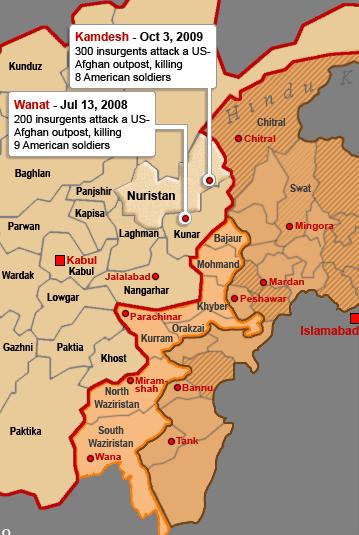
About 100 Taliban fighters carried out the attack on the outpost near the town of Kamdesh on Oct. 3 in what U.S. Army spokesmen said was a surprise strike that left eight U.S. soldiers dead.

Gen. Burgess explained in testimony to the committee that the military had three intelligence reports on the issue, but that the reports were among many human-source reports that had not been verified by other means, such as electronic intelligence. As a result, the reporting was not deemed “actionable” intelligence, said defense officials familiar with the testimony.

The officials spoke on condition of anonymity because of the sensitivity of the issue.

Democratic and Republican spokesmen for the Senate Intelligence Committee had no comment, citing rules limiting discussion of closed-door committee meetings.

A DIA spokesman also declined to comment.

One official said the reports indicate that there was an intelligence failure by analysts who he suspects were “waiting for the smoking-gun report from technical systems.”

“The bottom line is that in spite of all our intelligence capabilities in Afghanistan, U.S. forces have been surprised twice by massed Taliban forces in a pre-planned attack against two of our outposts,” the official said. “That begs the question of whether we have a problem of analysis.”

Partially declassified intelligence reports revealed that in the period before the Oct. 3 battle, a new Taliban subcommander in Kamdesh named Ghulan Faroq had been appointed and was in charge of attacking Combat Outpost Keating. The reports also indicated that days before the attack, insurgent fighters in Kamdesh were resupplied with ammunition for large-caliber guns.

Commentary & Analysis

One year and nine months ago we discussed the claim made by General Rodriguez, apparently relying on Army intelligence, that the Taliban were focusing on Pakistan rather than Afghanistan and thus there wouldn’t be a Taliban spring offensive in 2008.  We predicted otherwise, and quite obviously defense intelligence got it wrong while we got it right.  Reinforcing this analysis several months later, Colonel Pete Johnson said that the notion of a Taliban spring offensive was a myth that was going to be debunked.  Yet there has been a spring offensive every year, with the security situation in Afghanistan continuing to degrade and the Taliban controlling more and more of both the terrain and the population.

In our analysis of the Battle of Wanat we pointed out that the AR 15-6 Investigation and Findings of Wanat pointed towards intelligence failures in the time leading up to the battle.

One key breakdown in force protection pertained to intelligence. Multiple villagers, including tribal elders, had told multiple U.S. troops that an attack on VPB Wanat was imminent, but the assumption that such an attack would be probative caused little concern among the leadership. But the enlisted ranks included men who knew what was coming. Cpl. Gunnar Zwilling suspected that his days were numbered, while he and his band of brothers in the 173rd Airborne Brigade Combat Team prepared for a mission near Wanat, Afghanistan. “It’s gonna be a bloodbath,” he told his father, Kurt Zwilling, on the phone in what would be their last conversation.  In fact, there had been daily reports of 200-300 fighters massing to attack COP Bella in the first 10 days of July before transfer of operations to VPB Wanat

We have also discussed in detail the Taliban massing of troops, bringing at times near half-Battalion size forces to bear on U.S. troop garrisons as a favorite tactic.
Nuristan

Now regarding the Taliban attack at Combat Outpost Keating at Kamdesh, Afghanistan, we learn that defense intelligence had three reports of imminent danger but failed to act on this intelligence.  What “smoking gun report” would have convinced them to take action we aren’t told in the Gertz investigation, but it’s important not to get buried in the details of the specific intelligence failure.

This failure is part of a larger problem in defense intelligence.  The problem is both significant and consequential.  It is significant in that it points to a systemic problem, and consequential in that the affects range from denying the presence of a Taliban offensive to the deaths of nine Soldiers at Wanat and eight at Kamdesh.

The point is granted that this administration is at war with the CIA.  But issues at the tactical level, e.g., Taliban massing of forces, imminent attacks, etc., must be acted upon without reference to certainty.  Intelligence is meant to be shared, and if further verification and validation is needed, the proper assets must be deployed to address the need.

I have previously weighed in on the cult of special forces advocating a shift away from (the current fad of) replacing kinetic operations by infantry with Special Operations Forces.  But regarding the proper use of special operators (as I see it), this is an instance of ideal application of several Rangers assigned to and embedded with infantry platoons.  Recon missions based out of the smaller COPs might add to the local intelligence rather than having to rely on electronic and technological verification of other intelligence information.

In any case, just as we are attempting to define the boundary conditions for riskless war, our Army intelligence is attempting to craft riskless analysis.  There is no such thing, and in the mean time, we are failing our Soldiers and Marines in the field at the tactical and personal level.

Who says blogs don’t matter?

16 years, 3 months ago

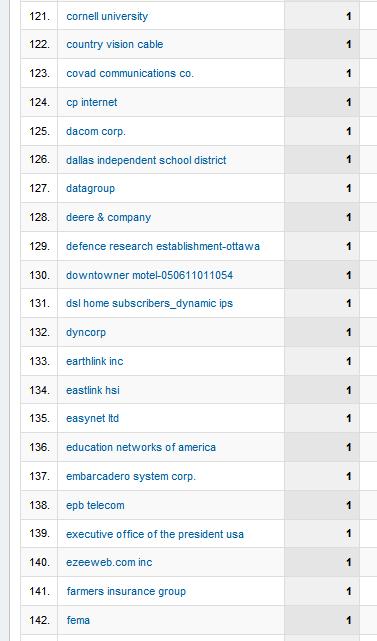
From Google Analytics:

President_USA

See network domain number 139 that particular day from Washington, D.C.  Analytics shows this to be a previous (repeat) visitor who didn’t come to TCJ via other links.  Here at The Captain’s Journal we’re glad to have each and every one of our readers, from the executive office of the President U.S.A. to DoD, CENTCOM, Dyncorp, Cornell University, FEMA, the U.S. Senate, and John Deere.

Interview with Lt. Col. Allen West

16 years, 4 months ago

Courtesy of CBN, spend the time to watch this excellent interview with Lt. Col. Allen West.

Lt. Col. West retired from the army in 2004 after a distinguished  20-years-plus career that included a number of honors, the Bronze Star among them. He has served in several combat zones, including Operation Desert Storm and Operation Iraqi Freedom, where he was battalion commander for the Army’s 4th Infantry Division. Lt. Col. West also served in Afghanistan, where he trained Afghan officers to take control of their country’s security.

Sons of Afghanistan?

16 years, 4 months ago

From CNN:

There is a well-known saying in Afghanistan: “You can rent an Afghan, but you can’t buy him.”

Some experts on the region believe a U.S. program to pay Taliban fighters to quit the organization is buying temporary loyalty.

President Obama on Wednesday signed a $680 billion defense appropriations bill, which will pay for military operations in the 2010 fiscal year. The bill includes a Taliban reintegration provision under the Commander’s Emergency Response Program, which is now receiving $1.3 billion. CERP funding also is intended for humanitarian relief and reconstruction projects at commanders’ discretion.

The buyout idea, according to the Sen. Carl Levin, chairman of the Senate Armed Services Committee, is to separate local Taliban from their leaders, replicating a program used to neutralize the insurgency against Americans in Iraq.

“Afghan leaders and our military say that local Taliban fighters are motivated largely by the need for a job or loyalty to the local leader who pays them and not by ideology or religious zeal,” Levin said in a Senate floor speech on September 11. “They believe an effort to attract these fighters to the government’s side could succeed, if they are offered security for themselves and their families, and if there is no penalty for previous activity against us.”

But Nicholas Schmidle, an expert on the Afghanistan-Pakistan region for the non-partisan New America Foundation, said that while the plan has a “reasonable chance for some success,” the old Afghan saying will eventually be borne out.

“So long as the Americans are keenly aware of this, you’re buying a very, very, very temporary allegiance,” he said. “If that’s the foundation for moving forward, it’s a shaky foundation.”

Nick is a smart analyst, and he is right concerning the temporary nature of services.  But I don’t even think it will get that far.  Let’s very briefly deal with Carl Levin’s assertion that this “replicates” the sons of Iraq program.  No it does not.  And again, NO IT DOES NOT.  One more time.  NOITDOESNOT.

The sons of Iraq program followed heavy kinetic operations to ensure that joining the insurgency was unappealing.  It was implemented from a position of strength, not weakness.  The troops were in place, we were committed to the campaign, and the U.S. Marines weren’t leaving the Anbar Province until they had achieved success.  The U.S. Marines were the stronger tribe, and the indigenous insurgents knew it.

We are in a position of relative weakness in Afghanistan, more troops are needed, and the Taliban now control the countryside (while they have eyes for the larger cities such as Kandahar).  A program like this will only work if the Afghans are convinced that we will be there for the long haul and help to protect them against retaliation and retribution from the Taliban.  Some of the Afghans may team with us – but none will go it alone.

Michael Yon’s thoughts are salient.

We ask Afghans for help in defeating the enemies, yet the Afghans expect us to abandon them. Filkins pointed out that Afghans don’t like to see Americans living in tents. Tents are for nomads. It would be foolish for Afghans in “Talibanastan” to cooperate with nomadic Americans only to be eviscerated by the Taliban when the nomads pack up. (How many times did we see similar things happen in Iraq?) The Afghans want to see us living in real buildings as a sign of permanency. The British forces at Sangin and associated bases live in temporary structures, as do the Americans at many of their bases. Our signals are clear. “If you are coming to stay,” Afghans have told me in various ways, “build a real house. Build a real office. Don’t live in tents.”

A great many Iraqis wanted assurances that we would stay long enough to help their country survive but were not planning on making Iraq part of an American empire. It thus became important to convey signs of semi-permanence, signaling, “Yes, we will stay, and yes, we will leave.” Conversely, Afghans in places like Helmand tend to have fond memories of Americans who came in the middle of last century, and those Afghans seem apt to cooperate. That much is clear. But Afghans need to sense our long-term commitment. They need to see houses made of stone, not tents and “Hesco-habs.”

Throwing satchels of cash around and expecting the Afghans to do our heavy lifting for us isn’t a plan for success.  It’s a sign of the ignorance of the people managing this effort.  And it’s a sign of a national sickness – the idea that we can print and spend enough money to get us out of almost any problem.  Finally, for an Afghanistan that has few resources, throwing money around only devalues the existing supply rather than creating new and real wealth.  It’s just a bad idea all around, but especially so without the necessary force projection by U.S. troops.

Fewer Troops is Better: Riding Unicorns Over Rainbows

16 years, 4 months ago

From David Adams and Ann Marlowe, via the WSJ.

From the beginning of 2007 to March 2008, the 82nd Airborne Division’s strategy in Khost proved that 250 paratroopers could secure a province of a million people in the Pashtun belt. The key to success in Khost—which shares a 184 kilometer-long border with Pakistan’s lawless Federally Administered Tribal Areas—was working within the Afghan system. By partnering with closely supervised Afghan National Security Forces and a competent governor and subgovernors, U.S. forces were able to win the support of Khost’s 13 tribes.

Today, 2,400 U.S. soldiers are stationed in Khost. But the province is more dangerous.

Mohammed Aiaz, a 32-year-old Khosti advising the Khost Provincial Reconstruction Team, puts it plainly: “The answer is not more troops, which will put Afghans in more danger.” If troops don’t understand Afghan culture and fail to work within the tribal system, they will only fuel the insurgency. When we get the tribes on our side, that will change. When a tribe says no, it means no. IEDs will be reported and no insurgent fighters will be allowed to operate in or across their area.

Khost once had security forces with tribal links. Between 1988 and 1991, the Soviet client government in Kabul was able to secure much of eastern and southern Afghanistan by paying the tribal militias. Khost was secured by the 25th Division of the Afghan National Army (ANA), which incorporated militias with more than 400 fighters from five of Khost’s 13 major tribes. The mujahedeen were not able to take Khost until internal rifts among Pashtuns in then-President Mohammed Najibullah’s government resulted in a loss of support for the militias in Khost and, eventually, the defection of the 25th Division in April 1991.

The mistake the Najibullah government made was not integrating advisers to train the tribal militias and transform them into a permanent part of the government security forces. During the Taliban period between 1996-2001 the 25th Division dispersed amongst the tribes. Many fled to Pakistan.

When the U.S. invaded in 2001, the 25th Division, reformed under the command of Gen. Kilbaz Sherzai, immediately secured Khost. But the division was disbanded by the new Afghan government for fear of warlordism.

Today, some elements of the 25th still work for the Americans as contract security forces. However, the ANA now stationed in Khost is mainly composed of northern, non-Pashtun Dari speakers, and it is regarded as a foreign body. Without local influence and tribal support, the ANA tends to stay on its bases.

Part of this is our fault. We built the ANA in our own Army’s image. Its soldiers live on nice bases and see themselves as the protectors of Afghanistan from conventional attacks by Pakistan. But to be effective, the ANA must be structured more like a National Guard, responsible for creating civil authority and training the police.

We saw how this could work in the Tani district of Khost starting in 2007. By assisting an ANA company—with a platoon of American paratroopers, a civil affairs team from the U.S.-led Provincial Reconstruction Team, the local Afghan National Police, and a determined Afghan subgovernor named Badi Zaman Sabari—we secured the district despite its long border with Pakistan.

Raids by the paratroopers under the leadership of Lt. Col. Scott Custer were extremely rare because the team had such good relations with the tribes that they would generally turn over any suspect. These good tribal relations were strengthened further by meeting the communities’ demands for a new paved road, five schools, and a spring water system that supplies 12,000 villagers.

Yet security has deteriorated in Khost, despite increases of U.S. troops in mid-2008. American strategy began to focus more on chasing the insurgents in the mountains instead of securing the towns and villages where most Khostis live.

Analysis & Commentary

Make friends with the right people, empower their men, and ride unicorns over rainbows.  Presto!  Counterinsurgency made simple.  Note that at least one strategic argument all along is that Afghanistan isn’t like Iraq and the tribal awakening may not in fact apply, so it will be harder in Afghanistan than it was in the Anbar Province.  Now Adams and Marlowe turn that argument on its head.  Not only is the tribal awakening possible, but it should be easier in Afghanistan than in Iraq, and more troops are certainly not necessary.

Grim at Blackfive has a roundup of views that complement Marlowe’s plan, but on a more sophisticated level.  But as with Marlowe’s view, Grim’s discussion relies on tribal engagement.  Regular readers know that I reject the narrative (of now mythical and magical proportions) that the campaign for Anbar was all about the tribes.  It was much more complicated than that.

In Haditha it required sand berms to prevent the influx of foreign fighters into the city, combined with a local police chief strong man named Colonel Faruq to bring the town to heel.  In al Qaim it required heavy kinetic operations by the U.S. Marines, combined with a local police chief strong man named Abu Ahmed to keep out foreign fighters and bring local insurgents under control.  In Fallujah in 2007 it required heavy kinetic operations by the U.S. Marines followed on by gated communities, biometrics, and block captains (or Muktars) and strong men police all over the city.

Whereas Captain Travis Patriquin’s outline for counterinsurgency in Anbar seems to have carried the day when it comes to narrative, even in Ramadi (where the tribal awakening supposedly got its start), Colonel MacFarland’s observations are telling concerning the tribes upon his arrival to Anbar.

… the sheiks were sitting on the fence.

They were not sympathetic to al-Qaeda, but they tolerated its members, MacFarland says.

The sheiks’ outlook had been shaped by watching an earlier clash between Iraqi nationalists — primarily former members of Saddam Hussein’s ruling Baath Party — and hard-core al-Qaeda operatives who were a mix of foreign fighters and Iraqis. Al-Qaeda beat the nationalists. That rattled the sheiks.

“Al-Qaeda just mopped up the floor with those guys,” he says.

While Captain Patriquin wanted to talk to Sheik Risha, U.S. forces were engaged in heavy combat to shut down his smuggling lines, even at the expense of killing his tribal and family members.  The U.S. Marine Corps operations in Iraq are best described by diplomacy with a gun (and this is consistent with the literally countless interviews of Marines that I have conducted).  When it was all finished, more than one thousand Marines had perished in Anbar, and tens of thousands of both indigenous insurgents and foreign fighters had died.  There were no unicorns or rainbows in Anbar, popular myths to the contrary.

In spite of the sophistication of the Anbari tribes compared to the Afghan tribes, even they couldn’t hold off al Qaeda without heavy kinetics by the Marines.  The Pashtun tribes in Afghanistan and Pakistan were also said to have a strong sense of unity and organization, that is, until Baitullah Mehsud had some 600 tribal elders assassinated.  The Pashtun tribal structure is said to have been decimated by the Pakistan Taliban.

Upon the initial liberation of Garmsir by the U.S. Marines in 2008, the tribal elders pleaded with the Marines to join with them to fight the Taliban.  The 24th MEU did, at least until their deployment ended.  The British weren’t able to hold Garmsir, and no U.S. Marines followed up the 24th MEU into the Garmsir (in a tip of the hat to the “economy of force” campaign).  Thus did Operation Khanjar have to be launched in 2009 to do some of the same things that the Marines did in 2008.  Even now with U.S. Marines present in the Helmand Province, fear of retribution for cooperating with the Marines against the Taliban is pervasive.

There are certain elements of Marlowe’s analysis that are salient.  You cannot find more criticism of the ANA and ANP than I have lodged, and I objected to the use of ANA soldiers from Tajik areas to control Pashtun tribes before Marlowe did.  But for those naive analysts who believe that reorganization of the ANA is the answer to our problems in Afghanistan, you only need to know that the U.S. Marines are still trying to talk the ANA troops aligned with them to go on night time patrols.

There may also be some virtue to the notion of better engagement of the tribes.  Steven Pressfield has a continuing stream of conversation and analysis at his blog on this very topic (to be fair, I should also mention that Joshua Foust has another view on this, and both positions are well worth studying).  But after the tribes are engaged and the ANA has been reorganized, the tribes cannot stop the Taliban and allied foreign fighters alone, and the ANA is far from ready to take on defense of their country from internal threats.

What Davis and Marlowe are missing is the general evolution of the campaign and the warp and woof of the Afghan countryside now as compared to the utopia they describe.  The Taliban have grown stronger, and it will take heavy kinetics, patrolling, policing and engagement of the population by other-than-ANA forces to dislodge them.

There aren’t any easy solutions, but the general reluctance to send additional troops being demonstrated by this administration cannot possibly be a doctrinal or strategic basis for denying the necessary resources to complete the campaign.  U.S. troops are the currency upon which the campaign will succeed or fail.

Video of COP Keating (Kamdesh)

16 years, 4 months ago

Following up on Kamdesh Troops Were Sitting Ducks: The Importance of Terrain, this video is a stark reminder of just where COP Keating was located.  They were completely walled-in by the terrain.  Perhaps the ease of vehicle movement and delivery of logistics was the reason for locating COP Keating where they did.  But they didn’t have even a single hill which abuts the COP (or or on which the COP is at least partially built).  Every direction is up.  It would have been better to have utilized a hill and go to the hassle of building, walking and driving on sloped terrain.

Resignation at the State Department Over Afghanistan

16 years, 4 months ago

By now it’s old news that Marine Captain Matthew Hoh, veteran of Iraq who later joined the State Department, has resigned over the campaign in Afghanistan.  He sees no reason whatsoever for the U.S. to be engaged there.  Jules Crittenden opines of Hoh’s letter:

It highlights some of the very real problems of the situation in Afghanistan, but concludes that remaining in Afghanistan requires, “if honest,” that we have to invade Pakistan, Yemen, Somalia, the Sudan, etc. Maybe we will before this long war is done. Hard to say. It wouldn’t be the first time, whether in a short four-year war or a 45-year-long one, that we’d had to fight multiple fronts to reomve tyranny and secure freedom in the world. Hoh also includes a Vietnam reference that, tellingly, assumes that failure in Afghanistan is as inevitable as many believe failure in Vietnam was.

The long war.  That phrase that so many people are afraid to use, and which has been used so many times here at The Captain’s Journal.  Jules understands.  And I understand that Captain Hoh is an honorable man for sticking to his principles.  He has a right to decide how he wants, just as I have a right to decide against his views.  What I don’t get is why Captain Hoh is getting so much attention.  So another State employee doesn’t want to see us in Afghanistan.  How many more hundreds are there?

Finally, I find it rather embarrassing and gushy that State worked so hard to retain him.  If he is so decidedly against the campaign in Afghanistan that he feels that he cannot work at State, then he should go rather than be begged to stay.  The fact of the matter is that this thinking is systemic to not only State but the entire administration.

Do you disagree?  Read this depressing comment at Neptunus Lex (from It’s All Verbatim).

My office has been an integral part of these “Af/Pak Principal Strategy Sessions”

Let’s just say most of the proposals of the table (excluding the Joint Staff J7 & J3/5, DIA and the more rational sects of the NSC) are totally divorced from reality.

It’s painful, really. NDA’s prevent me from delving into it fully, but some of the proposals would cause the regulars here to go completely ape-shit. I sit along the wall, and let my boss do the talking. It is absolutely incredible how naive this administration (and yes, senior members of the NSC and State) are.

USD(P) isn’t innocent, either. DoD’s policy shop is cooking up some the craziest policies I’ve seen in a long time. There is a concerted effort to create “Stop Loss 2.0″ – basically you would be re-classed from whatever specialty/MOS/AFSC/rate, regardless of branch/age/rank, and thrust into, say, military police, MI, or EOD. Not offered; you’d be required to jump over. Even the 10% we vets know exist that shouldn’t and couldn’t do MI, EOD et al. If you refused, they would whip out the UCMJ. This is actually being considered as a way to surge without actually surging. Joint Staff J1 and J3/5 were under heavy pressure to report we were under strain, and couldn’t handle a 40K/60K/80K push. J1 came back and told the WH/NSC point blank: we have more than enough. They didn’t like that and are now finding excuses to not surge period, not even the 10K trial balloon they tossed up last week.

They’re stalling. I spend my entire morning, 5 days a week in the EEOB and State with these fuckers. You heard it here first.

Then again, maybe I do understand why Captain Hoh is getting so much attention.  It’s just that the other hundreds who feel just like him at State don’t have the integrity to resign.

Army Rejects Call for Independent Assessments of Body Armor

16 years, 4 months ago

About eight months ago the GAO issued a report concerning body armor (SAPI plate) recall, and outlined a number of findings concerning the testing the Army had performed.  We summarized a few of the findings in DoD Testing Requirements for Body Armor and Army Recall.

COPD is “Contract Purchase Description,” PEO is “Program Executive Officer,” and BFD means “Back Face Deformation.”  This last concept becomes important in the overall picture.  Turning to the specifics of the report, several key findings are outlined below for the purpose of providing examples of the investigation.

The inconsistencies that we identified concerned the treatment of over velocity shots.  During first article testing conducted on February 20 and November 7, 2007, shots on six of the plates were over the required velocity. Because none of the shots resulted in a complete penetration, the shots should have been considered fair, and the test should have proceeded, according to the COPD. During the November 7, 2007, test, the testing facility official complied with the COPD and correctly proceeded with testing. However, even though the scenario was exactly the same for the February 20, 2007, test, the testing facility official conducted retests on additional plates. The testing facility official documented all of the shots, including the retests, and provided the test results to PEO Soldier for scoring.  When scoring the test results for the February 20, 2007, first article test (design M3D2S2), the PEO Soldier scoring official chose to use the test results for the retested plates when he computed the test score. Use of the retested plates resulted in a score of 5.5 points, and the contractor passed the first article test. Had the scoring official followed the fair shot acceptance criteria as stated in the COPD and used the initial plates that withstood the over velocity shot, the contractor would have accumulated an additional 1.5 points (complete penetration on the second shot) and would have failed the first article test with 7 points.

Translation: When an over-velocity shot is taken on a plate, the testing may proceed if the plate is not penetrated under the assumption that a lower velocity shot would not have penetrated either.  This is a reasonable assumption.  However, if the plate is penetrated by the second shot it fails the testing, even if weakened by the initial shot.  The PEO made the decision to exclude the plates that had sustained over-velocity shots on the initial testing and to perform retests, but not consistently (as later records show).  A second example of the Inspector General’s findings pertains to measurements of BFD (back face deformation).

PEO Soldier instructed the testing facility to deviate from the COPD and use an offset correction technique (a mathematical formula used to adjust the BFD) when measuring the BFD. The testing facility official used this technique during 2 of the 21 first article tests conducted under Contract 0040. The COPD required that the testing facility officials measure the BFD at the deepest point in the clay depression after the bullet impacted the plate. However, PEO Soldier officials stated that contractors complained that the BFD measurement was not fair if the deepest point in the clay was not behind the point of impact. Therefore, a PEO Soldier official instructed the testing facility in an April 25, 2005, e-mail to use the offset correction technique if the deepest point in the clay depression was not behind the bullet’s point of impact.

Translation: The contractors complained when the measurement of deepest penetration was made at any point other than the point of bullet impact, which is the point of highest risk to the Soldier.  Therefore, the PEO made a decision that a correction would be applied to account for this effect and bring consistency to the program.

The Captain’s Journal initially concurs with both of the program deviations discussed above, since it isn’t fair to penalize one plate as compared to another if an over-velocity shot happened to be taken against it, and also since the highest risk to the Soldier does happen to be the point of bullet impact.

And it is also fair to point out that these aren’t the only problems discussed in the report.  But there are deeper problems that discussed even in the report.  With respect to the over-velocity shots, our judgment is that not enough SAPI plates are being included in the test samples (i.e., the sample size is not large enough) and the boundary conditions (such as shot velocity) are not being well-managed.  With respect to the deformation, the question naturally arises why the most severe deformation is occurring anywhere other than the point of bullet impact?  What’s happening to the ESAPI plates that is causing deformation in other than impact locations?

These questions (and other such technical questions) are not posed or answered in the Inspector General’s report, since the investigation is done by a government office.  The investigation focuses on programs, QA, adherence to procedures, consistency of application of rules and the like.  True enough, there are problems with some of the above.

But Senators and Representatives who have infinite trust in the power of government to solve problems leave the technology to the experts when a government office is the the sole arbiter of the strength of any technical program – and technological expert doesn’t usually define government offices.  In this particular case, as we have suggested before, there is no shame in assistance from industry experts.

Questions have been raised above which point to the need for completely independent consultative services focusing on QA, programmatic controls, statistical analysis of sample size, control over testing boundary conditions, and most especially the SAPI plates themselves and the underlying fracture mechanics of bullet impacts by finite element analysis.

At this point the business of body armor investigations wasn’t complete at the Government Accountability Office.  Hence, in October 2009 they issued Warfighter Support: Independent Expert Assessment of Army Body Armor Test Results and Procedures Needed Before Fielding.  In the executive summary they state:

To determine what effect, if any, the problems GAO observed had on the test data and on the outcomes of First Article Testing, the Army should provide for an independent ballistics evaluation of the First Article Testing results by ballistics and statistical experts external to the Department of Defense before any armor is fielded to soldiers under this contract solicitation. Because DOD did not concur with this recommendation, GAO added a matter for congressional consideration to this report suggesting that Congress direct DOD to either conduct such an independent external review of these test results or repeat First Article Testing.

To better align actual test practices with established testing protocols during future body armor testing, the Army should assess the need to change its test procedures based on the outcome of the independent experts’ review and document these and all other key decisions made to clarify or change the testing protocols during future body armor testing. Although DOD did not agree that an independent expert review of test results was needed, DOD stated it will address protocol discrepancies identified by GAO as it develops standardized testing protocols. DOD also agreed to document all decisions made to clarify or change testing protocols.

To improve internal controls over the integrity and reliability of test data for future testing as well as provide for consistent test conditions and comparable data among tests, the Army should provide for an independent external peer review of Aberdeen Test Center’s body armor testing protocols, facilities, and instrumentation to ensure that proper internal controls and sound management practices are in place. DOD generally concurred with this recommendation, but stated that it will also include DOD members on the review team.

Consistent with our own recommendations, they counsel in the strongest possible terms that outside independent consultative support be obtained.  But as soon as the GAO released its report, the DoD released a statement claiming confidence in the safety of the SAPI plates – a completely irrelevant rejoinder to the overall recommendations of the GAO report to procure consultative support for the program.  The same day that the DoD announced that they had full confidence in their body armor tests, they announced several new QA positions concerning ballistics and body armor testing.

The Army is sounding defensive and unwilling to open their program to outside expert inspection and assessment.  Here at The Captain’s Journal we haven’t recommended draconian measures such as jettisoning the Army test program, or complete replacement of the SAPI (at least until an equivalent, lighter weight ballistic insert can be developed).  We have only recommended the engagement of outside consultative services for the Army, just as did the GAO.

For the Army to reject that recommendation is very small and in extremely bad form.  When counsel has been given to open your programs to outside inspection and that counsel is rejected, it constitutes poor engineering.  There are many industries which “live in a glass house,” so to speak: nuclear, commercial air transport, pharmaceutical and medical, just to mention a few.  There is no valid technical or budgetary reason whatsoever that the Army cannot open their program to inspection by people who know as much or more than they do.

Taliban and al Qaeda Ideological Alignments

16 years, 4 months ago

In Connection Between the Taliban and al Qaeda we discussed the first hand account by David Rohdes of the New York Times after he was kidnapped by the Afghan Taliban, transported to Pakistan, spent time among both Afghan and Pakistan Taliban, and then finally escaped some seven months later.  His experience, coupled with data we had previously cataloged and analyzed, is convincing and compelling evidence of the hardened and more extremist theological alignment of the Taliban, and thus of their alignment with transnational insurgents and global actors such as al Qaeda.

Over those months, I came to a simple realization. After seven years of reporting in the region, I did not fully understand how extreme many of the Taliban had become. Before the kidnapping, I viewed the organization as a form of “Al Qaeda lite,” a religiously motivated movement primarily focused on controlling Afghanistan.

Living side by side with the Haqqanis’ followers, I learned that the goal of the hard-line Taliban was far more ambitious. Contact with foreign militants in the tribal areas appeared to have deeply affected many young Taliban fighters. They wanted to create a fundamentalist Islamic emirate with Al Qaeda that spanned the Muslim world.

But questions remain.  There are some (not identified in this article) that have weighed in saying that Rohdes is merely offering perspective or speculation, not facts.  There are others who have gone on record with analyses (parsing the Taliban into many different factions) that seems at the outset to cast doubt on Rohdes’ observations, at least, in a normative sense.  Myra MacDonald, for instance, outlines the main insurgent groups in Pakistan and Afghanistan, and weighs in questioning whether some of them share the global aspirations as al Qaeda.  In this same analysis she links Vahid Brown writing for Jihadica who even questions whether the Taliban and al Qaeda may be diametrically opposed.

Mullah Omar’s Afghan Taliban and al-Qa’ida’s senior leaders have been issuing some very mixed messages of late, and the online jihadi community is in an uproar, with some calling these developments “the beginning of the end of relations” between the two movements.  Beginning with a statement from Mullah Omar in September, the Afghan Taliban’s Quetta-based leadership has been emphasizing the “nationalist” character of their movement, and has sent several communications to Afghanistan’s neighbors expressing an intent to establish positive international relations.  In what are increasingly being viewed by the forums as direct rejoinders to these sentiments, recent messages from al-Qa’ida have pointedly rejected the “national” model of revolutionary Islamism and reiterated calls for jihad against Afghanistan’s neighbors, especially Pakistan and China.  However interpreted, these conflicting signals raise serious questions about the notion of an al-Qa’ida-Taliban merger.

We covered the al Qaeda rejection of the nationalistic model for jihad in The Globalization of Jihad in Palestine, and there is no question that the infighting between insurgent groups can become deadly.  It’s this supposed rift between factions of the insurgency that the U.S. administration wants to exploit.

… the Obama administration has indicated that it intends to make a fresh attempt to engage more moderate Taliban groups in talks with the Afghan government – in a determined effort to woo at least some of them away from the fighting that is claiming increasing numbers of American and other Nato forces’ lives.

Mullah Mutawakkil, once a confidant of the one-eyed Taliban leader, Mullah Mohammed Omar, was held at a US base in Kandahar in 2002 after he gave himself up to American troops.

Now he is being politely wooed by a stream of senior US officials who make discreet visits to his villa, which is guarded by armed police, to hear his thoughts on what the Taliban mood is like and whether any of its leaders are ready for talks.

A soft-spoken and intelligent man who was one of the Taliban regime’s youngest ministers, Mullah Mutawakkil is cautious about what can be achieved, but even so his thinking is music to tired Western ears.

He believes that the Taliban would split from what he called their al-Qaeda “war allies” if a deal was within reach. Speaking to The Sunday Telegraph in the guest room of his Kabul home, he insisted that a settlement to end the war was possible – and that it would be the West’s best chance of stopping terrorists from turning Afghanistan back into their base again.

“If the Taliban fight on and finally became Afghanistan’s government with the help of al-Qaeda, it would then be very difficult to separate them,” he warned.

But there is, he says, another option. Taliban leaders are looking for guarantees of their personal safety from the US, and a removal of the “bounties” placed on the head of their top commanders. They also want a programme for the release of prisoners held at the notorious Bagram US air base in Afghanistan, and at Guantanamo Bay.

In return, he says, the Taliban would promise not to allow Afghanistan to be used to plan attacks on America – the original reason for American invervention (sic), and the overriding aim of US policy in the region.

A Morton’s Fork to be sure.  Settle with Taliban who might bring back al Qaeda safe haven, or send more troops in what may prove to be an increasingly unpopular war.  But perhaps not.  Perhaps the choice is clearer.  Commenter Amm Sam at Jihadica offers a clear and unvarnished view of the debates between the globalists and the nationalists.

The Taliban’s statements of late have to be understood in the context of the US debate on what strategy to pursue in Afghanistan. Mullah Omar is trying to influence the debate by signaling to the Obama Administration that they aren’t a threat – but should we take Mullah Omar’s word for it? Of course not. If you look at the discourse of the Taliban, from spokesmen and commanders to the footsoldiers quoted in David Rhodes’ excellent 5-part NYT series, you see that the Taliban as a semi-coherent movement has drifted into the global jihadist perspective over the last several years. They are still primarily focused on the region, but less so now than ever.

Only now do we see this shift from Omar in the heat of Washington deliberations on Afghanistan.

In fact, the Haqqani group, the Taliban who held foreign al Qaeda fighters in such high esteem in the Rohdes account with the New York Times, is operationally allied with Mullah Omar who is said to be ready to jettison al Qaeda’s presence after a return to power.

Most violence in the province has been linked to the Haqqani network, which operates out of havens on both sides of the porous Afghanistan-Pakistan border and has taken responsibility for dozens of attacks around Afghanistan.

The group was founded by Jalaluddin Haqqani, who made his name as a leader of the Islamist uprising against the Soviet occupation in the 1980s. More recently, the militants introduced the use of suicide bombings to Afghanistan.

Sirajuddin Haqqani, Jalaluddin’s son, said his fighters didn’t want to capture heavily populated areas because the operations would likely result in significant casualties among insurgents and civilians. Still, he made clear his group had no intention of abandoning its focus on Khost. “Every now and then we want to carry out coordinated group attacks,” he said.

An American military official who recently served in eastern Afghanistan said the U.S. had intercepted communications suggesting the Haqqani leadership was closely coordinating its activities in Khost with Mullah Omar, the Taliban’s leader, who is believed to be in Pakistan. “It’s a division of labor, with each group focusing on a different part of Afghanistan,” the official said.

The official said some U.S. intelligence officers suspect that the Haqqani leadership had offered to conquer Khost in exchange for a promise from Mullah Omar that the family would be allowed to rule large swaths of eastern Afghanistan if the armed group eventually retook control of the country.

And it’s now believed that the Taliban and / or al Qaeda are helping the Gaza insurgents to fabricate much more sophisticated bombs for use in their terrorist efforts.  The battles between certain factions of the Taliban and al Qaeda must be seen as internecine spats – as intramural struggles.  They don’t represent a terminus.  They are quite public debates over strategy and tactics rather than policy and doctrine.  It’s important not to conflate one with the other.  Believing that any faction of the Taliban would actually risk their lives to battle al Qaeda because of the former’s focus on the region and the focus of the later on the globe is not only unwise, it is profoundly bad logic.

As for David Rohdes, everything and everyone else takes second place (or less) to direct, first hand knowledge to someone who has been there and seen these things first hand.  Rohdes is now in the position of being a subject matter expert – perhaps the foremost and most knowledgeable one in the world.  Rejection of his analysis because it creates discomfort for one strategic option (i.e., separating the “good” Taliban from the bad) is paramount to rejection of the preeminent scholar in the field of study.  From his time with the Taliban, Rohdes has earned the equivalent of a Doctorate in Jihadist Islamic studies in Afghanistan and Pakistan.

Finally, the fact that certain jihadi web sites may be “abuzz” with emotion over a coming split between the Taliban and al Qaeda simply isn’t important.  It’s as irrelevant and insignificant as the silly and gross exaggerations of U.S. and NATO casualties inflicted by the Taliban at the Islamic Emirate of Afghanistan (Voice of Jihad).

Turkey Pen Gap, Pisgah National Forrest

16 years, 4 months ago

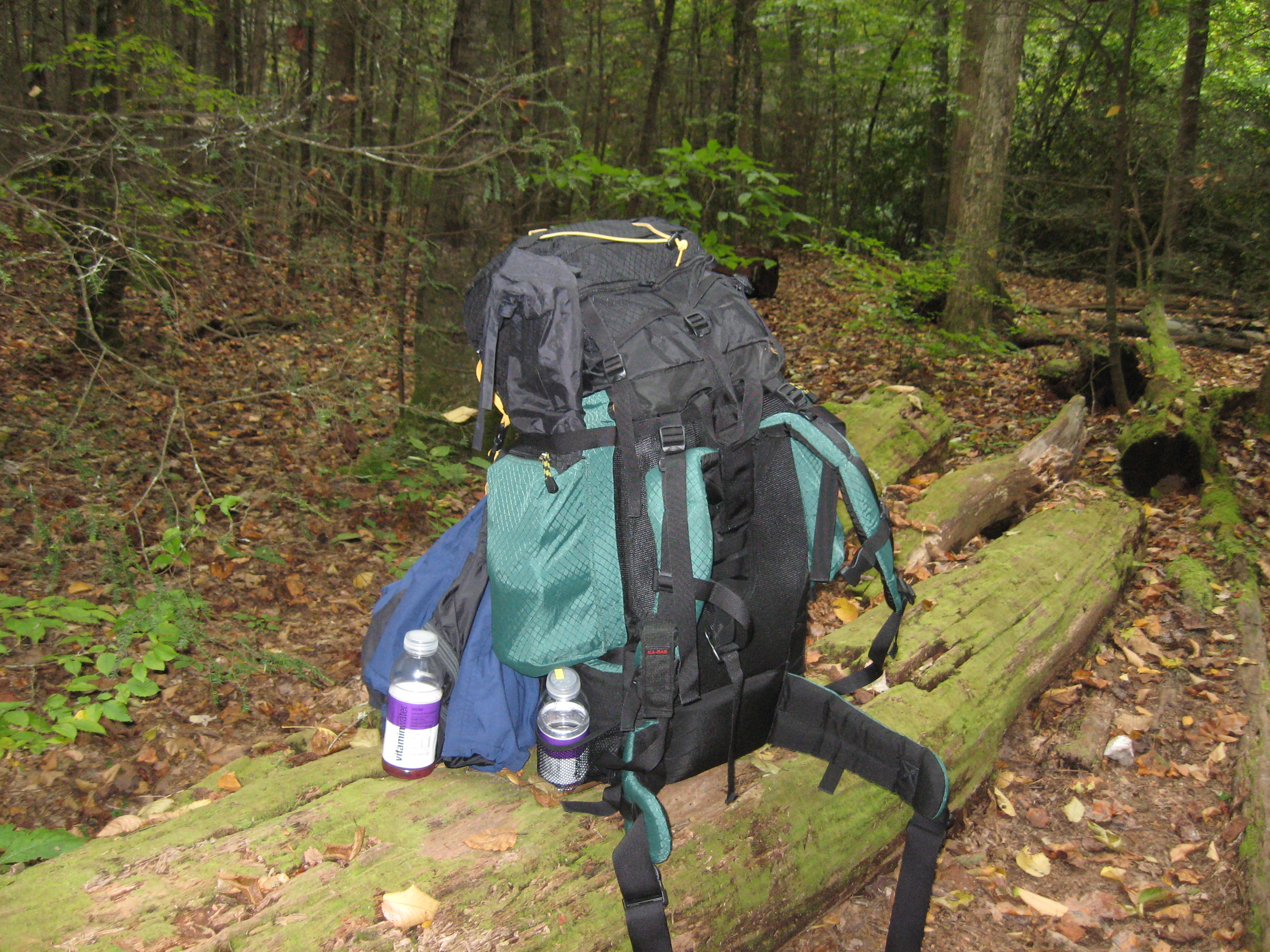
Smith’s backpack beckoned, saying “You know you can’t leave without me.  You know you need me.  Come.  Come to me … you have no choice.”

2009E 136

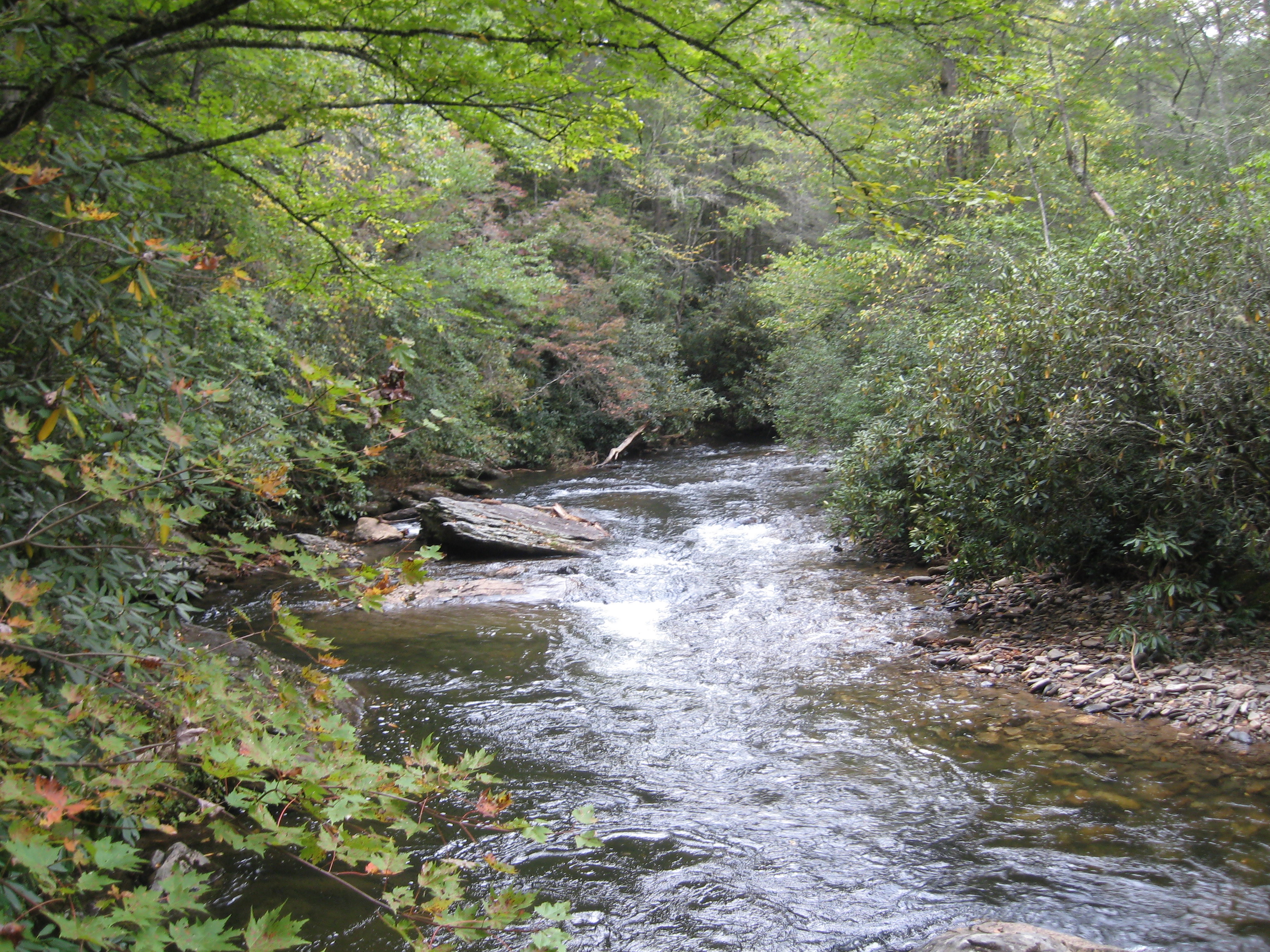
So Smith picked up his stuff again, hit the trail with Josh, and took in the beautiful vista.

2009E 138


26th MEU (10)
Abu Muqawama (12)
ACOG (2)
ACOGs (1)
Afghan National Army (36)
Afghan National Police (17)
Afghanistan (704)
Afghanistan SOFA (4)
Agriculture in COIN (3)
AGW (1)
Air Force (41)
Air Power (10)
al Qaeda (83)
Ali al-Sistani (1)
America (22)
Ammunition (304)
Animals (321)
Ansar al Sunna (15)
Anthropology (3)
Antonin Scalia (1)
AR-15s (393)
Arghandab River Valley (1)
Arlington Cemetery (2)
Army (90)
Assassinations (2)
Assault Weapon Ban (29)
Australian Army (7)
Azerbaijan (4)
Backpacking (4)
Badr Organization (8)
Baitullah Mehsud (21)
Basra (17)
BATFE (246)
Battle of Bari Alai (2)
Battle of Wanat (18)
Battle Space Weight (3)
Bin Laden (7)
Blogroll (3)
Blogs (24)
Body Armor (23)
Books (3)
Border War (18)
Brady Campaign (1)
Britain (39)
British Army (36)
Camping (5)
Canada (19)
Castle Doctrine (1)
Caucasus (6)
CENTCOM (7)
Center For a New American Security (8)
Charity (3)
China (19)
Christmas (18)
CIA (30)
Civilian National Security Force (3)
Col. Gian Gentile (9)
Combat Outposts (3)
Combat Video (2)
Concerned Citizens (6)
Constabulary Actions (3)
Coolness Factor (3)
COP Keating (4)
Corruption in COIN (4)
Council on Foreign Relations (1)
Counterinsurgency (218)
DADT (2)
David Rohde (1)
Defense Contractors (2)
Department of Defense (220)
Department of Homeland Security (26)
Disaster Preparedness (5)
Distributed Operations (5)
Dogs (15)
Donald Trump (27)
Drone Campaign (4)
EFV (3)
Egypt (12)
El Salvador (1)
Embassy Security (1)
Enemy Spotters (1)
Expeditionary Warfare (18)
F-22 (2)
F-35 (1)
Fallujah (17)
Far East (3)
Fathers and Sons (2)
Favorite (1)
Fazlullah (3)
FBI (39)
Featured (192)
Federal Firearms Laws (18)
Financing the Taliban (2)
Firearms (1,866)
Football (1)
Force Projection (35)
Force Protection (4)
Force Transformation (1)
Foreign Policy (27)
Fukushima Reactor Accident (6)
Ganjgal (1)
Garmsir (1)
general (15)
General Amos (1)
General James Mattis (1)
General McChrystal (44)
General McKiernan (6)
General Rodriguez (3)
General Suleimani (9)
Georgia (19)
GITMO (2)
Google (1)
Gulbuddin Hekmatyar (1)
Gun Control (1,717)
Guns (2,405)
Guns In National Parks (3)
Haditha Roundup (10)
Haiti (2)
HAMAS (7)
Haqqani Network (9)
Hate Mail (8)
Hekmatyar (1)
Heroism (5)
Hezbollah (12)
High Capacity Magazines (16)
High Value Targets (9)
Homecoming (1)
Homeland Security (3)
Horses (2)
Humor (72)
Hunting (60)
ICOS (1)
IEDs (7)
Immigration (123)
India (10)
Infantry (4)
Information Warfare (4)
Infrastructure (4)
Intelligence (23)
Intelligence Bulletin (6)
Iran (171)
Iraq (379)
Iraq SOFA (23)
Islamic Facism (64)
Islamists (98)
Israel (19)
Jaish al Mahdi (21)
Jalalabad (1)
Japan (3)
Jihadists (82)
John Nagl (5)
Joint Intelligence Centers (1)
JRTN (1)
Kabul (1)
Kajaki Dam (1)
Kamdesh (9)
Kandahar (12)
Karachi (7)
Kashmir (2)
Khost Province (1)
Khyber (11)
Knife Blogging (7)
Korea (4)
Korengal Valley (3)
Kunar Province (20)
Kurdistan (3)
Language in COIN (5)
Language in Statecraft (1)
Language Interpreters (2)
Lashkar-e-Taiba (2)
Law Enforcement (6)
Lawfare (14)
Leadership (6)
Lebanon (6)
Leon Panetta (2)
Let Them Fight (2)
Libya (14)
Lines of Effort (3)
Littoral Combat (8)
Logistics (50)
Long Guns (1)
Lt. Col. Allen West (2)
Marine Corps (281)
Marines in Bakwa (1)
Marines in Helmand (67)
Marjah (4)
MEDEVAC (2)
Media (68)
Medical (146)
Memorial Day (6)
Mexican Cartels (46)
Mexico (70)
Michael Yon (6)
Micromanaging the Military (7)
Middle East (1)
Military Blogging (26)
Military Contractors (5)
Military Equipment (25)
Militia (9)
Mitt Romney (3)
Monetary Policy (1)
Moqtada al Sadr (2)
Mosul (4)
Mountains (25)
MRAPs (1)
Mullah Baradar (1)
Mullah Fazlullah (1)
Mullah Omar (3)
Musa Qala (4)
Music (25)
Muslim Brotherhood (6)
Nation Building (2)
National Internet IDs (1)
National Rifle Association (97)
NATO (15)
Navy (31)
Navy Corpsman (1)
NCOs (3)
News (1)
NGOs (3)
Nicholas Schmidle (2)
Now Zad (19)
NSA (3)
NSA James L. Jones (6)
Nuclear (63)
Nuristan (8)
Obama Administration (222)
Offshore Balancing (1)
Operation Alljah (7)
Operation Khanjar (14)
Ossetia (7)
Pakistan (165)
Paktya Province (1)
Palestine (5)
Patriotism (7)
Patrolling (1)
Pech River Valley (11)
Personal (76)
Petraeus (14)
Pictures (1)
Piracy (13)
Pistol (4)
Pizzagate (21)
Police (672)
Police in COIN (3)
Policy (15)
Politics (998)
Poppy (2)
PPEs (1)
Prisons in Counterinsurgency (12)
Project Gunrunner (20)
PRTs (1)
Qatar (1)
Quadrennial Defense Review (2)
Quds Force (13)
Quetta Shura (1)
RAND (3)
Recommended Reading (14)
Refueling Tanker (1)
Religion (499)
Religion and Insurgency (19)
Reuters (1)
Rick Perry (4)
Rifles (1)
Roads (4)
Rolling Stone (1)
Ron Paul (1)
ROTC (1)
Rules of Engagement (75)
Rumsfeld (1)
Russia (37)
Sabbatical (1)
Sangin (1)
Saqlawiyah (1)
Satellite Patrols (2)
Saudi Arabia (4)
Scenes from Iraq (1)
Second Amendment (708)
Second Amendment Quick Hits (2)
Secretary Gates (9)
Sharia Law (3)
Shura Ittehad-ul-Mujahiden (1)
SIIC (2)
Sirajuddin Haqqani (1)
Small Wars (72)
Snipers (9)
Sniveling Lackeys (2)
Soft Power (4)
Somalia (8)
Sons of Afghanistan (1)
Sons of Iraq (2)
Special Forces (28)
Squad Rushes (1)
State Department (23)
Statistics (1)
Sunni Insurgency (10)
Support to Infantry Ratio (1)
Supreme Court (79)
Survival (214)
SWAT Raids (58)
Syria (38)
Tactical Drills (38)
Tactical Gear (17)
Taliban (168)
Taliban Massing of Forces (4)
Tarmiyah (1)
TBI (1)
Technology (21)
Tehrik-i-Taliban (78)
Terrain in Combat (1)
Terrorism (96)
Thanksgiving (13)
The Anbar Narrative (23)
The Art of War (5)
The Fallen (1)
The Long War (20)
The Surge (3)
The Wounded (13)
Thomas Barnett (1)
Transnational Insurgencies (5)
Tribes (5)
TSA (25)
TSA Ineptitude (14)
TTPs (4)
U.S. Border Patrol (8)
U.S. Border Security (22)
U.S. Sovereignty (29)
UAVs (2)
UBL (4)
Ukraine (10)
Uncategorized (105)
Universal Background Check (3)
Unrestricted Warfare (4)
USS Iwo Jima (2)
USS San Antonio (1)
Uzbekistan (1)
V-22 Osprey (4)
Veterans (3)
Vietnam (1)
War & Warfare (432)
War & Warfare (41)
War Movies (4)
War Reporting (21)
Wardak Province (1)
Warriors (6)
Waziristan (1)
Weapons and Tactics (80)
West Point (1)
Winter Operations (1)
Women in Combat (21)
WTF? (1)
Yemen (1)

February 2026
January 2026
December 2025
November 2025
October 2025
September 2025
August 2025
July 2025
June 2025
May 2025
April 2025
March 2025
February 2025
January 2025
December 2024
November 2024
October 2024
September 2024
August 2024
July 2024
June 2024
May 2024
April 2024
March 2024
February 2024
January 2024
December 2023
November 2023
October 2023
September 2023
August 2023
July 2023
June 2023
May 2023
April 2023
March 2023
February 2023
January 2023
December 2022
November 2022
October 2022
September 2022
August 2022
July 2022
June 2022
May 2022
April 2022
March 2022
February 2022
January 2022
December 2021
November 2021
October 2021
September 2021
August 2021
July 2021
June 2021
May 2021
April 2021
March 2021
February 2021
January 2021
December 2020
November 2020
October 2020
September 2020
August 2020
July 2020
June 2020
May 2020
April 2020
March 2020
February 2020
January 2020
December 2019
November 2019
October 2019
September 2019
August 2019
July 2019
June 2019
May 2019
April 2019
March 2019
February 2019
January 2019
December 2018
November 2018
October 2018
September 2018
August 2018
July 2018
June 2018
May 2018
April 2018
March 2018
February 2018
January 2018
December 2017
November 2017
October 2017
September 2017
August 2017
July 2017
June 2017
May 2017
April 2017
March 2017
February 2017
January 2017
December 2016
November 2016
October 2016
September 2016
August 2016
July 2016
June 2016
May 2016
April 2016
March 2016
February 2016
January 2016
December 2015
November 2015
October 2015
September 2015
August 2015
July 2015
June 2015
May 2015
April 2015
March 2015
February 2015
January 2015
December 2014
November 2014
October 2014
September 2014
August 2014
July 2014
June 2014
May 2014
April 2014
March 2014
February 2014
January 2014
December 2013
November 2013
October 2013
September 2013
August 2013
July 2013
June 2013
May 2013
April 2013
March 2013
February 2013
January 2013
December 2012
November 2012
October 2012
September 2012
August 2012
July 2012
June 2012
May 2012
April 2012
March 2012
February 2012
January 2012
December 2011
November 2011
October 2011
September 2011
August 2011
July 2011
June 2011
May 2011
April 2011
March 2011
February 2011
January 2011
December 2010
November 2010
October 2010
September 2010
August 2010
July 2010
June 2010
May 2010
April 2010
March 2010
February 2010
January 2010
December 2009
November 2009
October 2009
September 2009
August 2009
July 2009
June 2009
May 2009
April 2009
March 2009
February 2009
January 2009
December 2008
November 2008
October 2008
September 2008
August 2008
July 2008
June 2008
May 2008
April 2008
March 2008
February 2008
January 2008
December 2007
November 2007
October 2007
September 2007
August 2007
July 2007
June 2007
May 2007
April 2007
March 2007
February 2007
January 2007
December 2006
November 2006
October 2006
September 2006
August 2006
July 2006
June 2006
May 2006

about · archives · contact · register

Copyright © 2006-2026 Captain's Journal. All rights reserved.