New York Court Holds Stun Gun Ban is Not Unconstitutional, in Contravention of Caetano

Herschel Smith · 30 Mar 2025 · 2 Comments

Dean Weingarten has a good find at Ammoland. Judge Eduardo Ramos, the U.S. District Judge for the Southern District of New York,  has issued an Opinion & Order that a ban on stun guns is constitutional. A New York State law prohibits the private possession of stun guns and tasers; a New York City law prohibits the possession and selling of stun guns. Judge Ramos has ruled these laws do not infringe on rights protected by the Second Amendment of the United States Constitution. Let's briefly…… [read more]

Bad Form in Counterinsurgency Debates

BY Herschel Smith
17 years, 5 months ago

Andrew Exum blogging at Abu Muqawama has a piece up on who he perceives to be the winner and losers in Tom Ricks’ new book The Gamble: General David Petraeus and the American Military Adventure in Iraq, 2006-2008.  I personally like Andrew and have enjoyed the exchanges I have had with him, via e-mail and in blog articles.  But let’s deal with a few items from this post by Andrew.

First, one of the “losers” is determined to be Colonel Gian Gentile who commanded a Battalion in Baghdad in 2006.  Tom Ricks judges the performance of his unit to be “actually quite poor.”  Major General Hammond is cited saying “Gentile had a different stance. It was night and day. He was FOB-centric. We are JSS-centric.”

Well, do tell.  Actually, I judge the performance of books that promulgate myths to be poor.  I have not read the book because Tom hasn’t sent me a free copy to review.  Had he sent me a copy I would have responded.  As a matter of fact, I haven’t even been able to get Tom to respond to a single e-mail.  But if Tom’s book advocates the idea that the campaign was won by jettisoning the notion of FOB-centric counterinsurgency and embracing Combat Outposts (or Joint Security Stations), then it is an exercise in simplistic myth-telling.

We have dealt with this before, this notion of a simple, one line narrative for Iraq.  The country, the security situation, the units, the commanders, and the enemy was simply too diverse for a one-size-fits-all narrative.  Even as late as the middle of 2007 operations were conducted in Fallujah, Anbar that were essentially FOB-centric.  The Marines in Operation Alljah would spend some time at JSS, but rotate in and out of them, never spending more than about two or three weeks per rotation.  The FOB was the main strategy for force protection, and yet the Marines still spent most of their time interacting with the population no matter where they garrisoned (heavy census operations, heavy patrolling, and especially heavy kinetic operations).  These operations were so successful that many high level visitors were received to discuss the methods, including the Commandant of the Marine Corps.

To say that a commander is FOB-centric is to say nothing more than he is committed to force protection.  It means nothing regarding the ability to do counterinsurgency.  And so now we have let the cat out of the bag, haven’t we?  There it is.  The great myth.  Now, let’s distinguish between levels.  Currently much of the Army in Afghanistan is cloistered into huge FOBs and left without much contact with the population.  Let’s contrast that the right way to do it.  In Opening a Combat Outpost for Business, we listened as the Marines built their force protection.

Marines with 2nd Platoon, Motor Transportation Company, Combat Logistics Battalion 3, conducted multiple combat logistics patrols in support of Operation Gateway III in Farah Province, Islamic Republic of Afghanistan Dec. 28, 2008, through Jan. 25, 2009.

The logistics combat element Marines, part of Special Purpose Marine Air Ground Task Force – Afghanistan, endured more than two weeks behind their steering wheels and gun turrets in improvised explosive device-laden terrain during the initial phases of the operation.  Military planners with SPMAGTF-A designed Operation Gateway III as a deliberate plan to clear southern Afghanistan’s Route 515 of any existing IED and insurgent threats on the important east-west route.

The combat logisticians directly supported 3rd Battalion, 8th Marine Regiment (Reinforced), the ground combat element of SPMAGTF-A, with the essential supplies and construction support necessary to erect three combat outposts at strategic locations along Route 515.  In a limited amount of time, the three locations were successfully developed from barren land into safe havens for the 3/8 Marines occupying the area.

“Ultimately I was surprised,” said Staff Sgt. Chris O. Ross, platoon sergeant. “The COPs were built quickly, and the Marines were working overtime to do it.”

Ross also said the timing and coordination required to conduct the operation came together well.

Second Lt. Juliann C. Naughton, 2nd Platoon’s convoy commander, explained it’s shocking for the locals to wake up the next morning to see that a military outpost has appeared from nowhere during the course of the night.

“The logistical support was a success, and we delivered the materials in a timely manner,” Naughton said. “We’ve also been interacting with the villagers and letting them know why we’re here.”

Fortifications including concertina wire, a parapet several feet tall and dirt-filled protective barriers ensured the Marines on the interior of the COPs were shielded from outside threats. Multiple observation posts and several heavy and medium machine guns provided security and over-watch for the combat logisticians as they performed their craft.

The interior of the COPs offer living quarters, hygiene facilities, combat operations centers and more to accommodate its current and future residents.

The posts were strategically placed along the route to show an alliance presence, as well as enable safe travel.

And thus can it be done successfully, this notion of force protection combined with contact with the population.  To set them in juxtaposition as opposites or somehow mutually exclusive is the grand myth around which the narrative of the surge is being built.  In reality, the situation was more complicated, a subject we covered in The Surge.

Second, Gian Gentile asks Tom in the comments of this post at Abu Muqawama:

Ref your book Fiasco, which at the end you spend about a page talking about my unit, 8-10 Cav. In Fiasco you said this about my unit and what we were doing in 2006:

“… overall the US effort was characterized by a more careful, purposeful style.”

you even went on to praise a simple tactic of slow mounted movement that we adopted and noted that

“it was less disruptive to the Iraqis and sends a message of calm, control…”

OK, you were not saying that Gentile was the next Galula, that they were on the way to winning the war by themselves. But clearly your impression was positive, at least the way you portrayed us in Fiasco.

Then The Gamble comes along and in it you become a harsh critic of my unit’s performance (and that criticism was based on the same embed tour that you did with us in early February). So what changed between the two books?

To which Tom responds thusly:

‘what changed between the two books?’

A small civil war, and the prospect of defeat.

So there you have it.  One may ask rhetorically what this has to do with Gian Gentile, and the obvious answer is nothing whatsoever.  So we may conclude that Tom doesn’t have a good answer for what happened between the two books.

Third, as for Gian, he and I have slightly disagreed and nuanced our arguments to come to agreement elsewhere, such as with Sadr (I believe that marginalization of his forces did him in, and that he wouldn’t have been alive anyway had the 3/2 Marines had their way, as he was under their custody in 2004) and the Sons of Iraq and pay to participate (which saw robust use in the Anbar province in 2007 as it should have).

But Gian is a great American and a warrior-scholar, and to place him in the category of “loser” as Andrew does is simply bad form.  There is no excuse for it.  Again, I like Andrew, but he seems to have bought into the Gnostic version of counterinsurgency.  Only a few “get it,” and the rest of us should simply be consigned to the doofus category in counterinsurgency.  Such may be the indiscretions of youth.

Andrew is a bright young man and his contributions to this discipline in the future will be enormous.  But with this authority comes responsibility.  Andrew should be circumspect with his thoughts.  Gian doesn’t advocate jettisoning counterinsurgency doctrine, any more than he wishes to lose the campaigns in which we are engaged.  Gian wants to be prepared for the future, no matter what that may bring.  It was a very wise man who once said:

“For waging war you need guidance, and for victory many advisers” (Proverbs 24:6, NIV).

See also: The Man in the Arena, Small Wars Journal Blog

On the Front Lines in Afghanistan

BY Herschel Smith
17 years, 5 months ago

Jim Landers of the Dallas News is on the front line with U.S. soldiers in Afghanistan.  All of his observations are interesting, but there are two that are particularly poignant.

KALAGU, Afghanistan – Sgt. Corey Tack guns the engine of the 18-ton armored truck up a snow-streaked, gravelly hill. He parks on a spot with a commanding view of the valley between white, jagged mountains. Sgt. Oscar Macias opens the 400-pound back door and jumps out.

Facing a night of midteen temperatures and heavy frost, the soldiers start digging holes for their sleeping bags.

“A mortar hits in the middle here, bang, we’re all dead,” said Macias, from Rio Hondo, Texas. “But if it hits over there, you’ll be in a hole and the shrapnel will go over your head.”

The confident, weather-burned faces of these soldiers tell a story. They’re battle-tested and undefeated. They sense the enemy knows and avoids their truck with its red-and-white banners that read “Hooligans.” But they also know they are not winning the battle against insurgents in Afghanistan.

“When I first rolled in, it was kill everybody and everything,” Macias said with exaggeration.

No more.

Even if you do take their leaders out, there’s always somebody else to replace them,” he said.

These Cavalry Scouts say there aren’t enough American troops here to cover a country the size of Texas.

They know their enemies roam unchecked across much of the bleak high plains. They know the enemy is winning on the information front, spreading propaganda about U.S. soldiers smashing down doors in the middle of the night to rape, pillage and murder.

To win, they know they have to hand over security to their Afghan counterparts, who often come to a fight ill-equipped and stoned on hashish.

The hash smoking “happens a lot – more than I know or want to know,” said Sgt. 1st Class Bruce Kobel, a Lewiston, Maine, firefighter with the Vermont National Guard who is training Afghan soldiers here. “It’s like, you learn there’s an accepted level of corruption. Well, there’s also an accepted level of drug abuse, too. It’s part of their culture.”

Macias’ observation runs right in line with reports to The Captain’s Journal from field grade officers in Afghanistan.  Kill a mid-level Taliban commander, and they stay low for a few weeks to regroup and realign.  Then the violence starts again, and the cycle continues.  The Special Operations Forces campaign against high value targets, however effective it might have been to get us far enough to stand down troops in Iraq and switch focus to Afghanistan, is now failing us.  A HVT campaign is no replacement for counterinsurgency.

We have previously commented on the corruption in Afghanistan and how it will cause the campaign to fail if it proceeds unchecked (because it legitimizes the Taliban shadow government).  But we learn something new with Landers’ report from the front lines.  Hash smoking is not only rampant within Afghan culture (we knew this), but the Afghan Army doesn’t control it among their own.

This is yet another example of reverse legitimacy.  It would almost be better for the population not to see the Afghan Army at all than to see them staggering towards their home on patrol, stoned on Hashish.  The Captain’s Journal thinks that it’s time to throw away the bongs and pick up a rifle.  Without being able to turn over to a legitimate Afghan Army, all will be lost in Afghanistan.

Afghanistan, Corruption and Counterinsurgency

BY Herschel Smith
17 years, 5 months ago

Edward Joseph writing for the Washington Post gives us a glimpse into how some of the former anti-Soviet Mujahideen feel about the U.S. presence in Afghanistan.

I recently visited the exhibit during a seven-week mission to evaluate a U.S. program assisting local governments in Afghanistan. On our way out of the museum, we bumped into a prominent mujahed fighter and his entourage. When an American in our group told him that the United States would never forget the Afghan fighters’ struggle against the Soviets, he smiled and nodded proudly. “And we also can never forget your fight against the Taliban now,” the American added. With that, the mujahed’s smile vanished — and so did he, with all his people, after an awkward goodbye.

A full sixty percent of the Afghan population see the Taliban as the biggest threat to Afghanistan.  This Mujahideen can be counted as one of the irreconcilables, and Petraeus has noted that we must pursue and kill them.  But the author goes on to discuss what turns out to be an important underlying problem in Afghanistan: corruption.

Everywhere I went, people complained about corruption. “The government is corrupt from A to Z,” said a road contractor working in one of the most dangerous provinces. The pressure, he explained, begins with “suggestions” that he hire officials’ relatives and friends and rent vehicles only from certain providers; it ends with the officials telling him exactly how big a cut of his profits they’ll take to let the project continue.

This theme is so ubiquitous that it isn’t difficult to find reports of corruption.  It applies to everything in life.

When it comes to governing this violent, fractious land, everything, it seems, has its price.

Want to be a provincial police chief? It will cost you $100,000.

Want to drive a convoy of trucks loaded with fuel across the country? Be prepared to pay $6,000 per truck, so the police will not tip off the Taliban.

Need to settle a lawsuit over the ownership of your house? About $25,000, depending on the judge.

“It is very shameful, but probably I will pay the bribe,” Mohammed Naim, a young English teacher, said as he stood in front of the Secondary Courthouse in Kabul. His brother had been arrested a week before, and the police were demanding $4,000 for his release. “Everything is possible in this country now. Everything.”

Kept afloat by billions of dollars in American and other foreign aid, the government of Afghanistan is shot through with corruption and graft. From the lowliest traffic policeman to the family of President Hamid Karzai himself, the state built on the ruins of the Taliban government seven years ago now often seems to exist for little more than the enrichment of those who run it.

Ubiquitous corruption is now causing a major problem in the counterinsurgency campaign.  Some of the population is beginning to contrast the massive, systemic corruption of the current regime with Taliban rule.

Some in Kabul have become nostalgic for Taliban times. “At least, with the Taliban, we had security,” one mechanic told me after we haggled over the cost of my motorcycle repair. “No one would steal my tools. Now life is dangerous, the cost of food and gas are expensive, and the government does nothing for us. They work only for themselves, because they know this won’t last” …

[Some] seem nostalgic about the Taliban government’s honesty and integrity, despite the harsh rules. One recent cartoon in The Kabul Times showed a $100 bill on a human body, pointing to an Afghan government ministry and saying, “If you need help, don’t go in there without me!”

According to one report, NGOs now dedicate an average of 7 to 8 percent of their budget to paying bribes—sometimes called “facilitation fees” or “marketing fees” on paper—many directly to government official coffers. USAID and military organizations seem able to avoid much of the corruption, but ordinary Afghans face it regularly. There are at least four phrases in Dari specifically for persons who demand bribes, my favorite being chor sat o bist, “420,” the code for corruption.

It’s not that the system is corrupt,” the U.S. State Department’s new anti-corruption director told me in September, inside a heavily guarded compound in Wazir Akbar Khan. “It’s that corruption is the system.”

Corruption undermines legitimacy of the government, especially for the poor and lower middle class.  This has been and is being exploited by the Taliban, whether in Afghanistan or Pakistan.  The PakTribune has a remarkable anecdotal account of this kind of exploitation.  It is a lengthy account, but necessary if we wish fully to understand one of the tools that the Taliban have used to come back to power.

It was during a visit to Peshawar that I met a senior police officer. He narrated a story which was brow-raising. He told of a person from Bannu who lent Rs 40,000/ to a man he knew, who promised that he would return it within a specified time. He told the borrower that he had saved up the said amount to help pay for his children`s education. When the agreed time lapsed, he asked him to return the amount. The borrower started making excuses and after a few months he flatly refused and challenged the lender to do what ever he could. There is a Pukhtun word for it “Laas Da Azaad De”.

The man went from pillar to post to seek justice but with no result. The police proved incapable as the borrower was a powerful man with strong connections. When he tried to knock on the door of the court for justice he was dismayed to hear that it would take months for the case to come to a hearing and years to reach a final judgment. After all that, the chances were that the verdict would go against him as he was up against powerful people. To top it off, he was told he had to pay Rs. 1000/ upfront every time he wanted to put his case forward for a hearing. This amount did not include the amount he was going to pay the lawyers. When he calculated it, the approximate amount turned out to be more than the actual amount he was going to seek justice for.

At the end of every day, he would go back home heart broken; cursing his luck to be living in a country where there was no justice for the middle or poor classes. He tried to persuade the borrower by pleading with him, explaining how desperately he needed the money for his children’s education. He even offered a discount or to split the amount into installments, but all in vain. It was like hitting a brick wall. He felt dejected, helpless and powerless to see his children suffering just because he came from strata of a society pushed against the wall.

One evening, he heard a knock on the door. He opened it and saw two strangers with bushy beards standing outside. Thinking they were there to collect ‘Chanda’, he asked with irritation what they wanted. They told him that they saw him crying in the mosque and on enquiry they were told that someone was refusing to pay his money back. With a surprised look on his face, he asked them who they were.

“We are local Taliban” Then they asked if he would let them have his side of story. He saw a ray of hope and ushered them in. After listening to his story, the Taliban told him that the borrower had committed an un-Islamic act, and if he wanted they could persuade him to return the said money. “We want your permission”. His heart jumped with flickering optimism and immense joy and without any hesitation, he gave them his consent. Before they left the premises they asked for 72 hours.

According to the police officer, the Taliban went to the influential man and told him it was un-Islamic not to pay the amount he had borrowed from the man. They threatened that if he did not pay the debt back within 48 hours; he would bear the consequences. They also told him how Taliban had previously dealt with people like him. Shivers went through the spine of the ‘powerful’ man as he knew what their threat meant. With a dry mouth, frightened face and shaking body he nodded his head in agreement, promising he would pay back the amount. The next day, he went to the house of the lender and paid back the full amount he had refused up until then. He apologised for the delay and requested him to tell the Taliban not to harm him or his family and to let them know that he had returned the money. The Taliban never went back to ask whether he got the money back, but they must had been watching the development. From that day on, according to the police officer, that man became a strong supporter of Taliban. Could anyone blame him?

When Taliban justice is seen as free of corruption, the people can overlook its harshness – at least, some of them.  As long as corruption is the way of life in Afghanistan and the Taliban are seen as the anti-corruption faction, the campaign will be very hard to prosecute, and in fact no lasting good is likely to come of it.

The application of soft power is necessary in Afghanistan, and this power doesn’t necessarily mean more largesse.  But it does mean that we must be clever and crafty regarding the politics, governance, mentoring and instruction of the Afghan government, and the accountability we demand of the current (and future) regime.  We must not be as politically stolid as we were in Iraq.  We might just win the military campaign and lose the country because we back a corrupt regime.

NATO and Poppy: The War Over Revenue Part 2

BY Herschel Smith
17 years, 5 months ago

In NATO and Poppy: The War Over Revenue, we discussed the U.S. and NATO program (then in the planning stages) to eradicate poppy since it provides a revenue stream to the Taliban.  The Taliban also create income from marble quarries in Pakistan, extortion of cell phone providers in Afghanistan, ransom from kidnapping, and “protection” of small businesses.

The plans are finalized now and U.S. forces will fire on drug related individuals without proof that they are connected to any military objective.

NATO will remain within international law when it proceeds with new measures to kill drug traffickers in Afghanistan and bomb drug processing laboratories to deprive the Taliban of its main financing, the alliance’s secretary general said Wednesday.

The official, Jaap de Hoop Scheffer, said that “a number of buffers and filters” had been put in place to safeguard the legality of combating what he termed the nexus between the insurgency and narcotics.

“It is according to international law,” he said. “And if nations at a certain stage think that they would rather not participate, they will not be forced to participate.”

Two weeks ago, the alliance was embroiled in controversy after Gen. John Craddock, the NATO commander who is also chief of American forces in Europe, said troops in Afghanistan would fire on individuals responsible for supplying heroin refining laboratories with opium without need for evidence.

In a letter to Gen. Egon Ramms, a German who heads the NATO command center responsible for Afghanistan, General Craddock said that “it was no longer necessary to produce intelligence or other evidence that each particular drug trafficker or narcotics facility in Afghanistan meets the criteria of being a military objective.”

General Ramms questioned the legality of the proposal, warning that it would violate international law and rules governing armed conflict. General Ramms’s letter was leaked, provoking a debate within NATO about the conditions and circumstances under which troops could attack drug laboratories.

Mr. de Hoop Scheffer ordered an investigation into the leak. “Our enemies and opponents in Afghanistan are reading this leak,” he said. “They are not stupid.”

Aside from the effeminate hand wringing over whether this program is “legal,” the program is an attempt to avoid conducting counterinsurgency.

The notions of herion, opium and drug cartels carry connotations of evil, and properly so.  But that isn’t the point.  When the Marines engaged the Taliban in the Helmand province they purposely avoided any destruction of crops, poppy and otherwise.  Turning the farmers into insurgents was not in the mission plan, and the Marines are smart fighters.

Concerning a recent example of Texas National Guard in an agricultural program to compete with the Taliban farms for seed production, we warned that it is one thing to win the competition, and quite another to ensure that the Taliban don’t co-opt the program and turn it to their favor.

Yet another example of this comes from a clever plan to replace poppy with pomegranates.

POMEGRANATES are the key to eliminating heroin, a pioneering charity founder has claimed.

James Brett is spearheading a campaign to persuade farmers in Afghanistan to switch from growing poppies to growing the super-fruit.

He was in Cardiff yesterday as a guest speaker at the annual conference at City Hall of Cymorth Cymru, the organisation that represents people in supported housing.

“I recognised that Afghanistan not only grew the best pomegranates in the world,” said James, who founded the charity Pom 354.

“They also produced more than 90% of the world’s heroin.

“From research I undertook I came to realise that sales of pomegranates on the global market could outstrip the value to Afghanistan of the opium industry.

“With Pom 354 we are putting in place something that is completely viable for the farmers, and that’s vital to the sustainability of the project in Afghanistan.”

Many families in the war-torn country rely on growing poppies, which are turned into heroin, which in turn is smuggled through Europe and has destroyed countless lives in South Wales.

James added: “The tribal elders [in Afghanistan] are very happy that someone has come and started a project they can believe in.

“There’s a lot of unity there and we’re just getting ready to get started on a large scale.

“We’re looking at installing a factory in Kandahar to produce pomegranate concentrate and, if possible, pomegranate jam.

“We’d like to see at the end of this year containers of fresh pomegranate leaving Afghanistan for supermarkets.

“There’s a lot of interest in pomegranates in the West because of its health benefits.

“Over the course of the next 10 years we would like to plant 45.9 million trees, which would cover an area slightly larger than the areas which are used for poppy production.”

The program sounds promising so far.  As for the Taliban?

Asked whether he had been in contact with the Taliban, Mr Brett said: “In the complexity of the tribal system in Afghanistan, the Taliban are in every element of society.

When I talked at the three tribal gatherings, the Taliban were present. I believe that if we don’t communicate with every faction of this problem, we’re not going to solve it.

So what is the solution to the evolving pomegranate problem?  How will we prevent it from becoming a revenue stream for the Taliban?  Will we shoot pomegranate dealers on sight?

The problem is that we have tried everything – from special operations and air raids on high value targets, and now to poppy eradication – instead of classical counterinsurgency with enough troops to accomplish the mission.

The problem isn’t poppy any more than it is marble quarries, small businesses, wheat seed or pomegranate farmers.  There is no solution to the problem of the revenue stream except to kill or capture the Taliban.  Why is this so hard for strategists and staff level officers to understand?

Marines, Taliban and Tactics, Techniques and Procedures

BY Herschel Smith
17 years, 5 months ago

This generation’s Ernie Pyle, Michael Yon, has posted a very important Powerpoint presentation.  His post is entitled The Eagle Went Over the Mountain.  Michael has posted some very important prose on the campaigns in both Iraq and Afghanistan.  But sometimes all a good journalist has to do to be good is find and send on the important things he finds.  The trick is in knowing what’s important.  Every unit planning a deployment to Afghanistan, and even those who are not, should spend time studying this presentation for its worth in the fundamentals of tactics, techniques and procedures (TTP).  The Powerpoint presentation is linked just below.

the_eagle_went_over_the_mountain3

Here is one excerpt on a common tactic.

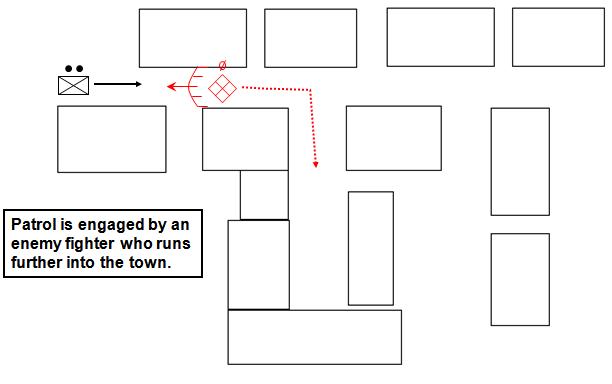
The bait and ambush attack is one of the most common ambush techniques used by the enemy.  The enemy is very observant and has noticed how aggressive Marines are compared to other coalition forces.  They have use this to their advantage on several occasions and have drawn Marines into complex ambushes with catastrophic results.

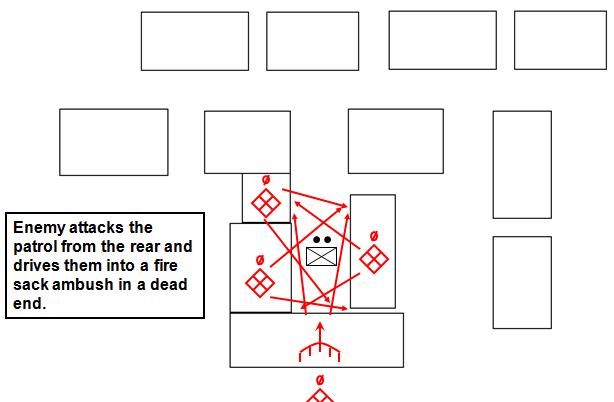
In this scenario a platoon minus was patrolling the town when they were engaged with sporadic small arms fire from a distance.  They returned fire and were moving further into the town when they were engaged by a single enemy fighter who fired on the platoon and broke contact.  The platoon chased the fighter through the town when they suddenly found themselves in a dead end.

The enemy attacked the platoon from the rear and pushed them further into the dead end.  The enemy had driven the platoon into a fire sack and they ambushed the platoon from the roof tops.  This continued until aviation assets came over head and broke the ambush.

Here is a visual depiction of the tactic.

This is only the beginning of the discussion concerning logistics ambushes, fire and maneuver tactics, development of enfilade fire, and even the thickness of the mud walls of the Afghan homes (18″ thick, resistant even to 20 mm Vulcan).  As few of the summary points of the presentation follow:

Fire Control: Enemy forces have demonstrated a high level of fire control in numerous engagements.  They have shifted and focused their fires on what they perceived to be the greatest threat.  Ambushes have generally been initiated with bursts of machinegun fire followed by volleys of RPGs.  The beaten zone of the RPGs have been within six inches to a foot.  This shows a very developed system of fire control and points to a section leader controlling these fires.  The complexity and size of some of these ambushes point to a platoon and company level command structure.

Interlocking fields of fire: The enemy did an excellent job of placing fighting positions in locations where they could mutually support each other.  As elements of the platoon attacked one position, they would be engaged from multiple firing positions.  Several times during the engagement elements of the platoon would be pinned down from accurate fire coming from several directions until other elements could maneuver to destroy those positions.

RPG Volley Fire: Almost every time the enemy attacked the armored vehicles, the enemy attacked with volleys of 2-3 RPGs.  This demonstrated a high amount of coordination and discipline.  Often times these attacks came from multiple firing positions.

Combined arms:  The enemy demonstrated an advanced understanding of combined arms.  Most of their attacks on the platoon combined machine gun fire with RPGs, rockets and mortars.  Enemy forces used their PK machine guns to suppress turret gunners while several RPG gunners would engage vehicles with volleys of RPGs. They also attempted to fix the vehicles using RPGs and machinegun fire for attacks with rockets and mortars.

Fire and Maneuver: The enemy proved to be very adept at fire and maneuver. The enemy would fix Marines with RPG and machine gun fire and attempt to maneuver to the flanks.  This happened with every engagement.  If elements of the platoon were attacked from one direction, they could expect further attacks to come from the flanks.  This occurred both with mounted and dismounted elements of the platoon.

Anti-Armor Tactics: The enemy did not attempt to penetrate the crew compartment of the vehicles they engaged.  They fired volleys of RPGs to the front end of the HMMWVs in order to disable them and start a vehicle fire.  Once the crew evacuated, they would engage them with crew served weapons.  This demonstrates a very detailed understanding of the limitations of their weapon systems and a thorough knowledge of our armor vulnerabilities.

“Karez” Irrigation Ditches: The enemy utilized prepared fighting positions built into irrigation ditches to maneuver about the battlefield and attack the platoon.  These ditches ranged from four to seven feet deep and made any frontal attacks very difficult.  The enemy would attack from one position and rapidly maneuver to another.  This facilitated flanking attacks.  The enemy also used tree lines to stage their attacks from.  Many wooded areas are bordered with mud walls and irrigation ditches, which the enemy used for cover and concealment.

Massing Forces: The enemy was able to mass their forces to over 400 enemy on the battlefield on several occasions.  This was not normally the case in Iraq.  Situations here in Afghanistan can quickly escalate and even company sized elements can find themselves outnumbered, outmaneuvered and outgunned.  The enemy will not always mass but they will rally to defend their leadership or protect their interests.  They have conducted ambushes that have swelled to 400 fighter engagements and have also massed to that size to conduct attacks on Forward Operating Bases.

Defense in Depth: The enemy plans their defenses with depth and mutual support in mind.  In one ambush the enemy engaged the platoon from a tree line that was supported by fighting position to the north that were tied into the defense and prevented us from flanking the ambush site.  These machine gun positions had excellent fields of fire and machine guns were set in on the avenues of approach. The enemy fought to the death in the tree line to defend their base 200 meters to the north.  As the platoon attempted to attack the base from the flank, they were engaged from multiple machine gun positions with excellent fields of fire with interlocking fields of fire.

Fire Discipline: Engagements have lasted from two to forty hours of sustained combat.  Marines must be careful to conserve rounds because there may not be any way to replenish their ammunition and it is not practical or recommended to carry an excessive number of magazines.  Marines took a few moments to apply the fundamentals of marksmanship and this greatly improved the ratio of shots fired to enemy fighters killed.  Crew Served Weapons do not always need to be fired at the rapid rate.  Good application of shoulder pressure will tighten beaten zones and lead to effective suppression. Talking guns will help conserve ammunition.

Fire Control: Fire control was critical during the battle from the team to platoon level.  One of the main reasons the platoon did not take many casualties during the battle was due to the effective coordination between crew served weapons, precision fires, CAS, mortars and small arms.  This permitted the platoon to place pressure on the enemy force and focus fires as required to maneuver elements of the platoon to close with and destroy the enemy.  Enemy forces use water to reduce the dust signature around their battle positions and it can become very difficult to locate enemy firing positions in the chaos of battle.  Unit leaders can use tracers in the day time and lasers at night to mark targets for crew served weapons and small arms fire.   Vehicle commanders and drivers can walk gunners on target using ADDRACS, target reference points and the field expedient mil system (one finger, four fingers from the hay stack).  The impacts from MK-19 are easily seen and can be used to orient the other gunners.

Combat Load: Marines had to conduct numerous trench assaults and squad rushes during the eight hour battle and the heavy weight of their armor and equipment greatly hampered their movement.  After this battle all of the Marines reevaluated their combat load and reduced the amount of ammunition that they carried.  After the battle, Marines normally carried no more than 4 to 6 magazines and one grenade.  In the company ambush in Bala Baluk no Marine fired more than four magazines in the eight hours of fighting despite the target rich environment.

This is not nearly all of the important TP observations.  The entire presentation is worth the time to study and re-study, and there are a number of counter-tactics that the Marines found that they could use with success.  This extremely important observation concludes the presentation: Iraq has allowed us to become tactically sloppy as the majority of fighters there are unorganized and poorly trained.  This is not the case in Afghanistan.  The enemy combatants here will exploit any mistake made by coalition forces with catastrophic results.  Complacency and laziness will result in mass causalities.

The Recon Marines and the authors of this report have done a great service to the balance of U.S. forces in theater for providing this analysis both of the enemy TTP and successful defeaters for them.  While a new study is released from the think tanks about every week on Afghanistan, this presentation should be considered the most important thing to come out of Afghanistan in the past two years.  I have discussed this with Michael Yon, and on this we agree.

It deserves as wide a distribution as possible.  Thanks to Michael for posting this, and a special thanks to the brave warriors of the Force Recon Marines.

Is Afghanistan Worth It?

BY Herschel Smith
17 years, 5 months ago

A confluence of events and articles is focusing attention on the question(s) “Why are we in Afghanistan?” and “Is it worth it?”  A main stream media reporter recently sent The Captain’s Journal a note questioning what would happen if the U.S. and Britain completely pulled out of Afghanistan?  This reporter isn’t alone.  The likes of Dr. John Nagl, Michael Yon, Bill Roggio and Dr. David Kilcullen have recently weighed in on a number of both directly and tangentially related issues concerning whether we stay in Afghanistan and what the campaign should look like if we do.  Since this also relates to our own advocacy of a particular strategy for Afghanistan, we’ll take a sweeping trek across this terrain.

David Kilcullen weighs in at The Small Wars Journal Blog with Crunch Time in Afghanistan-Pakistan (an edited version of his statement before the Senate Foreign Relations Committee hearing on Afghanistan, 5th February 2009).  We’ll return to what Kilcullen says shortly, but first, there is a particular comment that runs in the same vein as the many of the objections to the campaign.  Excerpts are provided below.

… is it not better to cut the losses and leave now?  What is the downside of an immediate departure?  Loss of prestige? We have none to lose with any the groups we’re attempting to defeat.  Loss of deterrence? As Israel will discover, misapplied force encourages rather than discourages resistance. (Didn’t some guy named Galula say that about 50 years ago?)  The Taliban take over? Let them. As with Hamas, the only avenue to a positive outcome for us is to let them attempt to govern. If they succeed and create development and stability, we win. If they fail and destroy their popular support, we win … That al Qaeda will flourish? It’s more an identity than an entity, and we can’t defeat ideas with firepower. External events will determine al Qaeda’s viability.  The instability in Afghanistan spills over into Pakistan? Too late. We pretty much assured that when we underwrote the original mujahedeen back in the 80’s and then walked away after the Red Army bolted …  That heroin will flood the world? Legalize drugs and kill their funding source. (And that of the cartels.) (And we can shift the DEA budget to development work.)  That it will become a training ground (again) for terrorists? As long as there is a sea of disaffected people for them to swim in, terrorists will exist and their camps will be somewhere. True counterterrorism is social work – police, intel, development. The solution is social justice, not combat … Aid workers are a lot cheaper than warfighters, and the rising expectation of Pashtuns, driven by the awareness of their neighbors’ prosperity, will become an existential threat to the Taliban.

This objection to the campaign as it is currently constituted is the classic counterterrorism schema in which kinetic operations are reserved for high value targets and the population is changed from policing actions and social justice.  Seth G. Jones with RAND is a proponent of this model, i.e., that policing and intelligence are the answer to the problem rather than military action.

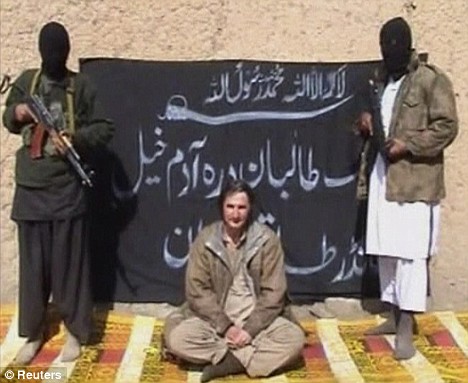
Aid workers would suffer the same fate as the Polish engineer who was recently executed by the Taliban.

When aid workers have no security they cannot perform the functions of an aid worker.  The Taliban will hardly create a stable regime, and Afghanistan would indeed become a haven again for AQ.  Furthermore, the mission of the Taliban (both Afghan Taliban and Tehrik-i-Taliban) is harmonizing into one of support for regional control and then confrontation of the West.  Baitullah Mehsud has made it clear that the goals of the TTP have evolved to one of global aspirations: “We want to eradicate Britain and America, and to shatter the arrogance and tyranny of the infidels. We pray that Allah will enable us to destroy the White House, New York, and London.”

If the Taliban ever were just local rogues and thugs who wanted control over money and women, they aren’t now only that.  There has been a dovetailing not only of ideology but of forces as well.  The Tehrik-i-Taliban shout to passersby in Khyber “We are Taliban! We are mujahedin! “We are al-Qaida!” There is no distinction.  Bill Roggio has recently written about al Qaeda’s shadow army, operating in both Pakistan and Afghanistan.

Al Qaeda has reorganized its notorious paramilitary formations that were devastated during the US invasion of Afghanistan in 2001 and 2002. Al Qaeda has reestablished the predominantly Arab and Asian paramilitary formation that was formerly known as Brigade 055 into a larger, more effective fighting unit known as the Lashkar al Zil, or Shadow Army, a senior US intelligence official told The Long War Journal.

The Shadow Army is active primarily in Pakistan’s tribal areas, the Northwest Frontier Province, and in eastern and southern Afghanistan, several US military and intelligence officials told The Long War Journal on condition of anonymity due to the sensitivity of the subject.

The paramilitary force is well trained and equipped, and has successfully defeated the Pakistani Army in multiple engagements. Inside Pakistan, the Shadow Army has been active in successful Taliban campaigns in North and South Waziristan, Bajaur, Peshawar, Khyber, and Swat.

In Afghanistan, the Shadow Army has conducted operations against Coalition and Afghan forces in Kunar, Nuristan, Nangahar, Kabul, Logar, Wardak, Khost, Paktika, Paktia, Zabul, Ghazni, and Kandahar provinces.

“The Shadow Army has been instrumental in the Taliban’s consolidation of power in Pakistan’s tribal areas and in the Northwest Frontier Province,” a senior intelligence official said. “They are also behind the Taliban’s successes in eastern and southern Afghanistan. They are helping to pinch Kabul.”

Afghan and Pakistan-based Taliban forces have integrated elements of their forces into the Shadow Army, “especially the Tehrik-e-Taliban and Haqqani Network,” a senior US military intelligence official said. “It is considered a status symbol” for groups to be a part of the Shadow Army.

There are no “reconcilables” in this group or the TTP.  The time delay in conducting legitimate counterinsurgency in Afghanistan has ensured that the Taliban have become radicalized.

Michael Yon has penned a sober (and sobering) analysis of the situation in Afghanistan.

The Iraq war, even during the worst times, never seemed like such a bog.  Yet there is something about our commitment in Afghanistan that feels wrong, as if a bear trap is hidden under the sand … We must also understand that Afghanistan is what it is. The military is acutely aware that Afghanistan is not Iraq.  The success we are seeing in Iraq is unlikely to suddenly occur in Afghanistan.  If we are to deal with moderate elements of the AOGs (armed opposition groups) we must do so from a position of strength, and this means killing a lot of them this year, to encourage the surviving “reconcilables” to be more reconcilable.

In fact, Dr. John Nagl waxes even darker in his forecast.

Col Nagl, an Iraq veteran who helped devise the successful strategy there under the aegis of Gen David Petraeus, told The Daily Telegraph that the gains made by the Taliban over the past two years need to be reversed by the end of the traditional fighting season in Afghanistan, around late September or early October, or else the Taliban will establish a durable base that would make a sustained Western military presence futile.

The forecast given by The Captain’s Journal to the querry from the MSM journalist was fundamentally that without U.S. and British troops in Afghanistan, the Taliban would be inside of Kabul within two weeks and the Karzai regime would collapse within one month to six weeks.  The Afghan police would be slaughtered, and the Army would last just a little longer than the police.  The Northern Alliance (which has been relegated to the sidelines by the U.S., and supported to some extent by India) would then be at civil war again with the Taliban.  Al Qaeda and a radicalized Taliban (such as the TTP) along with other international jihadist elements would have safe haven from which to train and launch attacks against Pakistan initially, and the West eventually.

To return to what Kilcullen advocates, he advises against the notion of a scaled-back effort performing counterterrorism operations against al Qaeda.  Whether we like it or not, we must provide security for the population and rebuild government legitimacy.  He also contrasts “chasing the Taliban around” with providing security, a dichotomy The Captain’s Journal rejects.  Having enough troops to chase and kill the Taliban should be part of an effective counterinsurgency strategy.  Petraeus has said so himself.

But Kilcullen is fundamentally right.  Counterinsurgency is the only viable option, short of pulling out of Afghanistan come what may.  Counterterrorism-policing operations against high value targets has failed us for six years in Afghanistan, and engaging only the soft side of COIN (i.e., sending more aid workers to rebuild the nation as the military bolted from the country) is a bizarre strategy to say the least.  As for Pakistan?  Again, listen to one Taliban who, when interviewed, gave away valuable intelligence concerning their perspective.  “If NATO remains strong in Afghanistan, it will put pressure on Pakistan. If NATO remains weaker in Afghanistan, it will dare [encourage] Pakistan to support the Taliban, its only real allies in the region.”

Afghanistan is as good a place to begin the regional counterinsurgency campaign as anywhere.

Petraeus on Pursuing the Enemy

BY Herschel Smith
17 years, 6 months ago

General Petraeus doesn’t read this blog, but here at The Captain’s Journal we’re happy with his words on Afghanistan.  True enough, he has focused on many things that should help the campaign: holding areas that we have cleared, having more enablers and trainers, and a surge of civilian capacity to match the effort by the military forces.  True enough, all of it.

But there is an interesting statement in his speech before the 45th Munich Security Conference which we shouldn’t gloss over.

… we must pursue the enemy relentlessly and tenaciously.  True irreconcilables, again, must be killed, captured, or driven out of the area.  And we cannot shrink from that any more than we can shrink from being willing to support Afghan reconciliation with those elements that show a willingness to reject the insurgents and help Afghan and ISAF forces.

Exactly the point we made in Counterinsurgency: Focus on the Population or the Enemy, and several hundred other articles prior to that.  But what is even more interesting than the comment by Petraeus is Joe Klein’s take on it in the context of Euro-sensibilities.

Richard Holbrooke and David Petraeus–appearing onstage together for the first time–emphasized the difficulty of the Af/Pak situation. Although Petraeus, a human power-point presentation, used phrases like “we must pursue the enemy tenaciously,” which clearly make the peacable Euros uncomfortable.

Indeed, the contrast between the British and German defense ministers said it all. The German, Franz Josef Jung, was archetypically skittish when it came to any mention of kinetics in Afghanistan, except to criticize the scourge of civilian casualties. His assessment of the situation was so ridiculously upbeat that the Afghan President Hamid Karzai praised it.

Joe Biden also used phrases like “pushing the reset button” on the U.S.-Russian relationship, an idea which seemed to suit and sooth the audience.

Our allies in Afghanistan.  Welcome to the old Europe – and the old Europe in Washington.

Lousy Excuses Against Language Training for Counterinsurgency

BY Herschel Smith
17 years, 6 months ago

Every now and again I pass by a particular report that doesn’t make it to the response stage, but also occasionally, I’ll circle back around and hit it when I have time.  Also of note is that sometimes subjects are timeless.  Language is one of them.

In The Enemy of My Enemy The Captain’s Journal highlighted a great example of what language can do for counterinsurgency.  Make sure to read it (if you haven’t yet) or read it once again (if you have already).  We have been calling for better language training for almost two years.

Without going into the debate over conventional versus COIN that has so plagued the pages of Milblogs lately – The Captain’s Journal wants a balance, with good preparation for conventional ops while at the same time equipping our warriors for the fight they face today – take a short look at this justification for leaving language training just as it is.

“Some of the interpreters aren’t very good,” Petronzio said. “What I am proposing is to identify half a dozen senior interpreters and link them with company commanders.” What about Marines learning Pashto or Dari, the main languages of Afghanistan, rather than relying on contract linguists? “You’d have a hard time doing that. Every year one third of the United States Marine Corps turns over. How are you going to generate a Dari or a Pashto capability? We focus more on the culture than the language.”

The question impales us on the horns of a dilemma.  It isn’t necessary to pose the question as EITHER training Marines in language OR relying on interpreters.  It can be BOTH – AND.  If the interpreters aren’t very good, get better ones.  If the Marines would function better with better language training, then give it to them.  The fact that every year one third of the Corps turns over isn’t a relevant objection, since this same objection can be made about any training (except for the fact that language takes longer).

Since language indeed takes longer, we train to the extent we are capable and simply understand when we don’t create Marines who are fluent within a few years.  While the debate about conventional versus COIN has taken many pages of ink lately, the debate usually focuses on theory.  Seldom does the debate get into the dirt of application and example.

You can’t get your hands any dirtier than with this example.  If we believe that the campaign in Afghanistan is a long one, and we should, then there isn’t any excuse for not embarking on a serious language training program in both the Corps and the Army.

Finally, one more example of how language can help.

“We try our best with our Arabic to speak to them, make them feel comfortable to talk to us, make sure they have a good visit,” said Airman 1st Class Aaron Bahadori, an 887th ESFS member deployed from MacDill AFB, Fla. “It makes them feel comfortable. Yes, I am wearing an American uniform, but I can also speak their language, and they don’t feel they are in a foreign area while visiting. Some of the visitors can speak English. For them to have taken the time to learn English and for us to have taken the time to learn Arabic is mutual respect, so they appreciate it.”

Whether aiding contact with the enemy or engendering mutual respect with the population, the benefits are worth the cost.

Counterinsurgency: Focus on the Population or the Enemy?

BY Herschel Smith
17 years, 6 months ago

In The British Approach to Counterinsurgency we weighed in on the British Kajaki dam project (for readers unfamiliar with this project visit the links provided).  While brave and effective operations were necessary to deliver large turbines to the dam for electricity generation, we observed that this front in counterinsurgency was merely one, an important one also being that of focus on the enemy.

The point is that in order for infrastructure to work, the enemies of that infrastructure must be targeted. The dam won’t long operate if its operators are all killed, or if other replacement parts have to undergo such intensive operations in order to be deployed at the plant. Infrastructure is good, as is good governance. But for these softer tactics in counterinsurgency to be successful, the Taliban must be engaged and killed.

Soon after this “defense analysts” also weighed in with similar concerns.

… electricity supplies are likely to face disruption from Taliban attacks unless the region is cleared of militants, analysts said.

The area is not densely populated, so the power lines must cover many miles of hostile land to reach the remote villages that are due to be linked up to the dam. British troops in Helmand control an area of only a few miles radius beyond the Kajaki dam, so pylons and substations will have to cross what is now a stronghold for militants operating in the region.

“The power lines coming out of Kajaki are going to be extremely vulnerable to attack,” said Matthew Clements, Eurasia analyst at Jane’s Defence. “The arrival of the extra turbine is a major blow to the Taliban, so they are going to be keen to make sure the project fails.”

“In Iraq we’ve seen that overhead power lines are extremely difficult to protect, and there’s no point generating electricity if you can’t distribute it,” said Paul Smyth, head of operational studies at the Royal United Services Institute for Defence Studies.

The point about electricity is also similar to our observations on the grid in Iraq as well as irrigation and water supply systems.  So whatever happened to the dam?  Were our warnings prescient or merely an overreaction?  More on the dam shortly.

Thematically similar operations are being waged in Afghanistan by the Texas National Guard.

Fifty-two Texas National Guard men and women are planning an attack on a Taliban stronghold near here that other Army units estimate would take thousands of U.S. and Afghan soldiers to capture.

The Texans plan to win the battle of Khajanoor Farms without firing a shot …

A Texas National Guard Agribusiness Development Team plans to defeat the Taliban’s hold on the big wheat-seed farm at Khajanoor by building a larger, quality seed farm in the high mountain plains of Ghazni province.

If approved – and if the climate at 10,000 feet can be mastered – the Nawur Farm could free Ghazni’s wheat farmers from Taliban-approved suppliers and lousy products imported from Pakistan.

“It could also save lives,” said Col. Stan Poe of Houston, commander of the Texas agribusiness team …

“For seven years, we’ve been chasing the Taliban. They literally just come back,” said Illinois National Guard Col. David Matakas. “We can go in and kill a lot of people and do no good. It’s more important that we push forward with training the Afghan forces and focus on turning a district, a tribe or a village away from the Taliban, one at a time” …

Khajanoor Farms is in the code-red Andar District. A large force of Taliban fighters controls the 2,500 acres of wheat fields and subsistence plots from caves in mountains overlooking the farm.

Khajanoor was built in 1975 as a government farm to supply wheat seeds to five provinces. There are 96 farm buildings on the site, two wells and a crude irrigation system. The farm’s flour mill is a shambles.

Satellite photos show sharecropper farmers are still cultivating wheat for seeds, but much of the farm is broken down.

U.S. forces say the seed produced at Khajanoor is sold under Taliban control to farmers loyal to the Taliban cause.

The Texans had visited wheat farms in the far north Nawur district, an area populated by descendants of Genghis Khan known as Hazaris. Some of the Hazari farms were at elevations of 10,000 feet. Trees were growing at elevations 1,500 feet higher than you’d find in North America or Europe.

The Ghazni provincial government owns vast tracts of land in Nawur.

There’s plenty of water stored in a vast snowmelt playa called Daste Nawur.

Martin and James thought this offered a way to defeat the Taliban at Khajanoor Farms. They designed a giant, 20,000-acre wheat seed farm north of Daste Nawur that could provide seeds for most of Afghanistan’s wheat farmers.

The Hazaris were eager to help the Texans and willing to learn how to run a large farm …

Lt. Col. Al Perez of San Antonio is the agribusiness team’s market specialist. He’s been in the military for 23 years, both in the regular Army and the Texas National Guard.

“This is way much better than pulling the trigger,” he said. “Way, way better.”

So the plan is to compete with the inefficient Taliban-sponsored operation and send the local population on its way to independence from the thugs.

It’s a nice idea, and along with better language training, The Captain’s Journal supports such tactics.  We have applauded similar efforts by the Department of Agriculture.  So the proof of our support for the nonkinetic part of counterinsurgency is on the books.

But there is a subtle although important problem with this account.  Notice that kinetic operations and population-centric operations are placed in juxtaposition for purposes of contrast rather than complement.  This is a far better way, says Lt. Col. Perez.  Indeed it is, if it works without any focus on finding and killing the Taliban.

But the Taliban have proved resilient and adaptive.  To assume that they can be beaten by developing better seed assumes that they won’t take over “protection” of the new production operation.  Not so, for Taliban operations in both Afghanistan and Pakistan.

The Taliban have made a significant amount of money in operations ranging from taxation of various local businesses, to “protection” for larger industrial operations, to kidnapping and extortion of cell phone providers.  With the Taliban unmolested in this region there is no assurance that they won’t strong-arm the operations for cash.  Mere operation of businesses has not proven to be enough incentive yet for the population to revert to armed resistance against the Taliban.

As for the status of the Kajaki dam?

Afghan workers have kept the power station running throughout the past 30 years of war and upheaval, and even now have negotiated with the Taliban so they can travel to work from their villages …

The Taliban hold sway in the countryside around the dam and even charge people for electricity, so they can be persuaded to let the workers keep the power plant running, the workers said.

“We do not have a problem with anyone,” Mr. Rasoul said. “We tell them we are working and producing electricity for everyone in the villages and towns.”

In the case of the dam, it hasn’t exactly been a nail in the coffin of the insurgency.  In fact, they are making money off of it.  It’s advisable to see soft operations such as this agricultural expedition as part of a whole rather than an alternative to targeting the enemy.  This was our argument in Center of Gravity Versus Lines of Effort in COIN.

The Texas National Guard deserves credit for innovative tactics in the counterinsurgency campaign.  It is apparently a long term program and it will be self-evident if successful.  But the program should not be seen as a replacement for other lines of effort, including targeting the enemy so that he doesn’t use his criminal enterprise to flip yet another soft counterinsurgency program to his favor.

Prior:

Financing the Taliban

Kidnapping: The Taliban’s New Source of Income

The U.S. Department of Agriculture Does COIN

The British Approach to Counterinsurgency

Defense Analysts Echo The Captain’s Journal Concerning Kajaki Dam

The Role of Electricity in State Stabilization

Targeting the Insurgency Versus Protecting the Infrastructure

What the USS San Antonio Can Teach Us About Iran

BY Herschel Smith
17 years, 6 months ago

The Amphibious Dock USS San Antonio has something to teach us about Iran and its intentions.

But before learning from the USS San Antonio, a framework must be constructed within which to view this information.  David Ignatius authored an article for the Washington Post on the A-Team for Iran.  Ignatius likes Zbigniew Brzezinski and Brent Scowcroft because of their ability to help American foreign policy “turn a page,” so to speak.  Ignatius asks the two how they would begin negotiations with Iran.

Scowcroft replied that his brief to the Iranians would begin this way: “First, that we’re aware you live in a dangerous region, and we’re prepared to discuss a regional security framework. . . . Second, whether or not you want nuclear weapons, you’re proceeding on a course that psychologically destabilizes the whole region. It is dangerous. It will bring about a counterreaction. And let’s work on this security framework. You don’t need nuclear weapons.”

Brzezinski said he agreed and added: “The only way we can accomplish [mutual security] is by sitting together and figuring out some mechanism whereby you achieve what you say you want, which is a peaceful nuclear program, and we achieve what we need, which is a real sense of security that it’s not going to go any further.”

The obvious but unstated presupposition is that Iran is pursuing a nuclear program, and indeed, behaves as it does, because of its fear and need for survival, or in their own words, “mutual security” in a dangerous region.  That no nation has threatened them, and that no nation in the region would even be able seriously to threaten them, doesn’t weigh in on the axiom.  It is simply irreducible, the notion that Iran would live in peace with its neighbors if only it could assure its own security.

All mathematics and in fact all philosophy begins with presuppositions, propositions that are unproven because they cannot be proven.  But the investigation doesn’t end here.  When a system of thought based on these presuppositions yields conclusions, results, observations and consequences that are radically inconsistent with what would be expected given the presuppositions, then something is wrong with the starting point.  Under these conditions, one must be willing to relinquish his presuppositions.

That Iranian weapons, special groups, IRG, Quds and other rogue forces supported by Iran (Ansar al Sunna) created havoc inside of Iraq hasn’t been enough to convince the two A-Team members that Iran doesn’t intend on having peace in the region.  Neither, for that matter, does the fact that General Petraeus had to appeal to Iranian General Qassem Suleimani to stop the shelling of the Green Zone in the summer of 2008 (at which point it stopped) convince the A-Team that their ideas of a docile Persia just may not be panning out.

But this unwillingness to revisit presuppositions isn’t baggage carried by the Arab states.  In fact, the Arab states never started with these ideas.  They are uniquely Western.  With Iran’s push towards going nuclear, the balance of the Middle East is thinking the same way, and not because they need the energy.

The outstanding Middle East journalist Michael Totten has an important article on how the Sunni Arabs see Iran, and the role Israel is playing in regional resistance.

Most Arab governments, aside from Syria’s and possibly Qatar’s, are far more worried about Iranian regional dominance than they are about anything coming out of Tel Aviv or Jerusalem. They know perfectly well that the State of Israel is not going to undermine or overthrow them, while radical Iranian-sponsored Islamists just might.

Egypt and Saudi Arabia are threatening Iran with a nuclear arms race. Surely they weren’t happy when Israel developed nuclear weapons, but they never retaliated with programs of their own. Bombastic anti-Zionist rhetoric to the contrary, they know Israel isn’t really a threat. Nor are they a serious threat to Israel anymore.

While the Arab states fear for their very existence, the A-Team wants to convince the radical Mullahs that they aren’t in any danger.  They wish to tell the regime that it doesn’t need nuclear weapons for its defense, while the regime has flatly told them that negotiations and dialogue will only succeed if the U.S. accepts the Iranian nuclear program.  It isn’t just the evidence of Iraq, Hezbollah, Hamas, trouble in Iraq, and threats against the state of Israel that is available to convince the A-Team that they must revisit their fundamental axioms about Iran.  In fact, it’s not even the conservatives in America (who have mostly given up).  The Iranian regime itself is trying to convince the U.S. that what they believe about Iran is fundamentally wrong by dictating a starting point for negotiations that ensures that the end game is diametrically opposed to what the U.S. wishes.

And now to the USS San Antonio.

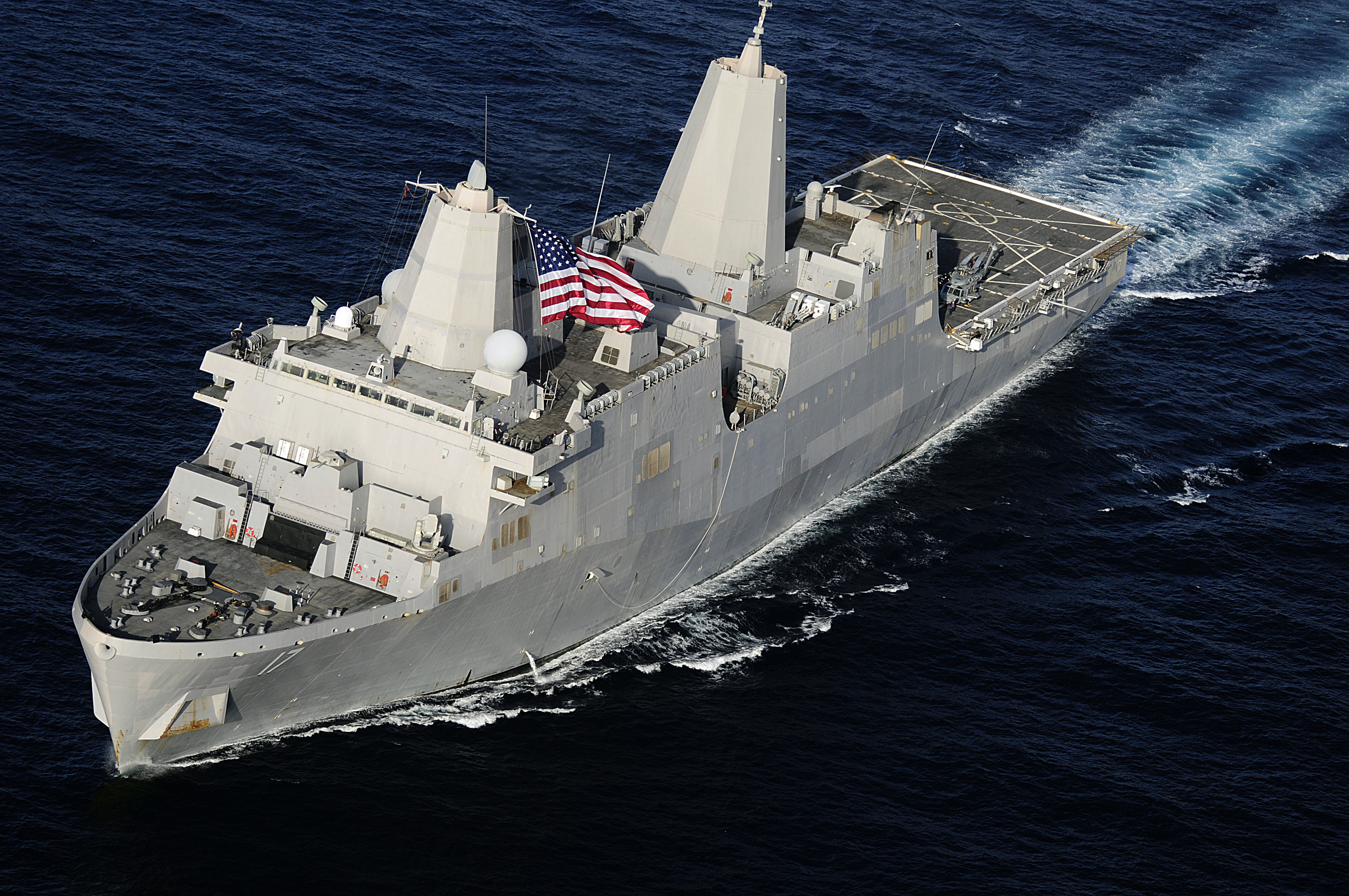
The U.S. Navy has assigned an amphibious transport dock ship, the USS San Antonio, to track Iranian weapons shipments to the Gaza Strip.

Officials said the San Antonio, flagship of Combined Task Force 151, intercepted and searched an Iranian-owned cargo ship in mid-January found to contain artillery, missiles and rockets. The ship was released and expected to arrive in Syria on Jan. 28.

Adm. Michael Mullen, the chairman of the U.S. Joint Chiefs of Staff, said the weapons ship intercepted in the Red Sea was determined to have been destined for Syria, a leading supplier of Hamas and Hizbullah. Mullen said the United States could not legally hold the Cypriot-flagged ship, owned by Iran.

“The United States did as much as we could do legally,” Mullen told a briefing on Jan. 27.

“There are authorities, limitations in complying with this particular UN resolution, and we basically went right up to the edge of that and we couldn’t do anything else. And we think those weapons are headed to Syria, which is obviously not a great outcome …shipping weapons to Syria that we think, quite frankly, are going to end up in Gaza.”

We learn many things about our own struggle with lawfare versus warfare with this example.  But saving this for another time, the U.S. has interdicted a ship bound for Syria with artillery, missiles and rockets.  Whether these weapons end up with Hezbollah or Hamas is not relevant.  They will end up destabilizing the region over nation-states which are not a threat to its own existence.  The weapons will end up contributing to the regional hegemony that Iran has pursued for twenty five years.

While the A-Team is confused about presuppositions, they don’t hold the exclusive right to dreary stubbornness regarding Persian intentions.  This has been going on for twenty five years now, and thus, the same page that has been read for twenty five years is being recited once again.


26th MEU (10)
Abu Muqawama (12)
ACOG (2)
ACOGs (1)
Afghan National Army (36)
Afghan National Police (17)
Afghanistan (704)
Afghanistan SOFA (4)
Agriculture in COIN (3)
AGW (1)
Air Force (42)
Air Power (10)
al Qaeda (83)
Ali al-Sistani (1)
America (23)
Ammunition (305)
Animals (336)
Ansar al Sunna (15)
Anthropology (3)
Antonin Scalia (1)
AR-15s (397)
Arghandab River Valley (1)
Arlington Cemetery (2)
Army (91)
Assassinations (2)
Assault Weapon Ban (29)
Australian Army (7)
Azerbaijan (4)
Backpacking (4)
Badr Organization (8)
Baitullah Mehsud (21)
Basra (17)
BATFE (247)
Battle of Bari Alai (2)
Battle of Wanat (18)
Battle Space Weight (3)
Bin Laden (7)
Blogroll (3)
Blogs (24)
Body Armor (23)
Books (3)
Border War (18)
Brady Campaign (1)
Britain (39)
British Army (36)
Camping (5)
Canada (20)
Castle Doctrine (1)
Caucasus (6)
CENTCOM (7)
Center For a New American Security (8)
Charity (3)
China (19)
Christmas (18)
CIA (30)
Civilian National Security Force (3)
Col. Gian Gentile (9)
Combat Outposts (3)
Combat Video (2)
Concerned Citizens (6)
Constabulary Actions (3)
Coolness Factor (3)
COP Keating (4)
Corruption in COIN (4)
Council on Foreign Relations (1)
Counterinsurgency (218)
DADT (2)
David Rohde (1)
Defense Contractors (2)
Department of Defense (220)
Department of Homeland Security (26)
Disaster Preparedness (5)
Distributed Operations (5)
Dogs (15)
Donald Trump (27)
Drone Campaign (4)
EFV (3)
Egypt (12)
El Salvador (1)
Embassy Security (1)
Enemy Spotters (1)
Expeditionary Warfare (18)
F-22 (2)
F-35 (1)
Fallujah (17)
Far East (3)
Fathers and Sons (2)
Favorite (1)
Fazlullah (3)
FBI (39)
Featured (192)
Federal Firearms Laws (18)
Financing the Taliban (2)
Firearms (1,876)
Football (1)
Force Projection (35)
Force Protection (4)
Force Transformation (1)
Foreign Policy (27)
Fukushima Reactor Accident (6)
Ganjgal (1)
Garmsir (1)
general (15)
General Amos (1)
General James Mattis (1)
General McChrystal (44)
General McKiernan (6)
General Rodriguez (3)
General Suleimani (9)
Georgia (19)
GITMO (2)
Google (1)
Gulbuddin Hekmatyar (1)
Gun Control (1,730)
Guns (2,416)
Guns In National Parks (3)
Haditha Roundup (10)
Haiti (2)
HAMAS (7)
Haqqani Network (9)
Hate Mail (8)
Hekmatyar (1)
Heroism (5)
Hezbollah (12)
High Capacity Magazines (16)
High Value Targets (9)
Homecoming (1)
Homeland Security (3)
Horses (2)
Humor (72)
Hunting (65)
ICOS (1)
IEDs (7)
Immigration (123)
India (10)
Infantry (4)
Information Warfare (4)
Infrastructure (4)
Intelligence (23)
Intelligence Bulletin (6)
Iran (171)
Iraq (379)
Iraq SOFA (23)
Islamic Facism (64)
Islamists (98)
Israel (19)
Jaish al Mahdi (21)
Jalalabad (1)
Japan (3)
Jihadists (82)
John Nagl (5)
Joint Intelligence Centers (1)
JRTN (1)
Kabul (1)
Kajaki Dam (1)
Kamdesh (9)
Kandahar (12)
Karachi (7)
Kashmir (2)
Khost Province (1)
Khyber (11)
Knife Blogging (7)
Korea (4)
Korengal Valley (3)
Kunar Province (20)
Kurdistan (3)
Language in COIN (5)
Language in Statecraft (1)
Language Interpreters (2)
Lashkar-e-Taiba (2)
Law Enforcement (6)
Lawfare (14)
Leadership (6)
Lebanon (6)
Leon Panetta (2)
Let Them Fight (2)
Libya (14)
Lines of Effort (3)
Littoral Combat (8)
Logistics (50)
Long Guns (1)
Lt. Col. Allen West (2)
Marine Corps (281)
Marines in Bakwa (1)
Marines in Helmand (67)
Marjah (4)
MEDEVAC (2)
Media (68)
Medical (146)
Memorial Day (6)
Mexican Cartels (48)
Mexico (72)
Michael Yon (6)
Micromanaging the Military (7)
Middle East (1)
Military Blogging (26)
Military Contractors (5)
Military Equipment (25)
Militia (9)
Mitt Romney (3)
Monetary Policy (1)
Moqtada al Sadr (2)
Mosul (4)
Mountains (25)
MRAPs (1)
Mullah Baradar (1)
Mullah Fazlullah (1)
Mullah Omar (3)
Musa Qala (4)
Music (25)
Muslim Brotherhood (6)
Nation Building (2)
National Internet IDs (1)
National Rifle Association (97)
NATO (15)
Navy (31)
Navy Corpsman (1)
NCOs (3)
News (1)
NGOs (3)
Nicholas Schmidle (2)
Now Zad (19)
NSA (3)
NSA James L. Jones (6)
Nuclear (63)
Nuristan (8)
Obama Administration (222)
Offshore Balancing (1)
Operation Alljah (7)
Operation Khanjar (14)
Ossetia (7)
Pakistan (165)
Paktya Province (1)
Palestine (5)
Patriotism (7)
Patrolling (1)
Pech River Valley (11)
Personal (77)
Petraeus (14)
Pictures (1)
Piracy (13)
Pistol (4)
Pizzagate (21)
Police (673)
Police in COIN (3)
Policy (15)
Politics (999)
Poppy (2)
PPEs (1)
Prisons in Counterinsurgency (12)
Project Gunrunner (20)
PRTs (1)
Qatar (1)
Quadrennial Defense Review (2)
Quds Force (13)
Quetta Shura (1)
RAND (3)
Recommended Reading (14)
Refueling Tanker (1)
Religion (501)
Religion and Insurgency (19)
Reuters (1)
Rick Perry (4)
Rifles (1)
Roads (4)
Rolling Stone (1)
Ron Paul (1)
ROTC (1)
Rules of Engagement (76)
Rumsfeld (1)
Russia (37)
Sabbatical (1)
Sangin (1)
Saqlawiyah (1)
Satellite Patrols (2)
Saudi Arabia (4)
Scenes from Iraq (1)
Second Amendment (715)
Second Amendment Quick Hits (2)
Secretary Gates (9)
Sharia Law (3)
Shura Ittehad-ul-Mujahiden (1)
SIIC (2)
Sirajuddin Haqqani (1)
Small Wars (72)
Snipers (9)
Sniveling Lackeys (2)
Soft Power (4)
Somalia (8)
Sons of Afghanistan (1)
Sons of Iraq (2)
Special Forces (28)
Squad Rushes (1)
State Department (23)
Statistics (1)
Sunni Insurgency (10)
Support to Infantry Ratio (1)
Supreme Court (84)
Survival (216)
SWAT Raids (58)
Syria (38)
Tactical Drills (38)
Tactical Gear (17)
Taliban (168)
Taliban Massing of Forces (4)
Tarmiyah (1)
TBI (1)
Technology (21)
Tehrik-i-Taliban (78)
Terrain in Combat (1)
Terrorism (96)
Thanksgiving (13)
The Anbar Narrative (23)
The Art of War (5)
The Fallen (1)
The Long War (20)
The Surge (3)
The Wounded (13)
Thomas Barnett (1)
Transnational Insurgencies (5)
Tribes (5)
TSA (25)
TSA Ineptitude (14)
TTPs (4)
U.S. Border Patrol (8)
U.S. Border Security (22)
U.S. Sovereignty (29)
UAVs (2)
UBL (4)
Ukraine (10)
Uncategorized (107)
Universal Background Check (3)
Unrestricted Warfare (4)
USS Iwo Jima (2)
USS San Antonio (1)
Uzbekistan (1)
V-22 Osprey (4)
Veterans (3)
Vietnam (1)
War & Warfare (435)
War & Warfare (41)
War Movies (4)
War Reporting (21)
Wardak Province (1)
Warriors (6)
Waziristan (1)
Weapons and Tactics (80)
West Point (1)
Winter Operations (1)
Women in Combat (21)
WTF? (1)
Yemen (1)

August 2026
July 2026
June 2026
May 2026
April 2026
March 2026
February 2026
January 2026
December 2025
November 2025
October 2025
September 2025
August 2025
July 2025
June 2025
May 2025
April 2025
March 2025
February 2025
January 2025
December 2024
November 2024
October 2024
September 2024
August 2024
July 2024
June 2024
May 2024
April 2024
March 2024
February 2024
January 2024
December 2023
November 2023
October 2023
September 2023
August 2023
July 2023
June 2023
May 2023
April 2023
March 2023
February 2023
January 2023
December 2022
November 2022
October 2022
September 2022
August 2022
July 2022
June 2022
May 2022
April 2022
March 2022
February 2022
January 2022
December 2021
November 2021
October 2021
September 2021
August 2021
July 2021
June 2021
May 2021
April 2021
March 2021
February 2021
January 2021
December 2020
November 2020
October 2020
September 2020
August 2020
July 2020
June 2020
May 2020
April 2020
March 2020
February 2020
January 2020
December 2019
November 2019
October 2019
September 2019
August 2019
July 2019
June 2019
May 2019
April 2019
March 2019
February 2019
January 2019
December 2018
November 2018
October 2018
September 2018
August 2018
July 2018
June 2018
May 2018
April 2018
March 2018
February 2018
January 2018
December 2017
November 2017
October 2017
September 2017
August 2017
July 2017
June 2017
May 2017
April 2017
March 2017
February 2017
January 2017
December 2016
November 2016
October 2016
September 2016
August 2016
July 2016
June 2016
May 2016
April 2016
March 2016
February 2016
January 2016
December 2015
November 2015
October 2015
September 2015
August 2015
July 2015
June 2015
May 2015
April 2015
March 2015
February 2015
January 2015
December 2014
November 2014
October 2014
September 2014
August 2014
July 2014
June 2014
May 2014
April 2014
March 2014
February 2014
January 2014
December 2013
November 2013
October 2013
September 2013
August 2013
July 2013
June 2013
May 2013
April 2013
March 2013
February 2013
January 2013
December 2012
November 2012
October 2012
September 2012
August 2012
July 2012
June 2012
May 2012
April 2012
March 2012
February 2012
January 2012
December 2011
November 2011
October 2011
September 2011
August 2011
July 2011
June 2011
May 2011
April 2011
March 2011
February 2011
January 2011
December 2010
November 2010
October 2010
September 2010
August 2010
July 2010
June 2010
May 2010
April 2010
March 2010
February 2010
January 2010
December 2009
November 2009
October 2009
September 2009
August 2009
July 2009
June 2009
May 2009
April 2009
March 2009
February 2009
January 2009
December 2008
November 2008
October 2008
September 2008
August 2008
July 2008
June 2008
May 2008
April 2008
March 2008
February 2008
January 2008
December 2007
November 2007
October 2007
September 2007
August 2007
July 2007
June 2007
May 2007
April 2007
March 2007
February 2007
January 2007
December 2006
November 2006
October 2006
September 2006
August 2006
July 2006
June 2006
May 2006

about · archives · contact · register

Copyright © 2006-2026 Captain's Journal. All rights reserved.