Archive for the 'Georgia' Category


It’s Time To Engage the Caucasus Part III

BY Herschel Smith
5 months ago

From The Times of India:

The US is now less dependent on Pakistan for supply of cargo for its troops fighting al-Qaida and Taliban  militants in Afghanistan, a Congressional report said today, amid a standoff between Washington and Islamabad over supplies through the country.

The Senate committee report said that only 29% of the total Afghan cargo supply now goes through Pakistan; which about an year ago was nearly 50%.

Islamabad has closed the crucial Nato supply route from Pakistan after the November 26th airstrikes that killed 24 of its soldiers.

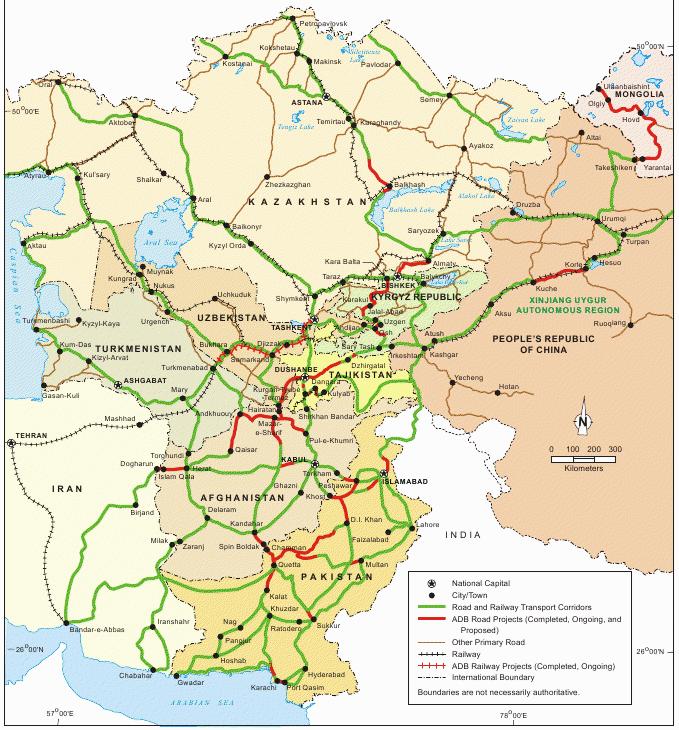
“An estimated 40% of all cargo transits the NDN (Northern Distribution Network), 31% is shipped by air, and the remaining 29% goes through Pakistan. An estimated 70% of cargo transiting the NDN enters Afghanistan via Uzbekistan’s Hairaton Gate,” the Senate Foreign Relations Committee said.

Since 2009, the US has steadily increased traffic on the Northern Distribution Network (NDN), a major logistical accomplishment.

According to US Transportation Command, close to 75 per cent of ground sustainment cargo is now shipped via the NDN, it said.

As a result of increasing dependence on NDN for supply of logistics and cargo to its troops in Afghanistan, Senator John Kerry, chairman of the Senate Foreign Relations Committee emphasized that there was a need to build relationship with the Central Asia countries.

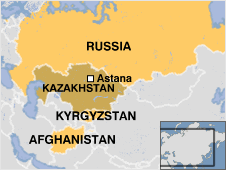
“Central Asia matters. Its countries are critical to the outcome in Afghanistan and play a vital role in regional stability. As we reassure our partners that our relationships and engagement in Afghanistan will continue after the military transition in 2014, we should underscore that we have long-term strategic interests in the broader region,” Kerry said.

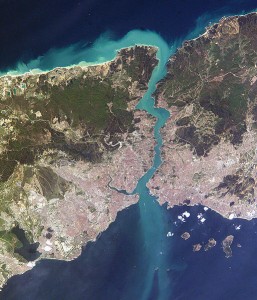
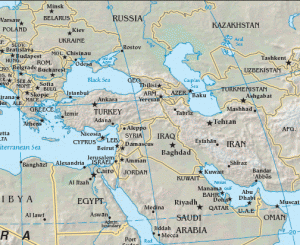
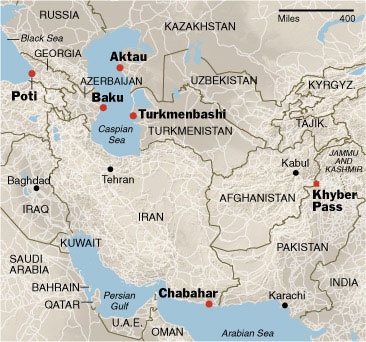
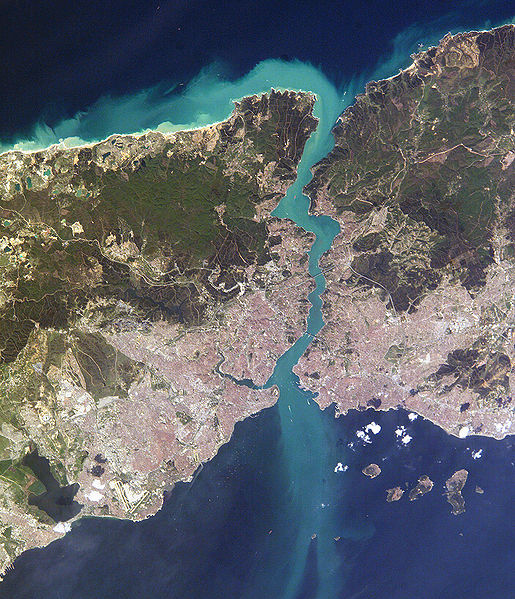
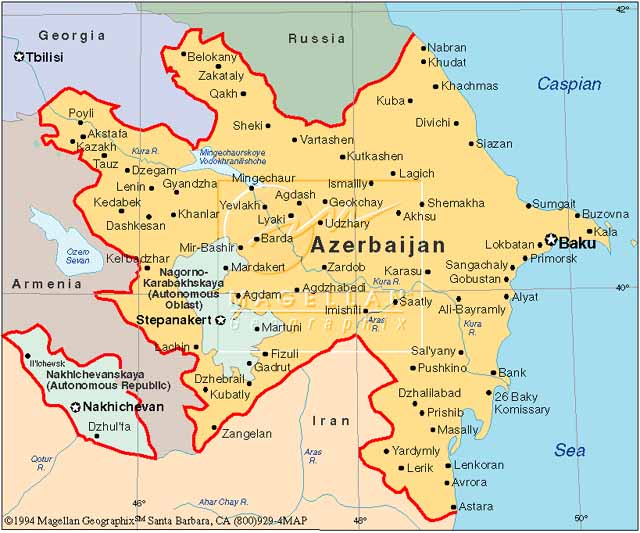
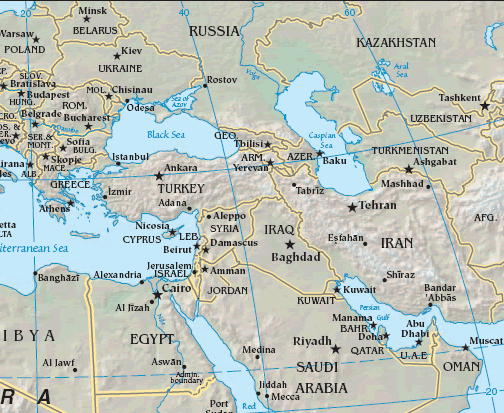
And of course, you heard about the need for this transition here before you heard about it anywhere else.  But there is a catch.  Kerry is right – Central Asia matters, but our lines of logistics now rely exclusively on routes through Central Asia and Russia (whereas I had recommended a logistics line from the Mediterranean Sea through the Bosporus Strait in Turkey, and from there into the Black Sea.  From the Black Sea the supplies would go through Georgia to neighboring Azerbaijan.  From here the supplies would transit across the Caspian Sea to Turkmenistan, and from there South to Afghanistan).  The added benefit of such a logistics line would be increased spending, influence and authority in the region, a region heavy in oil and natural gas.
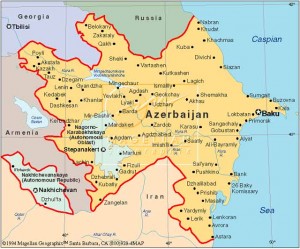
The Caucasus region matters too.  From The Jamestown Foundation:

The “disbalance of interests” (see EDM, December 15), favoring Russia over the United States in the South Caucasus, used to be offset by superior US resources, attractiveness and credibility. But that offset has diminished as US policy turned toward de-prioritizing this region (compared with the earlier level of Washington’s engagement). Lacking a strategy for the South Caucasus, the US has taken a back seat to Russia at least since 2008 in the negotiations on the Armenia-Azerbaijan conflict.

Washington had reduced its profile and role on this issue (and on South Caucasus regional security writ large) already during the second term of the Bush administration. It folded the Karabakh conflict portfolio into other portfolios within the State Department; it handled this issue through medium-level diplomats versus Russia’s top leaders; and it separated this issue from US regional strategy, which was itself fading out. Under the Obama administration, the policy drift grew more pronounced, with domestic politics distorting US diplomacy on the Armenia-Azerbaijan conflict.

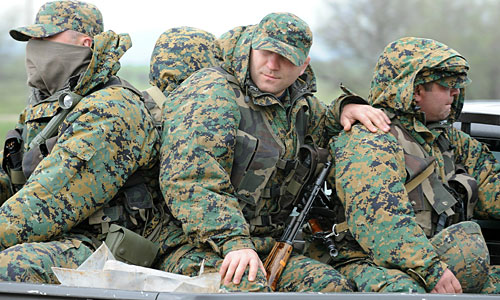
Takeaway point: “Lacking a Strategy.”  Read the whole report.  What other administration could pull off such a feat?  We have transitioned our logistics lines to the North (as I recommended almost three years ago), all the while alienating the Caucasus region in favor of Russian routes.  Meanwhile, while every other nation is preparing to cut and run from Afghanistan, including the U.K., Georgia is literally doubling down on its troop levels in Afghanistan.

What a strange world in which we live.  Georgia is begging to be our ally, assisting us in Afghanistan at their own peril, and we have the chance to increase U.S. authority and presence in the Caucasus, and choose instead to empower Russia.  Again, what other administration could pull off something like this?

It’s Time To Engage the Caucasus

It’s Time To Engage the Caucasus Part II

Rapidly Collapsing U.S. Foreign Policy Part II

BY Herschel Smith
2 years ago

Iran is attempting to move to higher Uranium enrichment, and Ambassador John Bolton is warning us to get ready for a nuclear Iran.  The CIA has already warned us.  Unless Israel acts unilaterally, the Obama administration will be in the difficult position of trying to explain why so much energy was invested in the prevention of a nuclear Iran, when it was acceptable all along for Iran to possess a nuclear weapon.  In other words, it must explain why containment would have worked all along, thus making fools of those who tried to forestall that otherwise acceptable condition.

In a stark testimony to the fact that the Middle East has no confidence in our stomach for doing whatever is necessary to contain Persian hegemony, Kuwait and France have signed agreements on nuclear cooperation, and Saudi Arabia has established a new national agency to take the lead role in nuclear activities.  These countries do not need commercial nuclear power for purposes of energy infrastructure.  Commercial nuclear power is the first step to having the infrastructure, QA, training and protocols to control a weapons program.  Even the UAE is planning a nuclear site with four reactors.

Iran has made no attempt to hide its lack of fear of U.S. presence in the region.  Iran has been at war with us in Iraq since the inception of Operation Iraqi Freedom, and there are dead U.S. servicemen whose lives were sacrificed to the altar of avoiding the necessity of addressing the regional conflict.  Just recently an Iranian reconnaissance aircraft buzzed the U.S. aircraft carrier Dwight D. Eisenhower, coming within 1000 yards of the ship.  This kind of aggression has become fairly routine.  During the 2008 deployment of the 26th MEU, an Iranian helicopter all but landed on the deck of the USS Iwo Jima.  The Marines could almost touch it from a standing position on the deck, but no actions were taken.  The Navy refused to allow the Marines to fire on the aircraft.  Iran has made its presence known in the recent Iraqi elections, and Moqtada al Sadr is trying to emerge as a legitimate political power after having been trained in Iran for the last several years.

Things don’t look much better to the North.  In spite of recommendations to seriously engage the Caucasus region, we have snubbed our allies in Georgia (in spite of their having sent the Georgian 31st Infantry Battalion to assist us in Afghanistan)  and most recently it appears that we are losing Azerbaijan.

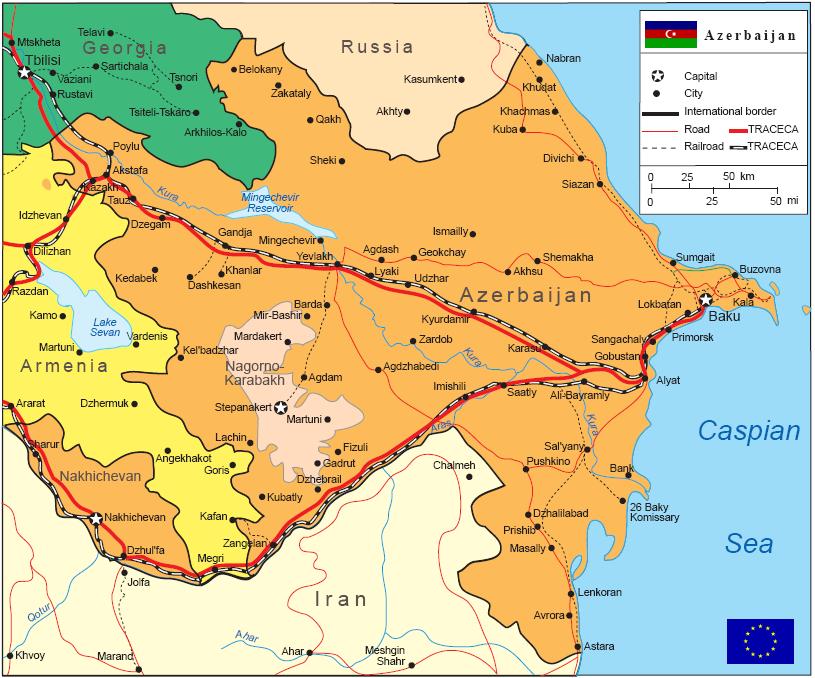
Azerbaijan’s long-standing alignment with the United States is rapidly unraveling in the wake of Washington’s recent policy initiatives. As perceived from Baku, those US initiatives fly in the face of Azerbaijan’s staunch support over the years to US strategic interests and policies in the South Caucasus-Caspian region.

Current US policies, however, are seen to favor Armenia in the Karabakh conflict resolution negotiations, curry favor with Armenian advocacy groups in domestic US politics, split Turkey and Azerbaijan from one another over the Karabakh issue, isolate Azerbaijan in the region, and pressure Baku into silent acquiescence with these policies.

Key actors in the region tend to share Azerbaijan’s perceptions in this regard. During last week’s nuclear safety summit in Washington, Georgian President, Mikheil Saakashvili, and Turkish Prime Minister, Recep Tayyip Erdogan, spoke frankly in this regard. They told US interlocutors at every step that the refusal to invite Azerbaijan’s President, Ilham Aliyev, to the summit was a mistake, counterproductive to US interests in the region, and confirming perceptions that Washington was attempting to isolate Baku.

US President, Barack Obama’s, meeting with his Armenian counterpart, Serzh Sargsyan during the Washington summit (while failing to invite the Azerbaijani president) confirmed perceptions that Armenian issues in US domestic politics distort Washington’s policy on the Karabakh conflict and toward Azerbaijan.

Ankara had cautioned Washington against such moves ever since Erdogan’s December 2009 visit to the US. At least from that point onward, Turkey has closed ranks with Azerbaijan, instead of distancing from it and opening the Turkish-Armenian border promptly and unconditionally at the Obama administration’s urging. The administration insists on de-linking the border opening from the continuing Armenian military occupation of seven districts beyond Karabakh, deep inside Azerbaijan. The administration had, instead, hoped to link the border opening with the April 24 US anniversary of the 1915-1918 Armenian events in Ottoman Turkey.

Washington’s summit miscalculation is the latest in a year-long series of blows to US-Azeri relations. This trend continues amid an apparent US strategic disengagement from the wider region (rationalized as a “strategic pause” to assuage pro-US governments there). In Azerbaijan’s case, Washington seems unable even to fill the long-vacant post of US ambassador in Baku. The vacancy deprives the United States of steady high-level access to Azerbaijan’s leaders (which had never been a problem previously), while making it more difficult for Washington to grasp the crisis in US-Azerbaijan relations and its region-wide implications.

Addressing an April 14 cabinet meeting in front of TV cameras, President Aliyev criticized the US policy of pushing Turkey to open the border with Armenia, despite the latter’s occupation of seven Azeri districts beyond Karabakh. This move pulls the rug from under Azerbaijan’s carefully constructed negotiating position for a stage-by-stage peaceful solution to the conflict. It also seems designed to separate Turkey from Azerbaijan. Accordingly, Aliyev complained about “certain countries that believe that they can meddle in everything…by exerting pressure and blackmailing. This is how we see it. This policy clearly runs against Azerbaijan’s interests, and the Azeri state is taking appropriate steps.”

It isn’t clear if the U.S. policy regarding Azerbaijan is malicious or merely inept.  What is clear is that we are still witnessing the collapse of U.S. foreign policy, a fact both easy and sad to catalog.

Prior: Rapidly Collapsing U.S. Foreign Policy

At Nuclear Summit Obama Snubs an Ally

BY Herschel Smith
2 years, 1 month ago

From Jackson Diehl:

Forty-seven world leaders are Barrack Obama’s guests in Washington Tuesday at the nuclear security summit. Obama is holding bilateral meetings with just twelve of them. That’s led to some awkward exclusions — and some unfortunate appearances, as well.

One of those left out was Mikheil Saakashvili, president of Georgia, who got a phone call from Obama last week instead of a meeting in Washington. His exclusion must have prompted broad smiles in Moscow, where Saakashvili is considered public enemy no. 1 — a leader whom Russia tried to topple by force in the summer of 2008. After all, Obama met with Viktor Yanukovych, the president of Ukraine and a friend of the Kremlin. And he is also meeting with the leaders of two of Georgia’s neighbors — Armenia and Turkey, both of which enjoy excellent relations with Russia.

So is anyone really surprised?  Each passing day of our Caucasus policy makes another Russian invasion of Georgia more likely.  Perhaps Obama’s previous assurances to Georgia ring hollow now?  And perhaps Georgia will rethink sending the Georgian 31st Infantry Battalion, recently deployed to serve alongside the U.S. Marines in the Helmand Province, to assist with the campaign in Afghanistan?

Prior:

It’s Time to Engage the Caucasus

The Coming War in the Caucasus

Obama, Russia and the Future of Georgia

Rapidly Collapsing U.S. Foreign Policy

Progress on Logistics Through Georgia?

BY Herschel Smith
2 years, 2 months ago

There are more logistical problems in the Khyber region, just as I predicted two years ago.

Suspected Islamist militants armed with guns and rockets on Monday blew up a tanker carrying fuel through Pakistan for NATO troops based in neighbouring Afghanistan, police said.

Several armed men lobbed a rocket and then opened fire on the supply convoy on the outskirts of Pakistan’s northwestern city Peshawar, senior police officer Imtiaz Ahmed said.

“The attack triggered a huge fire and destroyed one tanker. Its driver escaped unhurt but his helper was wounded,” he said.

In a subsequent exchange of fire lasting up to an hour, Pakistani security forces killed a militant, another police officer Karim Khan said.

Police did not immediately identify the assailants, but the Taliban and members of local militant group Lashkar-e-Islam regularly attack NATO supply vehicles on the main route through northwest Pakistan.

Lashkar-e-Islam is active in the lawless region of Khyber, which is just outside Peshawar and part of Pakistan’s tribal belt snaking along the Afghan border that Washington has branded the headquarters of Al-Qaeda leaders.

About 80 percent of supplies destined for the 121,000 US and NATO troops in landlocked Afghanistan pass through Pakistan.

Khyber_Attack

Are we making any progress on engagement of the Caucasus?

President Mikheil Saakashvili recently offered Georgia as a logistical hub for NATO’s operations in Afghanistan. This offer, made in an interview with The Associated Press, came only days after NATO had finalised a supply route agreement with Kazakhstan in the wake of NATO’s expanding mission in Afghanistan. While a supply route through Georgia already functions (for equipment, not armaments), U.S. officials have not immediately accepted Saakashvili’s new proposal. Russia might be in the way, analysts say.

Saakashvili offered Georgia’s Black Sea ports of Poti and Batumi as docks for military supply ships and the country’s airports as refuelling points for cargo planes. AP quoted Pentagon officials as saying that the U.S. Defense Department was aware of Saakashvili’s offer, but had not explored the proposal.

The U.S. Special Representative for Afghanistan and Pakistan, Ambassador Richard Holbrooke, has scheduled a visit to Georgia on February 21-22. He plans to meet Saakashvili and visit Georgian troops at the Krtsanisi National Training Centre and observe their training for the operation in Afghanistan. Reportedly, the issue of Georgia as a supply route for the war could also be on the table.

Georgia has already been utilised as a transit point for shipment of non-armaments. “The route to Afghanistan is already used extensively, because almost 80 percent of cargo which is not going through Pakistan is going through Georgia, and only 20 percent through Russia, already,” said Alexander Rondeli, President of GFSIS (the Georgian Foundation for Security in International Studies).

Ariel Cohen, Senior Research Fellow at the Heritage Foundation, said that the supply route to Afghanistan via Eurasia has been in existence since 2001. “I do not think this [Saakashvili’s offer] is something particularly remarkable because the U.S. is covering all the bases. It is shipping equipment, both lethal and non-lethal, via Russia and Kazakhstan, as well as via Georgia and Azerbaijan across the Caspian Sea to Central Asia.

Oh good heavens – commit already.  To say that 80% of logistics that don’t flow through Pakistan already flow through the Caucasus is to say nothing.  Ninety percent of our logistics flow through Pakistan.  To say that Russia stands in the way is to reiterate what we all already know, i.e., that there are dangerous dictators who desire regional hegemony.  It is to say nothing.  Senior Research Fellow at the Heritage Foundation is a nice title for a man who needs to do better analysis work.  The U.S. has not covered all of the logistical bases when we are reliant on Karachi, Chaman and Khyber to supply our troops in Afghanistan.

There are attempts at better logistics, but this work bottlenecks in Khyber.  It’s still not too late to engage the Caucasus (including Georgia) like I recommended one year ago.

The Coming War in the Caucasus

BY Herschel Smith
3 years ago

In It’s Time to Engage the Caucasus we described a potential logistics route through the Caucasus region in lieu of the problematic and troublesome Pakistan routes (especially through Khyber).  The recommended route involved transit from the Mediterranean Sea through the Bosporus Strait in Turkey, and from there into the Black Sea.  From the Black Sea the supplies would go through Georgia to neighboring Azerbaijan.  From here the supplies would transit across the Caspian Sea to Turkmenistan, and from there South to Afghanistan.

In addition to this region being a potential viable alternative to Pakistan, we noted this region as being an up-and-coming economic power due in part to the massive quantities of energy buried beneath its soil.  The engagement of the Caucasus region would potentially lead not only to logistics routes, but political and energy partnership as well.  But the darker truth that accompanies this potential is that Russia is also interested.

Russia is interest for several reasons, including the fact that Russian bases in Armenia have no viable land resupply and logistics route except through Georgia.  Recent NATO exercises in Georgia infuriated the Russian administration, causing the Russian ambassador to say that “Differences between Russia and U.S. on a number of issues still persist. The most recent example is NATO maneuvers in Georgia. It disappoints us as it assures Georgian government that regardless of what it did towards Russia, it will gain NATO membership. Unfortunately, no lesson was drawn from August events,” referring to their 2008 invasion of Georgia.

This is the first admission of the real reason behind the invasion of Georgia, veiled though it was.  It was all about “lessons” for the U.S. and Georgia.  The most recent warnings are less veiled.

A Kremlin policy paper says international relations will be shaped by battles over energy resources, which may trigger military conflicts on Russia’s borders.

The National Security Strategy also said that Russia will seek an equal “partnership” with the United States, but named U.S. missile defense plans in Europe among top threats to the national security.

The document, which has been signed by President Dmitry Medvedev, listed top challenges to national security and outlined government priorities through 2020.

“The international policy in the long run will be focused on getting hold of energy sources, including in the Middle East, the Barents Sea shelf and other Arctic regions, the Caspian and Central Asia,” said the strategy paper that was posted on the presidential Security Council’s Web site.

“Amid competitive struggle for resources, attempts to use military force to solve emerging problems can’t be excluded,” it added. “The existing balance of forces near the borders of the Russian Federation and its allies can be violated.”

Medvedev’s predecessor Vladimir Putin, who is now Russia’s powerful prime minister, often accused the West in the past of trying to expand its clout in the ex-Soviet nations and push Russia out of its traditional sphere of influence. The Kremlin has fiercely opposed NATO’s plans to incorporate its ex-Soviet neighbors, Ukraine and Georgia.

Russia currently controls most natural gas export routes out of the former Soviet region, but that grip is coming under growing pressure from China and the West.

The European Union, which depends on Russia for about one-quarter of its gas needs, has sought alternate supply routes, including the prospective Nabucco pipeline that would carry the Caspian and Central Asian gas to Europe but skirt Russia.

Intensifying rivalry for influence in the ex-Soviet region fomented tensions and helped stage the ground for last August’s war between Russia and Georgia, which sits astride a key export pipeline carrying Caspian oil to Western markets.

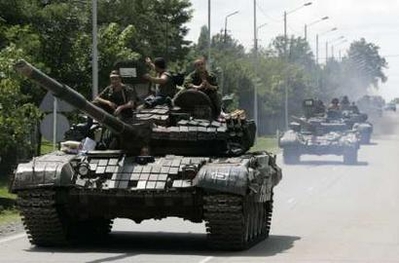
The war erupted when the U.S.-allied Georgian President Mikhail Saakashvili sent troops to regain control over the separatist province of South Ossetia, which had close links with Russia. After routing the Georgian army in five days of fighting, Russia recognized both South Ossetia and another Georgian rebel province of Abkhazia as independent nations and permanently stationed nearly 8,000 troops there.

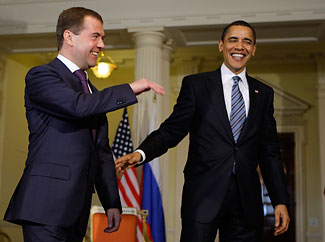
President Barack Obama’s administration has sought to rebuild ties with Moscow, which plummeted to a post-Cold War low under his predecessor and focus on negotiating a new nuclear arms control deal. Medvedev and other Russian officials have hailed what they called the new administration’s constructive approach and voiced hope that Washington will drop plans to deploy missile defense sites in Poland and the Czech Republic — a top irritant in U.S.-Russian relations.

Reflecting the Kremlin’s hope for better ties with Washington, the strategy paper said Russia will seek “equal and full-fledged strategic partnership with the United States on the basis of coinciding interests.”

But it warned that missile defense plans and prospects to develop space-based weapons remain a top threat to Russia’s security, and said Russia will seek to maintain a nuclear parity with the United States. However, it added that Russia’s policy will be pragmatic and will exclude a new arms race.

The Captain’s Journal has recommended engaging the Caucasus by means of friendship, assistance and special dispensation for business partnerships.  This remarkable admission by Russia, signed by Medvedev, directly admits that war is possible over energy.

The romantic notions of influence in its so-called near abroad has been dropped in favor of more honest but crass verbal bullying and threats, targeted at an administration which wants to press the “reset” button with them.  The team of Putin and Medvedev intend to bloat the cash flow directly into Russia in payment for energy, this very energy being extorted by force if necessary.

Given the predisposition of the current administration to negotiate, talk, bargain and expect only the best of our supposedly erstwhile enemies, it isn’t apparent that Georgia, the Ukraine and other regional countries have any hope of continued sovereignty as it currently exists.  If extortion and threats don’t pave the way towards a re-emergence of the old Soviet style government, then they have made their only other option clear.  War is coming to the Caucasus.

Prior:

Mutiny in Georgia

Obama, Russia and the Future of Georgia

It’s Time to Engage the Caucasus

Rapidly Collapsing U.S. Foreign Policy


26th MEU (10)
Abu Muqawama (12)
ACOG (1)
Afghan National Army (32)
Afghan National Police (16)
Afghanistan (655)
Afghanistan SOFA (4)
Agriculture in COIN (3)
AGW (1)
Air Force (28)
Air Power (9)
al Qaeda (81)
Ali al-Sistani (1)
America (4)
Animals in War (3)
Ansar al Sunna (15)
Anthropology (3)
Arghandab River Valley (1)
Arlington Cemetery (2)
Army (28)
Assassinations (2)
Australian Army (5)
Azerbaijan (4)
Backpacking (1)
Badr Organization (8)
Baitullah Mehsud (21)
Basra (17)
BATFE (23)
Battle of Bari Alai (2)
Battle of Wanat (14)
Battle Space Weight (3)
Bin Laden (7)
Blogroll (2)
Blogs (2)
Body Armor (15)
Books (1)
Border War (4)
Brady Campaign (1)
Britain (24)
British Army (35)
Canada (1)
Caucasus (6)
CENTCOM (7)
Center For a New American Security (8)
Charity (3)
China (9)
Christmas (3)
CIA (12)
Civilian National Security Force (3)
Col. Gian Gentile (9)
Combat Outposts (3)
Combat Video (2)
Concerned Citizens (6)
Constabulary Actions (3)
Coolness Factor (2)
COP Keating (4)
Corruption in COIN (4)
Council on Foreign Relations (1)
Counterinsurgency (212)
DADT (2)
David Rohde (1)
Defense Contractors (1)
Department of Defense (106)
Distributed Operations (5)
Dogs (3)
Drone Campaign (2)
EFV (3)
Egypt (9)
Enemy Spotters (1)
Expeditionary Warfare (17)
F-22 (2)
F-35 (1)
Fallujah (17)
Far East (3)
Fathers and Sons (1)
Favorite (1)
Fazlullah (3)
Featured (138)
Federal Firearms Laws (11)
Financing the Taliban (2)
Firearms (59)
Football (1)
Force Projection (34)
Force Protection (4)
Force Transformation (1)
Foreign Policy (20)
Fukushima Reactor Accident (6)
Garmsir (1)
general (14)
General Amos (1)
General James Mattis (1)
General McChrystal (35)
General McKiernan (6)
General Rodriguez (3)
General Suleimani (6)
Georgia (19)
GITMO (2)
Google (1)
Gulbuddin Hekmatyar (1)
Guns (23)
Haditha Roundup (10)
Haiti (2)
HAMAS (7)
Haqqani Network (8)
Hate Mail (7)
Hekmatyar (1)
Heroism (4)
Hezbollah (12)
High Value Targets (9)
Homecoming (1)
Homeland Security (1)
Horses (1)
Humor (10)
ICOS (1)
IEDs (7)
Immigration (19)
India (10)
Infantry (3)
Information Warfare (2)
Infrastructure (2)
Intelligence (19)
Intelligence Bulletin (6)
Iran (164)
Iraq (375)
Iraq SOFA (23)
Islamic Facism (27)
Islamists (26)
Israel (15)
Jaish al Mahdi (21)
Jalalabad (1)
Japan (2)
Jihadists (69)
John Nagl (5)
Joint Intelligence Centers (1)
JRTN (1)
Kabul (1)
Kajaki Dam (1)
Kamdesh (7)
Kandahar (12)
Karachi (7)
Kashmir (2)
Khost Province (1)
Khyber (11)
Knife Blogging (1)
Korea (4)
Korengal Valley (3)
Kunar Province (18)
Kurdistan (2)
Language in COIN (5)
Language in Statecraft (1)
Language Interpreters (2)
Lashkar-e-Taiba (2)
Law Enforcement (1)
Lawfare (6)
Leadership (5)
Lebanon (6)
Leon Panetta (1)
Let Them Fight (2)
Lines of Effort (3)
Littoral Combat (7)
Logistics (44)
Long Guns (1)
Lt. Col. Allen West (2)
Marine Corps (221)
Marines in Bakwa (1)
Marines in Helmand (66)
Marjah (4)
MEDEVAC (1)
Media (17)
Memorial Day (2)
Mexican Cartels (18)
Mexico (16)
Michael Yon (2)
Micromanaging the Military (7)
Middle East (1)
Military Blogging (25)
Military Contractors (3)
Military Equipment (23)
Mitt Romney (1)
Monetary Policy (1)
Moqtada al Sadr (2)
Mosul (4)
Mountains (5)
MRAPs (1)
Mullah Baradar (1)
Mullah Fazlullah (1)
Mullah Omar (3)
Musa Qala (4)
Music (15)
Muslim Brotherhood (5)
Nation Building (1)
National Internet IDs (1)
National Rifle Association (2)
NATO (15)
Navy (18)
Navy Corpsman (1)
NCOs (3)
News (1)
NGOs (2)
Nicholas Schmidle (2)
Now Zad (19)
NSA James L. Jones (6)
Nuclear (50)
Nuristan (7)
Obama Administration (116)
Offshore Balancing (1)
Operation Alljah (7)
Operation Khanjar (14)
Ossetia (7)
Pakistan (164)
Paktya Province (1)
Palestine (5)
Patriotism (6)
Patrolling (1)
Pech River Valley (11)
Personal (12)
Petraeus (13)
Philip Smucker (2)
Pictures (1)
Piracy (13)
Police (10)
Police in COIN (2)
Policy (14)
Politics (83)
Poppy (2)
PPEs (1)
Prisons in Counterinsurgency (12)
Project Gunrunner (20)
PRTs (1)
Qatar (1)
Quadrennial Defense Review (2)
Quds Force (13)
Quetta Shura (1)
RAND (3)
Recommended Reading (8)
Refueling Tanker (1)
Religion (47)
Religion and Insurgency (19)
Reuters (1)
Rick Perry (4)
Roads (4)
Rolling Stone (1)
Ron Paul (1)
ROTC (1)
Rules of Engagement (70)
Rumsfeld (1)
Russia (26)
Sabbatical (1)
Sangin (1)
Saqlawiyah (1)
Satellite Patrols (2)
Saudi Arabia (3)
Scenes from Iraq (1)
Second Amendment (45)
Second Amendment Quick Hits (1)
Secretary Gates (9)
Sharia Law (3)
Shura Ittehad-ul-Mujahiden (1)
SIIC (2)
Sirajuddin Haqqani (1)
Small Wars (72)
Snipers (9)
Sniveling Lackeys (1)
Soft Power (4)
Somalia (8)
Sons of Afghanistan (1)
Sons of Iraq (2)
Special Forces (20)
Squad Rushes (1)
State Department (15)
Statistics (1)
Sunni Insurgency (10)
Support to Infantry Ratio (1)
SWAT Raids (10)
Syria (31)
Taliban (164)
Taliban Massing of Forces (4)
Tarmiyah (1)
TBI (1)
Technology (16)
Tehrik-i-Taliban (78)
Terrain in Combat (1)
Terrorism (82)
Thanksgiving (3)
The Anbar Narrative (23)
The Art of War (5)
The Fallen (1)
The Long War (19)
The Surge (3)
The Wounded (13)
Thomas Barnett (1)
Transnational Insurgencies (5)
Tribes (5)
TSA (4)
TSA Ineptitude (8)
TTPs (1)
U.S. Border Patrol (3)
U.S. Border Security (6)
U.S. Sovereignty (10)
UAVs (2)
UBL (3)
Ukraine (2)
Uncategorized (32)
Unrestricted Warfare (4)
USS Iwo Jima (2)
USS San Antonio (1)
Uzbekistan (1)
V-22 Osprey (4)
Veterans (2)
Vietnam (1)
War & Warfare (206)
War & Warfare (40)
War Movies (1)
War Reporting (16)
Wardak Province (1)
Warriors (5)
Waziristan (1)
Weapons and Tactics (53)
West Point (1)
Winter Operations (1)
Women in Combat (9)
WTF? (1)
Yemen (1)


Prev | List | Random | Next · Join Powered by RingSurf!

Featured in Alltop

about · archives · contact · register

Copyright © 2006-2012 Captain's Journal. All rights reserved.