Will we continue to invest in military power?

Herschel Smith · 02 Dec 2008 · 0 Comments

The Captain's Journal respects only one individual on the national security team and featured in the photograph above - Secretary of Defense Robert Gates. He has earned every bit of respect he has throughout the defense community. The balance of the team must earn their respect but is off to a very bad start. Eric Holder with his pitiful judgment inspires absolutely no confidence, and Janet Napolitano may as well…… [read more]


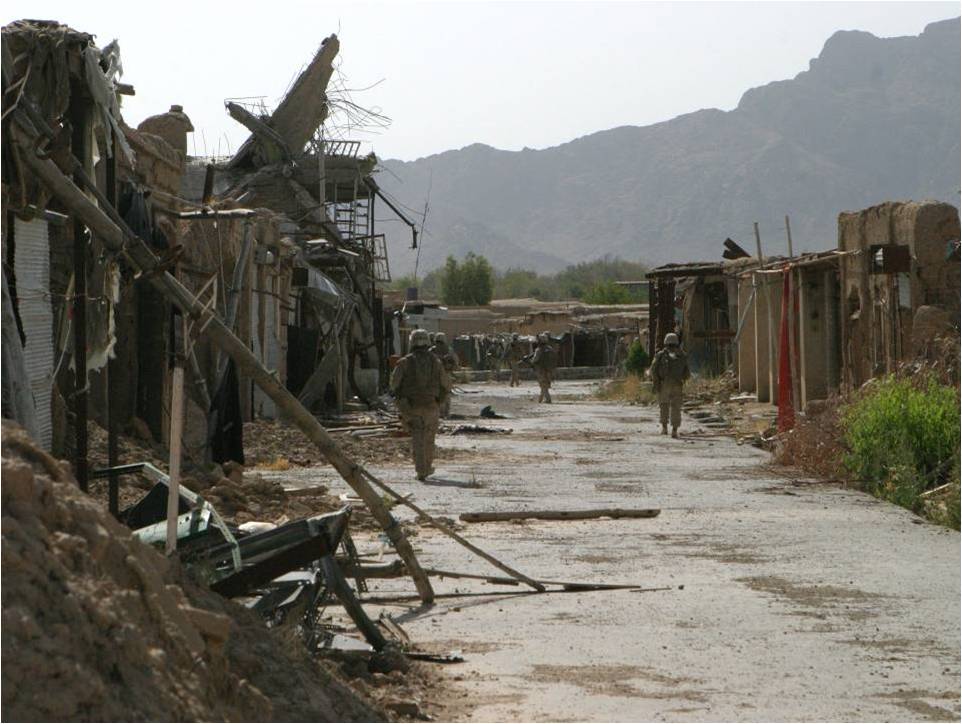
Marine Operations in Now Zad, Afghanistan

BY Herschel Smith
2 months ago

Marines of 3rd platoon 1st squad, Fox Company, 2nd Battalion 7th Marines, conduct a local security patrol in the city of Now Zad, Afghanistan to ensure the safety of the forward operating base on June 08, 2008.

Friend of The Captain’s Journal Major Cliff Gilmore (USMC) is in Afghanistan and sends an anecdotal update on Marines in Now Zad that makes him proud to be a Marine.

I did make a short trip “up north” to a fun little place called Now Zad where a company of Marines have been slogging it out. I don’t like to bring politics into these e-mails, but in general I can comfortably say that those who beat the “support our troops, bring them home now” drum clearly haven’t talked to the warriors I mixed with out there. Several have died. More have lost limbs to improvised explosive devices (IED). All of their corpsmen (medics) have received one or more Purple Heart Medals for injuries sustained in combat and not a one of them talked about wanting to go home. When I arrived at Now Zad I came in with approximately 30 combat replacements. New Marines in to take the place of those already killed or injured. They were all volunteers and left their various units to re-enforce the Marines at Now Zad because, according to one Marine, “…we heard this was where the bad guys are.”

I talked with numerous Marines and hovered in the pre-dawn shadows of the moonscape listening to their chatter for hours and heard only about what they had learned, how they were getting better at this kind of fighting, and how they couldn’t wait to get back outside the wire and “…hunt the scrappy little @&%!ers down.” Point here being, I’m not at all confident the boys in the middle of the fight are thinking in terms of how the folks back Stateside might be able to support them by bringing them home. Mostly they just want more bullets.

I ran into one young Marine who has already been shot twice and blown up by an IED once and came away essentially unscathed both times. The IED resulted in a sprained ankle which he taped up and strapped back into his boot. The two shots came while he was on the radio calling for medevac for a fellow Marine. As the story goes — told the same way by numerous Marines out at Now Zad — he was kneeling beside the wounded Marine, radio in one hand, assisting the corpsmen in treating the wounded Marine with the other. Calm as could be his conversation on the radio went something like “…sir, we have a Marine down and need a medevac immediately. We are located at grid 123456. He looks stable but his injuries are serious. We need you to come and get him now. Oh, and I just got shot too so you’ll have to come get me as well.”

He took two 7.62 AK-47 rounds to the left side under his arm. His armor stopped the bullets, but he didn’t realize that at first. As he described it, the force of the rounds hitting him felt “…pretty much real enough at the time…” As others described it, he didn’t even flinch when the shots came, did not skip a beat on his evac call, and once he had a chance to inspect his bruised ribs simply asked the doc to tape him up and then went back into the fight.

He didn’t ask to go home.

Proud indeed. Thanks to Major Gilmore for this update, and watch your six, friend.

Tribal Awakening in Pakistan?

BY Herschel Smith
2 months ago

The Wall Street Journal recently carried a news item on Pakistan’s turn to tribal militias to help in the fight against the Taliban.

The Pakistani army is backing tribal militias that are rising to battle pro-Taliban groups, a development that the government hopes will turn the tide against insurgents here in the embattled northwest.

Pakistan’s military and intelligence agencies say recent antigovernment violence, including last week’s deadly bombing of the Marriott Hotel in Islamabad, is rooted in Islamist strongholds along the border with Afghanistan, in districts like Bajaur.

The militant groups here — Pakistanis allied with Taliban and al Qaeda guerrillas in Afghanistan — are trying to carve out Islamist enclaves along the border. To fight them, the government has deployed more than 8,000 troops in the Bajaur region. The army says it has killed 1,000 militants in the six weeks since the campaign started. But a steady supply of Islamist guerillas is pouring in from Pakistan and Afghanistan, and the fighting shows little sign of abating.

The tribal militias could provide a counterweight. “The tribesmen have risen against the militants. It could be a turning point in our fight against militancy,” says Owais Ghani, governor of North West Frontier Province. The province is “providing them financial as well as moral support,” he says.

Military commanders say the struggle for control of the tribal region is crucial to containing the spread of Islamist militancy to other parts of northwestern Pakistan.

“The threat of Bajaur radiates in all directions and affects the entire region,” said Maj. Gen. Tariq Khan, the commanding officer of the military campaign in the region, last week.

The army-backed militia movement has similarities with the Sunni awakening in Iraq, where U.S.-supported Arab tribesmen turned against al Qaeda fighters, says Tanveer Ahmed Khan, chairman of the Pakistan Institute of Strategic Studies.

Indeed, the U.S. has also been assisting the tribes with money and training, and has been ever since it was determined that the Khyber pass and Torkham Crossing were problematic and could be lost to the Taliban (one of two main supply routes through Pakistan to NATO forces in Afghanistan; the other border crossing is at the southwestern town of Chaman). Shoring up relations with the tribes in Khyber is one reason for Deputy Secretary of State John D Negroponte’s visit to Khyber earlier in the year (although it should be pointed out that out of fear of the Taliban, only six tribal elders showed up at the meeting).  The Captain’s Journal predicted over six months ago that interdiction of these supply routes would be one leg of the Taliban strategy against NATO.

But the last statement by Khan is troubling, inasmuch as it betrays a fundamental misunderstanding of the tribal awakening in Anbar. The Anbar awakening can be succinctly characterized by Abu Ahmed’s experience as the Sheriff of al-Qaim, Iraq.

The 40-year-old is a hero to the 50,000 residents of Al-Qaim for having chased Al-Qaeda from the agricultural centre where houses line the green and blue waters of the Euphrates.

In the main street, with its fruit and vegetable stalls, its workshops and restaurants, men with pistols in their belts approach Abu Ahmed to kiss his cheek and right shoulder in a mark of respect.

It was not always this way.

He tells how one evening in May 2005 he decided that the disciples of Osama bin Laden went too far — they killed his cousin Jamaa Mahal.

“I started shooting in the air and throughout the town bursts of gunfire echoed across the sky. My family understood that the time had come. And we started the war against Al-Qaeda.”

It took three battles in the streets of Al-Qaim — in June, in July and then in November 2005 — to finish off the extremists who had come from Arab countries to fight the Americans.

Abu Ahmed, initially defeated by better equipped forces, had to flee to the desert region of Akashat, around 100 kilometres (60 miles) southwest of Al-Qaim. There he sought help from the US Marines.

“With their help we were able to liberate Al-Qaim,” he said, sitting in his house with its maroon tiled facade.

This alliance between a Sunni tribe and American troops was to be the first, and it give birth to a strategy of other US-paid Sunni fighters ready to mobilise against Al-Qaeda.

It resulted in the Sunni province of Al-Anbar being pacified in two years.

The fundamental difference is that the Pakistani troops have withdrawn from their offensive in Bajaur. Pakistan has made it clear through threats and firing on U.S. troops - causing a stand down of U.S. operations across the Pakistan border - that Pakistan will not tolerate the presence of U.S. forces in spite of its duplicity towards the Taliban and reluctance to engage them in combat.

So by expecting the tribes to stand up to the Taliban and al Qaeda without the presence or protection of the U.S. Marines or even Pakistani forces, we are expecting something that an even more proud and obstinate people, the Anbaris, couldn’t manage on their own. This is why there isn’t any real similarity between the Anbar awakening and the tribal actions in Pakistan. One might surmise what the outcome will be.

I dream of a conversation

BY Herschel Smith
2 months ago

The last exchange between Katie Couric and Governor Sarah Palin didn’t go as well as it should have. Therefore, I am laying this out there as my conversational dream - the one that should have happened the last time, and the one that surely must happen the next time.

Katie: I asked you last time, Governor, give me one example of effort to increase regulation by John McCain.  You didn’t, and you said that you would get back to me. So I am giving you one last chance here. Can you give me just one …

Sarah: Hold on Katie. Sorry to interrupt you - well, actually, no I’m not.  Let’s get one thing clear. I’m not going to play your stupid little quiz game. This isn’t twenty one questions with a right or wrong answer. I have no more intention of answering your quiz questions than I do of demanding that you tell me about my reform efforts in Alaska, or telling me what it feels like to deploy a son to Iraq.  This is supposed to be an investigative and analytical interview. We all know what John is about. If you want to know something about one of his reform efforts, then ask him. Don’t ask me. If you want to know something about my reform efforts in my home state, then ask me. But either way, prove yourself to be something other than just another talking head. I’ll give you one last chance to conduct a meaningful interview that is useful to the citizens of America. One more chance. Now, I’m the Governor of a state of 700,000 citizens who has the reputation for taking on waste and bureaucracy. Don’t you have a single heavyweight question you want to ask me about my record? Huh, Katie? One last chance.

The Coming Winter Combat Between Taliban and U.S. Forces

BY Herschel Smith
2 months ago

It was Maj. Gen. Jeffery J. Schloesser who initially pointed out that the Taliban would be active this winter despite the common perceptions of a stand down in operations due to the weather.

American troops in Afghanistan will step up offensive operations this winter because insurgents are increasingly staying in the country to prepare for spring attacks, a U.S. commander told The Associated Press.

Maj. Gen. Jeffery J. Schloesser said a 40 percent surge in violence in April and May was fueled in part by militants preparing stores of weapons during the winter, which generally is a slow period for fighting, particularly in snowy Afghan mountainous areas.

“If we don’t do anything over the winter the enemy will more and more try to seek safe haven in Afghanistan rather than going back to Pakistan,” Schloesser said …

He said the U.S. military realized more militants spent last winter in Afghanistan after speaking with elders and villagers who had been pushed out of their homes. The spike in violence in the spring occurred because insurgents were already in position to unleash attacks, though U.S. officials didn’t know it at the time, he said.

“They didn’t have to come over the passes, they were already here,” Schloesser said during an interview while flying in a Black Hawk helicopter Monday to a small U.S. outpost in Nuristan, a province that borders Pakistan.

Now he is reiterating this position, but adding a new twist concerning the capabilities of U.S. forces and the intent to interdict Taliban operations.

A top U.S. general said he expects militant violence in Afghanistan to rise some 30 percent this winter compared with last year, but that he does not think insurgents have the ability to mount a massive campaign during the country’s harsh weather.

Maj. Gen. Jeffrey J. Schloesser said the U.S. will attack militant cells in areas of Afghanistan where U.S. forces in some cases haven’t operated before but where officials now realize “the enemy is seeking to remain as a rest and facilitation area in the winter.”

Winter has traditionally been seen as a down time for fighting in Afghanistan, but Schloesser said offensive operations by U.S. troops this year could dispel that notion.

U.S. troops will “take advantage of our mobility and capacity to operate in the snow and to be able to find the enemy,” he told The Associated Press in a telephone interview Thursday.

Militants will have the option to be “captured, killed, to reconcile or flee,” the general said. “And I think fleeing will be very hard in the winter, especially if they’re in flip flops or sandals.”

In January 2007, U.S. airstrikes killed some 120 militants crossing the border on foot from Pakistan into Afghanistan, and a video of the attack taken by a drone showed that many of the insurgents — who were walking in a single-file line through mountainous terrain — were barefoot.

Schloesser said he thinks militants are now better equipped with boots and sleeping bags but don’t have the ability to conduct complex operations in deep snow or freezing weather.

Schloesser clearly intends to use the weather as a force multiplier. But many of the insurgents are at home in Kandahar or other smaller villages in Southern Afghanistan, with families, history, homes and experience in the bitter winters. For these fighters there is no need to traipse through the countryside looking for a place to throw a sleeping bag for the night.

Time will tell if the these good intentions come to pass, but expect it to be a tough winter for U.S. troops - frostbite, frost-jamming of the tight tolerances of the action in the M16A2 and SAWs, and the inability to detect IED emplacements due to muddy and snow-covered terrain. On this last example, the Taliban have shown an adaptability that can prove menacing. “Western field commanders readily acknowledge that the Taliban and their allies learn from failures as well as successes. When Taliban fighters noticed that western forces were jamming the signals they used to detonate roadside bombs, they switched back to pressure plates that would be set off by a passing convoy.”

But scores of Taliban have been killed too. If the U.S. command has their way, it’ll be a tougher winter for the Taliban.

Finalized Command Structure Changes for Afghanistan

BY Herschel Smith
2 months, 1 week ago

Regular readers of The Captain’s Journal know that we’ve been critical of NATO. As far back as five months ago we were discussing and advocating a reorganization of NATO to report to U.S. CENTCOM, or at a minimum, removing U.S. troops from NATO command in Afghanistan. We also pointed out the red tape and utter confusion in NATO in everything from strategy to radio frequencies. As characterized by one Marine officer prior to operations in the Helmand Province, they had to “wait for the Elephants to stop dancing.”

Four months ago The Captain’s Journal continued to advocate realignment of forces, saying that “promotion of General Petraeus to Commander of CENTCOM without a realignment of U.S. troops to his direct command (they currently report to NATO command) removes the possibility for any strategic changes needed to make the campaign successful.”

One week ago we discussed the potential realignment in the works for the campaign, but continued to advocate more U.S. troops since many NATO troops are bound by overly restrictive rules of engagement. Now we learn that the realignment we have recommended is underway.

The BBC has learnt that a new-look command structure will drive the continuing fight against the Taleban in Afghanistan. will (sic) now be led by a change in the existing command structure.

US General David McKiernan will now command both the US and Nato forces who are currently based in Afghanistan.

General McKiernan told the BBC’s John Simpson that the move would create “a greater unity” among the forces. But the British Army has criticised the move, arguing that any big decisions will now be taken primarily by the US.

As we recently said, “Petraeus must have access to resources that will operate with regard to unity of command, unity of strategy and unity of mission. Time is short in the campaign, Pakistan’s intentions cannot be trusted, and the security situation is degrading.”

We’re thrilled that what we have advocated has come to pass.  Does CENTCOM read this blog?  As for the overall command structure change, regular readers of The Captain’s Journal heard it advocated here first, heard it announced here first, and studied the reasons for our advocacy.


26th MEU (7)
Afghanistan (197)
Air Force (21)
Air Power (5)
al Qaeda (61)
America (1)
Ansar al Sunna (15)
Anthropology (3)
Arlington Cemetery (1)
Army (12)
Australian Army (2)
Badr Organization (8)
Baitullah Mehsud (13)
Basra (15)
Battle of Wanat (2)
Body Armor (8)
Books (1)
Britain (15)
British Army (22)
CENTCOM (4)
Charity (3)
CIA (3)
Civilian National Security Force (3)
Combat Video (1)
Concerned Citizens (5)
Constabulary Actions (3)
Counterinsurgency (95)
Department of Defense (67)
Distributed Operations (2)
Dogs (1)
Fallujah (13)
Far East (3)
Favorite (1)
Featured (63)
Force Projection (20)
Force Transformation (1)
general (13)
General McKiernan (1)
General Suleimani (3)
Georgia (5)
Google (1)
Haditha Roundup (10)
HAMAS (1)
Hate Mail (7)
Heroism (1)
Hezbollah (5)
Humor (6)
Immigration (15)
India (1)
Infrastructure (2)
Intelligence (11)
Intelligence Bulletin (6)
Iran (112)
Iraq (315)
Iraq SOFA (6)
Islamic Facism (24)
Islamists (11)
Israel (2)
Jaish al Mahdi (21)
Jihadists (53)
Kajaki Dam (1)
Kandahar (1)
Karachi (3)
Kashmir (1)
Khyber (8)
Korea (1)
Language Interpreters (1)
Lawfare (3)
Leadership (2)
Lebanon (4)
Logistics (5)
Marine Corps (84)
Marines in Helmand (17)
Media (2)
Memorial Day (1)
Military Blogging (13)
Military Equipment (15)
Mosul (4)
Mountains (2)
Mullah Fazlullah (1)
Musa Qala (1)
Music (12)
NATO (13)
Navy (6)
Nuclear (20)
Obama Administration (1)
Operation Alljah (7)
Ossetia (5)
Pakistan (90)
Palestine (1)
Personal (4)
Petraeus (5)
Piracy (3)
Police in COIN (1)
Policy (5)
Politics (59)
Poppy (1)
Qatar (1)
Quds Force (10)
RAND (1)
Recommended Reading (1)
Religion (30)
Religion and Insurgency (12)
Roads (1)
Rules of Engagement (24)
Rumsfeld (1)
Russia (7)
Sabbatical (1)
Saqlawiyah (1)
Saudi Arabia (1)
Scenes from Iraq (1)
SIIC (2)
Small Wars (72)
Snipers (8)
Soft Power (2)
Somalia (2)
Special Forces (2)
State Department (4)
Sunni Insurgency (10)
Syria (22)
Taliban (91)
Tarmiyah (1)
TBI (1)
Technology (15)
Tehrik-i-Taliban (36)
Terrorism (76)
Thanksgiving (1)
The Anbar Narrative (16)
The Art of War (5)
The Fallen (1)
The Long War (11)
The Surge (1)
The Wounded (8)
Thomas Barnett (1)
Transnational Insurgencies (2)
Tribes (2)
TSA Ineptitude (1)
U.S. Sovereignty (3)
UAVs (1)
Ukraine (1)
Uncategorized (14)
USS Iwo Jima (2)
V-22 Osprey (4)
Veterans (1)
War & Warfare (198)
War & Warfare (36)
War Movies (1)
War Reporting (13)
Warriors (4)
Weapons and Tactics (34)
Winter Operations (1)
Women in Combat (4)


Prev | List | Random | Next · Join Powered by RingSurf!

Featured in Alltop

about · archives · contact · register

Copyright © 2006-2008 Captain's Journal. All rights reserved.