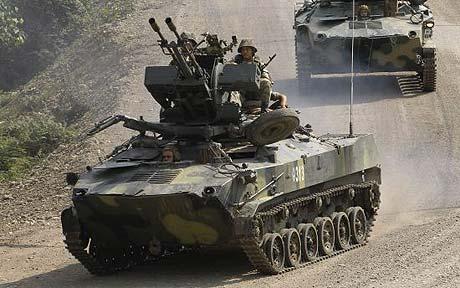
New York Court Holds Stun Gun Ban is Not Unconstitutional, in Contravention of Caetano

Herschel Smith · 30 Mar 2025 · 2 Comments

Dean Weingarten has a good find at Ammoland. Judge Eduardo Ramos, the U.S. District Judge for the Southern District of New York,  has issued an Opinion & Order that a ban on stun guns is constitutional. A New York State law prohibits the private possession of stun guns and tasers; a New York City law prohibits the possession and selling of stun guns. Judge Ramos has ruled these laws do not infringe on rights protected by the Second Amendment of the United States Constitution. Let's briefly…… [read more]

Financing the Taliban

BY Herschel Smith
17 years, 11 months ago

Some Taliban and al Qaeda support comes from radical Salafists in Saudi Arabia, but the Taliban also harvest their own support. Regular readers of The Captain’s Journal know that we’re not particularly fond of the notion of mixing the war on drugs with Operation Enduring Freedom, since the idea of destruction of a farmer’s means of income does not comport with the need to win the population.

What about support for the Taliban from poppy? This has been asked thousands of times in the main stream media, and indeed, the State Department wants badly to war against drugs in Afghanistan. So do some military (mostly Army, not any Marines to our knowledge, since Marine operations in Helmand specifically avoided destruction of crops).

Our contention all along has been that the problem is not poppy, any more than it is any other crop. It’s the Taliban, and they are more than capable of obtaining income through bullying tactics whether from farmers who grow poppy or women who weave clothing with yarn. The Taliban have begun heavy handed tactics of taxation of various businesses to support their campaign.

PESHAWAR: The Taliban are financing their “jihad” against the United States and supporting the families of the militants killed in the war with private taxation, besides Zakat and Ushr.

Sources close to militants, tribal elders and government officials in various tribal regions where Taliban-linked militancy has paralysed business told Daily Times that the organisation has not made a uniform policy on Zakat so far.

Taliban vary the taxation from area to area and depending on the financial status of traders. Bajaur is the worst case, where reports say the Taliban have imposed fixed taxes on traders, ranging from Rs 30 to Rs 25,000 per month.

“I pay Rs 500 a month to the Taliban as per their decree,” said Rustam Khan, who runs a small business in the Khar bazaar. “I can afford to pay the sum, otherwise it would have been great injustice.”

Maulana Waheed, in charge of Zakat for Taliban in Bajaur, said the total collection was around Rs 175,000 so far – much lower than what Taliban need to spend. Waheed denied the Taliban were forcing Khar residents to pay Zakat to them, but accepted collecting 12,000 kilogrammes of wheat as Ushr from farmers.

Fuel stations give 120 litres of fuel each to the Taliban, who are frequently on the move to avoid United States spy planes.

“That is true, we provide a certain quantity of fuel to the Taliban as per their desire and our contribution for jihad,” said a manager at one of the fuel stations in Khar.

In the neighbouring Mohmand tribal region, the Taliban are not collecting Zakat, but seek contributions from harvested crops and also collect skins of sacrificed animals.

The Maulvi Nazir-led Taliban in Ahmedzai Wazir areas of South Waziristan collect neither Zakat nor Ushr, but the heavy fines they impose on the residents are one of the main sources of revenue to run the “Movement for Return of Taliban rule in Afghanistan”.

It doesn’t have to be small local businesses; it can be larger industrial operations as well.

ZIARAT, Pakistan — The Taliban’s takeover in April of the Ziarat marble quarry, a coveted national asset, is one of the boldest examples of how they have made Pakistan’s tribal areas far more than a base for training camps or a launchpad for sending fighters into Afghanistan.

A rare, unescorted visit to the region this month revealed how the Taliban are grabbing territory, using the income they exact to strengthen their hold and turn themselves into a self-sustaining fighting force. The quarry alone has brought tens of thousands of dollars, said Zaman, a tribal leader.

The seizure of the quarry is a measure of how, as the Pakistani military has pulled back under a series of peace deals, the Pakistani Taliban have extended their reach through more of the rugged 600-mile-long territory in northern Pakistan known as the Federally Administered Tribal Areas, or FATA.

The quarry here in the Mohmand tribal district, strategically situated between Peshawar and the Afghan border, is a new effort by the Taliban to harness the region’s abundant natural resources of coal, gold, copper and chromate.

Of all the minerals in the tribal areas, the marble from Ziarat is one of the most highly prized for use in expensive floors and walls in Pakistan, and in limited quantities abroad.

A government body, the FATA Development Authority, had failed over the past several years to mediate a dispute between the Masaud and Gurbaz subtribes over how the mining rights to the marble should be allocated, according to Pakistani government officials familiar with the quarry.

The Taliban came eager for a share of the business. Their reputation for brutality and the weakness of the local government allowed them to settle the dispute in short order.

The Taliban decided that one mountain in the Ziarat area belonged to the Masaud division of the main Safi tribe, and said the Gurbaz subtribe would be rewarded another mountain, Zaman, the contractor, said.

The mountain assigned to the Masauds was divided into 30 portions, he said, and each of six area villages was assigned five of the 30 portions.

Zaman said the Taliban demanded $1,500 commission upfront for each portion, giving the insurgents a quick $45,000.

The Taliban also demanded a $7 tax on each truckload of marble, he said. With a constant flow of trucks, the Taliban were collecting up to $500 a day, Zaman said.

There are no magic tricks to perform. Get rid of the poppy, and you don’t get rid of the Taliban. Get rid of the marble quarry, and you don’t get rid of the Taliban. In fact, squeezing the financiers in Saudi Arabia, while a good tactics and hopefully fully in process, won’t get rid of the Taliban.

It isn’t about the poppy, marble or financiers from the house of Saud. It’s about the religious radicals practicing jihad because of their belief system, who would fight to the death to destroy the West. There is no solution except to kill them. Many in Afghanistan suffer under their yoke, and providing security for them is the other part of the equation. This requires forces and kinetic operations.

Degrading Security in Afghanistan Causes Supply and Contractor Problems

BY Herschel Smith
17 years, 11 months ago

In Taliban and al Qaeda Strategy in Pakistan and Afghanistan four months ago we predicted that NATO supply lines would be a serious risk, particularly in the Khyber Pass and at the Torkham Crossing. Before long convoys of NATO supplies were targeted, and the Khyber Agency is under the control of the Taliban. But the strategy is not limited to Pakistan, and we’re seeing an even more aggressive campaign in Afghanistan.

Gulab Khan is constantly reminded of the danger of his job by the two round stickers he has used to cover bullet holes in the windscreen of the cab of his lorry, one of the thousands of trucks carrying diesel and jet fuel to Nato bases across Afghanistan.

“I believe it was the holy Koran, which I keep with me in the truck, that saved me from the bullets,” says Mr Shah as he recalls being attacked by insurgents last year on the dangerous run between Kabul and Kandahar airfield, a huge coalition military base in Afghanistan’s insurgent-ridden southern desert.

Despite the extra $2,500 (€1,648, £1,297) to be made on each load supplying the needs of Nato’s war machine in the south, he now restricts himself to less lucrative but far safer northern routes, delivering jet fuel in his rusty old Mercedes truck from Pakistan to Bagram airfield.

It is just as well for him, as this summer has seen an escalation in Taliban assaults on Nato supply lines with insurgents stepping up attacks on fuel ­convoys and the country’s roads.

Country managers at western security companies that hire out teams of armed Afghans and foreigners to protect convoys operating in the south say the situation has deteriorated sharply.

“In the summer months, I would expect to be attacked once or twice a week,” said one manager, unwilling to speak on the record.

“Last week, we were caught up in an attack on a convoy of fuel trucks on a road we are working on. It looked like a war zone, with five diesel tanks burst open by [rocket propelled grenades] and burning diesel flooding out over the road.”

The security companies are circumspect about how many tankers they lose, but he said “multiple dozens” have been lost in the south each month during the summer. In June, fighters set upon a convoy of more than 50 tankers, setting fire to them about 65km south of Kabul.

According to British officials in Lashkar Gar, the capital of Helmand province, the 10 largest fuel transport groups now have to spend a combined $2m a month on protecting the 5,000 trucks they operate. Kabul is now encouraging the companies to help fund its efforts to reclaim control over the road network.

The eastern provinces of Zabul and Ghazni have been particularly badly hit by attacks on bridges, with local officials saying they have lost four bridges and around 30 culverts in the past three months.

Matthew Leeming, a Kabul-based fuel trader, said it had become increasingly difficult to get convoys of essential goods through to more distant bases.

“The Taliban’s new tactics of blowing bridges between Kabul and Kandahar, forcing convoys to slow down and become softer targets, is causing severe problems to companies trying to supply Kandahar from Kabul,” he said.

Billions of international aid dollars have been spent on building a national road network, with the US Agency for International Development providing $260m for most of the Kabul-Kandahar link and Japan adding $34m for the rest. But the Afghan army and police have been unable to reclaim control of the roads from insurgents and criminal gangs who illegally tax traders who pass through their patches.

Passengers on civilian buses are routinely searched and killed if any evidence suggesting they work for the government or foreigners is found.

This report dovetails with a recent report at the Guardian concerning Afghan citizens fearful for their lives and begging for protection against the Taliban.

The company that provides services and logistics for the British army has come under fire for ignoring the increasing security needs of its local staff in Afghanistan as the Taliban steps up its attacks on army support employees.

Up to 400 Afghan staff working for KBR at the Camp Bastion base in Helmand, south Afghanistan, have been barred from joining flights to Kandahar and told they must travel by road – one of the most dangerous journeys in the country.

The Taliban is known to be targeting local staff who work for the British or US army as traitors, but this summer has seen an unprecedented number of attacks against caterers, mechanics and interpreters who all work at the base, with 10 staff being killed in July alone.

Ahmed (not his real name) said he was too scared to leave the base despite the fact that he had not seen his family for more than six months.

“My family does not know whether I am dead or alive. We are not allowed to use phones so I was looking forward to my holiday. But now I am too scared to leave because the Taliban are waiting just outside and I will get killed,” he said. He offered money to KBR to join any flight to Kandahar, he said, but was told it was not possible. “My boss said the flights are for priority staff only. It seems some human life is more valuable than others.”

One man, who only wanted to be known as Abdullah, said: “When we started here just over a year ago, the situation wasn’t as bad. But now the Taliban are increasing their attacks on us, we need the company to give us protection. I am speaking on behalf of all of us here in Bastion.” Abdullah said staff had voiced their security concerns to KBR several times. “When I signed up for the job, KBR promised to look after me and provide me security. But none of this has happened. They just threaten to sack us if we complain.”

The overarching strategy that won Iraq – security for the population -is completely absent in Afghanistan due to [a] lack of forces, and [b] lack of a comprehensive and consistent approach throughout NATO forces deployed in Afghanistan.

There are two independent testimonies from neutral witnesses in the accounts above that point to a rapidly degrading condition. The first was from Matthew Leeming, a Kabul-based fuel trader, who said it had become increasingly difficult to get convoys of essential goods through to more distant bases. The second is from an unnamed contractor who said that the Taliban were waiting just outside the FOB to kill collaborators.

Metrics, statistics, and official intelligence reports aside, the population has no security, and they are the best indicator of the conditions in the country. Without security, they will not side with NATO forces. They will side with the “stronger horse,” and thus we are losing Afghanistan back to the Taliban. More forces are needed, now and not later.

Iraq Veterans Engage Russian Troops

BY Herschel Smith
17 years, 12 months ago

The Times brings us a report on Georgian troops who were transported back from Iraq to engage the Russian attack on their homeland.

The young soldier’s desert fatigues looked distinctly out of place on the Georgian front line facing the Russian advance. “I have just come from Iraq. Now I am here to drink Russian blood,” he said with a cheery smile, encapsulating Georgian bravado against an overwhelmingly superior opponent.

His presence was living proof that the United States has given at least some assistance to the beleaguered Georgian Government. Courtesy of the US Air Force and a fleet of C17 transporters, about 800 Georgian soldiers were airlifted from service in Iraq to the defence of their country. In some cases the men were taken straight from the runway to the front line, easily recognisable in their sandy uniforms against the dark green of the Georgian countryside.

Bryan Whitman, the Pentagon spokesman, described the US military assistance as “transportation”. But the move prompted an angry response from Vladimir Putin, the Russian Prime Minister, who accused Washington of giving direct military assistance to his Georgian enemies. “It is a shame that some of our partners are not helping us but, essentially, are hindering us,” he said.

Let’s stop there to offer up a few observations.  TCJ would like to see the Georgian troops “drink the blood” of the Russians, but the U.S. assistance thus far is pathetic and embarrassing, regardless of the troop transport.  As for Vladimir Putin, The Captain’s Journal considers his charge that we are “partners” with him to be an insult.  Putin is a thug, murderer, thief and criminal.  We aren’t partners with him in anything.  Continuing with the report:

The Georgian troops made up the third-largest contingent in Iraq after those from the US and Britain. President Saakashvili of Georgia had calculated that his country’s contribution to the “coalition of the willing” would secure Washington’s help if he needed it. Unfortunately for him, the gamble failed to pay off once Georgia found itself at war with its mighty northern neighbour.

Although America kept its promise to return the troops at a time of crisis, that is as far as its assistance went.

In spite of the confidence displayed by the young soldier, and other veterans of the Iraqi campaign, their experiences of fighting Iraqi insurgents and guarding the Baghdad green zone were of little value against the tanks, artillery and air bombardment of the Russian Army. Dug in 17 miles outside Gori with orders to blunt any Russian assault, the troops soon found themselves under attack. At one moment two Russian MiG fighters wheeled overhead before sending bombs in the direction of Georgian positions.

On the ground a group of Georgian soldiers were anxiously replacing all six tyres on their military transport as the enemy jets circled under the baking sun above them. They told The Times that the vehicle had been hit in an ambush outside the next village to the border, killing a 22-year-old soldier and wounding another.

A burst of machinegun fire in nearby fields sent everyone scattering for cover. Nukri Koshovidze, 47, a veteran of wars in Afghanistan and Iraq, looked defeated and felt betrayed. “The Russians are killing many people in the villages, even old women, and the West doesn’t want to hear their screams,” he said.

“If big countries like America and England said something more strongly then they may stop. But Russia is showing its muscles and we are all being forced to bow before it.”

Within a few hours his prediction came true. He and his troops were not bowing before the Russians but fleeing before them in an undignified rout, abandoning their positions to the advancing Russian forces. By nightfall the Iraqi veterans had joined their comrades on the outskirts of Tbilisi.

Baghdad might have seemed attractive by comparison.

It’s easy to make too much of the Georgian retreat, especially when one considers the force strength by the numbers.  Regardless of armor and artillery, the bottom line here is air power.  Air superiority doesn’t ensure a victory, and lack of it doesn’t guarantee a loss.  But it’s impossible to wage a conventional war against a larger armed forces without at least air equivalence.

If Georgia had air power it’s more than likely that the Georgian troops would indeed have had the chance to drink the blood of Russian troops.  A Squadran of A-10s (to cut Russian armor into little pieces) and fighter protection would have gone a long way towards neutralizing Russian air power.  But then, that would have required being true to friends who have given their utmost to our campaign in Iraq.

This is a commitment that the U.S. was not willing to make, and our “friends” in the future will likely remember this sad event.  Would Russia have responded with an increase in force?  Would the mere threat to cut the armor columns into small pieces have forced a retreat back to Russia without having to fire a shot?  We’ll never know.  TCJ misses Ronald Reagan.

The Captain’s Journal also salutes the brave Georgian troops and asks for God’s blessings on their efforts.

The Best Way to Keep the Bad Guys Out

BY Herschel Smith
17 years, 12 months ago

Reuters brings us an interesting report on counterinsurgency in Sadr City.

SADR CITY, Iraq, Aug 11 (Reuters) – A strapping U.S. soldier, his flak jacket draped with weaponry and his rifle pointed at his feet, extends an application for a small business grant to Iraqi shopkeeper Warad Mutaab Qaataa.

Qaataa, a balding, soft-bellied man, watches nervously from across his tiny living room as Captain Beau Hunt tells him how to apply for up to $2,500 to enlarge the small shop he runs from his home in Sadr City, a sprawling Baghdad slum.

Not long ago, U.S. soldiers raided his home at gunpoint in the middle of the night. Now, they are back offering cash.

Qaataa says business is picking up slowly. “Of course, the situation is far better than it was,” he said.

The grant is one small part of the U.S. push to resurrect this mainly Shi’ite area that until a few months ago was in the iron grip of the Mehdi Army — the feared militia loyal to anti-American cleric Moqtada al-Sadr.

Sadr City has quietened down since fierce fighting this spring allowed U.S. and Iraqi troops to take control of the area, a major boost for the U.S.-backed government of Prime Minister Nuri al-Maliki …

U.S. troops say the best way to ensure that the fighters don’t come back is to improve life in Sadr City, where power flickers on a few hours a day and rotting trash piles on curbs.

A balance needs to be struck here.  TCJ has strongly supported the so-called concerned citizens program (later called “Sons of Iraq”), which involved payment for work (usually security) in order to prevent some portion of the Sunni insurgency.  But then again, the Sunnis were more than willing to work with the U.S., and most had no love for the radical al Qaeda brand of terrorism.

Poverty can foment insurgency, and this can be dealt with by traditional means.  But as we’ve pointed out before, Bangladesh is one of the poorest countries in the world and 90% Muslim, but without the radical Islamists.  Poverty doesn’t foment radical, militant Islam.  That’s just a myth.

The fighters of the Mahdi militia, following their religiously radical leader, Moqtada al Sadr, seem much more religiously motivated than the Sunni fighters were, and therefore less amenable to the methods and tactics used in Anbar.

Reconstruction, reliable power, business loans and other forms of good will and needed resources are good tactics to befriend the locals and obtain intelligence and reciprocal good will.  Thus this is a valid and needed part of counterinsurgency.  But as for the hard core fighters who won’t reconcile and the religiously motivated radicals, the best way to ensure that they don’t come back is to kill them.

Georgia Pleads for Help Against Russian Brutality and Hegemony

BY Herschel Smith
17 years, 12 months ago

It’s important to understand what the war in Georgia is about – and what it’s not about.

Russian troops sit on armored personnel carriers in the South Ossetian town of Dzhava on Saturday (Dmitry Kostyukov AFP/Getty Images). (TCJ: Some with beards, most with hair that’s too long, many with different cammie patterns, different types of cover being worn (or no cover at all), and one “soldier” sitting at the back with purple socks and sneakers. They look like crap, ideal representatives of their thug-in-chief, Vladimir Putin).

The news accounts, blogs and blog comments are adrift with Russian-made propaganda. The Russian machine has saturated the media with its own account of the situation in Georgia, the bulk of it lies with what little truth there is being stripped from proper context.

The war isn’t about Georgian violations of humanitarian law. To assume that Russia has a right to “protect its own borders from instability” is utterly to miss the point. The war isn’t about escalation by the Georgian President, Mikheil Saakashvili, or some dream of grandeur he has. The war isn’t even about an oil pipeline, per se, although that makes a nice catch in the process and increases their control over the region’s oil supply. Control over the oil pipeline results from Russian hegemony rather than causes it.

Vladimir Putin is the strongman behind the curtain. He is a murderer, liar, thug and criminal. Russian President Medvedev is merely a puppet, and does the bidding of Putin. Putin has long held that “First and foremost it is worth acknowledging that the demise of the Soviet Union was the greatest geopolitical catastrophe of the century.” He wishes the world to negotiate and reason from this as an axiomatic irreducible, our unquestioned starting point. But Russia never had any claim to Georgia to begin with, and the criminality of the Soviet Union only reinforces the point that we mustn’t play the devil’s game. We must not allow Putin to set the theoretical framework for the debate and confrontation.

There has been plenty of dialog and negotiation with Russia, and Georgia hasn’t been heavy handed, as we learned again today from the Georgian President in a commentary in the Wall Street Journal.

The Kremlin designed this war. Earlier this year, Russia tried to provoke Georgia by effectively annexing another of our separatist territories, Abkhazia. When we responded with restraint, Moscow brought the fight to South Ossetia.

Ostensibly, this war is about an unresolved separatist conflict. Yet in reality, it is a war about the independence and the future of Georgia. And above all, it is a war over the kind of Europe our children will live in. Let us be frank: This conflict is about the future of freedom in Europe.

No country of the former Soviet Union has made more progress toward consolidating democracy, eradicating corruption and building an independent foreign policy than Georgia. This is precisely what Russia seeks to crush.

This conflict is therefore about our common trans-Atlantic values of liberty and democracy. It is about the right of small nations to live freely and determine their own future. It is about the great power struggles for influence of the 20th century, versus the path of integration and unity defined by the European Union of the 21st. Georgia has made its choice.

When my government was swept into power by a peaceful revolution in 2004, we inherited a dysfunctional state plagued by two unresolved conflicts dating to the early 1990s. I pledged to reunify my country — not by the force of arms, but by making Georgia a pole of attraction. I wanted the people living in the conflict zones to share in the prosperous, democratic country that Georgia could — and has — become.

In a similar spirit, we sought friendly relations with Russia, which is and always will be Georgia’s neighbor. We sought deep ties built on mutual respect for each other’s independence and interests. While we heeded Russia’s interests, we also made it clear that our independence and sovereignty were not negotiable. As such, we felt we could freely pursue the sovereign choice of the Georgian nation — to seek deeper integration into European economic and security institutions.

We have worked hard to peacefully bring Abkhazia and South Ossetia back into the Georgian fold, on terms that would fully protect the rights and interests of the residents of these territories. For years, we have offered direct talks with the leaders of Abkhazia and South Ossetia, so that we could discuss our plan to grant them the broadest possible autonomy within the internationally recognized borders of Georgia.

But Russia, which effectively controls the separatists, responded to our efforts with a policy of outright annexation. While we appealed to residents of Abkhazia and South Ossetia with our vision of a common future, Moscow increasingly took control of the separatist regimes. The Kremlin even appointed Russian security officers to arm and administer the self-styled separatist governments …

Just this past spring, we offered the separatist leaders sweeping autonomy, international guarantees and broad representation in our government.

Our offers of peace were rejected. Moscow sought war. In April, Russia began treating the Georgian regions of Abkhazia and South Ossetia as Russian provinces. Again, our friends in the West asked us to show restraint, and we did. But under the guise of peacekeeping, Russia sent paratroopers and heavy artillery into Abkhazia. Repeated provocations were designed to bring Georgia to the brink of war.

When this failed, the Kremlin turned its attention to South Ossetia, ordering its proxies there to escalate attacks on Georgian positions. My government answered with a unilateral cease-fire; the separatists began attacking civilians and Russian tanks pierced the Georgian border. We had no choice but to protect our civilians and restore our constitutional order. Moscow then used this as pretext for a full-scale military invasion of Georgia.

Vladimir Putin wants to reconstruct the Soviet Union, his ultimate design ever since taking power. President Bush’s response is weak: “I expressed my grave concern about the disproportionate response of Russia and that we strongly condemn bombing outside of South Ossetia,” the US president told NBC television. But again, it isn’t a matter of a disproportionate response. Russia has no right to have forces deployed within the borders of Georgia.

As this is being written, Georgia has been effectively cut in half by advancing columns of armor, and Russia is demanding that Georgia disarm. One of the clearest explanations of the high stakes war that is being fought comes from an unnamed State Department representative (courtesy of Scott Johnson at Powerline).

This is a huge event, and our inaction has been a disgrace. Have you noticed that Secretary Rice and President Bush’s responses have virtually mirrored Senator Obama’s recommendations? It is heaps of shame on the current administration for letting a close ally dangle like this, and is instructive of just how bad an Obama foreign policy would be …

Your last post on the energy route made an important point. Georgia is important to the West for more than just political reasons. It is an incredibly strategic location. That pipeline is an independent source of energy for the West, and an independent source of income for countries in the Caspian Basin. It allows them to have an independent foreign policy. It gives, say, Azerbaijan and Kazakhstan the freedom to allow US arms to fly across their territory on the way to Afghanistan. Did you know that Russia forbids the transport of US military hardware across its territory, even by plane? Of course, Iran does too. Look at a map and think of where the large US logistical bases are located (Germany). That leaves only a narrow corridor — across Georgia and Azerbaijan — that we can use to supply our troops in Afghanistan.

There’s another point here. Russia is best influenced from Tbilisi, Astana, Kiev, etc. — not from Moscow. Russia is a bully. It does not respond to demarches, security council rebukes and harsh denunciations …

Russia has been angry that Georgia and its other former Soviet colonies haven’t been bowing to Russian control. Russia is out to teach them a lesson.

And that’s precisely why this attack is a swipe at the US. President Bush made Georgia one of his signature projects. One of the very first decisions Bush’s security council made in 2001 was on Georgia. Georgia’s progress over the last few years have been awe-inspiring and President Bush can very plausibly take a significant amount of credit for that. The Georgians sure think so. They renamed the main street in downtown Tbilisi after him. They sent troops to help us in Iraq, Afghanistan and Kosovo. Russia is punishing Georgia for cozying up with the US, and telegraphing the message to the rest of its neighbors: listen to us and not the Americans.

Given the weak response from the US, who do you think Russia’s neighbors are listening to right now? Countries like Estonia or Kazakhstan are going to be terrified over this. Or think about the Czech Republic who just fought a very contentious political battle to allow missile defense radars (the Russian Chief of Staff of the Army threatened an invasion!) . Poland has yet to sign an agreement to allow missile defense interceptors on their soil. What do you want to bet the price just went up? NATO has also been silent. What does that mean for countries like Ukraine who have asked to join, bucking Moscow’s decree not to do so or else. The message is clear: don’t go too far out on the US’ limb because they won’t back you up. (and what kind of lesson will Israel take away from this?)

Put into the context of Russia’s recent behavior — the polonium poisonings, trying to kill a pro-Western presidential candidate in Ukraine, shutting off energy supplies to Europe, high tech arms transfers and nuclear know-how to Iran, strategic bomber runs into Alaskan airspace, etc., etc., etc. – this is very serious indeed. Russia responds to resistance and pushback, not “strong denunciations.” So far they’ve only found an open door.

This State Department representative “gets it.” There is a much larger plan being implemented than just Georgia, and it has to do with Russian hegemony. As for the Georgians? They sent several thousand troops to assist Operation Iraqi Freedom, and are asking why the U.S. wouldn’t now come to the aid of Georgia? Indeed. The balance of the world may very well be asking a similar question for their help to the U.S.

Below are some scenes of Russian “peace keepers” and their handiwork.

An unidentified crying Georgian woman is calmed by her husband after finding out that her child was killed in a neighboring village, in the town of Gori, Georgia (AP, Sergei Grits)

Russian armor column (note that the column is out in the open and highly susceptible to being chopped to small pieces by A-10s with its faster kill chain) (Reuters)

Wounded Georgian Soldier (AFP)

A mother and child in the ravaged Georgian city of Gori, where at least 17 people were killed at the weekend when Russian jets bombed apartment blocks (David Mdzinarishvili/REUTERS).

An injured woman stands next to her bombarded home (Reuters)

Afghanistan: We Don’t Have That Much Time!

BY Herschel Smith
17 years, 12 months ago

Stateside military command has been kicking the Afghanistan can down the road for a while now, and the belief seems to be that the next President will figure out priorities. January, or February, perhaps, and the new administration will begin to sight in on a comprehensive strategy, which itself will then be months away from being implemented.

Recall that wonderful movie Apollo 13, where both the Astronauts and the engineers were heroes? One part of the dialog keys in on that pivotal moment when the crew finally realized their real predicament. It’s right after unsuccessful isolation of the oxygen leak, and goes like this:

Jim Lovell: Freddo, how long does it take to power up the LEM?
Fred Haise, Sr.: Three hours by the checklist.
Jim Lovell: We don’t have that much time.

They actually had only minutes to transition to and power up the lunar landing module, or die. The Captain’s Journal has been arguing for more than half a year for focus and force projection in Afghanistan. Somewhat belatedly, the U.S. force command and NATO might have had a similar moment to Apollo 13. “How long does traditional COIN takes? Why, ten to twelve years by the book, sir! We don’t have that much time!

Senior British commanders are to warn ministers that unless thousands more troops are sent to Afghanistan the Taliban will win back control of the country.

They are recommending a rapid reduction in the 4,000 troops in Iraq so that more can go to Afghanistan. American and British commanders in Afghanistan want an Iraq-style surge “within months” to fend off a Taliban victory before next year’s presidential election there.

One senior officer said the Taliban were now operating in areas where they had not been since the allied invasion in 2001.

“Unless the West commits serious numbers of extra troops soon, we are looking at a Taliban victory,” another officer said.

Commanders in Helmand need at least one more infantry brigade, which would increase British numbers from 8,000 to about 12,000, he added.

British officers fear that having been accused of failing in Iraq, they will face a second defeat caused solely by the failure to provide sufficient troops.

They have already begun lobbying to persuade Gordon Brown to back the idea of a surge. The prime minister, however, is looking for a “peace dividend” from the Iraq withdrawal that would cut the £1.7 billion annual cost of the two operations.

Des Browne, the defence secretary, ordered his officials last week to deny that there were any plans to send more troops. Nato chiefs in Afghanistan, however, including General David McKiernan, the American commander, and his British deputy, Lieutenant-General Jonathon Riley, are “screaming out” for more troops, sources said.

They see the presidential election as a strategic “tipping point” and are concerned that worsening security will make it impossible to hold a meaningful vote. They are said to be backed by senior British officers in charge of planning Afghanistan operations, including Lieutenant-General Nick Houghton, chief of joint operations.

Browne insisted last week that he had always increased troop numbers when asked by commanders, pointing to a 230-man increase in June. Commanders say that is nowhere near enough.

One senior officer said: “We can beat them face to face; we just can’t be everywhere, and that has allowed them to gain ground.”

The Captain’s Journal has weighed in before that “Properly resourcing the campaign will require at least – but not limited to – three Marine Regimental Combat Teams (outfitted with V-22s, Harriers and all of the RCT support staff) and three Brigades (preferably at least one or two of which are highly mobile, rapid reaction Stryker Brigades). These forces must be deployed in the East and South and especially along the border, brought out from under the control of NATO and reporting only to CENTCOM. Finally, NATO must implement a sound, coherent counterinsurgency strategy across the board in the balance of Afghanistan.”

So even now NATO is being timid regarding the true requirements of the campaign, in our opinion. But at least they have encountered their “we don’t have that much time” moment of truth. Des Browne, being the weakling that he is, continues to equivocate. But at least the truth is out there. The Taliban have been clever.

They want to disrupt and/or make the elections meaningless. No end to the corruption, they want the people to think. That paves the way for Sharia courts and Taliban justice, and thus an empowerment of the Taliban. Unlike the delays in the U.S., the Taliban are working towards a target, and unfortunately the election will not occur in time to deploy a comprehensive strategy after the U.S. election in order to save the Afghan election.

Regarding delaying any sort of increased commitment to Operation Enduring Freedom until a new administration takes over, “we don’t have that much time.”

Russia Invades Georgia

BY Herschel Smith
17 years, 12 months ago

Ralph Peters has the best analysis of the situation I can find.  All of Ralph’s commentary is worth studying, but the summary is that Russia planned this in advance.  They cannot move that much armor without pre-deploying the right equipment and troops.  The military materiel is too dilapidated.

Vladimir Putin is a criminal and thug, and also has a heavy hand in the parent company of Airbus, erstwhile winner of the tanker contract (which is reason enough to reject out-of-hand any proposal made by this company).  But leave it to some shallow thinkers to romanticize the issue.  Courtesy of the Small Wars Journal Blog, Gordon Chang has a short piece in Commentary Magazine, and following the comments leads to this jaw-dropping statement:

I’m a great admirer of the Georgians, their music and their traditions. They poked a stick in the bear’s eye. It’s not up to us to tell the bear what to do right outside his lair.

That way, madness lies. Thank God we never admitted Georgia into NATO. This crisis would prove that obsolete entity a toothless cat, indeed.

Good grief.  Say what you will about American self-protection by imperial presence across the globe, but she has never forced anything upon a population except its own will.  Russia is still communist, and communism imposes the will of the government regardless of the will of the people.  It’s evil to the core, lest we forget the lessons taught to us by 60+ years of watching Russian brutality, or the lessons taught to us by our great leader Ronald Reagan.

The “bear” is evil, and we should be working towards the diminution of his “lair,” romantic stupidity and inane blog comments notwithstanding.

Friday Night Music Continued

BY Herschel Smith
17 years, 12 months ago

We’ll return to the heavy articles on Monday.  Until then, enjoy a very sophisticated rock tune by the Doobie Brothers entitled Clear as the Driven Snow.  There is an older (and better) version on video, but it was pulled from Youtube.

Made famous by other tunes such as “China Grove,” this goes to show what a diverse and talented group the Doobies were.  You won’t find tunes like this on many web sites.  We bring you the best, and as always, something very interesting.  The Captain’s Journal likes to supply you with nuggets of gold in a wasteland of prose and video across the globe.

Ingress to Afghanistan

BY Herschel Smith
18 years ago

India has long been very wary of the Taliban, having fought Islamic extremists in the Kashmir region for years. Hence, they knew long before the U.S. did that political and security problems would cast doubt on the supply of arms and other military materiel to NATO forces in Afghanistan. Karachi is the next target of the Tehrik-i-Taliban, and it is the port city of entry for NATO supplies. We predicted Karachi would be at risk months ago. India also stands to lose with the ascendancy of the Taliban, i.e., India itself is at risk. So India has been busy, but on what?

KABUL, August 07, 2008 (AFP) – India has almost completed a key road linking Afghanistan to Iranian sea ports despite Taliban attacks that claimed more than 100 lives in two years, the deputy public works minister said.

The 217-kilometre (134-mile) route connects a nearly completed ring road around Afghanistan to the Iranian port cities of Bandar-i-Abas and Chabahar, the official told AFP.

Eight Indian engineers and more than 100 Afghan workers were killed in Taliban attacks since the construction of the road began more than two years ago, said Minister Wali Mohammad Rasouli.

There were a few sections of route that had to be touched up before a handing over ceremony was held in a few weeks, he said.

Landlocked Afghanistan relies mostly on Pakistan’s port of Karachi for goods arriving by sea, including supplies for the nearly 70,000 international soldiers helping to fight a Taliban-led insurgency.

The road was initially budgeted at 80 million dollars but is reported to have cost 185 million dollars, in part because of the high security risks of operating in southern Afghanistan.

The route, already open to traffic, is a welcome alternative, since goods can sometimes be held up on alternate routes from Pakistan, where they are also often subjected to high taxes, Rasouli said.

“The new road is very important for us,” he said. “Now we have an alternative road to use when Pakistan creates problems and obstacles for our traders on their ports.”

Islamabad also does not allow goods from India — its enemy — to transit through Pakistan into Afghanistan.

Kabul has a good relationship with New Delhi, one of the main financers of its efforts to rebuild from decades of war although it has not sent troops to join the international military effort against the resurgent Taliban.

However its ties with Islamabad are strained, notably over the unrest.

Kabul alleges that elements in Pakistan, including its government, are supporting the Taliban. Islamabad was one of only three countries that recognised the 1996-2001 Taliban regime.

A road to Iran. This is truly bizarre. A sworn enemy of the U.S. and perpetrator of all manner of anti-Western military operations through its proxy Syria and Hezbollah, the idea that Iran would ever knowingly allow support for NATO forces in Afghanistan to transit through its borders, while also actively working for the defeat of the very same forces in both Afghanistan and Iraq, calls this report into serious suspicion. If it’s true, it isn’t readily apparent why India would have worked for such a road.

It would have been easier to secure disputed areas of Kashmir (or construct air fields to supply NATO via flights over the Northern region of Kashmir) than to get Iranian agreement to assist NATO forces in Afghanistan. To make this report make any sense whatsoever requires a better analyst than The Captain’s Journal. We believe that India has wasted its time and money.

The Globalization of Jihad in Palestine

BY Herschel Smith
18 years ago

The danger in Pakistan negotiating with Tehrik-i-Taliban is the presumption that they’re interested in accommodation, local or national politics. We have previously pointed out regarding the internet interview of Ayman al-Zawahiri that “Over the past year, Zawahiri and other senior al-Qa’ida figures have been waging a vigorous propaganda campaign against the Palestinian organization HAMAS. Although Jihadists unanimously denounce Israel they continue to disagree over whether HAMAS should be considered a legitimate Islamic movement. For Zawahiri, HAMAS’ embrace of nationalism, democracy, and its legacy in the Muslim Brotherhood — arguably the three things al-Qa’ida hates most — delegitimizes the group.”

We also observed that “What we see as a transnational insurgency is to the jihadists simply a world wide struggle. They don’t recognize nation-states as legitimate.” In recent Internet postings we have now learned that:

Sheikh Hamid al-Ali, based in Kuwait, is a leading Islamist ideologue whose teachings are often posted on Islamist Web sites.

“Lebanon is a vivid example of the Iranian expansionist scheme at the expense of real Arab causes, which are exploited by Shi’ite sects,” Ali said in a recently posted message on an al-Qaida affiliated Web forum. “The jihadi movement has to be aware of the reality of the size of Iran’s influence, and must not allow Iran to exploit legitimate causes.”

Al-Qaida ideologues have also expressed deep disappointment with Hamas, which they accuse of being too nationalist and provincial. Al-Qaida members routinely condemn Hamas for failing to declare an Islamic emirate in Gaza, an entity they say could link up with other pockets of Islamist rule in a future caliphate state.

One message, posted on the jihadi al-Firdaws forum several months ago by a user who identified himself as Palestinian, read, “When Hamas took over Gaza, we eagerly anticipated their announcement of the establishment of an Islamic emirate, as was the case in Afghanistan and in Somalia. But this did not happen.”

There is the recurring theme of condemnations of Hamas (to which we have pointed), but in reality the situation is far more dire for this region of the world.

The Hamas regime has been alarmed by a new Islamic revivalist movement that eschews politics.

The movement, known as Salafis, was said to receive funds from the Gulf as well as sources within the Gaza Strip. The Salafis, who appear to resemble the Taliban and Al Qaida, have established a mosque and religious school and were believed to number up to 50,000.

“They have become the new rival of Hamas and are supported by very powerful sheiks in the Gulf,” a Palestinian security source said.

The source said the Salafis have become established in every major town in the Gaza Strip. Salafi members, dressed in robes and long beards, spend their evenings going from door to door in efforts to recruit Muslims to attend mosque on a daily basis. The Salafis have their own mosque, A-Sahabah, as well as an elementary and high school in Gaza City, Middle East Newsline reported.

The Salafis have urged Gazans to live a modesty lifestyle and throw away their television, alcohol, pictures and cosmetics. Recruits to the movement have been encouraged to spread these principles and influence mosques, schools and the work place.

Hamas has sought to limit the Salafi influence. Palestinian sources said Hamas security forces raided mosques under the influence of the Salafis.

Several militias have derived their inspiration from the Salafis. They include the Army of Islam and the Army of the Nation — the former sponsored by the Dughmoush clan and the latter comprised of former members of Hamas and Islamic Jihad.

Palestinian sources said the Salafis were said to have participated in or inspired a series of strikes on Internet cafes and cellular phone stores around Gaza City. They said Salafis were also involved in a grenade strike at a United Nations-sponsored festival in Rafah in 2007.

“Hamas has been very careful in dealing with the Salfis, fearing that any crackdown will anger its supporters in Qatar and the United Arab Emirates,” the source said.

There’s that same theme: eschewing politics for transnational interests and global aspirations. The Captain’s Journal predicts that within short order Hamas will either be completely absorbed within the Salafist movement in Palestine or disappear.

In the mean time this also points to another, perhaps much larger, problem. Not only are radicals in Palestine being supported by oil-engorged sheiks, the Taliban and al Qaeda are similarly recipients of oil wealth. Whether there is any concerted effort – financial pressure, black operations, or covert warfare – to dry up these funds and take out the leaders is not currently known to us. What is clear, however, is that one of the quickest ways to kill the evil progeny is to dry up the support.


26th MEU (10)
Abu Muqawama (12)
ACOG (2)
ACOGs (1)
Afghan National Army (36)
Afghan National Police (17)
Afghanistan (704)
Afghanistan SOFA (4)
Agriculture in COIN (3)
AGW (1)
Air Force (42)
Air Power (10)
al Qaeda (83)
Ali al-Sistani (1)
America (23)
Ammunition (305)
Animals (336)
Ansar al Sunna (15)
Anthropology (3)
Antonin Scalia (1)
AR-15s (397)
Arghandab River Valley (1)
Arlington Cemetery (2)
Army (91)
Assassinations (2)
Assault Weapon Ban (29)
Australian Army (7)
Azerbaijan (4)
Backpacking (4)
Badr Organization (8)
Baitullah Mehsud (21)
Basra (17)
BATFE (247)
Battle of Bari Alai (2)
Battle of Wanat (18)
Battle Space Weight (3)
Bin Laden (7)
Blogroll (3)
Blogs (24)
Body Armor (23)
Books (3)
Border War (18)
Brady Campaign (1)
Britain (39)
British Army (36)
Camping (5)
Canada (20)
Castle Doctrine (1)
Caucasus (6)
CENTCOM (7)
Center For a New American Security (8)
Charity (3)
China (19)
Christmas (18)
CIA (30)
Civilian National Security Force (3)
Col. Gian Gentile (9)
Combat Outposts (3)
Combat Video (2)
Concerned Citizens (6)
Constabulary Actions (3)
Coolness Factor (3)
COP Keating (4)
Corruption in COIN (4)
Council on Foreign Relations (1)
Counterinsurgency (218)
DADT (2)
David Rohde (1)
Defense Contractors (2)
Department of Defense (220)
Department of Homeland Security (26)
Disaster Preparedness (5)
Distributed Operations (5)
Dogs (15)
Donald Trump (27)
Drone Campaign (4)
EFV (3)
Egypt (12)
El Salvador (1)
Embassy Security (1)
Enemy Spotters (1)
Expeditionary Warfare (18)
F-22 (2)
F-35 (1)
Fallujah (17)
Far East (3)
Fathers and Sons (2)
Favorite (1)
Fazlullah (3)
FBI (39)
Featured (192)
Federal Firearms Laws (18)
Financing the Taliban (2)
Firearms (1,876)
Football (1)
Force Projection (35)
Force Protection (4)
Force Transformation (1)
Foreign Policy (27)
Fukushima Reactor Accident (6)
Ganjgal (1)
Garmsir (1)
general (15)
General Amos (1)
General James Mattis (1)
General McChrystal (44)
General McKiernan (6)
General Rodriguez (3)
General Suleimani (9)
Georgia (19)
GITMO (2)
Google (1)
Gulbuddin Hekmatyar (1)
Gun Control (1,730)
Guns (2,416)
Guns In National Parks (3)
Haditha Roundup (10)
Haiti (2)
HAMAS (7)
Haqqani Network (9)
Hate Mail (8)
Hekmatyar (1)
Heroism (5)
Hezbollah (12)
High Capacity Magazines (16)
High Value Targets (9)
Homecoming (1)
Homeland Security (3)
Horses (2)
Humor (72)
Hunting (65)
ICOS (1)
IEDs (7)
Immigration (123)
India (10)
Infantry (4)
Information Warfare (4)
Infrastructure (4)
Intelligence (23)
Intelligence Bulletin (6)
Iran (171)
Iraq (379)
Iraq SOFA (23)
Islamic Facism (64)
Islamists (98)
Israel (19)
Jaish al Mahdi (21)
Jalalabad (1)
Japan (3)
Jihadists (82)
John Nagl (5)
Joint Intelligence Centers (1)
JRTN (1)
Kabul (1)
Kajaki Dam (1)
Kamdesh (9)
Kandahar (12)
Karachi (7)
Kashmir (2)
Khost Province (1)
Khyber (11)
Knife Blogging (7)
Korea (4)
Korengal Valley (3)
Kunar Province (20)
Kurdistan (3)
Language in COIN (5)
Language in Statecraft (1)
Language Interpreters (2)
Lashkar-e-Taiba (2)
Law Enforcement (6)
Lawfare (14)
Leadership (6)
Lebanon (6)
Leon Panetta (2)
Let Them Fight (2)
Libya (14)
Lines of Effort (3)
Littoral Combat (8)
Logistics (50)
Long Guns (1)
Lt. Col. Allen West (2)
Marine Corps (281)
Marines in Bakwa (1)
Marines in Helmand (67)
Marjah (4)
MEDEVAC (2)
Media (68)
Medical (146)
Memorial Day (6)
Mexican Cartels (48)
Mexico (72)
Michael Yon (6)
Micromanaging the Military (7)
Middle East (1)
Military Blogging (26)
Military Contractors (5)
Military Equipment (25)
Militia (9)
Mitt Romney (3)
Monetary Policy (1)
Moqtada al Sadr (2)
Mosul (4)
Mountains (25)
MRAPs (1)
Mullah Baradar (1)
Mullah Fazlullah (1)
Mullah Omar (3)
Musa Qala (4)
Music (25)
Muslim Brotherhood (6)
Nation Building (2)
National Internet IDs (1)
National Rifle Association (97)
NATO (15)
Navy (31)
Navy Corpsman (1)
NCOs (3)
News (1)
NGOs (3)
Nicholas Schmidle (2)
Now Zad (19)
NSA (3)
NSA James L. Jones (6)
Nuclear (63)
Nuristan (8)
Obama Administration (222)
Offshore Balancing (1)
Operation Alljah (7)
Operation Khanjar (14)
Ossetia (7)
Pakistan (165)
Paktya Province (1)
Palestine (5)
Patriotism (7)
Patrolling (1)
Pech River Valley (11)
Personal (77)
Petraeus (14)
Pictures (1)
Piracy (13)
Pistol (4)
Pizzagate (21)
Police (673)
Police in COIN (3)
Policy (15)
Politics (999)
Poppy (2)
PPEs (1)
Prisons in Counterinsurgency (12)
Project Gunrunner (20)
PRTs (1)
Qatar (1)
Quadrennial Defense Review (2)
Quds Force (13)
Quetta Shura (1)
RAND (3)
Recommended Reading (14)
Refueling Tanker (1)
Religion (501)
Religion and Insurgency (19)
Reuters (1)
Rick Perry (4)
Rifles (1)
Roads (4)
Rolling Stone (1)
Ron Paul (1)
ROTC (1)
Rules of Engagement (76)
Rumsfeld (1)
Russia (37)
Sabbatical (1)
Sangin (1)
Saqlawiyah (1)
Satellite Patrols (2)
Saudi Arabia (4)
Scenes from Iraq (1)
Second Amendment (715)
Second Amendment Quick Hits (2)
Secretary Gates (9)
Sharia Law (3)
Shura Ittehad-ul-Mujahiden (1)
SIIC (2)
Sirajuddin Haqqani (1)
Small Wars (72)
Snipers (9)
Sniveling Lackeys (2)
Soft Power (4)
Somalia (8)
Sons of Afghanistan (1)
Sons of Iraq (2)
Special Forces (28)
Squad Rushes (1)
State Department (23)
Statistics (1)
Sunni Insurgency (10)
Support to Infantry Ratio (1)
Supreme Court (84)
Survival (216)
SWAT Raids (58)
Syria (38)
Tactical Drills (38)
Tactical Gear (17)
Taliban (168)
Taliban Massing of Forces (4)
Tarmiyah (1)
TBI (1)
Technology (21)
Tehrik-i-Taliban (78)
Terrain in Combat (1)
Terrorism (96)
Thanksgiving (13)
The Anbar Narrative (23)
The Art of War (5)
The Fallen (1)
The Long War (20)
The Surge (3)
The Wounded (13)
Thomas Barnett (1)
Transnational Insurgencies (5)
Tribes (5)
TSA (25)
TSA Ineptitude (14)
TTPs (4)
U.S. Border Patrol (8)
U.S. Border Security (22)
U.S. Sovereignty (29)
UAVs (2)
UBL (4)
Ukraine (10)
Uncategorized (107)
Universal Background Check (3)
Unrestricted Warfare (4)
USS Iwo Jima (2)
USS San Antonio (1)
Uzbekistan (1)
V-22 Osprey (4)
Veterans (3)
Vietnam (1)
War & Warfare (435)
War & Warfare (41)
War Movies (4)
War Reporting (21)
Wardak Province (1)
Warriors (6)
Waziristan (1)
Weapons and Tactics (80)
West Point (1)
Winter Operations (1)
Women in Combat (21)
WTF? (1)
Yemen (1)

August 2026
July 2026
June 2026
May 2026
April 2026
March 2026
February 2026
January 2026
December 2025
November 2025
October 2025
September 2025
August 2025
July 2025
June 2025
May 2025
April 2025
March 2025
February 2025
January 2025
December 2024
November 2024
October 2024
September 2024
August 2024
July 2024
June 2024
May 2024
April 2024
March 2024
February 2024
January 2024
December 2023
November 2023
October 2023
September 2023
August 2023
July 2023
June 2023
May 2023
April 2023
March 2023
February 2023
January 2023
December 2022
November 2022
October 2022
September 2022
August 2022
July 2022
June 2022
May 2022
April 2022
March 2022
February 2022
January 2022
December 2021
November 2021
October 2021
September 2021
August 2021
July 2021
June 2021
May 2021
April 2021
March 2021
February 2021
January 2021
December 2020
November 2020
October 2020
September 2020
August 2020
July 2020
June 2020
May 2020
April 2020
March 2020
February 2020
January 2020
December 2019
November 2019
October 2019
September 2019
August 2019
July 2019
June 2019
May 2019
April 2019
March 2019
February 2019
January 2019
December 2018
November 2018
October 2018
September 2018
August 2018
July 2018
June 2018
May 2018
April 2018
March 2018
February 2018
January 2018
December 2017
November 2017
October 2017
September 2017
August 2017
July 2017
June 2017
May 2017
April 2017
March 2017
February 2017
January 2017
December 2016
November 2016
October 2016
September 2016
August 2016
July 2016
June 2016
May 2016
April 2016
March 2016
February 2016
January 2016
December 2015
November 2015
October 2015
September 2015
August 2015
July 2015
June 2015
May 2015
April 2015
March 2015
February 2015
January 2015
December 2014
November 2014
October 2014
September 2014
August 2014
July 2014
June 2014
May 2014
April 2014
March 2014
February 2014
January 2014
December 2013
November 2013
October 2013
September 2013
August 2013
July 2013
June 2013
May 2013
April 2013
March 2013
February 2013
January 2013
December 2012
November 2012
October 2012
September 2012
August 2012
July 2012
June 2012
May 2012
April 2012
March 2012
February 2012
January 2012
December 2011
November 2011
October 2011
September 2011
August 2011
July 2011
June 2011
May 2011
April 2011
March 2011
February 2011
January 2011
December 2010
November 2010
October 2010
September 2010
August 2010
July 2010
June 2010
May 2010
April 2010
March 2010
February 2010
January 2010
December 2009
November 2009
October 2009
September 2009
August 2009
July 2009
June 2009
May 2009
April 2009
March 2009
February 2009
January 2009
December 2008
November 2008
October 2008
September 2008
August 2008
July 2008
June 2008
May 2008
April 2008
March 2008
February 2008
January 2008
December 2007
November 2007
October 2007
September 2007
August 2007
July 2007
June 2007
May 2007
April 2007
March 2007
February 2007
January 2007
December 2006
November 2006
October 2006
September 2006
August 2006
July 2006
June 2006
May 2006

about · archives · contact · register

Copyright © 2006-2026 Captain's Journal. All rights reserved.