
Combat Action Around Kandahar
BY Herschel Smith 18 years, 4 months ago
Colonel Tom McGrath recently met with bloggers to discuss the recent events surrounding the prison break in Kandahar and subsequent combat that occurred in the villages around Kandahar. A number of interesting exchanges took place.
Q Sure, I mean, you know, the question that I’d really hope to ask, after the obligatory thank-you for taking the time with us, was basically the media impressions of this were that it was a fairly large, well-organized raid on the part of the Taliban. And the impression I’m getting from listening to you is pretty substantially different. Am I correct in that?
COL. MCGRATH: Yeah, I mean, listen, I’ll give them credit. They pulled it off. It was successful. So you know, it’s all about the results. And they got what they wanted. But I don’t think it was that big of a success, because we pursued them up into the district and we were able to kill them and capture them and push them out of the district very quickly within a matter of days — (inaudible) — weeks or months, which has happened before. So I don’t —
Q Not so much asking about sort of the outcomes as sort of the scale on which they could operate, I mean, to the extent that they had 40 or 50 people as opposed to the extent they had 5 people.
COL. MCGRATH: Yeah, I don’t think it was, no. The numbers: I’m not really sure. We’ll never know. It could have been that large or that small. But you know, they’re walking around the city like you and I. It doesn’t take much to burst into a compound and, you know, push the doors open and let some folks out. You know, someone had written that it was as good as, you know, a ranger-style raid or a commando-style raid. I don’t buy that. If it was so good, they would have been able to get away, reconsolidate and attack us and
hurt us. But it was the other way around.
Regardless of the way the main stream media put it, The Captain’s Journal compared it more to a Mad Max movie than some special operation by well-honed troops.
You simply cannot make this stuff up. In a scene reminiscent of Mad Max or The Road Warrior, 30 motorcyclists managed to take out a prison and release 1150 criminals, 400 Taliban among them. Where was the force protection? Where were the vehicle barriers (you know, those mechanically operated devices that flatten your tires if you go over them the wrong way)? Where were the concrete truck barricades? Where was the training? Where was the supervision? Forget expensive UAVs and road construction for a minute. What about spending a little money on teaching the Afghan police about combat and force protection. Failure to do so has cost us the freedom of 400 Taliban – and potentially U.S. lives to capture or kill them again.
The point was not the brilliance of the Taliban, but the abject failure of the prison system and police. What did Col. McGrath have to say about that issue?
… like I said, their prisons aren’t like our prisons or jails. They’re pretty much just edifices with doors and things like that, so if a big explosion comes though, there’s a lot of mayhem, they’re able to push their way out or — many are unlocked, what might be a lock or not — there might even not be locks in there as far as I know, and just make their way — made a run for it.
Our point exactly. There is good news too. The Afghan Army readied themselves quickly, went after the Taliban, and within a couple of days have driven them from the Kandahar area (read the full interview of Col. McGrath). They are getting better. But there is a caveat. Our friend Richard S. Lowry asked some hard questions since TCJ couldn’t be in on the discussion.
Q Great. We’ve heard reports back here after the prison break that there were roughly 1,100 prisoners that got away and 400 of them were Taliban. Assuming those numbers are right, and what you’ve told us just in the last few minutes, it looks like there’s 900 to a thousand of them that are still at large. Is there any ongoing operation that you can tell us about to hunt these people down?
COL. MCGRATH: There was about 900, we think, that got out. There was reports, you know, there were 400 Taliban, 200 Taliban. I’d say it was more probably 200 to 300 that were in there, Taliban. We conducted the operations in the Arghandab, and I told you we killed about 80, took another 25 prisoner, killed another 20 or 30 southwest of the city. But there’s ongoing operations – – I can’t get into detail — to continue to fight the Taliban and pursue the Taliban.
Q So you’re pretty confident that you got a vast majority of the Taliban in the first 24 to 48 hours that escaped?
COL. MCGRATH: No, I can’t speculate. They don’t keep very good records at the prison. We haven’t been through the training with the prison yet. That’s something — probably be down the road. It’s not on my — I don’t do the prisons over here. So I just don’t know, to be honest with you.
Col. McGrath wisely refused to speak authoritatively concerning numbers. But based on previous reports, it appears that there are several hundred Taliban still at large from this prison break. They melted away into the villages to fight again another day rather than take anyone on in direct kinetic engagements. Or, they melted away into the nearby mountains.
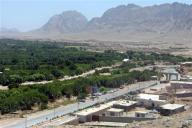
A view of the Arghandabd district in the southern city of Kandahar, June 19, 2008 (Reuters)
The Taliban have history in the mountains around Kandahar, where Mullah Omar had a wealthy dwelling in spite of the poverty of the people in the region. We have seen it before. In December of 2001 upon the fall of Kandahar, Muhammad Omar and the Taliban fled to the mountains in the area. Three months ago in Taking the High Ground in Afghanistan we commented that Afghan and IASF forces must be prepared to engage in the chase in the high ground.
Winning or losing the campaign will not come down to being able to rapidly deploy and temporarily drive the Taliban from their domiciles. The lessons learned in Iraq – constant contact with both the enemy and population, intelligence-driven raids, security, relentless pressure on the enemy, relationships with the people – must be applied in Afghanistan. Whack-a-mole counterinsurgency will not work.






No comments yet.
RSS feed for comments on this post. TrackBack URL
Leave a comment