Articles by Herschel Smith


The “Captain” is Herschel Smith, who hails from Charlotte, NC. Smith offers news and commentary on warfare, policy and counterterrorism.


Shootout in Karachi

17 years, 1 month ago

We have discussed the Talibanization of Karachi, and while the alleged number of Taliban in Karachi (400,000) is probably exaggerated, there is no doubt that extremism has taken root in Karachi.  It was the launch point for the Mumbai attacks, and as we have also discussed before, the port city through which all NATO supplies into Afghanistan through Pakistan flow.  Recently the police and Taliban fighters had a shootout in Karachi in which numerous police casualties occurred.

Pakistani police have arrested more than a dozen Islamist militants in the southern city of Karachi after a gun battle following a pre-dawn raid on their hideout, officials said.

Two policemen were killed and nine wounded before the militants’ resistance was broken after several hours of shooting.

The raid came as tension is running high between Pakistan and India in the wake of a militant attack on the Indian city of Mumbai in November, and there is pressure from the international community for Pakistan to crack down harder on jihadi groups.

A senior police official who declined to be identified said the detained men had links with Pakistani Taliban commander Baitullah Mehsud, who is based in lawless ethnic Pashtun lands on the Afghan border …

“We were getting reports for a long time that some jihadi elements were active in this area. Today, we raided the area and arrested many of them,” Ahmed said.

One Pakistani official also said (coincidentally before this shootout) that “The Taliban won’t cause real trouble in Karachi because it’s their funding point – they get their infrastructure here, the money, the SIM chips, the mobile phones.”  Perhaps this official should re-evaluate his position on whether the Taliban wish to cause “real” trouble.  Funding point or not, the Taliban will be able to focus their activities on the implementation of Islamic writ and anti-American activities – including the closing of the port city to NATO supplies – with enough fighters.

Finally, it isn’t clear whether the police believe their propaganda or not, but one thing is certain.  In arresting approximately a dozen Taliban, the Karachi police haven’t yet seen the tip of the iceberg, much less arrested many of the Taliban.

Prior:

The Talibanization of Karachi

Targeting of NATO Supply Lines Through Pakistan Expands

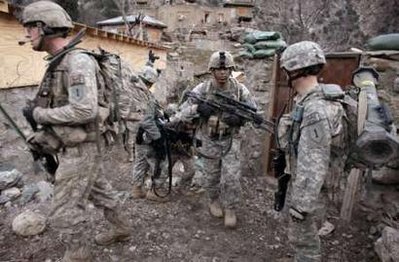
6-4 Cavalry COP in Afghanistan

17 years, 1 month ago

Soldiers with the US Army’s 6-4 Cavalry prepare to leave on a patrol
from Combat Outpost Lowell in eastern Afghanistan January 7, 2009
.

Commandant James Conway’s Vision for the U.S. Marine Corps

17 years, 1 month ago

Having been busy in the Anbar Province since 2004, the Marines had become a second land Army, or at least, so Commandant General James Conway had feared.  We’ve been listening hard, and in the midst of seemingly disorganized talk about littoral combat, the force being “too heavy,” the need to go back to the Corps’ expeditionary roots, and the desire to leave Anbar and take on the task of Afghanistan, frankly it has been difficult to weave together a narrative for the future of the Corps.

Commandant Conway has taken a huge step forward in systematizing that vision with his presentation at the national symposium of the Surface Navy Association, even if he didn’t intend to address this point.

Marines shipping out to Afghanistan this year eventually will spend twice as much time at home as deployed, Commandant Gen. James Conway said Thursday.

Conway said he doesn’t know yet exactly how many Marines will go to Afghanistan, but he said it would be fewer than 20,000. And as the Corps swells to 202,000 active-duty Marines, a goal the service expects to reach later this year, those deployed troops could spend about 14 months at home for every seven months they spent in theater, he said.

But that’s only partly meant to afford troops more time off with their families, Conway said. Just as important, he wants Marines to have more time to train for operations they’ve been too busy for since the force has been locked down in Iraq.

“You don’t have time to do mountain warfare training, or jungle training, or cold weather training, and most importantly to us, we’re not doing amphibious training with our brothers in the Navy, because we just don’t have time,” he said. “Now, we’ve got to fix that.”

Conway made his presentation at the national symposium of the Surface Navy Association, outside Washington, D.C., to an audience composed mostly of active and retired naval officers and defense contractors.

Marines and other U.S. forces will be in Afghanistan “for some time to come,” Conway said, acknowledging that the situation there “will get worse before it gets better.” He hasn’t ruled out negotiations at some point with the resurgent Taliban fighters there, but the problem now is that the Taliban thinks it’s winning, Conway said, and it wants to bargain as the victor.

“Of course, we can’t allow them to do that,” he said.

Conway sees a Corps that has as many as (but no more than) 20,000 troops in Afghanistan, with the balance of the force Stateside for 14 months at a time.  Not only is this time intended for family, but he sees retraining to conduct all manner of warfare, from conventional to COIN, from jungle to mountain and cold weather.

He wants a well-trained and rested force.  This is a good vision.  What isn’t apparent is whether his vision includes the Navy’s vision for littoral combat.  It’s one thing to support amphibious warfare with amphibious assault docks, amphibious assault vehicles, helicopters, and all of the other things necessary to support a Marine expeditionary unit.

It’s quite another to buddy up with the Navy as it pursues its vision of littoral combat in the vicinity of near-failed states.  At The Captain’s Journal we see jettisoning aircraft carriers, guided missile destroyers, and larger surface warfare as a very dubious proposition.  Hopefully, Conway can find a way to partner with the Navy in preparation for amphibious warfare without involving the Corps in questionable programs in which the Corps has no business.

Finally, the amount of time preparing for amphibious warfare should be limited to be commensurate with the actual probability of engaging in such warfare.  Jungle and cold weather mountain training makes sense.  The Corps might actually be engaged in such things at any point as the ready reserve for CENTCOM.  Unless we can find a nation-state against which we believe we might launch an amphibious assault, it’s prudent to spend less time and effort on it.

Will Russian-Afghan Logistics Dictate Foreign Policy?

17 years, 1 month ago

We have raised the issue of Georgian and more broadly European involvement in the search and decision-making for a new logistics line for Afghanistan.  As to the proposed supply line through Georgia, we observed that:

… interestingly, this leaves us vulnerable yet again to Russian dispositions, even with the alternative supply route.  Georgia is the center of gravity in this plan, and our willingness to defend her and come to her aid might just be the one thing that a) kills the option of Russia as a logistical supply into Afghanistan, and b) saves Georgia as a supply route.  Thus far, we have maneuvered ourselves into the position of reliance on Russian good will.  These “thawed relations” might just turn critical should Russia decide again to flex its muscle in the region, making the U.S. decisions concerning Georgia determinative concerning our ability to supply our troops in Afghanistan.  Are we willing to turn over Georgia (and maybe the Ukraine) to Russia in exchange for a line of supply into Afghanistan, or are we willing to defend and support Georgia for the preservation of democracy in the region and – paradoxically – the preservation of a line of supply to Afghanistan?

Stratfor weighs in on the logistical maelstrom (at the time of writing of this article, the Stratfor analysis was still available through Google organic search, but not by direct URL for non-registered users).

With little infrastructure to the east, the Pentagon is forced to go north, into Central Asia. Though some fuel is shipped to Western forces in Afghanistan from Baku across the Caspian Sea, there is little indication that existing shipping on the Caspian could expand meaningfully. Additionally, there would be the challenge of transferring cargo from rail to ship back to rail on top of the ship-rail-truck transfers that are already required in Afghanistan.

But even if Caspian shipping was not a problem and if there was sufficient excess seaworthy capacity, there remains the problem of Georgia. Though politically amenable at the moment, it is unstable; furthermore, with some 3,700 Russian troops parked in both Abkhazia and South Ossetia, Russian military forces are poised to sever the country’s east-west rail links.

These realities will likely drive the logistical pathway farther north, through Turkmenistan and Uzbekistan and through Kazakhstan to Russia proper (some U.S. transports already utilize Russian airspace).

Turkmenistan presents its own challenges, as it is particularly isolated after years of authoritarian rule and continues to suffer from the legacy of what was essentially a state religion of worshipping the now-deceased Turkmenbashi. His successor, Gurbanguly Berdimukhammedov (who is rumored to be the Turkmenbashi’s illegitimate son), continues to struggle to consolidate power and is left with a series of delicate internal and external balancing acts. In short, enacting new policies under the new government remains problematic to say the least.

There is another choice: Use a Russian or Ukrainian port of entry where organized crime will be a particularly serious problem (as well as espionage with any sensitive equipment shipped this way), or use a more secure — and efficient — port that will require a rail gauge swap from the European and Turkish 1,435 mm standard to the 1,520 mm rail gauge standard in the former Soviet Union.

All of this is complicated, but the linchpin is working out an agreement to use Russian territory. This presents an even more profound challenge than Russia’s real (but not unlimited) capacity to meddle in its periphery.

While there are a number of outstanding questions — where exactly U.S. supply ships might dock to offload supplies, whether a transfer of cargo from the Western to Russian rail gauge might be necessary, whether the route would transit Uzbekistan, Turkmenistan or both, etc. — these are minor details in comparison to the Russian problem. If there is an understanding with Moscow, the rest is possible. But that understanding must entail enough reliability that Russia cannot treat U.S. and NATO military supplies like natural gas for Europe and Ukraine.

Without an understanding between Washington and Moscow, none of this is possible.

The problem is that while the Kremlin has been reasonably cooperative up to this point when it comes to U.S. and NATO efforts in Afghanistan, such an understanding may not be possible completely independent of the clash of wills between Russia and the West. There is too much at stake, and the window of opportunity is too narrow for Moscow to simply play nice with the new American administration without a much broader strategic agreement and very real concessions. Nevertheless, NATO’s Supreme Allied Commander Europe, U.S. Gen. Bantz Craddock, has been making overtures to Russia about improving relations.

General David Petraeus is also involved in the efforts to line up a logistics pathway to Afghanistan.  “The top US military commander for the Middle East and Central Asia has denied reports the US is planning to open a military base in Kazakhstan.

Speaking in the Kazakh capital, Astana, Gen David Petraeus also said the US had no plans to withdraw its military presence from neighbouring Kyrgyzstan.

The general is in Kazakhstan for talks on the role of Central Asian states in supporting America’s Afghan operations.

Gen Petraeus and Kazakh President Nursultan Nazarbayev discussed the partnership between their countries, and Kazakhstan’s role in supporting US operations in Afghanistan.  Kazakhstan has recently signed an agreement allowing the transit of non-military US supplies to Afghanistan.”

Assuming the veracity and accuracy of this report, it would appear that the probability is that the chosen line of supply directly involves Russia, although only for so-called “non-military” supplies.

But this choice might burden any upcoming decisions on the Ukraine and Georgia and whether they are allowed to enter into NATO, as well as other important European issues such as whether missiles will be deployed in Poland.  While not learning much from the Stratfor analysis, they are on target with their analysis of the affects of the decision-making as it pertains to Russia.

Stratfor says “there is too much at stake, and the window of opportunity is too narrow for Moscow to simply play nice with the new American administration without a much broader strategic agreement and very real concessions.”  Concessions indeed.  And while the route selected will be moderately to significantly less problematic that the alternatives, and while Gates, Petraeus and Craddock might actually believe (for now) in Russian good intentions, they should remember that Russia is ruled by ex-KGB, bent on regional hegemony for at least what they consider to be their near abroad.

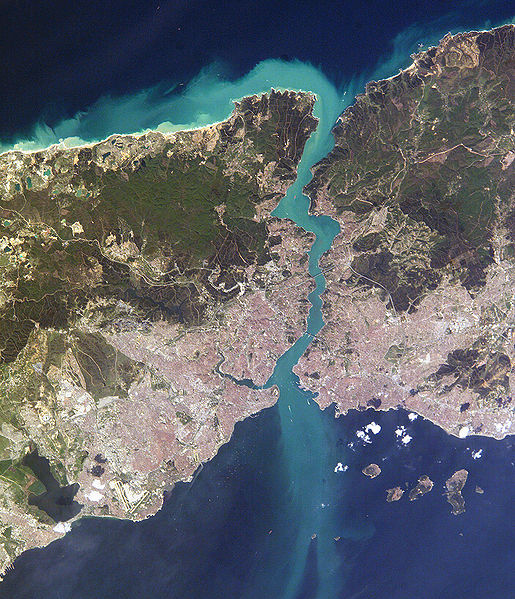
The alternative through Georgia still exists, as long as the U.S. is willing to play hard ball and defend her sovereignty (as well as defend her as a line of logistical supply to Afghanistan).  More specifically, the line of supply is as follows.  First, supplies (including military supplies) would be shipped through the Mediterranean Sea through the Bosporus Strait in Turkey.

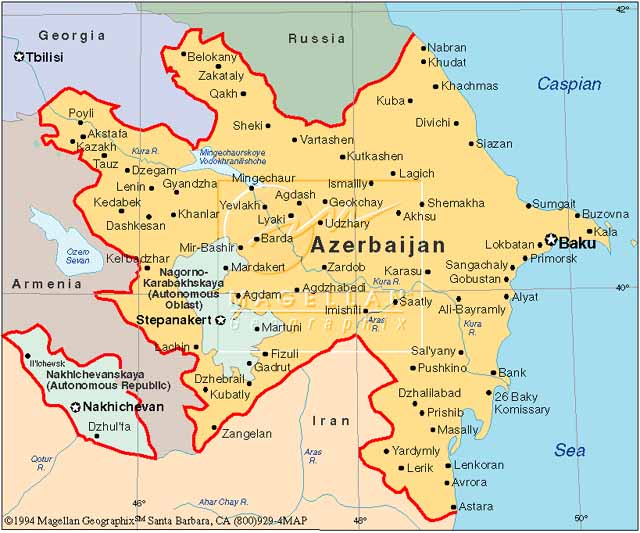
And from there into the Black Sea.  From the Black Sea the supplies would go through Georgia to neighboring Azerbaijan.

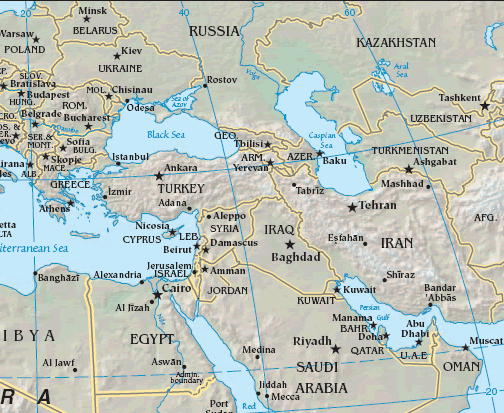
From here the supplies would transit across the Caspian Sea to Turkmenistan, and from there South to Afghanistan.  A larger regional map gives a better idea of the general flow path.

The problems are numerous, including the fact that the supplies would be unloaded in Georgia to transit by rail car or road, unloaded from rail or truck to transit again by sea, and finally loaded aboard rail cars or trucks again (after passage across the Caspian Sea) in Turkmenistan to make passage to Afghanistan.

But it isn’t obvious that this line of supply is impossible, however impractical it may be.  U.S. military leadership should remember that an alternative exists to the Russian line of supply to Afghanistan.  It will be too late to act to secure a line of supply through Georgia at some point in the future, but until then, the U.S. should carefully examine the Russian demands for this logistical aid.  The Russian demands are likely to evolve and expand, and it is this expansion that will prove to be troubling.  Russia is playing nice now.  This won’t last forever.

Prior:

New Afghan Supply Route Through Russia Likely

U.S-Georgia Strategic Partnership

The Logistical Battle: New Lines of Supply to Afghanistan

The Search for Alternate Supply Routes to Afghanistan

Large Scale Taliban Operations to Interdict Supply Lines

More on Lines of Logistics for Afghanistan

How Many Troops Can We Logistically Support in Afghanistan?

Targeting of NATO Supply Lines Through Pakistan Expands

Logistical Difficulties in Afghanistan

Taliban Control of Supply Routes to Kabul

Interdiction of U.S. Supplies in Khyber Pass

The Torkham Crossing

Taliban and al Qaeda Strategy in Pakistan and Afghanistan

Baitullah Mehsud

17 years, 1 month ago

We have provided analysis of Baitullah Mehsud, the center of gravity of the globalist jihad movement in the Taliban controlled areas of Pakistan, head of the Tehrik-i-Taliban (TTP) and more powerful by far than al Qaeda.  The Guardian has an exposé on Baitullah that is so good and extensive that several quotes will be provided below (the entire article is recommended reading), followed by brief analysis.

… after five years of germination, the disparate forces behind most of these attacks formally merged into the Pakistan Taliban (TTP) under the leadership of an illiterate 35-year-old commander, Baitullah Mehsud, confirming western suspicions that the epicentre of global jihad had shifted. Soon militias allied to the new grouping had permeated all of Pakistan’s border regions, even the northern ski slopes and trout streams of the former tourist haven of Swat …

“From the 26 suicide attacks where we recovered a head in 2007, we made a startling discovery,” says the Sig analyst. “The vast majority [of suicide bombers] came from just one tribe, the Mehsuds of central Waziristan, all boys aged 16 to 20.” Until the Sig team analysed the 2007 bombings, no one realised how successful the Pakistan Taliban leader Baitullah Mehsud had been in recruiting his extended clan to the martyrdom business …

The officer found out more when a few Mehsud boys, who escaped a suicide training camp, recently contacted him. “They told me, ‘We have nothing. Simple things would make a difference. We are fond of football. Give us a ball and we won’t bomb.’ ” The officer is working to recruit informers, but tentatively. Those who resist Baitullah Mehsud have been brutally dealt with – like the 600 elders who spoke out against him in 2005 and were, according to Pakistani journalist Ahmed Rashid, each sent a needle, black thread and 1,000 rupees with which to buy some cloth to stitch their own shrouds; all of them were then killed

“The suicide bombers would be nothing without the bomb makers,” says Pervez, describing how men in caves and cowsheds, operating with a generator, a soldering iron and a pair of pliers, have become eminently adaptable. What the Sig proved was the axiom that today’s Islamic war zones inter-relate, how advice is passed down the line, in knapsacks and saddlebags, in encrypted computer files, in postcards and even in love letters. After insurgents in Iraq began to use mobile phones to detonate roadside bombs in the summer of 2003, the same technique emerged in Pakistan, deployed in one of the two assassination attempts on Musharraf in December. However, as western intelligence agencies caught up, developing high-frequency jammers to block the phone signals, the bombers changed tactics. Pervez says: “In Pakistan they returned to older techniques, using a 300-rupee [£2.50] wireless doorbell to send a low-frequency signal for which no one had thought to make a jammer” …

In the 80s, when Pervez was a young officer, the military and ISI had established hundreds of Sunni madrasas in southern Punjab that were aligned to a strict revivalist sect, the Deobandis, similar to the Wahhabis in Saudi Arabia. On graduation, most of these students were funnelled by the ISI into the secret war against the Soviets in Afghanistan, used to target Pakistan’s minority Shia population or infiltrated Indian Kashmir. “All the groups we are familiar with today came out of this process, and by the late 90s these men had had more consistent exposure to war than most officers in premier league armies in Europe” …

The closer you get to Baitullah Mehsud, the more of his strategy you can see. He is estimated to need one billion rupees (£8.6m) a year to keep his operations going. “It’s Jihadi Inc out here,” one senior police officer says. Among the Pakistan Taliban’s most recent recruits are a serial killer and two criminal dons, all of whom have been invited to become commanders. The officer says: “Mehsud’s Talibs now act like criminals, too, mounting a protection racket, charging road tolls, stealing fuel at gunpoint, blackmailing communities.”

They reach out across Pakistan. After arresting Qasim Toori, a wanted villain, in Shah Latif town, southeast Karachi, in January 2008, police learned he had been sent by Baitullah with 19 Taliban fighters to begin a crime wave. In Toori’s most successful raid, on October 30 2007, he held up the Bank al-Habib and stole 5m rupees (£43,000), money that was used to buy arms from al-Qaida. Baitullah’s men simultaneously began kidnapping …

Commentary & Analysis

When behind-the-times television analysts refer to al Qaeda who is being given safe haven in Pakistan, they fundamentally miss the point.  The globalist jihad movement of al Qaeda has been absorbed into the TTP of Pakistan.  The TTP shout to passersby in Khyber “We are Taliban! We are mujahedin! “We are al-Qaida!”  There is no distinction.  A Pakistan interior ministry official has even said that the TTP and al Qaeda are one and the same.

Baitullah Mehsud is not only the unchallenged master of the Tehrik-i-Taliban movement in Pakistan and across the border into Afghanistan, and he is essentially the head of not only a terror state, but also of a criminal enterprise worth 1E9 rupees annually (21 million dollars annually).

The group he leads is adaptive and improvisational with regards to their tactics, techniques and procedures.  They are even more experienced in war than the Pakistan Army, and certainly more so than most of the NATO forces in Afghanistan.

As for their global vision, Mehsud has said “We want to eradicate Britain and America, and to shatter the arrogance and tyranny of the infidels. We pray that Allah will enable us to destroy the White House, New York, and London.”

Baitullah Mehsud and the Tehrik-i-Taliban are not just dangerous; concerning the future of global jihad and the security of the West, they are – without rival – enemy #1.

Prior:

Pakistan Declares Baitullah Mehsud Patriot

Kidnapping: The Taliban’s New Source of Income

Tehrik-i-Taliban and al Qaeda Linked

Baitullah Mehsud: The Making of a Terror State

U.S. Marines Find Iraq Tactics Don’t Work in Afghanistan

17 years, 1 month ago

Before The Captain’s Journal is a strategy blog, we are first and foremost a logistics and tactical blog (logistics and tactics, techniques and procedures – TTP – is our first interest).  We are also a Marine blog, and so naturally, when McClatchy published their article (U.S. Marines find Iraq Tactics don’t work in Afghanistan), we were interested.  Several money quotes are given below, followed by commentary and analysis.

DELARAM, Afghanistan — On a sunset patrol here in late December, U.S. Marines spotted a Taliban unit trying to steal Afghan police vehicles at a checkpoint. In a flash, the Marines turned to pursue, driving off the main road and toward the gunfire coming from the mountain a half mile away.

But their six-ton vehicles were no match for the Taliban pickups. The mine-resistant vehicles and heavily armored Humvees bucked and swerved as drivers tried to maneuver them across fields that the Taliban vehicles raced across. The Afghan police trailed behind in unarmored pick-up trucks, impatient about their allies’ weighty pace.

The Marines, weighted down with 60 pounds of body armor each, struggled to climb up Saradaka Mountain. Once at the top, it was clear to everyone that the Taliban would get away. Second Lt. Phil Gilreath, 23, of Kingwood, La., called off the mission.

“It would be a ghost chase, and we would run the risk of the vehicles breaking down again,” Gilreath said. The Marines spent the next hour trying to find their way back to the paved road.

The men of the 3rd Batallion, 8th Marine Regiment, based at Camp Lejeune, are discovering in their first two months in Afghanistan that the tactics they learned in nearly six years of combat in Iraq are of little value here — and may even inhibit their ability to fight their Taliban foes.

Their MRAP mine-resistant vehicles, which cost $1 million each, were specially developed to combat the terrible effects of roadside bombs, the single biggest killer of Americans in Iraq. But Iraq is a country of highways and paved roads, and the heavily armored vehicles are cumbersome on Afghanistan’s unpaved roads and rough terrain where roadside bombs are much less of a threat.

Body armor is critical to warding off snipers in Iraq, where Sunni Muslim insurgents once made video of American soldiers falling to well-placed sniper shots a staple of recruiting efforts. But the added weight makes Marines awkward and slow when they have to dismount to chase after Taliban gunmen in Afghanistan’s rough terrain.

Even the Humvees, finally carrying heavy armor after years of complaints that they did little to mitigate the impact of roadside explosives in Iraq, are proving a liability. Marines say the heavy armor added for protection in Iraq is too rough on the vehicles’ transmissions in Afghanistan’s much hillier terrain, and the vehicles frequently break down — so often in fact that before every patrol Marine units here designate one Humvee as the tow vehicle.

The Marines have found other differences:

In Iraq, American forces could win over remote farmlands by swaying urban centers. In Afghanistan, there’s little connection between the farmlands and the mudhut villages that pass for towns.

In Iraq, armored vehicles could travel on both the roads and the desert. Here, the paved roads are mostly for outsiders – travelers, truckers and foreign troops; to reach the populace, American forces must find unmapped caravan routes that run through treacherous terrain, routes not designed for their modern military vehicles.

In Iraq, a half-hour firefight was considered a long engagement; here, Marines have fought battles that have lasted as long as eight hours against an enemy whose attacking forces have grown from platoon-size to company-size.

U.S. military leaders recognize that they need to make adjustments. During a Christmas Eve visit here, Marine Commandant Gen. James T. Conway told the troops that the Defense Department is studying how to reconfigure the bottom of its MRAPs to handle Afghanistan’s rougher terrain. And Col. Duffy White, the commander of the Special Purpose Marine Air-Ground Task Force, said he anticipates that Marines will be wearing less armor by spring, when fighting season begins again.

Commentary & Analysis

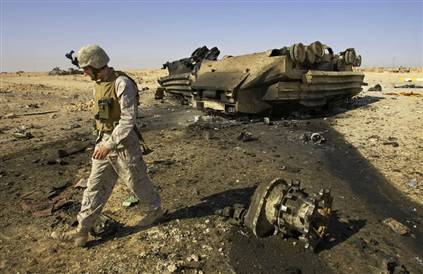
As regular readers know from our body armor coverage and analysis, we have been preaching the virtues of weight reduction in body armor for months, and even years (focusing on the weight of SAPI plates).  Further, the Marine Corps was lethargic to react to known problems with troop transport, abandoning an urgent request for MRAPs in 2005.  The Marines had chosen to run Amphibious Assault Vehicles across desert terrain, and one particularly brutal example of the consequences of this choice was the loss of fourteen Marines near Haditha in August 2005.
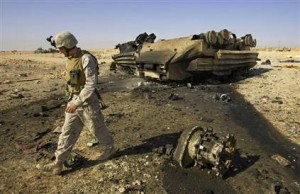
Marine Commandant Conway has lamented the heaviness of the force now, and if there is a need for lighter, faster-moving all-terrain vehicles, then the Corps cannot be as slow to react as it was in Anbar.  We have also commented that some TTPs (such as satellite patrols) won’t have the same value in the rural terrain of Afghanistan versus the urban terrain of Iraq.  Having said that, the lectures of the Marines will stop and the analysis will start.

First of all, the Marines do not carry “60 pounds of body armor each.”  Someone has misled the journalist, or the journalist has simply gotten the wrong data, and unfortunately the misinformation has made it’s way into print.

The Modular Tactical Vest, the outer tactical vest in lieu of what the Army uses (Interceptor Body Armor vest) carries the same front, rear and side SAPI plates as the Army, and although the Marine MTV consists of slightly more soft panel protection than the IBA which adds a couple of pounds, the weight of all body armor fielded for the Army and Marines equals roughly 32 pounds, give or take a few ounces.

The balance of the weight to which the journalist refers is a hydration system, ammunition, weapon (which is hooked to the vest by a carabiner) and other odds and ends (e.g., ballistic glasses, gloves, tools, etc.).  These things would be carried by the Marine whether there was body armor or not.  So roughly half of the weight is non-negotiable.  Further, a backpack adds much more weight to the system.

Second, the McClatchy reporter says the following: “The Afghan police trailed behind in unarmored pick-up trucks, impatient about their allies’ weighty pace,” as if the U.S. Marines were holding up the Afghan police.  This is embarrassing for McClatchy, even if they aren’t embarrassed.  The notion of the Afghan police being anything but rife with corruption is absurd, and there was a reason that the police didn’t go out ahead of the Marines.  It’s the same reason that of the nine dead and twenty seven wounded in the Battle of Wanat, not a single one was Afghan Army.  They were all U.S. Army.  There wasn’t a chance in hell that the police would have gone it alone without the Marines, and they likely wouldn’t have even contributed to the fight.

Third, this example shows the need to adapt, and adapt the Marines will.  But Marines who have to chase the Taliban through the hills need more Marines.  Counterinsurgency will require more force projection, this being done in the rural rather than urban areas (the McClatchy article does have this right).  Intelligence-driven raids and kinetic operations will ensue upon adequate contact with the population, with the Marines providing them the security they need from the Taliban.

The real fight will start when the Marines are waiting for the Taliban in their mountain lairs because of what the people have told them.  Or, when the Taliban can’t come out of their caves because the Marines own the terrain.  Dismounted patrols will suffice just fine with enough Marines, and the question of all-terrain vehicles won’t be such a weighty issue.
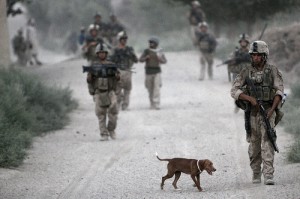
Corporal William Ash, a squad leader from 1st Platoon, Bravo Company, Battalion Landing Team 1st Battalion, 6th Marine Regiment, 24th Marine Expeditionary Unit, NATO International Security Assistance Force (ISAF), along with a stray dog lead a patrol through a city in Helmand Province, Afghanistan. When the platoon moved into the area, they found two stray dogs, and each time the Marines head out on patrol the dogs are right at the Marines’ side.

The Marines will ramp up force projection in Afghanistan, and McClatchy reports like the one above won’t take on the importance they do with minimal forces.  The Marines will adapt, improvise and overcome.  McClatchy, on the other hand, should do a much better job of understanding Tactics, Techniques and Procedures.  And in order to have any respectability whatsoever, they need to get the data right concerning simple things like body armor weight.


Afghans Wary of Militia Plan

17 years, 1 month ago

The tribal awakening in Ramadi, Iraq, was unique in that Sheikh Abdul Sattar Abu Risha was able to lead a council of tribal elders, mostly who believed approximately the same things and who saw themselves as part of a coherent Anbar province, to work with the U.S. Marines providing intelligence and policing to assist in expelling al Qaeda in Iraq from the Anbar Province.

There are those, Amir Teheri among them, who believe that part of the U.S. difficulty in Afghanistan has to do with the forced imposition of a centralized power structure in Afghanistan.  But the detractors of such an arrangement have their history as well to which they can point.  There is a dubious past concerning tribal militias that gives the population concerns over the proposed awakening in Afghanistan.

A US-backed plan to form local forces to fight insurgents, like those that had some success in Iraq, has met with alarm in Afghanistan where memories are fresh of the 1990s war between local factions.

The plan, still in a pilot phase, is officially being developed at the request of the government of President Hamid Karzai as a way to empower villagers to protect themselves amid an upsurge in insurgent violence.

But it is being pushed by the United States, Afghanistan’s key ally, with US ambassador to Kabul William Wood saying in late December that there were simply not enough Afghan or international troops to deploy into all villages.

Under the programme, the United States would give members of certain local communities training, clothing and other supplies to “restore their own capacity to protect themselves”, Wood said.

They would be linked into military back-up but the United States would not provide them with weapons, he said, careful to stress that “this is not a recreation of tribal militias or any other kind of militia.”

“We are trying to strengthen the villages, we are trying to strengthen the tribes,” he said, calling these new groups “community guards”.

These groups would likely have weapons. But officials have been vague about who would supply them, with some saying it would be the interior ministry and also insisting the groups could not be called “militias” as they would fall under government supervision.

The guards would be chosen by local-level traditional councils, said Barna Karimi, deputy director of the Independent Directorate of Local Governance (IDLG) set up by Karzai more than a year ago.

The directorate is tasked with reviving these councils, called “shuras”, which fell into disarray during Afghanistan’s three decades of war.

It is starting its work in Logar and Wardak provinces, Karimi told AFP.

Security has plummeted in these two strategic areas, close to the capital and criss-crossed by important roads that are regularly attacked by insurgents and common criminals.

Some of the 20,000-30,000 extra US soldiers due to be in place by summer, in Afghanistan’s own Iraq-style “surge”, are expected to head to these provinces.

Official insistence that the plans for “community guards” do not amount to the establishment of militias has done little to allay public fears amid warnings it could lead to factional warfare like that seen in the 1990s.

Even Karzai, whom the United States has said requested help to create the guards, said in an interview with the Chicago Tribune newspaper last month that the creation of tribal militias would be a bad idea.

“If we create militias again, we will be ruining this country further,” he said. “That is not what I want.”

The communist government of the 1980s poured money into tribal forces because its own security structures were unable to defeat an Afghan uprising against the 1979 Soviet invasion.

Some of these factions grew into powerful forces that later battled each other for control of the government in a devastating civil war that ended only with the Taliban’s seizure of power in 1996.

Observers said it would be better to reinforce the Afghan police and army than set up militias that the government one day might not be able to control.

“We are concerned,” said Nader Nadery from the Afghanistan Independent Human Rights Commission.

“We have tried to disarm groups for many years now, and this means to rearm some people,” he said, referring to a UN-backed government programme to persuade the country’s myriad armed factions to hand in their weapons.

Lawmaker Ahmad Joyenda was more emphatic.

“I am totally against militias. They will end up fighting again,” he said.

The government could not even control its own police force, added Joyenda, referring to police corruption.

This analysis suffers from being a bit clunky and simplistic.  The Russian mistake, among other things, was in not conducting counterinsurgency in the rural areas, restricting their presence to the urban population centers.  This is a mistake that the U.S. is currently making in the campaign due to lack of troops.

Yet the account does have dire warnings for the U.S. plan.  The U.S. is currently searching for a plan that doesn’t involve large increases in troop presence, and because none is forthcoming, the only viable option seen is to engineer an awakening on the scale and of the type of the Anbar revolt against al Qaeda.

Yet the problem is just that – this awakening would be engineered rather than natural, and if it’s not a natural fit, then it will fail.  Either way, U.S. forces will be in Afghanistan for a protracted period of time, and force projection will be necessary until a natural solution floats to the top among the flotsam of the wreck that is Afghanistan.

One of our Marine Chaplains

17 years, 1 month ago

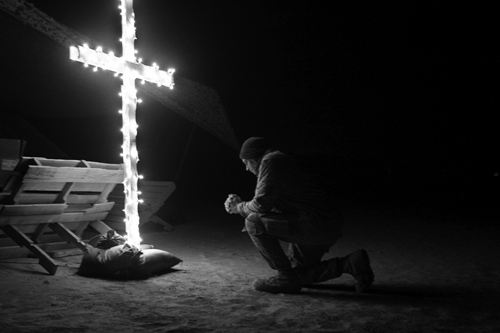
One of our Marine Chaplains.

Lt. Cmdr. James L. Johnson, chaplain, 1st Light Armored Reconnaissance Battalion, kneels before a lighted cross before an evening prayer service in Sahl Sinjar, Iraq. Johnson said his job as chaplain is to assist the Marines and be a counsel for them wherever they go.

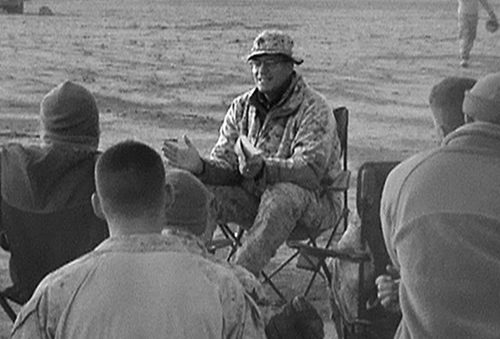
Johnson delivers a service to Marines of Company C, 1st LAR Bn. in the field in an area south of Mosul, Iraq. Johnson said he is impressed by how the battalion’s Marines bring all their skills together to do many different types of jobs in order to get their mission accomplished.

U.S. Attempts to Undermine the Iranian Nuclear Program

17 years, 1 month ago

The New York Times has an analysis of U.S. rejection of aid and Iraq-flyover permission for Israel in a possible air raid against Iranian nuclear installations.  Most of this was previously known, but the real revelation concerns other U.S. attempts to undermine the Iranian nuclear program in lieu of a sign-off for Israeli operations.

The interviews also indicate that Mr. Bush was convinced by top administration officials, led by Defense Secretary Robert M. Gates, that any overt attack on Iran would probably prove ineffective, lead to the expulsion of international inspectors and drive Iran’s nuclear effort further out of view. Mr. Bush and his aides also discussed the possibility that an airstrike could ignite a broad Middle East war in which America’s 140,000 troops in Iraq would inevitably become involved.

Instead, Mr. Bush embraced more intensive covert operations actions aimed at Iran, the interviews show, having concluded that the sanctions imposed by the United States and its allies were failing to slow the uranium enrichment efforts …

The covert American program, started in early 2008, includes renewed American efforts to penetrate Iran’s nuclear supply chain abroad, along with new efforts, some of them experimental, to undermine electrical systems, computer systems and other networks on which Iran relies. It is aimed at delaying the day that Iran can produce the weapons-grade fuel and designs it needs to produce a workable nuclear weapon …

Late last year, international inspectors estimated that Iran had 3,800 centrifuges spinning, but American intelligence officials now estimate that the figure is 4,000 to 5,000, enough to produce about one weapon’s worth of uranium every eight months or so.

While declining to be specific, one American official dismissed the latest covert operations against Iran as “science experiments.” One senior intelligence official argued that as Mr. Bush prepared to leave office, the Iranians were already so close to achieving a weapons capacity that they were unlikely to be stopped …

There were two specific objectives: to slow progress at Natanz and other known and suspected nuclear facilities, and keep the pressure on a little-known Iranian professor named Mohsen Fakrizadeh, a scientist described in classified portions of American intelligence reports as deeply involved in an effort to design a nuclear warhead for Iran.

Past American-led efforts aimed at Natanz had yielded little result. Several years ago, foreign intelligence services tinkered with individual power units that Iran bought in Turkey to drive its centrifuges, the floor-to-ceiling silvery tubes that spin at the speed of sound, enriching uranium for use in power stations or, with additional enrichment, nuclear weapons.

A number of centrifuges blew up, prompting public declarations of sabotage by Iranian officials. An engineer in Switzerland, who worked with the Pakistani nuclear black-marketeer Abdul Qadeer Khan, had been “turned” by American intelligence officials and helped them slip faulty technology into parts bought by the Iranians.

What Mr. Bush authorized, and informed a narrow group of Congressional leaders about, was a far broader effort, aimed at the entire industrial infrastructure that supports the Iranian nuclear program. Some of the efforts focused on ways to destabilize the centrifuges. The details are closely held, for obvious reasons, by American officials. One official, however, said, “It was not until the last year that they got really imaginative about what one could do to screw up the system.”

Analysis & Commentary

We understand Gates’ concern over the fanning of existing fires in the Middle East by launching air operations against Iranian nuclear facilities.  However, expulsion of IAEA inspectors would be a meaningless loss, since they provide almost no useful or actionable information as it is.  Further, the presence of “inspectors” has no deleterious affect at all on the Iranian nuclear program.  Gates, for one who believes that Iran is hell bent on obtaining nuclear weapons, gives us no viable options to prevent such an outcome if inspectors are his main deterrence.

As for the attempts to sabotage the Iranian nuclear program, we agree with the assessment by one intelligence officer: these are just science experiments.  They aren’t serious implements of strategy.  Rather, they are a testimony to the juvenile belief that the current regime can be tricked, dealt with, bargained with, negotiated with, nuanced, lawyered and inspected out of being a danger to the balance of the world.  These technological tricks are temporary at the very best, and at the worst they may be a complete waste of time and effort.

There are those who believe we can live with a nuclear Iran.

ABC News’ Jonathan Karl Reports: In contrast to U.S. officials who have consistently called a nuclear Iran unthinkable, former CENTCOM commander John Abizaid told reporters Monday that he believes the United States could live with a nuclear Iran.

“There are ways to live with a nuclear Iran,” Abizaid said.  “I believe we have the power to deter Iran if they go nuclear” he said, just as we deterred the Soviet Union and China.  “Iran is not a suicidal nation.  Nuclear deterrence would work with Iran.”

We believe that Abizaid fundamentally misjudges the nature of the radical Mullahs who rule Iran.  But the regional rulers weren’t so naive as Abizaid (even in 2007).

Two years ago, the leaders of Saudi Arabia told international atomic regulators that they could foresee no need for the kingdom to develop nuclear power. Today, they are scrambling to hire atomic contractors, buy nuclear hardware and build support for a regional system of reactors.

So, too, Turkey is preparing for its first atomic plant. And Egypt has announced plans to build one on its Mediterranean coast. In all, roughly a dozen states in the region have recently turned to the International Atomic Energy Agency in Vienna for help in starting their own nuclear programs. While interest in nuclear energy is rising globally, it is unusually strong in the Middle East.

“The rules have changed,” King Abdullah II of Jordan recently told the Israeli newspaper Haaretz. “Everybody’s going for nuclear programs.”

The Middle East states say they only want atomic power. Some probably do. But United States government and private analysts say they believe that the rush of activity is also intended to counter the threat of a nuclear Iran.

By nature, the underlying technologies of nuclear power can make electricity or, with more effort, warheads, as nations have demonstrated over the decades by turning ostensibly civilian programs into sources of bomb fuel. Iran’s uneasy neighbors, analysts say, may be positioning themselves to do the same.

“One danger of Iran going nuclear has always been that it might provoke others,” said Mark Fitzpatrick, a senior fellow at the International Institute for Strategic Studies, an arms analysis group in London. “So when you see the development of nuclear power elsewhere in the region, it’s a cause for some concern.”

The people who are most intimate with the Persian threat are the very ones who want a deterrent.  In addition to the potential that Iran would use the weapon against its enemies, there is the corollary threat of the entire Middle East engulfed in a race for nuclear weapons.

The possibility of air assaults against Iranian nuclear facilities must be a viable and considered option.  But if the U.S. wishes to avoid this last resort, regime change in Iran is the penultimate target.  We have already discussed the budding insurgency in Western Iran, as well as the strong student rejection of the schemes of the radical Mullahs.  With the U.S. reluctant even to speak with authority to support democracy efforts within Iran, it’s as if official policy is forcing us towards military confrontation – or a nuclear Iran.

Of Marines, Counterinsurgency, Widows and Cows

17 years, 1 month ago

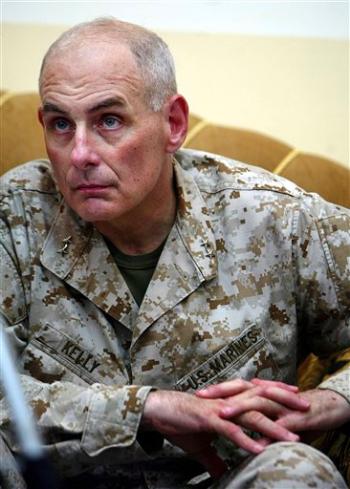
U.S. Marine Maj. Gen John Kelly, the top U.S. commander in Anbar Province, is seen before the start of a handover ceremony at the government headquarters in Ramadi, capital of Anbar province, in Iraq Monday, Sept. 1, 2008. Progress is proceeding apace in Anbar, and the Marines are leaving the Fallujah area of operations headed mainly for Camp Baharia and Al Asad Air Base.

We have observed before that it is the responsibility of the people and government of Iraq to progress on reconciliation, and that the Marines can help only marginally in this endeavor and certainly don’t belong in the middle of internecine struggles at this point in the counterinsurgency and reconstruction effort.  Maj. Gen. Kelly regrets, though, the lack of progress in sectarian reconciliation, saying that “the Shiite-led government should have poured reconstruction money into the Sunni region after Sunni fighters joined forces with U.S. troops to chase al-Qaida out of the western province.

Marine Maj. Gen. John F. Kelly told The Associated Press that his greatest “mission failure” was his inability to bring together the government in Baghdad and the Sunnis in Anbar to take advantage of the steep decline in violence … Although Kelly said his mission did not include asking the central government for more money for the Sunni province, he was clearly frustrated by the lack of progress — a schism that stems from decades of brutal oppression of Shiites under Saddam Hussein’s Sunni-led regime.”

In a time in our nation when the reflexive tendency is to avoid responsibility for things assigned to your responsible charge, the U.S. Marines still accept responsibility for things they weren’t assigned.  It’s a still sure and reliable sign that the phrase semper fidelis is more than mere words – it’s a code by which the Marines live.

The adaptability, wisdom and scholarly approach to the campaign in Anbar is a testimony to the character of the Marines and their leadership.  It hasn’t ended, and the example provided to the government of Iraq even recently by the Marines couldn’t be more stark.  Rather than “close with and destroy the enemy by fire and maneuver,” the Marines are making sure that they have done their very best to ensure that there is no enemy, once again at the direction of Maj. Gen. Kelly.

As American forces work to revive Iraq’s tattered farming economy, they seem to have found an effective new weapon.

Cows.

At the suggestion of an Iraqi women’s group, the Marine Corps recently bought 50 cows for 50 Iraqi widows in the farm belt around Fallouja, once the insurgent capital of war-torn Anbar province.

The cow purchase is seen as a small step toward reestablishing Iraq’s once-thriving dairy industry, as well as a way to help women and children hurt by the frequent failure of the Iraqi government to provide the pensions that Iraqi law promises to widows.

The early sign is that the program is working. Widows, many with no other income, have a marketable item to sell, as well as milk for their children. Although Iraqis, particularly women, are often reluctant to participate in an American effort, the cows were immediately popular.

“It was an easy sell,” said Maj. Meredith Brown, assigned to the Marines’ outreach program for Iraqi women.

The idea, proposed by members of the Women’s Cultural Center in Fallouja, at first met with resistance from U.S. military officers and civilian officials involved in aid programs for Anbar. Nothing in their training provided guidance in haggling for livestock.

But those objections quickly evaporated when Maj. Gen. John Kelly, the top Marine in Iraq, signaled his support, Brown said. The Iraqis now refer to their animals as Kelly’s Cows.

Though Kelly’s support may have been based on gut instinct, the need to beef up Iraq’s badly broken dairy industry was argued in a Nov. 25 report by Land O’Lakes Inc.

The Minnesota cheese-and-butter company was hired by the Marine Corps to examine the Iraqi dairy industry. Its 38-page report, based on field research in the fall by two Land O’Lakes dairy specialists, concluded that there was enormous growth potential for the industry in a milk-drinking, cheese-eating nation that can locally produce enough milk to satisfy only 5% of the demand.

The study also pointed out that, even in Iraqi farm families with able-bodied adult males, much of the work is left to women: “Women milk the cows, bring feed and fodder to the animals and are supported by their children.”

In Anbar, two factors drew the Marines to the cow purchase: It was small-scale and it was suggested by the Iraqis. The Marines have learned that big-ticket projects, or those imposed by the U.S. on the Iraqis without local support, start with two strikes.

The Marines began buying cows in November at a livestock market at Saqlawiyah. Of the 50 cows, 35 were pregnant and 10 already had calves, which went along with their mothers. The five others were taken to a laboratory for artificial insemination. Brown put the program cost so far at $58,000.

To qualify for a free cow, each widow had to sign an agreement not to slaughter or sell the animal and instead to use the milk as a marketable item or for the family.

The project is not entirely altruistic. The Marines believe that widows with at least some economic resources are less likely to join Al Qaeda to carry out suicide attacks in exchange for a promise that their children will be cared for after the women are gone.

“If she’s desperate enough, she just might put on that [suicide] vest or drive that truck” full of explosives, Maj. Brown said.

Rather than being in the middle of internecine struggles, the Marines have led by example.  This is counterinsurgency at its very best, and represents the closing of an era in Anbar.  It’s the final phase of the campaign, and while troops will remain in Iraq for some time to help ensure border sovereignty, proper training of Iraqi Security Forces and robust actions against remaining hard core al Qaeda in Iraq fighters, General Kelly has every reason to be proud of his Marines and his own effort.  Mission accomplished.


26th MEU (10)
Abu Muqawama (12)
ACOG (2)
ACOGs (1)
Afghan National Army (36)
Afghan National Police (17)
Afghanistan (704)
Afghanistan SOFA (4)
Agriculture in COIN (3)
AGW (1)
Air Force (41)
Air Power (10)
al Qaeda (83)
Ali al-Sistani (1)
America (22)
Ammunition (304)
Animals (323)
Ansar al Sunna (15)
Anthropology (3)
Antonin Scalia (1)
AR-15s (393)
Arghandab River Valley (1)
Arlington Cemetery (2)
Army (91)
Assassinations (2)
Assault Weapon Ban (29)
Australian Army (7)
Azerbaijan (4)
Backpacking (4)
Badr Organization (8)
Baitullah Mehsud (21)
Basra (17)
BATFE (246)
Battle of Bari Alai (2)
Battle of Wanat (18)
Battle Space Weight (3)
Bin Laden (7)
Blogroll (3)
Blogs (24)
Body Armor (23)
Books (3)
Border War (18)
Brady Campaign (1)
Britain (39)
British Army (36)
Camping (5)
Canada (19)
Castle Doctrine (1)
Caucasus (6)
CENTCOM (7)
Center For a New American Security (8)
Charity (3)
China (19)
Christmas (18)
CIA (30)
Civilian National Security Force (3)
Col. Gian Gentile (9)
Combat Outposts (3)
Combat Video (2)
Concerned Citizens (6)
Constabulary Actions (3)
Coolness Factor (3)
COP Keating (4)
Corruption in COIN (4)
Council on Foreign Relations (1)
Counterinsurgency (218)
DADT (2)
David Rohde (1)
Defense Contractors (2)
Department of Defense (220)
Department of Homeland Security (26)
Disaster Preparedness (5)
Distributed Operations (5)
Dogs (15)
Donald Trump (27)
Drone Campaign (4)
EFV (3)
Egypt (12)
El Salvador (1)
Embassy Security (1)
Enemy Spotters (1)
Expeditionary Warfare (18)
F-22 (2)
F-35 (1)
Fallujah (17)
Far East (3)
Fathers and Sons (2)
Favorite (1)
Fazlullah (3)
FBI (39)
Featured (192)
Federal Firearms Laws (18)
Financing the Taliban (2)
Firearms (1,867)
Football (1)
Force Projection (35)
Force Protection (4)
Force Transformation (1)
Foreign Policy (27)
Fukushima Reactor Accident (6)
Ganjgal (1)
Garmsir (1)
general (15)
General Amos (1)
General James Mattis (1)
General McChrystal (44)
General McKiernan (6)
General Rodriguez (3)
General Suleimani (9)
Georgia (19)
GITMO (2)
Google (1)
Gulbuddin Hekmatyar (1)
Gun Control (1,717)
Guns (2,406)
Guns In National Parks (3)
Haditha Roundup (10)
Haiti (2)
HAMAS (7)
Haqqani Network (9)
Hate Mail (8)
Hekmatyar (1)
Heroism (5)
Hezbollah (12)
High Capacity Magazines (16)
High Value Targets (9)
Homecoming (1)
Homeland Security (3)
Horses (2)
Humor (72)
Hunting (61)
ICOS (1)
IEDs (7)
Immigration (123)
India (10)
Infantry (4)
Information Warfare (4)
Infrastructure (4)
Intelligence (23)
Intelligence Bulletin (6)
Iran (171)
Iraq (379)
Iraq SOFA (23)
Islamic Facism (64)
Islamists (98)
Israel (19)
Jaish al Mahdi (21)
Jalalabad (1)
Japan (3)
Jihadists (82)
John Nagl (5)
Joint Intelligence Centers (1)
JRTN (1)
Kabul (1)
Kajaki Dam (1)
Kamdesh (9)
Kandahar (12)
Karachi (7)
Kashmir (2)
Khost Province (1)
Khyber (11)
Knife Blogging (7)
Korea (4)
Korengal Valley (3)
Kunar Province (20)
Kurdistan (3)
Language in COIN (5)
Language in Statecraft (1)
Language Interpreters (2)
Lashkar-e-Taiba (2)
Law Enforcement (6)
Lawfare (14)
Leadership (6)
Lebanon (6)
Leon Panetta (2)
Let Them Fight (2)
Libya (14)
Lines of Effort (3)
Littoral Combat (8)
Logistics (50)
Long Guns (1)
Lt. Col. Allen West (2)
Marine Corps (281)
Marines in Bakwa (1)
Marines in Helmand (67)
Marjah (4)
MEDEVAC (2)
Media (68)
Medical (146)
Memorial Day (6)
Mexican Cartels (47)
Mexico (71)
Michael Yon (6)
Micromanaging the Military (7)
Middle East (1)
Military Blogging (26)
Military Contractors (5)
Military Equipment (25)
Militia (9)
Mitt Romney (3)
Monetary Policy (1)
Moqtada al Sadr (2)
Mosul (4)
Mountains (25)
MRAPs (1)
Mullah Baradar (1)
Mullah Fazlullah (1)
Mullah Omar (3)
Musa Qala (4)
Music (25)
Muslim Brotherhood (6)
Nation Building (2)
National Internet IDs (1)
National Rifle Association (97)
NATO (15)
Navy (31)
Navy Corpsman (1)
NCOs (3)
News (1)
NGOs (3)
Nicholas Schmidle (2)
Now Zad (19)
NSA (3)
NSA James L. Jones (6)
Nuclear (63)
Nuristan (8)
Obama Administration (222)
Offshore Balancing (1)
Operation Alljah (7)
Operation Khanjar (14)
Ossetia (7)
Pakistan (165)
Paktya Province (1)
Palestine (5)
Patriotism (7)
Patrolling (1)
Pech River Valley (11)
Personal (76)
Petraeus (14)
Pictures (1)
Piracy (13)
Pistol (4)
Pizzagate (21)
Police (672)
Police in COIN (3)
Policy (15)
Politics (998)
Poppy (2)
PPEs (1)
Prisons in Counterinsurgency (12)
Project Gunrunner (20)
PRTs (1)
Qatar (1)
Quadrennial Defense Review (2)
Quds Force (13)
Quetta Shura (1)
RAND (3)
Recommended Reading (14)
Refueling Tanker (1)
Religion (499)
Religion and Insurgency (19)
Reuters (1)
Rick Perry (4)
Rifles (1)
Roads (4)
Rolling Stone (1)
Ron Paul (1)
ROTC (1)
Rules of Engagement (75)
Rumsfeld (1)
Russia (37)
Sabbatical (1)
Sangin (1)
Saqlawiyah (1)
Satellite Patrols (2)
Saudi Arabia (4)
Scenes from Iraq (1)
Second Amendment (708)
Second Amendment Quick Hits (2)
Secretary Gates (9)
Sharia Law (3)
Shura Ittehad-ul-Mujahiden (1)
SIIC (2)
Sirajuddin Haqqani (1)
Small Wars (72)
Snipers (9)
Sniveling Lackeys (2)
Soft Power (4)
Somalia (8)
Sons of Afghanistan (1)
Sons of Iraq (2)
Special Forces (28)
Squad Rushes (1)
State Department (23)
Statistics (1)
Sunni Insurgency (10)
Support to Infantry Ratio (1)
Supreme Court (79)
Survival (214)
SWAT Raids (58)
Syria (38)
Tactical Drills (38)
Tactical Gear (17)
Taliban (168)
Taliban Massing of Forces (4)
Tarmiyah (1)
TBI (1)
Technology (21)
Tehrik-i-Taliban (78)
Terrain in Combat (1)
Terrorism (96)
Thanksgiving (13)
The Anbar Narrative (23)
The Art of War (5)
The Fallen (1)
The Long War (20)
The Surge (3)
The Wounded (13)
Thomas Barnett (1)
Transnational Insurgencies (5)
Tribes (5)
TSA (25)
TSA Ineptitude (14)
TTPs (4)
U.S. Border Patrol (8)
U.S. Border Security (22)
U.S. Sovereignty (29)
UAVs (2)
UBL (4)
Ukraine (10)
Uncategorized (105)
Universal Background Check (3)
Unrestricted Warfare (4)
USS Iwo Jima (2)
USS San Antonio (1)
Uzbekistan (1)
V-22 Osprey (4)
Veterans (3)
Vietnam (1)
War & Warfare (432)
War & Warfare (41)
War Movies (4)
War Reporting (21)
Wardak Province (1)
Warriors (6)
Waziristan (1)
Weapons and Tactics (80)
West Point (1)
Winter Operations (1)
Women in Combat (21)
WTF? (1)
Yemen (1)

February 2026
January 2026
December 2025
November 2025
October 2025
September 2025
August 2025
July 2025
June 2025
May 2025
April 2025
March 2025
February 2025
January 2025
December 2024
November 2024
October 2024
September 2024
August 2024
July 2024
June 2024
May 2024
April 2024
March 2024
February 2024
January 2024
December 2023
November 2023
October 2023
September 2023
August 2023
July 2023
June 2023
May 2023
April 2023
March 2023
February 2023
January 2023
December 2022
November 2022
October 2022
September 2022
August 2022
July 2022
June 2022
May 2022
April 2022
March 2022
February 2022
January 2022
December 2021
November 2021
October 2021
September 2021
August 2021
July 2021
June 2021
May 2021
April 2021
March 2021
February 2021
January 2021
December 2020
November 2020
October 2020
September 2020
August 2020
July 2020
June 2020
May 2020
April 2020
March 2020
February 2020
January 2020
December 2019
November 2019
October 2019
September 2019
August 2019
July 2019
June 2019
May 2019
April 2019
March 2019
February 2019
January 2019
December 2018
November 2018
October 2018
September 2018
August 2018
July 2018
June 2018
May 2018
April 2018
March 2018
February 2018
January 2018
December 2017
November 2017
October 2017
September 2017
August 2017
July 2017
June 2017
May 2017
April 2017
March 2017
February 2017
January 2017
December 2016
November 2016
October 2016
September 2016
August 2016
July 2016
June 2016
May 2016
April 2016
March 2016
February 2016
January 2016
December 2015
November 2015
October 2015
September 2015
August 2015
July 2015
June 2015
May 2015
April 2015
March 2015
February 2015
January 2015
December 2014
November 2014
October 2014
September 2014
August 2014
July 2014
June 2014
May 2014
April 2014
March 2014
February 2014
January 2014
December 2013
November 2013
October 2013
September 2013
August 2013
July 2013
June 2013
May 2013
April 2013
March 2013
February 2013
January 2013
December 2012
November 2012
October 2012
September 2012
August 2012
July 2012
June 2012
May 2012
April 2012
March 2012
February 2012
January 2012
December 2011
November 2011
October 2011
September 2011
August 2011
July 2011
June 2011
May 2011
April 2011
March 2011
February 2011
January 2011
December 2010
November 2010
October 2010
September 2010
August 2010
July 2010
June 2010
May 2010
April 2010
March 2010
February 2010
January 2010
December 2009
November 2009
October 2009
September 2009
August 2009
July 2009
June 2009
May 2009
April 2009
March 2009
February 2009
January 2009
December 2008
November 2008
October 2008
September 2008
August 2008
July 2008
June 2008
May 2008
April 2008
March 2008
February 2008
January 2008
December 2007
November 2007
October 2007
September 2007
August 2007
July 2007
June 2007
May 2007
April 2007
March 2007
February 2007
January 2007
December 2006
November 2006
October 2006
September 2006
August 2006
July 2006
June 2006
May 2006

about · archives · contact · register

Copyright © 2006-2026 Captain's Journal. All rights reserved.