Marines in Now Zad, Afghanistan III
 16 years, 10 months ago
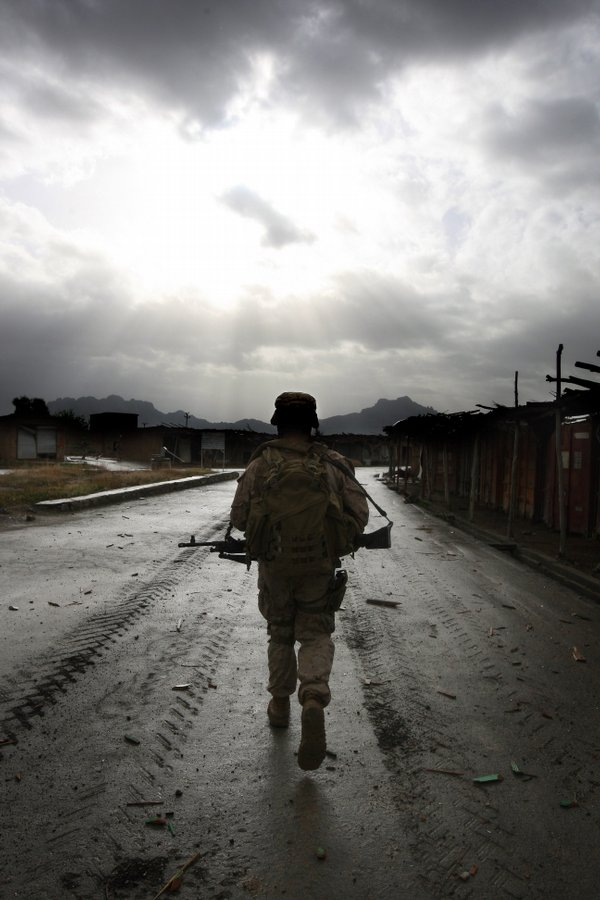
A U.S. Marine patrols down a road on April 1, 2009 in Now Zad in Helmand province Afghanistan (Photo: John Moore/Getty Images).



The “Captain†is Herschel Smith, who hails from Charlotte, NC. Smith offers news and commentary on warfare, policy and counterterrorism.
16 years, 10 months ago
A U.S. Marine patrols down a road on April 1, 2009 in Now Zad in Helmand province Afghanistan (Photo: John Moore/Getty Images).
16 years, 11 months ago
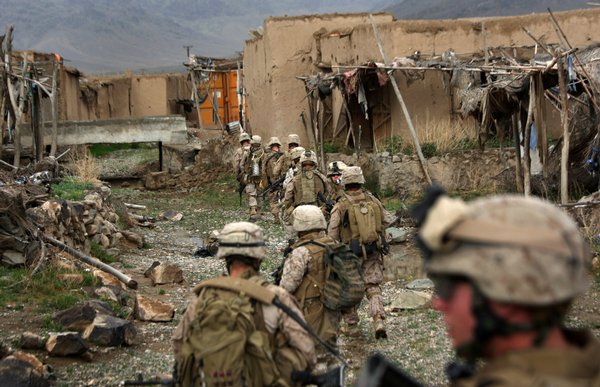
U.S. Marines patrol single file on April 1, 2009 through Now Zad in Helmand province Afghanistan.Taliban have buried IEDs throughout the abandoned city, and U.S. forces there patrol through unpaved areas behind a mine sweeper in “Ranger file” to avoid stepping on the hidden explosives (Photo: John Moore/Getty Images).
TCJ Editorial Comment: Now Zad is currently abandoned. Perhaps someone in the chain of command could drop by and explain the strategic and/or tactical significance of patrolling and holding an abandoned town. Do we intend to secure it, rebuild it, and repopulate it with the original citizens?
16 years, 11 months ago
At the Globe and Mail, Margaret Wente has a preening commentary on the situation for women in Afghanistan.
Why are we in Afghanistan? To do good, of course. To beat back the Taliban so Afghans can build a secure and peaceful state where little girls can go to school and their mothers have the right to go to the market without having acid thrown in their faces.
But that’s not the goal of Afghan President Hamid Karzai. His aim is to get re-elected. So he signed a law that gives the powerful Shia minority the right to treat women the traditional way. According to United Nations organizations, the law legalizes marital rape, gives custody rights to fathers and forbids women from leaving their home without their husbands’ protection.
Not surprisingly, Mr. Karzai’s Western allies – especially Canada – are horrified. Our Foreign Affairs Minister spoke sternly to some Afghan cabinet ministers, and International Trade Minister Stockwell Day demanded a “definitive answer” on the situation. Alas, Canadian scolding isn’t likely to do much good. Mr. Karzai is the democratically elected leader of an independent country, one that Canadian soldiers are dying to protect. The government has the right to pass any laws it wants.
The Westerners who helped Mr. Karzai get elected now despise him. So do most Afghans. But the West can hardly overthrow him now, because that would not be democratic.
The original reason for the war was to stop al-Qaeda from using Afghanistan to mount terrorist attacks on the West. But Western leaders have sold the war on all the good we’re doing there. People are (grudgingly) willing to go along with it, so long as we’re helping little girls go to school …
Personally, I doubt anyone can fix Afghanistan – not even Barack Obama. But both conservatives and liberals have become quite attached to this war. Conservatives think the war will improve security in the West. Liberals think the war will improve the Afghans’ lot. And because the UN approves of it, they think it is an exercise in benign humanitarian intervention rather than hubristic imperial overreach.
Hmmm … hubristic imperial overreach. Well, let’s recall exactly why we went into Afghanistan. Remember the attacks of 9/11? The Hamburg cell trained there after meeting UBL who convinced them to attack the U.S. rather than their original target of Germany.
Since then it has become obvious that an evolution – or devolution – was occurring in which the Taliban and Tehrik-i-Taliban of Pakistan were morphing into something more like al Qaeda with globalist intentions. Several seasons of counterinsurgency have been wasted in the campaign for Afghanistan with too few forces to do any good.
So the question now isn’t how many al Qaeda are located in Afghanistan or the tribal regions of Pakistan. The question isn’t how many of the indigenous poor we can strip away from the hard core Taliban. The question isn’t even how many of the Tehrik-i-Taliban are now globalists. Most of them, if I have the right sense of things. They must all be killed. The real question is without U.S. presence, how many of the Afghans would willingly give safe haven to globalists. Without force projection and some larger presence in the counterinsurgency campaign, this may be an impossible question to answer.
We aren’t in Afghanistan to change their culture or value system. Girls going to school is indeed a good thing, but we must not attempt to enforce such an idea with guns. This is the surest way to defeat. In short, nation-building must only occur to the extent necessary to give some reasonable probability to the ejection of globalists from the country. We are there for the safety and security of the West, not to remake them in our own image.
16 years, 11 months ago
TNR has a good interview of Nicholas Schmidle concerning the Tehrik-i-Taliban (h/t AM) and its expansion across the Indus River. I have to disagree with Nicholas on one thing, namely that this really isn’t the first time that Baitullah Mehsud has threatened the U.S. (as we discussed in Baitullah Mehsud Threatens Washington). But Nicholas is a must read whenever and whatever he writes, and his work on the Next-Gen Taliban is seminal and may never be repeated, unfortunately. The human terrain may be too inhospitable to get this sort of information and perspective. Anyway, Nicholas was kicked out of Pakistan after his expose, and I expect that the same thing would happen to any other journalist as good as he is.
Drop by his website and spend some time reading his prose.
16 years, 11 months ago
This is very important testimony from someone in Pakistan who should know.
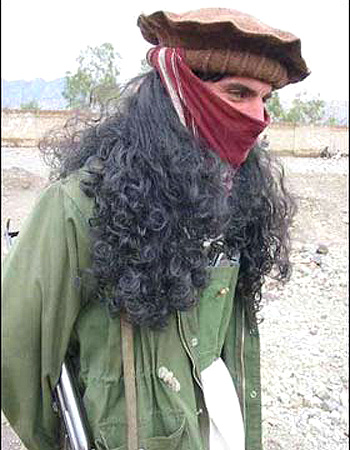
Al Qaeda and Taliban are planning to stage terrorist strikes similar to the 9/11 attacks in the US and Europe, NWFP police chief Malik Navid told the National Assembly Standing Committee on Interior on Monday.
The briefing, on the law and order situation in NWFP, informed the committee that the extremists were spreading throughout Pakistan, adding they planned to destabilise the Middle East to have a launch pad for terrorist attacks on the US or Europe. He said Arabs and people from other countries had entered Afghanistan in large numbers between 1979 and 1995, adding some had expertise in making biochemical weapons. He urged the government to focus on curbing militancy in the country, saying the activities of militants were rapidly increasing.
Responding to question from Muttahida Qaumi Movement (MQM) lawmaker Wasim Akhtar on whether the Taliban were moving towards the country’s major cities, including Karachi and Lahore, Navid said the Taliban were in every city and town. Most groups choose to operate secretly, he added. “Their people are present in every city and town. In some places they are active, in others dormant. The Taliban’s philosophy is to create pockets everywhere,” he said.
He said the Taliban were currently moving towards southern Punjab with intent to eventually reach the financial hub of the country, Karachi. He said the attack on the police academy in Lahore had proven that they were now established in the city.
The NWFP inspector general of police said there was a 1,000-mile porous border between Pakistan and Afghanistan, adding the neighbouring country was the major source of the weapons in the Tribal Areas. He claimed the Taliban were trying to turn the Tribal Areas into the Islamic Emirates of Waziristan.
Madrassas: According to Navid, Al Qaeda is expert in indoctrinating suicide bombers within a three-month period. He said five to 10 percent of the country’s madrassas were also involved in this. Al Qaeda operative Qari Hussain is training the bombers, he added. The police chief said the militants were composed of Pakistani Taliban, jihadis, local groups, criminals and Afghan Taliban, adding the major component was Al Qaeda. He said the Taliban choose to challenge the writ of the government and target army installations, law enforcement agencies, government buildings, schools, barbers, music shops, NGOs and Internet cafes. He said six suicide attacks had occurred in the NWFP during 2006, 125 in 2007, 62 in 2008 and five in the past three months. He said the Taliban had very sophisticated weaponry, adding police personnel required capacity building to match their opponents.Two men on a motorcycle threw a bomb at a truck carrying an excavating machine to NATO troops in Afghanistan, halting traffic Wednesday along a supply route through Pakistan’s southwest, officials said.
In Baitullah Mehsud Threatens Washington we discussed his most recent threat within the proper context of our year-long investigation of Baitullah’s globalist ambitions. The news of his latest threats sparked some interest and analysis. One such comes to us from FOXNews.
Steve Emerson, executive director of The Investigative Project on Terrorism, said that of the many terrorists who have issued “blustery threats” in recent years, Meshud is considered a “rising young star” among militants.
“He’s a dangerous guy,” Emerson told FOXNews.com. “It just reaffirms the fact that Washington is a major target.
“He seems to be a pretty bloody, bold guy who is not afraid to have a marker on himself and knows how to exact publicity … The real issue is what U.S. intelligence knows.”
Malou Innocent, a foreign policy analyst at the Cato Institute, said Mehsud’s attacks have “significantly altered” the political dynamics in Pakistan and provide a major test for President Asif Ali Zardari. But any direct threat Mehsud poses to the United States will be through his link with Al Qaeda, she said.
“If he did have the reach, it would be because of Al Qaeda,” she said. “This is more posturing on his behalf.”
Steve Emerson is correct, but let’s be clear in our own analysis. Malou Innocent has not yet plugged into the danger that Baitullah poses, and her analysis suffers because of it. Al Qaeda lives and trains with safe haven in South Waziristan because Baitullah allows it, not vice versa. It is believed that he has between 20,000 and 100,000 fighters, including a number of well-indoctrinated suicide bombers. While his “links” with al Qaeda may extend his global reach, rest assurred that he has more fighters at his disposal than al Qaeda could ever hope for.
The testimony above is sobering, and points to what we have always known at The Captain’s Journal. The model – assumed by Ms. Malou Innocent – of a precise parsing and delineation between groups, sects and factions within the Taliban, Tehrik-i-Taliban and al Qaeda in Pakistan and Afghanistan is arcane, outdated and obsolete. To be sure, they have internecine struggles and jockeying for power. But the basic axiom of Islamist domination is the same.
Forget about the pretend internet jihadists, because the Taliban are going to destroy connectivity for the masses. The legitimate hard core fighters have threatened the West yet again, and we believe that they mean business. The training and plans for their attacks are in the works at the present moment.
16 years, 11 months ago
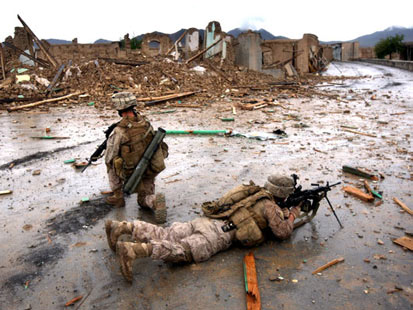
U.S. Marines keep watch as fellow Marines search for Taliban arms caches on March 31, 2009 in the abandoned town of Now Zad in Afghanistan’s Helmand province. Marines from Lima Company of the 3rd Battalion, 8th Marine Regiment, have been fighting Taliban insurgents, whose frontline position is just over a mile away from their base (John Moore/Getty Images).
16 years, 11 months ago
Our buddy Andrew Exum has a piece out today with The New Republic entitled No Place to Hide. In it, he defends the Obama administration’s “renunciation of traditional counter-terror strategies.” More specifically:
When the Obama administration announced the results of its review of Afghanistan and Pakistan policies on Friday, reporters quizzing the review’s authors seemed confused. They wondered whether the recommendations announced by the president amounted to an abandonment or endorsement of the kind of population-centric counter-insurgency strategy employed in Iraq in 2007. Were we embracing a more limited counter-terror mission? Or were we committing ourselves more fully to nation-building?
The aims of the strategy are quite modest: to deny transnational terror groups the ability to use physical space to plan and prepare for attacks on the United States in the way that al-Qaeda used Afghanistan in the years before the 9/11 attacks. And the central problem of the post-Cold War era is that these staging grounds are often in ungoverned spaces like the Pashtun belt straddling the Afghanistan-Pakistan border. The solution to this problem in those countries is improved governance from Kabul and Islamabad, respectively, which leads us to pursuing lines of operation quite unlike those most normally associated with the art of war–such as improving centralized governance, coordinating economic development, and providing essential services to the peoples of southern Afghanistan and western Pakistan. The new Obama strategy for Afghanistan and Pakistan is thus better described as a “counter-haven” strategy then a counter-terrorism strategy. (I must credit a conversation I had with counter-insurgency theorist-practitioner David Kilcullen on Friday for that particular turn of phrase.)
So the plan announced by the Obama administration is actually a renunciation of traditional counter-terror strategies–which have employed special operations raids, drone strikes, and bombing campaigns to deter or reduce the capacity of transnational terror groups. In the administration’s strategy is the admission that solely “kinetic” means–blowing things up and killing people–cannot be relied upon to end the threat from terror groups in Afghanistan and Pakistan.
I won’t repeat all of his prose here, but Exum launches into an interesting missive on the issue of Cartesian space versus virtual space.
The White House strategy, though, betrays an obsession with physical space at the expense of virtual space. This fixation very much reflects a generational divide among the scholars and policy-makers who focus on terrorism. Younger scholars such as Will McCants (now at the Department of Defense) and Thomas Hegghammer–in addition to being much more likely to actually be able to speak and read the relevant languages (Arabic and Urdu)–are “digital natives” rather than “digital immigrants” (to use the labels preferred by the counter-insurgency scholar Thomas Rid): They do not need to have the explosive potential of the internet explained to them, and McCants and Hegghammer especially have individually spent hundreds of hours on the more popular jihadi chatrooms to gather data about the debates and spread of information that is taking place in the virtual world
Well, Exum seems to be saying that we must be prepared to take on the enemy anywhere for this to work, and I tend to agree (and for that reason believe that the global counterinsurgency in which we are engaged is underfunded and under-resourced). I also believe that we should be prepared to confront the conventional enemies, which is why rather than throwing several trillion dollars down the toilet, we should be funding the U.S. military.
But anywhere is still somewhere that is located in Cartesian space. I’m not impressed with the alleged global power of the Internet jihadists, and most of them are still jihadist wannabes in cyberspace. Let them pick up a rifle and do duty, but until they do, we are worrying about the wrong thing. Have your IT experts, but what we really need are boots on the ground.
Our very good friend Professor Gian Gentile gives Exum nice props, and is perhaps being too gracious. I’m not that gracious, something quite endemic to my nature, I’m sure. Exum is playing make believe about the Obama administration renunciation of the counter-terror strategy and HVT campaign. Only recently was it announced that the UAV strikes would expand to Quetta.
Now, I’m not against the strikes for the typical reasons: they kill innocents, they add to the rolls of the insurgency, etc. In fact, I’m not against them at all. But simply put, this strategy won’t work. Neither will this strategy work when applied with SOF troopers who swoop into an area, kill a HVT, and then withdraw.
Stupid in the superlative, and we have discussed it before. Have your airmen that can use a Milstar uplink to guide a JDAM to target by painting it with a laser; have your SEALs who can attach underwater demolitions. Very well. The ground is controlled by infantry, and if we win the campaign in Afghanistan it will be because the load is borne on the backs of the infantry and Cavalry. They can converse with the population, they can gain intelligence, they can deliver logistics, they can fight the enemy, and they can fast-rope into an area and kill or capture the HVTs if that becomes necessary.
I have had very unsatisfactory e-mail exchanges with Exum on this issue, and while Exum continues to defend the Obama adminstration and its alleged repudiation of the HVT strategy, he then turns around and defends the use of SOF to kill or capture HVT.
We must fish or cut bait in Afghanistan. We must not go in half way. We must decide if we support the campaign or not. If we support it, then we need to resource and finance it. Send in the Cavalry and infantry. Prepare for proper logistics. If not, then let’s withdraw and live to fight another day, while protecting and training the sons of America. They aren’t toys or pawn pieces with which to enact an administration’s damn foreign policy. They are men, made in God’s image, your neighbors and loved ones.
16 years, 11 months ago
The Captain’s Journal received numerous visits today from searches concerning Baitullah Mehsud. It seems that he has threatened Washington.
The commander of the Pakistani Taliban claimed responsibility Tuesday for a deadly assault on a Pakistani police academy and said the group was planning a terrorist attack on the White House that would “amaze” the world.
Baitullah Mehsud, who has a $5 million bounty on his head from the U.S., said Monday’s attack on the outskirts of the eastern city of Lahore was retaliation for U.S. missile strikes against militants along the Afghan border.
“Soon we will launch an attack in Washington that will amaze everyone in the world,” Mehsud told The Associated Press by phone. He provided no details.
Mehsud has never been directly linked to any attacks outside Pakistan, but attacks blamed on his network of fighters have widened in scope and ambition in recent years. The threat comes days after President Barack Obama warned that al-Qaida is actively planning attacks on the United States from secret havens in Pakistan.
Pakistan’s former government and the CIA named Mehsud as the prime suspect behind the December 2007 killing of former Prime Minister Benazir Bhutto. Pakistani officials accuse him of harboring foreign fighters, including Central Asians linked to al-Qaida, and of training suicide bombers.
In his latest comments, Mehsud identified the White House as one of the targets in an interview with local Dewa Radio, a copy of which was obtained by the AP.
For regular readers of The Captain’s Journal, there isn’t anything new in this threat. We have discussed it before.
The globalist jihad movement of al Qaeda has been merged with the Tehrik-i-Taliban of Pakistan. The TTP shout to passersby in Khyber “We are Taliban! We are mujahedin! We are al-Qaida!” There is no distinction. A Pakistan interior ministry official has even said that the TTP and al Qaeda are one and the same.
TTP chief Baitullah Mehsud has said “We want to eradicate Britain and America, and to shatter the arrogance and tyranny of the infidels. We pray that Allah will enable us to destroy the White House, New York, and London.” Now there are even indications that the original Afghan Taliban under Mullah Omar have morphed into an organization that desires regional Islamist revolutions.
Only recently (March, 2009) did the U.S. see the danger with him and begin to target Baitullah Mehsud with UAVs. If readers will tool back through the archives for Baitullah Mehsud, you will find that we have been discussing him for approximately one year, warning throughout the last year of his globalist intentions.
What turns out to be big news today, you found out about one year ago. That’s why you read The Captain’s Journal.
UPDATE: Welcome to Instapundit readers, and thanks to Glenn for the link. While you’re on board, drop by and check out reports of a son at war in Fallujah, 2007, and recently returned from the 26th MEU.
16 years, 11 months ago
In The Afghanistan Strategy we discussed one problem with the administration plan, namely reliance on more money being a precursor to Pakistani operations against the Taliban. Some powerful people in Pakistan don’t really believe that the Taliban are a threat to Pakistan’s stability, and still believe in using them as a counterbalance to what they see as the real threat: India.
This obsession is so severe, so embedded, and so thoroughgoing that the U.S. policy makers do not understand it and have not yet adequately incorporated this characteristic of Pakistani culture and politics into the calculus for moving forward with stability in Asia.
Case in point. The PakTribune recently carried a stunning commentary on the relationships of the various intelligence forces involved in Pakistan. It is simply so breathtakingly incredible that it bears at least partial reproduction below.
It is now getting clear as to why FATA has been declared most dangerous place on earth. After making series of allegations that FATA is the main breeding ground where militants and suicide bombers are trained for launching into Afghanistan; where the entire senior leadership of Al-Qaeda and Taliban is housed; and from where possible attack on US homeland would take off, so far not a single training camp has been located in FATA, nor any high-profile militant leader nabbed or killed. This is in spite of continuous hovering of spy planes and next door US-NATO troops equipped with latest state-of-the-art surveillance and detection gadgets breathing over Pakistan’s neck, and RAW-CIA-Mossad agents having infiltrated into FATA in big numbers. If CIA controlled drones can hit suspected houses, madrassas and Hujras based on intelligence, why have they been unable to detect so-called training sites and the top wanted leaders? Why have the drones not taken a pot shot at Baitullah Mehsud or Maulana Fazlullah if the US considers Pakistani Taliban a threat?
The fact is that whatever has been said about FATA is pack of white lies uttered with sinister designs. All sorts of harrowing stories were cooked up to justify drone attacks as well as ground raids in Pakistan’s northwestern tribal belt. Blatant lies are similar to the WMD falsehood to justify invasion of Iraq. Why not Afghanistan, Iraq, Somalia, Sudan or for that matter India which has become the hub-centre of extremism and terrorism been added to the list of most dangerous places?
Stop here. In order to get the full force of the cultural obsession with India in this commentary, let’s rehearse a bit. The RAW (Research & Analysis Wing, India’s intelligence services), the CIA and the Mossad are said to be in cahoots with each other. Literally, the intelligence services of the U.S., India and Israel are claimed to be working together in Pakistan! Israel doesn’t have its hands full with Hamas and Hezbollah, and even has the time to involve their assets in Pakistan. Why would something like this come to pass? Keep reading.
Other than the militants, which the US is keen to eliminate, Pakistan army and the ISI also continue to remain in CIA’s firing line. CIA is deliberately leaking out stories in US leading newspapers while CNN, Fox News drum beats scandalous news on electronic media to malign the two institutions. The allegations made against the two institutions range from collaboration with the Taliban and playing a double game. The themes played are: One, the army is either incapable of dealing with militants or is soft towards them; Two, the army has surrendered FATA and Swat to the Taliban; Three, the army uses the Taliban as a weapon to regain strategic depth in Afghanistan; Four, the army is not under civil government control; Five, the ISI trains, equips and launches militants into Pakistan to hit Afghan-Nato targets.
Well, this is a fairly comprehensive and accurate list of the problems endemic to the Pakistani military. A hit dog always yelps, as the saying goes. Continuing:
The CIA and ISI have always enjoyed cordial relations. The Afghan war against the Soviets brought the two very close to each other. This closeness got reinvigorated when Pakistan volunteered to become the frontline state against war on terror. The two sailed along smoothly till as late as 2007 after which there was a sudden shift in CIA’s attitude. This change in attitude occurred after ISI learnt about CIA playing a double game in FATA and Baluchistan by providing all out assistance to RAW to destabilize the marked regions. When ISI became cautious and started to take protective measures, it irked CIA and started to distance itself. CIA’s relations with Pak army and the ISI became strained when the army-ISI outspread details of drug trade in Afghanistan in which CIA, RAW and Mossad were deeply involved … It transpired that CIA assisted by India was sponsoring multi-billon dollar Afghan drug trade. The duo banks on $3 trillion worth of drug money each year, generated through heroin production and its subsequent sale across the world. Drug money is used by CIA for carrying out covert operations in the world. RAW utilizes drug money for running tens of training camps, for recruiting and equipping agents and suicide bombers and funding dissident elements within Pakistan.
The scenario has now become rather twisted. The CIA-RAW-Mossad coalition is supposedly involved in the drug trade in order to raise money for international operations. That the very source of income would be in jeopardy if the destabilization occurred from CIA operations doesn’t matter. The fact that the CIA would be involved in something (i.e., funding the Taliban with drug money) that ran contrary to the objectives of the Army and Marines in Afghanistan doesn’t matter. Consistency, according to this author, must be the hobgoblin of little minds.
We needn’t go any further with this commentary. No doubt this author has his sources inside the Pakistan Army. And no doubt these sources also believe their fantasies, at least to some degree. The sad part is that Talibanization of the NWFP, FATA, Lahore, Karachi and Islamabad continue unabated while the Army concocts elaborate schemes and fairly tales to convince themselves that they have an evil neighbor. In fact, they do. They just happen to fear the wrong one. Until we understand this aspect of Pakistani politics, we are operating from an impoverished perspective.
16 years, 11 months ago
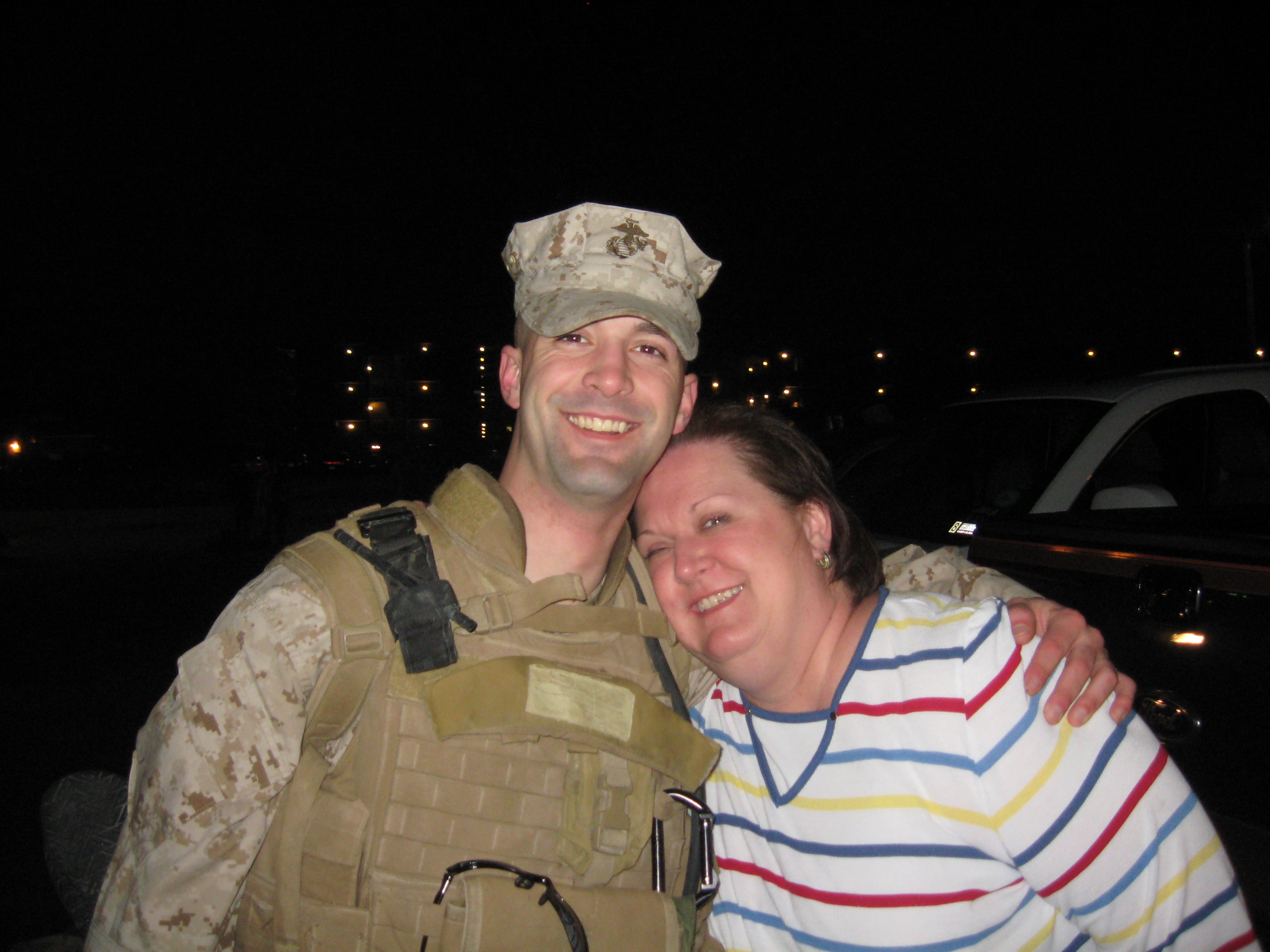
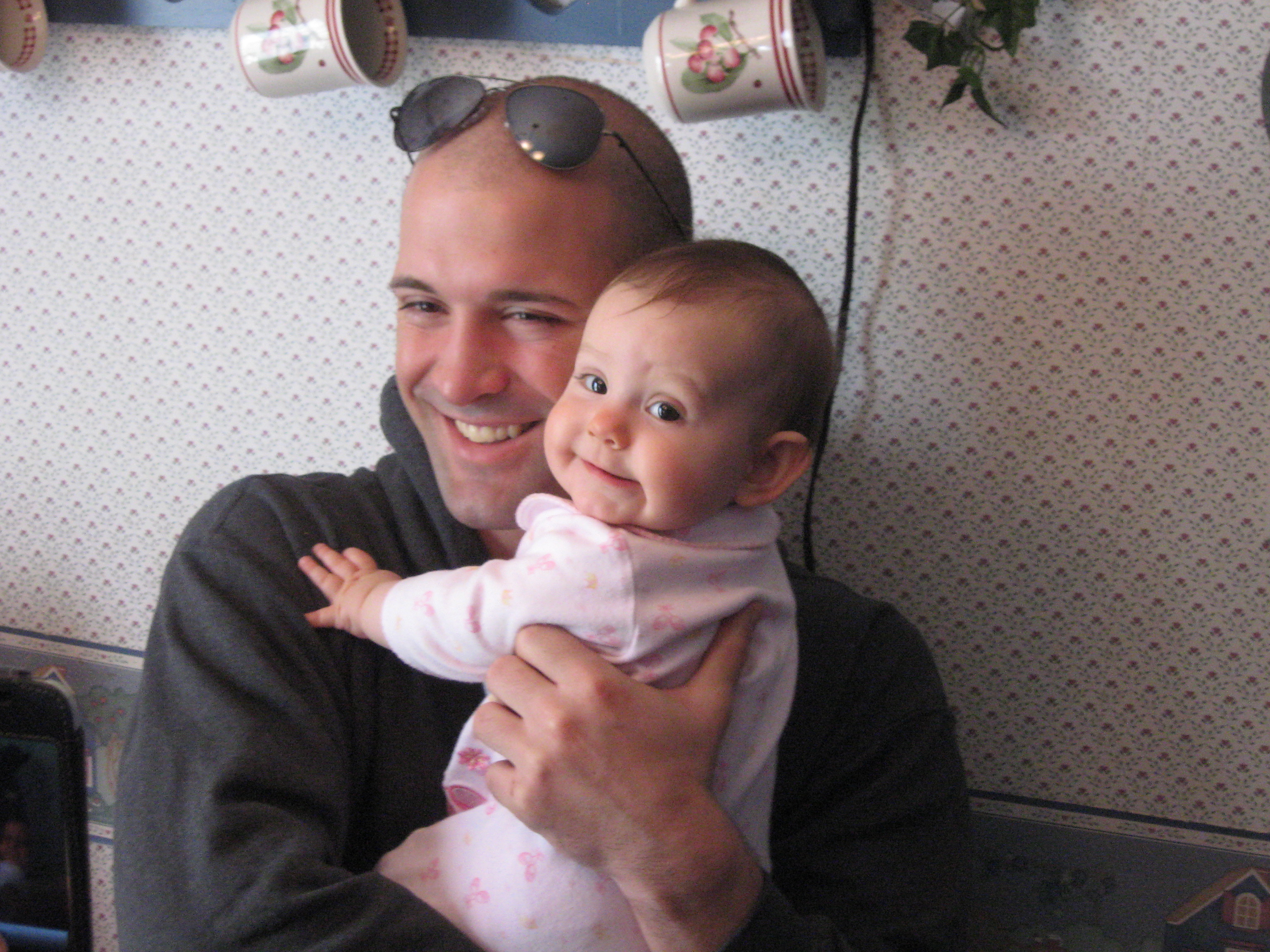
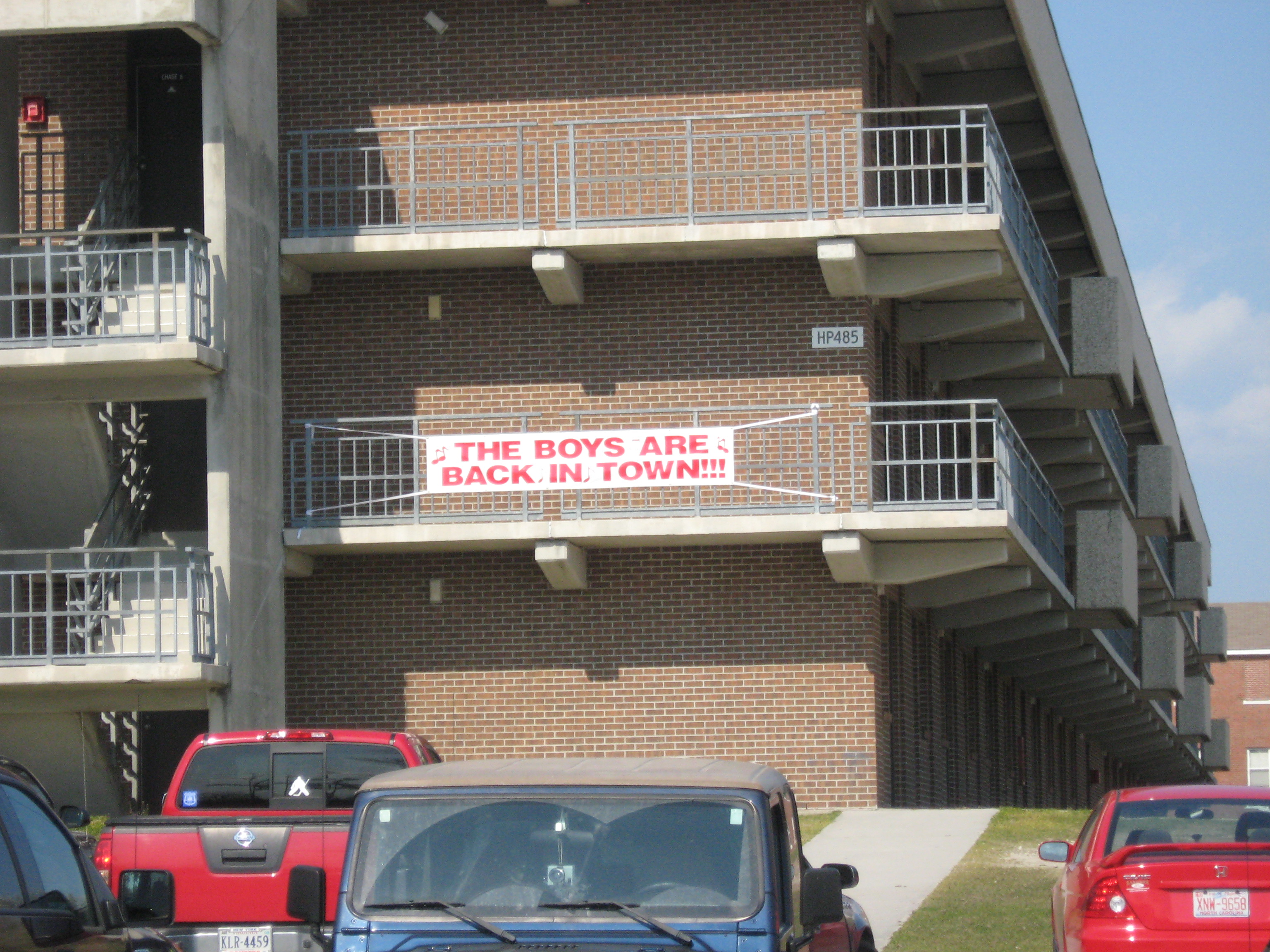
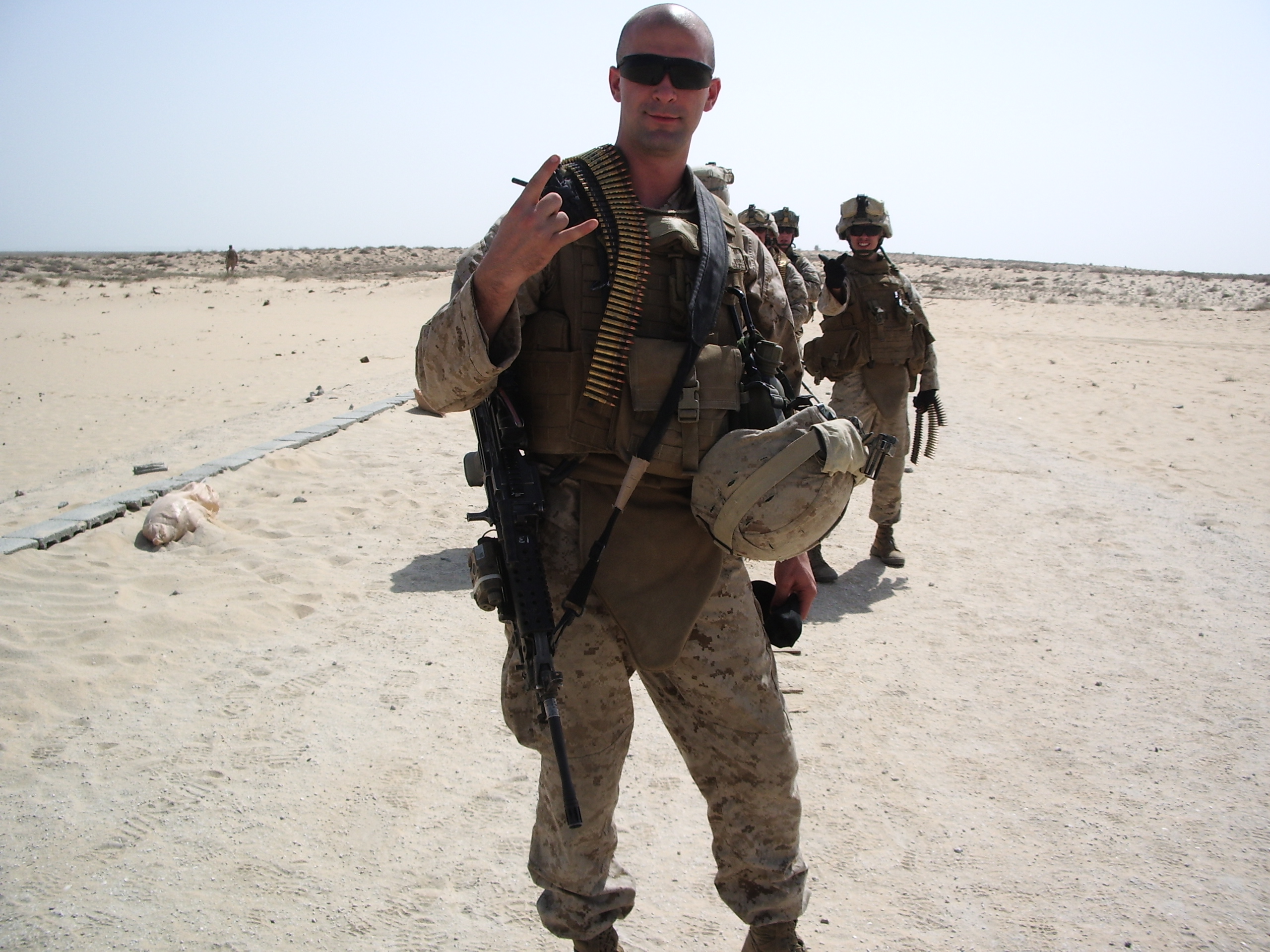
It’s nice to receive my son home from his second deployment, the first in Fallujah in 2007, the second on the 26th MEU. We stayed on beautiful Emerald Isle for the week, and the LCACs were a bit late getting on to shore on Monday. The reception was a night time event.