New York Court Holds Stun Gun Ban is Not Unconstitutional, in Contravention of Caetano

Herschel Smith · 30 Mar 2025 · 2 Comments

Dean Weingarten has a good find at Ammoland. Judge Eduardo Ramos, the U.S. District Judge for the Southern District of New York,  has issued an Opinion & Order that a ban on stun guns is constitutional. A New York State law prohibits the private possession of stun guns and tasers; a New York City law prohibits the possession and selling of stun guns. Judge Ramos has ruled these laws do not infringe on rights protected by the Second Amendment of the United States Constitution. Let's briefly…… [read more]

An Aging Nuclear Weapons Stockpile

BY Herschel Smith
17 years, 9 months ago

Glenn Reynolds linked a report that the Secretary of Defense and Chairman of the Joint Chiefs of Staff are calling for refurbishment of the existing nuclear weapons in the U.S.  Good find by Glenn.  A brief word of explanation.

It has always been true that we can’t sit on the nuclear weapons stockpile without working to maintain the purity of the materials.  Uranium and transuranics (e.g., Plutonium) do decay, albeit most isotopes with very long decay half lives (e.g., Pu-239 has a half life of 24,100 years).  Decay introduces impurities into the material, and purity is a requirement for miniturization of nuclear weapons, something the Chinese have not yet learned like the U.S. (this means that weapon delivery is made easier).

But by far the larger effect of decay is tritium, which is used as material for fussion in thermonuclear weapons in conjuction with the fission to enhance their power.  The half life for tritium is 12.32 years.  In other words, as the stockpile sits, its effectiveness decays away.  This must be considered in thinking about national security as we move forward into the twenty first century.  In the ongoing work to maintain the effectiveness of the stockpile, TVA won a bid for a government program to produce Tritium (this is done by activation of Lithium) at their Watts Bar Nuclear Power Plant.

How does Obama stack up against the nuclear stockpile?  Opposed.

Senator Barack Obama will propose on Tuesday setting a goal of eliminating all nuclear weapons in the world, saying the United States should greatly reduce its stockpiles to lower the threat of nuclear terrorism, aides say.

In a speech at DePaul University in Chicago, Mr. Obama will add his voice to a plan endorsed earlier this year by a bipartisan group of former government officials from the cold war era who say the United States must begin building a global consensus to reverse a reliance on nuclear weapons that have become “increasingly hazardous and decreasingly effective.”

Mr. Obama, according to details provided by his campaign Monday, also will call for pursuing vigorous diplomatic efforts aimed at a global ban on the development, production and deployment of intermediate-range missiles.

“In 2009, we will have a window of opportunity to renew our global leadership and bring our nation together,” Mr. Obama is planning to say, according to an excerpt of remarks provided by his aides. “If we don’t seize that moment, we may not get another.”

This places Obama and current military leadership (Gates and Mullen) on a direct collision course over national security and the need for maintenance of nuclear weapons.

U.S. Combat Action Across the Syrian Border

BY Herschel Smith
17 years, 9 months ago

The U.S. has launched limited kinetic operations inside the Syrian border to help destroy part of a foreign fighter logistics network.

U.S. military helicopters launched a rare attack Sunday on Syrian territory close to the border with Iraq, killing eight people in a strike the government in Damascus condemned as “serious aggression.”

A U.S. military official told the Associated Press the attack included a raid by special forces targeting a foreign-fighter network that travels through Syria into Iraq. The Americans have been unable to shut the network down in the area because Syria was out of the military’s reach.

“We are taking matters into our own hands,” the official told the AP on the condition of anonymity because of the political sensitivity of cross-border raids.

The attack came just days after the commander of U.S. forces in western Iraq said American troops were redoubling efforts to secure the Syrian border, which he called an “uncontrolled” gateway for fighters entering Iraq …

On Thursday, U.S. Maj. Gen. John Kelly said Iraq’s western borders with Saudi Arabia and Jordan were fairly tight as a result of good policing by security forces in those countries, but that Syria was a “different story.”

“The Syrian side is, I guess, uncontrolled by their side,” Gen. Kelly said. “We still have a certain level of foreign-fighter movement.”

He added that the U.S. was helping construct a sand berm and ditches along the border.

“There hasn’t been much, in the way of a physical barrier, along that border for years,” Gen. Kelly said.

The foreign-fighters network sends militants from North Africa, the Persian Gulf states and elsewhere in the Middle East to Syria, where elements of the Syrian military are in league with al Qaeda and loyalists of Saddam Hussein’s Ba’ath Party, the U.S. military official told the AP.

Sand Berms were an effective tool for isolating Haditha from foreign fighters, but such a concept will be difficult to implement along an entire border, and probably not nearly as effective. The strike directly against the logistics network, in fact, closely follows an approach recommended by The Captains Journal more than one year ago in Sun Tzu and the Art of Border Security.

The solution is not for Iraq to seal the borders. The solution involves intimidation of Iraq’s neighbors into sealing the borders. While the U.S. and Iraq are involved in talks with Iran and other neighbors, tried and tested military strategy suggests that bullying is the order of the day.

This bullying and intimidation might take the form of financial pressure (or conversely rewards for good behavior), market sanctions, air assets used against foreign fighters flowing in from across the borders, small incursions across the borders to destroy the sanctuaries of foreign fighters, or even larger air power involvement to destroy those sanctuaries and other supporting infrastructure.

The alternative is leaving these sanctuaries and flow paths in place, with no hope of the Iraqi security forces or U.S. forces being able to stop them (due to force size). Tested military strategy aims for the right target. In the case of the borders, the target is the offending country, not the Iraqi border proper. At the moment, the offending countries know that U.S. forces have restricted the battle space to Iraq proper. Either this changes — causing confusion and disaggregation among the foreign elements who wish to destabilize Iraq — or the borders will remain porous.

The question is why now? General David Petraeus has moved on to head up CENTCOM, and General Odierno is in charge of Operation Iraqi Freedom. Is this a sign of a shift in strategy to incorporate cross-border operations solely because Odierno is in charge? It’s possible, but not likely. Since this represents a fairly significant change in strategic approach with potential international repercussions, Petraeus would certainly have been involved in the decision-making, and likely the CJCS.

While it has been claimed in the past that Syria was doing a better job of deconstructing the terrorist networks inside her borders, this has mostly been theater, much as the Pakistani military operations in the FATA and NWFP are intended to be a show to keep U.S. dollars rolling in. The Iraqi insurgency was in many ways born in Damascus, and the constant flow of suicide bombers across the Syrian border has killed or injured at least 4000 Iraqis.

Since cross-border operations have been initiated, follow-through is absolutely necessary. Any capitulation by the Multinational Force, any show of weakness by the State Department, and any reluctance to continue with these operations in the future will spell the death of this strategy, and little if anything will have been gained.

With over 4000 American warriors having perished in Operation Iraqi Freedom, this approach should have been implemented long before now. Nothing needs to be said by the Administration or the State Department about this incident. In fact, nothing needs to be said by the Multinational Force. All spokesmen should respond to inquiries with “no comment.” Everything that needs to be communicated has been. The U.S. is willing to conduct kinetic operations inside Syrian territory. Silence is golden. Let the guns do the talking, as Sun Tzu smiles upon the plan.

Tribes Outgunned by Taliban

BY Herschel Smith
17 years, 9 months ago

It’s like a sickness, really, this continual reversion to magical solutions to hard problems.  A pinch of this ingredient, a smidgen of that seasoning, and a secret incantation that very few people know – and the Gnostic knowledge of the “experts” can solve the problems for us.  Only in never works that way in any discipline or area of life.

Many of the “lawmakers,” certainly many pundits, and even some military men who should know better, see the Anbar campaign this way.  Forgetting the more than 1000 Marines who died and many thousands who were wounded and are even now disabled, ignoring the hard core kinetic engagements, and disrespecting the sweat and tears of the men and their families who contributed to the campaign, they purvey a narrative that has the tribes being the key to the campaign in Anbar.  True enough without context, the question is “why would someone ignore the context?”

The precondition for the tribal awakening was fire fights with a ferocity that convinced the tribes that battle against the U.S. was futile, security for the population, an al Qaeda reeling from Marine Corps operations against it, a 1/1 AD tank parked in the front yard of Sheikh Abdul Sattar Abu Risha’s home to ensure his family’s safety, many hundreds of thousands of knock-and-talks, intelligence gathering, arrests, detentions, fingerprints, retinal scans, and so on the long, complicated list goes.  And this hints at the complexity of Ramadi and the surrounding area.  Fallujah in 2007 was different, with tribal Sheikhs being relatively unimportant and Marine operations taking a different approach (as they did in Haditha with sand berms and isolation from insurgents from Syria).

So whither the tribes in Pakistan’s FATA and NWFP?  Well, Pakistan wants them to do it alone.  In fact, they want to do it alone.   But here is an example of what happens (two weeks ago) when the tribes take on the Taliban alone.

A suicide bomber has killed at least 10 people and wounded 30 others at a tribal council in Pakistan’s northwestern Orakzai region.

The attack happened a day after a force of pro-government tribesmen destroyed two militant hideouts in Orakzai.

Qeemat Khan Orakzai, a member of the council, told the Reuters news agency: “We were busy in raising a lashkar (a tribal militia) to evict Taliban from the region when this attack took place.”

He said that 15 people had been killed although other reports put the death toll at 10.

Orakzai has been the most peaceful of Pakistan’s seven semi-autonomous tribal regions. Unlike most of the others, it does not border Afghanistan.

Mohammed Luqman, a local government official, said: “A bomber struck at a meeting of a tribal lashkar killing at least 15 people and wounding dozens more.

“They were gathered to create a tribal force against the militants. We have shifted the injured to hospitals.”

The members of the Alizai tribe had met in the town of Ghaljo in the mountainous region.

A security official told the AFP news agency: “The tribesmen blew up two hideouts of the militants a day earlier and it is possible this attack was in revenge for their actions.”

The bombing also came a day after Taliban militants abducted and beheaded four tribal elders in the insurgency-hit Bajaur region who had attended another pro-government meeting, officials said.

There seems to be an understanding by Pakistani officials that the tribes are outgunned.

The tribal militias, known as lashkars, have quickly become a crucial tool of Pakistan’s strategy in the tribal belt, where the army has been fighting the Taliban for more than two months in what army generals acknowledge is a tougher and more protracted slog than they had anticipated. And, indeed, the lashkars’ early efforts have been far from promising.

As the strength of the militants in the tribal areas grows, and as the war across the border in Afghanistan worsens, the Pakistanis are casting about for new tactics. The emergence of the lashkars is a sign of the tribesmen’s rising frustration with the ruthlessness of the Taliban, but also of their traditional desire to run their own affairs and keep the Pakistani Army at bay, Pakistani officers and law enforcement officials say.

Some in Washington have pointed to the emergence of the lashkars as a hopeful parallel to the largely successful Sunni Awakening movement in Iraq, which drew on tribes’ frustration with militant jihadis to build an alliance with U.S. troops that helped lessen violence in Iraq. But there are significant differences, a senior U.S. government official acknowledged. In Anbar Province, he said, the Iraqi tribes “woke up to millions of dollars in government assistance, and the support of the 3rd Infantry Division.”

But the support by the Pakistani Army and the civilian government for the tribal militias has been “episodic” and so far “unsustained,” the official said. In addition, tribal structures in Pakistan have been weakened in recent years by the Taliban, unlike the situation in Iraq.

The tribesmen, armed with antiquated weaponry from the 1980s Afghan war, are facing better equipped, highly motivated Taliban fighters who have intimidated and crushed some of the militia.

In the last two months, the Taliban have burned the homes of tribal leaders and assassinated others who have dared to participate in the resistance. They have pulled tribesmen suspected of backing the militia out of buses and cars and used suicide bombers against them as they did in Orakzai, the place where the wounded in the Peshawar hospital were attacked.

But in spite of this understanding, the Pakistani parliament has promised to stand down its military operations against the Taliban.  Time is running short to save the tribes, and indeed, to save Pakistan itself.

Pakistan on the Brink of Collapse

BY Herschel Smith
17 years, 9 months ago

In NATO and Pakistan Commitment to Defeat Taliban Wavering we discussed the deep ambivalence of the Pakistan parliament towards the fight against the Taliban. The parliament has little stomach for a protracted counterinsurgency against the Tehrik-i-Taliban. The problems with properly understanding the horrible danger they are in run deep, and so do the overall problems with Pakistani society, both culturally and financially. In fact, the country itself is on the brink of collapse and civil war.

Pakistan was locked in crisis last night, with the government pressed by Washington to deepen its conflict with Islamic militants in the lawless regions on the Afghan border, and obliged to call in the International Monetary Fund to stave off financial catastrophe.

In the rugged north of the country, a major military offensive to root out Taliban militants has created a flood of up to 200,000 refugees and pitched Pakistani against Pakistani, Muslim against Muslim, in a conflict some are beginning to regard as a civil war.

A new US intelligence estimate meanwhile has warned that the renewed insurgency, coupled with energy shortages and political infighting, means that Pakistan, which is the only Muslim nation with nuclear weapons, is “on the edge”.

“Pakistan is going through the worst crisis of its history,” according to a leaked letter signed by the former prime minister Nawaz Sharif, the main opposition leader. It is a view shared by Imran Khan, another opposition leader, who says that the political and economic meltdown “is leading to a sort of anarchy in Pakistan”.

“How does a country collapse?” the former cricketer asked. “There’s increasing uncertainty, economic meltdown, more people on the street, inflation rising between 25 and 30 per cent. Then there’s the rupee falling.”

Pakistan is experiencing power cuts that have led to hourly blackouts, a doubling of basic food prices and a currency that has lost a third of its value in the past year. “The awful thing is there’s no solution in sight – neither in the war on terror nor on the economic side,” Mr Khan said during a visit to London. Heightening the sense of national emergency, the government yesterday turned to the International Monetary Fund for $15bn (£9.3bn) to cope with a balance of payments crisis caused by a flight of capital, after previously saying that applying to the IMF would be a last resort.

Almost every day there are retaliatory attacks against police and soldiers and Western targets. Hundreds of soldiers and an unknown number of civilians are losing their lives. The national parliament rejected the US influence on the government by adopting a resolution last night calling for an “independent” foreign policy and urging dialogue with the extremists.

The Pakistanis with money have pulled their funds from banks and investments in Pakistan and moved them towards the Middle East.  Pakistan is facing a liquidity crisis.  In spite of the Taliban violence, claims of violence, globalist perspective and refusal to disarm, the Pakistani people still cling to the belief that there is something else behind the movement. The movement, they claim, wouldn’t be capable of surviving without the influence and support of foreign intelligence services.

It is not as worrying to see the Taliban running free in Pakistan. But it is more worrying to see our government and intelligence agencies running around confused without being able to figure out who are financing the Taliban. While every Pakistani even with half a mind knows that India with its 14 consulates on the Pakistan-Afghanistan is financing the Taliban. Now we can just hope that the government and media promote these facts to the International community and pressurize India to stop financing the Taliban.

The preoccupation with India and their alleged misdeeds and interest in the conquest of Pakistan claims not only the full attention of Pakistan military officers, but the common, ordinary citizens. The claims have become so prevalent that the Taliban saw them as requiring rebuttal.

Tehrik-e-Taliban Pakistan refuting allegations that they are destabilising Pakistan on the behest if foreign intelligence agencies has indicated that they are willing to lay down their arms if the government assures of an end to the ongoing military operation.

TTP spokesman Maulvi Omar talking to BBC said that there is no truth to news and such assertions are baseless that the Taliban movement is destabilising Pakistan on the say of foreign intelligence agency adding that we are stuck to our stance that if the government ends the military operation than we would lay down their arms. However, he added, that it is the government who always backs out on its promises.

He said that we have no foreign pressure and we are fully independent in making our own decisions.

Maulvi Omar claimed that the Taliban movement is very popular in the area and they would ceasefire when the tribesmen would wish them to do so.

NATO – and even U.S. military leadership – is looking for a magic solution, the silver bullet to kill the Taliban; a button to push, an incantation to chant. For now that incantation is to peel away layers of the reconcilables to fight against the hard core irreconcilable Taliban. The Pakistanis, almost all of them, want to negotiate and talk with the Taliban too. But they have added another layer of counterinsurgency to their stable of imaginary solutions. Get India to stop financing the Taliban.

You can’t make this sort of stuff up.  Reality is sometimes more bizarre than fantasy.  This is the same India who fought jihadist insurgents in Kashmir for more than a decade and had jihadist bombings in her cities. If the notion that Indian intelligence is funding the Taliban sounds ridiculous, its only because it is. But Pakistan is still stumbling in the darkness of ignorance to the danger she faces – this danger becoming more pronounced with each passing day. The time to save Pakistan is ebbing away, and yet she sits and points her finger at her neighbors.

Adventures in ROE: Waiting on the Lawyers

BY Herschel Smith
17 years, 9 months ago

In Prosecution of U.S. Troops Under Iraq SOFA we broadly outlined some problems we have with the draft Status of Forces Agreement awaiting Iraqi parliament approval.  Review of the draft SOFA raises even more questions and forces the conclusion that things could very well be worse than first suspected.  A few examples are in order, followed by a review of international lawyer hand-wringing over Somalian pirates.

Article 3 [1] sets the context for review of the agreement: “All members of the U.S. armed forces and civilian members must follow Iraqi laws, customs, traditions, and agreements while conducting military operations in accordance to this agreement. They must also avoid any activities that do not agree with the text and spirit of this agreement. It is the responsibility of the U.S. to take all necessary measures to ensure this.”

Moving ahead in the document, Article 12 [9] says “The U.S. authorities submit, in accordance to paragraphs 1 and 2 of this article, a declaration explaining whether the alleged crime occurred while suspects where off duty or on duty. In case the Iraqi authorities think the conditions require such a decision to be reviewed or changed, the two sides discuss that through the joint committee, and the U.S. authorities takes into consideration all the conditions, events and any (sic) other information
submitted by the Iraqi authorities that might have an effect on changing the U.S. authorities (sic) decision.”

It should be fairly straight forward, shouldn’t it, to ascertain whether a Soldier or Marine is actively performing approved operations?  But the Kabuki dance is being done for the reason that by intent it isn’t really that simple.  There are the standing rules of engagement, theater-specific rules of engagement, and then unit-specific rules laid out by unit lawyers.  It’s this last category where the rubber meets the road, so to speak.

The Mental Health Advisory Team (MHAT) IV, Operation Iraqi Freedom 05-07, Final Report, 17 November 2006, Office of the Surgeon, Multi-National Force Iraq, and Office of the Surgeon General, United States Army Medical Command, outlines examples of problems that have come up on the level of application of the ROE:

More than one third of all Soldiers and Marines continue to report being in threatening situations where they were unable to respond due to Rules of Engagement (ROE).  In interviews, Soldiers reported that Iraqis would throw gasoline-filled bottles (i.e., Molotov Cocktails) at their vehicles, yet they were prohibited from responding with force for nearly a month until the ROE were changed.  Soldiers also reported they are still not allowed to respond with force when Iraqis drop large chunks of concrete blocks from second story buildings or overpasses on them when they drive by.  Every groups of Soldiers and Marines interviewed reported that they felt the existing ROE tied their hands, preventing them from doing what needed to be done to win the war (pages 13 – 14).

The lawyers know that the real power of the ROE lies in how they are applied.  If, for example, a unit has completed operations and is headed back to the FOB, and a vehicle takes chunks of concrete through the windshield killing the driver, when the son of a high profile Parliamentarian dies in the subsequent small arms fire because the unit feels under threat, the time will have come to invoke the clause where Iraqi authorities attempt to change the U.S. decision on who has authority over the actions of that unit.  Soldiers and Marines have seen stranger things, and that, at the hands of their own lawyers.  In fact, one of the most poweful and effective tactics that has been used by U.S. forces – patrols, entering houses, the “knock and talk” – is patently prohibited in Article 22 [5], and agreed to by U.S. lawyers.

U.S. forces are not permitted to search houses and other properties without a court
warrant, unless there was an active combat operation in accordance to article four, and in
coordinating with the specialized Iraqi authorities.

Turning to the Gulf of Aden, the U.S. Navy is absolutely hand-tied and impotent because lawyers across the globe can’t agree to how to treat pirates (h/t War News Updates).

The commander of a NATO task force on its way to tackle piracy off the coast of Somalia has said he still does not know what the rules are for taking on the high-seas bandits.

U.S. Admiral Mark Fitzgerald said while he was aware of where the pirates were operating, there was little he could do militarily to stop them and that guidelines on how to take them on — including whether to shoot — were still in the works.

“You know, I don’t think we’ve gotten the rules of engagement yet from NATO,” Fitzgerald told reporters on Monday during a briefing on U.S. naval operations in Europe and Africa.

“That’s all still being debated in the North Atlantic Council. All we’ve been told is to prepare a plan to go down there. So (the rules) are going to have to be debated.”

Six NATO members have contributed ships, including destroyers and frigates, to a special anti-piracy task force following a request from the United Nations.

The NATO group passed through the Suez Canal last week on its way to the Horn of Africa, where piracy has surged this year, with more than 30 ships seized and ransoms estimated at $18-$30 million have been paid to free hostages.

There are already naval assets from Britain, the United States and Russia in the region, but the area is so vast — more than 2.5 million square miles — that it is almost impossible for the pirates to be stopped unless they are caught red-handed.

“From a military standpoint, we certainly are limited by what we can do,” said Fitzgerald. “How do you prove a guy’s a pirate before he actually attacks a ship?

“We have a problem from the military side at sea because we can’t be omnipresent in the space, and the pirates operate at an advantage because … they don’t announce they’re a pirate until they attack a ship.”

Security specialists say there is a window of only about 15 minutes for a navy ship to respond to a distress call and get to another ship that’s being hijacked. Once pirates are on board, there’s little, legally, that can be done.

“You’ve got a very short window, a short time span, from the point where they decide to board a ship and (actually) board it. If you’re not right there, there’s not much you can do, and once the ship is taken hostage, then….”

The Danish navy learnt to its cost last month what can happen if you do seize suspected pirates.

They captured 10 people, but after holding them for six days aboard a Danish ship, the suspects were set free and put ashore in Somalia because the legal conditions surrounding their detention were unclear.

Denmark’s Defence Ministry said Danish law did not allow for prosecution of the men before a Danish court. The ministry said it had explored the possibility of handing them over to other countries but that was also not feasible.

A senior British naval commander admitted last week that it was essentially a legal minefield trying to take on the pirates, and urged commercial ships operating in the region to hire their own private security companies to deal with the threat.

Admiral Fitzgerald said the Danish experience showed how weak the impetus was going to be to capture pirates. Instead he said his task force would focus on escorting World Food Programme ships trying to deliver aid to Somalia.

The Captain’s Journal has weighed in saying:

This is easy. We tell the LOAC and ROE lawyers that they’re special and that they should go to their rooms and write high-sounding platitudes about compassion in war so that they’re out of the way, we land the Marines on the ship, and we kill every last pirate. Then we hunt down his domiciles in Somali and destroy them, and then we find his financiers and buyers and kill them. Regardless of the unfortunate potential loss of Ukrainian or Russian civilian life upon assaulting the ship, this weaponry and ordnance should never have been shipped in this part of the world without escort (and perhaps it shouldn’t have been shipped even with escort).  Negotiations will only serve to confirm the pirates in their methods. It’s killing time. It’s time to turn the United States Marines loose.

Ralph Peters has weighed in saying:

Piracy must be exterminated. Pirates aren’t folk heroes or champions of the oppressed. They’re terrorists and violent criminals whose ransom demands start at a million bucks. And they’re not impressed by the prospect of trials in a velvet-gloved Western court.  The response to piracy must be the same as it was when the British brought an end to the profession’s “golden age:” Sink them or board them, kill them or hang them.

Lt. Col. P at OpFor has weighed in saying:

Kill all of the pirates.

Seriously. Why do we allow a handful of khat-addled assholes to dominate one of the world’s most important sea lanes? We, the western powers, have sufficient naval units in the area to take care of the problem in very quick order. What we lack is the will. We apply an idiotically high standard of judicial due process to a situation that doesn’t lend itself well to a judicial solution. Anyone who has dealt with Somalis can tell you that they laugh at western legalisms, and what they perceive as western weaknesses. And then they redouble their violent efforts to take what they want from you. They do react very well to a boot on their necks, and a gun to their heads. Then they tend to wise up quickly.

Here’s how it needs to be done. Oil tanker sends distress call, takes evasive actions insofar as it is capable. (Or better yet, armed men aboard oil tanker defend by fire.) Coalition forces despatch (sic) vessels and boarding parties. Pirates who survive ensuing gun battle are lined up by the rail and shot in the head, then dumped overboard. Pirate boats are burned. If their bases or villages on the coast can be identified, said bases are raided and destroyed. No fuss no muss, no ransom, no hostages, no skyrocketing costs.

Apparently, the lawyers don’t think like we do.  But for the time being, the lawyers are setting the agenda.

NATO and Pakistan Commitment to Defeat Taliban Wavering

BY Herschel Smith
17 years, 9 months ago

In NATO Cannot Be Rehabilitated we discussed the fact that German forces had spent the last three years in Afghanistan without conducting a single combat mission. The Strategy Page followed this report up with their own:

Germany is pulling its commandos out of Afghanistan. The KSK commandos have been there for most of the last seven years. Many Germans, especially leftist politicians and journalists, have not been happy with that. This has resulted in several unflattering, and largely inaccurate, articles about the KSK in the German media. There was also an investigation of several KSK men, accused of kicking an Afghan prisoner. While the KSK were allowed to fight, they also operated under some restrictions. They generally could not fire at the enemy unless first fired upon. This led to at least one senior Taliban leader getting away from the KSK. The fleeing Taliban honcho was not firing at the pursuing KSK, so the commandos could not take him down.

Germany sent 120 KSK commandos to Afghanistan in late 2001. They were not given their own area of operation, but worked with American special forces and commandos as needed. The KSK commandos are the first German troops to engage in combat since 1945 (not counting some communist East German military advisers who may have had to defend themselves in places like Africa. German peacekeepers in the 1990s Balkans have not had to fight.) KSK’s achievement was celebrated in late 2001, when a supply of quality German beer was flown in for the troops.

The KSK were respected by their fellow special operations soldiers, and particularly liked because the Germans were sent beer rations (two cans a day per man). The KSK troops would often share the brew with their fellow commandos, which sometimes resulted in favors in the form of special equipment or intel data. Even with the restrictions, the KSK saw lots of action, but little of it was publicized, lest it generate more criticism back home.

So some of the troops are getting sauced on German beer in theater? (Someone might want to weight in on deployment rules for ISAF troops, but the alcohol prohibition for U.S. troops during deployment is absolute and nonnegotiable). The Strategy Page apparently obtains some of their information from Army intelligence, the same Army intelligence who fed General Rodriguez the absurdity that the Taliban wouldn’t conduct a spring offensive in 2008 (while The Captain’s Journal claimed that they would conduct not one offensive, but two, one in Afghanistan and the other in Pakistan). Rodriguez should have listened to The Captain’s Journal.  The Strategy Page also routinely authors analyses that discuss how swimmingly the campaign is going. The Captain’s Journal no longer uses the Strategy page as a source of information or analysis.

But the Taliban are indeed having the desired affect on Afghans, and German officials are again admitting that their troops are not contributing to the campaign (h/t LT Nixon Rants).

The growing threat is having the effect that soldiers are sticking close to their base camps and avoiding any contact to the civilian population, which then only shows increasing animosity towards the soldiers. Clearly, such a “spiral of alienation” is no help to the reconstruction of Afghanistan. The majority of Afghans in the relatively peaceful north are still amiable to the Germans, say the generals. But if even this support starts to dwindle, there will be consequences for the entire NATO mission. It may even be that the fight for a stable, peaceful Afghanistan can no longer be won (italics TCJ).

Support for the campaign is wavering in NATO countries as well.

NATO members are “wavering” in their political commitment to defeat the Taliban and the international effort in Afghanistan is disjointed, the alliance’s top military commander said.

Operations are affected by a shortfall of troops and more than 70 caveats limiting where soldiers can be deployed, U.S. Army General John Craddock, supreme allied commander in Europe, said in London yesterday.

“It is this wavering political will that impedes operational progress and brings into question the relevancy of the alliance here in the 21st century,” Craddock said in a speech at the Royal United Services Institute.

While President Asif Ali Zardari has been relatively strong thus far (at least in terms of rhetoric) regarding the Taliban, his enthusiasm for taking out the enemy apparently isn’t reciprocated in the Pakistan parliament.

An unusual parliamentary debate designed to forge a Pakistani policy on how to fight the Taliban and Al Qaeda has exposed deep ambivalence about the militants, even as their reach extends to suicide attacks in the capital.

Calls for dialogue with the Taliban, peppered with opposition to fighting what is perceived as an American war, dominated the closed-door sessions, according to participants.

After seven years of military rule under General Pervez Musharraf, the new civilian government initiated the debate in an effort to convince the public and the political parties of the necessity of the war against the militants. Musharraf – who had been both head of the army and president, as well as an important ally of the Bush administration – never consulted Parliament.

The new president, Asif Ali Zardari, pledged a strong effort by Pakistan against terrorism during his visit to Washington earlier this month, and stressed the contrast between his civilian rule and that of his military predecessor.

But the tenor of the parliamentary proceedings, including criticism by politicians of a lengthy military briefing by a general on the conduct of the war, showed that members of the political elite have little stomach for the fight against the militants.

This is a very troubling sign and doesn’t bode well for the removal of Taliban safe havens in the FATA and NWFP. However, it does explain the recent stand down of military actions in Waziristan.

It appears that the U.S. will have to increase force presence and take the brunt of the campaign (along with British and Canadian troops) – and show significant progress – before Pakistan will commit itself to the campaign.

Mission (Almost) Accomplished

BY Herschel Smith
17 years, 9 months ago

In a sign of the evolving state of affairs in Iraq’s Anbar Province, Camp Fallujah is soon to close to U.S. forces.

When Marine Maj. Gen. John Kelly deployed to Iraq in February, the violence had fallen so low in Anbar province that he began figuring out how to start closing bases and prepare to go home.

In the last 10 months the Marines in Fallujah have done what was unthinkable before the surge began — they have quietly transferred out of one of Anbar province’s largest cities. FOX News has learned in an exclusive interview with Kelly from Fallujah that 80 percent of the move is complete. In February there were 8,000 Marines living at Fallujah base. Now there are about 3,000 left. By Nov. 14 there will be none.

“We will shut down the command function here and I will move; my staff has already started to move,” Kelly, the commander of Multinational Force-West, told FOX News in an exclusive interview via satellite. “We will turn the lights off here.”

They will hand the Fallujah base over to their Iraqi counterparts on Nov. 14, having relocated themselves and thousands of combat vehicles to the desert base of Al Asad to the west. Marines will no longer be seen in city centers such as Fallujah — a major step toward leaving Iraq, and one step closer to Iraq’s goal of having U.S. troops out of its population centers by mid-2009 — one of the key points enshrined in the Status of Forces Agreement being reviewed on Capitol Hill today.

On Wednesday, to little fanfare, the Marines quietly closed down Al Qaim base near the Syrian border. Now it is run by Iraqis.

In Fallujah, where the U.S. Marines once had three large mess halls to feed troops, they are now down to one. The Marines have quietly disassembled the entire infrastructure of the base.

“We probably had several thousand of those large metal containers — tractor-trailer containers,” Kelly said. “I bet we don’t have 200 of them here now.”

Of the thousands of vehicles once parked at the base, now there are only 300 left. Their transfer occurred at night, between 9 p.m. and 5 a.m., over the past 10 months so as not to disturb Iraqi drivers and clog the roads.

They dubbed it “Operation Rudy Giuliani” because they were cleaning the streets up and returning Fallujah to normalcy — taking down barbed wire and tearing down checkpoints and Jersey walls that made Anbar look like a war zone.

“There is almost no barbed wire left anywhere in Fallujah,” Kelly said. An Iraqi no longer sees barbed wire when traveling in and around the city.

Between 300 and 400 concrete barriers that divided the city were removed by Navy Seabees.

One of the big changes Kelly made when he took command in Anbar was to remove fixed checkpoints, and Iraqi vehicles no longer had to pull off to the side when a military convoy was on the road. His troops risked car bombs, but the gamble paid off in what had once been Iraq’s most dangerous province. The new road rules instantly lowered the tension between military and locals. Soon he transitioned to moving military convoys only at night, so they would not encounter locals. This also stymied many of the insurgents laying IEDs or roadside bombs, which they often had done at night.

Another change for the better since Kelly arrived in February: He pushed the central government to provide more fuel to the people of Anbar, so the mostly Sunni population is now happier. In February, Anbaris were receiving only 8 percent of their allocation of fuel from the central government of Prime Minister Nouri al-Maliki. Now it’s 90 percent — eliminating one of their main gripes …

… the Marines no longer use violence as an indicator of how much progress they have made. Two years ago they had 400 attacks — roadside bombs or shootings — at U.S. forces every week. In February it was down to 30 attacks per week. Now it is down to under 12 attacks per week. There hasn’t been a Marine death in a few months.

Troop numbers have dropped, as well — down by 40 percent since February. About 26,000 Marines still serve in Anbar.

“In Anbar there is no longer an insurgency,” Kelly said. “Unless someone does something stupid (for instance, if the Coalition were to accidentally kill a large number of civilians), this place will not go back to the way it was.”

In football terms, Kelly says, the Marines are “in the last 10 yards of this fight.”

While some Army and a limited number of National Guard participated in the campaign for Anbar, it has mostly been a Marine Corps operation.  It wasn’t too long ago that the streets of Ramadi were impassable due to enemy activity, and that Fallujah was locked down to vehicular traffic.  Operation Alljah, run out of Forward Operating Base Reaper on the South side of Fallujah, sectioned Fallujah into neighborhoods monitored by block captains, or Muktars.  These communities were gated, and biometrics were used to take census and monitor the activities of the population.  Barbed wire, concrete barricades, gates and checkpoints were a large part of the strategy to secure Fallujah (along with intensive kinetic operations the first few months of the operation and overflights and combat over the Euphrates River to prevent insurgents from re-entering the city on the South side).  The disappearance of barbed wire and concrete barricades represents a profound evolution in the state of Fallujah and indeed, all of Anbar.

My son and I were sitting a few months ago and reflecting on FOB Reaper, the things he saw in Fallujah, the things he did, the history that had been made, and the fact that no U.S. forces would ever again occupy this (or any other) FOB in Anbar.  The thoughts were communicated haltingly, but communicated they were.  It is something that has passed in time, but the sights and smells of Fallujah are forever burned into his memory.  Anbar has indeed been a hard and remarkable campaign, perhaps the most remarkable counterinsurgency campaign in history.

Let us never forget the sacrifices necessary for the campaign – more than one thousand Marine dead and many thousands wounded and disabled.  Let us also be diligent to judiciously utilize U.S. forces in the future.

The United States Marines will eventually completely stand down in Anbar, and take up Marine Expeditionary Units, Operation Enduring Freedom in Afghanistan, and other assignments.  Things change, and so will the Marines and their challenges.  We are in the last 10 yards of the fight.  Mission almost accomplished.

Prior: Did the U.S. Turn Over Anbar Too Soon?

See also: US News & World Report, In the Former Cradle of Iraq’s Insurgency, A U.S. Military Base Prepares to Close.

Targeting of NATO Supply Lines Through Pakistan Expands

BY Herschel Smith
17 years, 9 months ago

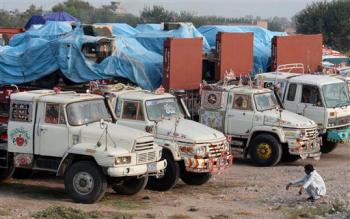
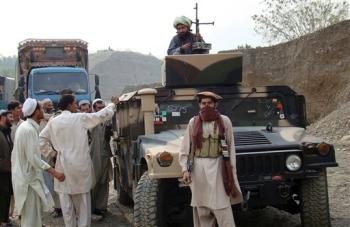
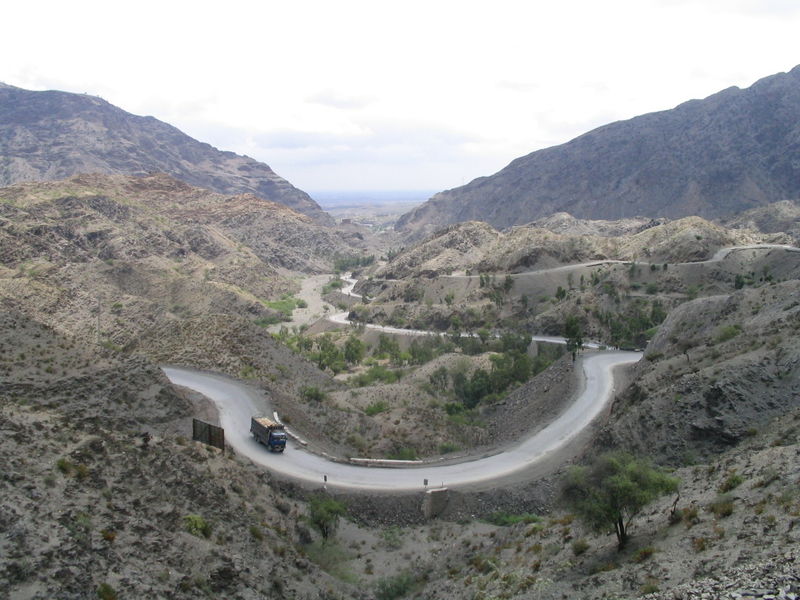
Seven months ago The Captain’s Journal published Taliban and al Qaeda Strategy in Pakistan and Afghanistan in which we outlined a major prong of the coming strategy to cut off supplies to NATO forces through Pakistan. We followed this up with a discussion of the importance of the Khyber Pass and the Torkham Crossing, the Northern border crossing through which supplies flow, and which has been the target of attacks against fuel tankers and other traffic.

We’ve also discussed the Talibanization of Karachi, Karachi being the only port through which supplies flow. Thousands of Taliban fighters have entered Karachi in a sign of the increased enemy interest in controlling this vital hub of transit. From Karachi the supplies go to the Southwestern Pakistan city of Chaman to cross into Afghanistan or to the Northwestern province of Khyber and then to the Torkham Crossing, eventually arriving in Kabul unless interdicted by the Taliban. The Taliban have worked to close both of these supply routes. But recently they have moved their targeting South of the the city of Peshawar and the Khyber Pass. In other words, they are expanding – not moving – their points of interdiction. They are now targeting the supplies as they come North from Karachi to Kohat.

The Pakistani army is locked in a fierce battle to stop fuel and arms supply routes to British and American forces in Afghanistan falling under Taliban control.

Last week Pakistani troops launched a series of raids on villages around Peshawar, capital of the North West Frontier Province, in pursuit of a Taliban commander blamed for bomb attacks that have destroyed more than 40 fuel tankers supplying Nato troops in Afghanistan.

They claim that Mohammad Tariq Alfridi, the commander, has seized terrain around the mile-long Kohat tunnel, south of Peshawar, three times since January. He has coordinated suicide bomb attacks and rocket strikes against convoys emerging from it.

The Taliban attacks stretch all the way south from the Afghan border to Karachi, where weapons, ammunition, food and oil supplies arrive at the docks before being transported by road.

Last week western diplomats in Karachi said there had been an alarming increase in Taliban activity in the city. Local politicians said they had been warned by intelligence officials that 60 Taliban families had fled to Karachi from tribal areas close to the Afghan border and had begun to impose strict Islamic law. They had recently posted notices throughout the city forbidding girls from going to school.

The army’s antiTaliban offensive in the tribal areas appears to be hitting the militants hard. Last week Maulvi Omar, a Taliban spokesman, said that his fighters would lay down their arms if the army ceased fire. His offer was ignored.

The battle for the tunnel began at the start of the year when Taliban fighters seized five trucks carrying weapons and ammunition. They held the tunnel for a week before they were driven out in fierce fighting. Since then Tariq and his men have returned several times to attack convoys. The army launched its latest onslaught after a suicide bomb attack at one of its bases near the tunnel six weeks ago. Five people were killed and 45 were injured, including 35 soldiers, when a pickup truck packed with explosives was driven into a checkpoint.

When The Sunday Times visited the approaches to the tunnel last week, several bridges along the road bore the signs of explosive damage and bullet holes. Villagers said the Taliban had not fled but had melted into the background to wait out the army assault.

Pakistan is not just strategically important for U.S. interests in Afghanistan. Pakistan is quite literally in a fight for its continued existence. The Pakistan army’s juvenile preoccupation with expansion and war with India will become deadly if not relinquished in favor of a realistic view towards self preservation from internal threats.

Intensive negotiations (and eventually, pressure) must be brought to bear to secure the supply lines into Afghanistan, and eventually to obtain permissions for U.S. operations. Currently, 90% of NATO supplies enter through Karachi, while a total of 80% go to Torkham through Khyber, with the remaining 10% going to Chaman and finally to Kandahar. Only 10% come into Afghanistan via air routes. The 10% that comes in via air supply is about to become very important, and unless Pakistan can secure the supply routes, the amount coming into Afghanistan via air supply must increase (e.g., through India over Pakistani Kashmir or other routes).

Military Transport by Rocketship

BY Herschel Smith
17 years, 9 months ago

Yes, you heard right. The title is correct.

In the future, U.S. troops could be on the ground in hotspots anywhere on the globe in only two hours. This may sound like science fiction, but it is exactly what a group of civilians and military officials met to talk about at a two-day conference.

The meeting’s purpose was to plan the development of the Small Unit Space Transport and Insertion (SUSTAIN) program. USA Today reports that the invitation to the conference called the idea a “potential revolutionary step in getting combat power to any point in the world in a timeframe unachievable today.”

The biggest challenge for the SUSTAIN program is certainly the technology. Air Force Lt. Col. Mark Brown, a spokesman for the space office said that the next step in the plan is addressing technological challenges and seeking military input.

The goal of the program is to be able to insert a team of 13 soldiers anywhere on the globe in two hours. John Pike, a military analyst told USA Today, “This isn’t even science fiction. It’s fantasy.” Pike says that the concept defies physics and the reality of what a small number of lightly armed troops could accomplish.

Burt Rutan, the rocket pioneer who won the X Prize in 2004 for building a private spacecraft capable of flying into space says that the plan is technologically possible. Rutan wrote in an email to USA Today, “This has never been done. However, it is feasible. It would be a relatively expensive way to get the troops on the ground, but it could be done.”

Some things leaves one speechless. Well, not quite. Absurd. “Relatively expensive?” Try ridiculously expensive for no purpose (13 Soldiers can accomplish nothing useful). John Pike, who is smart and whom The Captain’s Journal likes, is correct. This is nothing but fantasy, but the sad part is that dollars are being wasted on even contemplating such a thing.

The litany of potential problems are too long to be enumerated (e.g., If ingress by rocketship, by what means egress? What kind of emergency could possibly warrant the deployment of troops within two hours, but only 13 troops in number? Who is going to maintain this rocketship launch capable 24 hours per day, 365 days per year? Etc.) Want “ready reserve?” That’s what Marine Expeditionary Units are for. Rather than wasting dollars on rocketships, spend them on increasing the size and deployment of Marines in ready reserve.

Nir Rosen and the Taliban

BY Herschel Smith
17 years, 9 months ago

The Small Wars Journal Blog links to a report by embedded journalist Nir Rosen, who spent some time with hard core Taliban, and wrote How We Lost the War We Won: A journey into Taliban-controlled Afghanistan for Rolling Stone. It’s an interesting report, but for regular readers of The Captain’s Journal, it’s not obvious that we learn much new (Sorry here, no bragging, and no embedded report from this end, but we’ve been covering OEF intensely for almost a year, ridiculing inept Army intelligence when they fed General Rodriguez the lunacy that the Taliban wouldn’t launch a spring offensive, telling our readers how important the Torkham Crossing and Chaman were, warning of affects of the TTP and Baitullah Mehsud, warning that roads and construction were irrelevant if IEDs tore them up, warning that British work on dams would be to no avail if dam workers were killed by the Taliban or if the electrical grid was taken out, warning that NATO was hopelessly deadlocked in red tape with many European troops sitting at FOBs with candy-ass rules of engagement, and so on, and so forth, and on and on, again and again and again. Been there, done that.).

So, go and read Rosen’s piece if you wish, it’s linked above. But regular readers of The Captain’s Journal will see our warnings in real life, real time. You’ve read it for a year. Now you can read a summary of our work in 45 minutes. Not bragging – just saying. We’re more interested in the take on this whole affair by Dave at The Small Wars Journal. Says Dave:

Just call me old fashioned – I have serious misgivings respecting and tolerating journalists who embed with an enemy (the Taliban in this instance) responsible for what some call the strictest interpretation and implementation of Sharia law “ever seen in the Muslim World.” The crimes against humanity that were a direct result of their rule in Afghanistan and continue in their desire to regain that rule cannot be forgiven or glossed over in hopes of some temporary respite from increased violence in Afghanistan and Pakistan.

Yea, yea, okay – some people’s terrorists are other people’s freedom fighters – yada, yada – save it for the think tank- or university-circle sponsored seminars, studies and white papers. There is still black and white in today’s complex environment and our efforts in South Asia should most certainly fall within that category.

If there was ever a grouping of individuals and supporters that deserved complete annihilation (yea – I said the A word) – the Taliban and their support structure would and should be up front and center. It will take quite some time (that is why it is called The Long War) and there will most certainly be peaks and valleys along the way – but we must – and will – win this one and we will write the last chapter of the history book reserved for the victors.

Cheers, loud applause from the whole stadium – and the fans keep erupting in spontaneous dancing and celebrations and more applause and cheers. Now, just to set the mood going forward with this article, see the picture below.

The woman being killed (h/t LT Nixon Rants) probably forgot to pull her burqa completely closed and some of her face was showing. Not enough, says you? Want more? How about this.

In Meerwala, Pakistan, an 11-year-old boy walked unchaperoned with a girl. This was a violation of Islam. A tribal council was called.

The boy’s father pleaded that since he was too young to have sex, the girl was safe and no harm was done. The council disagreed. But instead of punishing the boy, it decided to punish his whole family by punishing his 18-year-old sister.

In order to shame the family, the council sentenced the teenage daughter to be gang raped. Four members of the council took turns forcing themselves upon her in a mud hut, as hundreds of villagers laughed and cheered.

“I touched their feet,” said the girl to an Associated Press reporter. “I wept. I cried. I said I taught the holy Qur’an to children in the village, therefore don’t punish me for a crime which was not committed by me. But they tore my clothes and raped me one by one.”

There you have it. The hard core Taliban and people who support them. Now. We can’t kill everyone, but every time The Captain’s Journal has weighed in negatively at the Small Wars Council (handle – Danny) on negotiating with these bastards, much consternation ensues, with Danny being labeled as someone who doesn’t understand counterinsurgency.

The Captain’s Journal (Danny) has lost much sleep over COIN. We’re very close to one particular SAW gunner who stopped counting his kills (literally – stopped counting, according to independent confirmations) and asked for prayer every time we talked. We’ve killed many, many enemy (the Wikipedia entry on Operation Alljah is low in number of enemy dead). As for the rest, “we’re paying them not to shoot at us,” said the SAW gunner to Danny.

Danny nodded approvingly that night, “Good, good,” said Danny. “Good. This is the way it’s supposed to be. Kill the irreconcilables without mercy, make peace with the rest, and sooner or later they will learn to be citizens again. Pay them until then. Good, good. This is the way it should be done.” And so Danny had very good sleep that night, and made sure that there was a concerned citizens category and that we weighed in with approval. Danny has thought quite a bit about counterinsurgency.

But the Anbaris were relatively secular compared to the Taliban, and had no love for the extreme vision of al Qaeda. It’s estimated that there are some 8000 – 20,000 Taliban fighters in the South and East, and these fighters are probably irreconcilable. Peel away a few, okay. Fine. Make your silly attempts to reconcile and negotiate, and you’ll get a few come to our side. But as for the hard core fighters (the majority), they must be killed. Their vision has as its world view a radical version of Islam that is either globalist in its import, or is amenable to that vision (and thus malleable for al Qaeda fighters).

Dave says he’s old fashioned. Fine with us. We are too. As for Nir Rosen, Danny doesn’t need the embedded report. We can figure it out on our own. We may as well have had someone embed with the Schutzstaffel while the Jews were being exterminated. Just as there is nothing romantic about putting Jews in ovens to die, there is nothing good, wholesome, romantic or righteous about Taliban ideology. Nir Rosen had better watch his six, or better yet, embed with U.S. troops.


26th MEU (10)
Abu Muqawama (12)
ACOG (2)
ACOGs (1)
Afghan National Army (36)
Afghan National Police (17)
Afghanistan (704)
Afghanistan SOFA (4)
Agriculture in COIN (3)
AGW (1)
Air Force (42)
Air Power (10)
al Qaeda (83)
Ali al-Sistani (1)
America (23)
Ammunition (305)
Animals (336)
Ansar al Sunna (15)
Anthropology (3)
Antonin Scalia (1)
AR-15s (397)
Arghandab River Valley (1)
Arlington Cemetery (2)
Army (91)
Assassinations (2)
Assault Weapon Ban (29)
Australian Army (7)
Azerbaijan (4)
Backpacking (4)
Badr Organization (8)
Baitullah Mehsud (21)
Basra (17)
BATFE (247)
Battle of Bari Alai (2)
Battle of Wanat (18)
Battle Space Weight (3)
Bin Laden (7)
Blogroll (3)
Blogs (24)
Body Armor (23)
Books (3)
Border War (18)
Brady Campaign (1)
Britain (39)
British Army (36)
Camping (5)
Canada (20)
Castle Doctrine (1)
Caucasus (6)
CENTCOM (7)
Center For a New American Security (8)
Charity (3)
China (19)
Christmas (18)
CIA (30)
Civilian National Security Force (3)
Col. Gian Gentile (9)
Combat Outposts (3)
Combat Video (2)
Concerned Citizens (6)
Constabulary Actions (3)
Coolness Factor (3)
COP Keating (4)
Corruption in COIN (4)
Council on Foreign Relations (1)
Counterinsurgency (218)
DADT (2)
David Rohde (1)
Defense Contractors (2)
Department of Defense (220)
Department of Homeland Security (26)
Disaster Preparedness (5)
Distributed Operations (5)
Dogs (15)
Donald Trump (27)
Drone Campaign (4)
EFV (3)
Egypt (12)
El Salvador (1)
Embassy Security (1)
Enemy Spotters (1)
Expeditionary Warfare (18)
F-22 (2)
F-35 (1)
Fallujah (17)
Far East (3)
Fathers and Sons (2)
Favorite (1)
Fazlullah (3)
FBI (39)
Featured (192)
Federal Firearms Laws (18)
Financing the Taliban (2)
Firearms (1,876)
Football (1)
Force Projection (35)
Force Protection (4)
Force Transformation (1)
Foreign Policy (27)
Fukushima Reactor Accident (6)
Ganjgal (1)
Garmsir (1)
general (15)
General Amos (1)
General James Mattis (1)
General McChrystal (44)
General McKiernan (6)
General Rodriguez (3)
General Suleimani (9)
Georgia (19)
GITMO (2)
Google (1)
Gulbuddin Hekmatyar (1)
Gun Control (1,730)
Guns (2,416)
Guns In National Parks (3)
Haditha Roundup (10)
Haiti (2)
HAMAS (7)
Haqqani Network (9)
Hate Mail (8)
Hekmatyar (1)
Heroism (5)
Hezbollah (12)
High Capacity Magazines (16)
High Value Targets (9)
Homecoming (1)
Homeland Security (3)
Horses (2)
Humor (72)
Hunting (65)
ICOS (1)
IEDs (7)
Immigration (123)
India (10)
Infantry (4)
Information Warfare (4)
Infrastructure (4)
Intelligence (23)
Intelligence Bulletin (6)
Iran (171)
Iraq (379)
Iraq SOFA (23)
Islamic Facism (64)
Islamists (98)
Israel (19)
Jaish al Mahdi (21)
Jalalabad (1)
Japan (3)
Jihadists (82)
John Nagl (5)
Joint Intelligence Centers (1)
JRTN (1)
Kabul (1)
Kajaki Dam (1)
Kamdesh (9)
Kandahar (12)
Karachi (7)
Kashmir (2)
Khost Province (1)
Khyber (11)
Knife Blogging (7)
Korea (4)
Korengal Valley (3)
Kunar Province (20)
Kurdistan (3)
Language in COIN (5)
Language in Statecraft (1)
Language Interpreters (2)
Lashkar-e-Taiba (2)
Law Enforcement (6)
Lawfare (14)
Leadership (6)
Lebanon (6)
Leon Panetta (2)
Let Them Fight (2)
Libya (14)
Lines of Effort (3)
Littoral Combat (8)
Logistics (50)
Long Guns (1)
Lt. Col. Allen West (2)
Marine Corps (281)
Marines in Bakwa (1)
Marines in Helmand (67)
Marjah (4)
MEDEVAC (2)
Media (68)
Medical (146)
Memorial Day (6)
Mexican Cartels (48)
Mexico (72)
Michael Yon (6)
Micromanaging the Military (7)
Middle East (1)
Military Blogging (26)
Military Contractors (5)
Military Equipment (25)
Militia (9)
Mitt Romney (3)
Monetary Policy (1)
Moqtada al Sadr (2)
Mosul (4)
Mountains (25)
MRAPs (1)
Mullah Baradar (1)
Mullah Fazlullah (1)
Mullah Omar (3)
Musa Qala (4)
Music (25)
Muslim Brotherhood (6)
Nation Building (2)
National Internet IDs (1)
National Rifle Association (97)
NATO (15)
Navy (31)
Navy Corpsman (1)
NCOs (3)
News (1)
NGOs (3)
Nicholas Schmidle (2)
Now Zad (19)
NSA (3)
NSA James L. Jones (6)
Nuclear (63)
Nuristan (8)
Obama Administration (222)
Offshore Balancing (1)
Operation Alljah (7)
Operation Khanjar (14)
Ossetia (7)
Pakistan (165)
Paktya Province (1)
Palestine (5)
Patriotism (7)
Patrolling (1)
Pech River Valley (11)
Personal (77)
Petraeus (14)
Pictures (1)
Piracy (13)
Pistol (4)
Pizzagate (21)
Police (673)
Police in COIN (3)
Policy (15)
Politics (999)
Poppy (2)
PPEs (1)
Prisons in Counterinsurgency (12)
Project Gunrunner (20)
PRTs (1)
Qatar (1)
Quadrennial Defense Review (2)
Quds Force (13)
Quetta Shura (1)
RAND (3)
Recommended Reading (14)
Refueling Tanker (1)
Religion (501)
Religion and Insurgency (19)
Reuters (1)
Rick Perry (4)
Rifles (1)
Roads (4)
Rolling Stone (1)
Ron Paul (1)
ROTC (1)
Rules of Engagement (76)
Rumsfeld (1)
Russia (37)
Sabbatical (1)
Sangin (1)
Saqlawiyah (1)
Satellite Patrols (2)
Saudi Arabia (4)
Scenes from Iraq (1)
Second Amendment (715)
Second Amendment Quick Hits (2)
Secretary Gates (9)
Sharia Law (3)
Shura Ittehad-ul-Mujahiden (1)
SIIC (2)
Sirajuddin Haqqani (1)
Small Wars (72)
Snipers (9)
Sniveling Lackeys (2)
Soft Power (4)
Somalia (8)
Sons of Afghanistan (1)
Sons of Iraq (2)
Special Forces (28)
Squad Rushes (1)
State Department (23)
Statistics (1)
Sunni Insurgency (10)
Support to Infantry Ratio (1)
Supreme Court (84)
Survival (216)
SWAT Raids (58)
Syria (38)
Tactical Drills (38)
Tactical Gear (17)
Taliban (168)
Taliban Massing of Forces (4)
Tarmiyah (1)
TBI (1)
Technology (21)
Tehrik-i-Taliban (78)
Terrain in Combat (1)
Terrorism (96)
Thanksgiving (13)
The Anbar Narrative (23)
The Art of War (5)
The Fallen (1)
The Long War (20)
The Surge (3)
The Wounded (13)
Thomas Barnett (1)
Transnational Insurgencies (5)
Tribes (5)
TSA (25)
TSA Ineptitude (14)
TTPs (4)
U.S. Border Patrol (8)
U.S. Border Security (22)
U.S. Sovereignty (29)
UAVs (2)
UBL (4)
Ukraine (10)
Uncategorized (107)
Universal Background Check (3)
Unrestricted Warfare (4)
USS Iwo Jima (2)
USS San Antonio (1)
Uzbekistan (1)
V-22 Osprey (4)
Veterans (3)
Vietnam (1)
War & Warfare (435)
War & Warfare (41)
War Movies (4)
War Reporting (21)
Wardak Province (1)
Warriors (6)
Waziristan (1)
Weapons and Tactics (80)
West Point (1)
Winter Operations (1)
Women in Combat (21)
WTF? (1)
Yemen (1)

August 2026
July 2026
June 2026
May 2026
April 2026
March 2026
February 2026
January 2026
December 2025
November 2025
October 2025
September 2025
August 2025
July 2025
June 2025
May 2025
April 2025
March 2025
February 2025
January 2025
December 2024
November 2024
October 2024
September 2024
August 2024
July 2024
June 2024
May 2024
April 2024
March 2024
February 2024
January 2024
December 2023
November 2023
October 2023
September 2023
August 2023
July 2023
June 2023
May 2023
April 2023
March 2023
February 2023
January 2023
December 2022
November 2022
October 2022
September 2022
August 2022
July 2022
June 2022
May 2022
April 2022
March 2022
February 2022
January 2022
December 2021
November 2021
October 2021
September 2021
August 2021
July 2021
June 2021
May 2021
April 2021
March 2021
February 2021
January 2021
December 2020
November 2020
October 2020
September 2020
August 2020
July 2020
June 2020
May 2020
April 2020
March 2020
February 2020
January 2020
December 2019
November 2019
October 2019
September 2019
August 2019
July 2019
June 2019
May 2019
April 2019
March 2019
February 2019
January 2019
December 2018
November 2018
October 2018
September 2018
August 2018
July 2018
June 2018
May 2018
April 2018
March 2018
February 2018
January 2018
December 2017
November 2017
October 2017
September 2017
August 2017
July 2017
June 2017
May 2017
April 2017
March 2017
February 2017
January 2017
December 2016
November 2016
October 2016
September 2016
August 2016
July 2016
June 2016
May 2016
April 2016
March 2016
February 2016
January 2016
December 2015
November 2015
October 2015
September 2015
August 2015
July 2015
June 2015
May 2015
April 2015
March 2015
February 2015
January 2015
December 2014
November 2014
October 2014
September 2014
August 2014
July 2014
June 2014
May 2014
April 2014
March 2014
February 2014
January 2014
December 2013
November 2013
October 2013
September 2013
August 2013
July 2013
June 2013
May 2013
April 2013
March 2013
February 2013
January 2013
December 2012
November 2012
October 2012
September 2012
August 2012
July 2012
June 2012
May 2012
April 2012
March 2012
February 2012
January 2012
December 2011
November 2011
October 2011
September 2011
August 2011
July 2011
June 2011
May 2011
April 2011
March 2011
February 2011
January 2011
December 2010
November 2010
October 2010
September 2010
August 2010
July 2010
June 2010
May 2010
April 2010
March 2010
February 2010
January 2010
December 2009
November 2009
October 2009
September 2009
August 2009
July 2009
June 2009
May 2009
April 2009
March 2009
February 2009
January 2009
December 2008
November 2008
October 2008
September 2008
August 2008
July 2008
June 2008
May 2008
April 2008
March 2008
February 2008
January 2008
December 2007
November 2007
October 2007
September 2007
August 2007
July 2007
June 2007
May 2007
April 2007
March 2007
February 2007
January 2007
December 2006
November 2006
October 2006
September 2006
August 2006
July 2006
June 2006
May 2006

about · archives · contact · register

Copyright © 2006-2026 Captain's Journal. All rights reserved.