Articles by Herschel Smith


The “Captain” is Herschel Smith, who hails from Charlotte, NC. Smith offers news and commentary on warfare, policy and counterterrorism.


Missing the Point of the New Strategy in Iraq

18 years, 6 months ago

Think Progress, a liberal web site, has a short commentary on the “surge,” the success in Anbar, and how the facts on the ground allegedly bebunk the relationship between the two.  Says the commentary:

Today, President Bush held the Anbar province up as an example of his escalation’s success and justification for why the troop buildup should not be cut short:

In Anbar you’re seeing firsthand the dramatic differences that can come when the Iraqis are more secure. … You see Sunnis who once fought side by side with al-Qaida against coalition troops now fighting side by side with coalition troops against al-Qaida.

But as the AP points out, “In truth, the progress in Anbar was initiated by the Iraqis themselves, a point Gates himself made, saying the Sunni tribes decided to fight and retake control from al-Qaida many months before Bush decided to send an extra 4,000 Marines to Anbar as part of his troop buildup.

The Pacification of Fallujah: Is it Fake?

18 years, 6 months ago

John Robb has a post entitled Potemkin Pacification, in which he writes:

Indications of calm and tranquility in the “pacified cities” of Iraq is at the expense of viability. Essentially, to pacify urban areas we have destroyed the basic levels of connectivity that make them work. For example, Fallujah residents are disconnected…

  • from the country. A wall around the city with biometric entry points.
  • from each other. The city is divided into 10 walled districts with few entry/exit points. Each is guarded by a combination of neighborhood militias, police and US soldiers.
  • from basic mobility. The city has been under a vehicle ban since May 2007.

The natural result is zero economic activity. Its industrial area is closed since it is a security risk. The city suffers from 80 percent unemployment with the bulk of the remainder of those employed are either working in militias or with the police. There are chronic shortages of basic necessities like food and fuel. Reconstruction is nearly at a stand-still (in part due to a complete lack of support from the central government).

By invoking the word Potemkin, Robb is suggesting that whether intentionally or accidentally, the pacification of Fallujah is fake.

Rehearsing what I said about this post from Robb at a discussion thread at the Small Wars Council:

I like to keep up with John Robb. Without studying analyses that run counter to your own one can become rather closed-minded. But what were the conditions like in Fallujah prior to this? I had interviewed Lt. Col. William Mullen concerning the conditions in Fallujah in this article: Operation Alljah and the Marines of 2nd Battalion, 6th Regiment.

And so I knew full well what we have had to do to pacify Fallujah. The tribal influence is much weaker in Fallujah, so more traditional counterinsurgency TTPs have been required, such as gated communities.

But is Robb seriously claiming that this has hindered true progress or otherwise caused conditions in Fallujah that are worse than they were prior to these actions? Is he seriously claiming that our efforts have caused unemployment or the lack of communication with the balance of Iraq?

He misses the point. The unemployment was already there, because it was the last major city in Anbar to undergo pacification. I claim exactly the opposite of Robb. Now … and only now … can Fallujah BEGIN its communication with the rest of Iraq.

More on Biometrics here from Noah Shachtman: Iraq diary: Anbar’s Boys in Blue.

Of course, the lifting of the vehicle ban will bring uninvited danger compared to the past few months, and there will certainly be bumps in the road.  Kinetic events can always happen — after all, it is still a counterinsurgency.  But Robb’s post makes it sound as if the typical Fallujan could object, “We had it all.  Fallujah was the tourism and vacation hot spot of Iraq, we were all employed and wealthy, had power and water 100% of the time, and then came the daffy Americans with their counterinsurgency tactics.  Sure wish for the good ole’ days.”

I have come to expect better and more challenging commentary and analysis from John Robb.  This is simply poor, and the pacification of Fallujah is real.  The question is, “Can it be maintained at the current level or some level greater than prior to these tactics being implemented?”

My bet is on the Marines and Fallujans.

Cessation in Support for Maliki

18 years, 6 months ago

Daniel M. Zucker has a compelling commentary for the cessation of U.S. support for Prime Minister Nouri Kamal al-Maliki at Global Politician.

Iranian exile dissident Ghazal Omid’s recent Op-Ed of August 16, 2007, “Close the Iraq Chapter Before Opening Iran

Three Day Blitz Planned for Iran?

18 years, 6 months ago

The London Times makes claims concerning Pentagon plans for a coming air war against Iran.

THE Pentagon has drawn up plans for massive airstrikes against 1,200 targets in Iran, designed to annihilate the Iranians’ military capability in three days, according to a national security expert.

Alexis Debat, director of terrorism and national security at the Nixon Center, said last week that US military planners were not preparing for “pinprick strikes

A-10 Update and Pictures

18 years, 6 months ago

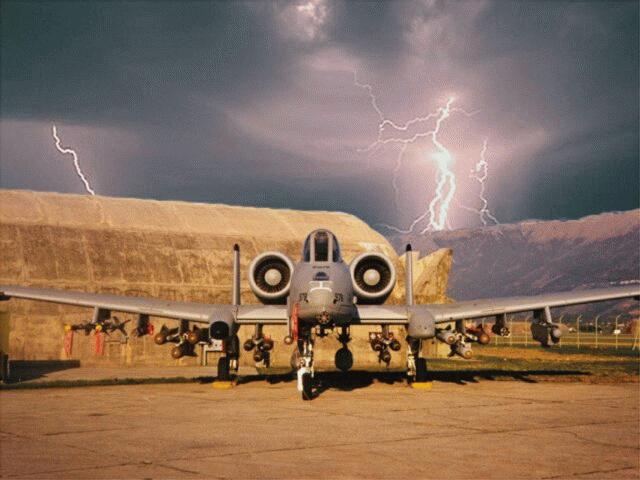
a-10-lightning.jpg

Picture h/t Fortress Australia Outpost.

In A-10s Aid in Counterinsurgency, I discussed the new role for A-10s being considered by the USAF: Counterinsurgency.  I followed this up with Faster Kill Chain, in which I briefly discussed the changes occurring to take the Hog from the analog to the digital age.

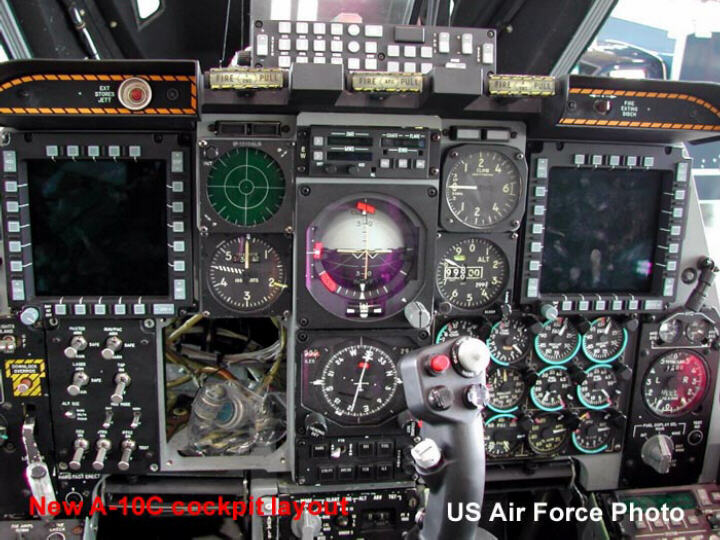
Defense Industry Daily has an article on the higher-tech Hog that is a good primer on the changes occurring to make it suitable for its new intended purpose.  The new cockpit layout is shown below.

elec_a-10c_cockpit_lg.jpg

One significant new feature is the ability to target, task and talk (my words, not Defense Industry Daily).

Another very significant Increment 3.2 upgrade involves Raytheon’s SADL data link. SADL was added after the A-10 Precision Engagement program requirements were finalized, which is usually a predictor of trouble. Instead, it went from requirements to delivery in just 17 months, thanks to a general sense of urgency and extraordinary contractor efforts. Those efforts included hardware purchases by Lockheed Martin before they had a government contract to do so, putting their funds at risk but ultimately shortening project completion by 6 months.

SADL automatically sends and receive data from the Army Enhanced Position Locating and Reporting System (ePLRS) that is part of FBCB2, a.k.a. “Blue Force Tracker.” This means that friendly troops on the ground receive the plane’s position and altitude, while the 5 closest “friendlies” will show up on the aircraft’s heads-up display and/or multi-function cockpit displays at the beginning of an attack. SADL also offers Link 16 integration with other fighters and air defense systems, allowing the A/OA-10C to automatically known receive position data for enemy aircraft, air defenses, and other targets – including targets beyond its range of sight. Link 16 and SADL share information via gateways, which are land-based or airborne portals that permit the transfer of information between different formats. The USAF adds that:

“A command and control platform—such as the 12th Air Force Air Operations Center here—can send digital communication via SADL to the A-10C for a variety of purposes. Tasking messages, targeting information, threat warnings, and friendly locations can all be sent and received by the A-10C. Additionally, the A-10C is the only platform with the ability to task other fighter platforms to attack targets.”

Given past A-10-related friendly fire incidents, the appeal of a system like SADL is obvious. Major Drew English, the USAF program manager for A-10C Precision Engagement, told Military Aerospace Technology that:

“I would say the biggest [change] we have coming impact wise is the data link. It will shape our tactics and it bring us into a new era, probably as much as night vision goggles did when we got those in the mid-’90s”

We’ll see if it can live up to its billing.  It own history sets a very high standard.

MOS 0311: A Young Man’s Work

18 years, 6 months ago

My son’s MOS is 0311: Marine Infantry.  It is my policy not to blog on things I learn from my son.  However, it is nice to see these things in print elsewhere, even if rather cleaned up for publication.  W. Thomas Smith, Jr., has written a great article entitled Young Man’s Work: A Snapshot of Marine Life.

Tired, dirty, footsore, slightly dehydrated, hungry, and with an aching back and shoulders, I limped toward the battalion headquarters building from where a clean, fit, and slightly younger Lt. Col. Jason Bohm — task force commander of 1st Battalion, 4th Marines — emerged. I had just returned to Forward Operating Base Al Qaim after several days operating out of one of Bohm’s battle positions up on Iraq’s Syrian border. Bohm was getting ready to head back out to be with his men.

“Colonel, this is young man’s work,

MOS 0311: A Young Man’s Work

18 years, 6 months ago

My son’s MOS is 0311: Marine Infantry.  It is my policy not to blog on things I learn from my son.  However, it is nice to see these things in print elsewhere, even if rather cleaned up for publication.  W. Thomas Smith, Jr., has written a great article entitled Young Man’s Work: A Snapshot of Marine Life.

Tired, dirty, footsore, slightly dehydrated, hungry, and with an aching back and shoulders, I limped toward the battalion headquarters building from where a clean, fit, and slightly younger Lt. Col. Jason Bohm — task force commander of 1st Battalion, 4th Marines — emerged. I had just returned to Forward Operating Base Al Qaim after several days operating out of one of Bohm’s battle positions up on Iraq’s Syrian border. Bohm was getting ready to head back out to be with his men.

“Colonel, this is young man’s work,

The Swing of the Pendulum

18 years, 6 months ago

In 1942, Russia was fully engaged in a battle for its very survival along the Eastern front.  Stalin was demanding that the Allies open a second front in the West.  Britain had tried day bombing, but it had proven too difficult to protect its pilots in the daylight, and many pilots and aircraft were lost.  Neither Britain nor the United States was anywhere near ready to conduct a land invasion of Europe, but both nations might offer such aid as an air attack might bring.

At the end of 1942, the British Chiefs of Staff called for “the progessive destruction and dislocation of the enemy’s war industrial and economic system, and the undermining of his morale to a point where his capacity for armed resistance is fatally weakened.”  No fleet of bombers could yet accurately deliver enough high explosives to raze a city.  But if the bombloads were incendiary, then massed aircraft might combine their destructiveness.

On July 24, 1943, the bombing of Hamburg began.  As noted by Richard Rhodes in The Making of the Atomic Bomb, a flight lieutenant remarks of the scene (pg 473):

The burning of Hamburg that night was remarkable in that I saw not many fires but one.  Set in the darkness was a turbulent dome of bright red fire, lighted and ignited like the glowing heart of a vast brazier.  I saw no flames, no outlines of buildings, only brighter fires which flared like yellow torches against a background of bright red ash.  Above the city was a misty red haze.  I looked down, fascinated but aghast, satisfied yet horrified.  I had never seen a fire like that before and was never to see its like again.

Roads melted, and some people were seen stuck in the melted asphalt, having put their hands out to try to get out, only to get their hands stuck as well.  Many were seen on fire, eventually melting in their own fat.  Eight square miles of Hamburg were completely burned out that night, killing 45,000 Germans.

Here Richard Rhodes is setting up the discussion at the end of the book in which the reader engages in the ethical choice to drop the atomic bomb on Japan, or commit 200,000 men to a land invasion of Japan, possibly losing many or even a majority of them.  This book is a technical, sobering and difficult read, but highly recommended.  It is meant only for the serious thinker.

The pendulum has swung to its apex in the opposite direction.  A recent Washington Times commentary gives us food for thought concerning application of rules of engagement in combat action in Afghanistan.

Now that Marcus Luttrell’s book “Lone Survivor: The Eyewitness Account of Operation Redwing and the Lost Heroes of Seal Team 10” is a national bestseller, maybe Americans are ready to start discussing the core issue his story brings to light: the inverted morality, even insanity, of the American military’s rules of engagement (ROE).

On a stark mountaintop in Afghanistan in 2005, Leading Petty Officer Luttrell and three Navy SEAL teammates found themselves having just such a discussion. Dropped behind enemy lines to kill or capture a Taliban kingpin who commanded between 150-200 fighters, the SEAL team was unexpectedly discovered in the early stages of a mission whose success, of course, depended on secrecy. Three unarmed Afghan goatherds, one a teenager, had stumbled across the Americans’ position.

This presented the soldiers with an urgent dilemma: What should they do? If they let the Afghans go, they would probably alert the Taliban to the their whereabouts. This would mean a battle in which the Americans were outnumbered by at least 35 to 1. “Little Big Horn in turbans,” as Marcus Luttrell would describe it. If the Americans didn’t let the goatherds go — if they killed them, there being no way to hold them — the Americans would avoid detection and, most likely, leave the area safely. On a treeless mountainscape far from home, four of our bravest patriots came to the ghastly conclusion that the only way to save themselves was forbidden by the rules of engagement. Such an action would set off a media firestorm, and lead to murder charges for all.

It is agonizing to read their tense debate as Mr. Luttrell recounts it, the “lone survivor” of the disastrous mission. Each of the SEALs was aware of “the strictly correct military decision” — namely, that it would be suicide to let the goatherds live. But they were also aware that their own country, for which they were fighting, would ultimately turn on them if they made that decision. It was as if committing suicide had become the only politically correct option. For fighting men ordered behind enemy lines, such rules are not only insane. They’re immoral.

The SEALs sent the goatherds on their way. One hour later, a sizeable Taliban force attacked, beginning a horrendous battle that resulted not only in the deaths of Mr. Luttrell’s three SEAL teammates, but also the deaths of 16 would-be rescuers — eight additional SEALS and eight Army special operations soldiers whose helicopter was shot down by a Taliban rocket-propelled grenade.

“Look at me right now in my story,” Mr. Luttrell writes. “Helpless, tortured, shot, blown up, my best buddies all dead, and all because we were afraid of the liberals back home, afraid to do what was necessary to save our own lives. Afraid of American civilian lawyers. I have only one piece of advice for what it’s worth: If you don’t want to get into a war where things go wrong, where the wrong people sometimes get killed, where innocent people sometimes have to die, then stay the hell out of it in the first place.”

It might have been that firing on the goatherds would have divulged their position to the enemy.  But assuming the accuracy of the scenario given to us above, i.e., it is possible for Luttrell and his team to have killed the goatherds and avoided the combat caused by divulging their position, then a different choice should have been made in this instance.

Another complicating factor is that the Luttrells’s team could only surmise that the goatherds would give away their position.  They could not know with absolute certainty.  In the end, they were right in their suspicion, but either way, the moral of the story is that in such situations certainty is not possible and thus should not be required.

No one wants to see civilians burning in streets of melted asphalt.  Similarly, no one wants to see teams of U.S. forces hamstrung by rules that are made out to be rigid and inflexible when taught to them, but which cannot possibly be applied that way in a broken and complex world.  Latitude and professional judgment should be the order of the day.  A pendulum that isn’t swinging is the best approach.

Postscript: This article has elicited a visceral reaction.  Just to cover a few basics, (1) yes, I know what the LOAC is, (2) no, I am not advocating changing it, or even the written ROE, necessarily, (3) my position is somewhat more nuanced than that, with greater emphasis on judgment during battle, and more discrete judicial and prosecutorial temperament, and finally (4) no, allowing the killing of U.S. troops didn’t “win hearts and minds” in Afghanistan.


In Defense of the Marines

18 years, 6 months ago

The world over, the word Marine defines something more than a soldier.  It arouses the image of a warrior on the boundlessness of the oceans, coming from the mystique of the sea onto the land – an amphibian, a soldier of the sea.  The aura is of one who is different and of whom more is expected … This is The Corps, the strongest brotherhood in the world (The Marines).

Michael Yon is a clearheaded reporter and diligent – even relentless – embedded blogger.  Every article he writes is worth reading, and then reading again.  But permit us a spirited response to one of his statements in The Ghosts of Anbar, Part II of IV (actually, Michael is quoting others at this point).

Arrowhead Ripper was merely the latest experience that underlines the Army’s rapidly-growing expertise. Yet the Marines have adapted faster and seem poised to win the war in their battle space. In fact, it’s been Army officers who have told me repeatedly over the past several years that nobody is successfully morphing to meet this war faster than the Marines. Of course, Army officers who compliment Marines always say, “But that didn’t come from me.

Basra and Anbar Reverse Roles

18 years, 6 months ago

In Operation Alljah and the Marines of 2nd Battalion, 6th Regiment, we interviewed Lt. Col. William F. Mullen who gave us a realistic but positive report on the accomplishments of the Marines in Fallujah.  As expected, we received e-mail from detractors (is Fallujah really this much better off?).  There are also reports that take the same facts and turn them into a completely different interpretation than the one we published.

We have also published extensively on the calamity in Basra, the British having essentially lost the military struggle for Basra and surrounding areas.  True to form, this assessment has also been questioned by detractors.  But even the British are finally managing to turn their gaze towards just how bad the situation is in Basra.

Like Donald Rumsfeld, the man British commentators love to hate, we never sent enough troops to Iraq. At first we were pretty condescending to the Americans, insisting that our light touch, learned in Northern Ireland, was far more effective than their alleged heavy-handedness. We were wrong. Basra is not Londonderry. Our ever-lower profile was seen by local militias — and the public — as weakness. As a result the militia grewstronger and stronger, and now Basra is a town of warring gangs. We never committed enough — and we reduced our numbers much too soon. We now have only 5,000 men and women in Basra. That small force must protect itself, must continue training the 10th Iraqi Division.

The U.S. has also begun to divulge the sensitivity of the situation.

“This is less an insurgency issue than it is criminal, a borderline Mafia kind of situation. You’ve got competing criminal interests looking for territory down there,” said Geoff Morrell, the Pentagon’s press secretary.

“So that has certainly complicated matters for the Brits down there, and it certainly remains a concern for us,” he told reporters.

Britain has 5,500 troops in Basra but almost all have been pulled back to the airport where they are training Iraqi forces.

This admission may be gratuitous. Beyond criminal activity, three strong, competing Shi’a factions are at war with one another and openly demanding protection money from the population: Jaish al Mahdi, the Fadhila Party, and SIIC (Badr).

So what is the relationship between Basra and Anbar, and is there any acendotal evidence to back up these analyses?  The best on-the-scene evidence comes from Omar Fadhil of Iraq the Model, who assesses the reversal of roles between the Shi’a south and the Sunni West in Crossing Anbar.

We’ve been getting some reports about the improvement in security in Anbar in the last few months but little was said about the highway that runs across the province.

The several hundred kilometer western section of the international highway is technically Iraq’s second “port” in a way as it connects Iraq with Syria and Jordan and was for years the only window to the world when all airports and the southern ports in Basra were closed to traffic in the 1990s.

For most of the time between 2004 and 2007 taking this road was considered suicidal behavior as the chance someone would be robbed or killed was too high.

But with the tribal awakening in Anbar that cleared large parts of the province from al-Qaeda the highway is expected to be safer, but how much safer?

My family returned yesterday from a vacation in Syria and they have used this road twice in six weeks. I had tried hard to convince them not to do that and take a flight instead but now after hearing their story I’m convinced that my fear was not justified; the road is safe…

This is good not only for Iraq’s economy and traveling but also for the American troops who can use this road as an alternative supply route in case the British troops withdraw and leave the strategic southern highway between Kuwait and Baghdad unguarded.

Back to the story; there are two travel plans for passenger SUV’s and buses from Damascus to Baghdad; one includes leaving Damascus between 10 pm and midnight, reaching the Syrian border control before dawn, entering the Iraqi border control at 8 am and arriving in Baghdad around sunset. A total of approximately 20 hours with 6 to 7 hours lost in waiting and passport control.

The second plan includes leaving Damascus at noon and here convoys carrying the passengers continue to move all the way until a short distance northwest of Ramadi. At this point the time would be between midnight and 2 am and since that’s within curfew hours in Baghdad, the drivers park their vehicles and everyone gets to sleep 3 or 4 hours and wait for the sun to rise and then the journey would continue.

Now the first plan sounds predictable, safe and well planned given the distance and necessary stops. But look at the second one carefully and try to picture the scene; dozens of passenger SUV’s (GMC trucks mostly) and buses parking in he middle of nowhere in a zone that was until recently the heart of al-Qaeda’s Islamic state! Obviously the drivers and families feel safe enough that they know they won’t be robbed and slaughtered by cold-blooded terrorists. Even more interesting, this parking and resting zone was not designated nor protected by the Iraqi or American forces but simply an arrangement the drivers managed on their own perhaps with cooperation from the local tribes.

I still laugh every time I think of this incredible change and I honestly wouldn’t have believed it if the story teller wasn’t my father.

This sign of positive progress brings to my mind a sad irony. Back in 2004 when taking the Anbar highway was out of question for me, the Sunni dentist, I made the trip back and fourth between Baghdad and Basra countless times without any fear.

Now, I’m ready to try the trip through the west, but going south through the militia infested land is something I’d never dare do at this stage.

The reports on the pacification of Anbar are indeed correct, and sadly, the British failure in Basra has made Operation Iraqi Freedom much more complicated.

Prior:


26th MEU (10)
Abu Muqawama (12)
ACOG (2)
ACOGs (1)
Afghan National Army (36)
Afghan National Police (17)
Afghanistan (704)
Afghanistan SOFA (4)
Agriculture in COIN (3)
AGW (1)
Air Force (41)
Air Power (10)
al Qaeda (83)
Ali al-Sistani (1)
America (22)
Ammunition (304)
Animals (323)
Ansar al Sunna (15)
Anthropology (3)
Antonin Scalia (1)
AR-15s (393)
Arghandab River Valley (1)
Arlington Cemetery (2)
Army (91)
Assassinations (2)
Assault Weapon Ban (29)
Australian Army (7)
Azerbaijan (4)
Backpacking (4)
Badr Organization (8)
Baitullah Mehsud (21)
Basra (17)
BATFE (246)
Battle of Bari Alai (2)
Battle of Wanat (18)
Battle Space Weight (3)
Bin Laden (7)
Blogroll (3)
Blogs (24)
Body Armor (23)
Books (3)
Border War (18)
Brady Campaign (1)
Britain (39)
British Army (36)
Camping (5)
Canada (19)
Castle Doctrine (1)
Caucasus (6)
CENTCOM (7)
Center For a New American Security (8)
Charity (3)
China (19)
Christmas (18)
CIA (30)
Civilian National Security Force (3)
Col. Gian Gentile (9)
Combat Outposts (3)
Combat Video (2)
Concerned Citizens (6)
Constabulary Actions (3)
Coolness Factor (3)
COP Keating (4)
Corruption in COIN (4)
Council on Foreign Relations (1)
Counterinsurgency (218)
DADT (2)
David Rohde (1)
Defense Contractors (2)
Department of Defense (220)
Department of Homeland Security (26)
Disaster Preparedness (5)
Distributed Operations (5)
Dogs (15)
Donald Trump (27)
Drone Campaign (4)
EFV (3)
Egypt (12)
El Salvador (1)
Embassy Security (1)
Enemy Spotters (1)
Expeditionary Warfare (18)
F-22 (2)
F-35 (1)
Fallujah (17)
Far East (3)
Fathers and Sons (2)
Favorite (1)
Fazlullah (3)
FBI (39)
Featured (192)
Federal Firearms Laws (18)
Financing the Taliban (2)
Firearms (1,867)
Football (1)
Force Projection (35)
Force Protection (4)
Force Transformation (1)
Foreign Policy (27)
Fukushima Reactor Accident (6)
Ganjgal (1)
Garmsir (1)
general (15)
General Amos (1)
General James Mattis (1)
General McChrystal (44)
General McKiernan (6)
General Rodriguez (3)
General Suleimani (9)
Georgia (19)
GITMO (2)
Google (1)
Gulbuddin Hekmatyar (1)
Gun Control (1,717)
Guns (2,406)
Guns In National Parks (3)
Haditha Roundup (10)
Haiti (2)
HAMAS (7)
Haqqani Network (9)
Hate Mail (8)
Hekmatyar (1)
Heroism (5)
Hezbollah (12)
High Capacity Magazines (16)
High Value Targets (9)
Homecoming (1)
Homeland Security (3)
Horses (2)
Humor (72)
Hunting (61)
ICOS (1)
IEDs (7)
Immigration (123)
India (10)
Infantry (4)
Information Warfare (4)
Infrastructure (4)
Intelligence (23)
Intelligence Bulletin (6)
Iran (171)
Iraq (379)
Iraq SOFA (23)
Islamic Facism (64)
Islamists (98)
Israel (19)
Jaish al Mahdi (21)
Jalalabad (1)
Japan (3)
Jihadists (82)
John Nagl (5)
Joint Intelligence Centers (1)
JRTN (1)
Kabul (1)
Kajaki Dam (1)
Kamdesh (9)
Kandahar (12)
Karachi (7)
Kashmir (2)
Khost Province (1)
Khyber (11)
Knife Blogging (7)
Korea (4)
Korengal Valley (3)
Kunar Province (20)
Kurdistan (3)
Language in COIN (5)
Language in Statecraft (1)
Language Interpreters (2)
Lashkar-e-Taiba (2)
Law Enforcement (6)
Lawfare (14)
Leadership (6)
Lebanon (6)
Leon Panetta (2)
Let Them Fight (2)
Libya (14)
Lines of Effort (3)
Littoral Combat (8)
Logistics (50)
Long Guns (1)
Lt. Col. Allen West (2)
Marine Corps (281)
Marines in Bakwa (1)
Marines in Helmand (67)
Marjah (4)
MEDEVAC (2)
Media (68)
Medical (146)
Memorial Day (6)
Mexican Cartels (47)
Mexico (71)
Michael Yon (6)
Micromanaging the Military (7)
Middle East (1)
Military Blogging (26)
Military Contractors (5)
Military Equipment (25)
Militia (9)
Mitt Romney (3)
Monetary Policy (1)
Moqtada al Sadr (2)
Mosul (4)
Mountains (25)
MRAPs (1)
Mullah Baradar (1)
Mullah Fazlullah (1)
Mullah Omar (3)
Musa Qala (4)
Music (25)
Muslim Brotherhood (6)
Nation Building (2)
National Internet IDs (1)
National Rifle Association (97)
NATO (15)
Navy (31)
Navy Corpsman (1)
NCOs (3)
News (1)
NGOs (3)
Nicholas Schmidle (2)
Now Zad (19)
NSA (3)
NSA James L. Jones (6)
Nuclear (63)
Nuristan (8)
Obama Administration (222)
Offshore Balancing (1)
Operation Alljah (7)
Operation Khanjar (14)
Ossetia (7)
Pakistan (165)
Paktya Province (1)
Palestine (5)
Patriotism (7)
Patrolling (1)
Pech River Valley (11)
Personal (76)
Petraeus (14)
Pictures (1)
Piracy (13)
Pistol (4)
Pizzagate (21)
Police (672)
Police in COIN (3)
Policy (15)
Politics (998)
Poppy (2)
PPEs (1)
Prisons in Counterinsurgency (12)
Project Gunrunner (20)
PRTs (1)
Qatar (1)
Quadrennial Defense Review (2)
Quds Force (13)
Quetta Shura (1)
RAND (3)
Recommended Reading (14)
Refueling Tanker (1)
Religion (499)
Religion and Insurgency (19)
Reuters (1)
Rick Perry (4)
Rifles (1)
Roads (4)
Rolling Stone (1)
Ron Paul (1)
ROTC (1)
Rules of Engagement (75)
Rumsfeld (1)
Russia (37)
Sabbatical (1)
Sangin (1)
Saqlawiyah (1)
Satellite Patrols (2)
Saudi Arabia (4)
Scenes from Iraq (1)
Second Amendment (708)
Second Amendment Quick Hits (2)
Secretary Gates (9)
Sharia Law (3)
Shura Ittehad-ul-Mujahiden (1)
SIIC (2)
Sirajuddin Haqqani (1)
Small Wars (72)
Snipers (9)
Sniveling Lackeys (2)
Soft Power (4)
Somalia (8)
Sons of Afghanistan (1)
Sons of Iraq (2)
Special Forces (28)
Squad Rushes (1)
State Department (23)
Statistics (1)
Sunni Insurgency (10)
Support to Infantry Ratio (1)
Supreme Court (79)
Survival (214)
SWAT Raids (58)
Syria (38)
Tactical Drills (38)
Tactical Gear (17)
Taliban (168)
Taliban Massing of Forces (4)
Tarmiyah (1)
TBI (1)
Technology (21)
Tehrik-i-Taliban (78)
Terrain in Combat (1)
Terrorism (96)
Thanksgiving (13)
The Anbar Narrative (23)
The Art of War (5)
The Fallen (1)
The Long War (20)
The Surge (3)
The Wounded (13)
Thomas Barnett (1)
Transnational Insurgencies (5)
Tribes (5)
TSA (25)
TSA Ineptitude (14)
TTPs (4)
U.S. Border Patrol (8)
U.S. Border Security (22)
U.S. Sovereignty (29)
UAVs (2)
UBL (4)
Ukraine (10)
Uncategorized (105)
Universal Background Check (3)
Unrestricted Warfare (4)
USS Iwo Jima (2)
USS San Antonio (1)
Uzbekistan (1)
V-22 Osprey (4)
Veterans (3)
Vietnam (1)
War & Warfare (432)
War & Warfare (41)
War Movies (4)
War Reporting (21)
Wardak Province (1)
Warriors (6)
Waziristan (1)
Weapons and Tactics (80)
West Point (1)
Winter Operations (1)
Women in Combat (21)
WTF? (1)
Yemen (1)

February 2026
January 2026
December 2025
November 2025
October 2025
September 2025
August 2025
July 2025
June 2025
May 2025
April 2025
March 2025
February 2025
January 2025
December 2024
November 2024
October 2024
September 2024
August 2024
July 2024
June 2024
May 2024
April 2024
March 2024
February 2024
January 2024
December 2023
November 2023
October 2023
September 2023
August 2023
July 2023
June 2023
May 2023
April 2023
March 2023
February 2023
January 2023
December 2022
November 2022
October 2022
September 2022
August 2022
July 2022
June 2022
May 2022
April 2022
March 2022
February 2022
January 2022
December 2021
November 2021
October 2021
September 2021
August 2021
July 2021
June 2021
May 2021
April 2021
March 2021
February 2021
January 2021
December 2020
November 2020
October 2020
September 2020
August 2020
July 2020
June 2020
May 2020
April 2020
March 2020
February 2020
January 2020
December 2019
November 2019
October 2019
September 2019
August 2019
July 2019
June 2019
May 2019
April 2019
March 2019
February 2019
January 2019
December 2018
November 2018
October 2018
September 2018
August 2018
July 2018
June 2018
May 2018
April 2018
March 2018
February 2018
January 2018
December 2017
November 2017
October 2017
September 2017
August 2017
July 2017
June 2017
May 2017
April 2017
March 2017
February 2017
January 2017
December 2016
November 2016
October 2016
September 2016
August 2016
July 2016
June 2016
May 2016
April 2016
March 2016
February 2016
January 2016
December 2015
November 2015
October 2015
September 2015
August 2015
July 2015
June 2015
May 2015
April 2015
March 2015
February 2015
January 2015
December 2014
November 2014
October 2014
September 2014
August 2014
July 2014
June 2014
May 2014
April 2014
March 2014
February 2014
January 2014
December 2013
November 2013
October 2013
September 2013
August 2013
July 2013
June 2013
May 2013
April 2013
March 2013
February 2013
January 2013
December 2012
November 2012
October 2012
September 2012
August 2012
July 2012
June 2012
May 2012
April 2012
March 2012
February 2012
January 2012
December 2011
November 2011
October 2011
September 2011
August 2011
July 2011
June 2011
May 2011
April 2011
March 2011
February 2011
January 2011
December 2010
November 2010
October 2010
September 2010
August 2010
July 2010
June 2010
May 2010
April 2010
March 2010
February 2010
January 2010
December 2009
November 2009
October 2009
September 2009
August 2009
July 2009
June 2009
May 2009
April 2009
March 2009
February 2009
January 2009
December 2008
November 2008
October 2008
September 2008
August 2008
July 2008
June 2008
May 2008
April 2008
March 2008
February 2008
January 2008
December 2007
November 2007
October 2007
September 2007
August 2007
July 2007
June 2007
May 2007
April 2007
March 2007
February 2007
January 2007
December 2006
November 2006
October 2006
September 2006
August 2006
July 2006
June 2006
May 2006

about · archives · contact · register

Copyright © 2006-2026 Captain's Journal. All rights reserved.