Articles by Herschel Smith


The “Captain” is Herschel Smith, who hails from Charlotte, NC. Smith offers news and commentary on warfare, policy and counterterrorism.


Sons of the Soil or Deal with the Devil?

17 years, 7 months ago

The important and always interesting MEMRI has an article on current Pakistani military operations in the North West Frontier Province.

On June 28, 2008, the Pakistani government ordered a military operation against Islamist fighters in the tribal district of Khyber Agency, which borders on the North West Frontier Province (NWFP). The next day, Pakistani Prime Minister Yousuf Raza Gilani said at a hurriedly-called press conference in Lahore that this military operation was aimed at the Taliban and was launched as a last resort. He explained that his government’s policy vis-à-vis the Islamist militants was based on three components: launching a dialogue with the Taliban; offering a development package to the regions in which it is active; and ordering military action as a last resort.

Prime Minister Gilani criticized the Taliban’s actions in the areas under their control, such as burning down girls’ schools, beheading alleged criminals, closing down barbershops that do shaving of beards, disregarding the peace agreements with the NWFP government, and undermining the government’s authority in the federally administered tribal areas (FATAs) and in the NWFP.

It should be noted that the Islamist groups targeted by the military operation in Khyber Agency – namely Lashkar-e-Islam and its rival, Ansarul Islam – are not formally part of Tehreek-e-Taliban Pakistan (the Pakistani Taliban Movement). However, their objectives and actions are identical to those of the Taliban. These groups also constitute a good example of how small groups of criminals develop muscle over the years and acquire a set of ideological objectives, depending on the social context in which they evolve.

But this was not the main reason that prompted the Pakistani government to launch a military operation in the tribal district of Khyber. This district, which borders Afghanistan on one side and the NWFP on the other, is important not only because the main supply route of the U.S. forces in Afghanistan passes through it, but also because of its proximity to Peshawar, the NWFP capital. In fact, the operation focused on the town of Bara, just five km from Peshawar, where Lashkar-e-Islam headquarters are located. The immediate reason for the military operation is the Taliban’s gradual encroachment on this city.

Military operations are not targeting Baitullah Mehsud’s organization.  They are targeting some very specific non-aligned groups that immediately threaten Peshawar.  But if the disposition and ideology of these groups is identical to those of the Tehrik-i-Taliban, what is the expected disposition of the balance of the threats?  After all, one might surmise that if the radicals in the Khyber Agency have the same goals as the Tehrik-i-Taliban, and Peshawar is under current threat, then the Tehrik-i-Taliban would be the next logical target.

We have long ago noted that the Pashtun rejected the global war on terror, and that the Pakistani Army believes that the war against the Taliban is American-made, and one in which Pakistan should not be engaged.  So who, then, is the enemy?  The Asia Times (“Sons of the Soil”) gives us a glimpse into the make-believe world of the Pakistani military leadership at the present.

The resilient Taliban have proved unshakeable across Afghanistan over the past few months, making the chances of a coalition military victory against the popular tide of the insurgency in the majority Pashtun belt increasingly slim.

The alternative, though, of negotiating with radical Taliban leaders is not acceptable to the Western political leadership.

This stalemate suits Pakistan perfectly as it gives Islamabad the opportunity to once again step in to take a leading role in shaping the course of events in its neighboring country.

Pakistan’s General Headquarters in Rawalpindi are thrilled with the Taliban’s sweeping military successes which have reduced President Hamid Karzai’s American-backed government to a figurehead decorating the presidential palace of Kabul; he and his functionaries dare not even cross the street to take evening tea at the Serena Hotel.

June (28 US combat deaths) was the deadliest month for coalition troops since they invaded Afghanistan in October 2001 and fatalities have increased steadily since 2004, when 58 soldiers were killed that year. The total more than doubled to 130 killed in 2005, 191 in 2006 and 232 in 2007. One hundred and twenty-seven have died so far this year.

Pakistan’s planners now see their objective as isolating radicals within the Taliban and cultivating tribal, rustic, even simplistic, “Taliban boys” – just as they did in the mid-1990s in the leadup to the Taliban taking control of the country in 1996. It is envisaged that this new “acceptable” tribal-inspired Taliban leadership will displace Taliban and al-Qaeda radicalism.

This process has already begun in Pakistan’s tribal areas.

A leading Pakistani Taliban leader, Haji Nazeer from South Waziristan, who runs the largest Pakistani Taliban network against coalition troops in Afghanistan, recently convened a large meeting at which it was resolved to once again drive out radical Uzbeks from South Waziristan. This happened once before, early last year.

In particular, Nazeer will take action against the Uzbeks’ main backer, Pakistani Taliban hardliner Baitullah Mehsud, if he tries to intervene. Nazeer openly shows his loyalty towards the Pakistani security forces and has reached out to other powerful Pakistani Taliban leaders, including Moulvi Faqir from Bajaur Agency, Shah Khalid from Mohmand Agency and Haji Namdar in Khyber Agency. Nazeer also announced the appointment of the powerful commander of North Waziristan, Hafiz Gul Bahadur, as the head of the Pakistani Taliban for all Pakistan.

The bulk of the Pakistani Taliban has always been pro-Pakistan and opposed to radical forces like Baitullah Mehsud and his foreign allies, but this is the first time they have set up a formal organization and appointed an amir (chief) as a direct challenge to the radicals.

There it is in a nutshell – the Pakistan strategy for the war on terror.  The Pakistani military isn’t concerned about Nazeer’s military actions against the coalition in Afghanistan.  They are siding with one Taliban faction against another in the hopes of the stability of the Pakistani government.  Afghanistan is the sacrificial lamb in this deal.

As for the brave Nazeer’s first actions in this deal?  Yes, it’s driving out those powerful Uzbeks from Pakistan!  Without them the landscape takes a turn for the idyllic according the Pakistani military strategy.  As for Baitullah Mehsud who has around 20,000 fighters, he will likely have none of this.  Nazeer’s life will be in serious danger very soon if he pursues this plan.  It’s more likely that it isn’t the plan at all.   It’s more likely that Nazeer is playing the Pakistani military for fools.

As for the military actions near Peshawar, exactly what have they accomplished?  MEMRI fills in the blanks.

The operation yielded the arrest of several civilians and low-ranking fighters. Pakistan’s mass-circulation Urdu-language newspaper Roznama Jang wondered who wrote the script for the Operation Sirat-e-Mustaqeem, stating that it targeted nothing more than “empty buildings [used by] the banned organizations Lashkar-e-Islam, Ansarul Islam and Amr bil Maroof wa Nahi al-Munkar,” and that “not one of the leaders or fighters [of these organizations] was captured.”

The heart for the struggle is gone.  Military operations are conducted against pretend targets, deals are struck with local warlords who haven’t the power to really challenge the Tehrik-i-Taliban (and probably would’nt if they could), and the Uzbeks are bullied as if they constitute the real problem in Pakistan.  When the Pakistani military and current political leadership awakens from this dangerous slumber and realizes that it has made a deal with the devil, it may be too late for at least large parts of Pakistan.  Afghanistan will then be directly in the sights.

Combat Video

17 years, 7 months ago

This is an instance of combat in Anbar where the tactic of fire and melt away didn’t work out so well for the insurgents.  Warning.  Language.

Prior: Marine Combat Video 1

Special Operations and the Hunt for Osama Bin Laden

17 years, 7 months ago

The always interesting Bill Gertz at the Washington Times has the scoop on a hot debate between the intelligence community and DoD on the use of Special Operations inside Pakistan to kill or capture OBL.

Defense officials are criticizing what they say is the failure to capture or kill top al Qaeda leaders because of timidity on the part of policy officials in the Pentagon, diplomats at the State Department and risk-averse bureaucrats within the intelligence community.

Military special operations forces (SOF) commandos are frustrated by the lack of aggressiveness on the part of several policy and intelligence leaders in pursuing al Qaeda leader Osama bin Laden and his top henchmen, who are thought to have hidden inside the tribal areas of Pakistan for the past 6½ years.

The focus of the commandos’ ire, the officials say, is the failure to set up bases inside Pakistan’s tribal region, where al Qaeda has regrouped in recent months, setting up training camps where among those being trained are Western-looking terrorists who can pass more easily through security systems. The lawless border region inside Pakistan along the Afghan border remains off-limits to U.S. troops.

The officials say that was not always the case. For a short time, U.S. special operations forces went into the area in 2002 and 2003, when secret Army Delta Force and Navy SEALs worked with Pakistani security forces.

That effort was halted under Deputy Secretary of State Richard L. Armitage, who recently blamed Pakistan for opposing the joint operations. Mr. Armitage, however, also disclosed his diplomatic opposition to the commando operations. Mr. Armitage, an adviser to Republican presidential contender Sen. John McCain, told the New York Times last month that the United States feared pressuring Pakistani leaders for commando access and that the Delta Force and SEALs in the tribal region were “pushing them almost to the breaking point” …

Another major setback for aggressive special operations activities occurred recently with a decision to downgrade the U.S. Special Operations Command. Under Defense Secretary Donald H. Rumsfeld, the command in 2004 began to shift its focus from support and training to becoming a front-line command in the covert war to capture and kill terrorists. In May, SOCOM, as the command is called, reverted to its previous coordination and training role, a change that also frustrated many SOF commandos.

Critics in the Pentagon of the failure to more aggressively use the 50,000-strong SOF force say it also is the result of a bias by intelligence officials against special forces, including Pentagon policy-makers such as former CIA officer Michael Vickers, currently assistant defense secretary for special operations; former CIA officer Mary Beth Long, assistant defense secretary for international security affairs; and Defense Secretary Robert M. Gates, a former CIA director.

There’s more at the link, but the gist of the argument is captured above.  More than a little daydreaming of daring-do invades this notion of the use of special operations to perform the hard activities.  It’s a nice notion, this dream of more training in explosives, airborne qualifications and language making soldiers into supermen and capable of leaping borders and mountains in a single stride, but the fact is that the Pashtun are opposed to the global war on terror, and upon questioning, it has now been learned that the majority of Pakistani soldiers in the NWFP are in favor of the Taliban and believe that they are in a wrong war with them.

The Pakistanis don’t want combination bases with U.S., be they special operations or otherwise.  Any known special operations presence inside the tribal region would be an open invitation to mortar fire and the unnecessary death of all of the special operators caught without the proper force protection, and this — very soon after discovery.

The Small Wars Manual makes no mention of the use of special or black operations (although it does incorporate the use of distributed operations with as small as squad-size units connected to larger forces), but focuses more on known presence and contact with both the population and the enemy, as the Marines have done in the Helmand Province.

The reflexive turning to black operations and surreptitious engagements to remove high value targets is an artifact of the failed Rumsfeld paradigm for Afghanistan.  High value targets, according to the Small Wars Manual which makes little mention of such a thing, are not so high value after all.

The proper use of special operators has to do with the conduct of operations and operations support which requires different and specialized training (such as language, airborne qualifications, training of indigenous fighters, reconnaissance, and so forth).  There is no replacement for the conduct of counterinsurgency, not even special operations.  Afghanistan is the place to start for the hunt for al Qaeda and Taliban.  After Pakistan senses commitment to the campaign, their disposition towards U.S. troops on Pakistani soil will change.

The Right Prescription for the Taliban

17 years, 7 months ago

Admonitions to spin off factions of the Taliban or Taliban-sympathizers against the so-called “hard core” Taliban are becoming commonplace.  But who are the Taliban?  We have already discussed the disaggregation of the Taliban into drug runners, war lords, petty former anti-Soviet commanders, criminals, Afghan Taliban, Pakistan Taliban, al Qaeda, and other rogue elements in both Afghanistan and Pakistan.

Drug runners, local war lords and other criminals can be dealt with differently than the Taliban.  Drug runners will likely not have strong inclinations to Islamic fundamentalism and certainly not the global expansion of the same.  On the other hand, the religiously motivated fighters within Afghanistan likely number as many as ten thousand fighters, including 3000 or so full time insurgents.

Then there is the Afghan Taliban who are not located within Afghanistan but who are indigenous to Afghanistan, under the leadership of Mohammed Omar who is probably in or around Quetta, Pakistan.  They continually resupply Taliban fighters and give them rest and sanctuary within Pakistan.  Quetta is a revolving door of support for Afghan fighters.

This group is organizationally disconnected with the Tehrik-i-Taliban, or Pakistan Taliban.  These are groups of Taliban who are led by various commanders, the most powerful of whom are Baitullah Mehsud in South Waziristan, and Mullah Fazlullah in the SWAT valley.  The Tehrik-i-Taliban number tens of thousands more fighters.  It is estimated that Mehsud alone owns 20,000 fighters.

The Tehrik-i-Taliban are different than the Afghan Taliban in that they have brought a hard core global expansionist focus to their radical religious views.  It is what Nicholas Schmidle calls the Next-Gen Taliban.

Some Afghan Taliban have laid down their weapons and taken up the Taliban cause in politics.  They have not changed their belief system – the same one that allied itself with the Taliban fighters and al Qaeda prior to 9/11.  The Afghan fighters who remain active in both Afghanistan and Pakistan have not laid down their weapons and still harbor hopes of regaining the leadership of Afghanistan.  The Tehrik-i-Taliban are hard core radicals, and shout to passersby in Khyber “We are Taliban! We are mujahedin! “We are al-Qaida!”  There is no distinction.

Not a single group or subgroup listed above can be violently turned against the active Taliban fighters, mostly because their are ideologically aligned.  In Anbar, Iraq, the more secular Sunni tribes had the religiously motivated al Qaeda thrust on them from the outside with all of the oppressive violence, and it didn’t take long for them to rebel.  The same is not true of either Afghanistan or Pakistan.  The proof is pre-9/11 history in Afghanistan where the hard core fighters – including al Qaeda – had safe haven.

There are repeated instances of misdiagnosis of the problem.

Given this state of affairs, Karzai and his foreign allies will not be in a position to do much against the Taliban and its supporters unless they work on three main objectives simultaneously. One is to address their political and strategic vulnerabilities; another is to widen and speed up reconstruction. A third is to re-establish a stable Afghan-Pakistan border by pressuring Pakistan  to halt all support for the Taliban.

True enough for potential future Taliban fighters whom we wish to keep in the fold, this prescription is wrong for the existing Taliban because the ailment has been misdiagnosed (and besides, pressure has already been put on Pakistan, to no avail).  For the Taliban, Gen. Abdul Rashid Dostum has the right suggestion: “NATO forces must be united in their commitment to wage war against the Taliban.”  No single group can be spun off to fight the Taliban in lieu of Western military operations against them.

Al Qaeda Withdrawal from Iraq

17 years, 7 months ago

In Resurgence of Taliban and al Qaeda we relied on the CTC Sentinel at the Combating Terrorism Center at West Point to show that there had begun a steady redeployment of al Qaeda and foreign fighters away from Iraq and to Afghanistan and Pakistan.  “By 2007, jihadist websites from Chechnya to Turkey to the Arab world began to feature recruitment ads calling on the “Lions of Islam” to come fight in Afghanistan. It appears that many heeded the call. This was especially true after the Anbar Awakening of anti-al-Qa`ida tribal leaders and General David Petraeus’ “surge strategy” made Iraq less hospitable for foreign volunteers.”

This steady drain of fighters away from Iraq has increased lately as reported by the Gulf News.

Some groups of Al Qaida terror network in Iraq have started leaving the country towards other hot spots in Africa like Sudan and Somalia, security sources tell Gulf News.

A key reason behind the change in strategy by the so-called Al Qaida Organisation in Mesopotamia is the intensity of the latest military strikes launched by Iraqi and US forces against the network, which has been the major challenge to restoring the stability of Iraq, the sources said.

“Our intelligence information indicates the withdrawal of certain groups of Al Qaida fromIraq because of the military strikes. Many of them have escaped through the borders with Syria and Iran to hotter zones such as Somalia and Sudan,” Major General Hussain Ali Kamal, head of the Investigation and Information Agency at the Interior Ministry, told Gulf News.

“I believe this is the beginning of the complete withdrawal of Al Qaida from Iraqi territory.”

A source at Iraqi Ministry of National Security said that documents and letters found in hideouts of “some elements of Al Qaida” during search operations in Sunni suburbs in Baghdad, which were previously under the control of Al Qaida, “prove these elements left Iraq for Somalia and Sudan”.

The sources for this article are mistaken that al Qaeda has “started leaving the country.”  They had started during the campaign for Anbar and later during the initial stages of the security plan for Baghdad.  The pace has apparently increased according to intelligence obtained directly from al Qaeda.  This is very good news for Operation Iraqi Freedom, but the vigilance must not wane.  Al Qaeda left Iraq and headed for Pakistan and Afghanistan, and now Somalia and the Sudan (among other countries – AQ was already present in Libya).

The Captain’s Journal has previously recommended that the U.S. Marines be deployed to Afghanistan to support Operation Enduring Freedom, and Somali and Sudan and other countries in Africa and the Middle East will need our attention.  While Iraq must be made secure and stable, we must not forget that the long war is against a transnational insurgency which has no recognition of borders as important or even existent with respect to its ideology.

Marine Money in the Helmand Province

17 years, 7 months ago

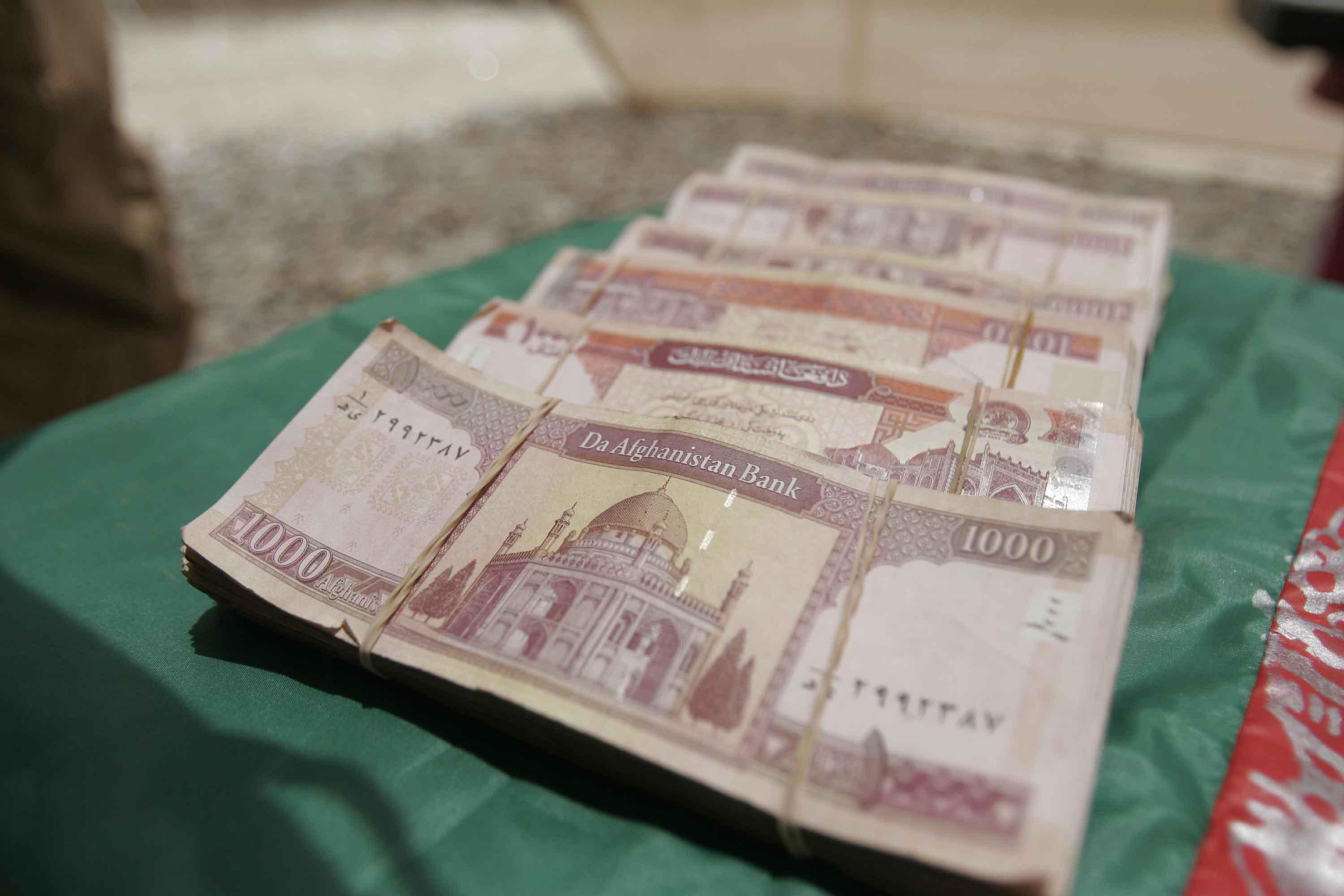
In U.S. Marine Style Counterinsurgency we discussed the Marines’ complaint shop after kinetic operations in and around Garmser.  The Marines pay for broken windows, dead farm animals, busted doors, and so forth.  This is the right thing to do, as well as being productive policy.  The surest way to lose the cooperation and respect of the population is to destroy their property and ignore their consequent needs from the battles.  Much money was promised, but at the end of the article it came to light that so far, the money was promised but not forthcoming.

There’s one flaw in the Marines’ campaign. While they freely issue compensation vouchers, they don’t have any actual money to give out yet. The cash, the Marines tell the villagers, will be here on July 1. The date has already slipped once, from mid-June, and some people doubt they’ll ever see the money. “If we don’t pay them on the first,” Sgt. Blake said, “it’s going to be bad.”

The Captain’s Journal responded, “the money had better be there because it affects the reputation of the U.S. Marines and the COIN effort underway in Afghanistan.  Time for the DoD to “belly up to the bar.”

True to the consistent reputation of the Marines, the money is shown below displayed nicely, just prior to be handed out to locals.

Photo courtesy of DVIDS.

The Taliban Can Be Beaten

17 years, 7 months ago

First the British were going to show the U.S. all about proper rules of engagement, proper counterinsurgency, and right conduct in a foreign country.  As Basra headed downhill, the British were demoralized and talked of the “good war” in Afghanistan – the campaign that must be won.  This vision has evaporated, and not just because of the talk by David Miliband and Des Brown.  The support is vanishing at the grass roots level.

Britain went into Helmand two years ago on the basis of gung-ho, and gung-ho still censors public debate. Yet behind the scenes all is despair. A meeting of Afghan observers in London last week, at the launch of James Fergusson’s book on the errors of Helmand, A Million Bullets, was an echo chamber of gloom.

All hope was buried in a cascade of hypotheticals. Victory would be at hand “if only” the Afghan army were better, if the poppy crop were suppressed, the Pakistan border sealed, the Taliban leadership assassinated, corruption eradicated, hearts and minds won over. None of this is going to happen. The generals know it but the politicians dare not admit it.

Those who still support the “good” Afghan war reply to any criticism by attempting to foreclose debate. They assert that we cannot be seen to surrender to the Taliban and we have gone in so far and must “finish the job”.

This is policy in denial. Nothing will improve without the support of the Afghan government, yet that support is waning by the month. Nothing will improve without the commitment of Pakistan. Yet two weeks ago Nato bombed Pakistani troops inside their own country, losing what lingering sympathy there is for America in an enraged Islamabad. Whoever ordered the attack ought to be court-martialled, except it was probably a computer.

We forget that the objective of the Afghanistan incursion was not to build a new and democratic Afghanistan. It was to punish the Taliban for harbouring Osama Bin Laden and to prevent Afghanistan from becoming a haven for Al-Qaeda training camps. The former objective was achieved on day one; the latter would never be achieved by military occupation.

It took the U.S. Marines to pacify Garmser, and so one has to wonder at just how gung ho the Brits were, especially when a single book can cause such moribund views of the campaign.  Continuing with Jenkins’ commentary:

Two things were known about the Taliban at the time and they are probably still true. First, under outside pressure their leaders were moving from the manic extremism of their “student” origins, even responding to demands to curb the poppy harvest. The present Nato policy of killing the older leaders and thus leaving young hotheads in charge is daft.

Second, the Pashtun Taliban are not natural friends of the Arab Al-Qaeda, despite Bin Laden being given sanctuary by the Taliban’s Mullah Omar. Bin Laden helped the Taliban by murdering Ahmed Shah Massoud, the Tajik leader, but that put a Tajik price on his head, which no man wants. Then the 9/11 coup made the Taliban pariahs even within the region.

Jenkins is being foolish and making things up.  There is no strategy to “kill the older leaders and thus leaving young hotheads in charge.”  Further, to pretend that the Taliban were or are moderating their views is worse than stolid and dense.  It’s dangerous, specifically because of what Jenkins recommends.

What is sure is that Al-Qaeda, as a (grossly overrated) “threat to the West”, will not be suppressed without Taliban cooperation. This means reversing a policy that naively equates “defeating” the Taliban with “winning” the war on terror. Fighting in Afghanistan is as senseless as trying to suppress the poppy crop. It just costs lives and money.

The British view of the world has grown bizarre, or at least it has for Jenkins’ and the friends with whom he cavorts.  All the Taliban really want is their piece of the pie.  Drive al Qaeda and the other globalists out, they will.  Only, this is daydreaming.

A more hearty view comes from inside Afghanistan from warlord-turned-military commander Gen. Abdul Rashid Dostum.

Following a traditional exchange of greetings and compliments, I asked the general to explain how the Taliban have managed to rebuild their support base and expand the insurgency.

“The Taliban are not unbeatable, and they do not field large troop formations,” he said. “They are a loose-knit group without a central organization in Afghanistan.

“The Taliban are equipped in Pakistan and sent into southern Afghanistan to wage an insurgency and to prevent reconstruction.”

When asked what was necessary to defeat the insurgents, Dostum was quick to respond.

NATO forces must be united in their commitment to wage war against the Taliban, and they must create a unique Afghan fighting force to help them accomplish this,” he said. “The current (Afghan) national army with its current leadership will never be efficient.”

The proposed new Afghan force would be recruited from Dostum’sown former Northern Alliance fighters, numbering about 5,000, and the general believes he is the best candidate to lead this army.

“I haven’t been defeated at any stage in time,” he boasted. “I will crush the Taliban with a complete defeat in a very short time, just six months, and push them totally outside of Afghanistan’s borders.”

Then the fledgling Afghan army would have the breathing space it needs to develop into a professional fighting force, he said.

The Northern Alliance, recall, is the group that forced the Taliban out with a slight bit of help from the U.S.  After this, we felt it necessary to enter into all manner of shady deals with Taliban-sympathizers rather than deploy forces to the theater, and thus the campaign has steadily gone downhill since (with steadily worsening security).

Rather than being the answer to the malaise in the campaign, making shady deals with Taliban and their sympathizers is what has gotten the campaign where it is today.  While it may be a most delightful daydream to imagine that we can simply leave the theater to good men who will drive out the extremists, the problem is that the men we will leave the theater to are the extremists.

Two Worthy Causes

17 years, 7 months ago

No Greater Sacrifice

The men and women of the United States Armed Forces and law enforcement communities risk their lives every day for our country and our way of life. There is no greater sacrifice: to serve, to work, to fight – and if need be – to lay down one’s life for the cause of freedom. In making this sacrifice, every Soldier, Sailor, Airman, Marine, and law enforcement official is forced to leave his or her loved ones back home.

No Greater Sacrifice (“NGS”) serves to bridge the educational development and professional mentoring gap for the children of our nation’s fallen heroes. Our job is to help finish their work by raising funds to pay for college tuition and graduate degree programs and to provide professional mentoring for their children. NGS accomplishes its mission by funding the charities that are already on the ground working on behalf of this noble cause, including:

The Marine Corps – Law Enforcement Foundation
The Special Operations Warrior Foundation
And other local charities that support the NGS mission

Operation Worship

You don’t have to be for or against war to support someone who has volunteered to defend your freedom and your country. Being in harm’s way takes its toll on the individual and the serviceperson’s family. You can encourage them with a personal note and a spiritual help.

Open Window Foundation, a non-profit ministry, created Operation worship to serve U.S. military people around the globe.

Tyndale Publishing House designed a Bible especially for deployed military people that includes a special page for your personal message of encouragement or prayer.

Stop by your local Christian store for a $4.99 Bible, write your message and we’ll ensure it’s delivered free to a deployed soldier or soldier’s spouse.

100,000 Bibles for our troops in 100 days.

Escalation in Afghanistan

17 years, 7 months ago

Both the size of the ISAF and the insurgency are growing in Afghanistan, but the the rates of growth are disparate.

Each year since 2002, the number of U.S. and allied troops in Afghanistan has grown. And each year, during the “fighting season” of spring and summer, the number of attacks by the Taliban has also increased, prompting commanders to conclude that still more troops are needed. This year is no exception. There are 66,000 foreign troops from 40 countries in Afghanistan, including 37,500 Americans; the force under NATO command has grown by 20,000 in 18 months. But Taliban attacks are up 40 percent in eastern provinces this year compared with 2007, and there has been another spike in coalition casualties. In May and June, more Western soldiers died in Afghanistan than in Iraq. Adm. Michael G. Mullen, chairman of the Joint Chiefs of Staff, says that “at least” three additional brigades, or about 10,500 more troops, are needed for combat operations and training of the Afghan army.

Will the escalation never end? The war in Afghanistan sometimes appears to suffer from a syndrome that also plagued the United States in Vietnam: incremental increases in troops that are never enough to turn the situation around. Had former defense secretary Donald H. Rumsfeld deployed 60,000 troops in 2002 — rather than 5,000 — Afghanistan might have been pacified. Now it seems that a “surge” of troops, like that successfully applied to Iraq last year, might be needed to turn the tide of the war.

The problem is that large numbers of fresh troops are unavailable. The U.S. military currently lacks the reserves, and NATO nations can’t or won’t provide them. Germany, Britain and France have recently pledged more soldiers, but the numbers are relatively small.

There have been more U.S. and NATO troops killed in Afghanistan in June than in Iraq for the second straight month.  But more to the point, many of the NATO troops aren’t allowed in kinetic engagements, so deploying more German troops doesn’t help if their mission is unnecessary.  To comprehend the full force of the report, it should be realized that some troops are taking a disproportionate level of the burden (e.g., U.S. troops), and the Marines’ deployment to Afghanistan has been bloody.

For the Marine Corps this year Afghanistan has proven a deadly and treacherous place.

Whereas 18 months ago the service was absorbing dozens of casualties per month in attacks throughout the once-restive al Anbar province in Iraq, today the bloodletting is in Afghanistan, where a resurgent Taliban insurgency and an undermanned, politically-constrained NATO force has lead to a sharp rise in leathernecks killed or wounded.

In June alone — when seasonal thaws lead to increased attacks from insurgent groups — the force of some 3,200 Marines there suffered 10 killed in action, including one Navy corpsman. By comparison, of the 23,000 Marines in Iraq, six were killed in June.

So far this year 13 Marines have been killed in combat in Afghanistan while 17 have been killed in Iraq. 

And for the Marine battalion commander in Afghanistan who lost nine of those killed in action in June, the deaths are hitting his unit hard.

Note again that the Marine Corps had in Afghanistan 167% of the casualties it took in Iraq, with roughly seven times as many Marines deployed in Iraq.  This is a remarkable statistic, and states clearer than any other argument where the “tip of the spear” should be deployed.

There is action on the political front with Pakistan, who is apparently getting edgy with their territorial rights (seasoned with a big dose of fear of the Tehrik-i-Taliban).

When Prime Minister Yousuf Raza Gilani meets President George W. Bush at the White House on June 28, he will tell the US leader that Islamabad will tolerate a US incursion into Fata if it is directed specifically against Al Qaeda leaders Osama bin Laden or Ayman Al Zawahiri – but nobody else, says a report published on Friday.

Quoting senior US and Pakistani officials, the Time magazine reported that the prime minister, however, would also tell Mr Bush that Pakistan would not allow incursions into its territory for any other Al Qaeda or Taliban leaders.

“If they do a raid and they find No. 3 or No. 4 or No. 5 but don’t get Bin Laden, it’s going to be a realproblem,” said the report, quoting a senior Pakistani official.

Ahead of the events again, The Captain’s Journal had previously said that Afghanistan would remain the focal point for kinetic operations against the Taliban, and that Pakistan could not be counted as allies in the fight.  This remains true despite arguments to the contrary.  “Expert” Jeremy Shapiro (Brookings Institution, RAND, Georgetown) stated to Spiegel that there is no need for additional troops.

SPIEGEL ONLINE: Policy-makers in the US and Europe are shocked by the gloomy Pentagon assessment for Afghanistan. You, however, are pleading for more optimism. Why?

Shapiro: There is ample reason for gloom, but we need to keep in mind that in the best of circumstances, Afghanistan is a long-term mission. We are talking about a commitment of 10 or 20 years. I believe we have fundamentally the right strategy in place, but even if that is so it will take some time to show progress. I don’t believe we need the major review people are talking about.

SPIEGEL ONLINE: Everyone seems to be asking for more troops in Afghanistan, though. President George W. Bush, John McCain, even Barack Obama.

Shapiro: More soldiers could be put to good use there, but they wouldn’t fundamentally change the situation. Let’s assume we would send in 10,000 more, as is contemplated: They could improve the local situation in a few areas for a time, but they would not rectify the problem of the Pakistani border areas and their ability to infiltrate insurgents into Afghanistan. As long as we don’t solve that problem, you could put 100,000 soldiers into Afghanistan and you would still have asymmetric attacks in various parts of Afghanistan and a rate of civilian and military casualties similar to the current one. And I have not yet heard viable suggestions on how to deal with the problem of the Pakistani border areas.

SPIEGEL ONLINE: But isn’t it understandable that security is paramount to people in Afghanistan?

Shapiro: Of course, but we can’t solve that problem simply by increasing forces. Achieving overall security in Afghanistan will be a slow process and unfortunately we will have to tolerate violence in the country for a long time.

Some expert.  So that there is no confusion, The Captain’s Journal unequivocally states that the argument above is idiotic.  The population will not “tolerate violence in the country for a long time,” and this is ridiculous counterinsurgency policy.  Additionally, it is immoral and counterproductive.  NATO (and the U.S.) will not be welcome for a “long time” if we continue to tolerate violence.  Shapiro doesn’t understand the ebb and flow of counterinsurgency campaigns.  Also, recognizing that the nature of insurgencies is to engage in asymmetric warfare is correct and has absolutely no relevance to the argument concerning force size.  Shapiro should stay on point.

Again, Syria has been a problem with respect to infiltration of foreign fighters into Iraq, but the surge and security plan (along with other events such as the Anbar awakening) has slowed the river of fighters to a trickle.  While harder and more costly, it is possible to fight a transnational insurgency in a local battlespace, as long as global pressure is brought to bear.

Pakistan is a thorny problem, and obviously their pact with the Taliban cannot be honored by the U.S.  But Pakistan’s recalcitrance is no argument for under-resourcing the campaign in Afghanistan.  Recall the words of one Taliban commander: “If NATO remains strong in Afghanistan, it will put pressure on Pakistan. If NATO remains weaker in Afghanistan, it will dare [encourage] Pakistan to support the Taliban.”

We’ll take the admonition of the Taliban over the pontification of Jeremy Shapiro.  More troops will indeed “fundamentally change the situation.”  Similar to other RAND studies (which advocate a very small footprint for COIN), Shapiro behaves as if the last two years in Iraq never occurred and the gains never happened.  The quickest gains in Iraq were at the hands of the U.S. Marines (the experience on which, at least in part, the security plan in Baghdad was based).  They now stand ready to be at the tip of the spear in Afghanistan.

The “Economy of Force Campaign”

17 years, 7 months ago

Marines do seven month tours.  Changing this is a big deal.  A big deal has occurred, and the 24th MEU has had their tour of Afghanistan extended by one month.

In a decision reflecting the shortage of available combat troops, more than 2,000 Marines fighting the Taliban will be kept in Afghanistan 30 days beyond their original seven-month tour, the Marine Corps said yesterday.

The decision by Defense Secretary Robert M. Gates to extend the Marines’ tour was confirmed a day after Adm. Mike Mullen, chairman of the Joint Chiefs of Staff, said that more troops are needed in Afghanistan but that he didn’t have more troops to send.

Gates had said several times in recent months that he had “no plans” to extend the Marines’ tour. But U.S. officials, including Mullen, have said recently that the situation in Afghanistan is worsening and that the Taliban-led insurgency is gaining ground and influence.

At present there are 32,000 U.S. troops in Afghanistan, of which 14,000 are assigned to work under the International Security Assistance Force, the 40-nation coalition led by U.S. Army Gen. David McKiernan.

The other 18,000 U.S. troops are fighting directly under U.S. command, mostly in eastern Afghanistan along the border with Pakistan, where violent attacks by insurgents have risen 40 percent from a year ago, according to a U.S. commander there.

In addition to U.S. forces, about 29,000 troops from 40 countries are serving in Afghanistan, although some are restricted by their home commands from combat.

Maj. David Nevers, a Marine Corps spokesman, confirmed that Gates had authorized an extension for up to 30 days for the 24th Marine Expeditionary Unit, an air-ground task force that deployed to Afghanistan in February and March.

The unit’s air squadron of jet fighters and attack helicopters, and its reinforced infantry battalion, the 1st Battalion, 6th Marine Regiment, have been fighting Taliban and other extremists around the southern Helmand province town of Garmser, a major poppy-growing region and insurgent stronghold, since late March.

Nevers said the Marines are needed “to continue full-spectrum operations as they have been doing” in southern Afghanistan.

The Captain’s Journal has noted too many times to cite that Operation Enduring Freedom needs forces and force projection.  The more acceptable way to say it this.

The nation’s top military officer said yesterday that more U.S. troops are needed in Afghanistan to tamp down an increasingly violent insurgency, but that the Pentagon does not have sufficient forces to send because they are committed to the war in Iraq.

Navy Adm. Michael G. Mullen, chairman of the Joint Chiefs of Staff, said insurgent Taliban and extremist forces in Afghanistan have become “a very complex problem,” one that is tied to the extensive drug trade, a faltering economy and the porous border with Pakistan. Violence in Afghanistan has increased markedly over recent weeks, with June the deadliest month for U.S. troops since the war began in 2001.

“I don’t have troops I can reach for, brigades I can reach, to send into Afghanistan until I have a reduced requirement in Iraq,” Mullen told reporters at the Pentagon. “Afghanistan has been and remains an economy-of-force campaign, which by definition means we need more forces there.”

This sounds so much nicer than the way we have described it.  “Economy of force.”  But then Mullen, who cares about both the troops and the campaigns, felt that he needed to say it bluntly like The Captain’s Journal does … “which by definition means we need more forces there.”

While The Captain’s Journal has many tears invested in Iraq (specifically, Anbar), there is a half life to insurgencies – and conversely, counterinsurgencies.  They can only go on so long.  Columbia hates the FARC, and their doom is sure to come.  Marines have handed over control of Anbar to Iraq, and while we have noted our objections to the failure of the Maliki administration to reconcile with the Sunni awakening movement, the Marines have completed their work in Anbar.  There will be no further Marine engagement in that province.  It isn’t a matter of wishes or needs.  It’s a matter of the nature of the campaign.  It’s finished in Anbar.

The Marines must move on, and while the Commandant wants an MEU focus (and we understand this desire), Afghanistan needs the troops.  A month won’t do it.  One month might close out the summer fighting where the Taliban won’t come back in during 2008 and kill those in the Helmand province who cooperated with the Marines.  Maybe.  But we’re talking about slicing the salami pretty thin here.  Economy of force indeed.  It’s time for Gates and Mullen to recognize that the Marines’ mission in Iraq is essentially completed, and to turn them loose in Afghanistan.  The world will understand.


26th MEU (10)
Abu Muqawama (12)
ACOG (2)
ACOGs (1)
Afghan National Army (36)
Afghan National Police (17)
Afghanistan (704)
Afghanistan SOFA (4)
Agriculture in COIN (3)
AGW (1)
Air Force (41)
Air Power (10)
al Qaeda (83)
Ali al-Sistani (1)
America (22)
Ammunition (304)
Animals (323)
Ansar al Sunna (15)
Anthropology (3)
Antonin Scalia (1)
AR-15s (393)
Arghandab River Valley (1)
Arlington Cemetery (2)
Army (91)
Assassinations (2)
Assault Weapon Ban (29)
Australian Army (7)
Azerbaijan (4)
Backpacking (4)
Badr Organization (8)
Baitullah Mehsud (21)
Basra (17)
BATFE (246)
Battle of Bari Alai (2)
Battle of Wanat (18)
Battle Space Weight (3)
Bin Laden (7)
Blogroll (3)
Blogs (24)
Body Armor (23)
Books (3)
Border War (18)
Brady Campaign (1)
Britain (39)
British Army (36)
Camping (5)
Canada (19)
Castle Doctrine (1)
Caucasus (6)
CENTCOM (7)
Center For a New American Security (8)
Charity (3)
China (19)
Christmas (18)
CIA (30)
Civilian National Security Force (3)
Col. Gian Gentile (9)
Combat Outposts (3)
Combat Video (2)
Concerned Citizens (6)
Constabulary Actions (3)
Coolness Factor (3)
COP Keating (4)
Corruption in COIN (4)
Council on Foreign Relations (1)
Counterinsurgency (218)
DADT (2)
David Rohde (1)
Defense Contractors (2)
Department of Defense (220)
Department of Homeland Security (26)
Disaster Preparedness (5)
Distributed Operations (5)
Dogs (15)
Donald Trump (27)
Drone Campaign (4)
EFV (3)
Egypt (12)
El Salvador (1)
Embassy Security (1)
Enemy Spotters (1)
Expeditionary Warfare (18)
F-22 (2)
F-35 (1)
Fallujah (17)
Far East (3)
Fathers and Sons (2)
Favorite (1)
Fazlullah (3)
FBI (39)
Featured (192)
Federal Firearms Laws (18)
Financing the Taliban (2)
Firearms (1,867)
Football (1)
Force Projection (35)
Force Protection (4)
Force Transformation (1)
Foreign Policy (27)
Fukushima Reactor Accident (6)
Ganjgal (1)
Garmsir (1)
general (15)
General Amos (1)
General James Mattis (1)
General McChrystal (44)
General McKiernan (6)
General Rodriguez (3)
General Suleimani (9)
Georgia (19)
GITMO (2)
Google (1)
Gulbuddin Hekmatyar (1)
Gun Control (1,717)
Guns (2,406)
Guns In National Parks (3)
Haditha Roundup (10)
Haiti (2)
HAMAS (7)
Haqqani Network (9)
Hate Mail (8)
Hekmatyar (1)
Heroism (5)
Hezbollah (12)
High Capacity Magazines (16)
High Value Targets (9)
Homecoming (1)
Homeland Security (3)
Horses (2)
Humor (72)
Hunting (61)
ICOS (1)
IEDs (7)
Immigration (123)
India (10)
Infantry (4)
Information Warfare (4)
Infrastructure (4)
Intelligence (23)
Intelligence Bulletin (6)
Iran (171)
Iraq (379)
Iraq SOFA (23)
Islamic Facism (64)
Islamists (98)
Israel (19)
Jaish al Mahdi (21)
Jalalabad (1)
Japan (3)
Jihadists (82)
John Nagl (5)
Joint Intelligence Centers (1)
JRTN (1)
Kabul (1)
Kajaki Dam (1)
Kamdesh (9)
Kandahar (12)
Karachi (7)
Kashmir (2)
Khost Province (1)
Khyber (11)
Knife Blogging (7)
Korea (4)
Korengal Valley (3)
Kunar Province (20)
Kurdistan (3)
Language in COIN (5)
Language in Statecraft (1)
Language Interpreters (2)
Lashkar-e-Taiba (2)
Law Enforcement (6)
Lawfare (14)
Leadership (6)
Lebanon (6)
Leon Panetta (2)
Let Them Fight (2)
Libya (14)
Lines of Effort (3)
Littoral Combat (8)
Logistics (50)
Long Guns (1)
Lt. Col. Allen West (2)
Marine Corps (281)
Marines in Bakwa (1)
Marines in Helmand (67)
Marjah (4)
MEDEVAC (2)
Media (68)
Medical (146)
Memorial Day (6)
Mexican Cartels (47)
Mexico (71)
Michael Yon (6)
Micromanaging the Military (7)
Middle East (1)
Military Blogging (26)
Military Contractors (5)
Military Equipment (25)
Militia (9)
Mitt Romney (3)
Monetary Policy (1)
Moqtada al Sadr (2)
Mosul (4)
Mountains (25)
MRAPs (1)
Mullah Baradar (1)
Mullah Fazlullah (1)
Mullah Omar (3)
Musa Qala (4)
Music (25)
Muslim Brotherhood (6)
Nation Building (2)
National Internet IDs (1)
National Rifle Association (97)
NATO (15)
Navy (31)
Navy Corpsman (1)
NCOs (3)
News (1)
NGOs (3)
Nicholas Schmidle (2)
Now Zad (19)
NSA (3)
NSA James L. Jones (6)
Nuclear (63)
Nuristan (8)
Obama Administration (222)
Offshore Balancing (1)
Operation Alljah (7)
Operation Khanjar (14)
Ossetia (7)
Pakistan (165)
Paktya Province (1)
Palestine (5)
Patriotism (7)
Patrolling (1)
Pech River Valley (11)
Personal (76)
Petraeus (14)
Pictures (1)
Piracy (13)
Pistol (4)
Pizzagate (21)
Police (672)
Police in COIN (3)
Policy (15)
Politics (998)
Poppy (2)
PPEs (1)
Prisons in Counterinsurgency (12)
Project Gunrunner (20)
PRTs (1)
Qatar (1)
Quadrennial Defense Review (2)
Quds Force (13)
Quetta Shura (1)
RAND (3)
Recommended Reading (14)
Refueling Tanker (1)
Religion (499)
Religion and Insurgency (19)
Reuters (1)
Rick Perry (4)
Rifles (1)
Roads (4)
Rolling Stone (1)
Ron Paul (1)
ROTC (1)
Rules of Engagement (75)
Rumsfeld (1)
Russia (37)
Sabbatical (1)
Sangin (1)
Saqlawiyah (1)
Satellite Patrols (2)
Saudi Arabia (4)
Scenes from Iraq (1)
Second Amendment (708)
Second Amendment Quick Hits (2)
Secretary Gates (9)
Sharia Law (3)
Shura Ittehad-ul-Mujahiden (1)
SIIC (2)
Sirajuddin Haqqani (1)
Small Wars (72)
Snipers (9)
Sniveling Lackeys (2)
Soft Power (4)
Somalia (8)
Sons of Afghanistan (1)
Sons of Iraq (2)
Special Forces (28)
Squad Rushes (1)
State Department (23)
Statistics (1)
Sunni Insurgency (10)
Support to Infantry Ratio (1)
Supreme Court (79)
Survival (214)
SWAT Raids (58)
Syria (38)
Tactical Drills (38)
Tactical Gear (17)
Taliban (168)
Taliban Massing of Forces (4)
Tarmiyah (1)
TBI (1)
Technology (21)
Tehrik-i-Taliban (78)
Terrain in Combat (1)
Terrorism (96)
Thanksgiving (13)
The Anbar Narrative (23)
The Art of War (5)
The Fallen (1)
The Long War (20)
The Surge (3)
The Wounded (13)
Thomas Barnett (1)
Transnational Insurgencies (5)
Tribes (5)
TSA (25)
TSA Ineptitude (14)
TTPs (4)
U.S. Border Patrol (8)
U.S. Border Security (22)
U.S. Sovereignty (29)
UAVs (2)
UBL (4)
Ukraine (10)
Uncategorized (105)
Universal Background Check (3)
Unrestricted Warfare (4)
USS Iwo Jima (2)
USS San Antonio (1)
Uzbekistan (1)
V-22 Osprey (4)
Veterans (3)
Vietnam (1)
War & Warfare (432)
War & Warfare (41)
War Movies (4)
War Reporting (21)
Wardak Province (1)
Warriors (6)
Waziristan (1)
Weapons and Tactics (80)
West Point (1)
Winter Operations (1)
Women in Combat (21)
WTF? (1)
Yemen (1)

February 2026
January 2026
December 2025
November 2025
October 2025
September 2025
August 2025
July 2025
June 2025
May 2025
April 2025
March 2025
February 2025
January 2025
December 2024
November 2024
October 2024
September 2024
August 2024
July 2024
June 2024
May 2024
April 2024
March 2024
February 2024
January 2024
December 2023
November 2023
October 2023
September 2023
August 2023
July 2023
June 2023
May 2023
April 2023
March 2023
February 2023
January 2023
December 2022
November 2022
October 2022
September 2022
August 2022
July 2022
June 2022
May 2022
April 2022
March 2022
February 2022
January 2022
December 2021
November 2021
October 2021
September 2021
August 2021
July 2021
June 2021
May 2021
April 2021
March 2021
February 2021
January 2021
December 2020
November 2020
October 2020
September 2020
August 2020
July 2020
June 2020
May 2020
April 2020
March 2020
February 2020
January 2020
December 2019
November 2019
October 2019
September 2019
August 2019
July 2019
June 2019
May 2019
April 2019
March 2019
February 2019
January 2019
December 2018
November 2018
October 2018
September 2018
August 2018
July 2018
June 2018
May 2018
April 2018
March 2018
February 2018
January 2018
December 2017
November 2017
October 2017
September 2017
August 2017
July 2017
June 2017
May 2017
April 2017
March 2017
February 2017
January 2017
December 2016
November 2016
October 2016
September 2016
August 2016
July 2016
June 2016
May 2016
April 2016
March 2016
February 2016
January 2016
December 2015
November 2015
October 2015
September 2015
August 2015
July 2015
June 2015
May 2015
April 2015
March 2015
February 2015
January 2015
December 2014
November 2014
October 2014
September 2014
August 2014
July 2014
June 2014
May 2014
April 2014
March 2014
February 2014
January 2014
December 2013
November 2013
October 2013
September 2013
August 2013
July 2013
June 2013
May 2013
April 2013
March 2013
February 2013
January 2013
December 2012
November 2012
October 2012
September 2012
August 2012
July 2012
June 2012
May 2012
April 2012
March 2012
February 2012
January 2012
December 2011
November 2011
October 2011
September 2011
August 2011
July 2011
June 2011
May 2011
April 2011
March 2011
February 2011
January 2011
December 2010
November 2010
October 2010
September 2010
August 2010
July 2010
June 2010
May 2010
April 2010
March 2010
February 2010
January 2010
December 2009
November 2009
October 2009
September 2009
August 2009
July 2009
June 2009
May 2009
April 2009
March 2009
February 2009
January 2009
December 2008
November 2008
October 2008
September 2008
August 2008
July 2008
June 2008
May 2008
April 2008
March 2008
February 2008
January 2008
December 2007
November 2007
October 2007
September 2007
August 2007
July 2007
June 2007
May 2007
April 2007
March 2007
February 2007
January 2007
December 2006
November 2006
October 2006
September 2006
August 2006
July 2006
June 2006
May 2006

about · archives · contact · register

Copyright © 2006-2026 Captain's Journal. All rights reserved.