Articles by Herschel Smith


The “Captain” is Herschel Smith, who hails from Charlotte, NC. Smith offers news and commentary on warfare, policy and counterterrorism.


Pakistan, Cricket Attacks and India

16 years, 11 months ago

Early on there were a number of theories about who sponsored and executed the attack on the Sri Lanka Cricket team in Lahore, Pakistan, on March 3.  But the theories seem to be converging on a single suspect.  The Asia Times reported on March 5 that the attack was was “carried out by disgruntled Punjabi militants seeking to extract concessions from the government … [who were] working directly under the command of a joint Punjabi and Kashmiri leadership based in the North Waziristan tribal area and allied with al-Qaeda.”  Syed Saleem Shahzad goes on to explain the theory.

Before the Swat agreement was inked, the Pakistani Taliban presented their demands. These included a financial package worth 480 million rupees (US$6 million) for compensation for families that had lost members through death or injury or which had lost property as a result of the operations of the security forces. They also demanded the release of prisoners.

The government accepted all of the demands, but it refused to release those prisoners who were not from Swat. At the top of this list was Maulana Abdul Aziz, a radical cleric from the Lal Masjid (Red Mosque) in Islamabad who was arrested in July 2007 while fleeing from the mosque after security forces stormed it. The government also refused to release several other militants, including a very important person, who were recently arrested in Islamabad.

The Punjabi militants were clearly upset at having their demands rejected, while the Pashtuns got what they wanted. The attack in Lahore was meant to redress the “injustice.”

Similarly, the Times reports that Pakistan’s investigation:

… showed that Tuesday’s attackers were from Punjab and North West Frontier Province, which has become the main battleground between militants and Pakistan’s armed forces.

Intelligence sources said that southern Punjab had become the main centre of radical Islamic activities in the country. Despite a ban, groups such as JeM and LeJ had expanded their influence in the area, drawing recruits from among rural poor, they said.

Most of the gunmen involved in the attack on Mumbai in November came from the same region.

JeM has become a virtual extension of al-Qaeda and was blamed for most of the terrorist attacks in Pakistan after the country become an ally in the US-led War on Terror in 2001.

LeJ is an extremist Sunni sectarian group whose members overlap with JeM. It has also been involved in al-Qaeda-led attacks in Pakistan.

But the reaction of some in Pakistan is both telling and important.  “Numerous Pakistani analysts have been quick to point a finger at India’s Research and Analysis Wing (RAW) for staging what they say is a tit-for-tat attack on Tuesday, although there is been no official announcement in this connection … retired General Hamid Gul, who is a former head of the ISI, blame India’s RAW.”

Of course he does.  Even the Times notes this reaction.

As usual, the kneejerk reaction in Pakistan was to blame Indian intelligence for the attacks. But the authorities now privately admit that the attack was home-grown.

Do they really?  Should the Times have been so quick to exonerate Pakistani analysts?  An interesting and at times sardonic article entitled After the Taliban Air Force, Time to Battle the Taliban Navy from domain-b.com discusses the U.S.-to-Pakistan largesse and why it is being spent the way it is.

With the recent revelation that the US administration has instructed GE to defer plans to operationalise engines for an Indian Navy frigate programme, it is time to look at how it is proceeding with plans to arm the Pakistan Navy with equipment that can only be utilised against India, writes Rajiv Singh.

Members of the US Congress have been sniggering for years about the funds being allocated to arm the Pakistan Air Force (PAF) with cutting-edge technology to fight what they refer to as the ”Taliban Air Force.”  Their sarcasm is aimed, in particular, at the number of contracts awarded to upgrade Lockheed Martin’s Paki fighter- the F-16, which over the past decade of the Bush administration, has been equipped with the best, and most lethal, in sensors, munitions and equipment.

Of course, it is yet to participate in a single tactical operation against the Taliban, or any other entity.

For long, these funds have been allocated to Pakistan under the guise of helping it fight the Global War on Terror (GWOT). At one point of time questions began to be asked of the Bush administration if the contracts, funds and upgrades of the Paki F-16 were aimed only at shoring up Pakistani capabilities against India.

Now, with the great ”agent of change” occupying the White House, and the majority Democrats in the Congress in love with everything he wants to do, the time has come for Indian parliamentarians, at least, to take cognizance of the way the Pakistan Navy (PN) intends to take on the ”Taliban Navy.”

Sometime in February this year, the Pakistan Navy was provided the clearance to acquire three types of anti-submarine warfare (ASW) sonobuoys – totaling 445 units – under the Foreign Military Sales programme. This piece of anti-submarine warfare equipment is of the same class as contracted for the US Navy.

Indeed, the contract signed with suppliers is a joint contract for the US and the Pakistan Navy.

The sale was cleared, presumably, even as the Obama administration was instructing General Electric not to operationalise two new LM 2500 gas turbines it has contracted to supply the Indian Navy for its state-of-the-art, indigenously designed, Project 17 stealth frigates.

The first of three frigates, INS Shivalik, is ready to commence sea trials but the programme will now have to go on hold – at least for a few months –with the Obama administration reviewing its military relations with a number of countries, including India.

What are sonobuoys? These are devices meant to detect, and identify, submarines as they move about stealthily in shallow or deep waters.

The article goes on to conclude that “The right of a nation to arm itself is a sovereign one and no objections can be taken on that score. What we need to look at is the reason why the US is persisting with its cold war strategy of propping up Pakistan militarily against India.”

Authorities in Pakistan may “privately admit” to any number of things, but their actions belie their words.  If you want to know the importance the authorities in Pakistan place on things, follow the money.  Pakistan is hopelessly obsessed with its neighbor India, a country which poses no threat whatsoever if it senses that Pakistan poses no threat.

Pakistan is a failing state, and more troubling is the fact that it is a nuclear state.  But while Pakistan fails, its authorities fret and wring their hands over internal politics, India, largesse, and a whole host of things that are serving as nothing more than distraction from the real threat, Islamic extremism in the FATA and NWFP.  This extremism is moving relentlessly from the tribal areas to the urban population centers, even as far South as Karachi.

Marine Corps Issues RFI on Cold Weather Tents

16 years, 11 months ago

The Marine Corps Times authored quite an interesting article on a request for information on a new cold weather tent system.

The Corps’ two-man infantry shelter and 10-man arctic tent are likely on their way out, officials said.

In separate advertisements, Marine Corps Systems Command said it is researching the development of a new two-man combat tent and an “extreme cold weather arctic shelter,” which would accommodate a squad and also withstand high winds and temperatures of at least 35 degrees below zero.

Changes to the arctic tent, in use since the 1950s, would be more dramatic. Officials want a replacement that sleeps 15 Marines, but weighs less and packs smaller than the existing 76-pound shelter, which breaks down to a 7.3-foot cube, said Capt. Geraldine Carey, a SysCom spokeswoman. Size and weight have not been determined, but the advertisement said the service is looking for a shelter that has more floor space than the 199 square feet available in the 10-man tent.

“We sent out a [request for information], which we are receiving information back on and will review,” Carey said. “We are working on the performance requirements rather than [dictating] a solution.”

Ideally, the new tent will withstand 70-mph wind and temperatures as low as minus 70 degrees, conditions nearly approached during the Korean War, when thousands of Marines suffered frostbite during engagements such as the Battle at Chosin Reservoir. The Corps has not required a fabric; the existing tent is made of cotton and wind-resistant sateen.

The new combat tent is expected to be chosen in fiscal 2010 after an industry competition is opened, with a rollout planned for the following year, Carey said. The number of tents to be purchased has not been decided, but the Corps would like to see it weigh 7½ pounds or less, at least a half-pound lighter than the current infantry shelter.

Bwaaahahaha …

Who wants to go backpacking with the Marines?  Anyone?  Raise your hands please.  Seriously, let’s get technical for a moment.  The Captain’s Journal supposes that since the tent itself will not be able to insulate*, temperature as a boundary condition for the specification pertains to embrittlement of the fabric.  Anything can break at cold temperatures.  But oh my God, who wants to be warfighting / backpacking in -70 degree F weather?  What do you think this might say about how long the Marine Corps believes it will be in the mountains of Afghanistan?

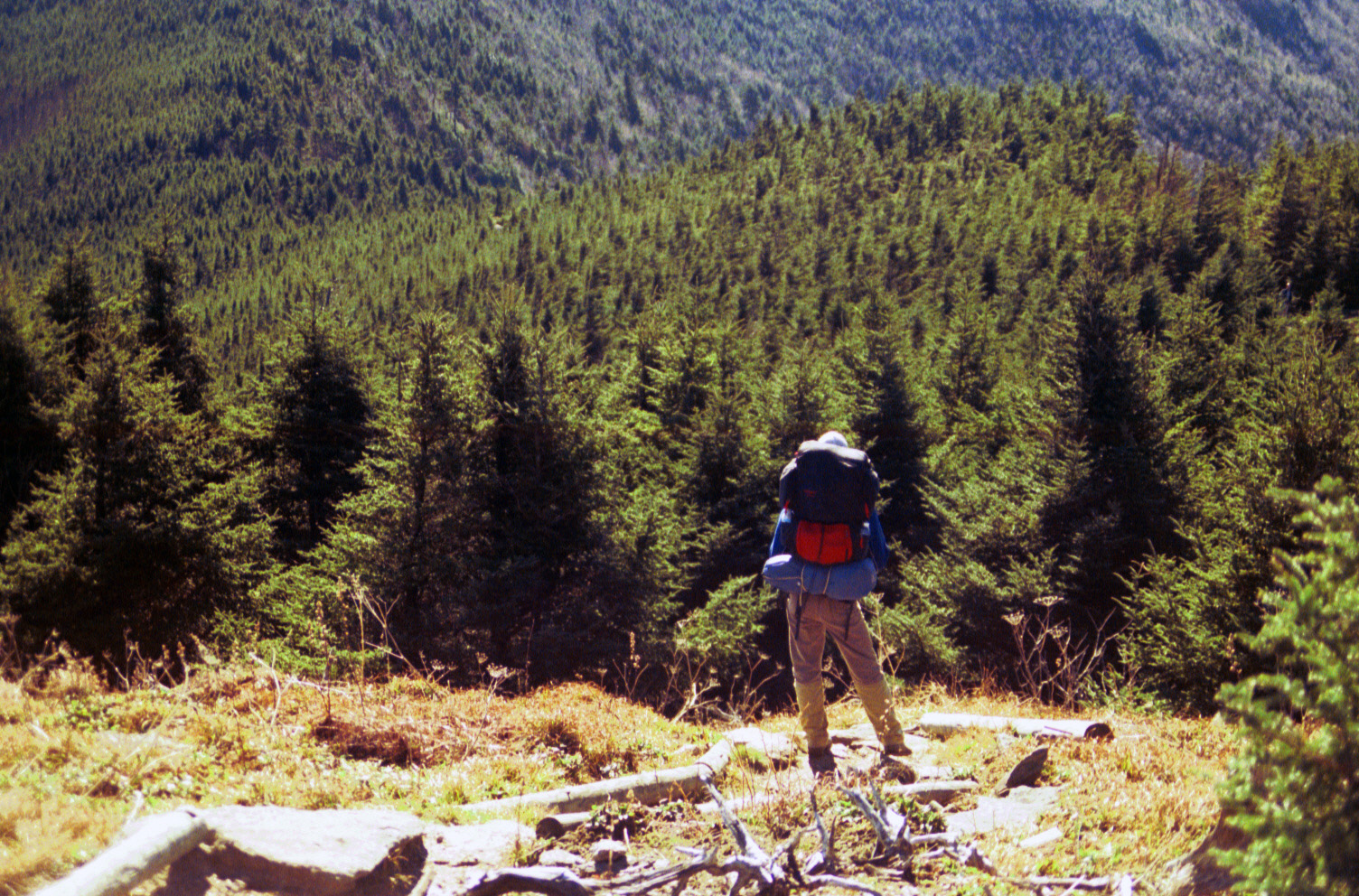
The pictures below are of the Captain (author of this journal) and a Marine just before he became a Marine, at Mount Mitchell or adjacent mountains (Big Tom?, or Mount Craig?, North Carolina).  This is the coldest the Captain wants to get.  Let’s stop at 5 or 10 degrees F please.

* Any tent fabric will be able to trap air, thus insulating since there are heat sources in the space, i.e., humans, but only very slightly due to the convective cooling of air flow across the fabric.  In this case, 70-mph winds make trapping heat virtually impossible.  Again, who wants to go backpacking with the Marines?

The Captain’s Journal Blocked in Afghanistan

16 years, 11 months ago

Joshua Foust and I were engaging in some friendly jousting over a few articles we had written (and found much more on which to agree than disagree), and some interesting information came to light.  You see, Joshua is currently in Afghanistan, and he responded to me that he couldn’t get to my web site as it was locally blocked by S6 (or otherwise CJ6 or J6, which is Army IT Staff).

I immediately copied the article into an e-mail and sent it on its way, but only later did the importance what Joshua said dawn on me.  Pressing him for more data and information, Josh responded with an article of his own.  The results of his little investigation are striking.

Blackfive is blocked, as is Abu Muqawama, Global Guerrillas, and our very own The Captain’s Journal.  This list is not comprehensive.  Allowed are Small Wars Journal, The Long War Journal, and rather interestingly, Bouhammer, whose URL has the word ‘blog’ in it.  I use WordPress to create articles, but I am not associated with WordPress and the Army would have no way of knowing what software I use.

The Captain’s Journal hasn’t been swept up in some doltish group block such as with Twitter.  No, we have been specially selected.  Says Joshua:

On a personal level, Registan.net is blocked. This is not an automatic block, as the category used in the reason line is “local blocks,” or it was manually added. Why an S6 would want to block this blog from being read on Army computers escapes me, but it is nevertheless the case. Many other blogs, including everything on blogspot, are also inaccessible … I see no noticeable rhyme or reason to this, aside from some local blocks, like Captain’s Journal, that are deeply puzzling. But it also speaks to a deeper problem in how the military in general is approaching IT issues in the field: it makes absolutely no sense. Many of the blocked blogs are sources for deep, intelligent, and even essential analysis, news, and discussions. In fact, I only know they are blocked because I read them and see value in them.

Someone in the Army in Afghanistan, after reading our content, has made the decision to initiate a local block of The Captain’s Journal.  Is it a field grade officer?  Is it a member of Army IT staff?  We don’t yet know.  But we do know that this is not accidental.

Now, we have been critical of the failure to look forward and plan for problems in logistics in Afghanistan, given that we pointed out the strategy now being employed by the Taliban one year ago in Taliban and al Qaeda Strategy in Pakistan and Afghanistan.  We also shot straight with Major General David Rodriguez (and Army intelligence) for ignoring the signs and even arguing that there wouldn’t be a Taliban spring offensive in 2008.  And while we praised certain parts of the campaign such as the Marine Corps operation in Helmand, we were also critical of certain other parts such as the disaster at the Battle of Wanat, especially focusing on the lack of control over the terrain at Observation Post Top Side.

But there are bright aspects of our prose, such as our almost constantly reminding command that Afghanistan needs more troops along with Generals McNeill and McKiernan.  We don’t apologize for any of it.  We aren’t a cheerleader site.  We don’t try to beat other web sites with breaking news.  We don’t regurgitate talking points.  We are an analysis and advocacy web site.  Our track record is impeccable, from advocating troop increases in Iraq before the word “surge” had ever been heard, to predicting the interdiction of logistical routes through the Khyber pass.

The troubling aspect of The Captain’s Journal being blocked isn’t our own reputation.  We won’t change, and we will only do what we can do to influence policy, logistics, strategy and tactics.  We are still a relatively small blog, but we have been contacted by a number of military both in Afghanistan (before we were blocked) and after coming back stateside.  We have been told that we are one of the more “squared away” web sites on Afghanistan.

But even if it’s unlikely that The Captain’s Journal could make any substantive difference in the state of affairs – and we are not convinced that this is so – the troubling aspect of being blocked is what it says about the Army and its institutional intransigence.  I already have had such experiences with the Marine Corps, and my relationship with PAOs has probably been irrevocably harmed as a result.

But when the Army’s own Command General Staff College is now requiring its officers to blog, what does this say about their own ability to listen to constructive criticism when they apparently cannot bear the scrutiny of The Captain’s Journal?  This is not a good sign.

Others:

Joshua Foust, Registan, Dispatches from FOBistan

Wings Over Iraq, Regarding Proxy Servers and Blocked Websites

David Axe, War is Boring Blocked!

Prior:

The Captain’s Journal, Thoughts on the New Media and Military Blogging

Logistics Still Rules

16 years, 11 months ago

Concerns are being raised about potential loss of logistical support for troops remaining in Iraq.

The U.S. military withdrawal from Iraq will create a shortage of helicopters and logistics support that high-level officials worry will hamper the elite U.S. troops who stay behind to train Iraqi forces and to combat terrorist networks, according to experts studying the problem.

The shortage is part of an overall logistics crunch that the Pentagon is grappling with as it shifts forces from Iraq to Afghanistan, where the rugged terrain and lack of infrastructure require more helicopter transport, engineers and a slew of other support capabilities.

As the U.S. military pulls out the bulk of its 142,000 troops from Iraq by August 2010, troops such as Army Green Berets, who are specially trained to partner with foreign forces, are expected to remain in significant numbers.

Yet those troops currently are dependent upon the basing, aviation, communications and other logistical backing of conventional U.S. Army brigades that are slated to leave the country.

Senior Special Operations officials “are really worried about the conventional Army pulling out of Iraq and leaving us holding the bag unable to support ourselves,” said Roger Carstens, who studied the problem as a nonresident fellow for the Center for a New American Security and testified on the issue last week before a House panel.

The leadership of the U.S. Special Operations Command in Tampa, Fla., is particularly concerned about the Army’s difficulty in splitting off from its brigades vital capabilities including intelligence, communications and helicopters that are needed by the Special Operations troops, Carstens said.

“A lot of people do not understand that SOF [Special Operations forces] are really unable to support themselves,” said Carstens, who is currently working at Joint Forces Command in Norfolk, Va.

In the longer term, the Pentagon should consider creating at least two additional helicopter battalions dedicated to Special Operations forces, according to Robert Martinage, a senior fellow at the Center for Strategic and Budgetary Assessment, who also testified last week before the terrorism subcommittee of the House Armed Services Committee.

But the issue is larger than mere helicopters.  Sustainability for a long term deployment requires consideration of food, fuel, ground transport, electricity, communication and connectivity, medical services, troops for force protection, interpreters, Chaplains, and so the list goes.

For all of the electioneering promises that have been made, Flag officers and even field grade officers will determine how many troops must remain if any do at all, how quickly the remainder will be able to withdraw, and what is needed to support the remaining troops who will remain deployed long term.  But these officers will only weigh in after consultation with their logistics officers.  Logistics rules.

Logistics trumps politics, and logistics even trumps valid orders.  Orders cannot be carried out without the necessary support, support that most uninitiated people don’t even think about before it’s too late.

Prior:

Support Andrew Lubin’s Embed in Afghanistan

16 years, 11 months ago

Andrew Lubin, who blogs at The Military Observer, is headed back to Afghanistan.  Andrew has authored articles we’ve used and quoted here, along with other work in Leatherneck, Small Wars Journal, Proceedings (U.S. Naval Institute), and others. He’s one of those few free-lance correspondents who goes out in the field with the Marines and soldiers; he understands both the strategies and tactics over which he writes.  He has embedded and written from both Iraq and Afghanistan.

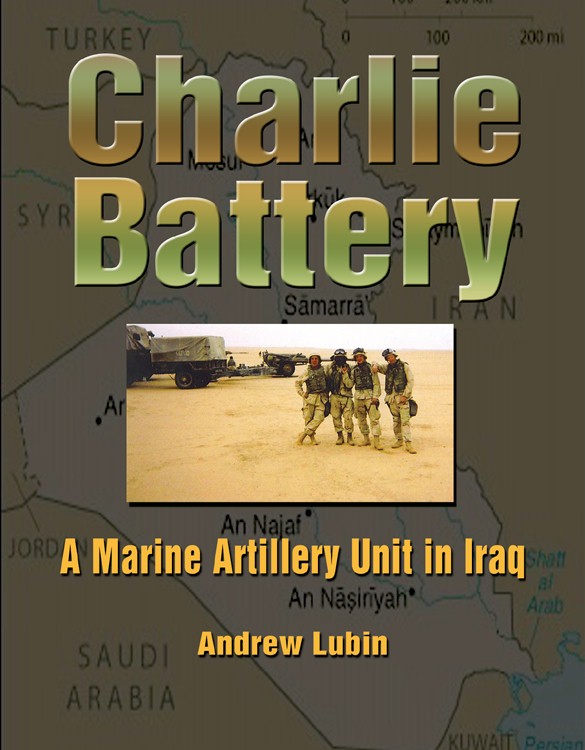
He’s asking for support for his trip back to Afghanistan, and asked us to mention that his book “Charlie Battery; A Marine Artillery Battery in Iraq”, is available for sale off his website. The book won the Military Writers Society of America’s 2007 Gold Medal for best military non-fiction, and selling it is how he funds his embeds. It’s a great book, and in this market, he needs all our support.  Without reader support, trips like this would not be possible.

Followup on Piracy with Information Dissemination

16 years, 11 months ago

Galrahn at Information Dissemination takes issue with us taking issue with him.  His post is worth the read time.  Drop on over and take a look (although we must say that William Lind is not one of favorite analysts, and Galrahn didn’t need Lind to make his point). We didn’t like his focus on equipment, strategy, tactics, etc., and recommended that we kill the pirates, dump the bodies overboard, and destroy their domiciles.  Galrahn responds that The Captain’s Journal is speaking from the perspective of what we want, he is speaking from the perspective of what is.  Galrahn is working within the system, we want to change the system.  Or at least, this is our take on his post.  It is more complicated than that, but this little summary will move us forward.

We accept the criticism of our criticism, and confess that it’s true that we are recommending things that have a vanishingly small chance of occurring.  Nevertheless, the import of our original article, Pirates? Call the Marines … er, the Lawyers! has not been addressed.  The question is not one of what to do within the system.  The current system won’t work, or so we have argued.

There may be a real solution within the current system as Galrahn suggests, but it is likely to be so expensive, so inefficient, and so protracted that it is effectively infeasible.  We aren’t suggesting that Galrahn is wrong or that we know more about Naval warfare than he does.  He isn’t and we don’t.

The most humane solution to the problem – the solution most likely to end piracy in a timely manner, save potential kidnap victims, and prevent largesse inflow to unstable regions of the world – is to rely on rapidly employed extreme violence.  This is a specialty of the U.S. Marines.  The most humane solution also happens to be the only viable solution.

Galrahn suggests a real but effectively infeasible solution.  We claim that the only solution likely to survive the budget cuts and end piracy is to reject his solution and implement our own.  If we do not do either, that is, if Galrahn’s solution as well as our own is rejected, then it proves yet again that piracy exists because we wish it to be so.  Collectively, we may not want the pirates, but we want them more than we want a solution.

Cowboy Counterinsurgency

16 years, 11 months ago

The Guardian published an insulting article on U.S. heavy-handedness in Afghanistan, but before we briefly tackle it, a note about the reaction over at Abu Muqawama.

… what lazy-ass Guardian sub-editor wrote the header at the top of this otherwise good article on the Poles in Ghazni? A good part of the British media (and some of the British Army) indulged in this kind of “oh, the Americans are all violent oafs” narrative for the first three years of the Iraq war until it dawned on everyone that the softly-softly British had more or less lost in Basra and that the “kill ’em all, let God sort ’em out” Americans had adapted and begun to win in the rest of Iraq. I’m not saying the Americans weren’t too kinetic in this part of Afghanistan. Maybe they were. But seriously, these tired all sterotypes about the clumsy American military in COIN operations was supposed to have gone out of style in 2007. This is not, I repeat, Julian Borger’s fault. This is the fault of some clown in London.

Actually, Abu is being gracious, or maybe he hadn’t had enough morning coffee (wait, it was posted at 1323 hours, after six cups).  The title of the article – Afghanistan diary: Poles apart from the Americans’ aggression – matches the import of the article quite well.  Some of the article is quoted below.

The Poles are missing their pierogi, but otherwise morale seems high. They have been here for four months and so far have not lost a man. They claim not to have killed any civilians, which for a rough province like Ghazni, with several “contacts” with the enemy each week, is a good record. The commander of the Polish taskforce is an energetic colonel called Rajmund Andrzejczak, who seems to have taken on board the emerging new orthodoxy on counter-insurgency.

“For me the critical thing is to be non-kinetic,” he said, employing Nato-speak for not shooting.

“After a couple of operations, we realised the less aggressive we were the more effective we were. I recommend not so many troops knocking down doors every night, but instead to sit down and drink tea, discuss what the people need, and bring them closer to the coalition,” he said.

The reference to knocking down doors at night is clear to anyone who has spent more than a couple of days here. It is a dig at US special forces, who have a reputation for raiding Afghan houses in the middle of the night, on the basis of intelligence that can be accurate or inaccurate, causing a disproportionate number of civilian casualties.

“The special forces are playing a damaging and negative role. They operate outside the chain of command, going in and doing raids without any co-ordination,” a senior western aid official told me. Nothing is eroding support for foreign forces faster …

Ghazni’s governor, Mohamed Osman Osmani, is pleased with the Poles. When Osmani first heard they were coming, he had feared a bunch of Warsaw pact headbangers, who would use their artillery and Soviet-model Hind gunships on everything that moved. So he is now pleasantly surprised. He says his province is more peaceful under the lighter-touch Poles than the more aggressive Americans before them.

“Security for us is like oxygen. Without it nothing can breathe, nothing can happen. And the Poles really have brought security,” Osmani said. He told me this in Kabul, on the way to Warsaw, his first trip abroad. From there he called Andrzejczak’s mobile several times a day, checking what was happening at home and reporting back on his first impressions of Europe.

However, by the time we arrived in Ghazni, something had happened to threaten this image of harmony. On 27 February, Polish troops were called to a house in a village called Dhi Khodaidad, a few miles south-west of Ghazni city, where they were told there was a Taliban cell recruiting locals.

What happened next is subject to furious debate, but there is no argument that any Taliban there had got away. The Poles said they were called in by the Afghan police, and did not open fire, using only a flash grenade on what looked like an ordinary building. The local press said the Poles had stormed a mosque guns blazing, damaging the building and destroying a Qur’an. Riots followed soon in Ghazni city, threatening to undo all the Poles’ careful “hearts and minds” work.

“People were saying that the Poles had improved security here, but now with this problem with the mosque they are beginning to wonder, and ask what the Poles are really trying to do here,” said Mirwais Pashtun, the director of a local radio station.

What a bunch of worthless claptrap.  Those cowboy Americans who shoot up everything have been replaced by the softer and more sophisticated and successful Poles, at least until they actually launched a semi-kinetic operation.  Now their reversion to American heavy-handedness has cost them all of the hard won good will.

Pure bunk and myth-making.  The Guardian is telling fairy tales.  Of course it has been more peaceful than before, since the Poles won’t conduct any kinetic operations against the insurgents.  And of course counterinsurgency is more than just kinetic operations, and to say its all about drinking chai in their homes is to dumb down the narrative.

But this whole European narrative wears like a ten year old shoe.  It has worn through and has now become unhealthy for the rest of the body.  The Europeans need to jettison it in order to take part in the larger campaign.  The catastrophe of Basra shows exactly what the British approach to Iraq brought us, and more of the same in Afghanistan is the reason why the campaign is gradually being taken away from the ISAF and brought back under the control of CENTCOM and General David Petraeus.

And as for Petraeus, the softly-softly General?  What does he have to say about the need for kinetics?

… we must pursue the enemy relentlessly and tenaciously.  True irreconcilables, again, must be killed, captured, or driven out of the area.  And we cannot shrink from that any more than we can shrink from being willing to support Afghan reconciliation with those elements that show a willingness to reject the insurgents and help Afghan and ISAF forces.

Petraeus made the attendees at the 45th Munich Security Conference feel uncomfortable with this remark, it was said.  Counterinsurgency: the right thing, at the right time, with the right tools, under the command of the right people, employing the right lines of effort, to the right ends.  If it’s kinetics, then so be it.  If it’s road building, then bring in the bulldozers and skid steers.  If it’s payment for damaged windows or attendance at a town council, or mentoring the police to build a sense of responsibility, then do it.

But if the Euro-sociologists wish to avoid kinetics altogether, then the solution is to leave their weapons at the FOB, and move out of the way so that the U.S. can do what needs to be done.  Mistakes will be made here and there, and the population and the troops will get to know each other over time.  But enough kinetics, while continuing to catalyze complaints, will also engender the belief that one can’t harbor insurgents and be safe.  This realization will be an important step in the campaign for Afghanistan.  Unfortunately, the Poles won’t be a part of it.

In Search of Good Taliban

16 years, 11 months ago

Military brass and strategists have been pining away at the good Taliban – the ones with whom we can deal in order to manufacture some sort of Afghanistan tribal “awakening” on the order of the Anbar campaign.  Thus the secret negotiations continue, attempting to stop the leak through the dam that is the Afghanistan insurgency.  The Captain’s Journal has struck a cautionary note concerning these so-called negotiations, especially without the accompanying force projection by U.S. troops, but a commentary in the Times of India does a good job of summing up the problem in a recent commentary.

According to certain strategists, in Pakistan as well as in the US, the Taliban can be broadly drawn into two categories -one, the socially ultra-conservative Islamists, who demand the rule of sharia in areas where they dominate, and, two, the global jihadis. It’s being suggested that the world can do business with the former, if only to isolate and eliminate the latter, the bad ones.

Is this a valid distinction? When General Musharraf suggested that there were “moderate” Talibs, the then external affairs minister Jaswant Singh had called this an “oxymoron” – and most of the world, the West certainly, would have agreed. And yet now, when the Taliban is threatening to overrun Pakistan, there are some who are proffering the “good” Taliban theory as a key foreign policy input for the US.

This is the theory that guided Islamabad to strike a deal last month in Swat with Muhammad Sufi, the same man who sent thousands of Talibs to fight the Americans when they went into Afghanistan after 26/11. He is today being seen as a “moderate” who is not interested in affairs outside Swat, unlike Baitullah Mehsud, the bad Taliban, who heads Tehrik-i-Taliban Pakistan and is waging a war against the state.

US strategists tend to divide the Taliban into three groups: first, based in Afghanistan under leaders like Jalaluddin Haqqani, responsible for the violence in Afghanistan; second, the Pakistan Taliban; and third, the ones led by Mullah Omar of the Quetta Shura, the core of al-Qaida. Some American strategists believe that by exploiting the divisions among these groups, US could achieve its objectives in the Afghanistan-Pakistan theatre.

Experts here say there are several reasons why flirtation with any kind of Talibanism is dangerous. They point out that, good or bad, all Talibs who demand the enforcement of sharia invoke a variant of Islam that also calls for Islamic domination by global jihad. Besides, to accept the “good” Taliban theory is to write off the rights of Muslim women, allow public stoning and summary executions.

So this commentary groups the Taliban in three divisions.  First, there is Jalaluddin Haqqani, ex-anti Soviet fighter and commander, now anti-U.S. commander.  Second, the Tehrik-i-Taliban, and third, Mullah Omar and the more traditional Afghanistan Taliban who have sought refuge in and around Quetta.  He has aligned al Qaeda with Omar when perhaps they should be more aligned with the Tehrik-i-Taliban, but let’s not quibble over details.

In a commentary for the Washington Times, Georgie Anne Geyer shills for the current administration in a pitiful piece on a symposium entitled “NATO at 60,” sponsored by the European Commission and the Council on Foreign Relations.  Geyers’ piece is just horrible for anyone who knows anything about Afghanistan or Pakistan, but she does give us an interesting quote.

As Ali Jalali, former Afghan interior minister and now a specialist with the National Defense University, said of his country at the symposium: “There are three kinds of opposition – the traditional insurgency of people who have been mistreated by the government and is not ideology-backed, the classic ideological Taliban-type movement, and the global movements using Afghanistan for their own purposes.”

Now it must be understood that this comment pertains more to Afghanistan than Pakistan, but the divisions Mr. Jalali gives us is as follows: indigenous insurgency, Afghan Taliban and the globalists.  This division is troubling because it fails to recognize what is pointed out by the commentary at the India Times, namely that all Talibs who demand the enforcement of sharia invoke a variant of Islam that also calls for Islamic domination by global jihad.

This requires careful thought.  The author is not saying that everyone who invokes Sharia is a Talib.  The author is saying that the Taliban who invoke Sharia do so in concert with a hermeneutic of Islam that is accompanied by a globalist import.  The distinction means everything, and the reader is advised to read the last several sentences again.

Thus The Captain’s Journal has been very wary of such “negotiations,” believing that the kinetic operations that will necessarily precede the next phase of the campaign have not yet occurred.  We have seen only the precursors.

As for the brief analysis by Jalali concerning the Afghan Taliban, we are afraid that he doesn’t group the traditional Taliban with the globalists, a mistake we made prior to 9/11.  It’s all about the hermeneutics rather than sociology.

But there is a group with which we can bargain and maneuver.  It is the indigenous insurgency who fights for monetary well-being.

FARAH, 5 March 2009 (IRIN) – A 25-year-old man we will call Shakir has told IRIN he rues rejecting an offer of “work” from a Taliban agent whereby he would get 500 Afghanis (about US$10) a day for carrying out attacks on government offices in Farah Province, southwestern Afghanistan.

Those who accepted the offer are better off, he thinks.

“People are jobless, hungry and destitute so they agree to do anything for a small payment,” he told IRIN, refusing to give his name for fear the insurgents would kill him.

The Farah ring-road linking southern and western provinces is risky for relief convoys. Dozens of food aid trucks hired by the UN World Food Programme (WFP) were attacked there in 2008, and Farah Province is seen as a hotbed of insurgency: two districts have been taken over by the insurgents in the past two years, according to local officials.

Shakir was deported from Iran three times in 2006-2008 and his efforts to find a job in his home district of Pushtroad have been unsuccessful. “I cannot marry and start a family because I have no money… Wherever I go [for work] I return empty-handed,” he said.

“The Taliban pay 500-1,000 Afghanis [$10-20] for a day of action against government and American forces,” said Lutfullah, 23, from Helmand Province.

By contrast, government employees get less than $2 a day.

In for a penny, in for a pound, as the saying goes.  We must address the situation holistically, but we must be careful with whom we negotiate and who we pay – and with whom we fight.

It is estimated that there are on the order of 20,000 hard core Taliban fighters alone in Helmand, and more in the balance of Afghanistan.  The Captain’s Journal seriously doubts that we can align any of these elements with the U.S. on a long term basis.

The indigenous poor are a different story.  This may be the doorway we are looking for.

Strategy in Afghanistan: Population or Enemy-Centric?

16 years, 12 months ago

Yochi J. Dreazen opines in the Wall Street Journal concerning how the U.S. strategy in Afghanistan hinges upon far-flung outposts.  A few salient parts follow.

“You can’t commute to work in counterinsurgency,” Gen. Petraeus told a security conference in Munich. He declined requests to be interviewed for this article.

Afghanistan, however, is different from Iraq. It remains a destitute country with few roads and virtually no modern infrastructure, meaning the outposts are unusually isolated. Outposts in Iraq were located in major cities, so they were able to protect the vast majority of the Iraqi populace. In Afghanistan, most outposts are in rural areas like Seray. Often, these outposts can be reached only by air. That has prompted fears the bases could theoretically be overtaken by insurgents before reinforcements can arrive.

The article then turns to Wanat as an example of what can happen in what he calls “far-flung outposts.”  More on this in a minute.  Continuing with Dreazen’s article:

David Kilcullen, a counterinsurgency expert who has long advised Gen. Petraeus on Iraq and Afghanistan, supported the outpost strategy in Iraq. But he says the U.S. is making a mistake by deploying so many troops to remote bases in Afghanistan.

Mr. Kilcullen, a retired Australian military officer, notes that 80% of the population of southern Afghanistan lives in two cities, Kandahar and Lashkar Gah. The U.S. doesn’t have many troops in either one of them.

“The population in major towns and villages is vulnerable because we are off elsewhere chasing the enemy,” he said.

Andrew Exum picks up on this theme and poses a number of questions.

Afghanistan is a really big country — bigger than Iraq — and we are trying to protect more terrain with fewer troops. The old maxim that he who defends everything defends nothing seems to apply here. Are we, by putting troops in little far-flung outposts, setting them up for more Wanats? Should we instead be camped out in the big cities of Kabul, Kandahar and Lashkar Gah as Kilcullen suggests? Should not our first priority be to secure the Afghan people in order to reduce violence in the country and facilitate the upcoming national elections?

Joshua Foust responds to Exum’s questions thusly.

Umm, should not. The last people to assume that “the people” reside in the cities, and so there their operations should focus, were the Soviets. The Taliban run circles around the U.S. and ISAF precisely they control most of the countryside and not the cities. The problem isn’t Kabul, but the Tagab. The problem isn’t Kandahar but the hills above it. The problem isn’t Lashkar Gah, but Garmser. The problem isn’t Khowst, but Spera. The problem isn’t Herat, but Shindand. The problem… well, you get my point (and that list wasn’t meant to be comprehensive, merely illustrative, in case that weren’t obvious). If you want to do a population-centric COIN in Afghanistan, you do it in the countryside …

… this kind of flabbergastery is perfectly emblematic of why knowing buzzwords like “population-centric counterinsurgency” is really worthless without that other COIN buzzword, “intimate knowledge.” You can’t make a strategy population-centric if you don’t know the population, COINdinistas.

Without considering nuance and detail, it is easy to conflate issues.  We have extensively covered the Battle of Wanat, and while the base may have been “far-flung,” close air support was initiated within 27 minutes of the start of the battle, close combat aviation within 62 minutes, and reinforcement and relief within approximately 2 hours.  The Battle of Wanat happened and proceeded as it did in large part due to other decisions: Eight of the nine who perished did so as a result of defending Observation Post Top Side, U.S. forces didn’t occupy or control the high ground, intelligence failed as indications of massive Taliban troop movements were ignored, and a host of other issues.

Wanat is a sidebar discussion regarding the overall strategy of the campaign.  So who is right?  Should we protect the population in large urban centers as suggested by Kilcullen (and questioned by Exum), or is Foust right that properly engaging Afghanistan means doing so in the countryside?  The answer means everything to the campaign.

First off, it is important to correct wrong impressions that this information can give.  The U.S. doesn’t have troops in Kandahar, for instance, because that is a Canadian operation under the purview of the ISAF.  Canada currently has approximately 2700 troops in Kandahar, and this force presence is soon to double with the addition of a U.S. BCT.

Furthermore, part of the 10th Mountain Division is now garrisoned near Kabul in Maidan Wardak and Logar provinces to the south of Kabul.  So it simply isn’t true that the U.S. forces are all going to far-flung outposts as opposed to securing the population centers.

But at what price?  At Forward Operating Base Altimur, the 10th Mountain has access to Lobster tails, massage services, skype hookups, jewelry shops and six kinds of ice cream.  While no one should begrudge them their creature comforts, the most problematic of all concerns is that they are said to be “bored.”  So should these troops be in more rural locations instead of urban centers?

This debate falls into the trap of Clausewitz – that of trying to find a unitary focus for our efforts.  Both Exum and Foust favor a population-centric model, and yet The Captain’s Journal supports a different view.  U.S. forces are present in Afghanistan because there are enemies of the U.S. located there, and also those who harbor enemies of the U.S.  Without them, the likelihood of our presence is vanishingly small.  The enemy is our target.

If the enemy announced his presence and fought without the benefit of mixing with the population, the rate of the fight would be more productive.  This has occurred even recently in Afghanistan, when the Taliban evacuated Garmser of its population, dug in and unsuccessfully faced down the Marines of the 24th MEU.  During their deployment in Helmand, they killed some 400 hard core Taliban fighters in what was described at times as “full bore reloading.”  Yet the tribal elders also said that “When you protect us, we will be able to protect you,” showing little interest in reconstruction, programs and assistance.

But it will not always be this clear.  The enemy is who we are after, but to get to them at times requires focusing on the population.  Every situation is unique, and thus rather than finding a center of gravity, it is best to see the campaign as employing lines of effort.  In spite of the lack of adequate troops, the campaign will not be an either-or decision, focusing on the enemy or the population.  It will be both-and.

Foust is right.  The Russians focused on the large population centers, and left the countryside to the Taliban.  But Exum is also right to question only deploying in rural areas.  Kandahar has seen its share of troubles, and even the Canadians admit that the sense of security has plummeted because of Taliban activity.  The Taliban are there in force, the population has no security, and thus a force presence is required in Kandahar.

No single narrative is adequate to describe what is required to successfully prosecute the campaign, and buzzwords add little if anything to the discussion.  We must be smart and allow the local situation to dictate the plan of action.  Whether from tribal elders in Garmser or the more sophisticated population of Kandahar, the message is the same.  The enemy cannot be allowed to rule the population.

Kill the Expeditionary Fighting Vehicle

16 years, 12 months ago

The EFV (Expeditionary Fighting Vehicle) has fallen on hard times.  More accurately, it fell on hard times long ago.

It’s back to the drawing board for the Expeditionary Fighting Vehicle.

The multibillion dollar program, designed to deliver combat-ready Marines from Navy ships to enemy shores aboard amphibious, armored personnel carriers, is so over-budget and behind schedule that it has been blasted as an “embarrassment” on Capitol Hill and identified as a poster child for troubled military acquisitions projects.

Widespread technical failures caused the Corps to scrap its existing plans two years ago and restart the program’s entire development and demonstration phase, a move that cost nearly $1 billion. But Marine Corps Systems Command is pushing forward with the creation of seven new prototypes while testing continues on existing vehicles in an attempt to head off future problems.

Marine officials say the program has turned a corner, but critics insist the EFV’s time has passed. It’s a money pit, they say, an engineering stinker that will consume about a quarter of the Corps’ research and development budget through 2014.

Even if does better next time around in operational assessments, analysts question whether the development of an amphibious vehicle without a V-shaped hull — favored for deflecting roadside-bomb blasts — makes sense, when there is no apparent need for amphibious raids on the Pentagon’s horizon.

But it’s more than just budgetary problems that plague the program.

Things began unraveling early into the development and demonstration phase. According to reports by the Government Accountability Office and the Oversight and Government Reform Committee, the Corps delayed the project’s completion date three times between November 2002 and March 2005 as numerous components failed in reliability tests.

Ultimately, General Dynamics was paid $1.2 billion under the contract, including $60 million in bonuses and fees for good performance, a 2008 congressional report said.

The GAO and Defense Department auditors blamed the EFV shortfalls on a variety of factors, including the adoption of an unrealistic schedule that rushed production, skipping a comprehensive design process in favor of having General Dynamics fix problems in a piecemeal fashion and not appointing an overall system engineer.

In a pivotal moment, the EFV failed a milestone operational assessment on numerous levels in 2006. According to Defense Department and congressional reports, the assessment was “dominated by very low reliability,” where the vehicle was able to operate only 4.5 hours between breakdowns, with 3.6 hours of corrective maintenance needed for every hour in use. Reviewers completed only two of the 11 amphibious tests and one of the 10 gunnery tests, and the gun turret support arm broke free during the assessment.

The Marines Corps is uncharacteristically willing to accept inferior equipment, even after all of the redesign has been finished.  “The Corps expects the new prototypes to last about 19 hours in between breakdown when they first receive them, which would put the requirement of 43.5 hours before breakdown within reach for the final product.”  Don’t let this fact escape notice.  Target = less than two full days of operation before major malfunction occurs requiring protracted maintenance.  This is the ultimate goal, not the interim stages while the Corps tests the vehicle.

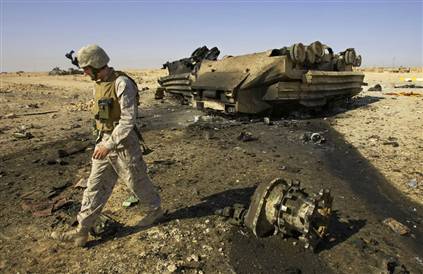
Finally, there is the issue of the IED and roadside bomb vulnerability of the EFV, since it has a flat bottom hull due to its need to float.  The Corps has experience in the use of flat bottom craft when, in the summer of 2005, 14 Recon Marines perished in Anbar when running an Amphibious Assault Vehicle down a road in the desert.

Marine Corps Commandant Conway has a justification for the continued investment in the EFV.  “We’re optimistic that once people understand the facts and understand that the United States Navy is not going closer than 25 miles to a shore, they’ll appreciate the value of a vehicle that is really an armored personnel carrier that also planes at about 30 knots over open ocean,” Conway said. “We think that the program is absolutely necessary to what we do.”

This issue touches on a debate over the so-called littoral combat program on which the U.S. Navy has supposedly embarked.  Twenty five miles is beyond the horizon.  The Navy believes in littoral combat, or so it says, but not really.  Not if it’s a risky proposition.  So Commandant Conway’s solution is to field the EFV.  A video of the USS San Antonio, the LCAC and the EFV is below.

But the whole amphibious assault construct including the EFV rests on the propositions that it [amphibious assault] will be necessary, that the assault will be a surprise along with the corollary idea that there will be no IEDs to destroy the EFVs, and that there is no other solution to the dilemma.

Let’s challenge at least the last three of those propositions.  First, if an amphibious assault becomes necessary against a nation-state, it is not a legitimate claim that the state will not be aware of the Amphibious Assault Dock just off its coast.  The element of surprise is thus taken away, and therefore the EFV is vulnerable to IEDs due to its flat hull, just like the Amphibious Assault Vehicle shown above.

Second, if the target to be invaded is a failed state, it’s not plausible to claim that conventional equipment such as the EFV is necessary.  If there is a need for rapid deployment of Marines, along with heavier equipment and firepower, then the solution is to invest money in a new generation of assault helicopters.

The problem of a broken military procurement system and irresponsible defense contractors isn’t going to go away.  The Marine Corp Commandant doesn’t need to jettison the expeditionary philosophy of the Corps.  Helicopters can supply the needed firepower, carried on board Aircraft Carriers and Amphibious Assault Docks.  The Commandant needs to jettison the EFV.  And the Navy needs to stop bragging about littoral combat unless they prove themselves actually willing to do it.


26th MEU (10)
Abu Muqawama (12)
ACOG (2)
ACOGs (1)
Afghan National Army (36)
Afghan National Police (17)
Afghanistan (704)
Afghanistan SOFA (4)
Agriculture in COIN (3)
AGW (1)
Air Force (41)
Air Power (10)
al Qaeda (83)
Ali al-Sistani (1)
America (22)
Ammunition (304)
Animals (323)
Ansar al Sunna (15)
Anthropology (3)
Antonin Scalia (1)
AR-15s (393)
Arghandab River Valley (1)
Arlington Cemetery (2)
Army (91)
Assassinations (2)
Assault Weapon Ban (29)
Australian Army (7)
Azerbaijan (4)
Backpacking (4)
Badr Organization (8)
Baitullah Mehsud (21)
Basra (17)
BATFE (246)
Battle of Bari Alai (2)
Battle of Wanat (18)
Battle Space Weight (3)
Bin Laden (7)
Blogroll (3)
Blogs (24)
Body Armor (23)
Books (3)
Border War (18)
Brady Campaign (1)
Britain (39)
British Army (36)
Camping (5)
Canada (19)
Castle Doctrine (1)
Caucasus (6)
CENTCOM (7)
Center For a New American Security (8)
Charity (3)
China (19)
Christmas (18)
CIA (30)
Civilian National Security Force (3)
Col. Gian Gentile (9)
Combat Outposts (3)
Combat Video (2)
Concerned Citizens (6)
Constabulary Actions (3)
Coolness Factor (3)
COP Keating (4)
Corruption in COIN (4)
Council on Foreign Relations (1)
Counterinsurgency (218)
DADT (2)
David Rohde (1)
Defense Contractors (2)
Department of Defense (220)
Department of Homeland Security (26)
Disaster Preparedness (5)
Distributed Operations (5)
Dogs (15)
Donald Trump (27)
Drone Campaign (4)
EFV (3)
Egypt (12)
El Salvador (1)
Embassy Security (1)
Enemy Spotters (1)
Expeditionary Warfare (18)
F-22 (2)
F-35 (1)
Fallujah (17)
Far East (3)
Fathers and Sons (2)
Favorite (1)
Fazlullah (3)
FBI (39)
Featured (192)
Federal Firearms Laws (18)
Financing the Taliban (2)
Firearms (1,867)
Football (1)
Force Projection (35)
Force Protection (4)
Force Transformation (1)
Foreign Policy (27)
Fukushima Reactor Accident (6)
Ganjgal (1)
Garmsir (1)
general (15)
General Amos (1)
General James Mattis (1)
General McChrystal (44)
General McKiernan (6)
General Rodriguez (3)
General Suleimani (9)
Georgia (19)
GITMO (2)
Google (1)
Gulbuddin Hekmatyar (1)
Gun Control (1,717)
Guns (2,406)
Guns In National Parks (3)
Haditha Roundup (10)
Haiti (2)
HAMAS (7)
Haqqani Network (9)
Hate Mail (8)
Hekmatyar (1)
Heroism (5)
Hezbollah (12)
High Capacity Magazines (16)
High Value Targets (9)
Homecoming (1)
Homeland Security (3)
Horses (2)
Humor (72)
Hunting (61)
ICOS (1)
IEDs (7)
Immigration (123)
India (10)
Infantry (4)
Information Warfare (4)
Infrastructure (4)
Intelligence (23)
Intelligence Bulletin (6)
Iran (171)
Iraq (379)
Iraq SOFA (23)
Islamic Facism (64)
Islamists (98)
Israel (19)
Jaish al Mahdi (21)
Jalalabad (1)
Japan (3)
Jihadists (82)
John Nagl (5)
Joint Intelligence Centers (1)
JRTN (1)
Kabul (1)
Kajaki Dam (1)
Kamdesh (9)
Kandahar (12)
Karachi (7)
Kashmir (2)
Khost Province (1)
Khyber (11)
Knife Blogging (7)
Korea (4)
Korengal Valley (3)
Kunar Province (20)
Kurdistan (3)
Language in COIN (5)
Language in Statecraft (1)
Language Interpreters (2)
Lashkar-e-Taiba (2)
Law Enforcement (6)
Lawfare (14)
Leadership (6)
Lebanon (6)
Leon Panetta (2)
Let Them Fight (2)
Libya (14)
Lines of Effort (3)
Littoral Combat (8)
Logistics (50)
Long Guns (1)
Lt. Col. Allen West (2)
Marine Corps (281)
Marines in Bakwa (1)
Marines in Helmand (67)
Marjah (4)
MEDEVAC (2)
Media (68)
Medical (146)
Memorial Day (6)
Mexican Cartels (47)
Mexico (71)
Michael Yon (6)
Micromanaging the Military (7)
Middle East (1)
Military Blogging (26)
Military Contractors (5)
Military Equipment (25)
Militia (9)
Mitt Romney (3)
Monetary Policy (1)
Moqtada al Sadr (2)
Mosul (4)
Mountains (25)
MRAPs (1)
Mullah Baradar (1)
Mullah Fazlullah (1)
Mullah Omar (3)
Musa Qala (4)
Music (25)
Muslim Brotherhood (6)
Nation Building (2)
National Internet IDs (1)
National Rifle Association (97)
NATO (15)
Navy (31)
Navy Corpsman (1)
NCOs (3)
News (1)
NGOs (3)
Nicholas Schmidle (2)
Now Zad (19)
NSA (3)
NSA James L. Jones (6)
Nuclear (63)
Nuristan (8)
Obama Administration (222)
Offshore Balancing (1)
Operation Alljah (7)
Operation Khanjar (14)
Ossetia (7)
Pakistan (165)
Paktya Province (1)
Palestine (5)
Patriotism (7)
Patrolling (1)
Pech River Valley (11)
Personal (76)
Petraeus (14)
Pictures (1)
Piracy (13)
Pistol (4)
Pizzagate (21)
Police (672)
Police in COIN (3)
Policy (15)
Politics (998)
Poppy (2)
PPEs (1)
Prisons in Counterinsurgency (12)
Project Gunrunner (20)
PRTs (1)
Qatar (1)
Quadrennial Defense Review (2)
Quds Force (13)
Quetta Shura (1)
RAND (3)
Recommended Reading (14)
Refueling Tanker (1)
Religion (499)
Religion and Insurgency (19)
Reuters (1)
Rick Perry (4)
Rifles (1)
Roads (4)
Rolling Stone (1)
Ron Paul (1)
ROTC (1)
Rules of Engagement (75)
Rumsfeld (1)
Russia (37)
Sabbatical (1)
Sangin (1)
Saqlawiyah (1)
Satellite Patrols (2)
Saudi Arabia (4)
Scenes from Iraq (1)
Second Amendment (708)
Second Amendment Quick Hits (2)
Secretary Gates (9)
Sharia Law (3)
Shura Ittehad-ul-Mujahiden (1)
SIIC (2)
Sirajuddin Haqqani (1)
Small Wars (72)
Snipers (9)
Sniveling Lackeys (2)
Soft Power (4)
Somalia (8)
Sons of Afghanistan (1)
Sons of Iraq (2)
Special Forces (28)
Squad Rushes (1)
State Department (23)
Statistics (1)
Sunni Insurgency (10)
Support to Infantry Ratio (1)
Supreme Court (79)
Survival (214)
SWAT Raids (58)
Syria (38)
Tactical Drills (38)
Tactical Gear (17)
Taliban (168)
Taliban Massing of Forces (4)
Tarmiyah (1)
TBI (1)
Technology (21)
Tehrik-i-Taliban (78)
Terrain in Combat (1)
Terrorism (96)
Thanksgiving (13)
The Anbar Narrative (23)
The Art of War (5)
The Fallen (1)
The Long War (20)
The Surge (3)
The Wounded (13)
Thomas Barnett (1)
Transnational Insurgencies (5)
Tribes (5)
TSA (25)
TSA Ineptitude (14)
TTPs (4)
U.S. Border Patrol (8)
U.S. Border Security (22)
U.S. Sovereignty (29)
UAVs (2)
UBL (4)
Ukraine (10)
Uncategorized (105)
Universal Background Check (3)
Unrestricted Warfare (4)
USS Iwo Jima (2)
USS San Antonio (1)
Uzbekistan (1)
V-22 Osprey (4)
Veterans (3)
Vietnam (1)
War & Warfare (432)
War & Warfare (41)
War Movies (4)
War Reporting (21)
Wardak Province (1)
Warriors (6)
Waziristan (1)
Weapons and Tactics (80)
West Point (1)
Winter Operations (1)
Women in Combat (21)
WTF? (1)
Yemen (1)

February 2026
January 2026
December 2025
November 2025
October 2025
September 2025
August 2025
July 2025
June 2025
May 2025
April 2025
March 2025
February 2025
January 2025
December 2024
November 2024
October 2024
September 2024
August 2024
July 2024
June 2024
May 2024
April 2024
March 2024
February 2024
January 2024
December 2023
November 2023
October 2023
September 2023
August 2023
July 2023
June 2023
May 2023
April 2023
March 2023
February 2023
January 2023
December 2022
November 2022
October 2022
September 2022
August 2022
July 2022
June 2022
May 2022
April 2022
March 2022
February 2022
January 2022
December 2021
November 2021
October 2021
September 2021
August 2021
July 2021
June 2021
May 2021
April 2021
March 2021
February 2021
January 2021
December 2020
November 2020
October 2020
September 2020
August 2020
July 2020
June 2020
May 2020
April 2020
March 2020
February 2020
January 2020
December 2019
November 2019
October 2019
September 2019
August 2019
July 2019
June 2019
May 2019
April 2019
March 2019
February 2019
January 2019
December 2018
November 2018
October 2018
September 2018
August 2018
July 2018
June 2018
May 2018
April 2018
March 2018
February 2018
January 2018
December 2017
November 2017
October 2017
September 2017
August 2017
July 2017
June 2017
May 2017
April 2017
March 2017
February 2017
January 2017
December 2016
November 2016
October 2016
September 2016
August 2016
July 2016
June 2016
May 2016
April 2016
March 2016
February 2016
January 2016
December 2015
November 2015
October 2015
September 2015
August 2015
July 2015
June 2015
May 2015
April 2015
March 2015
February 2015
January 2015
December 2014
November 2014
October 2014
September 2014
August 2014
July 2014
June 2014
May 2014
April 2014
March 2014
February 2014
January 2014
December 2013
November 2013
October 2013
September 2013
August 2013
July 2013
June 2013
May 2013
April 2013
March 2013
February 2013
January 2013
December 2012
November 2012
October 2012
September 2012
August 2012
July 2012
June 2012
May 2012
April 2012
March 2012
February 2012
January 2012
December 2011
November 2011
October 2011
September 2011
August 2011
July 2011
June 2011
May 2011
April 2011
March 2011
February 2011
January 2011
December 2010
November 2010
October 2010
September 2010
August 2010
July 2010
June 2010
May 2010
April 2010
March 2010
February 2010
January 2010
December 2009
November 2009
October 2009
September 2009
August 2009
July 2009
June 2009
May 2009
April 2009
March 2009
February 2009
January 2009
December 2008
November 2008
October 2008
September 2008
August 2008
July 2008
June 2008
May 2008
April 2008
March 2008
February 2008
January 2008
December 2007
November 2007
October 2007
September 2007
August 2007
July 2007
June 2007
May 2007
April 2007
March 2007
February 2007
January 2007
December 2006
November 2006
October 2006
September 2006
August 2006
July 2006
June 2006
May 2006

about · archives · contact · register

Copyright © 2006-2026 Captain's Journal. All rights reserved.