Texas Monthly:
On most Sunday mornings, Willeford would have been 45 minutes away, in San Antonio, at the Church of Christ he and his family had attended since his kids were young. But on November 5, 2017, he decided to stay home and rest up. He was scheduled to be on call the upcoming week at San Antonio’s University Hospital, and he knew he’d inevitably be summoned for a middle-of-the-night plumbing emergency. He had drifted to sleep sometime before 11:30 a.m. when his oldest daughter, Stephanie, came into his bedroom and woke him up. She asked if he heard gunfire.
He did hear something, but to Willeford it sounded like someone was tapping on the window. He looked outside but didn’t see anyone. He pulled on a pair of jeans and went to the living room, where the walls were less insulated. The sound was louder there. It was definitely gunfire, he realized, but he couldn’t tell where it was coming from.
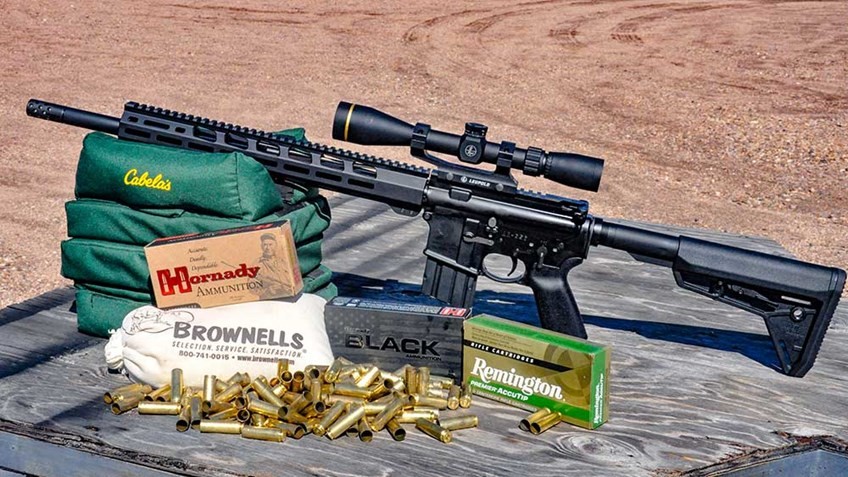
He rushed into a back room and opened his steel gun safe, where he stows his collection of pistols, rifles, and shotguns. Without hesitation, he snatched one of his AR-15s. He’d put the rifle together himself, swapping out parts and upgrading here and there over the years. It was light, good for mobility, and could shoot quickly. It wasn’t as accurate as some of his other rifles but good enough to hit the bowling pins he and his friends used for targets. He loaded a handful of rounds into the magazine.
[ … ]
As he approached the old white chapel, he screamed as loud as he could, “Hey!” To this day, he’s not sure why—he knows that giving away your position is foolish, tactically—but friends inside the church later told him that when the gunman heard Willeford’s cry, he stopped shooting and headed for the front door. “It was the Holy Spirit calling the demon out of the church,” he tells people.
[ … ]
Willeford propped his AR-15 on the pickup’s hood and peered through the sight. He could see a holographic red dot on the man’s chest. He fired twice. He wasn’t sure he’d hit him, though he was later told that the man had contusions on his chest and abdomen consistent with getting shot while wearing body armor. Regardless, the gunman stopped shooting and ran for a white Ford Explorer that was idling outside the chapel, roughly twenty yards from where Willeford had positioned himself.
As the shooter rounded the front of the Explorer, Willeford noticed that the man’s vest didn’t cover the sides of his torso. Willeford fired twice more, striking the man once beneath the arm—in an unprotected spot—and once in the thigh.
[ … ]
Willeford believes that what happened that day was a battle between good and evil. He says he was terrified, but he thinks the calm he experienced was the Holy Spirit taking over. He tells people he thinks it was the Lord’s hand shielding him as the man doing evil fired over and over again in his direction. And looking back now, he feels like God had been shaping him every day of his life, carving him into the perfect tool for that day.
[ … ]
He’d even had discussions with a police officer friend, long before his encounter with the gunman, about where to aim on a moving target wearing body armor: the side, the hip, the leg. More preparation from God, he believes.
[ … ]
For most of the afternoon, he was convinced he’d be going to jail, despite repeated assurances from the officers interviewing him. He’s always told people: if you use your gun, even in self-defense, expect to spend a night in jail before it’s all sorted out. He talked to five different law enforcement agencies, but his worries were assuaged only after the district attorney for Wilson County, Audrey Louis, introduced herself and put him at ease. She told him she had friends in that church, and she gave him a hug.
[ … ]
When the owner of Sons of Liberty learned that the rifle Willeford had used on the morning of the shooting had been confiscated and had yet to be returned, he insisted on building him a new one. It’s painted a desert camouflage, with a brown Texas flag on one side and a passage from Romans 13:4 on the other: For he is God’s servant for your good. But if you do wrong, be afraid, for he does not bear the sword in vain. For he is the servant of God, an avenger who carries out God’s wrath on the wrongdoer. (Law enforcement recently returned the rifle to him in a ceremony at the church.)
[ … ]
So in those moments, when his mind is unoccupied, here is what Willeford is fated to ponder: if he’d arrived fifteen seconds sooner, Kris Workman might still be able to walk. If he had been there a minute earlier, Workman’s mother, Julie, might not have a bullet hole in her leg. If he’d gone running when he first heard the tapping on his bedroom window, maybe he could have saved some of the children.
When these thoughts start to consume him, he’s learned to remind himself he did the best he could.
There is so much there it’s difficult to mine it all, but a few things jump out. First of all there are the tactical lessons. Body armor, legs, hips and head. Remember those lessons. I will too.
Next, while I understand the need to collect firearms for forensic analysis, that firearm was Willeford’s and law enforcement had absolutely no right to keep it that long. Not to law enforcement: be about your business. The property you have belongs to someone else, an individual or the taxpayers.
Then there is the issue of the fact that Willeford was certain he’d be jailed for doing the right thing. What a sad commentary on the state of America.
Finally, he did do the best he could. There is no reason to second guess what happened. He did God’s bidding. I am a Calvinist. God ordained that Willeford would be there that specific day, that he would have access to firearms to protect the community, and that he would respond. And God made his shots true. He was God’s tool for righteousness that day.
No regrets, no looking back, sir. You did great.
But for God’s sake, Stephen. Keep loaded magazines handy.



 7 years, 10 months ago