Grizzly Bear Attack Stopped With .44 Magnum
BY Herschel Smith 2 years, 3 months ago
This even occurred in Wyoming in 2010, and Dean Weingarten uses a FOIA to get the details.
So chalk another one up for the .44 Magnum.
 2 years, 3 months ago
This even occurred in Wyoming in 2010, and Dean Weingarten uses a FOIA to get the details.
So chalk another one up for the .44 Magnum.
2 years, 3 months ago
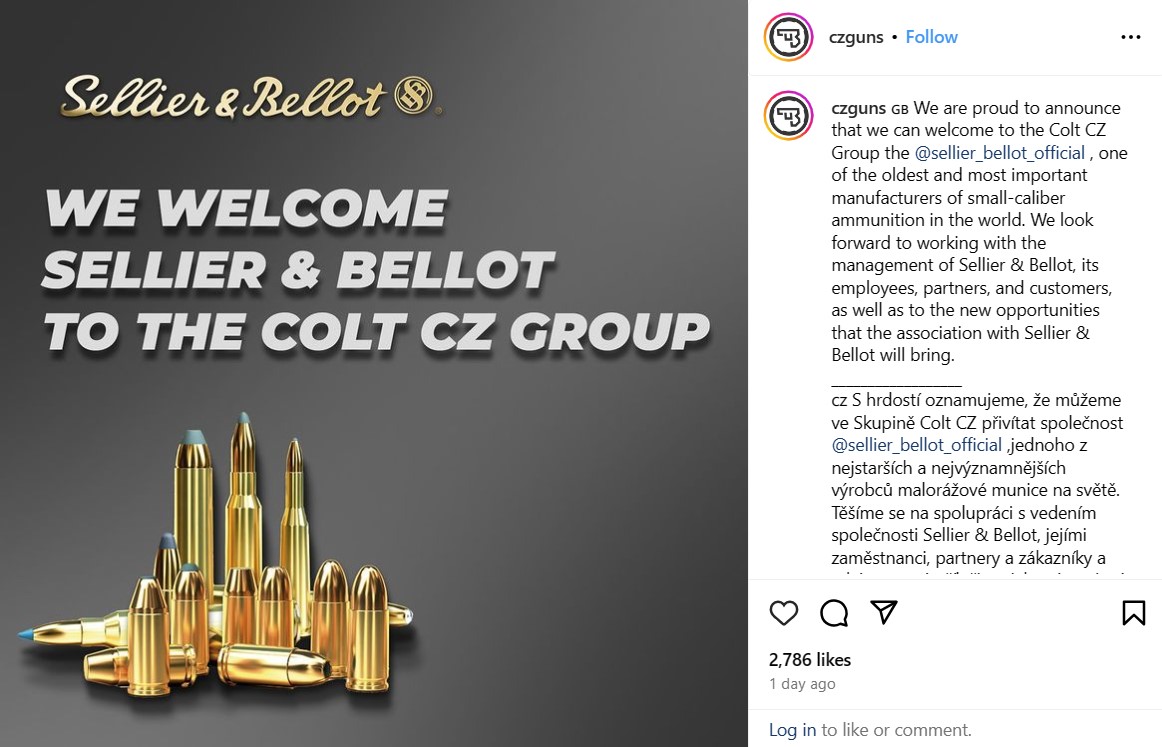
I have never used this ammo before and have no particular comment on their procurement, except that CZ manufactures very good guns. I wish they were entirely in America.
2 years, 4 months ago
F&S.
In 1955, Smith & Wesson and Remington teamed up to introduce the .44 Remington Magnum, and gun writer Elmer Keith was a great inspiration in the cartridge’s development. The .44 Magnum’s starring role in Clint Eastwood’s Dirty Harry movie gave it immediate credibility and fame. It is, however, a handful to shoot, which is why it’s common to find used .44 Magnum revolvers being sold that come with a half box of ammo. Many shooters find they’re just not quite the man Inspector Harry Callahan was. Fortunately, .44 Magnum revolvers can also safely chamber and fire .44 Special ammunition, which has much less offensive recoil. In factory ammunition, there are more than 50 .44 Magnum loads to choose from, and about half as many .44 Special loads.
The 44 Magnum does not use a 0.44-caliber bullet. The bullet diameter is actually 0.429-inch in diameter, but, 429 or 430 Magnum just does not have the same ring to it. The cartridge is loaded to a maximum average pressure of 36,000 psi, which is about twice that of the .44 Special. As powerful as that seems, the .357 SIG is actually loaded to a higher pressure. The .44 Magnum has been used to successfully take every game animal on earth, and it’s a personal protection favorite with those who like to tromp around in big bear country. Marlin and several other manufacturers currently offer lever guns chambered for the .44 Magnum.
[ … ]
The .454 Casull was not approved by the Sporting Arms and Ammunition Manufacturers Institute (SAAMI) until 1997, and their standard specifies a maximum average pressure of 65,000 psi. This is absurdly more than the .44 Magnum, and it’s where the .454 Casull finds all its power. The cartridge can push a 200-grain bullet to more than 2000 fps. By comparison, the .45 Colt is only loaded to a maximum average pressure of 14,000 psi. In a 50-ounce revolver, .454 Casull is intimidating to shoot with full-power loads, recoiling with around 36 foot-pounds of hand-numbing and wrist-twisting force. Rossi and Big Horn Armory both offer lever-action rifles chambered for the .454 Casull.
If power is your main consideration, there’s no comparison; the .454 Casull is the clear winner. With its most powerful loads, the .454 Casull can generate nearly 2,000 foot-pounds of kinetic energy at the muzzle. This puts it in the same class as some popular rifle cartridges, but with bullets weighing twice as much. However, with high performance +P+ ammunition, the .44 Magnum is not that far behind the .454. Take note, however, there is not a SAAMI standard for +P or +P+ .44 Magnum ammo. Dirty Harry’s cartridge will not shoot quite as fast or hit as hard as the .454 Casull, but like the .454 Casull, the .44 magnum is capable of handling any critter you want to tackle.
I find shooting a .44 magnum wheel gun quite enough, and after a couple of wheels of ammunition I’m ready to put it away. I shoot it enough to know what to expect. The power is great for the bush, but I don’t think I want to sport a .454 Casull handgun.
However, I would surely have a lever action rifle in 454 Casull, except that Big Horn Armory charges an arm and a leg for their rifles. I know Rossi makes a rifle, but it surely doesn’t have the looks of a quality gun. Henry doesn’t make one in that caliber either.
Ruger has several revolvers in 454 Casull but their choice is certainly limited. That the selections in 454 Casull are so limited seems to me to limit the use and popularity of the cartridge.
2 years, 4 months ago
If you have the time for it, these are two interesting videos. There are an awful lot of devotees to the 7mm Rem Mag. For those who have a rifle chambered in this cartridge, what are your thoughts on it?
2 years, 4 months ago
- A World War II-era AR-15 ammo factory is linked to several mass shootings, the Times found.
- The Lake City Army Ammunition Plant was built to supply the US military.
- But the plant shifted to commercial sales in the last decade.
A World War II-era ammunition factory meant to supply the US military has been linked to more than a dozen mass shootings.
The Lake City Army Ammunition Plant shifted to commercial sales in 2011 and is now one of the biggest manufacturers of commercial AR-15 ammunition in the United States. According to The New York Times, it has made “hundreds of millions” of commercial rounds every year since 2011.
The facility was built during World War II and has since been operated by US government contractors to produce ammunition, but its focus has gradually shifted to commercial production as military demand waned, The Times reported.
By 2021, commercial production in the facility was more than two times higher than the rate of production for military ammunition, The Times found.
I see. So we’re putting bullets at the beginning of articles now for idiots to read in two seconds. Alrighty then.
So, here’s another take. The U.S. military should in general avoid foreign entanglements. American citizens should be armed, and in fact, “every terrible implement of the soldier” is the birthright of the American citizen.
Moreover, rather than lay off good men working at the ammo plant, they repurposed the plant to do what they should have been doing all along rather than enabling foreign entanglements, as well as making better American riflemen.
I love a happy ending.
2 years, 4 months ago
I have nothing scientific to convey, just an anecdotal reference point. My local Academy Sports, which almost always has fairly inexpensive 5.56mm and .223 for sale, has no 5.56mm at all. They have very little .223, and what they do have is off-brand.
I’d be interested in your experience. It appears as if there is a rush to buy this caliber and that can be seen at the local level.
Nationally, if you do Ammoseek 5.56 you’ll see a lot of 5.56mm in the price range from 50 – 60 cents per round.
2 years, 4 months ago
This is almost enough to make me employ a polymer shell carrier.
Most of the comments are focused on moisture and/or salt. Has this ever happened to you before?
2 years, 4 months ago
PGF mentioned it, but Backfire is very concerned as am I. Skip to the 7 minute mark.
2 years, 5 months ago
Richard Mann writing at F&S.
The situation where the 10mm Auto has the bigges advantage is for backcountry survival or bear defense. Loaded with something like Buffalo Bore’s 220-grain hardcast Outdoorsman load at 1200 fps, it will hit harder than any 45 ACP load, and because of the smaller diameter non-deforming bullet, will penetrate deeper, even deeper than a 180-grain Barnes Triple Shock bullet fired out of a 30-06 rifle!
That’s his conclusion paragraph. It’s true enough as it reads, but it’s incomplete.
He doesn’t consider use of 450 SMC, which would give him 230 grains running downrange at 1120 FPS.
Comparatively speaking, the hottest factory 185-grain .45 ACP load you can buy will generate only about 1,140 fps, and the fastest 230-grain offering only about 1,000 fps. Essentially, what you get with the .450 SMC are 10 mm velocities with a .45-caliber instead of a .40-caliber bullet.
I have no problem at all using a heavier bullet at comparable velocities.
Richard should expand his article (or do another one) on the use of 450 SMC and 460 Rowland. Actually, he should have written this one to consider all of the 45 options.
2 years, 5 months ago
Vista Outdoors Bought by Czech Company. Press Release.
News:
Current CEO Jason Vanderbrink Will Continue to Lead the Sporting Products Business and the U.S. Headquarters Will Remain in Anoka, Minnesota
Represents Largest Acquisition in the History of Czech Defense Industry
The Czechoslovak Group (“CSG”) announced today that it has entered into a definitive agreement to acquire Vista Outdoor Inc.’s (NYSE: VSTO) (“Vista Outdoor”) Sporting Products business for a total consideration of $1.91 billion, valuing the business at approximately 5x Fiscal Year 2024E EBITDA, including estimated standalone costs. CSG will partner with the existing management to pursue the continued growth path envisaged for the Sporting Products business over the coming years.
Headquartered in Anoka, Minnesota, Vista Outdoor’s Sporting Products business is a leading ammunition manufacturer in the U.S. commercial and law enforcement markets. It employs approximately 4,000 employees across its four U.S. factories and owns leading ammunition brands including CCI, Federal, HEVI-Shot, Remington and Speer.
CSG, based in Prague, Czech Republic, is a leading industrial technology company operating in five strategic business segments: Defense, Aerospace, Ammunition, Mobility and Business Projects. It is 100% controlled and led by Michal Strnad, who has transformed it into the most relevant Czech industrial group, with a strong international footprint. CSG employs more than 10,000 people worldwide and owns and manages a diverse portfolio of industrial and trade companies across the civil and defense sectors.
This isn’t good news for any American. Having ammo manufacturing dependent in any way upon the hearts and minds of foreigners in Europe seems like a wrong strategic move for the government and certainly doesn’t bode well for civilians.
Smith & Wesson just opened manufacturing near Knoxville, TN; many southern states have stepped up, and now most U.S. firearms manufacturing is done in the southern United States. It’s time to bring ammunition manufacturing as well to the last vestiges of freedom on earth in the Deep South and Mountain West.





