Articles by Herschel Smith


The “Captain” is Herschel Smith, who hails from Charlotte, NC. Smith offers news and commentary on warfare, policy and counterterrorism.


Of Swine, Hyenas and Generals: The Petraeus Testimony

17 years, 10 months ago

Disregarding the title and departing from General Petraeus for a moment, the exchange between the laughing hyena Joe Biden and the respectful and respectable Ryan Crocker is below.

The transcript is as follows:

BIDEN: Mr. Ambassador, is Al Qaeda a greater threat to US interests in Iraq, or in the Afghan-Pakistan border region?

CROCKER: Mr. Chairman, al Qaeda is a strategic threat to the United States wherever it is–

BIDEN: Where is most of it? If you could take it out, you had a choice, the Lord Almighty came down and sat in the middle of the table there, and said, ‘Mr. Ambassador, you can eliminate every al Qaeda source in Afghanistan and Pakistan, or every al Qaeda personnel in Iraq, which would you pick?’

CROCKER: Well, given the progress that has been made against al Qaeda in Iraq, the significant decrease in its capabilities, the fact that it is solidly on the defensive and not in a position as far–

BIDEN: Which would you pick?

CROCKER: I would therefore pick Al Qaeda in the Pakistan-Afghanistan border area.

Actually, there was further testimony that didn’t make the news due to being behind closed doors.  The Senate panel cross examined The Captain’s Journal, with the laughing hyena Joe Biden leading off.  TCJ has been given exclusive access to the transcript which follows:

Laughing Hyena Joe Biden: Hiss … laugh, yelp, growl … suppose that you were required either to listen to me for an hour or take a beating with a baseball bat for an hour.  Which one would you choose?

TCJ: Well, sir, I would rather beat you with a baseball bat for an hour, and …

Hyena: SILENCE SWINE!  You don’t have that option.  You answer my question, now, swine!  Would you rather listen to me or take a beating?  ANSWER, SWINE?  Hiss … laugh … growl … yelp … laugh.

TCJ: Well, it’s really hard to say.  I really don’t want to listen to a hyena for an hour, but a beating with a baseball bat sounds bad …

Hyena: Hiss … laugh … suppose that God came down into your midst and commanded you to make a choice between me or a baseball bat.  Choose, SWINE!

TCJ: Well, hyena, since God didn’t give me the choice of being the vessel which exacts his vengeance upon you, I choose the baseball bat, hyena.

Hyena: Laugh … hiss … growl … hiss … laugh, laugh … I thought so, swine.

This either/or rather than the both/and approach is ridiculous and pertains only to the degree to which the nation chooses to engage in and fund the global war on terror.  Nothing more.  The hyena is purveying a false dilemma.

Returning to the Petraeus testimony, Abu Muqawama has some interesting comments.  First, Abu takes issue with Tom Ricks of the Washington Post for calling them the “rogue cousin” of the Small Wars Journal.  It was fun and interesting to watch Abu react by challenging Ricks to a slap down mixed martial arts cage match – or something like that.  We’ll wait to see that one – it should be interesting.  Next, we’ll reproduce some of the interesting comments below.

While we’re on the subject of Lebanonization, though, here’s another historical analogy that Amb. Crocker missed. In Lebanon, in September 1983, the U.S. lent direct support to what it assumed was a national institution, the Lebanese Army, in the battle at Souk el-Gharb. By doing so, it became, in the eyes of the rest of the Lebanese population, just another militia and thus fair game. What happened next? Ask any U.S. Marine.

Now we all know the situations in Iraq and Lebanon are not exactly the same, but Souk el-Gharb was running through Abu Muqawama’s head during the battle of Basra two weeks ago when we were lending our support to the “national” army of Iraq in its fight with the Sadr crew. To us good-natured Americans, it may have looked as if we were lending our support to the legitimate, national institutions of Iraq. But to other Iraqis, it probably looked as if we were taking sides in the intra-Shia political dispute between ISCI and Sadr in the run-up to this fall’s provincial elections.

At least the senators yesterday didn’t let Crocker and Petraeus get away with talking about the “Iran-supported Sadr Militia.” Yes, Ambassador, Iran does support Sadr and his militia. But they also support our allies. What a fine mess we’ve gotten ourselves into.

Well, at TCJ we believe that the gentleman Petraeus could have gone much further than he did concerning Iran’s involvement in the affairs of Iraq – and truthfully so.  He was moderate and measured, as always.  However, Abu makes a good point concerning the ISCI (otherwise SIIC) and the fact that they got out unscathed.  In Basra and Iran, we observed:

In order to cut ties with Iran, the SIIC “members” of the Iraqi Security Forces – who had to fight only rival miltias in Basra this time around – should be forced to rid Iraq of all Iranian influence, including Quds, Hezbollah, IRG and any other proxy Iranian fighters.  Failure to do so, from leadership down to the lowest ranking soldier, should be addressed as treason.  Until the SIIC is forced to fight for Iraq as opposed to fighting against rival gangs, they too are merely Iranian proxy forces.

So as far as Iranian-supported militia, we propose taking them all out, or coopting them absolutely and completely, no negotiations.  As for the hyena Biden, we should send him over to throw-down with the IRG and Sadrists.

Basra and Iran

17 years, 10 months ago

Michael Ledeen argues (as he has before) that it will be virtually impossible to achieve a durable peace in Iraq without confronting and dealing with the Iranian presence and influence.  The Captain’s Journal agrees and has advocated for some time that an insurgency be fomented inside the borders of Iran.  There is no end to the gushing reports about success in Basra, in spite of the defections, orders not to fire at the Mahdi militia, and premature stand-down in operations.

The Captain’s Journal has been quite a bit less sanguine about the Basra campaign, and continues to be so.  The gushing reports, in addition to ignoring the poor planning and execution of the operation, ignore both its short duration and broader connection to Iran.  The campaign in Basra must not be seen in the aggregate.  It has now been made clear that Iranian fighters and military leadership -Quds and even Hezbollah – were directing the fight in many areas of Iraq, and that Moqtada al Sadr has become a (militarily) irrelevant mouthpiece for Iran.

The top two U.S. officials in Iraq accused Iran, Syria and Lebanon’s Hezbollah on Tuesday of fueling recent fighting in Baghdad, saying Tehran and Damascus were pursuing a “Lebanization strategy” in Iraq.

“The hand of Iran was very clear in recent weeks,” U.S. commander in Iraq, Army Gen. David Petraeus, said at a hearing before the Senate Armed Services Committee.

But Petraeus told lawmakers that Iran’s Qods Force and Hezbollah were funding, training, arming and directing renegade Shi’ite groups he blamed for recent deadly rocket and mortar attacks in the Iraqi capital.

“Unchecked, the special groups pose the greatest long-term threat to the viability of a democratic Iraq,” said the four-star general.

Speaking from Iran, al Sadr said “the government should “protect the Iraqi people from the booby traps and American militias” and “demand the withdrawal of the occupier or a schedule for its withdrawal from our holy land.”  These are the words of Ayatollah Khamenei, and the Mahdi militia is little more than puppets of Iran.

The beginnings of this current campaign apparently came from Iranian concerns over a great many things, including the strength of the Sunni awakening fighters.

For its part, Tehran was angered by the latest American plan based on a ‘divide and conquer’ approach and fears that Iraq will become a US protectorate after the US has discovered a barrier against the Shia-dominated government in the [predominately] Sunni Sahwa (Awakening) protection forces. Tehran’s apprehension was quite considerable; especially after Bush declared that the Sahwa forces presently number 90,000 strong (members receive monthly salary of US $300).

Through an editorial written by Selig S. Harrison in the ‘Boston Globe’, Tehran was able communicate its point across to the US: “Unless [General David] Petraeus drastically cuts back the Sunni militias, Tehran will unleash the Shia militias against US forces again and step up to help al Maliki’s intelligence service, the Ministry of National Security.” This was followed by al Maliki’s attack on the Mehdi army in Basra.

The article written by the stooge Selig S. Harrison is entitled Working with Iran to Stabilize Iraq, a strategy also endorsed by Senator Jim Webb.  But assisting in the stability of Iraq is the last thing Iran can be expected to do.  The failure of the Basra campaign is simply that it stopped far short of what is needed.  Iran has become masters at starting, stopping, delaying, relocating, withdrawing, calling for a truce, hiding in the shadows, and in general conducting surreptitious warfare against the U.S.  This is exactly what has happened in Basra.

The temporary and fragile peace in Basra was purchased through negotiations with none other than Iran.

The Mehdi militiamen withdrew from the streets after six days of fighting, but they appear to have taken their arms with them, defying Prime Minister Maliki’s initial demand that all militia-held medium and heavy weapons be surrendered.

The political leadership of Iraq is saying that there was no deal with the Mehdi militia to stop the fighting.

On Thursday Mr Maliki insisted he had not ordered negotiations with Moqtada Sadr.

And a source close to the prime minister says that Moqtada Sadr’s order to cease fighting came at the instigation of Iran.

The source said that as the bloodshed in Basra began early last week, Moqtada Sadr tried to telephone Prime Minister Maliki from Qom, in Iran – and the prime minister refused to take his call.

But a delegation from the United Iraqi Alliance, the parliamentary bloc that supports Mr Maliki, flew to Tehran, where they told representatives of the Iranian leadership that Iran’s involvement in stirring up the militia violence was unacceptable and would have to stop, the source said.

They pointed out that Iranian munitions were being used in the fighting.

The Iranian leadership, according to the source, then brought Moqtada Sadr to Tehran.

There, late on Saturday night, he crafted the statement that would order his Mehdi Army militiamen off the streets, the source said.

In this version of events, the Iraqi prime minister retains the ability to deny entering talks with Moqtada Sadr. In effect, it appears to have been done for him, with Iranian influence brought to bear.

In order to obtain a victory in Basra and Sadr City proper, Maliki and the Multinational Force must think regionally.  Several important tactics must be pressed.  First, the Mahdi militia must be completely taken out and disarmed.  They can be seen as nothing more than Iranian proxy fighters.  Second, the SIIC (otherwise ISCI) has a great influence in Shi’ite Iraq, and it must be dealt with.  As Fred Kaplan notes, “the Iranians won because Maliki turned to them to mediate the cease-fire with Sadr, thus confirming their status as a major player in Iraqi politics and a dominant power on Iraq’s southern port. (The Iranians probably would have won no matter what happened, because the rival Shiite militia backing Maliki—the Islamic Supreme Council of Iraq, 10,000 members of which fought alongside the official army—also has ties to Iran. Maliki afterward admitted those 10,000 into the national armed forces. Does this mean that the ISCI militia has been co-opted into the Iraqi government—or that the government is, even more than before, controlled by the militia?).”

In order to cut ties with Iran, the SIIC “members” of the Iraqi Security Forces – who had to fight only rival miltias in Basra this time around – should be forced to rid Iraq of all Iranian influence, including Quds, Hezbollah, IRG and any other proxy Iranian fighters.  Failure to do so, from leadership down to the lowest ranking soldier, should be addressed as treason.  Until the SIIC is forced to fight for Iraq as opposed to fighting against rival gangs, they too are merely Iranian proxy forces.

At the moment, The Captain’s Journal is unpersuaded that any good has come from Basra and Sadr city fighting.  The campaign isn’t over, but with General David Petraeus, we are disappointed in the results so far.

Petraeus Advisor Colonel Derek Harvey

17 years, 10 months ago

St. Louis Today (STLtoday.com) has an interesting article on (outside military circles) a little known advisor to General David Petraeus, retired Army Colonel Derek Harvey.  Portions of it are reproduced below.

As Gen. David Petraeus prepares his critical testimony to Congress this week, one key figure advising him is a retired Army colonel from O’Fallon, Ill., whose Iraq advice the administration once ignored.

Derek Harvey has operated beneath the public radar for the entire Iraq war yet is regarded by many as the single most-informed American on military developments in Iraq. For the past 15 months, as Petraeus’ senior civilian adviser, Harvey has been a prime advocate — and architect — of the troop surge and altered policies credited with reducing violence in Iraq.

Harvey says he hopes Petraeus’ testimony will give Congress — and the public — a picture of Iraq’s improving conditions, including grass-roots citizen participation, despite recent violence in the south.

“What you have is local, town and county governing capacity being reborn, a sense of getting back to normal,” Harvey says.

Harvey sees significant advances, even if some are hard to put into numerical terms.

“There has been widespread, and real, progress, in Sunni Arab towns that have rejected al-Qaida, and in accommodation and reconciliation between Shia and Sunnis in Baghdad and in mixed areas of the country,” Harvey says.

“One can debate the wisdom of the war and its origins, but that is not the point for me and many who have been involved. It’s about the future, how do we make it an acceptable outcome?”

As an editorial note, I would like to echo this sentiment.  Discussions about the origin of the campaign should have been relegated to the first several months after the invasion.  The balance of our efforts should be focused on winning the campaign in order for our efforts to be fruitful.  Colonel Harvey’s position is mature and rises above political rancor.  Continuing, the article goes into unheeded warnings about a rising Sunni insurgency.

Early on, he privately told President George W. Bush and then-Defense Secretary Donald Rumsfeld that a strong Sunni insurgency was probable, that U.S. leaders didn’t understand their adversary and that American forces needed to provide better security for Iraqi civilians as part of a counterinsurgency strategy.

By several accounts, a startled Bush asked Harvey how he could know that the Sunnis were planning a “popular insurrection,” when dozens of more-senior officials had given assurances that no such thing would happen. Harvey, who speaks Arabic, responded that he had spent time with sheiks, tribal leaders and Sunni people listening to their anger and plans to retake power after what they saw as Saddam’s mismanagement of the war, while advisers painting a rosy picture hadn’t done that.

“Harvey is hands down the very best intelligence analyst that the United States government has on Iraq,” says former Army Vice Chief of Staff Gen. Jack Keane. “He has been right from late ’03 all the way … up to the present.

“Not everybody has listened to Harvey, but Gen. Petraeus has, and so he’s making a difference,” says Keane, who retired but is now a member of the Pentagon’s Defense Policy Board, an advisory panel …

Al-Qaida, which once loomed as a winner in Iraq, has been severely weakened, Harvey says, and what looked like an inevitable war between Sunnis and Shiites in Iraq has yielded to growing reconciliation.

The article concludes with Harvey being seen as someone who understands the complexity and nuance of the Iraq campaign, but also a sad note about the continuing lack of ability to promote the right people.

Sen. Jack Reed, D-R.I., of the Senate Armed Services Committee, says he has requested several briefings from Harvey because of his “unusually thoughtful insights into Iraq. He is somebody who works very, very hard to untangle all the nuances, and is always in my view prepared to step back and examine the assumptions, a critical feature for an analyst.”

Harvey has done doctoral-level Middle East studies, and while serving at U.S. Transportation Command at Scott Air Force Base before 9/11, he worked on the threat posed to the United States by Afghanistan, the Taliban and Osama bin Laden.

Harvey was denied promotion to the rank of a one- or two-star general, leading to his retirement, which former House Speaker Newt Gingrich, a member of the Pentagon’s Defense Policy Board, calls “a travesty” and “a sign of the continuing failure of the Army to adopt priorities that fit the modern world.”

Gingrich says both Gen. John Abizaid and Gen. George Casey, when they led U.S. forces in Iraq, told him that Harvey “was the most knowledgeable person on Iraq that we had.”

“He retired as a colonel … and yet he goes back again and again to Iraq to continue to determine plans for victory,” Gingrich said, calling Harvey’s efforts “simply stunning.”

Harvey credits Petraeus’ leadership, which he says is “why people like me have been willing to sacrifice.”

This ability to “untangle all the nuances” led Harvey to advocate a hard position on al Qaeda and Abu Musab al-Zarqawi in 2006.

Some senior intelligence officers believe Zarqawi’s role may have been overemphasized by the propaganda campaign, which has included leaflets, radio and television broadcasts, Internet postings and at least one leak to an American journalist. Although Zarqawi and other foreign insurgents in Iraq have conducted deadly bombing attacks, they remain “a very small part of the actual numbers,” Col. Derek Harvey, who served as a military intelligence officer in Iraq and then was one of the top officers handling Iraq intelligence issues on the staff of the Joint Chiefs of Staff, told an Army meeting at Fort Leavenworth, Kan., last summer.

In a transcript of the meeting, Harvey said, “Our own focus on Zarqawi has enlarged his caricature, if you will — made him more important than he really is, in some ways.”

“The long-term threat is not Zarqawi or religious extremists, but these former regime types and their friends,” said Harvey.

Al Qaeda and foreign insurgents have certainly been part of the Iraq campaign.  In Why are we succeeding in Iraq – or are we? we noted feedback from debriefing of Marines The Captain’s Journal performed after Operation Alljah.  “We killed Chechens, Africans, and men with slanted eyes – we don’t know where they were from.  But we didn’t kill a single Iraqi.”

But the final campaign for Fallujah – one might call it the third battle for Fallujah, conducted by the 2/6 Marines – was unique and involved unique preparation of the Marines who were sent in to secure Fallujah from al Qaeda in 2007.  The campaign for Anbar has involved a large part indigenous Sunni fighters, a position we advocated in Al Qaeda, Indigenous Sunnis and the Insurgency in Iraq.

The campaign for Iraq is much too complex and nuanced to be wrapped up by catch-phrases and sound bites.  Colonel Harvey understands this, and we are glad to have him advising General Petraeus.

Conservative Versus Liberal: The War Over the Wars

17 years, 10 months ago

The demarcation between “conservative” and “liberal” over the wars in Iraq and Afghanistan has not only made for strange bedfellows in recent months and years, it has caused the twisting and spinning of evidence and data to fit into a political model, this model being derived by political party operatives not for purposes of clear delineation and advocacy of strategy and tactics regarding the global war on terror, but rather for purposes of victory in the U.S. electoral college.

In the discussion that follows, we will provide three examples of this phenomenon and then an analysis of these examples to show how the traditional boundary conditions of “conservative” and “liberal” no longer suffice as an adequate explanation or descriptor of the positions advocated by an individual or party.

Examples

The first example pertains to whether the Sunni insurgency was primarily indigenous Sunnis or al Qaeda.  On or about July 2007, we released Al Qaeda, Indigenous Sunnis and the Insurgency in Iraq.  The primary point of this article was not to berate the talking points of the administration or Multinational Force, but rather to point out that much of what had been called al Qaeda in Iraq or al Qaeda in Mesopotamia was actually indigenous Iraqi Sunnis.

The next example pertains to the state of the U.S. Army and Marines.  Mid-2007, Gen. Peter Pace, then Chairman of the Joint Chiefs of Staff, conducted his own review of our military posture and concluded that there has been an overall decline in military readiness and that there is a significant risk that the U.S. military would not be able to respond effectively if it were confronted with another crisis.  Chairman of the U.S. Joint Chiefs of Staff Admiral Michael Mullen gave warning in October of 2007 that the Army and Marines were weary.  Speaking of his visits to soldiers and marines in Iraq and Afghanistan … Mullen said: “They’re tired. They’ve been doing unbelievably great work for our country. And we need to make sure we take care of them and their families.” Regarding prolonged and repeated deployments for the ground forces in Iran and Afghanistan, he said, “The ground forces are not broken, but they are breakable.”

General Pace above was cited in the testimony of Lawrence J. Kord of the left-leaning Center for American Progress.  But W. Thomas Smith, Jr., an analyst who can hardly be called liberal, recently authored an analysis which calls the Army and Marines “war-weary” and “worn thin,” both in terms of human and materiel exhaustion.  This assessment is disputed by Major General Bob Scales, a Foxnews contributor, who uses re-enlistment statistics and other intangibles to conclude that the Army and Marines are resilient rather than broken.  Scales’ view is disputed in the superlative by General Richard A. Cody, the Army’s vice chief of staff, who said that the heavy deployments are inflicting “incredible stress” on soldiers and families and that they pose “a significant risk” to the nation’s all-volunteer military; and General Robert Magnus, assistant commandant of the Marine Corps, who called the current pace of operations “unsustainable.”

The final example is Basra, and prior and recent operations there to bring peace and stability.  For all the attention given to Basra in recent days, we’ll note that most analysts are Johnny come lately compared to The Captain’s Journal.  TCJ has been covering Basra beginning mid-2007 with Calamity in Basra and British Rules of Engagement and The Rise of the JAM, recently with Continued Chaos in Basra and ending with As the Smoke Clears Over Basra.  The spin of victory is unrelenting.  One analyst is commenting that the Iraqi Army performance in Basra was good enough that it might be a model that points to a U.S. exit strategy.

Discussion and Analysis

An administration talking point during Operation Iraqi Freedom has been the battle with al Qaeda, and properly so.  But the term “al Qaeda” became a surrogate for a much larger campaign involving Ansar al Sunna, hard line Ba’athists, the Fedayeen, and indigenous fighters among other rogue elements.  The focus on al Qaeda neglected the strategy necessary to effect progress.  That is, insurgents who fight primarily (or at least partially) for religious reasons must be dealt with in a different way than indigenous insurgents.  For this reason The Captain’s Journal has been supportive of the concerned citizens program (now called sons of Iraq) for indigenous Sunnis, and exclusively kinetic operations against al Qaeda.  But balance is necessary, and we have also discussed Iraq as a watershed moment for al Qaeda, and the significant loss that al Qaeda has suffered as a result of sending so many of its fighters to die in Iraq.  In fact, as we had pointed out in Resurgence of Taliban and al Qaeda, by early to mid-2007, there was a paradigm shift concerning the recruitment of jihadists across the globe.  Iraq was and is becoming increasingly seen as a losing proposition for al Qaeda and the deployments of fighters is now primarily to Pakistan and Afghanistan rather than Iraq.

Over the course of this debate over al Qaeda, “conservatives” and “liberals” have become strange bedfellows.  Commentators on the right have argued for seeing the robust presence of al Qaeda in Iraq.  Commentators on the left find themselves in the hard position of having to relinquish their narrative that the U.S. is embroiled exclusively in a civil war in order to refute the conservative narrative.  We must leave Iraq immediately, says the left, because it is our mere presence there which is drawing jihadists from across the globe.  We must stay, says the right, because jihadists from across the globe are in Iraq and will cause a destabilizing presence if we leave.  Both narratives are shortsighted.  The exclusive focus by the right on al Qaeda missed the counterinsurgency strategy pressed by General Odierno to bring the indigenous fighters into the Iraqi fold.  The narrative on the left misses the role that a stable Iraq will play in the region over the next century, and assumes that al Qaeda has no regional or worldwide ambitions, contrary to its stated intent.

The current state of the U.S. military also brings the differences (and similarities) between the right and left into sharp focus.  The left has known for quite some time that the present pace of operations is unsustainable with the current military.  This has become a powerful talking point for withdrawal from at least one theater of operations, and this usually has been Iraq with most commentators.  In order to counter this point, some conservative commentators (including blogs and running up through retired generals) actually argue that the armed forces are – contrary to the specific, repeated, documented and insistent pronouncements by active duty generals – just fine.

But there is a problem with this narrative.  Tooling America for the long war is not something that either political party is ready to consider because of two reasons.  First, for the left, tooling for the long war would require acquiescence to the notion that there is such a thing.  Second, for the right, it would require the political courage to put before the American people that the time had come to go on a war footing.  Max Boot gives us a short picture of just how far we currently are from this footing.  “The overall size of our economy is $13.1 trillion. So the Iraq War is costing us less than 1% of GDP (0.91% to be exact). Even if you add in the entire defense budget that still only gets us to roughly 4% of GDP—roughly half of what we spent on average during the Cold War, to say nothing of previous “hot” wars such as World War II (34.5% of GDP), Korea (11.7%), and Vietnam (8.9%).”

The final example is interesting insofar as it unmasks the pretensions of the conservative narrative that the armed forces are having no problems with the current pace of operations.  This example is Basra.  If the U.S. Army and Marines can sustain the current pace of operations indefinitely without morale and materiel problems, then there is no need to see Basra as the exit strategy.

We must toe a balanced and careful line in these matters.  The campaign for Iraq is complex and requires patience, and measured words and doctrine, including full-orbed implementation of counterinsurgency involving both the hard and soft power of the government.  When a conservative takes the situation in Basra – where women have been beheaded by the hundreds, members of the the Iraqi Army deserted to the Mahdi militia, units in the Iraqi police were told not to shoot at the Mahdi militia even if shot at by them, and the Iranians had the power to broker the ceasefire – and turns this data on its head to conclude that this is some sort of victory for the Iraqi Army, then the conservative knows that he is on the wrong side of the data.  Pointing out failure is not the same thing as demanding retreat.  Max Boot, hardly having a history of advocacy for retreat, has one of the best analyses of Basra, and yet sees multiple failures on the part of the Iraqi army.

When a conservative finds himself ignoring the very real strain on the U.S. Army and Marines, he should know that he is on the wrong side of the data.  Usually supportive of the armed forces, when conservatives side with political talking points against the troops, the conservative soul has been lost.  The Captain’s Journal has good and well-sourced reason to believe that the recent resignation of CENTCOM commander Admiral William J. Fallon had little to do with any specific campaign, present or future, but rather, was focused more on whether the country itself is prepared to go on a war footing in order to tool the armed forces of the United States with the men and materiel it needs to conduct the long war.

The people of the United States will ultimately decide if and how to conduct the long war.  Issuing forth spin and fact-denial in the name of advocacy of that war (or for those on the left, advocacy against that war) creates an evolving narrative that changes as rapidly as the latest political soundbite, and places conservatives in truly dark company, unwittingly arguing for the diminution of the military.  Advocacy for winning the long war requires truth-telling.  It is always the best policy.  As part of this truth-telling, the need to increase the size and budget of the armed forces goes without question.  Going on a war footing to conduct the global war in which we now find ourselves should have been a point of contention in the new media for years.  Unfortunately, much of the new media is too wrapped up in talking points to engage the most significant issue of the century.

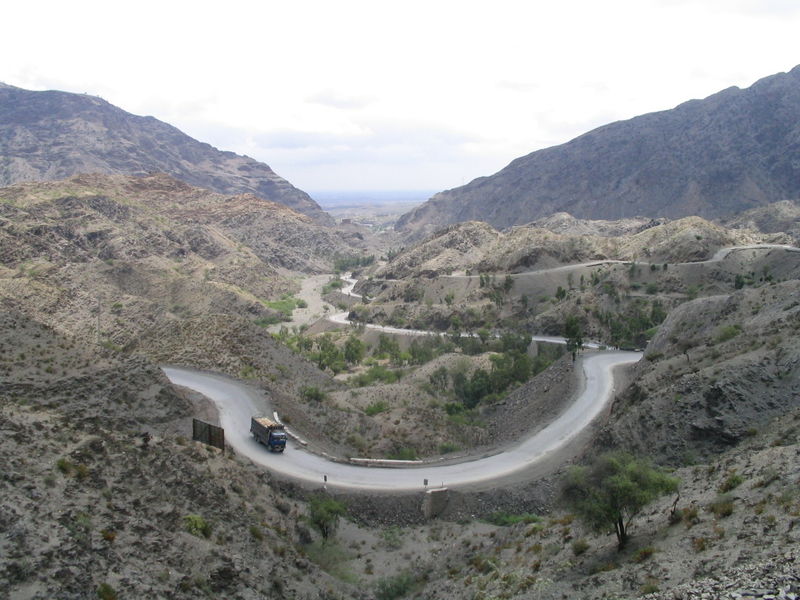
The Khyber Pass

17 years, 10 months ago

khyberpass.jpg

Photograph courtesy of the Jamestown Foundation

The Jamestown Foundation is reporting that the Taliban spring offensive will target the interdiction of NATO supply lines: “There are indications that a main target of the offensive will be the Afghanistan/Pakistan frontier, in particular the strategically vital Khyber Pass.”

Thaindian News is reporting the same thing.  Of course, the Jamestown Foundation released their report on April 3, 2008, and Thaindian News released their report on April 2, 2008.  The Captain’s Journal released our report, Taliban and al Qaeda Strategy in Pakistan and Afghanistan, on March 23, 2008, more than a week before any other analyst.

We’re glad to serve you with the best and most timely intelligence and military analysis.

In the Mail: The Israel-Arab Reader

17 years, 10 months ago

The Israel-Arab Reader, edited by Walter Laqueur and Barry Rubin (of GLORIA Center and MERIA).  This updated 626 page tome goes through more than one hundred years of history in the Israeli-Arab conflict.  Detailed, scholarly, and involved – but readable.  It should be a volume in your library.

Marine Combat Video 1

17 years, 11 months ago

Our friend Matt at Blackfive has posted some great video from SOF in Sadr City.  It’s well worth the time to view it.  Anyone who has spent even a few minutes at The Captain’s Journal knows full well what we think of Sadr and the political reluctance on the part of both the Iraqi and U.S. administrations to take him on and cut his forces’ ties with Iran.  Force must be projected into his camp, and this is a good start.

In the spirit of providing good video for the weekend, see first clearing operations by the Marines late in 2004 from Fallujah.  This video shows full well the stress and decision-making that goes on in room clearing while insurgents are shouting Allah akbar.  Warning: graphic language and content.

Next, from more recently in Fallujah (2007), see the Marines take on insurgents in a nighttime fight.  Much of the U.S. fire is coming from the rooftop of the house.Matt posted some great video, but the SOF aren’t the first ones to engage in heavy kinetic operations.  Nonetheless, we wish the SOF well in Sadr city.

Talks with the Taliban: Clinging to False Hopes

17 years, 11 months ago

In Our Deal with Mullah Abdul Salaam we discussed the mid-level commander Taliban defector who first promised fighters against the Taliban and then holed himself up in a room and screamed for help from the British and U.S. when the battle for Musa Qala started.  The whole “talk with the moderates” thing didn’t work out very well.

 But this tactic will not go away, it seems.  There are recent reports that talks are still ongoing.

The country’s most powerful opposition group announced last week that they have been engaging in peace talks with the Taliban. The move signals both the growing divisions within the Afghan government and the increasing possibility that elements of the insurgent group could be drawn into the political process, say analysts.

If successful, officials argue that the talks will change the way the United States deals with Afghanistan, by forcing Washington to contend with the opposition.

Representatives of the United National Front – an assemblage of ministers, members of parliament, and warlords led by former Northern Alliance commanders – say they have held secret talks with the Taliban for at least five months.

“Leaders of some Taliban sections contacted us,” says Front spokesman Sayyid Agha Hussein Fazel Sancharaki, “saying, ‘We are both Muslims, we are both Afghans, and we are both not satisfied with the government’s performance.’ ”

The government, which has had a series of secret talks with the “moderate Taliban” since 2003, has in contrast taken a different approach to negotiations. It insists that the Taliban must first surrender completely – disavow armed insurrection and accept the foreign presence.

Of course, the Taliban will not surrender their weapons and stand down.  The idea of talks has been pursued recently by local Afghanis to no avail.

“At first, we negotiate. Otherwise the fight is the only way we can solve the problem. It’s the second best way,” Haji Hashem, chairman of Zabul provincial council, told Canwest News in an exclusive interview from the capital of remote and impoverished Zabul province that borders Pakistan.

“I don’t like to hear about death,” Mr. Hashem said. “Sometimes NATO has to fight.”

Mr. Hashem’s comments came after a weekend in which a major offensive by coalition and Afghan forces left several dozen Taliban fighters dead in neighbouring Uruzgan province. Here in Zabul, nestled between Canada’s base in Kandahar province and the border with Pakistan, the local Afghan police also killed four Taliban insurgents on the weekend.

“If they stand against the government, we should get rid of them,” Mr. Hashem said. “I am hopeful we will have good police.”

Zabul ranks a close fourth behind Kandahar, Helmand and Uruzgan as the most violent of Afghanistan’s southern provinces. But its proximity to the Pakistan border, where al-Qaeda and Taliban militants regroup and re-energize to launch attacks in the south on coalition troops, poses an additional security threat.

As he sipped tea, Mr. Hashem recalled for the first time the clandestine negotiations that took place in December.

Elders and local politicians here tell of repeated abductions, especially of schoolteachers and local mullahs, threats, intimidation and mutilation of local people. All of this has continued in a desperately poor, illiterate region that has traditionally relied on opium farming.

So Mr. Hashem said local elders felt they had little to lose by reaching out to the Taliban. “We had a jirga of peace and security and it was the decision of the jirga to talk to those guys.”

But they did not tell U.S. authorities, which have jurisdiction over this region and have pumped more than $140-million in aid into the province. Nor did they tell their own government. “We just brought the result (of the negotiation) to the governor,” Mr. Hashem said.

They arranged a meeting in Sharizifat, a remote rural region.

“We asked them, don’t burn our schools, don’t bother those doing construction, don’t torture or kill,” he recalled.

But the message that came back from the four Taliban commanders sent to talk was firm.

“We got orders from Pakistan. We got orders to burn reconstruction projects,” he recalled.

Talks with the Taliban will not redound to any good for Afghanistan or the counterinsurgency campaign.  When pondering strategy and counterinsurgency doctrine, it is best to give up believing in myths and face reality.

Prior: Talking with the Enemy

As the Smoke Clears Over Basra …

17 years, 11 months ago

Preliminary Reading:

Calamity in Basra and British Rules of Engagement
The Rise of the JAM
The Battle in Basra
Continued Chaos in Basra
Flushing out the British Narrative
The Basra Backfire

The Long War Journal is discussing the idea that the Iraqi Army is following in the footsteps of the U.S. Army in dividing the Mahdi militia into legitimate actors and criminals.  We respectfully disagree.  Both Badr and the Mahdi militia have taken weapons and received training from Iran, and also serve Iranian intentions of undermining stability in Iraq, notwithstanding the show of political legitimacy by Badr.  The SIIC and Sadrists will not become a legitimate part of Iraq until force is projected into their camp and ties with Iran are cut.  We continue to believe that Operation Cavalry Charge has adequate forces and that the root problem is a lack of political will on the part of both Maliki and the Iraqi Army.  Recent reports justify this narrative.

On the eve of the Iraqi government’s showdown last week with radical Shiite cleric Muqtada al-Sadr and his Mahdi Army militia, Ismail Shnawa’s commander ordered him not to fight.

“He told us not to shoot back even if we get shot at by the Mahdi Army,” said Shnawa, a soldier in Iraq’s paramilitary police force that is commanded by the Iraqi army.

The six-day showdown with al-Sadr and other Shiite militias was the toughest test for Iraqi government forces since the U.S.-led invasion in 2003. The week of violence exposed troubling signs that the country’s security forces have much work before they can take over for U.S. troops. Militias and their followers remain entrenched within the government forces, and units sympathetic to al-Sadr, such as Shnawa’s, refused to fight.

In the southern town of Basra, more than 400 Iraqi soldiers and officers handed their weapons to the enemy, Ministry of Interior spokesman Abdel Karim Khalaf said.

In Baghdad, at least 65 Iraqi soldiers and policemen switched loyalties, said Baghdad’s deputy mayor, Naeem al-Kaabi, a Sadrist leader. Many others either wouldn’t fight or willingly surrendered, including Shnawa and 50 others in his unit …

“The Sadrists control more areas in Basra than when the fighting began,” said Osama al-Nujaif, a secular Sunni lawmaker who helped broker the cease-fire.

There are not only questions of commitment and will.  Pentagon officials are also dismayed at the apparent continuing lack of competence of the Iraqi Army.

“There is no empirical evidence that the Iraqi forces can stand up” on their own, a senior U.S. military official in Washington said, reflecting the frustration of some at the Pentagon. He and other military officials requested anonymity because they weren’t authorized to speak on the record.

Four military officials said Tuesday that the Americans were aware in general terms of the coming offensive but were surprised by the timing and by the Iraqis’ almost immediate need for U.S. air support and other help.

Whatever happens in Basra, any potential good will come spuriously rather than as a result of decisive action by the either the British or Iraqi Armies.  As the smoke clears in Basra, it will become even more obvious that it didn’t come from battle.  The smoke helped to hide the more ugly facts of the operation, like targeting the Sadrists and leaving SIIC alone, defections within the police and Army, brokering of a ceasefire by the Iranians, and on the sorry story goes.

Time to Make a Statement in Fallujah

17 years, 11 months ago

The Multinational Force is reporting that Marine Major William G. Hall, 38 of Seattle, died of wounds suffered in combat in Anbar.  He was assigned to 3rd Low Altitude Air Defense Battalion, Marine Air Control Group 38, 3rd Marine Aircraft Wing, I Marine Expeditionary Force, Camp Pendleton, California.  Actually, the Multinational Force appears to have his rank wrong.

Marine Lt. Col. William G. Hall, a Garfield High School and Washington State University graduate, was killed Saturday in Iraq, according to his family.

Hall, 38, who grew up in Skyway south of Seattle, is one of the highest-ranking U.S. military officers killed in the war.

Hall’s family said the husband and father of four died while riding in Fallujah in a vehicle that struck a roadside bomb. He was on his third deployment there, having arrived in February, and had been promoted to his new rank a month ago.

Hall’s wife and mother first learned in a phone call from the Marine Corps that he was in surgery after being injured. Later, two supportive Marine casualty-notification officers arrived at their door and they knew.

My heart goes out to the Hall family.  This visit by casualty-notification officers is one I awaited late at night for many sleepless nights, and thankfully didn’t get.  My thoughts frequently run to Fallujah – a place I have never been.

While Lt. Col. Hall cannot be brought back, the Marines can do something to prevent this from happening again.  Only a single IED exploded in Fallujah during the deployment of the 2/6 Marines, early in the summer of 2007.  After that … no more.

It’s time for the Marines in Anbar to make a statement in Fallujah and reinforce the idea that such things will not be tolerated.  Ever.


26th MEU (10)
Abu Muqawama (12)
ACOG (2)
ACOGs (1)
Afghan National Army (36)
Afghan National Police (17)
Afghanistan (704)
Afghanistan SOFA (4)
Agriculture in COIN (3)
AGW (1)
Air Force (41)
Air Power (10)
al Qaeda (83)
Ali al-Sistani (1)
America (22)
Ammunition (304)
Animals (323)
Ansar al Sunna (15)
Anthropology (3)
Antonin Scalia (1)
AR-15s (393)
Arghandab River Valley (1)
Arlington Cemetery (2)
Army (91)
Assassinations (2)
Assault Weapon Ban (29)
Australian Army (7)
Azerbaijan (4)
Backpacking (4)
Badr Organization (8)
Baitullah Mehsud (21)
Basra (17)
BATFE (246)
Battle of Bari Alai (2)
Battle of Wanat (18)
Battle Space Weight (3)
Bin Laden (7)
Blogroll (3)
Blogs (24)
Body Armor (23)
Books (3)
Border War (18)
Brady Campaign (1)
Britain (39)
British Army (36)
Camping (5)
Canada (19)
Castle Doctrine (1)
Caucasus (6)
CENTCOM (7)
Center For a New American Security (8)
Charity (3)
China (19)
Christmas (18)
CIA (30)
Civilian National Security Force (3)
Col. Gian Gentile (9)
Combat Outposts (3)
Combat Video (2)
Concerned Citizens (6)
Constabulary Actions (3)
Coolness Factor (3)
COP Keating (4)
Corruption in COIN (4)
Council on Foreign Relations (1)
Counterinsurgency (218)
DADT (2)
David Rohde (1)
Defense Contractors (2)
Department of Defense (220)
Department of Homeland Security (26)
Disaster Preparedness (5)
Distributed Operations (5)
Dogs (15)
Donald Trump (27)
Drone Campaign (4)
EFV (3)
Egypt (12)
El Salvador (1)
Embassy Security (1)
Enemy Spotters (1)
Expeditionary Warfare (18)
F-22 (2)
F-35 (1)
Fallujah (17)
Far East (3)
Fathers and Sons (2)
Favorite (1)
Fazlullah (3)
FBI (39)
Featured (192)
Federal Firearms Laws (18)
Financing the Taliban (2)
Firearms (1,867)
Football (1)
Force Projection (35)
Force Protection (4)
Force Transformation (1)
Foreign Policy (27)
Fukushima Reactor Accident (6)
Ganjgal (1)
Garmsir (1)
general (15)
General Amos (1)
General James Mattis (1)
General McChrystal (44)
General McKiernan (6)
General Rodriguez (3)
General Suleimani (9)
Georgia (19)
GITMO (2)
Google (1)
Gulbuddin Hekmatyar (1)
Gun Control (1,717)
Guns (2,406)
Guns In National Parks (3)
Haditha Roundup (10)
Haiti (2)
HAMAS (7)
Haqqani Network (9)
Hate Mail (8)
Hekmatyar (1)
Heroism (5)
Hezbollah (12)
High Capacity Magazines (16)
High Value Targets (9)
Homecoming (1)
Homeland Security (3)
Horses (2)
Humor (72)
Hunting (61)
ICOS (1)
IEDs (7)
Immigration (123)
India (10)
Infantry (4)
Information Warfare (4)
Infrastructure (4)
Intelligence (23)
Intelligence Bulletin (6)
Iran (171)
Iraq (379)
Iraq SOFA (23)
Islamic Facism (64)
Islamists (98)
Israel (19)
Jaish al Mahdi (21)
Jalalabad (1)
Japan (3)
Jihadists (82)
John Nagl (5)
Joint Intelligence Centers (1)
JRTN (1)
Kabul (1)
Kajaki Dam (1)
Kamdesh (9)
Kandahar (12)
Karachi (7)
Kashmir (2)
Khost Province (1)
Khyber (11)
Knife Blogging (7)
Korea (4)
Korengal Valley (3)
Kunar Province (20)
Kurdistan (3)
Language in COIN (5)
Language in Statecraft (1)
Language Interpreters (2)
Lashkar-e-Taiba (2)
Law Enforcement (6)
Lawfare (14)
Leadership (6)
Lebanon (6)
Leon Panetta (2)
Let Them Fight (2)
Libya (14)
Lines of Effort (3)
Littoral Combat (8)
Logistics (50)
Long Guns (1)
Lt. Col. Allen West (2)
Marine Corps (281)
Marines in Bakwa (1)
Marines in Helmand (67)
Marjah (4)
MEDEVAC (2)
Media (68)
Medical (146)
Memorial Day (6)
Mexican Cartels (47)
Mexico (71)
Michael Yon (6)
Micromanaging the Military (7)
Middle East (1)
Military Blogging (26)
Military Contractors (5)
Military Equipment (25)
Militia (9)
Mitt Romney (3)
Monetary Policy (1)
Moqtada al Sadr (2)
Mosul (4)
Mountains (25)
MRAPs (1)
Mullah Baradar (1)
Mullah Fazlullah (1)
Mullah Omar (3)
Musa Qala (4)
Music (25)
Muslim Brotherhood (6)
Nation Building (2)
National Internet IDs (1)
National Rifle Association (97)
NATO (15)
Navy (31)
Navy Corpsman (1)
NCOs (3)
News (1)
NGOs (3)
Nicholas Schmidle (2)
Now Zad (19)
NSA (3)
NSA James L. Jones (6)
Nuclear (63)
Nuristan (8)
Obama Administration (222)
Offshore Balancing (1)
Operation Alljah (7)
Operation Khanjar (14)
Ossetia (7)
Pakistan (165)
Paktya Province (1)
Palestine (5)
Patriotism (7)
Patrolling (1)
Pech River Valley (11)
Personal (76)
Petraeus (14)
Pictures (1)
Piracy (13)
Pistol (4)
Pizzagate (21)
Police (672)
Police in COIN (3)
Policy (15)
Politics (998)
Poppy (2)
PPEs (1)
Prisons in Counterinsurgency (12)
Project Gunrunner (20)
PRTs (1)
Qatar (1)
Quadrennial Defense Review (2)
Quds Force (13)
Quetta Shura (1)
RAND (3)
Recommended Reading (14)
Refueling Tanker (1)
Religion (499)
Religion and Insurgency (19)
Reuters (1)
Rick Perry (4)
Rifles (1)
Roads (4)
Rolling Stone (1)
Ron Paul (1)
ROTC (1)
Rules of Engagement (75)
Rumsfeld (1)
Russia (37)
Sabbatical (1)
Sangin (1)
Saqlawiyah (1)
Satellite Patrols (2)
Saudi Arabia (4)
Scenes from Iraq (1)
Second Amendment (708)
Second Amendment Quick Hits (2)
Secretary Gates (9)
Sharia Law (3)
Shura Ittehad-ul-Mujahiden (1)
SIIC (2)
Sirajuddin Haqqani (1)
Small Wars (72)
Snipers (9)
Sniveling Lackeys (2)
Soft Power (4)
Somalia (8)
Sons of Afghanistan (1)
Sons of Iraq (2)
Special Forces (28)
Squad Rushes (1)
State Department (23)
Statistics (1)
Sunni Insurgency (10)
Support to Infantry Ratio (1)
Supreme Court (79)
Survival (214)
SWAT Raids (58)
Syria (38)
Tactical Drills (38)
Tactical Gear (17)
Taliban (168)
Taliban Massing of Forces (4)
Tarmiyah (1)
TBI (1)
Technology (21)
Tehrik-i-Taliban (78)
Terrain in Combat (1)
Terrorism (96)
Thanksgiving (13)
The Anbar Narrative (23)
The Art of War (5)
The Fallen (1)
The Long War (20)
The Surge (3)
The Wounded (13)
Thomas Barnett (1)
Transnational Insurgencies (5)
Tribes (5)
TSA (25)
TSA Ineptitude (14)
TTPs (4)
U.S. Border Patrol (8)
U.S. Border Security (22)
U.S. Sovereignty (29)
UAVs (2)
UBL (4)
Ukraine (10)
Uncategorized (105)
Universal Background Check (3)
Unrestricted Warfare (4)
USS Iwo Jima (2)
USS San Antonio (1)
Uzbekistan (1)
V-22 Osprey (4)
Veterans (3)
Vietnam (1)
War & Warfare (432)
War & Warfare (41)
War Movies (4)
War Reporting (21)
Wardak Province (1)
Warriors (6)
Waziristan (1)
Weapons and Tactics (80)
West Point (1)
Winter Operations (1)
Women in Combat (21)
WTF? (1)
Yemen (1)

February 2026
January 2026
December 2025
November 2025
October 2025
September 2025
August 2025
July 2025
June 2025
May 2025
April 2025
March 2025
February 2025
January 2025
December 2024
November 2024
October 2024
September 2024
August 2024
July 2024
June 2024
May 2024
April 2024
March 2024
February 2024
January 2024
December 2023
November 2023
October 2023
September 2023
August 2023
July 2023
June 2023
May 2023
April 2023
March 2023
February 2023
January 2023
December 2022
November 2022
October 2022
September 2022
August 2022
July 2022
June 2022
May 2022
April 2022
March 2022
February 2022
January 2022
December 2021
November 2021
October 2021
September 2021
August 2021
July 2021
June 2021
May 2021
April 2021
March 2021
February 2021
January 2021
December 2020
November 2020
October 2020
September 2020
August 2020
July 2020
June 2020
May 2020
April 2020
March 2020
February 2020
January 2020
December 2019
November 2019
October 2019
September 2019
August 2019
July 2019
June 2019
May 2019
April 2019
March 2019
February 2019
January 2019
December 2018
November 2018
October 2018
September 2018
August 2018
July 2018
June 2018
May 2018
April 2018
March 2018
February 2018
January 2018
December 2017
November 2017
October 2017
September 2017
August 2017
July 2017
June 2017
May 2017
April 2017
March 2017
February 2017
January 2017
December 2016
November 2016
October 2016
September 2016
August 2016
July 2016
June 2016
May 2016
April 2016
March 2016
February 2016
January 2016
December 2015
November 2015
October 2015
September 2015
August 2015
July 2015
June 2015
May 2015
April 2015
March 2015
February 2015
January 2015
December 2014
November 2014
October 2014
September 2014
August 2014
July 2014
June 2014
May 2014
April 2014
March 2014
February 2014
January 2014
December 2013
November 2013
October 2013
September 2013
August 2013
July 2013
June 2013
May 2013
April 2013
March 2013
February 2013
January 2013
December 2012
November 2012
October 2012
September 2012
August 2012
July 2012
June 2012
May 2012
April 2012
March 2012
February 2012
January 2012
December 2011
November 2011
October 2011
September 2011
August 2011
July 2011
June 2011
May 2011
April 2011
March 2011
February 2011
January 2011
December 2010
November 2010
October 2010
September 2010
August 2010
July 2010
June 2010
May 2010
April 2010
March 2010
February 2010
January 2010
December 2009
November 2009
October 2009
September 2009
August 2009
July 2009
June 2009
May 2009
April 2009
March 2009
February 2009
January 2009
December 2008
November 2008
October 2008
September 2008
August 2008
July 2008
June 2008
May 2008
April 2008
March 2008
February 2008
January 2008
December 2007
November 2007
October 2007
September 2007
August 2007
July 2007
June 2007
May 2007
April 2007
March 2007
February 2007
January 2007
December 2006
November 2006
October 2006
September 2006
August 2006
July 2006
June 2006
May 2006

about · archives · contact · register

Copyright © 2006-2026 Captain's Journal. All rights reserved.