
U.S. Army Patents New M4A1 Rifle Barrel
BY Herschel Smith 6 years, 4 months ago
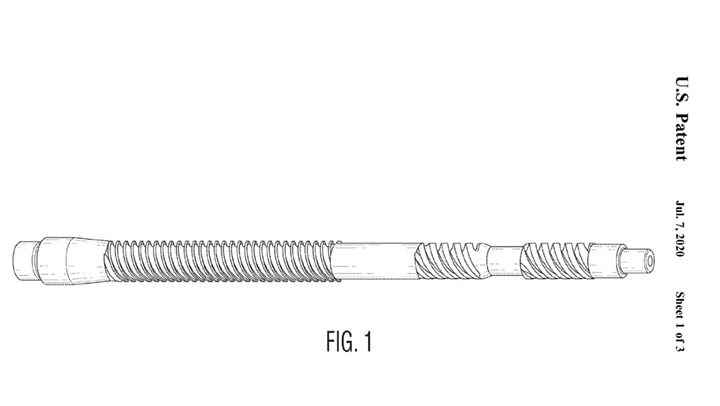
The barrel features spiral fluting in three distinct areas that increase exterior surface area to increase heat dissipation during firing. Fin height gradually tapers but widens toward the muzzle end, providing an unusual profile to the design. Barrel weight is a quarter pound less than that of the currently issued M4A1 version.
CDCC indicated the design may be applicable for other weapons systems currently fielded by the U.S. Military. Enthusiasts may soon see versions available on the commercial market because, “The patented design is available to companies that would make, use, or sell the barrels,” according to the announcement.
Well, it will certainly increase surface area, and thereby lead to increased rate of heat dissipation (or heat flux).
However, each spiral is a stress concentration point. I prefer to wait on proof before I make a judgment on this, and I would likely never purchase this design. Time will tell.






Yikes, seems like their kind of stomping all over J.P. Enterprises. I wouldn’t buy it either with out seeing some test data. A lot of data. I think that things gonna get hot and pop in the direction where the Helix bleeds out.
https://www.jprifles.com/1.4.1_barrel.php
If the Army still used horses, that device could be used by troopers as both a horse grooming device and as a deep large muscle massager. At the graphing point where both of its above uses intersect, its rate of twist probably would not matter too much.
Oh wait. They bought it because of other reasons. All right, not much new.
The cooling system on the Lewis machine rifle from more than a hundred years back, shares some design concepts with this new barrel. Just guessing that the Lewis barrel cooled just about as well, back when a buck was still silver.
Hybrid rifling systems are not new in the annals of military history. The Germans experimented around with them during WWII when they sought to design a practical “squeeze-bore” sub-caliber, ultra-high-velocity anti-tank gun. The effort was abandoned midway through the process in favor of other, more-promising projects, if memory serves…..
@Georgiaboy61: During the war between the states, it was common for revolvers to have progressive rifling with increasing twist rate.
Meh.
As the past century progressed military doctrine moved from precision fire to volume of fire. That includes infantrymen. With an essentially unlimited budget modern soldiers expend ammunition at an astonishing rate. A rate that virtually no civilian could afford. A rate that can and does destroy the barrel in modern M4 rifles. If this adaptation allows them to sustain fire longer then current doctrine will support it. Doesn’t mean it’s the next best thing for non military use.
I’d like to see their test methodology & data on the little thing they trumpet called “reduces cookoffs.” Do some COP Keating-mimic’d dumps and lets see what heat-soak really looks like, by the numbers.
I can attest they look nice and function flawlessly. As for the heat dissipation, it’s a selling point that I have no way of telling if it does what it says it does. I can’t find anything on barrel life. And it comes in FDE ;-)
I haven’t seen anyone else doing barrel fluting. You will not be disappointed in their DI.
https://www.lwrci.com/Company_ep_43.html
https://www.lwrci.com/IC-DI-Standard-556_p_246.html
Their quality is evident.
The Army get criticized for not being innovative and gets criticized when the are. Go figure.
Holy Crap! Some salesman/JAG-off patent attorney got them to patent barrel fluting? Isn’t that about as useful as getting a patent on thread pitch? I mean, who’s going to tell the Army they can’t flute a barrel? Anyway they want?
God help us in a real war!
I heard the helix created a down range draft conducive to more hits on target….; )
R