Baitullah Mehsud’s Hit List
Sharif brothers on Baitullah Mehsud's hit list.
No Georgian destruction of Tskhinvali, contrary to lying Russian claims.
Nuclear yield within six to twelve months.
McNeill ties length to Pakistan tribal region, likely to be protracted anyway.
Multinational force press release on Sadr City operations and seizure of weapons and munitions.
"We will fight them to the end."
War on terror not popular with Pakistani population.
U.S. presence expanding Southward in Iraq.
Its full steam ahead for Iran.
And SECDEF Gates continues to press this issue.
Pajamas Media exclusive: how your tax dollars fund terror.
Southwestern Baptist Theological Seminary Graduate executed in Afghanistan.
Nearly 1000 dead from harshest Afghan winter in 30 years.
Attacks in Baghdad down 80% according to Iraqi Army.
Lack of appropriate defense spending a grave situation.
Olmert claims Iran still on target to construct nuclear weapon.
Promoted to Army Vice Chief of Staff. Well deserved.
Must read on Israeli Army shame and lawyer happiness with war against Hezbollah.
Libyans joining jihad in increasing numbers.
How relevant will Maliki be to Iraq's future?
Maj. Gen. Gaskin: "The positive trends are permanent."
Abizaid questions whether Maliki can bring unity to Iraq.
From the Multinational Force, more on Operation Lion Pounce.
An important ally in Iraq has been assassinated.
Israel to show Chairman of Joint Chiefs of Staff nuclear intelligence on Iran.
Cabinet approves proposed agreement with U.S.
Prof. Kingsley Browne on his new book.
Major General Robert Scales: "Outcome is irreversible"
Mullen says military needs larger slice of GNP to modernize.
For siding with the U.S. against al Qaeda.
Terrorist poses as bride. Ugh!
Legislation in trouble.
Al Qaeda documents discovered near Syrian border.
Shameful people jeer disabled veterans in swimming pool.
Saudi jihadist in Iraq tells his personal story.
Concerning Iranian meddling and Quds.
Michael Yon breaks bread with General Petraeus.
Ralph Peters on the advancements in Iraq.
War between al Qaeda and Hezbollah.
Traumatic brain injury not recognized.
Ballistic Sensor Fused Munition.
High intensity electronic warfare.
Iranian weapons are a sign of continued Iranian meddling in Iraq.
U.S. forces in Iraq are using a high-resolution, thermal/infrared sensor system.
Washington Post profiles AQI (al Qaeda in Iraq, or al Qaeda in Mesopotamia).
Taiwan may not be as secure as we would like to think.
Be thankful your daughter isn't be raised in Basra.
Pastor discusses rules of engagement and sacrificial U.S. deaths.
In counterinsurgency (COIN), patience is a virtue. But violence has decreased so fast in
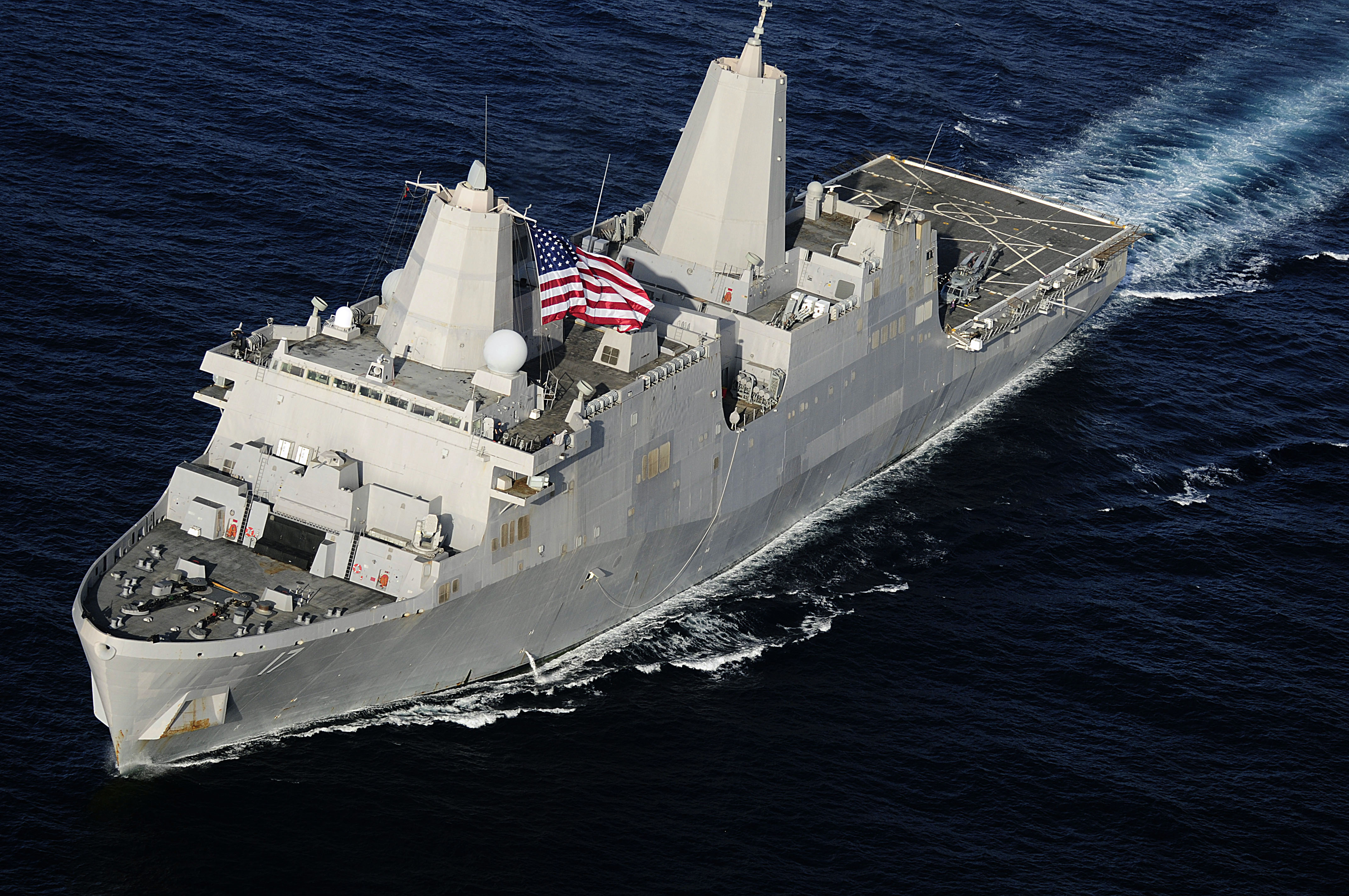
The San Antonio Express-News gives us the conclusion of weeks of repairs in Bahrain for the USS San Antonio.
The USS San Antonio, docked in Bahrain the past several weeks for repairs to a leaky engine oil lubrication system, left port Tuesday and prepared to rejoin its strike force in the Persian Gulf.
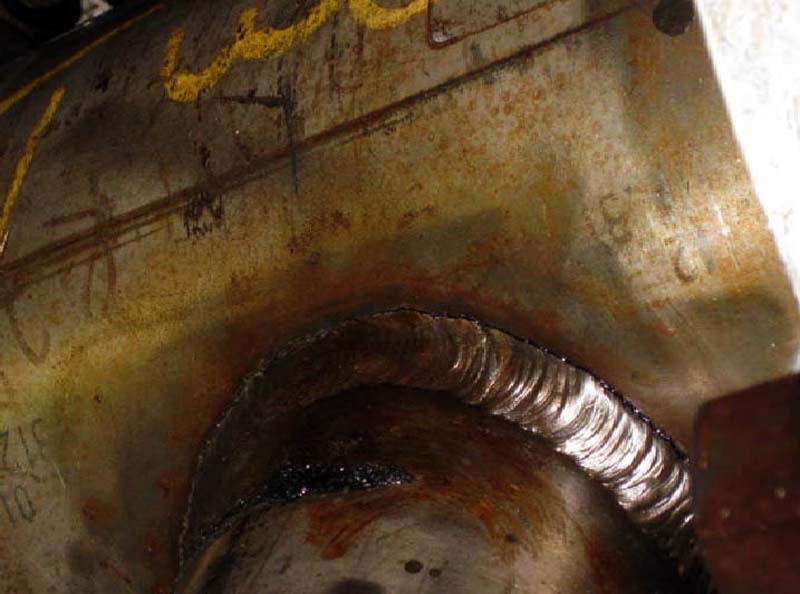
The Navy said that poor welds and joints that lacked support caused the leaks, which sprang up during the ship’s maiden voyage this fall.
But spokeswoman Pat Dolan said the Navy team that spent 25 days making the repairs still had not determined who was responsible for the sub-par construction: the service or Northrop Grumman Ship Systems. It also isn’t clear if three other San Antonio-class ships in the fleet have the same problems.
“They’re just returning from Bahrain,” she said of the repair team, “so we don’t have the root-cause analysis complete yet.”
The San Antonio will rejoin the USS Iwo Jima expeditionary strike force, now in the Navy’s 5th Fleet area of operations. As the ship continues its mission, the Navy will press its investigation into the cause of the leaks as well as learn if there are problems with oil lubrication systems aboard the USS New Orleans, USS Mesa Verde and USS Green Bay.
Dolan said the Navy hopes to have the analysis of those ships finished by mid-December.
Troubled by design flaws, construction delays and a failed inspection last year, the San Antonio entered the fleet well behind schedule, its $1.8 billion price tag three times the original estimate. The San Antonio left the East Coast for the Persian Gulf at the end of August but put into port in Bahrain last month when the crew discovered the leaks.
A special 40-member team that included pipe fitters, inspector and engineers was flown to Bahrain and spent more than three weeks analyzing and repairing the oil lubrication system.
Dolan said the team repaired the systems for two of the ship’s four engines in the forward and aft main machinery rooms of the San Antonio. She said she was unaware of any other problems with the ship.
Inspectors found an inadequate number of hangers to support lubrication pipes that feed oil into the engines, Dolan said. The lack of hangers, coupled with vibration throughout the ship, caused some of the welded joints to come loose, she said.
“The failures can be attributed to inadequate piping support, poor welding, material selection and insufficient quality assurance,” she said. “They ended up putting in additional pipe support, going in and taking out in some cases whole sections of pipes and joints. I can’t tell you the blow-by-blow, what they did or repairs. I can tell you that’s in general what they did.”
It’s good that a root cause analysis is being performed, but this analysis should include fully independent engineers, contracted from a pool of engineers not associated with defense contractors. The team should include experts in welding, fracture mechanics, mechanical and vibration engineering, and fluid flow and corrosion (chemical) engineers.
Furthermore, the analysis shouldn’t stop with a technical analysis, but should include the whole management and decision chain that led to the circumstances we face with the USS San Antonio, such as the use of Management Oversight and Risk Tree analysis. The problems listed above must be categorized into root and contributing causes and a full open source report issued on the management and engineering failures, along with recommended corrective actions.
Prior and other resources:
Time, The Navy’s Floating Fiasco.
The Captain’s Journal, The 26th MEU Stuck at Bahrain.
The Captain’s Journal, The 26th MEU, The USS San Antonio, and Military Equipment.
In The 26th MEU, the USS San Antonio, and Military Equipment, we detailed our objections to the job that Northrup Grumman had done in constructing the amphibious transport dock USS San Antonio, with its snarled electrical cables, unreliable steering, and general poor craftsmanship throughout the physical plant. It is wasteful of time and resources, and certainly hampers the ability of the U.S. Marines to perform during their duties.
In a time when pirates are endangering shipping lanes in the extremely busy Gulf of Aden, the U.S. Marines should be engaging and killing pirates. Ralph Peters, OpFor and The Captain’s Journal have weighed in describing the solution to the problem of pirates. But the Marines are wasting time in Bahrain rather than contributing to the global war on terror or protecting shipping lanes.
The USS San Antonio has yet another major mechanical problem. It has sprung an oil leak, and is in port in Bahrain to repair and weld piping.
Their ship is stuck at a Bahraini port, but that doesn’t mean extra liberty for some leathernecks with the 26th Marine Expeditionary Unit.
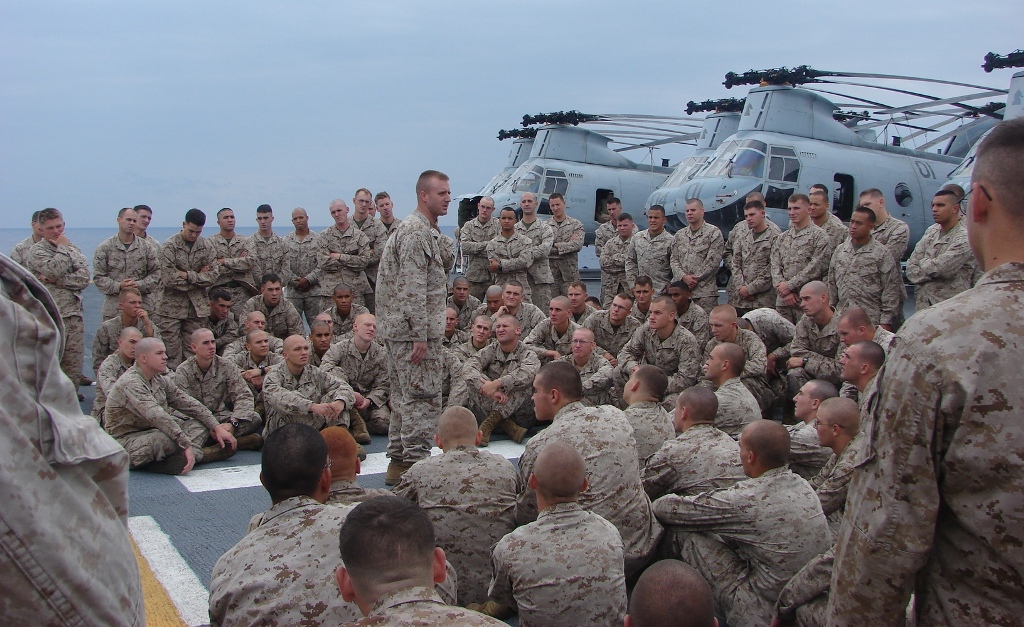
Marines and sailors with the Camp Lejeune, N.C.-based MEU who are aboard the amphibious transport dock San Antonio “continue to train aboard and from that vessel,” according to a MEU spokesman.
The ship’s maiden deployment with the Iwo Jima Expeditionary Strike Group out of Norfolk, Va., was interrupted Oct. 31 when it entered a yard in Bahrain to fix major oil leaks. Navy officials projected the maintenance would be finished within two weeks. This marks the latest problem for the ship, which has been plagued with performance problems, and was delivered late and $1 billion over budget.
But problems with the ship — criticized Monday by Navy Secretary Donald Winter, who said he “continues to be unsatisfied” with its performance — have not stopped its Marine inhabitants from participating in training exercises and classes.
“This training includes leadership, martial arts, physical training, infantry and other job-skills training they would normally conduct underway,” MEU spokesman Gunnery Sgt. Bryce Piper said in an e-mail. “Accessibility to land actually expands these Marines’ opportunities to conduct physical and small-unit training outside the confines of the ship, and unit leaders exploit these opportunities whenever possible.”
Elements of the MEU’s battalion landing team, 2nd Battalion, 6th Marines, and Combat Logistic Battalion 26, are on the ship, but they were not scheduled to participate in current training exercises, Piper said.
The 26th MEU set sail for a six-month deployment aboard the amphibious assault ship Iwo Jima, the San Antonio and dock landing ship Carter Hall Aug. 29. Those ships are currently in the 5th Fleet area of operation.
As expected, the Marines and Navy put a good face on this, but many Marines are surely grumbling under their breath, while their brothers suffer in Afghanistan, pirates plague the Gulf of Aden, and Islamists continue their takeover of Somalia. The long war is proving to be too difficult to encounter these kinds of problems during deployment. With radiograph, dye penetrant testing, and visual inspection, there is absolutely no excuse - none - for welding problems to become manifest while at sea on a new ship. This demonstrates that there is a QA problem somewhere that badly needs to be fixed.
But this also raises the important question of whether the existing MEU structure is the best way to implement the strategic vision of the Marine Corps Commandant for an expeditionary force. It might be wise to train to perform naval-based and amphibious operations, and perhaps this should be among the regular qualifications of Marines of all billets. But first of all, the use of an MEU with all of its expense, to work out the problems associated with a new ship is a questionable value judgment. Second, the use of a Battalion Landing Team (BLT) to spend seven months aboard a ship performing humanitarian missions, shows of force and practice maneuvers while their brother suffer in Afghanistan and pirates maraud the Gulf of Aden forces the question of whether command deployed this MEU in the most efficient manner to perform the most important mission.
General David Petraeus is apparently going to recommend that a Brigade be redeployed from Iraq to Afghanistan prior to the new administration taking over.
A senior U.S. Defense official who has seen Petraeus’ recommendations to the Joint Chiefs, Defense Secretary Gates and President Bush told FOX News the likely brigade to be shifted from Iraq to Afghanistan is the 3rd Brigade Combat Team of the 10th Mountain Division out of Fort Drum, N.Y.
The 3rd Brigade Combat Team is scheduled to deploy in the spring and their training could be shifted to match terrain in Afghanistan instead. The 10th Mountain Division, a light infantry unit, is well suited for such terrain.
Several reports also suggest that Petraeus is also recommending 1,500 Marines also be redirected from service in Iraq and sent to Afghanistan.
The Captain’s Journal has previously weighed in stating that we believe that the campaign will require an additional three Marine Regimental Combat Teams (RCT) and three Army Brigades. We now believe that this counsel was on the low end of the true requirements, and that General Petraeus will be obliged to redeploy much more that he has stated above.
The advisers to President Bush are said to object to the redeployment out of Iraq, and Bush will apparently decide this week. But in the spirit of our previous counsel that we don’t have until next year to bolster forces in Afghanistan, there is a revelation from Operation Enduring Freedom command that convinces us that there won’t likely be a Taliban winter rest this year.
FORWARD OPERATING BASE KALAGUSH, Afghanistan — American troops in Afghanistan will step up offensive operations this winter because insurgents are increasingly staying in the country to prepare for spring attacks, a U.S. commander told The Associated Press.
Maj. Gen. Jeffery J. Schloesser said a 40 percent surge in violence in April and May was fueled in part by militants preparing stores of weapons during the winter, which generally is a slow period for fighting, particularly in snowy Afghan mountainous areas.
“If we don’t do anything over the winter the enemy will more and more try to seek safe haven in Afghanistan rather than going back to Pakistan,” Schloesser said.
U.S. and NATO officials say militants cross into Afghanistan from Pakistan, where they rest, train and resupply in tribal areas along the frontier where the Pakistani government has little sway.
Schloesser estimated 7,000 to 11,000 insurgents operate in the eastern part of Afghanistan that he oversees — a far higher estimate than given by previous U.S. commanders.
He said the U.S. military realized more militants spent last winter in Afghanistan after speaking with elders and villagers who had been pushed out of their homes. The spike in violence in the spring occurred because insurgents were already in position to unleash attacks, though U.S. officials didn’t know it at the time, he said.
“They didn’t have to come over the passes, they were already here,” Schloesser said during an interview while flying in a Black Hawk helicopter Monday to a small U.S. outpost in Nuristan, a province that borders Pakistan.
Kudos to Maj. Gen. Schloesser for this perspective. The Captain’s Journal loves honesty and forthrightness. The Major General understands the need to continue operations, and so does General McKiernan, who doesn’t want to lose the terrain taken in and around Garmser after the Marines of the 24th MEU took it.
Introducing the general to his officers and senior enlisted, company commander Dynan briefs McKiernan on their recent fight against the Taliban, and the improving situation with the villagers.
Weeks later, McKiernan will explain how the problem with Pakistan and the ISI was affecting the local ground war. “There is a continuing issue of the very porous border with Pakistan and it has allowed insurgent militant groups a greater freedom of movement across that border . . . . They have the freedom to move across the border unimpeded and can easily resupply and recruit in Pakistan,” McKiernan told the Associated Press on 9 July. He added that rocket and mortar attacks launched by militants in Pakistan at U.S. and Afghani border outposts had spiked dramatically in May and June.
But today all the Army general wants to do is talk to “his” Marines. The 24th MEU was deployed specifically to Afghanistan in response to Canadian and British calls for additional American troops, and McKiernan uses it as his Quick Response Force, to be thrown into whatever emergency situation arises.
McKiernan asks Captain Dynan for permission to address the Marines of Alpha Company. Surrounded by Leathernecks, the new commanding general speaks quietly to the young men. “You’ve knocked the insurgents, the Taliban, out of the area,” he said. “They had no idea of how Marines can fight. They do now. You’ve given the locals the courage to stand up with us, and that’s what it takes to win down here.”
Pleased by the recognition, the Marines smile and pepper McKiernan with questions, then take turns shaking his hand. As the general and his entourage depart, the men of Alpha Company prepare for their evening patrols, where they will continue to walk through villages, meeting the locals, and letting friend and foe alike know that the Marines have landed.
Marine Corps Commandant Conway predicted that this would happen.
Conway anticipated the Corps’ predicament when the 24th Marine Expeditionary Unit and 2nd Battalion, 7th Marines, deployed to Afghanistan this spring, to provide a surge of forces there.
“I said, with all due respect … ‘let me predict something: Commanders will fall in love with the Marines because they will do a great job,’ ” Conway said. “There will be a request for an extension. There will be requests to replace them with other Marines.”
The Marines were, in fact, extended. And if new Marines are to fall in behind those slated to depart in November, a decision would have to be made soon.
That could come in a variety of forms. The 26th MEU departed North Carolina in August for an undisclosed location in the Middle East, while the 13th MEU is slated to push out of Southern California in January.
This is the first time The Captain’s Journal has seen in print the possibility that the 26th MEU might be replacements for the 24th MEU. But if this is going to happen, the decision will be made soon. The 24th MEU is scheduled to return stateside in November. Leaving port in January of 2009 and arriving in February of 2009, doesn’t really do justice to the needs of the campaign, although the 13th MEU might also be in the works for Afghanistan if our counsel is followed.
Either way, Operation Enduring Freedom is in dire need of troops, and the security situation is degrading. Security for the population is a hinge upon which much of counterinsurgency turns, and without adequate force projection, we cannot hope to win the campaign. As we have pointed out, at the height, Soviet General Gromov had up to 104,000 troops, while General Petraeus currently has only 32,500.
The Captain’s Journal will take great interest in the 26th MEU for the remainder of its current deployment. The 26th MEU consists of the USS Iwo Jima and USS San Antonio, are they are joined by amphibious dock landing ship USS Carter Hall, the guided missile cruiser USS Vella Gulf, the guided missile destroyer USS Ramage, the guided missile destroyer USS Roosevelt and the fast attack submarine USS Hartford.
The USS Iwo Jima, which carries the 2nd Battalion, 6th Regiment (2nd Marine Division), left the Norfolk Naval Station on Tuesday. On the other hand, the USS San Antonio has had equipment malfunctions that kept her in port.
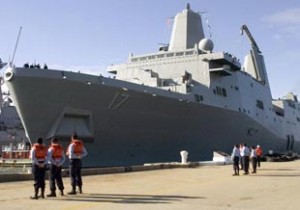
Hydraulic problems have delayed the maiden deployment the amphibious transport dock San Antonio (LPD-17), which was supposed to leave Aug. 26 with the Iwo Jima Expeditionary Strike Group.
The ship, which has endured lengthy delays and cost overruns, had to stay back in Norfolk due to a broken stern gate that will take days to repair, said U.S. Navy Lt. Cmdr. Herb Josey, spokesman for Naval Surface Force Atlantic.
The amphibious assault ship Iwo Jima left the pier at 11 a.m. without San Antonio and is headed to North Carolina to onload the rest of the Camp Lejeune-based 26th Marine Expeditionary Unit.
Capt. Brian Smith, Amphibious Squadron 4 commander, said the problem with San Antonio was discovered Aug. 24 and he expects the new amphib - the lead ship of the LPD 17 class - to be repaired and outbound by the end of this week.
“There is nothing that will keep San Antonio from getting underway,” he said. The problem is a mechanical failure in a ram cylinder piston that controls the stern gate, he said, crucial for conducting well-deck operations, an amphib’s very reason for existence.
San Antonio’s fleet debut has been a rocky one. It underwent two scathing inspection reports and had to miss its first shot at deployment in February with the Nassau ESG.
Smith defended both San Antonio and the San Diego-based amphib New Orleans, the second ship in the class, which was deemed “degraded in her ability to sustain combat operations” by a recent Navy inspection.
“Any new ship is going to be scrutinized and discrepancies will be generated,” he said.
But intense scrutiny isn’t really the problem. The problems run far deeper, into management of the design and construction process.
… the San Antonio had a troubled fleet debut. After arriving late and over-budget in 2005, an initial inspection report revealed major problems.
Board of Inspection and Survey officers found the ship “incomplete” and unsafe for crew members to board in a July 5, 2005, report. Inspectors found “poor construction and craftsmanship … throughout the ship.”
Wiring was also problematic.
“Poor initial cable-pulling practice led to what is now a snarled, over-packed, poorly-assembled and virtually uncorrectable electrical/electronic cable plant,” the report states.
The San Antonio made headlines again in April 2007, after the ship was deemed “unsuccessful” because of several equipment failures and “unreliable” steering during March sea trials. However, the report commends the crew for presenting the ship “professionally.”
Still, the catalog of problems prompted Navy Secretary Donald Winter to write a June 22, 2007, letter to shipbuilder Northrop Grumman complaining that two years after commissioning, the fleet “still does not have a mission-capable ship.”
Over its early life, San Antonio’s price also rose from a 1996 estimate of $876 million to $1.85 billion, once all of its discrepancies were corrected.
Unless the cable raceways and trays are done per specification, the wiring and cabling are all marked and labeled, the terminal cabinets are all labeled, the terminations are all numbered, the sliding links are all clearly marked, the relays are all labeled, and electrical engineering, logic diagrams and wiring tabulations are all certified and quality assured, the contractor has left the Navy with an unmaintainable situation.
We’ve discussed this before in Can the Navy Afford the New Destroyers, where we cataloged the demise the ship building industry in the U.S., concluding that:
Anything as complex as the engineering behind shipbuilding cannot be long sustained if a country is not actively engaged in the process. Certainly, contractors who bid the jobs believed that procedures for doing dye penetrant and radiography on welds were the same as before, and protocols for QA had not changed since the last time ships were constructed. Engineers are, after all, plug-and-play, white jumpsuit experts at everything under the sun, and also certainly the technology can be rapidly learned and applied by new, young engineers straight out of school, or who had been the understudy of engineers who had done this work before.
Only, none of this is exactly true … To be sure, accountability is the order of the day, and strict management of costs will be necessary for the Navy to be allowed to move forward with its Destroyer program. But shipbuilding is a lost science in the U.S., and recapturing it as an institution will be difficult and fraught with hidden problems for the DoD to deal with. This is not so much an issue with the Navy, or what they call the ‘Destroyers’, or how much they control the contractors, as it is with the fact that the U.S. has lost the ability to do large scale steel projects and shipbuilding.
The USS San Antonio is not a destroyer, but the basic principle remains the same. Day laborers are no substitute for professionals, hope is not a substitute for a QA program, poor design and construction practices lead to problems with maintenance, and rework always increases the cost and decreases the quality.
While at least somewhat unrelated, this brings up the issue of the refueling tanker. We have previously weighed in on this issue, but a good technical discussion is contained in a Human Events article by General John Handy, USAF (Ret.). A brief quote gives his perspective on the tanker controversy.
Somewhere in the acquisition process, it is obvious to me that someone lost sight of the requirement. Based on what the GAO decided, it’s up to people such as myself to remind everyone of the warfighter requirement for a modern air refueling tanker aircraft.
Recall that we started this acquisition process in order to replace the Eisenhower era KC-135 aircraft with a modern version capable of accomplishing everything the current fleet does plus additional needs for the future. Thus the required aircraft is of small to medium size much like the KC-135. Not a very large aircraft like the current KC-10, which may be replaced later with a comparably large aircraft.
Why a smaller to medium size aircraft? Because, first of all, you want tankers to deploy in sufficient numbers in order to accomplish all assigned tasks. You need to bed them down on the maximum number of airfields around the world along with or close to the customer — airborne fighters, bombers and other mobility assets in need of fuel close to or right over the fight or crisis. This allows the supported combatant commander the ability to conduct effective operations around the clock. The impact of more tankers is more refueling booms in the sky, more refueling orbits covered, wider geographic coverage, more aircraft refueled, and more fuel provided. A “KC-135 like” aircraft takes up far less ramp space, is far more maneuverable on the ground and does not have the risk of jet blast reorganizing your entire ramp when engine power is applied.
Just so. And TCJ wondered why, if from the beginning the specifications targeted a medium refueling tanker, extra credit would be awarded to larger air frames. It makes absolutely no sense. But regardless of this technical point, there is a more salient point that TCJ made several months ago concerning who holds a major share of EADS.
Even more worrisome is the power grab by Vladimir Putin, who is buying up the depressed shares of EADS like a corporate raider. The prospect of the authoritarian Russian leader, whose political opponents are harassed and jailed while prying journalists turn up missing or murdered, having a heavy hand in EADS affairs is deeply troubling. Russia opposed the invasion of Iraq and has sought to undermine U.S. plans to deploy a missile defense system in Poland and the Czech Republic.
The most troubling aspect of the tanker contract is the danger it poses to U.S. national security. According to a report by the Center for Security Policy, EADS has been a leading proliferator of weapons and technology to some of the most hostile regimes in the world, including Iran and Venezuela. When the U.S. formally objected to EADS selling cargo and patrol planes to Venezuelan despot Hugo Chavez, EADS tried to circumvent U.S. law by stripping American-built components from the aircraft. Chavez is now building an oil refinery in Cuba to keep Castro’s failed Communist state afloat, funding terrorists seeking the violent overthrow of Colombia’s government, and recently meddled in the presidential election in Argentina with secretly smuggled cash contributions. If EADS had its way, Chavez would now be advancing his anti-American designs in the Western hemisphere with U.S. technology and components.
EADS entanglements with Venezuela make the Pentagon’s decision to waive the Berry Amendment, which prohibits the export of technology that might be developed during the building of the tanker to third parties, indefensible. Given the sophisticated radar and anti-missile capabilities of military tankers, this is no small matter. Such technology falling into the hands of state sponsor of terrorism would devastate our war fighters.
And such a scenario is hardly unreasonable. EADS executives recently attended an air show in Iran and were caught red-handed trying to sell helicopters with military applications. When confronted, an EADS executive said the company was not bound by the U.S. arms embargo against Iran. EADS also sold nuclear components vital to exploding a nuclear device to an Asian company that in turn sold them to an Iranian front operation.
As TCJ coverage of the unwarranted Russian aggression against Georgia has made clear, we consider Vladimir Putin to be a gangster and international criminal. Any involvement with Putin - any involvement, including the Airbus - should be rejected without further consideration.
Technology is hard to regain once it has been lost. This is true of ship building, engineering QA, and air frame design. It is not only good for the U.S. economy and technological capabilities to have this done in the States, but it enables holding contractors accountable, something that we can never do with gangsters and criminals. It is yet to be seen how this will play out. But only the U.S. could be so stupid as to award a contract for our military refueling tankers to Vladimir Putin.

Prev | List | Random | Next · Join Powered by RingSurf! |