Articles by Herschel Smith


The “Captain” is Herschel Smith, who hails from Charlotte, NC. Smith offers news and commentary on warfare, policy and counterterrorism.


al Sadr Reigns in Militia: Backdown, Bluster or Bluff?

19 years, 4 months ago

Shia Islamic cleric Moqtada al Sadr has issued orders to his loosely organized militias by calling for an end to Iraqi-on-Iraqi violence.

BAGHDAD – Radical cleric Moqtada Al Sadr ordered his militia on Friday not to take part in the wave of sectarian bloodshed sweeping Iraq, as the head of the British army called for his troops to be brought home.

The Shia firebrand issued the order amid what a US military spokesman called a “tremendous spike

Friday Night Pictures

19 years, 4 months ago

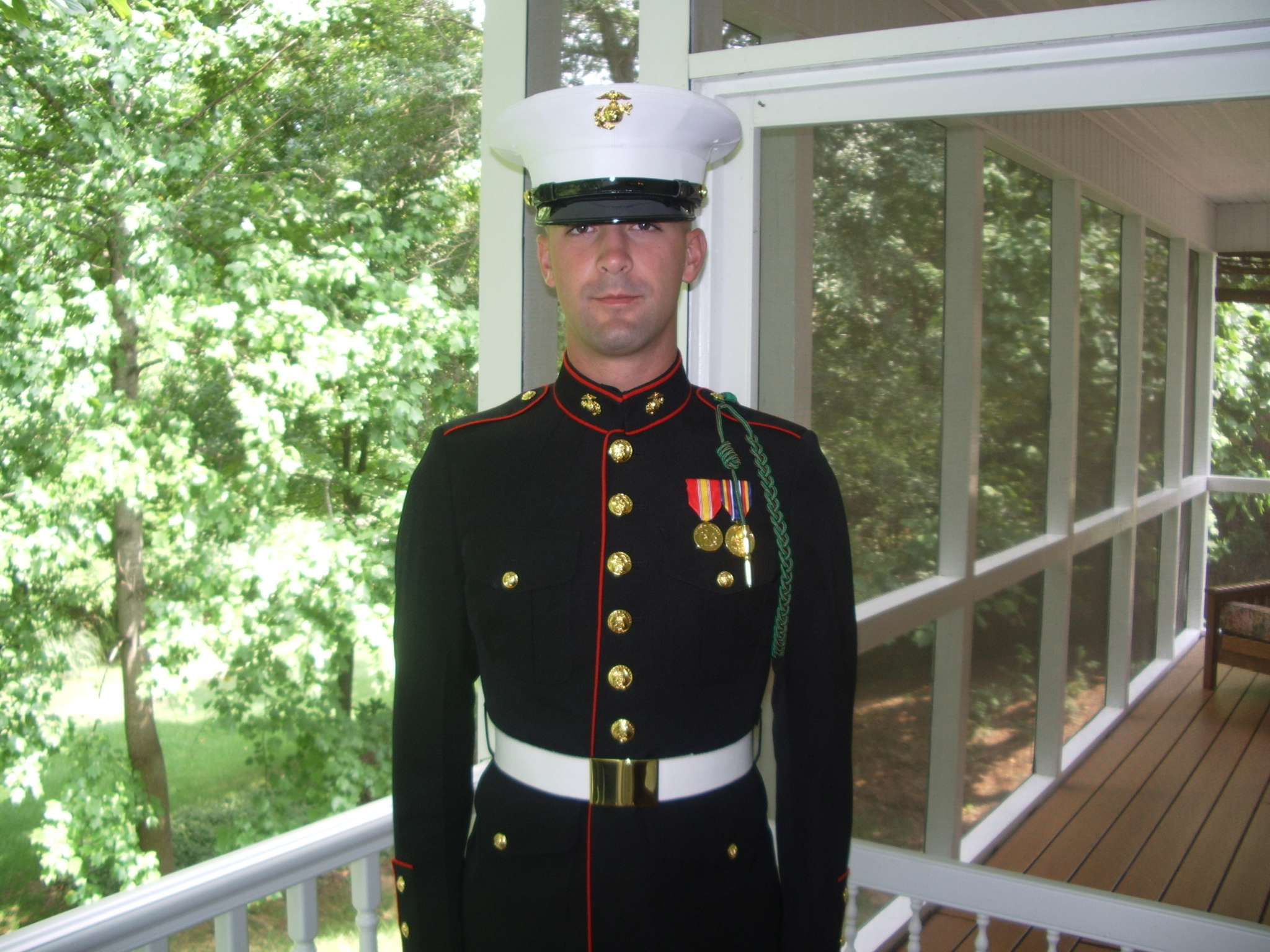
In lieu of Friday night music, here are two pictures.  The first is taken from Grandfather Mountain, North Carolina.  The second is of Daniel in his dress blues.  It takes a lot to get a Marine into his dress blues.  This was a lot.  Daniel’s best buddy, Andy Strickland, got married.  Andy and Daniel went through MEPS, Boot Camp and SOI together, were picked up by the fleet together and are in the same platoon at Camp Lejeune.  They will deploy together.  There isn’t any doubt in my mind that either one would die for the other.


Mtn 022.jpg


Daniel_011.jpg


Combat Operation Posts

19 years, 4 months ago

There is much bluster over counterinsurgency operations; what it means, how to do it, what causes these operations to succeed, and what causes them to fail.  There are even washed-up Generals who want the U.S. to jettison the “kill-kill” warrior ethos of the military in favor of a different approach as part of our COIN strategy.  [As an editorial note, there are so many things misrepresented and misconstrued in the “kinder and gentler soldier” article linked above that the real confusion is where to begin with debunking them.  The Generals misrepresent when the warrior ethos was introduced into the military and focus on the history of the Army rather than the Marines, they ignore the more than 300 engagements the USMC has had over its history in which for many of these operations they have successfully executed COIN operations in spite of the washed-up Generals, etc.]

It is simply not helpful to talk counterinsurgency and “winning the hearts and minds of the people,” without giving examples of its execution so that the strategy can be taught and implemented.  Good friend of the Captain’s Journal, Michael Fumento, is blogging from Ramadi, and he is giving us good and instructive COIN discussion material with his post Cop-ing out in Ramadi.

A COP is a combat operation post, and such posts are starting to play a crucial role in pacifying Al Anbar. In the Ramadi area, at least, COPs comprise an undersized company of four companies and about 80 soldiers. (Although Anvil has considerably more than that.) Anvil also has four M-2 Bradley fighting vehicles attached to it, each of which has a .25 caliber fully automatic gun and lesser guns along with an anti-armor capability. Anvil has three American platoons and one Iraqi Army one, but one of the American ones and the IA one are being loaned elsewhere right now. No matter, a COP can operate at half strength for awhile.

COPs are tiny compared to FOBs like Corregidor, which had a full battalion plus numerous support elements or about 800 men in all. In fact, this place comprises just two houses leased from Iraqi civilians. First Armored Division has put in 11 COPs so far, I believe, and is building a 12th. There will probably be many more to come.

In any counterinsurgency effort, a key to pacifying an area is to plop fortifications with interlocking communications into enemy territory and send out patrols. For example, King Edward I of England (the guy who had Braveheart drawn and quartered) used castles to subdue Wales. Nowadays we call this “grab and hold.” Originally we started doing that in Vietnam but gave it up in favor of search and destroy missions from large base camps, which helped contribute to losing the war.

One value of a COP versus the much larger FOBs and the huge camps such as Camp Ramadi is that this is an enemy that inflicts most casualties and damage with IEDS, greatly restricting movement. But missions from COPs are inherently short-range; you’re already almost there. That’s less road to be on and fewer IEDs to worry about.

In Habitually Offensive Operations Against Guerrillas, we discussed the re-deployment of U.S. troops to large, well-gaurded bases and the reduction of patrols allowing the growth of the insurgency, in contrast with the recommendation of the Small Wars Manual.  Michael Fumento is documenting a case in which the Small Wars Manual COIN strategy is working.  Continuing:

Another advantage of a COP is a shorter reaction time for one unit to support another, although that’s rarely necessary because the enemy just doesn’t mass in large units. They don’t have the men to do that like they used to. This inability to mass also makes COPs possible. In Vietnam, the enemy had lots of soldiers and highly-trained and motivated sappers that could cut through concertina wire barriers, throw satchel charges, and wreak havoc while the VC infantry came up behind them. This allowed them to inflict heavy casualties on small units, such as those manning howitzers. On a few occasions, they completely overran those positions. But the chance of a COP being overrun is essentially nil.

The impact of the FOB system was shown to me on a map. The foreigners who come into this area do so along a mini-Ho Chi Minh trail from the west, namely Jordan and Syria. And the foreigners tend to be better trained. Certainly any good sniper will come from that route, because Iraqis are terrible shots and hence crummy snipers.

From this road the terrorists would then literally fan out in the area where the COPs have been inserted. That is, their area of operation was shaped like a fan. But the troops from the COPs have rolled them up in a counter-clockwise pattern such that the only major activity left now is in a slice near the Tigris. Areas that Capt. Sapp would originally only send full platoons into, sometimes even with armor, he will now allow a squad of perhaps 12 men to enter. At some point, the bad guys will be pushed out of this last piece of the fan. Where they’ll go, who knows. The point is that they’ll have been denied their first choice of an operating area. It’s like knocking off the head of a terrorist cell. Yes, he’ll just be replaced. But the man originally chosen for the job is now dead and the cell weakened to that extent.

Any counterinsurgency operation is likely to fail without the right force projection.  We have argued that force size is the critical element to successful pacification.  If we know that the enemy (foreign fighters, most certainly al Qaeda) is coming into Iraq along a “mini-Ho Chi Minh” trail, this information immediately redounds to the question “why can’t we stop this traffic?”

The answer is that we can with the right force projection.  If the means of ingress into Iraq are turned into a shooting gallery where the foreign fighter faces certain death should he attempt to cross the border, then one of two things happens, leading to a consequent.  Either the foreign fighter dies at the border, or if he is smart, he doesn’t attempt to cross.  The consequence is that the existing foreign fighters do not get reinforced.  As U.S. forces share the risk of the people and protect the population, and as the foreign fighters (and Sunni Mujahideen) are killed, the pacification of the region finally ensues, and mothers can trust in the security of their homes and schools.  This, rather than the “kinder and gentler soldier,” is the road to “winning the hearts and minds of the people.”

Unintended Consequences: U.S. Strengthens Iran

19 years, 4 months ago

The Royal Institute of International Affairs (also known as the Chatham House) in Britain recently released a report essentially charging that the U.S.-led war in Iraq has strengthened Iran.

The United States, with Coalition support, has eliminated two of Iran’s regional rival governments — the Taliban in Afghanistan in November 2001 and Saddam Hussein’s regime in Iraq in April 2003 — but has failed to replace either with coherent and stable political structures. The outbreak of conflict on two fronts in June –July 2006 between Israel and the Palestinians in Gaza, and Israel and Hizbullah in Lebanon has added to the regional dimensions of this instability.

Consequently, Iran has moved to fill the regional void with an apparent ease that has disturbed both regional players and the United States and its European allies. Iran is one of the most significant and powerful states in the region and its influence spreads well beyond its critical location at the nexus of the Middle East, Turkey, the Caucasus, Central Asia and South Asia.

This influence has a variety of forms but all can be turned against the US presence in Iraq with relative ease, and almost certainly would heighten US casualties to the point where a continued presence might not be tenable. Sources in Iraq are already warning that the major cities (including Basra and Baghdad) have witnessed a rise in the activities of Iranian paramilitary units and the recent bout of violence and instability in Basra is now considered to be a small display of what would happen if Iran itself was targeted.

This is certainly an unintended consequence, but for the purpose of precision in our analysis, it should be made clear that this is not directly a function of the global war on terror.  Rather, if Iran has becomed stronger as a result of the broader war, it is a function of the strategy the U.S. has chosen to implement the war.  As we have previously discussed, the conduct of the war has been marked by brilliant command decision juxtaposed with lurching and stumbling.  The initial ground campaign was magnificent, but it bypassed large urban areas leaving huge numbers of Mujahideen alive to fight another day.  The force size was perfect for the initial ground campaign and woefully inadequate for the maintenance of security.  The U.S. troops too quickly transitioned from conventional operations to counterinsurgency, and rather than share the risk with the Iraqi people, they reflexively cloistered on well-gaurded bases and stayed there the more that IEDs became the primary means of warring against them.  As a result, the homes, schools and streets became more dangerous, and the high level of danger brought more power to those who can cause the danger and inflict the pain.

But the things directly under our control at the present cause us to have no excuse for any further strengthening of Iran.  One such instance of having no excuse is the State Department.  In a jaw-dropping example of the reticence at the State Department, the U.S. has just yesterday approved the sale of aircraft parts to Iran, and has given us this reasoning for its support.

“Our recommendation is consistent with the US government’s commitment to promote international safety-of-flight standards and ensure the safety of all aviation passengers, including the citizens of Iran,” the State Department said.

The US Federal Aviation Administration recommended immediate overhaul of US-made engines on certain Airbus planes, some of which are used by Iran Air, the statement said, and the US Departments of Commerce and State reported to Congress their recommendations to allow the sale.

“Therefore, despite our grave concerns regarding the Iranian regime’s activities, we believe this decision is consistent with our commitment to support the Iranian people and to use US sanctions to target the regime, not the Iranian people.”

To set this in context, imagine for a moment that it is 1944, and the State Department is proudly waltzing onto stage to announce that we have just approved the sale of U.S. steel manufacturing and fabrication technology to Germany because we care about the people.

Until and unless the State Department is coerced into actually contributing to the global war on terror (that is, on behalf of the U.S., we are constrained to mention), we are fighting with one hand tied behind our back.

Nuclear Japan

19 years, 4 months ago

We now know that the “nuclear” explosion in North Korea was more of a fizzle than a bang (h/t Virtually Theo).  Either something went badly wrong with this test, or it was in fact a conventional explosion.  More to the point, as we have discussed concerning the Wen Ho Lee incident, the miniturization of nuclear weapons is a technology that apparently China does not have (and so North Korea certainly would not possess this technology).  The U.S. leads the world in this technology due in no small part to the work of Los Alamos and Lawrence Livermore National Laboratories.

But the world may never know if this was nuclear or conventional.  Further, if this was a dud, then North Korea will certainly continue until it succeeds.  In Kim Jong il’s world, heads will roll until the engineers and physicists have constructed him a nuclear weapon that has been proven to work.  Potential death is a great motivator for the workers.  The proverbial Jeenie is out of the bottle.  The Far East will never be quite the same.

The new Japanese Prime Minister Shinzo Abe has flatly declared that Japan will not reverse its stand on a prohibition of nuclear weapons.  Japan, Taiwan and South Korea have lived for the last 50 years under the umbrella of protection provided by the U.S.  But there are signs of strain in this relationship.  The U.S. will always be an ally of these three countries, but there is strain associated with the heavy deployments of U.S. forces around the globe.  The U.S. has drawn the ire of both South Korea and Japan in the current dispute over who will shoulder the financial burden of U.S. troops deployments to South Korea, and the U.S. has said that there will be troop force reductions unless more of the financial burden for troop deployments is borne by South Korea.

But there is an even more important reason for Japan, Taiwan and South Korea to consider re-arming.  Stratfor recently discussed the situation, concluding that there is no effective military solution to North Korea’s military infrastructure.  Seoul is within striking distance of conventional artiliery from North Korea, and it is postulated that North Korea is capable of placing several hundred thousand high explosive shells per hour on the South Korean capital.  Further, war-gaming has shown that there is no solution that can be implemented quickly enough to prevent massive casualties.

The situation for Japan is not much better.  North Korea has shown that they can direct missiles at Japan with impunity, and the U.S. (and Japan) cannot now act quickly enough to prevent massive casualties should North Korea prove itself capable of building a nuclear weapon small enough to deliver by its missiles.

War with North Korea would have unfathomable consequences.  But there is a solution short of war.  It is prevention by strength.  The Strategy Page discusses the current situation for Japan.

October 11, 2006: The North Korean nuclear tests will have the effect of spurring the growth of a new military superpower in East Asia. Japan has, since World War II, not felt the need to re-arm. However, the recent North Korean tests are likely to change that, awakening what is arguably the sleeping military giant of Asia.

From Japan’s perspective, they have no choice. North Korea fired a missile over Japan in 1998. North Korea has also kidnapped Japanese citizens, and despite diplomatic protests, attempted to test both ballistic missiles and nuclear weapons in 2006. North Korea is not the only neighbor of Japan who has done some pretty irrational things. In the past decade, two Chinese generals have made very thinly-veiled nuclear threats towards the United States. From Japan’s perspective, East Asia is obviously a neighborhood that is becoming a lot less safe than it was in 1990.

At present, Japan spends about one percent of its GDP on the defense budget ($42.1 billion in 2005). Compare this to China, which spends about 4.3 percent of its GDP on defense (to the tune of $81.48 billion in 2005). Japan’s relative lack of defense spending still has not prevented it from turning out what is arguably the best navy and air force in the region, one that outclasses even China.

As one example, Japan has 40 destroyers in its Maritime Self-Defense Force. China has 25, only nine of which are really modern. China has 45 frigates, of which perhaps 15 are modern. Japan has nine. Most of China’s submarines are very old Romeo-class submarines or the Ming-class ( which is a variant of the Romeo). Only 22 of China’s subs are relatively modern. Japan has 16 modern diesel-electric submarines.

The respective air forces also show a technological disparity. The bulk of the 1,250 fighters in Chinese service are J-6 and J-7 models, copies of the 1950s era MiG-19 and MiG-21, respectively. China’s only modern fighters are the 200 J-11 (Su-27) and 180 Su-30MKK Flankers. The Japanese air defense force centers around 180 F-15J fighters and 130 F-2s (best described as an F-16 that took steroids).

Japan has been able to keep pace with China with a defense budget that is one percent of its GDP. Were Japan to spend the 2.4 percent of GDP, the same percentage that the United Kingdom spends, its defense budget would be $101.4 billion. If Japan were to spend 4.3 percent of its GDP (what China spends), its defense budget would reach $181.03 billion. What does a Japanese military with those budgets look like? For one thing, Japan easily could increase its military and equip it with modern ships (like the Atago and Takanami classes of destroyers), submarines (like the Oyashio class), and aircraft (like the F-2). Japan also could easily operate several “Harrier carriers” as well, giving Japan the ability to project power. Japan could also decide to build nukes – and has the ability to do so very quickly (within six months).

Japan would have no trouble spending big bucks on arms. The government already spends that kind of money on wasteful, “make work”, projects. It’s good politics to keep people employed, and it doesn’t matter if they are building warships, or highways to nowhere.

Such a buildup would make South Korea, China, and other countries in Asia very nervous. For that reason, Kim Jong-Il’s recent nuclear tests are going to make him a very unpopular person in East Asia, where old memories of Japan’s conduct from 1931-1945 are still fresh. They would much rather that the potential of Japan’s military remain potential, and not become realized. China, in particular, doesn’t want to see Japan start a buildup, because they will not be able to keep up.

If war with North Korea would have unfathomable consequences, the failure to prepare for it and prevent it would be worse.  Prime Minister Shinzo Abe should give his government more latitude in addressing the deteriorating security situation for Japan.  A nuclear Japan – to an extent that North Korea and perhaps even China could not match – is the warless answer to the situation, and thus is it is the most humane, kind and loving solution for both his own people and the North Koreans.  It is determent, and it is called peace through strength.  It has a proven track record.

Also blogging: Cop the Truth with Japan on the Edge.

Old and New Body Armor for Marines

19 years, 4 months ago

With the genesis of the Interceptor Body Armor System, Marines had access to significantly improved protection compared to the older flak vest.  It was lighter (at 16.4 pounds) than the flak vest (at 25.1 pounds), but studies showed a high mortality rate associated with rounds taken in the side of the torso, neck, shoulders, arms, groin and legs.  The currently deployed Interceptor system was provided with add-on packs, including hard side torso plates and removable components to protect each of the exposed areas (groin, upper arms, shoulders and neck).  The add-on components bring the total weight closer to 40 pounds rather than 16 pounds, more than doubling the original weight.  Press reports have even documented the fact that the weight of the body armor is so onerous to the Marine and instrusive to maneuverability that some have chosen to jettison it and go into combat without protection.

The Marine Corps has awarded a new contract for body armor to Protective Products International (hereafter PPI) for a new system called “Modular Tactical Vest.”  Marine officials hope to start producing a 60,000 vest order in October, with deployment of the vests starting early 2007.  The new Modular Tactical Vest costs about $560 each, and doesn’t promise to weigh less.  Rather, its promise is to distribute the weight more efficiently, thus making its load easier to bear, while also protecting more of the torso than the Interceptor System.

Hopefully, body armor manufacturers and the USMC have learned from past mistakes regarding the testing, quality assurance and deployment of body armor.  The Marine Corps Times exposed an attempt to continue deployment of the Interceptor System even after tests had shown catastrophic failure (picture of failed vest showing complete penetration of round) of one test vest.  As a result, several lots were rejected.  The QA (Quality Assurance) program was appropriately and correctly called into question, but in order to continue the deployment of the vests, waivers of the QA program had to signed by both industry and military authorities.

PPI has already addressed questions related to some of its components, and hopefully the QA program is robust enough that the recalcitrance associated with refusal to “stop work” and recall armor will not exist with PPI or this new body armor system.  QA programs in industry around the world have to meet specifications and standards, including some structures, systems and components that have to meet a zero failure rate.  The notion that it is necessary to deploy body armor that may be defective points to a military-industrial complex that has routinely not held industry accountable for meeting standards.  In most commercial industries, a failure to meet standards redounds to financial harm to the corporation and overtime for the workers who have to re-manufacture goods in order to avoid legal liability and meet schedule, not waivers signed by the recipient of the goods and services.  Military standards have not been high enough.  At least in the instance of body armor, failure is not an option.

The new body armor is intended to be deployed with Marines beginning early in 2007.  The Captain’s Journal will be contacting Camps Lejeune and Pendleton, along with PPI, to ascertain what units will be deployed early in 2007 and whether they will have the new system.  We will publish their response(s).

Finally, we have covered the issue of traumatic brain injury to our troops due to IEDs.  Brain injury is the signature wound of the Iraq war.  The Marine Corps Times is also reporting that the webbing or sling suspension system currently being used in combat helmets will be replaced with a system of pads designed to reduce the force of non-ballistic blunt impact.  The Captain’s Journal will also contact Camps Lejeune and Pendleton concerning the timing of deployment of these new helmet padding systems.  We will publish their reponse(s).

Prior: Thermobaric Weapons and Body Armor.

Regression in al Anbar Province

19 years, 4 months ago

In Ramadi is Still a Troubled City it was shown that Ramadi, capital of the al Anbar Province, is still a very deadly city, and that the region appears to be regressing, or devolving, into deeper trouble with the passage of time.  Al Qaeda brazenly attacks in daylight hours, recently even taking over a Hospital in Ramadi and executing wounded Iraqi soldiers and police.  It is an area awash in arms, and the flood of arms into the area may increase due to pressure from the Sunni tribes (who have ostensibly sided with the Iraqi central government against al Qaeda) for the U.S. to arm them for the fight against the foreign elements.

The redeployment of troops to Baghdad has hurt the effort in al Anbar.  Four Marines were killed July 29th, the very day that soldiers were pulling out of al Anbar to redeploy to Baghdad.  Three Marines with Regimental Combat Team 7 were killed Sunday, and Michael Fumento is blogging directly from Ramadi at the present.  He is reporting that the 1/6 Marines just arrived in Ramadi, and the enemy is testing them.  They lost three Marines to an IED today, October 9, 2006 (read all of Michael’s reports from the al Anbar Province at his web log).

About one third of the U.S. troops who have died in Iraq since September 1 have been killed in al Anbar.  The U.S. is paying for some of the same territory more than once, and losing confidence among the citizens due to the transient nature of force presence.  In complaints that mirror our concerns over Force Size, U.S. commanders privately disclose that the lack of force projection in al Anbar has hurt their efforts.

Commanders in western Anbar have long complained privately that they don’t have enough troops to control their area, which is about the size of South Carolina and includes notoriously violent cities such as Haditha, Rawah and Haqlaniyah.

“Any time you reduce forces it’s a concern,” said Marine Lt. Col. Norm Cooling, commander of the 3rd Battalion, 3rd Regiment which is scattered across western Anbar.

Few dispute that the U.S. military had to do something about the deteriorating security in the Iraqi capital, which threatened to spiral into fullscale civil war.

But the question is whether the U.S. has enough forces in the country overall to both regain control in Baghdad while also preventing Sunni insurgents in the west from using the U.S. military drawdown there to gain strength.

About a third of the 102 U.S. troops who have died in Iraq since Sept. 1 have been killed in Anbar, according to Pentagon reports.

“Where we’re not, the insurgency goes there. That’s just how an insurgency works,” said Capt. Chris L’Heureux, 30, of Woonsocket, R.I., who was also among those relocated to Baghdad.

U.S. commanders have also said that the reshuffling of forces makes it difficult to build trust among civilians and convince them to cooperate with U.S. forces.

For example, five different U.S. units were based in the western city of Hit in the space of just last year.

“It’s been like a transient area” in Hit, said Lt. Col. Ronald Gridley, the executive officer for Marine Regimental Combat Team 7.

“In a counterinsurgency,” he said recently, “you can’t throw put (sic) someone in there for 45 days and expect them to understand the communities, the different tribes, the different personalities involved.”

We have discussed both the positive and negative aspects of the alignment of some of the Sunni tribes in al Anbar with the Iraqi central government.  In the interest of full disclosure, it is meaningful and productive to hear voices of dissent.

“We heard a lot from the Americans and successive Iraqi governorates that they arrest hundreds of al-Qaeda men in Anbar and other places in Iraq,” said Ibrahim an electrical engineer in Hiyt, “but the number of these fighters is increasing daily”.

A former Iraqi intelligence officer believes the challenge in curbing violence may lie in the fact that the tribal leaders are not fully representative of the people in Anbar.

“There is no agreement among the tribes in Anbar to fight the foreign gunmen,” he told Aljazeera.net.

“The chieftains who attended the meetings with al-Maliki represent small tribes in the province and many of them reside outside Iraq for fear of assassination and so on.”

He believes the tribal leaders who met with al-Maliki have little clout over armed groups in western Iraq.

We have provocatively posed interrogatory with “Will we Lose the Anbar Province?”  The answer is that we have not yet lost, and we do not have to lose.  But winning efficiently and effectively will require U.S. force projection an order of magnitude greater than that of the enemy.

Force Size

19 years, 4 months ago

Following the Small Wars Manual, I have argued before that force projection and timeliness are critical for counterinsurgency operations, and that constant and perpetual offensive operations against guerrilla fighers is the way to effect security and thus stabilize territory.  Protracted duration is the enemy of victory in war and a sure path to defeat.  The al Qaeda high command letter to Zarqawi frankly admitted that “prolonging the war is in our interest.”  My arguments have been directly contrary to the Generals who have argued for a small footprint, believing that most effective way to achieve security is to use the minimum number of troops.  It is possible that the Generals have confused large force projection with the actual implementation of force.  There are even Generals who want to jettison the “kill-kill ethos” of the Army and Marines.  Yet this is certainly not the case.  The larger the force size, the smaller the probability that force will have to be exercised.  The two have proven to be inversely proportional.

The boots know that there aren’t enough troops, and haven’t been from the beginning.  In recent action in Iraq, we see what can happen with enough troops, versus the carnage that can ensue when the U.S. is not present.

… members of the Army’s 172nd Stryker Brigade are on a charm offensive. The soldiers spent 12 months in the restive city of Mosul, before having their tour in Iraq extended to help in the U.S.’s campaign to pacify Baghdad. The unit’s experience shows. They are alert but relaxed, carrying themselves with a gentle posture, weapons down, waving to the locals, talking with them. Kids hold hands with the Americans; an Iraqi mother hands a soldier her baby to hold. Locals invite U.S. officers in to sit and have glasses upon glasses of tea, orange Fanta, Pepsi and Arabic coffee. They don’t go into a house without a few Iraqi soldiers who can better gauge if someone looks suspicious. Walking out of one Iraqi home, Lieut. Colonel John Norris, commander of the Stryker 4th Battalion, 23rd Infantry Regiment Tomahawks, enjoys a moment of guarded optimism. “Days like this you think, wow, they can really do it. If they can just stop the killing.”

It’s the glimmers of hope that make the realities in Iraq so heartbreaking. Residents of Ur say that with the Strykers around, sectarian murders have all but disappeared. Neighbors emerge from their homes to chat and allow their sons and daughters to play in the street. But the Iraqis and Americans know that such sanity won’t last. Though 12,000 U.S. and Iraqi troops have moved to the capital to try to defuse sectarian violence, the level of killing across the city remains as high as ever. That’s because the U.S. doesn’t have enough troops to maintain the peace in the areas they’ve secured, instead relying on Iraqi units who have yet to prove they can impose order. In Ghazaliyah, a west Baghdad neighborhood the 172nd Strykers cleared weeks earlier, violence has already gone back up to previous levels. For all the progress made in Ur, the troops know the cycle is bound to repeat itself there too. “We leave,” says Sergeant First Class Joshua Brown, as his Stryker pulls out of Ur city, “and it turns into f—— Somalia.”

Commanders in Iraq have recently called for more troops, but will stop short of directly saying that these troops need to be U.S. rather than Iraqi troops.  As we have pointed out, Iraqi soldiers can sometimes hinder U.S. efforts.

There is a revised field manual soon to be issued, including reformulated counterinsurgency doctrine.  But is has been pointed out that the number of troops required to uphold this strategy are not there in Iraq, and are not coming.

North Korea Tests Nuclear Weapon

19 years, 4 months ago

There are a lot of unknowns at the moment, such as yield, degree of success, etc.  But Fox News is reporting that North Korea has tested a nuclear weapon.  There will be many consequences to this action, but perhaps the most significant will be what happens with Japan.

We have argued before that while Japan has not gone nuclear yet, the right set of circumstances could converge to cause Japan to embark on a robust nuclear program.  This is the right set of circumstances.  After Japan, South Korea will likely succeed in the development of such a program, and then possibly Taiwan.

The real loser in this is China, because the balance of power has just dramatically shifted.  Numbers of troops and size of industrial infrastructure now matters less than it did prior to a nuclear arms race.

A nuclear arms race has just begun in the Far East.  Japan and South Korea are set up to succeed in this race given their success at commercial nuclear power.

Land of Many Wars

19 years, 4 months ago

Iraq today is a land of many small wars, each with different goals, participants and dangers.  Bill Roggio is commenting on the multiple counterinsurgency operations currently taking place, in Kirkuk, Diyala and Diwaniyah.  The nature of these operations (COIN) and the widespread geography of these (and other recent actions) demonstrate the problematic nature of the conflict today in Iraq.  Also at The Fourth Rail, it was pointed out that al Sadr had sent two companies of the Madhi army into Kirkuk over the spring.

This was not a random action by al Sadr; there is a reason that his forces are located near or in the Kurdish north.  Iran has trained as many as 40,000 Iraqis in order to prevent an unlikely rollback of Shiite control, and is likely pulling the strings to effect the policy that is most beneficial to their interests in regional control.  Shiite control is also related to control over oil and refinery infrastructure.  Kurdish leaders have made it clear that they will not relent on their demands to reverse Saddam’s Arabization of the Kirkuk oil fields, which accounted for the bulk of exports before the 2003 invasion.  “We always said we would make no concessions on … the Kurdish identity of Kirkuk,” said leading Kurdish politician Massoud Barzani.

It is likely that al Sadr’s forces (and other factions in Iraq) are positioning for negotiations and decisions that might be determinative for the future of Iraq, namely, the division of Iraq into three autonomous regions: Shiite, Kurdish and Sunni.  In a strategically timed trip to the Middle East, Condoleezza Rice has put political pressure on the Kurds to share the wealth associated with a Kurdish Kirkuk.

Rice visited the region’s powerful president, Massoud Barzani, less than two weeks after the regional government threatened to break away from Iraq in a dispute over oil.

Barzani told reporters after meeting with Rice that Kurdistan, “like any other nation, has the right to self-determination.


26th MEU (10)
Abu Muqawama (12)
ACOG (2)
ACOGs (1)
Afghan National Army (36)
Afghan National Police (17)
Afghanistan (704)
Afghanistan SOFA (4)
Agriculture in COIN (3)
AGW (1)
Air Force (41)
Air Power (10)
al Qaeda (83)
Ali al-Sistani (1)
America (22)
Ammunition (304)
Animals (323)
Ansar al Sunna (15)
Anthropology (3)
Antonin Scalia (1)
AR-15s (393)
Arghandab River Valley (1)
Arlington Cemetery (2)
Army (91)
Assassinations (2)
Assault Weapon Ban (29)
Australian Army (7)
Azerbaijan (4)
Backpacking (4)
Badr Organization (8)
Baitullah Mehsud (21)
Basra (17)
BATFE (246)
Battle of Bari Alai (2)
Battle of Wanat (18)
Battle Space Weight (3)
Bin Laden (7)
Blogroll (3)
Blogs (24)
Body Armor (23)
Books (3)
Border War (18)
Brady Campaign (1)
Britain (39)
British Army (36)
Camping (5)
Canada (19)
Castle Doctrine (1)
Caucasus (6)
CENTCOM (7)
Center For a New American Security (8)
Charity (3)
China (19)
Christmas (18)
CIA (30)
Civilian National Security Force (3)
Col. Gian Gentile (9)
Combat Outposts (3)
Combat Video (2)
Concerned Citizens (6)
Constabulary Actions (3)
Coolness Factor (3)
COP Keating (4)
Corruption in COIN (4)
Council on Foreign Relations (1)
Counterinsurgency (218)
DADT (2)
David Rohde (1)
Defense Contractors (2)
Department of Defense (220)
Department of Homeland Security (26)
Disaster Preparedness (5)
Distributed Operations (5)
Dogs (15)
Donald Trump (27)
Drone Campaign (4)
EFV (3)
Egypt (12)
El Salvador (1)
Embassy Security (1)
Enemy Spotters (1)
Expeditionary Warfare (18)
F-22 (2)
F-35 (1)
Fallujah (17)
Far East (3)
Fathers and Sons (2)
Favorite (1)
Fazlullah (3)
FBI (39)
Featured (192)
Federal Firearms Laws (18)
Financing the Taliban (2)
Firearms (1,867)
Football (1)
Force Projection (35)
Force Protection (4)
Force Transformation (1)
Foreign Policy (27)
Fukushima Reactor Accident (6)
Ganjgal (1)
Garmsir (1)
general (15)
General Amos (1)
General James Mattis (1)
General McChrystal (44)
General McKiernan (6)
General Rodriguez (3)
General Suleimani (9)
Georgia (19)
GITMO (2)
Google (1)
Gulbuddin Hekmatyar (1)
Gun Control (1,717)
Guns (2,406)
Guns In National Parks (3)
Haditha Roundup (10)
Haiti (2)
HAMAS (7)
Haqqani Network (9)
Hate Mail (8)
Hekmatyar (1)
Heroism (5)
Hezbollah (12)
High Capacity Magazines (16)
High Value Targets (9)
Homecoming (1)
Homeland Security (3)
Horses (2)
Humor (72)
Hunting (61)
ICOS (1)
IEDs (7)
Immigration (123)
India (10)
Infantry (4)
Information Warfare (4)
Infrastructure (4)
Intelligence (23)
Intelligence Bulletin (6)
Iran (171)
Iraq (379)
Iraq SOFA (23)
Islamic Facism (64)
Islamists (98)
Israel (19)
Jaish al Mahdi (21)
Jalalabad (1)
Japan (3)
Jihadists (82)
John Nagl (5)
Joint Intelligence Centers (1)
JRTN (1)
Kabul (1)
Kajaki Dam (1)
Kamdesh (9)
Kandahar (12)
Karachi (7)
Kashmir (2)
Khost Province (1)
Khyber (11)
Knife Blogging (7)
Korea (4)
Korengal Valley (3)
Kunar Province (20)
Kurdistan (3)
Language in COIN (5)
Language in Statecraft (1)
Language Interpreters (2)
Lashkar-e-Taiba (2)
Law Enforcement (6)
Lawfare (14)
Leadership (6)
Lebanon (6)
Leon Panetta (2)
Let Them Fight (2)
Libya (14)
Lines of Effort (3)
Littoral Combat (8)
Logistics (50)
Long Guns (1)
Lt. Col. Allen West (2)
Marine Corps (281)
Marines in Bakwa (1)
Marines in Helmand (67)
Marjah (4)
MEDEVAC (2)
Media (68)
Medical (146)
Memorial Day (6)
Mexican Cartels (47)
Mexico (71)
Michael Yon (6)
Micromanaging the Military (7)
Middle East (1)
Military Blogging (26)
Military Contractors (5)
Military Equipment (25)
Militia (9)
Mitt Romney (3)
Monetary Policy (1)
Moqtada al Sadr (2)
Mosul (4)
Mountains (25)
MRAPs (1)
Mullah Baradar (1)
Mullah Fazlullah (1)
Mullah Omar (3)
Musa Qala (4)
Music (25)
Muslim Brotherhood (6)
Nation Building (2)
National Internet IDs (1)
National Rifle Association (97)
NATO (15)
Navy (31)
Navy Corpsman (1)
NCOs (3)
News (1)
NGOs (3)
Nicholas Schmidle (2)
Now Zad (19)
NSA (3)
NSA James L. Jones (6)
Nuclear (63)
Nuristan (8)
Obama Administration (222)
Offshore Balancing (1)
Operation Alljah (7)
Operation Khanjar (14)
Ossetia (7)
Pakistan (165)
Paktya Province (1)
Palestine (5)
Patriotism (7)
Patrolling (1)
Pech River Valley (11)
Personal (76)
Petraeus (14)
Pictures (1)
Piracy (13)
Pistol (4)
Pizzagate (21)
Police (672)
Police in COIN (3)
Policy (15)
Politics (998)
Poppy (2)
PPEs (1)
Prisons in Counterinsurgency (12)
Project Gunrunner (20)
PRTs (1)
Qatar (1)
Quadrennial Defense Review (2)
Quds Force (13)
Quetta Shura (1)
RAND (3)
Recommended Reading (14)
Refueling Tanker (1)
Religion (499)
Religion and Insurgency (19)
Reuters (1)
Rick Perry (4)
Rifles (1)
Roads (4)
Rolling Stone (1)
Ron Paul (1)
ROTC (1)
Rules of Engagement (75)
Rumsfeld (1)
Russia (37)
Sabbatical (1)
Sangin (1)
Saqlawiyah (1)
Satellite Patrols (2)
Saudi Arabia (4)
Scenes from Iraq (1)
Second Amendment (708)
Second Amendment Quick Hits (2)
Secretary Gates (9)
Sharia Law (3)
Shura Ittehad-ul-Mujahiden (1)
SIIC (2)
Sirajuddin Haqqani (1)
Small Wars (72)
Snipers (9)
Sniveling Lackeys (2)
Soft Power (4)
Somalia (8)
Sons of Afghanistan (1)
Sons of Iraq (2)
Special Forces (28)
Squad Rushes (1)
State Department (23)
Statistics (1)
Sunni Insurgency (10)
Support to Infantry Ratio (1)
Supreme Court (79)
Survival (214)
SWAT Raids (58)
Syria (38)
Tactical Drills (38)
Tactical Gear (17)
Taliban (168)
Taliban Massing of Forces (4)
Tarmiyah (1)
TBI (1)
Technology (21)
Tehrik-i-Taliban (78)
Terrain in Combat (1)
Terrorism (96)
Thanksgiving (13)
The Anbar Narrative (23)
The Art of War (5)
The Fallen (1)
The Long War (20)
The Surge (3)
The Wounded (13)
Thomas Barnett (1)
Transnational Insurgencies (5)
Tribes (5)
TSA (25)
TSA Ineptitude (14)
TTPs (4)
U.S. Border Patrol (8)
U.S. Border Security (22)
U.S. Sovereignty (29)
UAVs (2)
UBL (4)
Ukraine (10)
Uncategorized (105)
Universal Background Check (3)
Unrestricted Warfare (4)
USS Iwo Jima (2)
USS San Antonio (1)
Uzbekistan (1)
V-22 Osprey (4)
Veterans (3)
Vietnam (1)
War & Warfare (432)
War & Warfare (41)
War Movies (4)
War Reporting (21)
Wardak Province (1)
Warriors (6)
Waziristan (1)
Weapons and Tactics (80)
West Point (1)
Winter Operations (1)
Women in Combat (21)
WTF? (1)
Yemen (1)

February 2026
January 2026
December 2025
November 2025
October 2025
September 2025
August 2025
July 2025
June 2025
May 2025
April 2025
March 2025
February 2025
January 2025
December 2024
November 2024
October 2024
September 2024
August 2024
July 2024
June 2024
May 2024
April 2024
March 2024
February 2024
January 2024
December 2023
November 2023
October 2023
September 2023
August 2023
July 2023
June 2023
May 2023
April 2023
March 2023
February 2023
January 2023
December 2022
November 2022
October 2022
September 2022
August 2022
July 2022
June 2022
May 2022
April 2022
March 2022
February 2022
January 2022
December 2021
November 2021
October 2021
September 2021
August 2021
July 2021
June 2021
May 2021
April 2021
March 2021
February 2021
January 2021
December 2020
November 2020
October 2020
September 2020
August 2020
July 2020
June 2020
May 2020
April 2020
March 2020
February 2020
January 2020
December 2019
November 2019
October 2019
September 2019
August 2019
July 2019
June 2019
May 2019
April 2019
March 2019
February 2019
January 2019
December 2018
November 2018
October 2018
September 2018
August 2018
July 2018
June 2018
May 2018
April 2018
March 2018
February 2018
January 2018
December 2017
November 2017
October 2017
September 2017
August 2017
July 2017
June 2017
May 2017
April 2017
March 2017
February 2017
January 2017
December 2016
November 2016
October 2016
September 2016
August 2016
July 2016
June 2016
May 2016
April 2016
March 2016
February 2016
January 2016
December 2015
November 2015
October 2015
September 2015
August 2015
July 2015
June 2015
May 2015
April 2015
March 2015
February 2015
January 2015
December 2014
November 2014
October 2014
September 2014
August 2014
July 2014
June 2014
May 2014
April 2014
March 2014
February 2014
January 2014
December 2013
November 2013
October 2013
September 2013
August 2013
July 2013
June 2013
May 2013
April 2013
March 2013
February 2013
January 2013
December 2012
November 2012
October 2012
September 2012
August 2012
July 2012
June 2012
May 2012
April 2012
March 2012
February 2012
January 2012
December 2011
November 2011
October 2011
September 2011
August 2011
July 2011
June 2011
May 2011
April 2011
March 2011
February 2011
January 2011
December 2010
November 2010
October 2010
September 2010
August 2010
July 2010
June 2010
May 2010
April 2010
March 2010
February 2010
January 2010
December 2009
November 2009
October 2009
September 2009
August 2009
July 2009
June 2009
May 2009
April 2009
March 2009
February 2009
January 2009
December 2008
November 2008
October 2008
September 2008
August 2008
July 2008
June 2008
May 2008
April 2008
March 2008
February 2008
January 2008
December 2007
November 2007
October 2007
September 2007
August 2007
July 2007
June 2007
May 2007
April 2007
March 2007
February 2007
January 2007
December 2006
November 2006
October 2006
September 2006
August 2006
July 2006
June 2006
May 2006

about · archives · contact · register

Copyright © 2006-2026 Captain's Journal. All rights reserved.