Articles by Herschel Smith


The “Captain” is Herschel Smith, who hails from Charlotte, NC. Smith offers news and commentary on warfare, policy and counterterrorism.


Dealing with Pirates

17 years, 3 months ago

There have been so many accounts and reports of piracy in the last several weeks that tracking them, linking them and providing commentary has simply been impossible. In an interesting piece at the Wall Street Journal entitled Why Don’t We Hang Pirates Anymore?, Bret Stephens give us a synopsis of exactly where the world stands with respect to pirates.

Year-to-date, Somalia-based pirates have attacked more than 90 ships, seized more than 35, and currently hold 17. Some 280 crew members are being held hostage, and two have been killed. Billions of dollars worth of cargo have been seized; millions have been paid in ransom. A multinational naval force has attempted to secure a corridor in the Gulf of Aden, through which 12% of the total volume of seaborne oil passes, and U.S., British and Indian naval ships have engaged the pirates by force. Yet the number of attacks keeps rising.

Why? The view of senior U.S. military officials seems to be, in effect, that there is no controlling legal authority. Title 18, Chapter 81 of the United States Code establishes a sentence of life in prison for foreigners captured in the act of piracy. But, crucially, the law is only enforceable against pirates who attack U.S.-flagged vessels, of which today there are few.

What about international law? Article 110 of the U.N.’s Law of the Sea Convention — ratified by most nations, but not by the U.S. — enjoins naval ships from simply firing on suspected pirates. Instead, they are required first to send over a boarding party to inquire of the pirates whether they are, in fact, pirates …

Then there is the problem of what to do with captured pirates. No international body similar to the old Admiralty Courts is currently empowered to try pirates and imprison them. The British foreign office recently produced a legal opinion warning Royal Navy ships not to take pirates captive, lest they seek asylum in the U.K. or otherwise face repatriation in jurisdictions where they might be dealt with harshly, in violation of the British Human Rights Act.

In March 2006, the U.S. Navy took 11 pirates prisoner, six of whom were injured. Not wanting to set a precedent for trying pirates in U.S. courts, the State Department turned to Kenya to do the job. The injured spent weeks aboard the USS Nassau, enjoying First World medical care.

All this legal exquisiteness stands in contrast to what was once a more robust attitude. Pirates, said Cicero, were hostis humani generis — enemies of the human race — to be dealt with accordingly by their captors. Tellingly, Cicero’s notion of piracy vanished in the Middle Ages; its recovery traces the recovery of the West itself.

By the 18th century, pirates knew exactly where they stood in relation to the law. A legal dictionary of the day spelled it out: “A piracy attempted on the Ocean, if the Pirates are overcome, the Takers may immediately inflict a Punishment by hanging them up at the Main-yard End; though this is understood where no legal judgment may be obtained.”

This account of the legal head-scratching, hand-wringing and worrying over law of the sea rules closely parallels the ridiculous suggestions we have seen (that are also not worth linking), like the Naval officer who suggested that we actually spend time and resources to deploy small units of U.S. Marines aboard merchant ships to counterattack in the case of piracy.

This is really not so difficult, and the complications are mostly introduced by the lawyers, as is usually the case. Our prior recommendations for dealing with pirates closely follow the 18th century provisions and stipulations.

The Captain’s Journal has weighed in saying:

This is easy. We tell the LOAC and ROE lawyers that they’re special and that they should go to their rooms and write high-sounding platitudes about compassion in war so that they’re out of the way, we land the Marines on the ship, and we kill every last pirate. Then we hunt down his domiciles in Somali and destroy them, and then we find his financiers and buyers and kill them. Regardless of the unfortunate potential loss of Ukrainian or Russian civilian life upon assaulting the ship, this weaponry and ordnance should never have been shipped in this part of the world without escort (and perhaps it shouldn’t have been shipped even with escort). Negotiations will only serve to confirm the pirates in their methods. It’s killing time. It’s time to turn the United States Marines loose.

Ralph Peters has weighed in saying:

Piracy must be exterminated. Pirates aren’t folk heroes or champions of the oppressed. They’re terrorists and violent criminals whose ransom demands start at a million bucks. And they’re not impressed by the prospect of trials in a velvet-gloved Western court. The response to piracy must be the same as it was when the British brought an end to the profession’s “golden age:” Sink them or board them, kill them or hang them.

Lt. Col. P at OpFor has weighed in saying:

Kill all of the pirates.

Seriously. Why do we allow a handful of khat-addled assholes to dominate one of the world’s most important sea lanes? We, the western powers, have sufficient naval units in the area to take care of the problem in very quick order. What we lack is the will. We apply an idiotically high standard of judicial due process to a situation that doesn’t lend itself well to a judicial solution. Anyone who has dealt with Somalis can tell you that they laugh at western legalisms, and what they perceive as western weaknesses. And then they redouble their violent efforts to take what they want from you. They do react very well to a boot on their necks, and a gun to their heads. Then they tend to wise up quickly.

Here’s how it needs to be done. Oil tanker sends distress call, takes evasive actions insofar as it is capable. (Or better yet, armed men aboard oil tanker defend by fire.) Coalition forces despatch (sic) vessels and boarding parties. Pirates who survive ensuing gun battle are lined up by the rail and shot in the head, then dumped overboard. Pirate boats are burned. If their bases or villages on the coast can be identified, said bases are raided and destroyed. No fuss no muss, no ransom, no hostages, no skyrocketing costs.

The inability to deal with pirates properly is a 21st century phenomenon, entirely a function of legal problems, rules of engagement, rules for the use of force, and the impossible desire to be infallible and utterly perfect and pristine in the application of force.

Additionally, while the pirates and globalist Islamists are currently enemies in Somalia because the pirates attacked a Saudi ship, The Captain’s Journal doesn’t care. We hate them both. Kill them all if they don’t kill each other first.

Rumsfeld Peddles Revisionist History

17 years, 3 months ago

Donald Rumsfeld is peddling a bit of revisionist history in the New York Times. His overall aim is allegedly to describe how the Iraq troop surge and strategy may not be able to be precisely duplicated in Afghanistan. But leaving behind his thesis for a moment, we can get right to the revisionist history.

As one who is occasionally — and incorrectly — portrayed as an opponent of the surge in Iraq, I believe that while the surge has been effective in Iraq, we must also recognize the conditions that made it successful. President Bush’s bold decision to deploy additional troops to support a broader counterinsurgency strategy of securing and protecting the Iraqi people was clearly the right decision. More important, though, it was the right decision at the right time …

The decision to conduct a surge came out of an interagency review in the fall of 2006. By mid-December, as I was leaving the Pentagon, there was a rough consensus in the Defense Department that deploying additional combat brigades to Iraq was the right step. Some military leaders raised reasonable questions about the potential effectiveness of a surge, in part because of a correct concern that military power alone could not solve Iraq’s problems. I agreed, and emphasized that a military surge would need to be accompanied by effective diplomatic and economic “surges” from other departments and agencies of the American government, and by considerably greater progress from Iraq’s elected leaders.

During my last weeks in office, I recommended to President Bush that he consider Gen. David Petraeus as commander of coalition forces in Iraq, as General Casey’s tour was coming to an end. General Petraeus and his deputy, Gen. Ray Odierno, had the experience and skill to recognize and exploit the seismic shifts that were taking place in Iraq’s political landscape. And United States troops had the courage to win the alliance of Iraq’s people against a common enemy — and the benevolence to win their friendship.

At the critical moment — a moment when the Iraqis were able and willing to be part of the surge with the American forces — the United States surged into Iraq with the right commanders, additional forces and a fresh operational approach rooted in years of on-the-ground experience. Americans can be proud of what has been accomplished in Iraq over the last five-plus years. They should also be impressed by the results of the surge, which, thus far, has outstripped expectations, including mine.

Balderdash and myths. Rumsfeld and his reports repeatedly talked of standing down as the people and Iraqi Army stood up, and the strategy wasn’t one of counterinsurgency. It was one of a quick turnover and rapid drawdown. Saving the day had to rest on the shoulders of the enlisted men and those in the states who would support the campaign.

For the next three years, Donald Rumsfeld and the senior generals pushed a “short-war” scenario, “which was to get a political solution quickly, transition to the Iraqis security quickly, and get out,” says Gen. Keane. “It didn’t work” ….

In late 2006, after the midterm election debacle for Republicans, pressure rose for a quick if dishonorable exit from Iraq. Gen. Keane met Frederick Kagan, who was putting together a report on an alternative strategy for Iraq at the American Enterprise Institute. On Dec. 11, both men found themselves at the White House to push the plan. Congress, the Joint Chiefs, Iraq commander Gen. George Casey and the Iraq Study Group all wanted a fast drawdown. President Bush ignored their advice. Gen. Petraeus was sent out in February to oversee the new, risky and politically unpopular surge.

Rumsfeld, who apparently never sat down in his office, would have done much better to park himself in a chair and study why his philosophy of rapidly turning over to an Iraqi Army was destined for failure; or perhaps he could have listened to General Eric Shinseki’s recommendation that we needed more troops than called for under the current plan; or perhaps he could have prevented Paul Wolfowitz from making a clown of himself by publicly denouncing Shinseki’s remarks to the Congress; or perhaps he could have paid attention to General Anthony Zinni’s war-gaming of Iraq in which his team found that they needed 400,000 troops; or perhaps he could have thought a little more about the toppling of a government with troops expected to keep order under the ridiculous rules of engagement and rules for the use of force that more closely followed the SCOTUS Tennessee v. Garner decision than rules necessary for post-invasion Iraq.

But he didn’t do any of this. Upon the beginning of looting and after watching the streets of Iraq turn into Lord of the Flies except with adults and guns, the best Rumsfeld can offer is to say stuff happens.

Continuing with Rumsfeld’s fantasy:

The way forward in Afghanistan will need to reflect the current circumstances there — not the circumstances in Iraq two years ago. Additional troops in Afghanistan may be necessary, but they will not, by themselves, be sufficient to lead to the results we saw in Iraq. A similar confluence of events that contributed to success in Iraq does not appear to exist in Afghanistan.

What’s needed in Afghanistan is an Afghan solution, just as Iraqi solutions have contributed so fundamentally to progress in Iraq. And a surge, if it is to be successful, will need to be an Afghan surge.

Left unanswered in the current debate is the critical question of how thousands of additional American troops might actually bring long-term stability to Afghanistan — a country 80,000 square miles larger than Iraq yet with security forces just one-fourth the size of Iraq’s. Afghanistan also lacks Iraq’s oil and other economic advantages. It is plagued by the narcotics trade. Its borders are threatened by terrorist sanctuaries in Pakistan. Fractured groups of Pashtun tribesmen on both sides of the Afghanistan-Pakistan border do not yet appear willing to unite and take on the insurgents in their midst, as Arab tribes did in Iraq.

So after designing the strategy to topple the Taliban regime and push the Taliban into neighboring Pakistan, Rumsfeld now tells us that his strategy failed and going forward in Afghanistan is going to be difficult. But Rumsfeld’s force transformation (otherwise called by the erudite phrase “rationalizing the force structure”) is described for us by John Noonan of OpFor.

To some, his leadership was inspirational. To others, he was the guy who was single handedly dismantling a force that had barely survived eight years of Clinton-era defense cuts. The name for the pain was Transformation, Rumsfeld’s baby. The Pentagon’s “bridge to the 21st century.” And before September 11, it sounded and felt pretty slick. A lighter force, with emphasis on flexibility, technology, and force multiplication. Maximum effect, minimum loss cheered supporters.

In Afghanistan, Transformation was looking pretty good. A couple of hundred SPECOP warriors exploited our new, network-centric approach to warfighting and accomplished what the much-feared Soviet juggernaut could not. Who needs tanks? Who needs divisions? One foward air controller with a horse, a laptop, and a MILSTAR uplink to a B-52 could now do the heavy-lifting of an entire mechanized brigade.

And that’s when Transformation blasted off. The Air Force started delivering Raptors and Global Hawks while BRAC cut our fighter force by 20%. Money poured into the Army’s Future Combat Systems, the Marine led V-22 procurement, and the Navy’s new Littoral Combat Ships. New tankers for the Air Force, new EELV heavy lift rockets to facilitate our budding space weapons program, a new class of aircraft carrier and a new class attack sub. All very useful weapon systems, but all very expensive weapon systems.

Operation Iraqi Freedom was supposed to get the Transformation concept over that final, sizable high-cost hurdle. Afghanistan was mostly asymmetric, fought almost exclusively at the platoon and company level. OIF was Transformation’s real test. State v. State conflict, a real army -albeit ill-equipped and poorly trained- to prove the mettle of the new force. And again, Transformation worked. Less troops, higher tech did the job. Mission accomplished.

And like a Shakespearean tragedy, Rumsfeld’s bold new vision for a brave new military collasped at the height of its success. The insurgency dug-in, and with each IED blast another hole was punched in the Transformation concept. Billion-dollar B2s flew helpless overhead as suicide bombers and roadside bombs took the lives of troops who lacked armor on their Humvees and on their bodies. 100 dollar bombs killed 100,000 dollar weapon systems. The highly touted, highly financed UAV force could only watch as car bombers exploded Iraqi marketplaces. What we needed was more troops. What we got was more gizmos.

John describes what will forever be the Rumsfeld legacy for us, and it doesn’t include the surge. After ignoring his own role in the disaster that was post-invasion Iraq and taking credit for the surge, Rumsfeld then refused to admit that his strategy for Afghanistan led us to the debacle we have today with Operation Enduring Freedom. Finally, he tells us that more troops won’t necessarily fix the problem without a new strategy since there is no direct analogue to Iraq – an assertion so obvious that we don’t need to hear it from the man who developed the initial strategy, and who, if he had committed the troops early on in Afghanistan, wouldn’t have to tell us that more troops won’t fix the problem.

Some men have no shame, and history is important enough that lies deserve to be corrected.

Kill Ratio = Fifty : Zero

17 years, 3 months ago

The U.S. Marines recently made some Taliban pay heavily for their actions in Afghanistan.

In the city of Shewan, approximately 250 insurgents ambushed 30 Marines and paid a heavy price for it.

Shewan has historically been a safe haven for insurgents, who used to plan and stage attacks against Coalition Forces in the Bala Baluk district.

The city is home to several major insurgent leaders. Reports indicate that more than 250 full time fighters reside in the city and in the surrounding villages …

“The day started out with a 10-kilometer patrol with elements mounted and dismounted, so by the time we got to Shewan, we were pretty beat,” said a designated marksman who requested to remain unidentified. “Our vehicles came under a barrage of enemy RPGs (rocket propelled grenades) and machine gun fire. One of our ‘humvees’ was disabled from RPG fire, and the Marines inside dismounted and laid down suppression fire so they could evacuate a Marine who was knocked unconscious from the blast.”

The vicious attack that left the humvee destroyed and several of the Marines pinned down in the kill zone sparked an intense eight-hour battle as the platoon desperately fought to recover their comrades. After recovering the Marines trapped in the kill zone, another platoon sergeant personally led numerous attacks on enemy fortified positions while the platoon fought house to house and trench to trench in order to clear through the enemy ambush site.

“The biggest thing to take from that day is what Marines can accomplish when they’re given the opportunity to fight,” the sniper said. “A small group of Marines met a numerically superior force and embarrassed them in their own backyard. The insurgents told the townspeople that they were stronger than the Americans, and that day we showed them they were wrong.”

During the battle, the designated marksman single handedly thwarted a company-sized enemy RPG and machinegun ambush by reportedly killing 20 enemy fighters with his devastatingly accurate precision fire. He selflessly exposed himself time and again to intense enemy fire during a critical point in the eight-hour battle for Shewan in order to kill any enemy combatants who attempted to engage or maneuver on the Marines in the kill zone. What made his actions even more impressive was the fact that he didn’t miss any shots, despite the enemies’ rounds impacting within a foot of his fighting position.

“I was in my own little world,” the young corporal said. “I wasn’t even aware of a lot of the rounds impacting near my position, because I was concentrating so hard on making sure my rounds were on target.”

After calling for close-air support, the small group of Marines pushed forward and broke the enemies’ spirit as many of them dropped their weapons and fled the battlefield. At the end of the battle, the Marines had reduced an enemy stronghold, killed more than 50 insurgents and wounded several more.

“I didn’t realize how many bad guys there were until we had broken through the enemies’ lines and forced them to retreat. It was roughly 250 insurgents against 30 of us,” the corporal said. “It was a good day for the Marine Corps. We killed a lot of bad guys, and none of our guys were seriously injured.”

Making Afghanistan a Marine Corps operation should be looking better and better to command right about now. But of course, a kill ratio of 50 to 0 (zero), while a wonderful thing, is mathematically undefined.

The upshot of this problem is that it is much easier to explain why the kill ratio is undefined and the results can’t be entered into a spreadsheet than it is to explain to a grieving parent or spouse that their loved one perished on the field of battle. This is a nice problem to have, one that will hopefully be repeated many times over as long as the Taliban are stupid enough to engage the U.S. Marines in conventional operations.

A Battleground for Intelligence Services

17 years, 3 months ago

Iraq’s defense minister has weighed in with some interesting insights concerning the future of Iraq.

Iraq’s defence minister warned on Saturday that the Gulf would be infested by pirates and Iraq left at risk of attack by its neighbours if US forces leave the country too soon.

“Coalition forces are currently protecting the Gulf, and our navy will not receive its first ships until April 2009,” Abdel Qader Jassem Mohammed al-Obeidi told a press conference in Baghdad.

If those forces “withdraw precipitously, our gulf will become like the Gulf of Aden, where there have been 95 acts of piracy,” he said.

Obeidi was addressing journalists on his support for the controversial military pact that would allow US troops to remain in Iraq until the end of 2011, a deal now being considered by the Iraqi parliament.

The minister did not enlarge on his remarks or explain how the Gulf would become prey to pirates when one of its littoral states, Bahrain, is home to the US Navy’s Fifth Fleet.

The Gulf, which supplies the bulk of world oil imports, is also bordered by Kuwait, Saudi Arabia, Qatar, the United Arab Emirates, Oman and Iran, all of whose navies patrol the waterway.

Somali-based pirates have in recent months been plaguing shipping in the Gulf of Aden and in the Indian Ocean off the east coast of Africa.

Obeidi also said Iraqi territory risks being attacked by neighbouring states, referring to Turkey’s bombing of Turkish Kurdish PKK rebels in their mountain hideaways of northern Iraq.

“Today, Iraq is the target of bombing from abroad but it is limited because the (US-led) coalition represents a dissuasion force,” he said.

“If it not there any more, the whole country risks being the target of shooting, even (the southern port of) Basra, and they will justify their actions by referring to information on a PKK base there,” the minister said.

Obeidi also said his country has turned into “a battleground for different foreign intelligence services,” without naming any countries.

“Iraqi security forces, backed by the coalition, must impose a limit on their activities, of which Iraqis are the victims,” the defence minister added.

Iranian Quds, Syrian intelligence, and so on, are in Iraq battling for preeminence – and the Iraqi Defense Minister knows it and makes it clear that there is more that must be done in Iraq. The roles filled by U.S. forces going forward will be fundamentally different that before, with focus on border security (e.g., the Marines in Anbar have their eyes trained on the Syrian border), training, backup of ISF, sea and air space security.

But there is a very real need to continue the high value target campaign that has been going on for months now in Iraq. Whereas in Afghanistan we have incorrectly attempted to employ a strategy of high value targets rather than counterinsurgency, in Iraq the counterinsurgency campaign has now given way to a campaign against high value targets, which is the right order.

This campaign won’t simply employ the U.S. military. The Captain’s Journal has made it clear that U.S. intelligence will engage Iranian intelligence or we will lose the region regardless of what happens in Iraq. Iraq is the primary battleground at the moment as noted by the Iraqi Defense Minister. But the covert war has been going on for years, and we must be willing to play “hard ball” in order to be in the same league with the Iranians.

And what would such U.S. engagement look like? We mustn’t forget Iranian General Qassem Suleimani, who is the primary commander of the Iranian covert war with the U.S., and to whom General Petraeus had to turn to request that the summer 2008 artillery shelling of the green zone be halted.

Bullying, arrests, much better human intelligence and targeting of people like General Suleimani must be employed or the covert war will be lost. The Israeli Mossad understands that they are engaged in a deadly serious effort for self-preservation and behaves accordingly. Thus far in Iraq, the effort has also been deadly for U.S. warriors. The full engagement of all U.S. resources is necessary to finalize the gains in Operation Iraqi Freedom, and this means actions that make some squeamish. But the squeamish should find other things to occupy their attention, and we must do what needs to be done.

Sounding the Nuclear Alarm

17 years, 3 months ago

One month ago in An Aging Nuclear Weapoms Stockpile we sounded an alarm regarding refurbishment of the existing stockpile of nuclear weapons with Tritium. While not as technically detailed as our warning, General Kevin Chilton is also sounding an alarm, and his is even broader and more informed than ours.

Gen. Kevin Chilton, a former command astronaut, is no stranger to cutting-edge technology. But these days the man responsible for the command and control of U.S. nuclear forces finds himself talking more often about ’57 Chevys than the space shuttle. On a recent visit to The Wall Street Journal he wheeled out the Chevy analogy to describe the nation’s aging arsenal of nuclear warheads. The message he’s carrying to the Pentagon, Capitol Hill, the press and anyone else who will listen is: Modernize, modernize, modernize.

Since the end of the Cold War, the U.S. nuclear weapons program has suffered from neglect. Warheads are old. There’s been no new warhead design since the 1980s, and the last time one was tested was 1992, when the U.S. unilaterally stopped testing. Gen. Chilton, who heads U.S. Strategic Command, has been sounding the alarm, as has Defense Secretary Robert Gates. So far few seem to be listening.

The U.S. is alone among the five declared nuclear nations in not modernizing its arsenal. The U.K. and France are both doing so. Ditto China and Russia. “We’re the only ones who aren’t,” Gen. Chilton says. Congress has refused to fund the Department of Energy’s Reliable Replacement Warhead program beyond the concept stage and this year it cut funding even for that.

Gen. Chilton stresses that StratCom is “very prepared right now to conduct our nuclear deterrent mission” — a point he takes pains to repeat more than once. But the words “right now” are carefully chosen too, and the general also conveys a sense of urgency. “We’re at a point where we need to make some very hard choices and decisions,” he says. These need to be “based on good studies that would tell us how we would modernize this force for the future to incorporate 21st century requirements, which I believe are different than in the Cold War.”

“We’ve done a pretty good job of maintaining our delivery platforms,” the general says, by which he means submarines, intercontinental ballistic missiles and intercontinental bombers. But nuclear warheads are a different story. They are Cold War legacies, he says, “designed for about a 15- to 20-year life.” That worked fine back when “we had a very robust infrastructure . . . that replenished those families of weapons at regular intervals.” Now, however, “they’re all older than 20 years . . . . The analogy would be trying to extend the life of your ’57 Chevrolet into the 21st century.”

Gen. Chilton pulls out a prop to illustrate his point: a glass bulb about two inches high. “This is a component of a V-61” nuclear warhead, he says. It was in “one of our gravity weapons” — a weapon from the 1950s and ’60s that is still in the U.S. arsenal. He pauses to look around the Journal’s conference table. “I remember what these things were for. I bet you don’t. It’s a vacuum tube. My father used to take these out of the television set in the 1950s and ’60s down to the local supermarket to test them and replace them.”

And here comes the punch line: “This is the technology that we have . . . today.” The technology in the weapons the U.S. relies on for its nuclear deterrent dates back to before many of the people in the room were born.

The general then pulls out another prop: a circuit board that he holds in the palm of his hand. “Compare that to this,” he says, pointing to the vacuum tube. “That’s just a tiny, little chip on this” circuit board. But replacing the vacuum tube with a chip isn’t going to happen anytime soon. The Department of Energy can’t even study how to do so since Congress has not appropriated the money for its Reliable Replacement Warhead program.

It ought to go without saying, but the general says it anyway: His first priority for nuclear weapons is reliability. “The deterrent isn’t useful if it’s not believable, and to be believable you got to have tremendous, complete confidence that your stockpile will work. . . . We have that today. Let me be clear: We have that. We’ve monitored the stockpile, made adjustments as necessary, but, again, we’re on the path of sustaining your ’57 Chevrolet.”

Security is another priority — especially keeping nuclear weapons from falling into the hands of terrorists. This, he says, is another vital reason to modernize weapons that were designed and built in another era.

“In the Cold War you didn’t worry about the Soviets coming over here and stealing one of our weapons. They had plenty of their own. . . . But now you worry about these things.”

It’s possible to design a terrorist-proof nuke, the general says. “We have the capability to design into these weapons today systems that, should they fall into wrong hands — [should] someone either attempt to detonate them or open them up to take the material out — that they would become not only nonfunctional, but the material inside would become unusable.”

The general stresses the need to “revitalize” the infrastructure for producing nuclear weapons. The U.S. hasn’t built a nuclear weapon in more than two decades and the manufacturing infrastructure has disappeared. The U.S. today “has no nuclear weapon production capacity,” he says flatly. “We can produce a handful of weapons in a laboratory but we’ve taken down the manufacturing capability.” At the height of the Cold War, the U.S. produced 3,000 weapons a year.

Under the Moscow Treaty, signed in 2002, the U.S. has committed to reducing its strategic nuclear arsenal by two-thirds — to between 1,700 and 2,200 deployed nuclear weapons from about 10,000 at the height of the Cold War. “Deployed means they’re either on top of an ICBM, on top of a submarine, or in a bunker on the base where the aircraft are located,” Gen. Chilton says. “We’re supposed to be down to those numbers by 2012, but we’re on a glide path to actually get down to those numbers by the end of next year.”

But these already-old weapons aren’t going to last forever, and part of the general’s job is to prepare for their refurbishing or replacement. “Think about what it’s going to take to recapitalize or replace those 2,000 weapons over a period of time. . . . If you could do 10 a year, it takes you 200 years. If you build an infrastructure that would allow you to do 100 a year, then you could envision recapitalizing that over a 20-year-period.”

There’s also the issue of human capital, which is graying. It’s “every bit as important as the aging of the weapon systems,” the general says. “The last individual to have worked on an actual nuclear test in this country, the last scientist or engineer, will have retired or passed on in the next five years.” The younger generation has no practical experience with designing or building nuclear warheads.

Generals don’t talk politics, and the closest Gen. Chilton gets to the subject is to say that he had spoken to no one from either of the campaigns in the recent presidential election. It’s a fair bet, though, that Barack Obama’s comments on the campaign trail will not have escaped his notice. The president-elect likes to talk about a nuclear-free world and has said, “I will not authorize the development of new nuclear weapons.” He has not weighed in on the Reliable Replacement Warhead program.

Gen. Chilton says the modernization of U.S. nuclear weapons is “an important issue for the next administration in their first year.” At the very least, he says, the U.S. needs to “go out and do those studies” on design, cost and implementation. As for his own role: “You’ve got to talk about it. You can’t just one day show up and say we have a problem.”

We’ve duplicated the entire article above because it’s so important and the warning is so critical. The incoming administration, as we pointed out in our own warning, doesn’t even support refurbishment of the existing stockpile, much less the development of new weapons. The incoming administration intends to press forward with a global consensus to forgo nuclear weapons entirely.

This naivety can be explained only by a stupid, pre-adolescent faith in the inherent goodness of mankind and the belief that if we only do the “right thing” we will lead others to mimic our actions. But contra this Carter-esque view of the world, reality is a much different experience where evil men stand ready to harm our people, and the irony that isn’t apparent to the do-gooders and well-wishers is that the pursuit of nuclear weapons is only necessary precisely because we wish to avoid a nuclear confrontation. Power through strength had to wait on Ronald Reagan, and the next administration might very well witness the diminution of our national security if they follow Carter rather than Reagan.

The French Perspective

17 years, 3 months ago

Enduring the negative is difficult, but hearing the positive is encouraging. From a translation of a French article on American troops, here is an interesting take on things in Afghanistan.

“We have shared our daily life with two US units for quite a while – they are the first and fourth companies of a prestigious infantry battalion whose name I will withhold for the sake of military secrecy. To the common man it is a unit just like any other. But we live with them and got to know them, and we henceforth know that we have the honor to live with one of the most renowned units of the US Army – one that the movies brought to the public as series showing “ordinary soldiers thrust into extraordinary events”. Who are they, those soldiers from abroad, how is their daily life, and what support do they bring to the men of our OMLT every day ? Few of them belong to the Easy Company, the one the TV series focuses on. This one nowadays is named Echo Company, and it has become the support company.

They have a terribly strong American accent – from our point of view the language they speak is not even English. How many times did I have to write down what I wanted to say rather than waste precious minutes trying various pronunciations of a seemingly common word? Whatever state they are from, no two accents are alike and they even admit that in some crisis situations they have difficulties understanding each other.

Heavily built, fed at the earliest age with Gatorade, proteins and creatine – they are all heads and shoulders taller than us and their muscles remind us of Rambo. Our frames are amusingly skinny to them – we are wimps, even the strongest of us – and because of that they often mistake us for Afghans.

Here we discover America as it is often depicted : their values are taken to their paroxysm, often amplified by promiscuity and the loneliness of this outpost in the middle of that Afghan valley. Honor, motherland – everything here reminds of that : the American flag floating in the wind above the outpost, just like the one on the post parcels. Even if recruits often originate from the hearth of American cities and gang territory, no one here has any goal other than to hold high and proud the star spangled banner. Each man knows he can count on the support of a whole people who provides them through the mail all that an American could miss in such a remote front-line location : books, chewing gums, razorblades, Gatorade, toothpaste etc. in such way that every man is aware of how much the American people backs him in his difficult mission. And that is a first shock to our preconceptions : the American soldier is no individualist. The team, the group, the combat team are the focus of all his attention.

And they are impressive warriors ! We have not come across bad ones, as strange at it may seem to you when you know how critical French people can be. Even if some of them are a bit on the heavy side, all of them provide us everyday with lessons in infantry know-how. Beyond the wearing of a combat kit that never seem to discomfort them (helmet strap, helmet, combat goggles, rifles etc.) the long hours of watch at the outpost never seem to annoy them in the slightest. On the one square meter wooden tower above the perimeter wall they stand the five consecutive hours in full battle rattle and night vision goggles on top, their sight unmoving in the directions of likely danger. No distractions, no pauses, they are like statues nights and days. At night, all movements are performed in the dark – only a handful of subdued red lights indicate the occasional presence of a soldier on the move. Same with the vehicles whose lights are covered – everything happens in pitch dark even filling the fuel tanks with the Japy pump.

And combat ? If you have seen Rambo you have seen it all – always coming to the rescue when one of our teams gets in trouble, and always in the shortest delay. That is one of their tricks : they switch from T-shirt and sandals to combat ready in three minutes. Arriving in contact with the ennemy (sic), the way they fight is simple and disconcerting : they just charge ! They disembark and assault in stride, they bomb first and ask questions later – which cuts any pussyfooting short.

We seldom hear any harsh word, and from 5 AM onwards the camp chores are performed in beautiful order and always with excellent spirit. A passing American helicopter stops near a stranded vehicle just to check that everything is alright; an American combat team will rush to support ours before even knowing how dangerous the mission is – from what we have been given to witness, the American soldier is a beautiful and worthy heir to those who liberated France and Europe.

To those who bestow us with the honor of sharing their combat outposts and who everyday give proof of their military excellence, to those who pay the daily tribute of America’s army’s deployment on Afghan soil, to those we owned this article, ourselves hoping that we will always remain worthy of them and to always continue hearing them say that we are all the same band of brothers”.

Gatorade, proteins and creatine. Things given to boys in their football years and shipped to them in Care Packages to make then strong.

Just so, and thanks to the French warriors for this report.  Band of brothers indeed.

26th MEU Stuck at Bahrain

17 years, 3 months ago

In The 26th MEU, the USS San Antonio, and Military Equipment, we detailed our objections to the job that Northrup Grumman had done in constructing the amphibious transport dock USS San Antonio, with its snarled electrical cables, unreliable steering, and general poor craftsmanship throughout the physical plant. It is wasteful of time and resources, and certainly hampers the ability of the U.S. Marines to perform during their duties.

In a time when pirates are endangering shipping lanes in the extremely busy Gulf of Aden, the U.S. Marines should be engaging and killing pirates. Ralph Peters, OpFor and The Captain’s Journal have weighed in describing the solution to the problem of pirates. But the Marines are wasting time in Bahrain rather than contributing to the global war on terror or protecting shipping lanes.

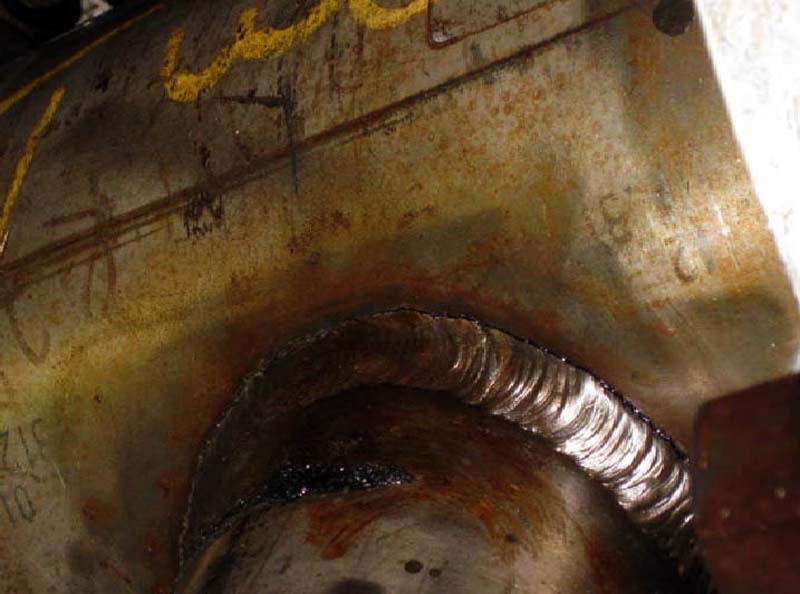
The USS San Antonio has yet another major mechanical problem. It has sprung an oil leak, and is in port in Bahrain to repair and weld piping.

Their ship is stuck at a Bahraini port, but that doesn’t mean extra liberty for some leathernecks with the 26th Marine Expeditionary Unit.

Marines and sailors with the Camp Lejeune, N.C.-based MEU who are aboard the amphibious transport dock San Antonio “continue to train aboard and from that vessel,” according to a MEU spokesman.

The ship’s maiden deployment with the Iwo Jima Expeditionary Strike Group out of Norfolk, Va., was interrupted Oct. 31 when it entered a yard in Bahrain to fix major oil leaks. Navy officials projected the maintenance would be finished within two weeks. This marks the latest problem for the ship, which has been plagued with performance problems, and was delivered late and $1 billion over budget.

But problems with the ship — criticized Monday by Navy Secretary Donald Winter, who said he “continues to be unsatisfied” with its performance — have not stopped its Marine inhabitants from participating in training exercises and classes.

“This training includes leadership, martial arts, physical training, infantry and other job-skills training they would normally conduct underway,” MEU spokesman Gunnery Sgt. Bryce Piper said in an e-mail. “Accessibility to land actually expands these Marines’ opportunities to conduct physical and small-unit training outside the confines of the ship, and unit leaders exploit these opportunities whenever possible.”

Elements of the MEU’s battalion landing team, 2nd Battalion, 6th Marines, and Combat Logistic Battalion 26, are on the ship, but they were not scheduled to participate in current training exercises, Piper said.

The 26th MEU set sail for a six-month deployment aboard the amphibious assault ship Iwo Jima, the San Antonio and dock landing ship Carter Hall Aug. 29. Those ships are currently in the 5th Fleet area of operation.

As expected, the Marines and Navy put a good face on this, but many Marines are surely grumbling under their breath, while their brothers suffer in Afghanistan, pirates plague the Gulf of Aden, and Islamists continue their takeover of Somalia. The long war is proving to be too difficult to encounter these kinds of problems during deployment. With radiograph, dye penetrant testing, and visual inspection, there is absolutely no excuse – none – for welding problems to become manifest while at sea on a new ship. This demonstrates that there is a QA problem somewhere that badly needs to be fixed.

But this also raises the important question of whether the existing MEU structure is the best way to implement the strategic vision of the Marine Corps Commandant for an expeditionary force. It might be wise to train to perform naval-based and amphibious operations, and perhaps this should be among the regular qualifications of Marines of all billets. But first of all, the use of an MEU with all of its expense, to work out the problems associated with a new ship is a questionable value judgment. Second, the use of a Battalion Landing Team (BLT) to spend seven months aboard a ship performing humanitarian missions, shows of force and practice maneuvers while their brother suffer in Afghanistan and pirates maraud the Gulf of Aden forces the question of whether command deployed this MEU in the most efficient manner to perform the most important mission.

Talking with the Taliban

17 years, 3 months ago

Via the Small Wars Journal Blog, Paul McLeary’s Talking with the Taliban at Aviation Weekly has an interesting quote.

I recently spoke with Nathaniel Fick, a former Marine officer who served in Iraq and Afghanistan and later taught at the counterinsurgency school in Kabul, and who is currently a Fellow at the Center for a New American Security, who thinks that negotiating with the Taliban right now is a bad idea. “If we open negotiations with the Taliban right now, we will be doing so from a position of weakness,” he says. “The trick for the next administration is to take the tactical and operational and strategic steps to get us into a position of strength where negotiation is an option.”

Regular readers of The Captain’s Journal will notice a familiar theme. Five months ago we published The Failure of Talking with the Taliban concerning our deal with Mullah Abdul Salaam for the town of Musa Qala. We said:

The history of negotiations with the Taliban has been disastrous, and every time they have been tried, the losers end up being Afghanistan and the ISAF because the “negotiations” are not occurring from a position of strength.

This theme has been periodically repeated ever since. From On Negotiating with the Taliban:

As for the mistaken effort to get the Saudis to collaborate and win the peace, the Taliban clearly aren’t interested. Why should they be, since they are winning? Negotiating in this instance is a sign of weakness.

Hamid Karzai recently continued his boyish, pathetic swoon over Mullah Omar, saying that he would go to “any length” to protect Omar during negotiations. But how does the Taliban reciprocate this unseemly display by Karzai? “Taliban spokesman Qari Yousif told CNN that Karzai’s offer is meaningless because he has to rely on the British and the Americans to provide his own security.” In other words, Karzai is offering to negotiate from a position of weakness rather than strength, says the Taliban – the same thing we said five months ago.

So Nathaniel Fick is right, but of course, so were we.

More on Lines of Logistics for Afghanistan

17 years, 3 months ago

Three days ago The Captain’s Journal published How Many Troops Can We Logistically Support in Afghanistan?, and since Glenn Reynolds linked it at Instapundit, it got plenty of web traffic. As of that date, although we had been covering Torkham, Khyber, Karachi, Chaman and the lines of logistical supply to troops in Afghanistan, we had not seen any American main stream media reports detailing the logistical difficulties and issues.

Enter the Washington Post, which today published an article entitled U.S. Seeks New Supply Routes Into Afghanistan. The same themes we discussed appear in this Washington Post report, although they also detail some new action to create other routes of supply.

TORKHAM, Afghanistan, Nov. 18 — A rise in Taliban attacks along the length of a vital NATO supply route that runs through this border town in the shadow of the Khyber Pass has U.S. officials seeking alternatives, including the prospect of beginning deliveries by a tortuous overland journey from Europe.

Supplying troops in landlocked Afghanistan has long been the Achilles’ heel of foreign armies here, most recently the Soviets, whose forces were nearly crippled by Islamist insurgent attacks on vulnerable supply lines.

About 75 percent of NATO and U.S. supplies bound for Afghanistan — including gas, food and military equipment — are transported over land through Pakistan. The journey begins in the southern Pakistani port city of Karachi and continues north through Pakistan’s volatile North-West Frontier Province and tribal areas before supplies arrive at the Afghan border. The convoys then press forward along mountain hairpin turns through areas of Afghanistan that are known as havens for insurgents.

Drivers at this busy border crossing say death threats from the Taliban arrive almost daily. Sometimes they come in the form of a letter taped to the windshield of a truck late at night. Occasionally, a dispatcher receives an early-morning phone call before a convoy sets off from Pakistan. More often, the threats are delivered at the end of a gun barrel.

“The Taliban, they tell us, ‘These goods belong to the Americans. Don’t bring them to the Americans. If you do, we’ll kill you,’ ” said Rahmanullah, a truck driver from the Pakistani tribal town of Landikotal. “From Karachi to Kabul there is trouble. The whole route is insecure.”

The growing danger has forced the Pentagon to seek far longer, but possibly safer, alternate routes through Europe, the Caucasus and Central Asia, according to Defense Department documents. A notice to potential contractors by the U.S. Transportation Command in September said that “strikes, border delays, accidents and pilferage” in Pakistan and the risk of “attacks and armed hijackings” in Afghanistan posed “a significant risk” to supplies for Western forces in Afghanistan …

The United States has already begun negotiations with countries along what the Pentagon has called a new northern route. An agreement with Georgia has been reached and talks are ongoing with Azerbaijan, Kazakhstan and Uzbekistan, according to an Oct. 31 Pentagon document. “We do not expect transit agreements with Iran or Uzbekistan,” the Transportation Command told potential contractors.

Whichever company gets the contract will have to provide security forces to protect the convoys. Port World Logistics, the transport company currently handling supplies going from Pakistan to Afghanistan, uses a Pakistani service, Dogma Security, and has also had some assistance from the Pakistani government’s Frontier Corps, according to a statement from the public affairs office of U.S. Forces-Afghanistan.

The new contractor will also be required to have intrusion detection devices and a real-time satellite tracking and tracing system that reports the location of each vehicle every 30 minutes.

Although it’s disappointing that it took approximately one year of harping on this subject, it’s good to see that it is getting the attention it deserves. The Captain’s Journal is glad to provide the best analysis well before it can be obtained open source.

Admiral Mullen to Obama: Logistics Rules Dude!

17 years, 3 months ago

In keeping with our theme of logistics of late, it bears mentioning that we’ve pointed out before that Obama’s ego may be writing checks that the U.S. military can’t cash. The logistics officers know how difficult it is to move the U.S. military and materiel, and Forbes gives us the thoughts of a logistics officer thinking merely about deploying a Brigade to Iraq (from an article several months ago).

While mission and TPFDD specifications vary, each brigade is allotted a standard cache of equipment and supplies. “There are 1,870 pieces of heavy equipment–plus or minus–required for every brigade, and that’s just for the machinery,” says Cashner.

Among the heavier items are 919 wheeled vehicles, including trucks and Humvees, and 424 tow vehicles. There are forklifts, generators and cranes to hoist and lower equipment when the brigade rumbles through Iraq. And there are 514 brigade tanks, including Bradley fighting vehicles, perhaps the most challenging items to move.

“Each [Bradley] weighs 70 tons,” says Cashner. “An African male elephant weighs 5 tons. So one tank weighs the equivalent of 12 male elephants.”

While the tanks, trailers and tow trucks rumble across Fort Riley toward the railhead staging platform, soldiers are loading boxes onto the trains. They pack spark plugs and spare engine parts, and stack some 2,850 shipping boxes containing everything from packaged omelets to chicken cordon bleu. They must load enough food to feed the 3,800-man brigade three square meals for the first three days of deployment.

The first rail car leaves at N+48. The 800-mile trip from Kansas to Texas takes 18 hours. All considered, it will take at least 500 to 600 rail cars to transport the combat brigade’s stuff from “fort to port.”

Once at the port in Texas, the brigade’s equipment and supplies will be packed on to massive container ships, each one 15 stories tall and about 1,000 feet long–the length of three football fields.

“To move the brigade, military logistics officials must marshal, at the very least, 19 cargo ships,” said Cashner. “They are humongous carriers with open decks, and you literally drive up the ramps and park your vehicles.”

The container ships carrying the bulk of the brigade or division equipment ship out one after the other, and often stop for additional supplies at Hampton Roads, Va., home to several military harbors. Roughly a week later, they arrive at one of the military’s so-called “power performance platforms,” massive debarkation hubs, in either Shuaiba, in Kuwait, or in Qatar, from where the equipment will travel by land to Iraq.

Meanwhile, late last year, with talk of troop withdrawals, logistics officials at U.S. Central Command started to ponder how they would retrieve the almost unfathomable array of equipment and supplies they have poured into Southwest Asia over the past five years. “It’s very easy to take things off the ship,” Cashner said. On the returning journey, though, everything from tanks to hand tools must be repaired, cleaned and labeled for customs. Getting out, just like getting in, could take years.

Admiral Mullen has recently weighed in with somewhat less detail but just as strongly about what it will take to bring the troops home from Iraq.

Admiral Michael Mullen said it will take at least two years to safely withdraw all U.S. troops from Iraq, an estimate that may conflict with President-elect Barack Obama’s goal of pulling most forces out within 16 months.

Mullen, the chairman of the Joint Chiefs of Staff, also said at a Pentagon news conference that the time wasn’t yet right to begin negotiating with elements of the Taliban in Afghanistan.

Mullen, the president’s principal military adviser, said it was possible to meet the three-year withdrawal deadline set in a status-of-forces agreement that was approved by the Iraqi Cabinet yesterday. He confirmed that the agreement calls for all U.S. forces to be out by the end of 2011, regardless of conditions on the ground.

“It’s very doable, but it’s not the kind of thing that we could do overnight,” Mullen said. “To remove the entire force would be two to three years, as opposed to something we could do in a very short period of time.”

As for Obama’s goal of removing U.S. combat forces within 16 months, with just a residual force remaining to train Iraqis and conduct counter-terrorism operations, Mullen said he would follow whatever orders the commander-in-chief gives him.

“Should President-elect Obama give me direction, I would carry that out,” he said. “That’s what I do as a senior member of the military.”

The questioning obviously pushed Adm. Mullen in the direction of trying to explain why what he said could be reconciled with a new commander in chief whose orders might contradict what he just said. Says Adm, Mullen, “I’ll try my best to do what I am told to do.”

In America, the military reports to civilian authority. But what Adm. Mullen couldn’t explain to the stolid reporters present at the news conferences is that it isn’t really up to him, and it isn’t even up to Obama, political promises nothwithstanding. The concerns are far more pedestrian than that.

It isn’t about giving orders and expecting them to be obeyed. We can order a five year old child to perform mathematical manipulations with calculus, or the world’s strongest man to pick up an elephant. In both cases try as they might, the expectations cannot be met by either one.

Regardless of the order given at the top and conveyed by Adm. Mullen, there is one thing clear from what we know. The logistics officers decide what can and can’t be done, and they will tell that to their chain of command, and Adm. Mullen will then have to tell that to Obama. That’s the way it works. Adm. Mullen knows that, and while he was attempting to show his servitude to the civilian authority structure, he was also giving us a not-so-coded or hidden message: Logistics rules, dude!


26th MEU (10)
Abu Muqawama (12)
ACOG (2)
ACOGs (1)
Afghan National Army (36)
Afghan National Police (17)
Afghanistan (704)
Afghanistan SOFA (4)
Agriculture in COIN (3)
AGW (1)
Air Force (41)
Air Power (10)
al Qaeda (83)
Ali al-Sistani (1)
America (22)
Ammunition (304)
Animals (323)
Ansar al Sunna (15)
Anthropology (3)
Antonin Scalia (1)
AR-15s (393)
Arghandab River Valley (1)
Arlington Cemetery (2)
Army (91)
Assassinations (2)
Assault Weapon Ban (29)
Australian Army (7)
Azerbaijan (4)
Backpacking (4)
Badr Organization (8)
Baitullah Mehsud (21)
Basra (17)
BATFE (246)
Battle of Bari Alai (2)
Battle of Wanat (18)
Battle Space Weight (3)
Bin Laden (7)
Blogroll (3)
Blogs (24)
Body Armor (23)
Books (3)
Border War (18)
Brady Campaign (1)
Britain (39)
British Army (36)
Camping (5)
Canada (19)
Castle Doctrine (1)
Caucasus (6)
CENTCOM (7)
Center For a New American Security (8)
Charity (3)
China (19)
Christmas (18)
CIA (30)
Civilian National Security Force (3)
Col. Gian Gentile (9)
Combat Outposts (3)
Combat Video (2)
Concerned Citizens (6)
Constabulary Actions (3)
Coolness Factor (3)
COP Keating (4)
Corruption in COIN (4)
Council on Foreign Relations (1)
Counterinsurgency (218)
DADT (2)
David Rohde (1)
Defense Contractors (2)
Department of Defense (220)
Department of Homeland Security (26)
Disaster Preparedness (5)
Distributed Operations (5)
Dogs (15)
Donald Trump (27)
Drone Campaign (4)
EFV (3)
Egypt (12)
El Salvador (1)
Embassy Security (1)
Enemy Spotters (1)
Expeditionary Warfare (18)
F-22 (2)
F-35 (1)
Fallujah (17)
Far East (3)
Fathers and Sons (2)
Favorite (1)
Fazlullah (3)
FBI (39)
Featured (192)
Federal Firearms Laws (18)
Financing the Taliban (2)
Firearms (1,867)
Football (1)
Force Projection (35)
Force Protection (4)
Force Transformation (1)
Foreign Policy (27)
Fukushima Reactor Accident (6)
Ganjgal (1)
Garmsir (1)
general (15)
General Amos (1)
General James Mattis (1)
General McChrystal (44)
General McKiernan (6)
General Rodriguez (3)
General Suleimani (9)
Georgia (19)
GITMO (2)
Google (1)
Gulbuddin Hekmatyar (1)
Gun Control (1,717)
Guns (2,406)
Guns In National Parks (3)
Haditha Roundup (10)
Haiti (2)
HAMAS (7)
Haqqani Network (9)
Hate Mail (8)
Hekmatyar (1)
Heroism (5)
Hezbollah (12)
High Capacity Magazines (16)
High Value Targets (9)
Homecoming (1)
Homeland Security (3)
Horses (2)
Humor (72)
Hunting (61)
ICOS (1)
IEDs (7)
Immigration (123)
India (10)
Infantry (4)
Information Warfare (4)
Infrastructure (4)
Intelligence (23)
Intelligence Bulletin (6)
Iran (171)
Iraq (379)
Iraq SOFA (23)
Islamic Facism (64)
Islamists (98)
Israel (19)
Jaish al Mahdi (21)
Jalalabad (1)
Japan (3)
Jihadists (82)
John Nagl (5)
Joint Intelligence Centers (1)
JRTN (1)
Kabul (1)
Kajaki Dam (1)
Kamdesh (9)
Kandahar (12)
Karachi (7)
Kashmir (2)
Khost Province (1)
Khyber (11)
Knife Blogging (7)
Korea (4)
Korengal Valley (3)
Kunar Province (20)
Kurdistan (3)
Language in COIN (5)
Language in Statecraft (1)
Language Interpreters (2)
Lashkar-e-Taiba (2)
Law Enforcement (6)
Lawfare (14)
Leadership (6)
Lebanon (6)
Leon Panetta (2)
Let Them Fight (2)
Libya (14)
Lines of Effort (3)
Littoral Combat (8)
Logistics (50)
Long Guns (1)
Lt. Col. Allen West (2)
Marine Corps (281)
Marines in Bakwa (1)
Marines in Helmand (67)
Marjah (4)
MEDEVAC (2)
Media (68)
Medical (146)
Memorial Day (6)
Mexican Cartels (47)
Mexico (71)
Michael Yon (6)
Micromanaging the Military (7)
Middle East (1)
Military Blogging (26)
Military Contractors (5)
Military Equipment (25)
Militia (9)
Mitt Romney (3)
Monetary Policy (1)
Moqtada al Sadr (2)
Mosul (4)
Mountains (25)
MRAPs (1)
Mullah Baradar (1)
Mullah Fazlullah (1)
Mullah Omar (3)
Musa Qala (4)
Music (25)
Muslim Brotherhood (6)
Nation Building (2)
National Internet IDs (1)
National Rifle Association (97)
NATO (15)
Navy (31)
Navy Corpsman (1)
NCOs (3)
News (1)
NGOs (3)
Nicholas Schmidle (2)
Now Zad (19)
NSA (3)
NSA James L. Jones (6)
Nuclear (63)
Nuristan (8)
Obama Administration (222)
Offshore Balancing (1)
Operation Alljah (7)
Operation Khanjar (14)
Ossetia (7)
Pakistan (165)
Paktya Province (1)
Palestine (5)
Patriotism (7)
Patrolling (1)
Pech River Valley (11)
Personal (76)
Petraeus (14)
Pictures (1)
Piracy (13)
Pistol (4)
Pizzagate (21)
Police (672)
Police in COIN (3)
Policy (15)
Politics (998)
Poppy (2)
PPEs (1)
Prisons in Counterinsurgency (12)
Project Gunrunner (20)
PRTs (1)
Qatar (1)
Quadrennial Defense Review (2)
Quds Force (13)
Quetta Shura (1)
RAND (3)
Recommended Reading (14)
Refueling Tanker (1)
Religion (499)
Religion and Insurgency (19)
Reuters (1)
Rick Perry (4)
Rifles (1)
Roads (4)
Rolling Stone (1)
Ron Paul (1)
ROTC (1)
Rules of Engagement (75)
Rumsfeld (1)
Russia (37)
Sabbatical (1)
Sangin (1)
Saqlawiyah (1)
Satellite Patrols (2)
Saudi Arabia (4)
Scenes from Iraq (1)
Second Amendment (708)
Second Amendment Quick Hits (2)
Secretary Gates (9)
Sharia Law (3)
Shura Ittehad-ul-Mujahiden (1)
SIIC (2)
Sirajuddin Haqqani (1)
Small Wars (72)
Snipers (9)
Sniveling Lackeys (2)
Soft Power (4)
Somalia (8)
Sons of Afghanistan (1)
Sons of Iraq (2)
Special Forces (28)
Squad Rushes (1)
State Department (23)
Statistics (1)
Sunni Insurgency (10)
Support to Infantry Ratio (1)
Supreme Court (79)
Survival (214)
SWAT Raids (58)
Syria (38)
Tactical Drills (38)
Tactical Gear (17)
Taliban (168)
Taliban Massing of Forces (4)
Tarmiyah (1)
TBI (1)
Technology (21)
Tehrik-i-Taliban (78)
Terrain in Combat (1)
Terrorism (96)
Thanksgiving (13)
The Anbar Narrative (23)
The Art of War (5)
The Fallen (1)
The Long War (20)
The Surge (3)
The Wounded (13)
Thomas Barnett (1)
Transnational Insurgencies (5)
Tribes (5)
TSA (25)
TSA Ineptitude (14)
TTPs (4)
U.S. Border Patrol (8)
U.S. Border Security (22)
U.S. Sovereignty (29)
UAVs (2)
UBL (4)
Ukraine (10)
Uncategorized (105)
Universal Background Check (3)
Unrestricted Warfare (4)
USS Iwo Jima (2)
USS San Antonio (1)
Uzbekistan (1)
V-22 Osprey (4)
Veterans (3)
Vietnam (1)
War & Warfare (432)
War & Warfare (41)
War Movies (4)
War Reporting (21)
Wardak Province (1)
Warriors (6)
Waziristan (1)
Weapons and Tactics (80)
West Point (1)
Winter Operations (1)
Women in Combat (21)
WTF? (1)
Yemen (1)

February 2026
January 2026
December 2025
November 2025
October 2025
September 2025
August 2025
July 2025
June 2025
May 2025
April 2025
March 2025
February 2025
January 2025
December 2024
November 2024
October 2024
September 2024
August 2024
July 2024
June 2024
May 2024
April 2024
March 2024
February 2024
January 2024
December 2023
November 2023
October 2023
September 2023
August 2023
July 2023
June 2023
May 2023
April 2023
March 2023
February 2023
January 2023
December 2022
November 2022
October 2022
September 2022
August 2022
July 2022
June 2022
May 2022
April 2022
March 2022
February 2022
January 2022
December 2021
November 2021
October 2021
September 2021
August 2021
July 2021
June 2021
May 2021
April 2021
March 2021
February 2021
January 2021
December 2020
November 2020
October 2020
September 2020
August 2020
July 2020
June 2020
May 2020
April 2020
March 2020
February 2020
January 2020
December 2019
November 2019
October 2019
September 2019
August 2019
July 2019
June 2019
May 2019
April 2019
March 2019
February 2019
January 2019
December 2018
November 2018
October 2018
September 2018
August 2018
July 2018
June 2018
May 2018
April 2018
March 2018
February 2018
January 2018
December 2017
November 2017
October 2017
September 2017
August 2017
July 2017
June 2017
May 2017
April 2017
March 2017
February 2017
January 2017
December 2016
November 2016
October 2016
September 2016
August 2016
July 2016
June 2016
May 2016
April 2016
March 2016
February 2016
January 2016
December 2015
November 2015
October 2015
September 2015
August 2015
July 2015
June 2015
May 2015
April 2015
March 2015
February 2015
January 2015
December 2014
November 2014
October 2014
September 2014
August 2014
July 2014
June 2014
May 2014
April 2014
March 2014
February 2014
January 2014
December 2013
November 2013
October 2013
September 2013
August 2013
July 2013
June 2013
May 2013
April 2013
March 2013
February 2013
January 2013
December 2012
November 2012
October 2012
September 2012
August 2012
July 2012
June 2012
May 2012
April 2012
March 2012
February 2012
January 2012
December 2011
November 2011
October 2011
September 2011
August 2011
July 2011
June 2011
May 2011
April 2011
March 2011
February 2011
January 2011
December 2010
November 2010
October 2010
September 2010
August 2010
July 2010
June 2010
May 2010
April 2010
March 2010
February 2010
January 2010
December 2009
November 2009
October 2009
September 2009
August 2009
July 2009
June 2009
May 2009
April 2009
March 2009
February 2009
January 2009
December 2008
November 2008
October 2008
September 2008
August 2008
July 2008
June 2008
May 2008
April 2008
March 2008
February 2008
January 2008
December 2007
November 2007
October 2007
September 2007
August 2007
July 2007
June 2007
May 2007
April 2007
March 2007
February 2007
January 2007
December 2006
November 2006
October 2006
September 2006
August 2006
July 2006
June 2006
May 2006

about · archives · contact · register

Copyright © 2006-2026 Captain's Journal. All rights reserved.