
The Coming Battle for Afghanistan
BY Herschel Smith 17 years, 6 months ago
Introduction
Several related but sometimes divergent reports are given below, followed by commentary and analysis.
Max Boot, Frederick Kagan and Kimberly Kagan, New York Times:
The main challenge is to overcome years of chronic neglect in terms of economic development, government services and above all security, which has allowed the insurgency free access to large swaths of the country. The good news is that the Taliban holds little appeal for most Afghans — a BBC-ABC News poll last month showed only 4 percent desired Taliban rule. The Sunni and Shiite insurgencies in Iraq, by contrast, maintained much greater support in their respective communities until they were defeated.
Even without much popular backing, Afghan insurgents are staging an increasing number of attacks, but major cities like Kabul and Jalalabad, which we visited, are relatively safe and flourishing. The civilian death toll in Afghanistan last year was 16 times lower than that in Iraq in the pre-surge year of 2006, even though Afghanistan is more populous.
Syed Saleem Shahzad, Asia Times:
Ahead of the resumption of battle in Afghanistan now that the weather is warmer, the Taliban have a virtual siege all around the capital Kabul. They have significant control in the vital districts of Wardak, Logar, Parwan and Kapisa.
A second strategic ring to reinforce this siege comprises the provinces of Kunar, Nooristan and Ghazni. The four vital entry and exit routes for the Taliban’s supply lines – Nimroz, Herat, Nangarhar and Kandahar – are also heavily manned by the militants.
In addition, after striking peace deals with the Pakistani security forces, the newly formed United Front of Taliban in the Pakistani tribal areas is ready to pump at least 15,000 to 20,000 fresh fighters into Afghanistan. These are expected to start crossing the rugged – and unmanned – border in April …
“Five percent of the Taliban is incorrigible, not susceptible to anything other than being defeated,” Biden said. “Another 25% or so are not quite sure, in my view, of the intensity of their commitment to the insurgency. Roughly 70% are involved because of the money.”
In a weekend New York Times interview, Obama floated the idea of engaging with non-radical members of the insurgency, as Afghanistan heads toward August 20 elections that will test its ability to govern itself.
However, it appears that Washington has already missed the boat. The reason is the all-time high domination of al-Qaeda-influenced militants – the neo-Taliban – who are not willing to make any deal short of the withdrawal of foreign occupation forces and the restoration of the Taliban regime.
Despite the killing of a large number of important al-Qaeda commanders, these hardliners have a strong presence among the Pakistan militants allied with the three main commanders – Mullah Bradar, Sirajuddin Haqqani and Anwarul Haq Mujahid. These three have pledged their allegiance to Taliban leader Mullah Omar, who has transformed the Taliban into an ultra-conservative force compared to a few years ago when the Taliban were a Pashtun tribal movement.
Paula Newton, CNN:
Kabul is clogged with traffic and people and at the best of times there is no way to assure safety in this city. And it’s alarming for this correspondent to hear the same line from both the Taliban and one of the city’s top cops: Insurgents can hit the city anytime, anywhere.
That’s not to say the Kabul Police force isn’t trying. They are now talking about a double ring of security around the city and they’ve gotten better at enforcing it. Many cities around the world with many more resources, are having their own battle with terrorists and so in that context, the security forces here aren’t doing a bad job.
Securing this capital is a crucial test not only for the city’s police force, but for the whole country. They need to know they can stand on their own and sort out their own security without thousands of foreign troops turning their capital into a fortress.
Less than three years ago, foreigners could walk the streets of Kabul in relative safety and have the luxury and freedom to hail their own cabs and try out the local food. Some foreigners of course still do that, but the majority live in armed camps throughout the city, fearing both random attacks and targeted kidnappings …
The fact is, even if Kabul becomes more secure in the coming months it may remain virtually cut off from the rest of the country for some time. And then there’s still the issue of how to secure the city itself with a police force of grossly underpaid officers who claim they are on the take just to survive?
Commentary & Analysis
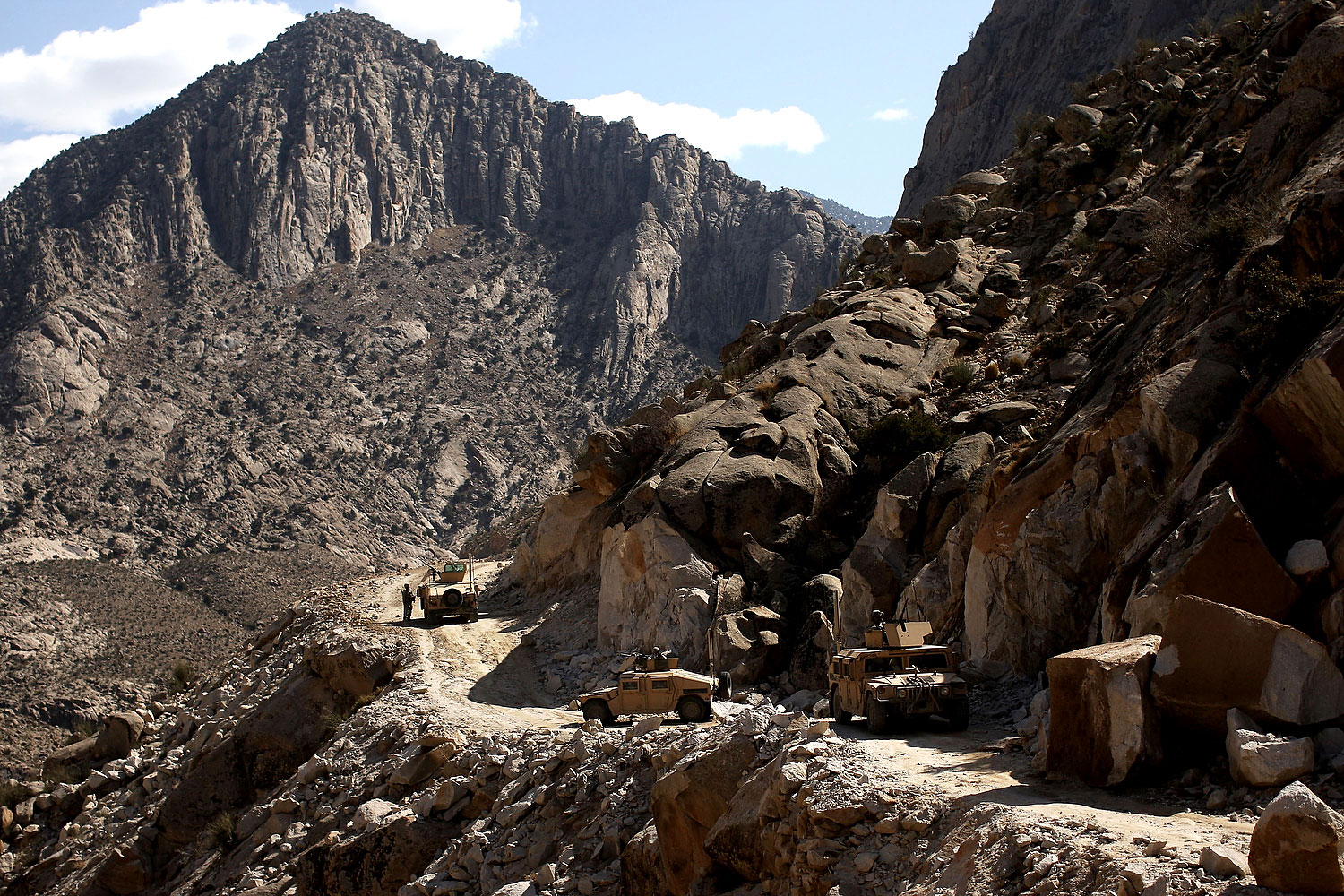
Afghanistan is a land of extremely challenging terrain, and yet engagement of this terrain by U.S. forces has meant that many of the rural inhabitants around Kandahar have fled to the city. “Massive numbers of people have already been forced from their villages in the fighting zones, and the numbers are going up as security continues to deteriorate.
It is a displacement that is fostering social upheaval and crime. It is straining the limited resources of a city with little food and shelter to offer. And it is creating a growing legion of young men with no land to farm and no jobs – young men who are ripe pickings for the Taliban.”
The insurgency must be fought and security provided for the population in both rural and urban areas. Counterinsurgency in Afghanistan is going to be very difficult, especially since we have [incorrectly] relied for some time on direct action by special operations forces against high value targets as being the cornerstone of our offensive operations.
Max Boot’s commentary is almost certainly overly optimistic, while Shahzad’s analysis is both informative and moderately propagandistic at the same time. While the Taliban own much of the countryside (and almost all of it at night), the Asia Times report makes it sound as if the Taliban are capable of launching major conventional operations against large urban population centers. The Taliban have launched small Battalion-sized operations against the U.S. Marines, and while the Taliban are much bolder and more tactically skillful that the enemy in Iraq, they have been beaten in numerous engagements. In one such instance the kill ratio was 50 : 0.
Yet American tactical superiority won’t negate the very real affects of the influx 15,000 – 20,000 hard core Taliban fighters in Pakistan being freed to perform operations in Afghanistan due to the so-called peace deal with the Pakistani government. There is no doubt that security is degrading as it has been for more than a year, and there is also no doubt that major insurgent attacks have occurred and will increase in the population centers of Kabul and Kandahar.
With the Afghan police “on the take,” high on cannabis or opium much of the time, and under constant threat and sometimes inept when sober, rapid turnover to Afghan forces isn’t an option. Mr. Biden is certainly dreaming when he says that as much as 70% of the Taliban are redeemable. While the indigenous poor who participate for money should be courted as elements who might side with anti-globalist forces in Afghanistan, targeting mid-level Taliban commanders for negotiations will likely bring about the same disaster as the British failure with Musa Qala and our deal with Mullah Abdul Salaam. It accomplished little and wasted precious time.
While Mr. Biden prevaricates on the makeup of the Taliban, U.S. Soldiers, Airmen and Marines will see a difficult year in Afghanistan. 2009 will be a determinative year in the campaign.






No comments yet.
RSS feed for comments on this post. TrackBack URL
Leave a comment