The Taliban Spring Offensive: Pointless Bickering

Herschel Smith · 11 May 2008 · 0 Comments

Enemy activity appears to be increasing in Afghanistan according to ISAF medical personnel. U.S. commanders have been braced for a "spring offensive", a pick-up in violence tied to the season, when warmer weather allows the Taliban to work their way over the mountains from hideouts in north-western Pakistan and into Afghanistan. In the first few weeks of this spring, there was little change in the level of violence…… [read more]


Thoughts on the Assassination of Benazir Bhutto

BY Herschel Smith
4 months, 2 weeks ago

I wanted to put out some preliminary thoughts on current news - the assassination of former (and likely future) Pakistani Prime Minister Benazir Bhutto - but to do this, I will neglect the sweeping, link-laden and highly sourced analyses that I try to provide.  Instead, my thoughts will be in the ’stream of consciousness’ style.

It is a sad day for the global war on terror, and the American left, always anxious to lay blame, hasn’t yet solidified its talking points.  Peter Beinart believes that the U.S. administration is somehow to blame because we didn’t push President Pervez Musharraf far and fast enough towards democracy.  Alan Colmes believes that the U.S. administration is somehow to blame because we pushed democracy on a country not ready for it.  Presidential candidate Mike Huckabee inexplicably apologized for the incident, expressing “our sincere concern and apologies for what has happened in Pakistan.”  Inexplicably, that is, unless along with the American left he also feels that the U.S. is somehow to blame for Islamic militancy in Pakistan.

I won’t engage in the omniscient blame game.  But Ambassador Bolton’s concerns are salient when he takes the position that in encouraging Bhutto’s re-emergence on the political scene in Pakistan we “helped to precipitate” the unfortunate events of today, and further remarks that of utmost strategic interest is the safety of the nuclear weapons under Pakistan’s care.  Bolton fails to see how any of this helps the strategic interests of the U.S.

Bolton is not part of the political left, and while I usually agree with him, I take issue with his characterization of these events.  I too, am concerned about the strategic interests of the U.S., and more could have been done after the first assassination attempt on Bhutto’s life (the first day that she returned to Pakistan) to protect her and provide more security.  Bhutto is said to have desired and requested this additional security (and in fact from the U.S. FBI and other assets), and Pakistan is said to have denied this request.  If this fact had been known, then the U.S. administration shares a little of the blame for not pushing hard enough on Musharraf for this protection (and of course, Musharraf is primarily to blame).

However, Bolton is ignoring the long term strategic interests in having Bhutto involved in Pakistani politics.  I have said before that ”counterinsurgency in Pakistan begins in Afghanistan and along the Pakistan / Afghanistan border. Unless and until we devote the troops and effect the force projection to let the people in these AOs know that we are serious about the campaign, there will be no success.”  I have advocated more troops in the Afghanistan campaign for the simple reason that not only must we win in Afghanistan, we have an unmitigated opportunity to kill Taliban and al Qaeda fighters in Afghanistan where we are not dealing with issues of sovereignty of Pakistan.  In other words, we have the best of all possible worlds in the current campaign in Afghanistan (similar to the campaign in Iraq, although this is waning somewhat due to Iraqi sovereignty).  We can fight international jihadists with the full approval of the administration and for the most part without the overhead of issues of national sovereignty.

This campaign, once shown to be successful, can then be expanded into Pakistan with the tacit approval of the Pakistani government (i.e., small incursions and concealed operations, expanded to larger operations if the need and approval were forthcoming).  Here is where the administration of Pakistan is important.  Musharraf is likely an American ally only to the extent that he believed Richard Armitage when it was said to him that the U.S. would enjoy his cooperation or Pakistan would be “bombed back to the stone age” (the words as reported by Musharraf himself).  Bhutto, on the other hand, would have been a willing participant in the global war on religious militancy, and is said to have desired international assistance in the Pakistan counterinsurgency campaign: “If Bhutto returns to power this week, Gauhar predicts the U.S. will finally get what Musharraf has refused it: “She will allow NATO boots on the ground in our tribal areas and a chance to neuter our nuclear weapons.”

While Secretary of Defense Robert Gates is said to favor an addition of only 7500 troops to the Afghanistan campaign, hope springs eternal that strategic interests would be seriously evaluated around the globe (e.g., Germany and South Korea) and troop realignments would occur to support both the Iraq and Afghanistan counterinsurgency campaigns.

We must think long term, and Bhutto, because she was a clear thinker, was a long term ally of the United States.  It is a sad day for the U.S. and the global war on terror.  Only time will tell how serious this setback is.  My sense is that it’s very serious.

British in Negotiations with Taliban

BY Herschel Smith
4 months, 2 weeks ago

The Telegraph is reporting that there are ongoing secret negotiations between British intelligence and the Taliban.

Agents from MI6 entered secret talks with Taliban leaders despite Gordon Brown’s pledge that Britain would not negotiate with terrorists, The Daily Telegraph can disclose.

Officers from the Secret Intelligence Service staged discussions, known as “jirgas”, with senior insurgents on several occasions over the summer.

An intelligence source said: “The SIS officers were understood to have sought peace directly with the Taliban with them coming across as some sort of armed militia. The British would also provide ‘mentoring’ for the Taliban.”

The disclosure comes only a fortnight after the Prime Minister told the House of Commons: “We will not enter into any negotiations with these people.”

Opposition leaders said that Mr Brown had “some explaining to do”.

The Government was apparently prepared to admit that the talks had taken place but Gordon Brown was thought to have “bottled out” just before Prime Minister’s Questions on Dec 12, when he made his denial instead.

It is thought that the Americans were extremely unhappy with the news becoming public that an ally was negotiating with terrorists who supported the September 11 attackers.

This is further confirmation,  but to be precise, this is not news.  We have previously discussed the fact that British officials believed the Taliban to be too deeply rooted to be eradicated by military means, and had intended to court the alleged more “moderate” members of the Taliban to attempt to divide their organization.  We have also discussed the fact that Britain does support negotiations with the Taliban and sees a role for them to play in the new Afghanistan.

“Britain will support deals with Taliban insurgents to give them places in Afghanistan’s new government and military, British Prime Minister Gordon Brown announced yesterday, distancing himself from the Canadian and U.S. strategy of refusing to sit down with the Taliban.  In a speech to the House of Commons announcing a new Afghanistan strategy, Mr. Brown said that Britain will join Afghan President Hamid Karzai in making money and job offers to “former insurgents.”

Brown is referring to an effort underway by Hamid Karzai to obtain the loyalties of the lieutenants of Mullah Omar and thus split the organization.  The price for this loyalty is a place at the table in the new Afghanistan.  So Prime Minister Brown will likely continue to play politics before the House of Commons and explain that Britain really doesn’t negotiate with the Taliban, but supports settling with the more ‘moderate’ Lieutenants of the senior leadership in order to fragment the Taliban.

He is taking this position because not a single country currently engaged in Afghanistan is willing to send more troops into the theater except the U.S., and Gates himself is only willing to commit an additional 7500 troops despite the ongoing review of the Afghanistan counterinsurgency campaign.  The British position is based on the American experience in Anbar of co-opting the enemy, or settling with erstwhile insurgents with the concerned citizens program. Or so they think.

Sadly, this is to mistake the Anbar narrative.  In Anbar, the U.S. Marines gave the U.S. the upper hand from three hard years of kinetic operations, and negotiations with the tribes took place from the perspective of strength.  Further, the Anbari tribes were not, for the most part, fighting from a perspective of religious fervor.  It is one thing to settle with insurgents who need jobs to feed their families.  It is quite another to settle with men who desire your death because of religious beliefs - like the Taliban.  The Brits are involved in a dirty game, indeed.

12/25/07 Air Power Summary

BY Herschel Smith
4 months, 2 weeks ago

From the U.S. Air Force:

12/26/2007 - SOUTHWEST ASIA (AFPN) — Coalition airpower integrated with coalition ground forces in Iraq and the International Security Assistance Force in Afghanistan during operations Dec. 25, according to Combined Air and Space Operations Center officials here.

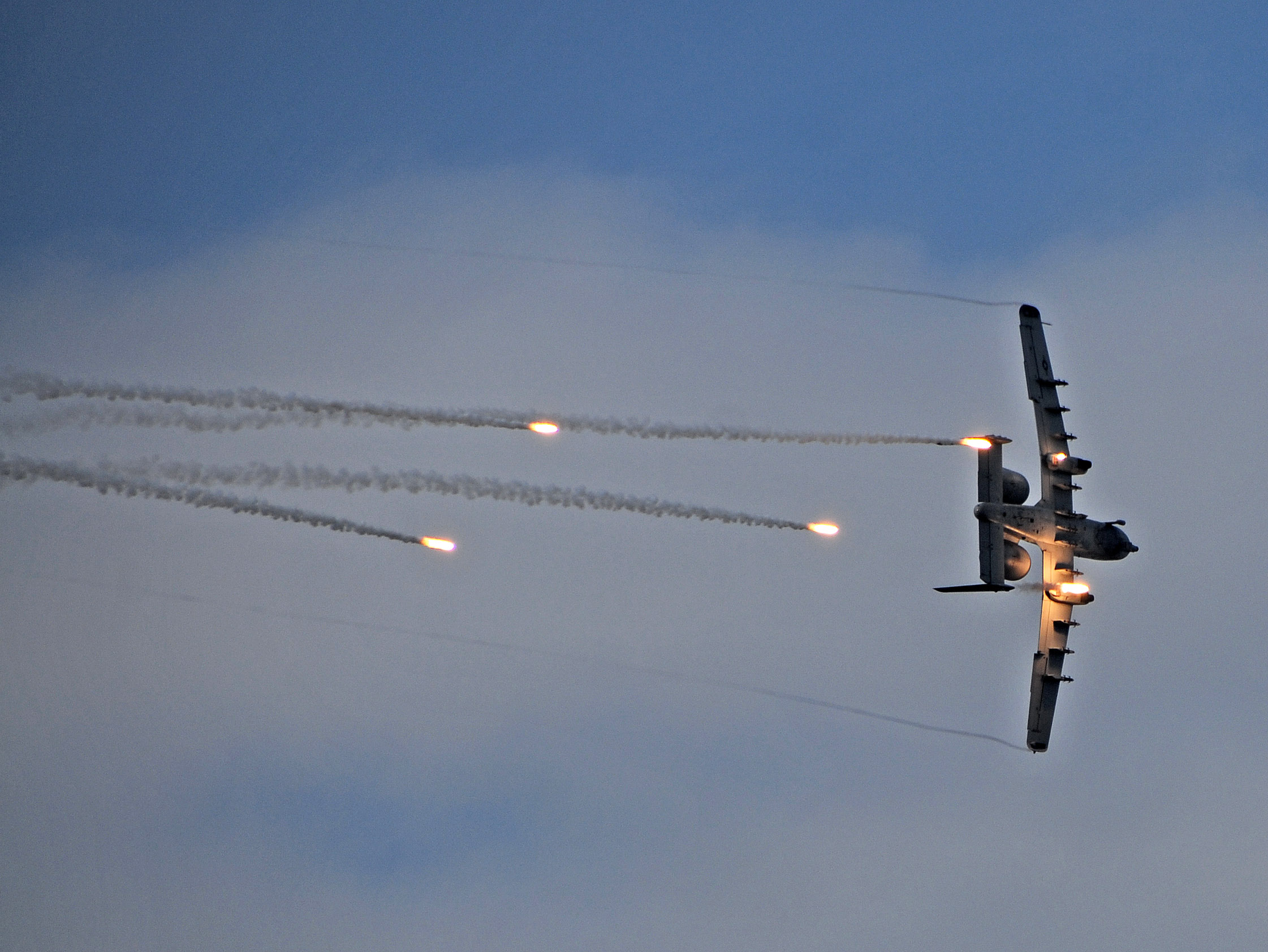
In Afghanistan, an Air Force F-15E Strike Eagle performed a show of force with flares to deter enemy activities in Gereshk. The mission was reported as successful by an on-scene joint terminal attack controller.

F-15Es performed multiple shows of force in Kandahar and a show of force in Kajaki Dam. The shows of force, including the use of flares, were performed to deter enemy actions. All of the missions were reported as a success by a JTAC.

Air Force A-10 Thunderbolt IIs conducted shows of force with flares to deter enemy activities in Orgune. The shows of force were reported as successful by a JTAC.

In Khowst and Kajaki Dam, multiple shows of force were performed by F-15Es to deter enemy activities in the area. JTACs reported the missions achieved the desired effects.

In total, 39 close-air-support missions were flown in support of the ISAF and Afghan security forces, reconstruction activities and route patrols.

These shows of force have become routine in both Iraq and Afghanistan.  In the best of all possible worlds, they can prevent the need for force by intimidating the enemy.  If this fails, they are available to effect force.  The two taken together are “force projection.”

Gates Sets Pretext for Review of Afghanistan Campaign

BY Herschel Smith
4 months, 2 weeks ago

In Review and Analysis of Afghanistan Counterinsurgency Campaign, we noted that the first quarter of 2008 should see the results of a department-wide review of the Afghanistan COIN campaign strategy, and previously we have strongly suggested the needs for more troops.  Secretary of Defense Robert Gates sets the pretext for this review and essentially tells us what he expects to see as a result of the review.

Gates said a small number of additional troops are needed in Afghanistan, but ruled out a broad surge of American forces. Commanders in Afghanistan are asking for smaller numbers of combat troops and support personnel who could train Afghan forces, but do not see the need for an Iraq-style troop buildup.

“You’re talking about probably somewhere in the neighborhood of 7,500 troops. So it’s not like moving 100,000 troops from one place to the other or something like that,” Gates said. “But there is clearly, in the view even of the commander in the field, no requirement for a substantial plus-up of forces in Afghanistan to accomplish his mission.”

Those additional 7,500 troops could be drawn from American forces. Gates had been pressing the NATO allies for more troops. Though U.S. officials do want to maintain pressure on allied nations to send more troops, Gates noted there is little reason to press countries with a weak minority government for whom it is politically impossible to send more troops.

“Continuing to publicly go after our allies for things — to do things that politically are just impossible for them is probably not very productive,” he said.

Gates said the challenge of the year ahead in Afghanistan is to build on military progress, maintain control of newly recaptured areas and start to push ahead on some economic progress.

“There is no doubt … that there has been an increase in violence over the past year,” Gates said. “But in part it has been due to much more aggressive actions on the part of the NATO alliance and the U.S. forces that are there. The spring offensive we expected from the Taliban became NATO’s spring offensive.”

This seems overly optimistic to me, and 7500 additional troops still doesn’t provide either the ability to conduct operations in a country the size of Afghanistan or to supply border security.

Attacking the Enemy’s Strategy in Iraq

BY Herschel Smith
4 months, 2 weeks ago

“Thus, what is of supreme importance in war is to attack the enemy’s strategy.  Next best is to disrupt his alliances.  The next best is to attack his army.”  Sun Tzu, The Art of War, III.4 - III.6

The role of Syria - at least tacitly - in the suicide bombings in Iraq and other foreign terrorist activities is well known.  Yet only recently is the United States diplomatic corps said to have lost patience with Syria.  Despite reports to the contrary, Iran continues to fund, arm, train and supply terrorists in Iraq in an effort to destabilize the country.  The foreign origins of the violence in Iraq could have been (and could be) better addressed than it has been.  The EFP (explosively formed projectile) factories in Iran should have been enemy targets as much as insurgent domiciles, and the Syrian Imams who recruited and supplied suicide bombers into Iraq should have been considered enemy fighters as much as those holding a weapon in Fallujah or Baghdad.  While the U.S. has conducted robust kinetic operations against the foreign fighters in Iraq with huge success, the strategy could still have been completed with so-called black operations against rogue elements in Syria and more visible operations against EFP factories in Iran (or at least diplomatic pressure against Iran, something the State Department seems loath to do).

However, in the area of the indigenous insurgents, the U.S. strategy has been more lucid.  The goal in counterinsurgency is to disrupt the allegiance of the people to the insurgents and then to ameliorate the conditions that led to the insurgency.  Kinetic operations against foreign fighters were necessary because they fight mainly due to religious motivation.  However, for the indigenous fighters, for months we have advocated both settling with the erstwhile insurgents and payment to the concerned citizens as both effective and anthropologically sound.  It has become in vogue, especially among the political left, to level very specific criticisms at this approach.  Kevin Drum gives us the template for this strategy bashing.

I’ve mentioned a few times before that our “bottoms up” strategy of supporting Sunni tribes in the provinces surrounding Baghdad carries a number of risks. The biggest risk, I suppose, is that once the tribes finally feel safe from the threat of al-Qaeda in Iraq, they’ll relaunch their insurgency and start shooting at American soldiers again. The second biggest risk is that the Shiite central government understands perfectly well that “competing armed interest groups” in the provinces are — well, competing armed interest groups.

That phrase comes from Australian Lt. Col. David Kilcullen (here), and a week ago I linked to a quote from a U.S. Army officer who was fairly candid about the effect that arming the tribes is likely to have on the balance of power in Iraq. “The grass-roots level will force change at the top,” he suggested, “because if they do not act on it, they will get overrun.”

Quite so. And does the Maliki government understand this threat? Via Cernig, AP reporter Diaa Hadid makes it clear that they do indeed:

Iraq’s Shiite-led government declared Saturday that after restive areas are calmed it will disband Sunni groups battling Islamic extremists because it does not want them to become a separate military force.

….The statement from Defense Minister Abdul-Qadir al-Obaidi was the government’s most explicit declaration yet of its intent to eventually dismantle the groups backed and funded by the United States as a vital tool for reducing violence.

“We completely, absolutely reject the [Sunni] Awakening becoming a third military organization,” al-Obaidi said at a news conference.

He added that the groups would also not be allowed to have any infrastructure, such as a headquarters building, that would give them long-term legitimacy. “We absolutely reject that,” al-Obaidi said.

The Maliki government has made similar noises in the past, but this is by far the most unequivocal they’ve ever been about it. And needless to say, the Sunni leaders are having none of it. There’s exactly zero chance that they will ever voluntarily disband their “Concerned Local Citizens” groups.

Who knows? Maybe this is posturing more than anything else. Maybe Petraeus and Crocker can work some magic that will defuse all this. But a year from now, if the Iraqi civil war is raging once again, this is where it will have started.

UPDATE: In the New York Times, Alissa Rubin and Damien Cave have a long overview piece on the current status of the Awakening. Money quote: “The Americans are haunted by the possibility that Iraq could go the way of Afghanistan, where Americans initially bought the loyalty of tribal leaders only to have some of them gravitate back to the Taliban when the money stopped.” The whole thing is worth a read.

Surely, with the Sunni leaders warning against sidelining the auxiliary police and concerned citizens, the Maliki administration should listen carefully.  Furthermore, Major General Rick Lynch has been clear on U.S. expectations for the administration.

A top U.S. commander warned that Sunnis who fight al-Qaida in Iraq must be rewarded and recognized as legitimate members of Iraqi society - or else the hard-fought security gains of the past six months could be lost.

Lynch has credited these groups for much of the improvement in security in the region he commands, an area that stretches to the Iranian and Saudi Arabian borders …

The people say security is good now, but we need jobs. It’s all about jobs and we have to create them,» he told The Associated Press as he flew into patrol base Salie, just south of Baghdad - where U.S. troops fund about 150 members of the tribal groups.  We are in a tenuous situation. We need to give jobs to the citizens (groups) or they will go back to fighting.

Lynch, who leads the 3rd Infantry Division, said he had 26,000 members of the groups in the area he controls and that they have given U.S. and Iraqi forces a key advantage in seeking to clear extremist-held pockets. They number about 70,000 countrywide, and are expected to grow by another 45,000 in coming months …

The U.S. military now funds the groups, known as Awakening Councils, Concerned Citizens and other names. But these Sunni groups expect to be rewarded for their efforts with jobs, either in the Iraqi security forces or elsewhere.

Having been militarily defeated by U.S. forces, we consider it to be unlikely that the Sunnis would take up the fight once again with the U.S.  More likely, however, is an escalation in the low intensity civil war that was ongoing for much of the previous two years.  This all makes it critical that political progress take root in the wake of the military successes.  But Kevin Drum’s concluding comment is absurd: ” … a year from now, if the Iraqi civil war is raging once again, this is where it will have started.”

Rather than an observation of the necessity for political progress, this statement follows the template of criticism set out by the left, and it has been followed with religious fervor.  Note carefully what Drum charges.  Rather than the seeds of violence being one thousand years of religious bigotry between Shi’a and Sunni, or recent history under Saddam’s rule, or the temptations of oil revenue in a land that has not ever seen the largesse of its natural resources due to corruption, the cause is said to be the “concerned local citizens” groups, i.e., U.S. strategy.

This outlandish claim betrays the presuppositions behind it - specifically, that it would be somehow better to continue the fighting than to, as they charge, buy peace with money.  But for the hundreds of thousands of disaffected Sunni workers who have no means to support their families, this criticism is impotent and offers no alternative to working for the insurgency to feed their children.  It ignores basic daily needs, and thus is a barren and unworkable view when considering the human condition.

The strategy all along has been one of ground-up counterinsurgency.  The statements by military leadership in Iraq, far from hiding the fact that political progress must follow on the heels of military progress, show not only a knowledge of this fact, but demonstrate that it is this way by design.  The intent from the beginning has been one of providing the window of opportunity for political reconciliation, at least insofar as the provision of basic human needs is concerned.  In this way, command in Iraq has attacked the enemy’s strategy, and has done so with remarkable success.

To the chattering class, success of the preparatory stages (the counterinsurgency proper), doesn’t provide a reason to hail the successes of the campaign.  Rather, it provides a reason to level the a priori charge that we caused a civil war, if in fact one ensues.  To the more sensible thinker, it should remind us of the fact that we are not finished, and more work needs to be done to complete the campaign.


Afghanistan (93)
Air Force (17)
Air Power (5)
al Qaeda (50)
Ansar al Sunna (15)
Anthropology (3)
Arlington Cemetery (1)
Army (10)
Badr Organization (7)
Baitullah Mehsud (3)
Basra (12)
Body Armor (7)
Books (1)
Britain (8)
British Army (13)
CENTCOM (2)
Charity (2)
CIA (1)
Concerned Citizens (3)
Constabulary Actions (3)
Counterinsurgency (52)
Department of Defense (58)
Distributed Operations (2)
Dogs (1)
Fallujah (13)
Far East (3)
Favorite (1)
Featured (34)
Force Projection (16)
general (13)
General Suleimani (1)
Haditha Roundup (10)
Hate Mail (7)
Heroism (1)
Hezbollah (2)
Humor (6)
Immigration (15)
Infrastructure (1)
Intelligence (10)
Intelligence Bulletin (6)
Iran (99)
Iraq (286)
Islamic Facism (24)
Islamists (10)
Israel (2)
Jaish al Mahdi (19)
Jihadists (47)
Korea (1)
Lawfare (1)
Leadership (2)
Lebanon (2)
Marine Corps (57)
Media (1)
Military Blogging (13)
Military Equipment (13)
Mosul (4)
Mountains (2)
Music (8)
NATO (6)
Navy (2)
Nuclear (17)
Operation Alljah (7)
Pakistan (47)
Personal (4)
Petraeus (2)
Policy (4)
Politics (58)
Quds Force (9)
Religion (29)
Religion and Insurgency (12)
Rules of Engagement (20)
Sabbatical (1)
Saqlawiyah (1)
Saudi Arabia (1)
Scenes from Iraq (1)
SIIC (2)
Small Wars (72)
Snipers (8)
Somalia (1)
State Department (4)
Sunni Insurgency (10)
Syria (18)
Taliban (32)
Tarmiyah (1)
Technology (12)
Terrorism (74)
The Anbar Narrative (10)
The Art of War (4)
The Long War (8)
The Wounded (7)
Transnational Insurgencies (1)
Tribes (2)
TSA Ineptitude (1)
U.S. Sovereignty (3)
UAVs (1)
Uncategorized (13)
V-22 Osprey (2)
Veterans (1)
War & Warfare (196)
War & Warfare (36)
War Reporting (12)
Warriors (1)
Weapons and Tactics (34)
Women in Combat (3)


Prev | List | Random | Next · Join Powered by RingSurf!

Site Meter

about · archives · contact · register

Copyright © 2006-2008 Captain's Journal. All rights reserved.