Myths About Afghanistan
Victor Davis Hanson on whether Afghanistan is really the "graveyard of empires ..."
Ernie Pyle's timeless wartime columns ...
No July 4 hot dogs with the Iranian Mullahs ...
Mark Steyn, U.S. sclerotic and ineffectual, declining into societal dementia ...
Nicholas Schmidle asks some hard questions about Nawaz Sharif ...
The CIA's war against President Bush was motivated by ass covering, or by political
NSA Director Keith Alexander, a three-star general, is expected to earn a fourth star when he
Providing electronic devices for IEDs ...
Police watched from a distance and did not intervene ...
Been there, done that in the Middle East ...
Matt Sanchez - repealing DADT would be a disaster.
Too much U.S. largesse has created corruption in Afghan government.
Dan Riehl weighs in on language, thinking and security from terrorism ...
The U.S. is seeking to hire a merchant ship to deliver hundreds of tonnes of arms to Israel
Sharif brothers on Baitullah Mehsud's hit list.
No Georgian destruction of Tskhinvali, contrary to lying Russian claims.
Nuclear yield within six to twelve months.
McNeill ties length to Pakistan tribal region, likely to be protracted anyway.
Multinational force press release on Sadr City operations and seizure of weapons and munitions.
"We will fight them to the end."
War on terror not popular with Pakistani population.
U.S. presence expanding Southward in Iraq.
Its full steam ahead for Iran.
And SECDEF Gates continues to press this issue.
Pajamas Media exclusive: how your tax dollars fund terror.
Southwestern Baptist Theological Seminary Graduate executed in Afghanistan.
Nearly 1000 dead from harshest Afghan winter in 30 years.
Attacks in Baghdad down 80% according to Iraqi Army.
Lack of appropriate defense spending a grave situation.
Olmert claims Iran still on target to construct nuclear weapon.
Promoted to Army Vice Chief of Staff. Well deserved.
Must read on Israeli Army shame and lawyer happiness with war against Hezbollah.
Libyans joining jihad in increasing numbers.
How relevant will Maliki be to Iraq's future?
Maj. Gen. Gaskin: "The positive trends are permanent."
Abizaid questions whether Maliki can bring unity to Iraq.
From the Multinational Force, more on Operation Lion Pounce.
An important ally in Iraq has been assassinated.
Israel to show Chairman of Joint Chiefs of Staff nuclear intelligence on Iran.
Cabinet approves proposed agreement with U.S.
Prof. Kingsley Browne on his new book.
Major General Robert Scales: "Outcome is irreversible"
Mullen says military needs larger slice of GNP to modernize.
For siding with the U.S. against al Qaeda.
Terrorist poses as bride. Ugh!
Legislation in trouble.
Al Qaeda documents discovered near Syrian border.
Shameful people jeer disabled veterans in swimming pool.
Saudi jihadist in Iraq tells his personal story.
Concerning Iranian meddling and Quds.
Michael Yon breaks bread with General Petraeus.
Ralph Peters on the advancements in Iraq.
War between al Qaeda and Hezbollah.
Traumatic brain injury not recognized.
Ballistic Sensor Fused Munition.
High intensity electronic warfare.
Iranian weapons are a sign of continued Iranian meddling in Iraq.
U.S. forces in Iraq are using a high-resolution, thermal/infrared sensor system.
Washington Post profiles AQI (al Qaeda in Iraq, or al Qaeda in Mesopotamia).
Taiwan may not be as secure as we would like to think.
Be thankful your daughter isn't be raised in Basra.
Pastor discusses rules of engagement and sacrificial U.S. deaths.
In counterinsurgency (COIN), patience is a virtue. But violence has decreased so fast in
In Looming Battle for Mosul we discussed Mosul as the last major stronghold of al Qaeda (after their being routed from Anbar and Baghdad) and the Iraqi Security Forces plans to retake Mosul. The reports were short on details, but we observed that:
… the battle would fare better if al Qaeda and the remaining Ba’athists are rendered unable to flee and relocate prior to this battle, as happened at the onset of the “surge” and security plan for Baghdad when the U.S. announced the plan. Checkpoints should already be operational, and the ISF should make significant use of barricades, roadblocks, gated communities and other elements of counterinsurgency that have proven valuable in the battles for Fallujah and Baghdad.
From Azzaman, we learn that al Qaeda may have already fled.
U.S. and Iraqi troops are carrying out military operations in heavily populated areas of the northern city of Mosul to flush out insurgents.
And in their bid they are separating and isolating residential quarters with security barriers and walls making movement rather difficult.
Some quarters like Yarmouk, Thawar and Siha are completed isolated.
The city, Iraq’s second largest with nearly three million people, has turned into a major stronghold for the Iraqi branch of Qaeda and anti-U.S. rebels.
But provincial officials, speaking on condition of anonymity, say the Qaeda and other groups opposing U.S. occupation have either fled or merged with the population.
With no guarantees given that the troops would not repeat the mistake committed in other rebel cities in the subjugation of which the U.S. employed warplanes and heavy artillery, tens of thousands of residents are fleeing to safer areas.
Regarding this alleged ‘mistake’ to which Azzaman refers regarding warplanes and heavy artillery, this report may be referring to the overall increased use of air power the last year, but also obviously refers most recently to the heavy use of air power in Arab Jabour.
The U.S. military says the massive airstrike it launched on Thursday was a success. The attack was directed against suspected al-Qaida in Iraq weapons depots outside of Baghdad. VOA’s Deborah Block has details from the Iraqi capital.
Military officials say U.S. bombers and fighter jets dropped a total of 48 bombs on 47 targets used by insurgents to store weapons. The airstrike was one of the largest in the war. Officials say the attack destroyed what they describe an an insurgent “defensive belt” around Baghdad. The attack in Arab Jabour, just south of Baghdad, is part of a large-scale operation launched this week against al-Qaida in Iraq by U.S. and Iraqi forces.
Air power has become extremely precise in Operation Iraqi Freedom, even on urban terrain. If residents are fleeing, it is more than likely due to the desire to avoid conflict, and this last statement by Azzaman is probably just propaganda. But the balance of the report is interesting in that the same affects resulted from preparations to launch operations as with the initial phases of the surge, i.e., the enemy flees.
All is not lost, however. The installation of gated communities is a positive development, as long as the troop commitment can leverage them to the advantage of the coalition. In other words, the troops necessary to take, hold and rebuild must be necessary, and as long as this precondition obtains, al Qaeda has lost one of its last holdouts. They might congregate in another area, but troop commitment can accomplish the same thing there. Time will tell how many al Qaeda remain in Mosul and how serious the kinetic operations become to root them out of the city.
In Last Stand in Mosul (more than two months ago) we discussed the relocation of remaining elements of al Qaeda to Mosul along with hard core Ba’athist, Republican Guard and Sadaam Fedayeed insurgents for the last ditch effort to forestall complete loss and eradication from Iraq. The battle now looms large for Mosul, with the Iraqi Security Forces apparently preparing to take the lead in the fight.
Iraqi Prime Minister Nuri al-Maliki called another meeting of his war council Thursday to discuss plans for a “decisive battle” against Al-Qaeda in the northern city of Mosul, his office said.
The meeting in Baghdad was attended by Vice President Tareq al-Hashemi, the interior and defence ministers, the governor of Nineveh province, of which Mosul is the capital, and “some military leaders,” a statement said.
On January 25, Maliki promised a “decisive battle” against Al-Qaeda in Iraq after dozens of people including a police chief were killed in Mosul bombings.
Last Saturday he called a meeting in Mosul of his crisis cell, which was also attended by the commander of US forces in Iraq, General David Petreaus, and warned afterwards of an imminent assault on the jihadists in Nineveh.
Thursday’s meeting, the statement said, was part of preparations “for a decisive battle against terrorism in Nineveh.”
On Saturday, Nineveh Governor Duraid Kashmoula told reporters in Mosul, the last urban bastion of Al-Qaeda in Iraq, that the assault would start “in a few days.”
Residents of the city, 370 kilometres (225 miles) north of Baghdad, have for the past two weeks been stocking up with supplies in anticipation of the battle, traders say.
The ethnically diverse city has been rocked by violence in recent weeks, including a powerful blast that killed up to 60 people when a cache of munitions stored by insurgents blew up in a building in the Zanjili suburb.
A suicide bomber killed provincial police chief Brigadier General Salah al-Juburi and two other officers the next day when they went to inspect the carnage.
Mosul is being called the “worst place in Iraq” at the moment. This will be a test of the ISF, and the battle would fare better if al Qaeda and the remaining Ba’athists are rendered unable to flee and relocate prior to this battle, as happened at the onset of the “surge” and security plan for Baghdad when the U.S. announced the plan. Checkpoints should already be operational, and the ISF should make significant use of barricades, roadblocks, gated communities and other elements of counterinsurgency that have proven valuable in the battles for Fallujah and Baghdad.
It’s been a while but now is the time to write.
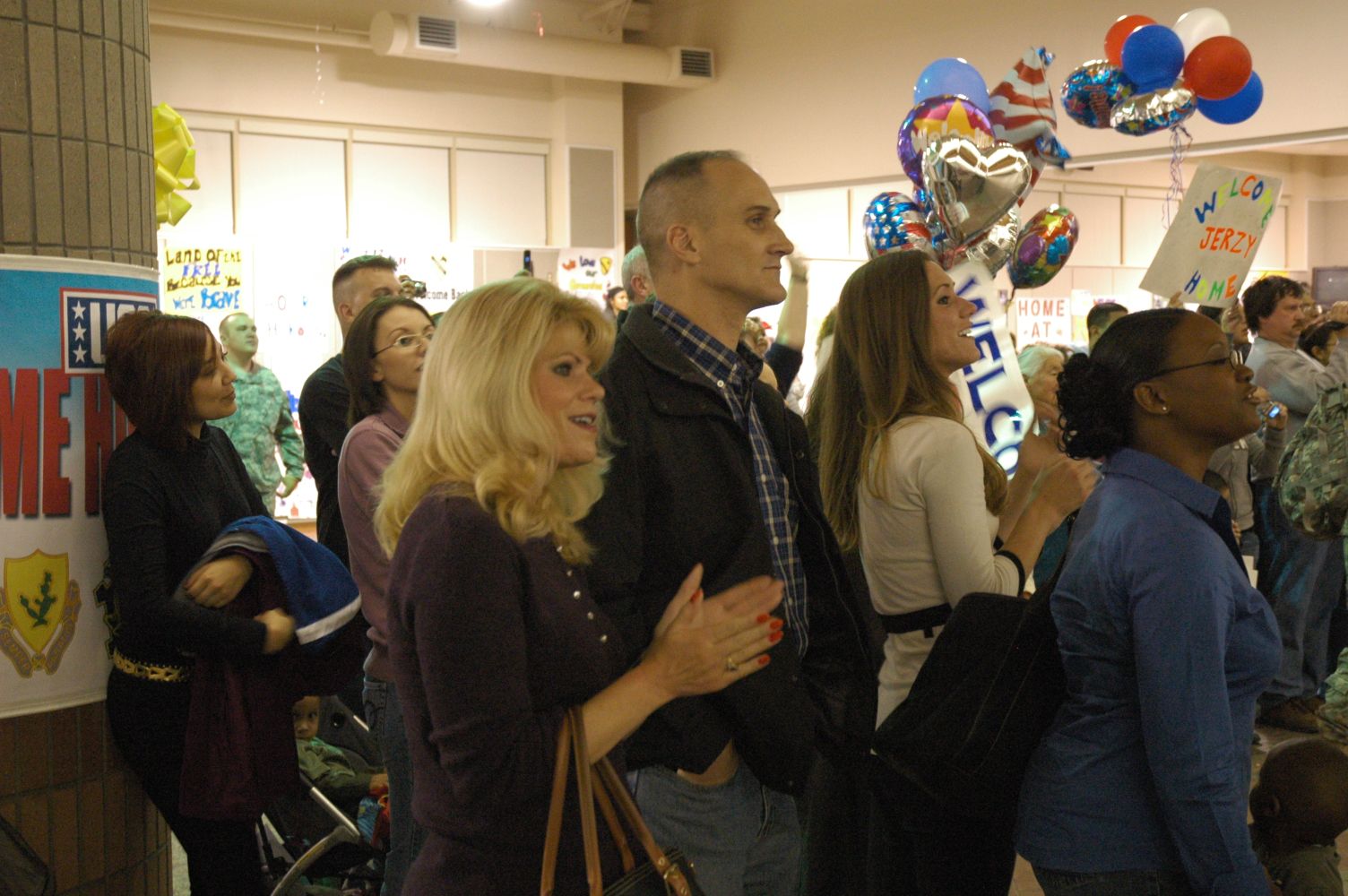
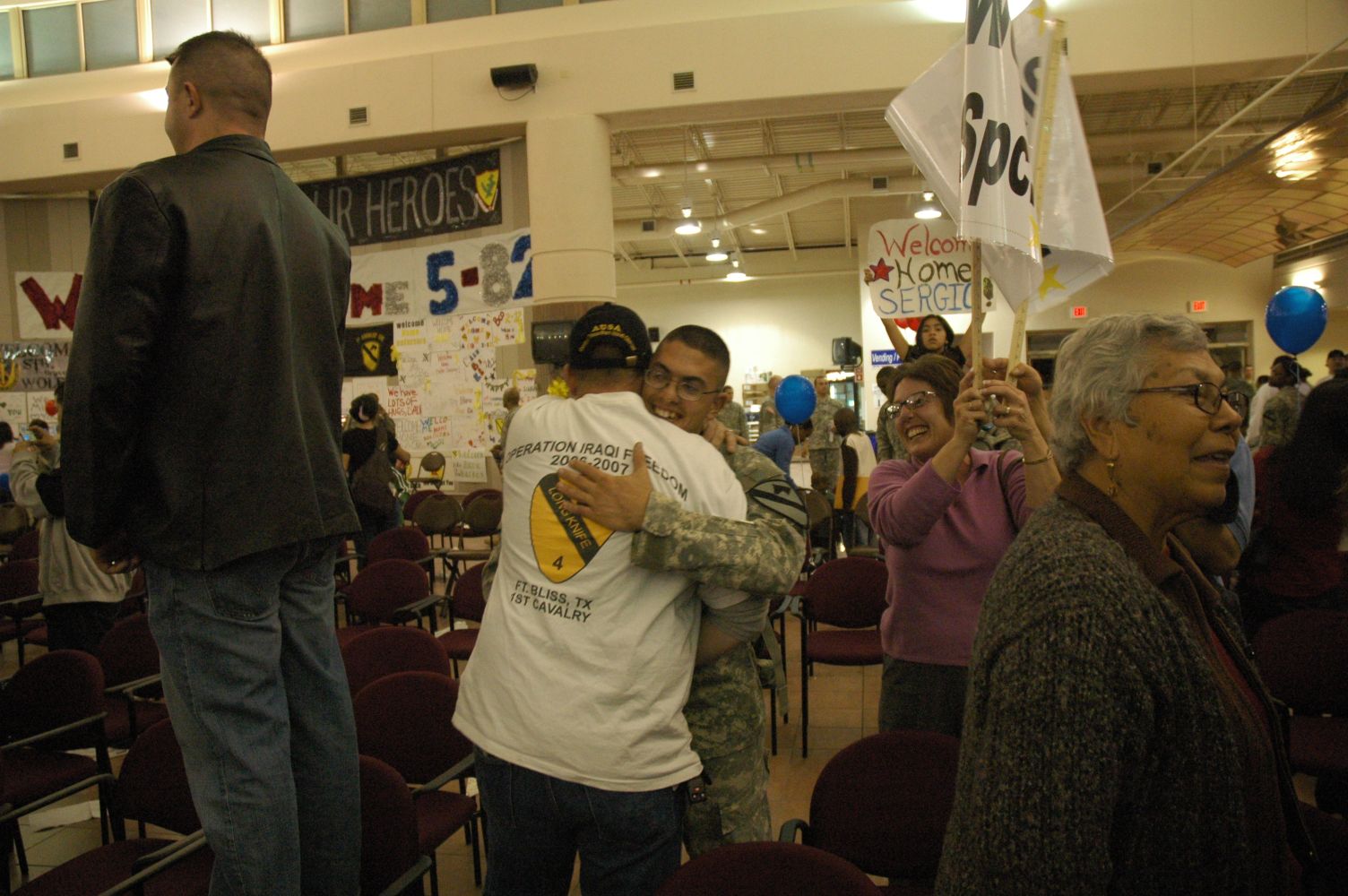
The troops I covered in both Mosul, Fallujah, and other places in Iraq, including my own son in Taji, have returned home now. For many, the reunion was glorious and very long awaited. I was able to be present on one particular homecoming on December 8, 2007, at Biggs Army Airfield, in Ft. Bliss, Texas, near El Paso. Members of 2/7 Cav came home via commercial airliner and arrived to a multitude of family and friends all quite excited. It was a sight to see and a lasting image in my mind shall remain forever. I felt that it was the culmination to a long journey that had to be witnessed.
As many of you know, I’ve been home since October. I knew that the others would follow by early December. My wife and I made the trip from Albuquerque to El Paso one day in early Devcember and coordinated with the ones in charge to be present. It was good once again to be among the warriors who “have been there and done that” as the daily life routine of adjusting to the “normal” life presses on. And it will continue.
As I watched the plane taxi to its designated parking spot, I found myself once again with my camera awaiting the opportunity to snap the steps of warriors, this time returning home. In years past, I’ve been among parents who awaited their own sons and I surely knew the feelings inside. This time, I would be a comrade with a camera and feel just as close as any other family member. For these ones had taken care of me as I was able to record for history their journey and experiences in the war zone a half a world away. Now, we would all be on familiar ground together.
I would meet family members who knew of me but I did not know them. Many came up to me prior to the arrival of their warrior and embraced me as one of their own. Through the blog I had managed to touch and connect the soldier to the family from afar. It was all good.
To describe the entire scene and convey all the emotions is a challenge. But, everyone can imagine that it was just right and realize that words alone cannot completely explain it all. There were children awaiting their dads, wives awaiting their husbands, parents awaiting their sons and daughters, husbands awaiting their wives, grandparents awaiting their grandchildren and so on and so forth. In short, it was America awaiting their sons and daughters home from war. It was the heartbeat of America at full pulse, and it was good.
In the time since I’ve returned from Iraq, and the homecoming as well, I’ve pondered all that I’ve experienced in the past year or so. I can only say that I have been most blessed to be a part of the “mission”. It is true that adjusting to the life at home is full of challenges. The most complicated part of being home is trying to find ones way without a mission at hand. But in time, it comes to pass. But it is a challenge.
As I greeted each soldier that I recognized as they walked off the plane and stepped onto American soil, I saw smiles and excitement and the awareness of a familiar face to greet them. As each one was directed to the processing area, I followed them and was present as they waited to see their families. Each are taken to a warehouse type area where a brief process is done and a coordinating of the group takes place prior to the march into the waiting area where families are. I had the opportunity to see them one by one and speak briefly to many of them. Their trip had been long but everyone was wide awake. In a half hour or so, they would march into the area where the hundreds and hundreds of family and friends were waiting.
As the time came for the march to the waiting area, I made my way back to where the families were. The crowd was electric. The time had come. The automatic door was raised and the entire group marched in unison and perfect step. The crowd all cheered with screams and yells of joy that could drown out any sports stadium gathering. Then, the announcer said, “welcome home, dismissed…!” And the crowd all met the soldiers.
It was a beautiful and glorious sight.
Soon, the crowd would diminish and the flow of folks would disperse. I managed to snap some photos and observe families with tears of joy embracing one another with soldiers encompassed by loved ones. One by one they would leave for their homes. As I was leaving I found one family whose son I had covered. The father recognized me and came up to me and hugged me and simply said, “Thank you Jim”. He knew I had found his son in Mosul and relayed a story of his son’s courage and experiences. This one father had made the trip for me all the worth while. I could hardly speak but as fathers we both knew what the sons had done. We said good bye as the crowds were now almost gone.
Upon leaving the facility, we made our way down one hallway that I had seen earlier. It was here that I knew I had to pass through once more before I left. For in this particular hallway there are the photos of members of the unit that did not return home from Iraq alive. As I passed by the photos of the fallen, I stared intently at one in particular. His name was Captain McGovern, of Echo Company. I had done a mission with his men at one point in time and wrote about it on the blog. I recalled Capt. McGovern and thought of the last time I saw him. This face I had known. He was killed less than a month after I left Iraq. I followed the story over the Internet from my home in Albuquerque, NM. As I stared at his photograph, I realized that other families were suffering in the midst of others rejoicing.
Candi and I left Biggs Army Airfield at Ft. Bliss, Texas that night. We drove back the five hours late at night to Albuquerque.
I realize now more than ever that this journey never ends. I will go back to Iraq once again, soon, hopefully by March 1, 2008 and continue following the stories of more of America’s sons and daughters in harms way in what we call “The War in Iraq.”
To find out more how you can help and be a part of the next journey, contact me via email or phone at the address below.
Sincerely,
Jim Spiri
jimspiri@yahoo.com
phone: 505-898-1680
Click pictures to enlarge.
![]()
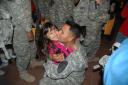
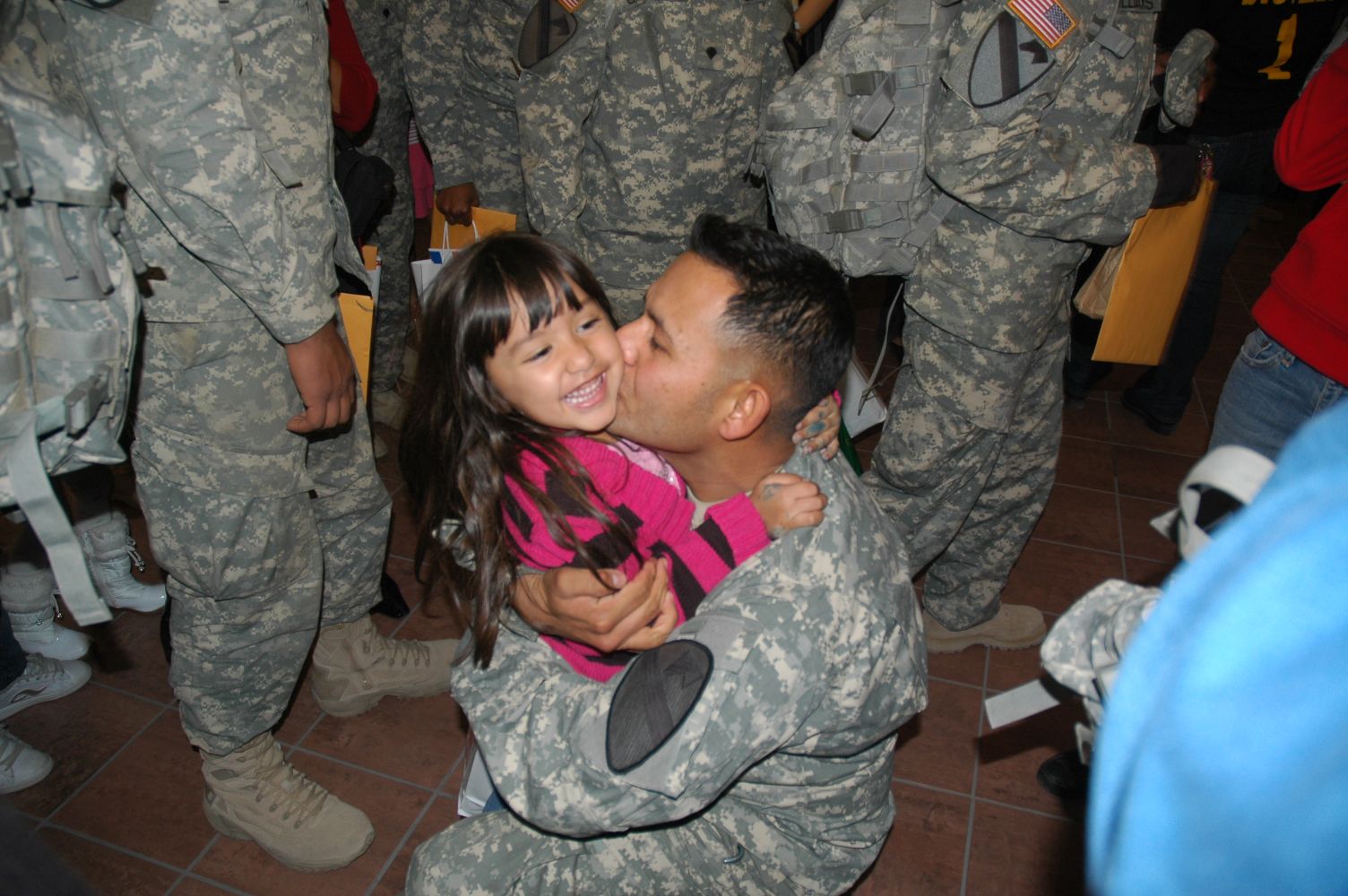
Sgt. Moreno of the 27th BSB, from Ft. Bliss, TX is seen greeted by his daughter upon return from Iraq on 12/8/07. Photo by Jim Spiri
![]()
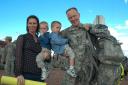
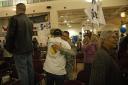
An unknown soldier is seen with his family after returning home from Mosul, Iraq, on 12/8/07 at Ft. Bliss, TX. Photo by Jim Spiri
![]()
![]()
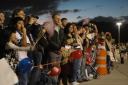
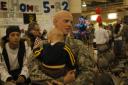
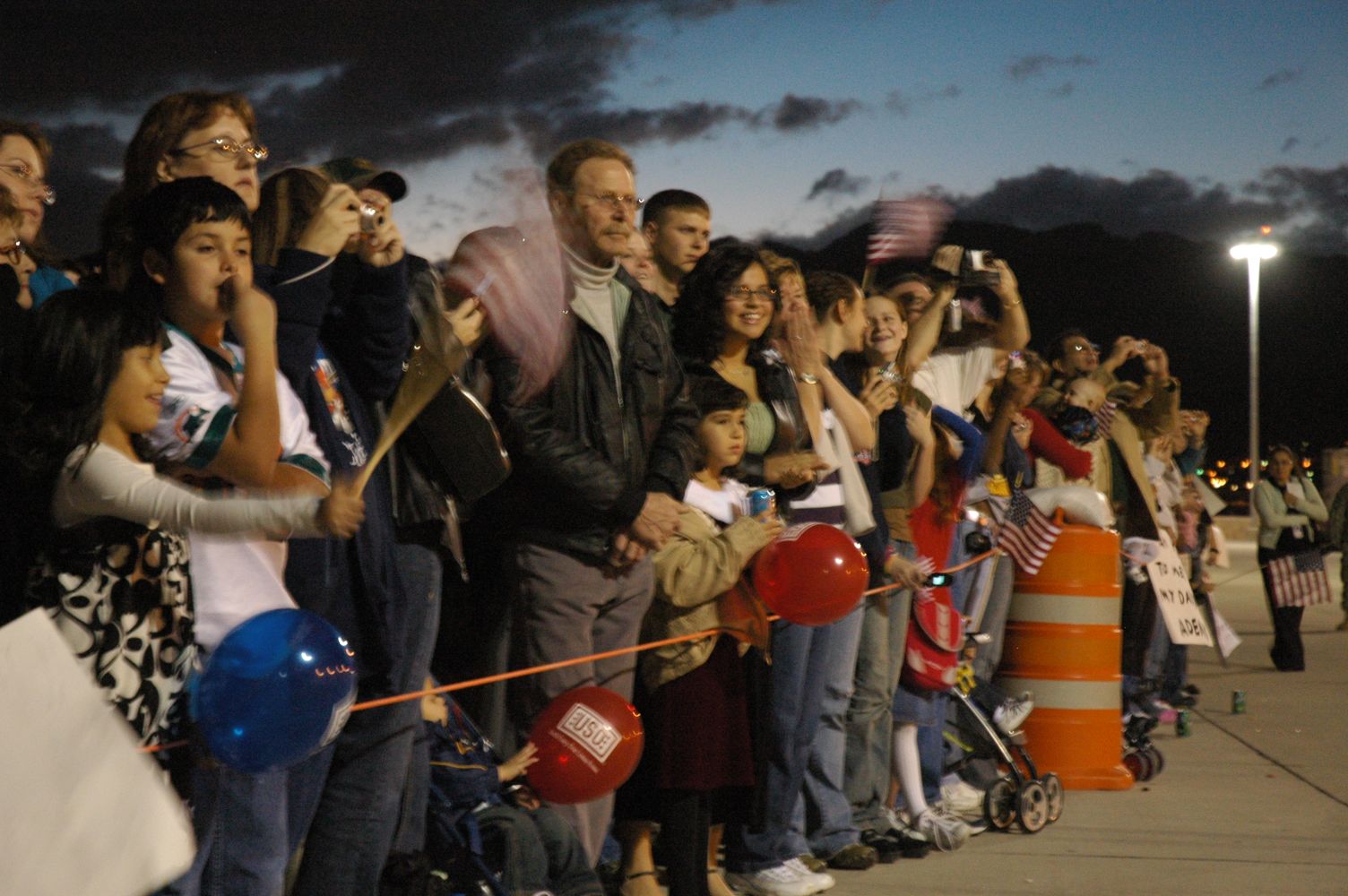
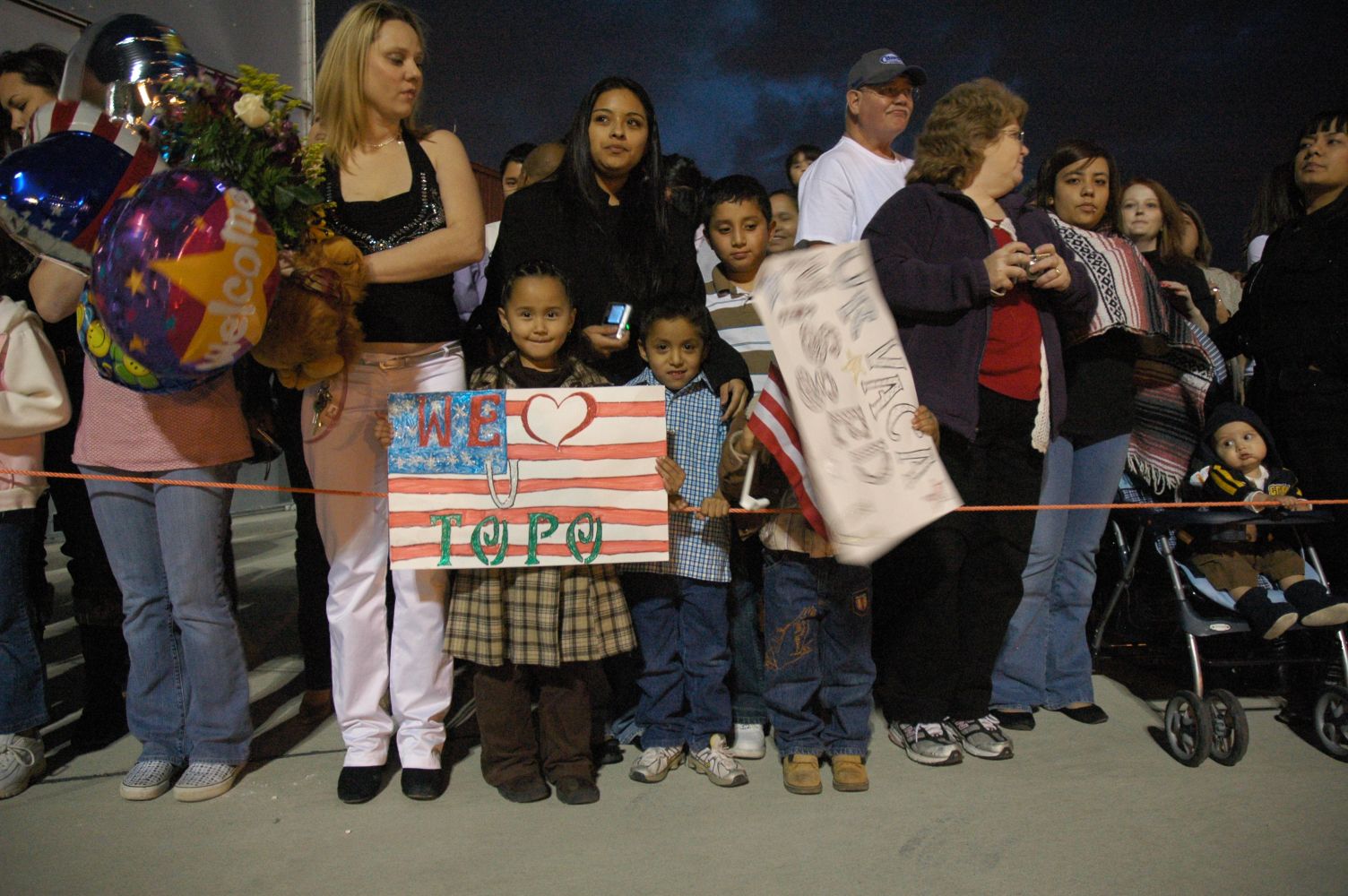
Photos by Jim Spiri, 12/8/07, Ft. Bliss, TX. Family and friends of members of 2/7 Cav, await the homecoming of their soldiers at Biggs Army Airfield, Ft. Bliss, TX.
![]()
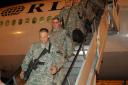
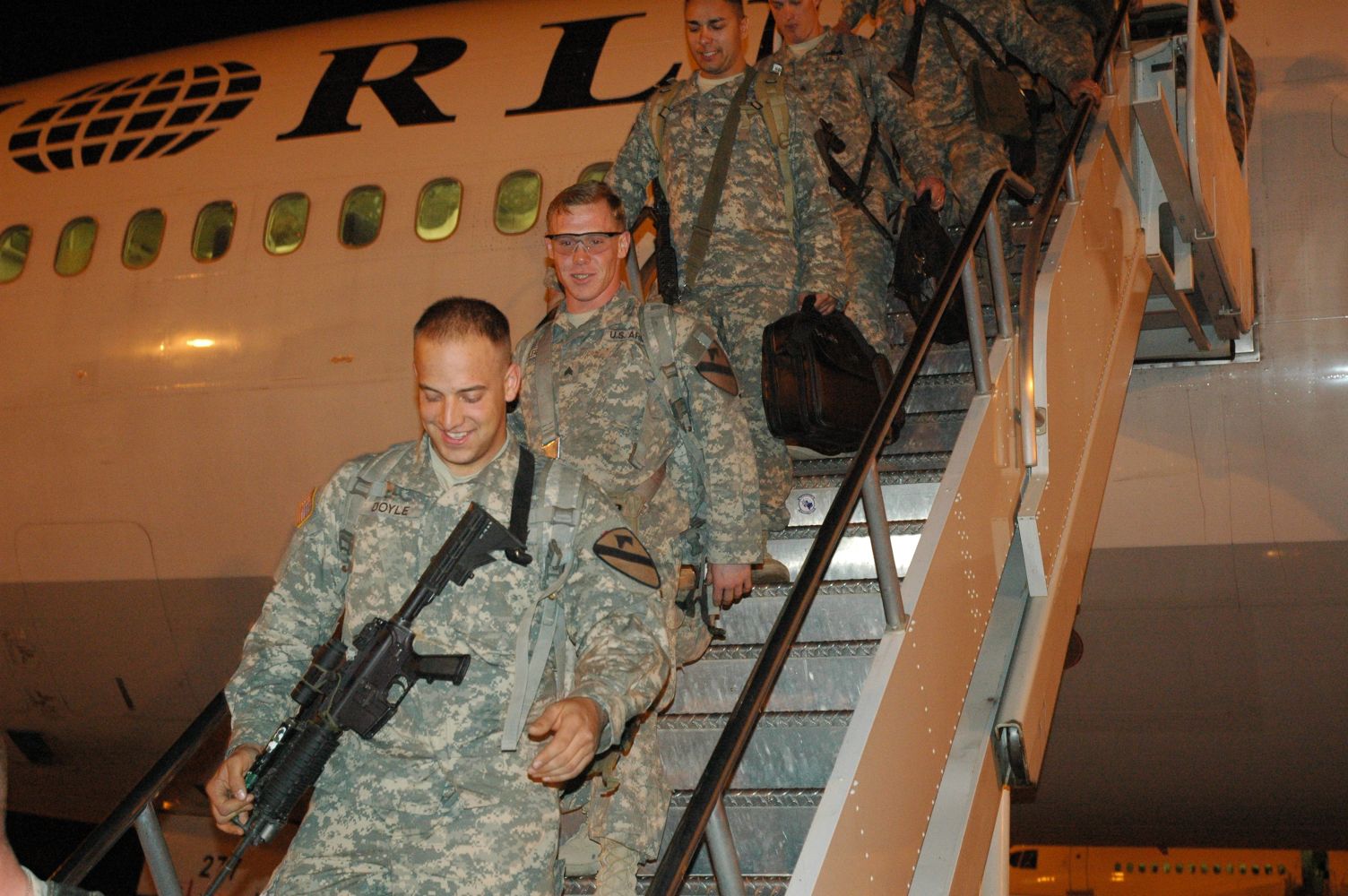
Photos by Jim Spiri, 12/8/07, Ft. Bliss, TX. Spc. Doyle, Sgt. Miller and Sgt. DeCarlo, of 2/7 Cav, are seen arriving home from Mosul, Iraq into Biggs Army Airfield at Ft. Bliss, TX on December 8, 2007.
![]()
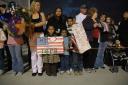
A mother and father await the return of their son from Iraq.
![]()
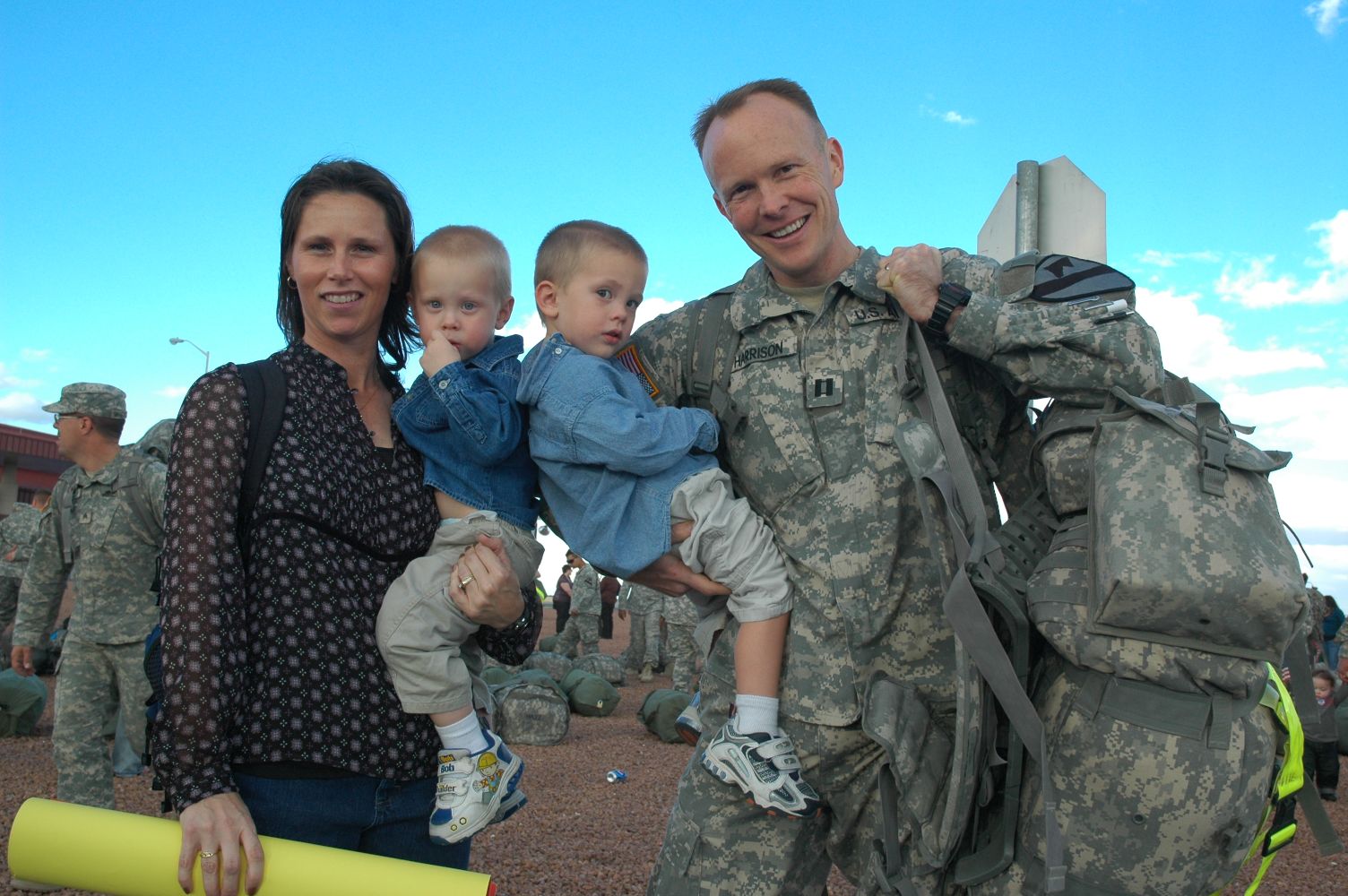
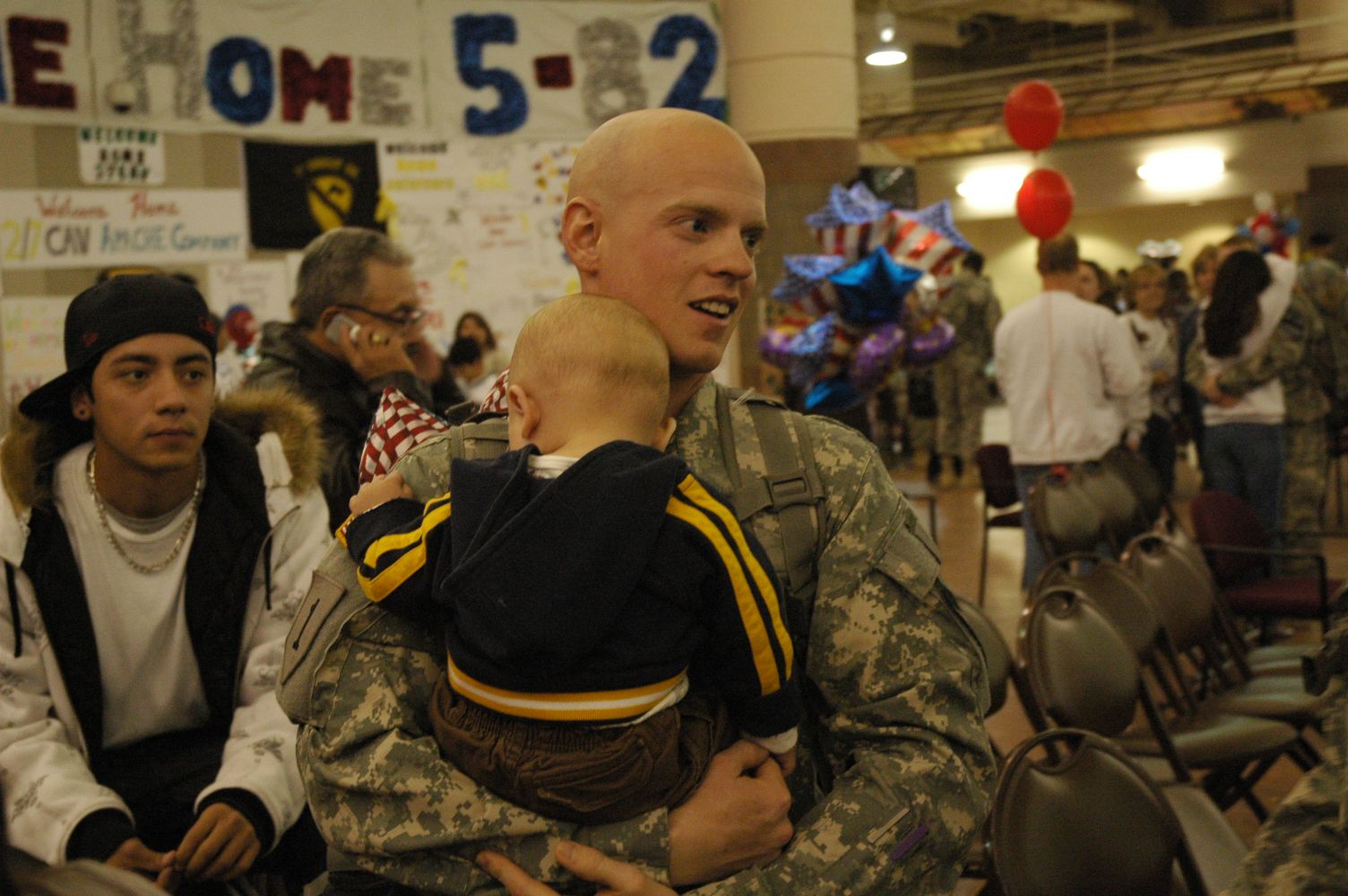
Photos by Jim Spiri, 12/8/07. An unidentified soldier is seen holding his son for the first time upon his return from duty in Iraq.
![]()
Spc. Simon Valdez, of Albuquerque, NM is seen greeted by a relative upon his return from Mosul, Iraq. Valdez and I traveled extensively on combat patrols in the summer through the streets of Mosul.
We have carefully noted the difference between indigenous insurgents in Iraq and foreign fighters who perpetrate terror, as well as the gradual defeat of al Qaeda in Iraq, which is comprised of fighters from Saudi Arabia, Syria, Jordan, Chechnya, Africa, Western China, and other locations across the globe, those fighters battling the U.S. for religious reasons, among others. Why is it important to make the delineation between the two categories? Because one must know the enemy before he can know what approach to use. It has meant everything to the battle for Anbar to know the parties to the struggle. Some local insurgents, upon watching the defeat of the foreigners in the battle that the 2/6 Marines conducted for Fallujah in Operation Alljah, simply stood down and went home to Al-Qaim, a far Western Province of Anbar, where they were carefully reintegrated into society. Yet a foreign fighter who has travelled half way across the globe to fight America and who has injected himself with Epinephrine isn’t likely to stand down because you offer him a promise, a paycheck and peace. Knowing the human terrain means everything in counterinsurgency.
Yet there is a hard core element of indigenous insurgents who will not reconcile with the current government, whether regional or national. Azzaman reports that they have congregated in Mosul.
A split in the ranks of the Islamic Army of Iraq is certain to reverse the successes U.S. occupation troops allege to have made in the country in the past few months.
The Mosul sector has severed ties with the Islamic Army whose leaders have agreed to cooperate with U.S. troops and turn their guns against Qaeda fighters and elements in the country.
The Mosul sector is one of the most effective and battle hardened of the insurgent group which once claimed the execution of almost daily attacks on U.S. troops.
Mosul – Iraq’s second largest city and the districts within the borders of the Province of Nineveh, of which the city is the capital – was the hometown of army generals and senior officers of former leader Saddam Hussein’s armed forces.
From Mosul came the largest number of volunteers of the former Republican Guards, Saddam Hussein’s elite forces, the Special Security and intelligence.
These disgruntled officers and security and army personnel are the commanders of the Islamic Army and the split of Mosul is bound to complicate matters for both the U.S. an the Iraq government.
While the Islamic Army has pledged to suspend all operations against U.S. troops, its Mosul sector has vowed to proceed ahead with anti-U.S. operations.
For the past three days, hundreds of leaflets have been distributed in Mosul, confirming the split and declaring that the city and its environs no longer receive their instructions form (sic) the leaders of the Islamic Army.
The Islamic Army combatants have given themselves a new name al-fatih al-Mubeen and the leaflets said the new formation had nothing to do with the alliances the Islamic Army has entered into recently.
Recall that when al Qaeda utilized brutality to subjugate the population thus engendering hatred for them and what they stood for, various other groups parted ways with them. Al Qaeda reorganized into what they call the Islamic State of Iraq, while the hard core Ba’athists, Fedayeen Saddam and other Sunni fighters from the previous regime who refused to reconcile created what they call the Islamic Army of Iraq (more than likely a surrogate name for many of them since they didn’t start their fight for religious motivation). The Islamic State of Iraq (al Qaeda) and Islamic Army of Iraq are not only enemies of the current state of Iraq along with the U.S., but of each other as well.
Azzaman cannot but let its bias be put on display with every commentary they author (anti-Maliki, anti-U.S.), as with the comment about “the successes U.S. occupation troops allege to have made in the country.” Yet when the bias can be effectively ignored, they have proven accurate in much of their reporting on Iraq. Assuming the accuracy of this report, the diehard holdouts from the former regime appear to be making their last stand in Mosul (they cannot move further North into Kurdish territory, and Mosul itself is large part Kurdish). The irony of this is not wasted. Mosul is where General David Petraeus and the 101st Airborne Division had so much success in 2003. General Petraeus will get his chance very soon to finally stamp out the Ba’athists and provide what might be a lasting security for the people of Mosul.
Prev | List | Random | Next · Join Powered by RingSurf! |