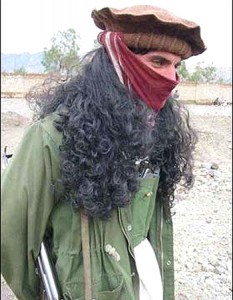
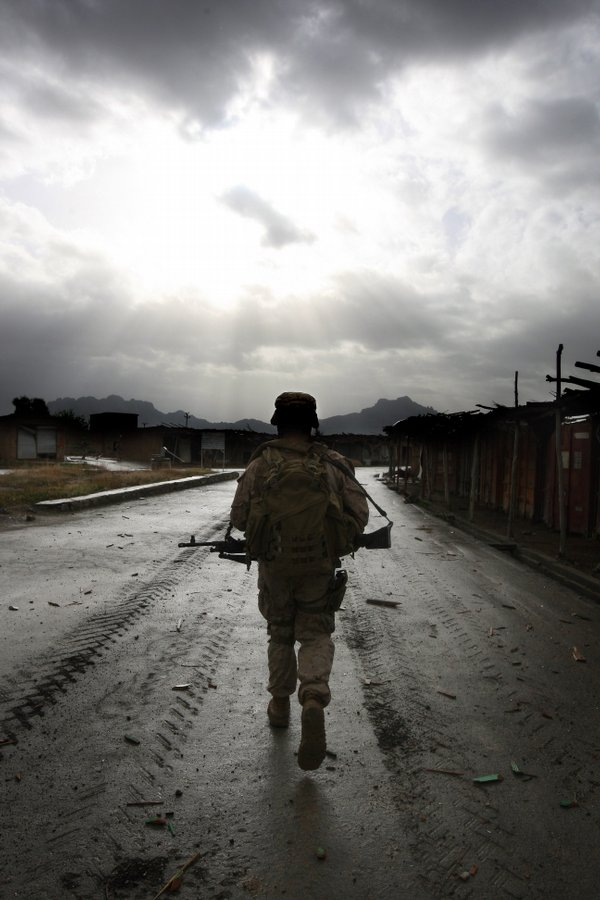
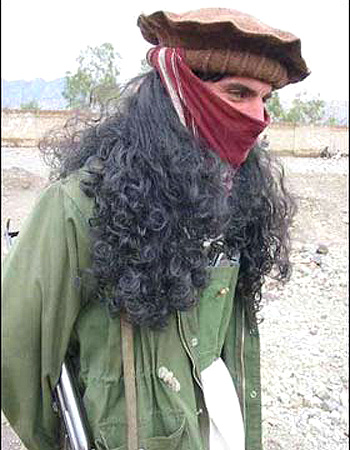
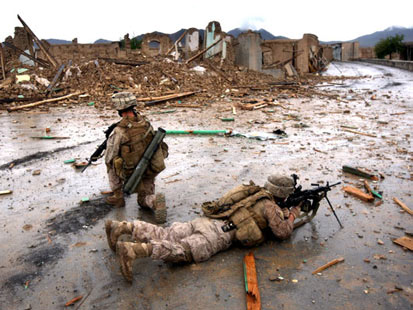
Withdraw From Afghanistan

Herschel Smith · 22 Jan 2012 · 14 Comments

Michael Yon has written a short note entitled Time To Leave Afghanistan.  I concur, but for somewhat different reasons, or at least, I will state my reasons somewhat differently.  I had been pondering going public with my counsel to withdraw from Afghanistan, and then I read possibly the most depressing entry on Afghanistan I have ever seen, from Tim Lynch.  Some of it is repeated below. Ten years ago, Afghans were…… [read more]


Counterinsurgency Successes in Afghanistan

BY Herschel Smith
2 years, 9 months ago

C. J. Chivers and Tyler Hicks bring us a great account of a remarkable counterinsurgency success in Afghanistan.

Only the lead insurgents were disciplined as they walked along the ridge. They moved carefully, with weapons ready and at least five yards between each man, the soldiers who surprised them said.

Behind them, a knot of Taliban fighters walked in a denser group, some with rifles slung on their shoulders — “pretty much exactly the way we tell soldiers not to do it,” said Specialist Robert Soto, the radio operator for the American patrol.

If these insurgents came close enough, the soldiers knew, the patrol could kill them in a batch.

Fight by fight, the infantryman’s war in Afghanistan is often waged on the Taliban’s terms. Insurgents ambush convoys and patrols from high ridges or long ranges and slip away as the Americans, weighed down by equipment, return fire and call for air and artillery support. Last week a patrol from the First Infantry Division reversed the routine.

An American platoon surprised an armed Taliban column on a forested ridgeline at night, and killed at least 13 insurgents, and perhaps many more, with rifles, machine guns, Claymore mines, hand grenades and a knife.

The one-sided fight, fought on the slopes of the same mountain where a Navy Seal patrol was surrounded in 2005 and a helicopter with reinforcements was shot down, does not change the war. It was one of hundreds of firefights that have occurred in the Korangal Valley, an isolated region where local insurgents and the Americans have been locked in a bitter stalemate for more than three years.

But as accounts of the fight have spread, the ambush, on Good Friday, has become an emotional rallying point for soldiers in Kunar Province, who have seen it as a both a validation of their equipment and training and a welcome bit of score-settling in an area that in recent years has claimed more American lives than any other.

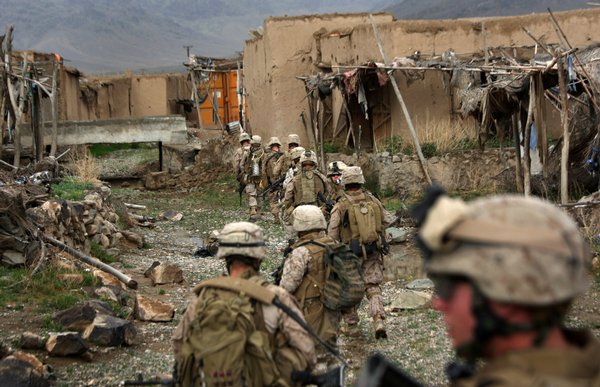
The patrol, 30 soldiers from the First Battalion, 26th Infantry, had left this outpost before noon on April 10, and spent much of the day climbing a ridge on the opposite side of the Korangal River, according to interviews with more than half the participants.

Once the soldiers reached the ridge’s crest, almost 6,000 feet above sea level on the side of a peak called Sautalu Sar, they found fresh footprints on the trails, and parapets of rock from where Taliban fighters often fire rifles and rocket-propelled grenades down onto this outpost.

The platoon leader, Second Lt. Justin Smith, selected a spot where trails intersected, and the platoon dug shallow fighting holes before dark. Claymore antipersonnel mines were set among the trees nearby.

At sunset, Lieutenant Smith called for a period of absolute silence, which lasted into darkness. Then he ordered three scouts to sit in a listening post about 100 yards away, 10 feet off the trail.

The scouts set in. Less than a half-minute later, a column of Taliban fighters appeared, walking briskly their way.

Sgt. Zachary R. Reese, a sniper, whispered into his radio. “We have eight enemy personnel coming down on our position really fast,” he said. He could say no more; the Taliban fighters were a few feet away.

More appeared. Then more still. The sergeant counted 26 gunmen pass by.

The patrol, Second Platoon of Company B, was in a place where no Americans had spent a night for years, and it seemed that the Afghans did not expect danger.

The soldiers waited. The rules of the ambush were long ago drilled into them: no one can move, and no one can fire until the patrol leader gives the order. Then everyone must fire at once.

The third Taliban fighter in the column switched on a flashlight, the soldiers said, and quickly switched it off. About 50 yards separated the two sides, but Lieutenant Smith did not want to start shooting too soon, he said, “because if too many lived then we’d be up there fighting them all night.”

He let the Taliban column continue on. The soldiers trained their weapons’ infrared lasers, which are visible only with night-vision equipment, on the fighters as they drew closer. The lasers mark the path a bullet will fly.

The lead fighter had almost reached the platoon when Pvt. First Class Troy Pacini-Harvey, 19, his laser trained on the lead man’s forehead, moved his rifle’s selector lever from safe to semi-automatic. It made a barely audible click. The Taliban fighter froze. He was six feet away.

Lieutenant Smith was new to the platoon. This was his fourth patrol. He was in a situation that every infantry lieutenant trains for, but almost no infantry lieutenant ever sees. “Fire,” he said, softly into the radio. “Fire. Fire. Fire.”

The platoon’s frontage exploded with noise and flashes of light as soldiers fired. Bullets struck all of the lead Taliban fighters, the soldiers said. The first Afghans fell where they were hit, not managing to fire a single shot.

Five Taliban fighters bolted to the soldiers’ left, unwittingly running squarely into the path of machine-gun bullets and the Claymore mines. For a moment, the soldiers heard rustling in the brush. They detonated their Claymores and threw hand grenades. The rustling stopped.

Two other Taliban fighters had dashed to the right, toward an almost sheer drop. One ran so wildly in the blackness that his momentum carried him off the cliff, several soldiers said.

Another stopped at the edge. Pvt. First Class Brad Larson, 19, had followed the man with his laser. “I took him out,” he said.

The scout at the listening post shot three of the fleeing fighters, and dropped two more with hand grenades. “We stopped what we could see,” Sergeant Reese said.

The shooting had lasted a few minutes. The hillside briefly fell quiet. The surviving Taliban fighters, some of whom had run back up the trail, began shouting in the darkness. “We could hear them calling out to one another,” Specialist Soto said.

Lieutenant Smith called the listening post back in. After two Apache attack helicopters showed up, an F-15 dropped a bomb on the Taliban’s escape route, about 600 yards up the trail. Then the lieutenant ordered teams to search the bodies they could find on the crest.

Sergeant Reese gave his rifle to another sniper to cover him while he tried to cut away a Taliban fighter’s ammunition pouches with a four-inch blade. The fighter had only been pretending to be dead, the soldiers said. He lunged for Sergeant Reese, who stabbed him in the left eye.

In all, the soldiers found eight bodies on the crest. They photographed them to try to identify them later, and collected their weapons, ammunition, radios and papers. Then the patrol swept down a gully where a pilot said he saw more insurgents hiding.

Four scouts, using night-vision gear, spotted five fighters crouching behind rocks, and killed them with rifle and machine-gun fire, the scouts said. The bodies were searched and photographed, too. The platoon began to hike back to the outpost, carrying the captured equipment.

Second Platoon, Company B has endured one of the most arduous assignments in Afghanistan. Eight of the platoon’s soldiers have been wounded in nine months of fighting in the valley, part of a bitter contest for control of a small and sparsely populated area.

Three others have been killed.

In a matter of minutes, the ambush changed the experience of the surviving soldiers’ tours. The degree of turnabout surprised even some the soldiers who participated.

“It’s the first time most of us have even seen the guys who were shooting at us,” said Sgt. Thomas Horvath, 21.

The next day, elders from the valley would ask permission to collect the villages’ dead. Company B’s commander, Capt. James C. Howell, would grant it.

But already, as the soldiers slid and climbed down the mountain, word of the insurgents’ defeat was traveling through Taliban networks.

Analysis & Commentary

Thanks to Chivers and Hicks for a great article on the campaign in Afghanistan.  Abu Muqawama gives the unit props, but asks the following question: “But what are we doing in the Korengal (sic) Valley? Does anyone know? Are we just trying to control the terrain or what?”  Good question.  There has been a robust debate concerning where the additional troops should go in Afghanistan – the urban population centers where the people are, or the rural areas where the Taliban control and recruit?  A good question, this, because it goes to the heart of the population-centric counterinsurgency doctrine promulgated over the last several years.

And in a hard situation in Afghanistan where we have both large rural areas and urban areas containing much of the population, how does this doctrine hold up?  Well, it at least leads to very puzzled questions from COIN experts.  It also shows that counterinsurgency cannot possibly be codified in a manual, no matter how hard we may try.

In Strategy in Afghanistan: Population or Enemy-Centric, we tried to strike a healthy balance.

The Captain’s Journal supports a different view.  U.S. forces are present in Afghanistan because there are enemies of the U.S. located there, and also those who harbor enemies of the U.S.  Without them, the likelihood of our presence is vanishingly small.  The enemy is our target.

If the enemy announced his presence and fought without the benefit of mixing with the population, the rate of the fight would be more productive.  This has occurred even recently in Afghanistan, when the Taliban evacuated Garmser of its population, dug in and unsuccessfully faced down the Marines of the 24th MEU.  During their deployment in Helmand, they killed some 400 hard core Taliban fighters in what was described at times as “full bore reloading.”  Yet the tribal elders also said that “When you protect us, we will be able to protect you,” showing little interest in reconstruction, programs and assistance.

But it will not always be this clear.  The enemy is who we are after, but to get to them at times requires focusing on the population.  Every situation is unique, and thus rather than finding a center of gravity, it is best to see the campaign as employing lines of effort.  In spite of the lack of adequate troops, the campaign will not be an either-or decision, focusing on the enemy or the population.  It will be both-and.

At times this will be extremely difficult, with the insurgency embedding with the population, shielding themselves with women and children, and hiding from U.S. forces.  Counterinsurgency thus proves to be a difficult mix of direct action military engagements, streetside conversations, visits to homes, learning the population and culture, and rebuilding the infrastructure.  There will be enough of this to go around for everyone in the campaign.

But just occasionally, the insurgents will separate themselves from the population, attempt to mass on a location, and go into conventional military formation.  When this happens and when U.S. forces can find it, it pays to kill them on the spot whether they are a direct threat or not.

Why are U.S. forces present in the Korangal valley?  The obvious answer is to kill the enemy.  It’s the perfect circumstances, crafted by the insurgents themselves.  No women, no children, no surrounding infrastructure to be destroyed, only the enemy and U.S. troops.  We dread the difficulty of population-centric counterinsurgency and pray for such engagements.

Such engagements are not to be found in the urban population centers.  Interdiction of enemy fighters and enemy-centric warfare can best be conducted when we are hunting and killing the enemy with enough troops to accomplish success.

There are other aspects of this engagement that warms our hearts.  Notice that despite the rules of engagement which do not discuss or countenance offensive operations at all, U.S. forces killed enemy fighters without first waiting for them to threaten or fire on them.  Notice also that the U.S. combatants are regular infantry.  Just so.  The campaign will be won or lost with regular infantry, not direct action by Special Operations Forces on so-called high value targets, a strategy that has not succeeded in the campaign for as long as it has been pursued.

The Importance of Logistics

BY Herschel Smith
2 years, 9 months ago

Regular readers know all about our deep love for good logistics, and our disdain for improper planning.  We have said repeatedly that field grade logistics officers will determine how fast we can draw down in Iraq, not the administration, and not flag officers.  Logistics can be the ultimate bottleneck for warfare.  Logistics can also be the most remarkable capability in the battle space.

Staff Sgt. Alfred Luna, right, and Spec. Randy Neff count ammunition that 4th Engineer Battalion has to turn in before it departs Baghdad. The unit is getting ready to redeploy to Afghanistan, after arriving in Iraq just a few weeks ago.

Welcome to Iraq. Now go to Afghanistan.

That was the message delivered to the Army’s 4th Engineer Battalion just two weeks after arriving in Baghdad for what was supposed to be a year-long tour.

Despite the stress caused by the unusual change of plans last month, many of the unit’s approximately 500 soldiers said they realized their specialty — clearing roads of bombs and other obstacles — is more needed in the area of southern Afghanistan, where they’ll likely begin patrols in a few weeks.

“If we were in the frying pan, we’re now heading directly into the fire,” Capt. Heath Papkov, one of the unit’s company commanders, said this week as the soldiers packed their gear to leave.

Moving a unit directly from one theater of war to another on such short notice is very rare, said Lt. Col. Kevin Landers, the battalion’s commander. Usually when troops are shifted from Iraq to Afghanistan, the change occurs between regular rotations abroad, after they spend several months at their home base.

The decision underscores how military commanders are scrambling to meet President Obama’s orders to draw down the U.S. presence in Iraq while deploying an additional 21,000 troops to combat the growing insurgency in Afghanistan.

Even after a spate of bombings in Baghdad in recent weeks, the overall rate of violence in Iraq remains at levels not seen since 2003, according to the U.S. military. Meanwhile, attacks on U.S. andNATO troops are on the rise in Afghanistan, and roadside bombs are the cause of 75% of coalition casualties there.

The region where the 4th Engineer Battalion is being deployed accounts for about 60% of all roadside bombs in Afghanistan.

The battalion’s transfer is “either an indication of the improving situation in Iraq or the quickly deteriorating situation in Afghanistan,” said Loren Thompson, a military expert at the Lexington Institute. “It’s probably more of the latter.”

The unit has continued its patrols in Baghdad while preparing for the move, a huge undertaking that includes the movement of millions of pounds of gear and dozens of heavy-armored vehicles. It could take 40 to 60 flights to transfer everything.

Commanders could not put a precise estimate on the additional cost of the move, but 2nd Lt. Gregory Smith, a logistics officer, said it will cost “millions and millions of dollars.”

“It’s been pretty stressful,” Smith said. “But it’s a good feeling to be going where we’re really needed.”

Logistics rules.  Without it, the battle space doesn’t work.  Period.  End of discussion.  Next time you see a logistics NCO, give him props for the good work he had done.

Postscript: I would have made an outstanding logistics officer, I think.  Yes.  Outstanding.  I’m sure of it.

China and U.S. at War

BY Herschel Smith
2 years, 9 months ago

We have previously noted how the Chinese hackers and cyberspies are not merely snooping; they are engaged in what China considers to be Unrestricted Warfare against the U.S.  Now comes an even more disturbing account of the extent of their activities.

The Chinese cyber spies have penetrated so deep into the US system — ranging from its secure defence network, banking system, electricity grid to putting spy chips into its defence planes — that it can cause serious damage to the US any time, a top US official on counter-intelligence has said.

“Chinese penetrations of unclassified DoD networks have also been widely reported. Those are more sophisticated, though hardly state of the art,” said National Counterintelligence Executive, Joel Brenner, at the Austin University Texas last week, according to a transcript made available on Wednesday.

Listing out some of the examples of Chinese cyber spy penetration, he said: “We’re also seeing counterfeit routers and chips, and some of those chips have made their way into US military fighter aircraft.. You don’t sneak counterfeit chips into another nation’s aircraft to steal data. When it’s done intentionally, it’s done to degrade systems, or to have the ability to do so at a time of one’s choosing.”

Referring to the Chinese networks penetrating the cyber grids, he said: “Do I worry about those grids, and about air traffic control systems, water supply systems, and so on? You bet I do. America’s networks are being mapped. There has also been experience of both Chinese and criminal network operations in the networks of some of the banks”.

Note the malicious intent – counterfeit routers and chips found in U.S. military aircraft.  No longer restricted to just water supply systems, electrical grids and banking networks, as if that isn’t enough, we are now finding intentional electronic attacks against U.S. military hardware.

There is a Sino-American war going on, even if America is not yet engaged.

Concerning the Importance of NCOs

BY Herschel Smith
2 years, 9 months ago

In Standing up the Iraq Army we noted the importance of NCOs (Non-Commissioned Officers) to the capabilities, cohesion and performance of an Army.  From Why Arabs Lose Wars, Norvell B. De Atkine, Middle East Quarterly, Dec. 1999, Vol. 6, No. 2:

The social and professional gap between officers and enlisted men is present in all armies, but in the United States and other Western forces, the non-commissioned officer (NCO) corps bridges it. Indeed, a professional NCO corps has been critical for the American military to work at its best; as the primary trainers in a professional army, NCOs are critical to training programs and to the enlisted men’s sense of unit esprit. Most of the Arab world either has no NCO corps or it is non-functional, severely handicapping the military’s effectiveness. With some exceptions, NCOs are considered in the same low category as enlisted men and so do not serve as a bridge between enlisted men and officers. Officers instruct but the wide social gap between enlisted man and officer tends to make the learning process perfunctory, formalized, and ineffective.

From the Small Wars Journal, Professors in the Trenches: Deployed Soldiers and Social Science Academics (Part 1 of 5), we read the following important analysis:

Another major issue that emerged was the relationship between commissioned officers and noncommissioned officers (NCOs). Commissioned officers did not believe that NCOs should or will ever assume the role played by NCOs serving the armies of western democracies. This was considered to be mostly an issue of class structure, which was reinforced by the differences in educational levels between the two groups. During the focus groups, many of the NCOs frequently complained about the unwillingness of officers (or even more senior NCO) to listen to them; offering advice was simply not considered an option. Conversely, officers – especially junior officers – frequently micromanaged, often doing even the most routine tasks themselves to ensure success.

A sure recipe for failure, at least on a relative scale.  But it may be that this is a cultural issue, unable to be amended or rectified by training, education and mentoring.  The upshot is that the questioning attitude, initiative, capability to take responsibility and education in the West ensures a strong NCO corps and thus the world’s greatest military.

How many times does Iran have to say no?

BY Herschel Smith
2 years, 9 months ago

The Christian Science Monitor notes that “Obama officials are playing cat-and-mouse these days with Iran’s envoys.  The new administration is eager to catch a meeting in any international forum that might lead to one-on-one talks.”  Unseemly, no, the picture of U.S. diplomats chasing Iranians around pining for someone to listen to them?

The Iranian leaders have ignored Obama’s clear overtures, saying on March 20 that “world powers had been persuaded they could not block Iran’s nuclear progress.”  The next day on March 24 “Iran’s supreme leader Ayatollah Ali Khamenei … dismissed President Barack Obama’s New Year’s greeting to the country, delivering Iran’s clearest rebuke so far to Washington’s recent, diplomatic charm offensive.

In a speech to tens of thousands in the Iranian holy city of Masshad, Mr. Khamenei said that despite Mr. Obama’s words, the U.S. hasn’t shown any sign of “genuine” change in its “hostile” policies toward Iran, according to Iran’s state-owned Press TV.”

Michael Rubin brings us yet another instance of rejection.

Those who today recommend the Iranian nation to return to the global order are the exact people who expressed displeasure with advances of the Iranian nation in the direction of the Islamic Revolution… The recommendation to return to the global order is the same thing as capitulating to the bullying powers and accepting the unjust world order. But the Iranian nation has during the past thirty years answered no to this ignorant and illogical demand… All the pressures against the Iranian nation and the regime of the Islamic Republic have only aimed to degrade the elevated position of the spiritual demands of the revolution. Naturally, they did not succeed in this, and they will also not succeed in the future.

Even more to the point.

We tell that you know yourself that you today are in a position of weakness and you can’t achieve anything.

Does that sound like the Iranian Mullahs want to negotiate their nuclear program away?  It doesn’t matter, because the administration’s fawning over the Iranian regime has to do with presuppositions that form a worldview of advocacy.  Rightness and wrongness has nothing to do with it.

It you listen to me long enough, they think, I will be able to convince you to see my point of view and act more in accordance with what I see as reasonable at this particular moment.  But reason is in the eyes of the beholder.  The deliverance of reason, tests for truth, analysis of consistency, and so on, are fundamentally different in the thought systems of the West and the radical Mullahs, and even more different between both and the Ivy League educated elitists.  The administration will keep chasing them until they understand the fundamental flaw in their thinking, which probably means that they will not cease the unseemly displays.


26th MEU (10)
Abu Muqawama (12)
ACOG (1)
Afghan National Army (29)
Afghan National Police (14)
Afghanistan (640)
Afghanistan SOFA (3)
Agriculture in COIN (3)
AGW (1)
Air Force (28)
Air Power (9)
al Qaeda (81)
Ali al-Sistani (1)
America (4)
Animals in War (3)
Ansar al Sunna (15)
Anthropology (3)
Arghandab River Valley (1)
Arlington Cemetery (2)
Army (27)
Assassinations (2)
Australian Army (5)
Azerbaijan (4)
Backpacking (1)
Badr Organization (8)
Baitullah Mehsud (21)
Basra (17)
BATFE (22)
Battle of Bari Alai (2)
Battle of Wanat (14)
Battle Space Weight (3)
Bin Laden (7)
Blogroll (2)
Blogs (2)
Body Armor (15)
Books (1)
Border War (2)
Brady Campaign (1)
Britain (24)
British Army (35)
Canada (1)
Caucasus (6)
CENTCOM (7)
Center For a New American Security (8)
Charity (3)
China (9)
Christmas (3)
CIA (12)
Civilian National Security Force (3)
Col. Gian Gentile (8)
Combat Outposts (3)
Combat Video (2)
Concerned Citizens (6)
Constabulary Actions (3)
Coolness Factor (2)
COP Keating (4)
Corruption in COIN (3)
Council on Foreign Relations (1)
Counterinsurgency (210)
DADT (2)
David Rohde (1)
Defense Contractors (1)
Department of Defense (103)
Distributed Operations (5)
Dogs (3)
Drone Campaign (2)
EFV (3)
Egypt (9)
Enemy Spotters (1)
Expeditionary Warfare (15)
F-22 (2)
F-35 (1)
Fallujah (17)
Far East (3)
Fathers and Sons (1)
Favorite (1)
Fazlullah (3)
Featured (135)
Federal Firearms Laws (11)
Financing the Taliban (2)
Firearms (51)
Football (1)
Force Projection (33)
Force Protection (4)
Force Transformation (1)
Foreign Policy (16)
Fukushima Reactor Accident (6)
Garmsir (1)
general (14)
General Amos (1)
General James Mattis (1)
General McChrystal (35)
General McKiernan (5)
General Rodriguez (3)
General Suleimani (4)
Georgia (19)
GITMO (2)
Google (1)
Gulbuddin Hekmatyar (1)
Guns (15)
Haditha Roundup (10)
Haiti (2)
HAMAS (6)
Haqqani Network (8)
Hate Mail (7)
Hekmatyar (1)
Heroism (4)
Hezbollah (9)
High Value Targets (9)
Homecoming (1)
Homeland Security (1)
Horses (1)
Humor (10)
ICOS (1)
IEDs (6)
Immigration (18)
India (10)
Infantry (3)
Information Warfare (2)
Infrastructure (2)
Intelligence (18)
Intelligence Bulletin (6)
Iran (156)
Iraq (374)
Iraq SOFA (23)
Islamic Facism (27)
Islamists (24)
Israel (15)
Jaish al Mahdi (21)
Jalalabad (1)
Japan (2)
Jihadists (69)
John Nagl (5)
Joint Intelligence Centers (1)
JRTN (1)
Kabul (1)
Kajaki Dam (1)
Kamdesh (7)
Kandahar (12)
Karachi (7)
Kashmir (2)
Khost Province (1)
Khyber (11)
Knife Blogging (1)
Korea (4)
Korengal Valley (3)
Kunar Province (18)
Kurdistan (2)
Language in COIN (5)
Language in Statecraft (1)
Language Interpreters (2)
Lashkar-e-Taiba (2)
Law Enforcement (1)
Lawfare (6)
Leadership (5)
Lebanon (6)
Let Them Fight (2)
Lines of Effort (3)
Littoral Combat (7)
Logistics (44)
Long Guns (1)
Lt. Col. Allen West (2)
Marine Corps (218)
Marines in Bakwa (1)
Marines in Helmand (66)
Marjah (4)
Media (17)
Memorial Day (2)
Mexican Cartels (14)
Mexico (11)
Michael Yon (2)
Micromanaging the Military (7)
Middle East (1)
Military Blogging (25)
Military Contractors (3)
Military Equipment (23)
Mitt Romney (1)
Monetary Policy (1)
Moqtada al Sadr (2)
Mosul (4)
Mountains (5)
MRAPs (1)
Mullah Baradar (1)
Mullah Fazlullah (1)
Mullah Omar (3)
Musa Qala (4)
Music (15)
Muslim Brotherhood (5)
Nation Building (1)
National Internet IDs (1)
National Rifle Association (2)
NATO (15)
Navy (17)
Navy Corpsman (1)
NCOs (3)
News (1)
NGOs (2)
Nicholas Schmidle (2)
Now Zad (19)
NSA James L. Jones (6)
Nuclear (46)
Nuristan (6)
Obama Administration (104)
Offshore Balancing (1)
Operation Alljah (7)
Operation Khanjar (14)
Ossetia (7)
Pakistan (163)
Paktya Province (1)
Palestine (5)
Patriotism (6)
Patrolling (1)
Pech River Valley (11)
Personal (12)
Petraeus (13)
Philip Smucker (2)
Pictures (1)
Piracy (13)
Police (9)
Police in COIN (2)
Policy (13)
Politics (81)
Poppy (2)
PPEs (1)
Prisons in Counterinsurgency (10)
Project Gunrunner (20)
PRTs (1)
Qatar (1)
Quadrennial Defense Review (2)
Quds Force (13)
Quetta Shura (1)
RAND (3)
Recommended Reading (8)
Refueling Tanker (1)
Religion (46)
Religion and Insurgency (18)
Reuters (1)
Rick Perry (4)
Roads (4)
Rolling Stone (1)
Ron Paul (1)
ROTC (1)
Rules of Engagement (70)
Rumsfeld (1)
Russia (25)
Sabbatical (1)
Sangin (1)
Saqlawiyah (1)
Satellite Patrols (2)
Saudi Arabia (3)
Scenes from Iraq (1)
Second Amendment (37)
Second Amendment Quick Hits (1)
Secretary Gates (9)
Sharia Law (3)
Shura Ittehad-ul-Mujahiden (1)
SIIC (2)
Sirajuddin Haqqani (1)
Small Wars (72)
Snipers (9)
Sniveling Lackeys (1)
Soft Power (4)
Somalia (8)
Sons of Afghanistan (1)
Sons of Iraq (2)
Special Forces (19)
Squad Rushes (1)
State Department (15)
Statistics (1)
Sunni Insurgency (10)
Support to Infantry Ratio (1)
SWAT Raids (9)
Syria (28)
Taliban (162)
Taliban Massing of Forces (4)
Tarmiyah (1)
TBI (1)
Technology (16)
Tehrik-i-Taliban (77)
Terrain in Combat (1)
Terrorism (82)
Thanksgiving (3)
The Anbar Narrative (23)
The Art of War (5)
The Fallen (1)
The Long War (18)
The Surge (3)
The Wounded (13)
Thomas Barnett (1)
Transnational Insurgencies (5)
Tribes (5)
TSA Ineptitude (4)
TTPs (1)
U.S. Border Patrol (2)
U.S. Border Security (4)
U.S. Sovereignty (7)
UAVs (2)
UBL (3)
Ukraine (2)
Uncategorized (30)
Unrestricted Warfare (4)
USS Iwo Jima (2)
USS San Antonio (1)
Uzbekistan (1)
V-22 Osprey (4)
Veterans (2)
War & Warfare (206)
War & Warfare (40)
War Movies (1)
War Reporting (16)
Wardak Province (1)
Warriors (5)
Waziristan (1)
Weapons and Tactics (53)
West Point (1)
Winter Operations (1)
Women in Combat (9)
WTF? (1)
Yemen (1)


Prev | List | Random | Next · Join Powered by RingSurf!

Featured in Alltop

about · archives · contact · register

Copyright © 2006-2012 Captain's Journal. All rights reserved.