The New York Times published an article concerning temporarily halting SOF raids in Afghanistan.
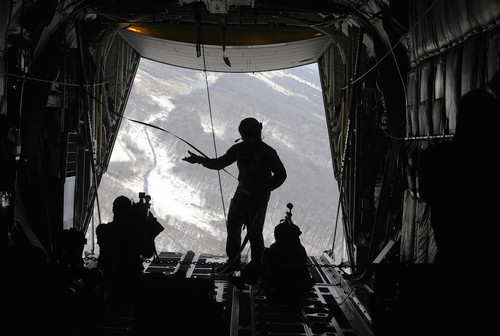
The commander of a secretive branch of America’s Special Operations forces last month ordered a halt to most commando missions in Afghanistan, reflecting a growing concern that civilian deaths caused by American firepower are jeopardizing broader goals there.
The halt, which lasted about two weeks, came after a series of nighttime raids by Special Operations troops in recent months killed women and children, and after months of mounting outrage in Afghanistan about civilians killed in air and ground strikes. The order covered all commando missions except those against the highest-ranking leaders of the Taliban and Al Qaeda, military officials said.
American commanders in Afghanistan rely on the commando units to carry out some of the most delicate operations against militant leaders, and the missions of the Army’s Delta Force and classified Navy Seals units are never publicly acknowledged. But the units sometimes carry out dozens of operations each week, so any decision to halt their missions is a sign of just how worried military officials are that the fallout from civilian casualties is putting in peril the overall American mission in Afghanistan, including an effort to drain the Taliban of popular support.
Andrew Exum got to this one before we did, perhaps partially because he is now being paid to blog a certain portion of his time at CNAS. Maybe Nagl could throw a few dollars our direction and we can blog more. At any rate and on a serious note, what Exum says is worth hearing concerning his position that the line between counterterrorism and counterinsurgency is a false one.
I asked a highly respected retired U.S. Army general a year ago what the appropriate role for direct action special operations forces was in a population-centric COIN campaign. His answer was that direct action SOF is highly valuable because “it’s the way you play offense.” At the same time, though, it absolutely has to be tied into a greater COIN strategy. The cool kids cannot be allowed to just run amok, no matter how much they may want to.
Oh good heavens! “… The way you play offense.” Regular readers of The Captain’s Journal know how we approach the issue of SOF after having read:
The Cult of Special Forces
And perhaps it’s true that we are biased towards a certain position given that this is a Marine blog (and please don’t drop comments or send notes saying that there is such a thing as MARSOC now). But still, there is a certain adolescent obsession with SOF being supermen that permeates this discussion and many like it.
SOF are not supermen. They are (or should be, or started out) as soldiers with specialized billets. Language, training, and cultural knowledge not typically found in the balance of the Army or Corps should mark SOF. For SEALs, they must do things that require specialized training, such as underwater demolition requiring use of the closed circuit oxygen system rebreather, and so on. Airmen who use satellite uplink equipment need specialized training.
To pretend that kinetics is performed by SOF while the “big Army” does something else is both elitist and insulting. It is insulting to infantry because it says to them that they aren’t really qualified to perform kinetic operations. But if reality is a gauge, squad rushes, satellite patrols, fire and maneuver tactics, stacks and room clearing operations, raids, use of night vision equipment, fast roping, and so on, are all things that infantry both trains on and has conducted in Iraq for years. These are infantry specialties, and SOF cannot and should not lay sole claim to them. As for that matter, flag and field grade officers who coddle this notion aren’t helping matters with the big Army.
Perhaps the supporters of this myth of the SOF superman are considering reality when recalling what is beginning to be the stark differences between Army basic training and Marine boot camp. From Thomas Ricks Making the Corps:
Army basic training is intentionally ‘user friendly’. All units at Fort Jackson, which trains support personnel – clerks, cooks, truck drivers, nurses and mechanics – are gender integrated. Men and women sleep in separate barracks, but do everything else together … the rifle ranges at Fort Jackson are named after states, not great battles. There is no shock theatre ‘pick up’. “We do not try to intimidate,” explains Lt. Col. Mark G. McCauley, Commander of the receiving area. “We do not try to strike fear in their hearts. We conduct the handoff in a calm, quiet, professional way. We want the soldiers in training to have a sense of comfort.”
‘Fun’ isn’t a word one hears on Parris Island. Here it comes naturally to the lips of trainees. “They teach us, but they also make it fun,” says Eric Escamilla, a soldier-in-training from Lubbock, Texas. Spec. Sheila Suess, his comrade in Delta Company, agrees as they eat breakfast in their mess hall. At other tables, trainees chat in conversations. No drill instructors hover, and there is no shouting anywhere in the building …
Out on the bayonet assault course, Alpha Company of the Third Battalion, 13th Infantry Regiment, is going through the paces. The platoon sergeant – the Army equivalent of senior drill instructor – addresses them. “Soldiers, please be interested in what I have to say,” begins Staff Sgt. Ron Doiron. “This is the only time in your military career you get to do the bayonet assault course. Make the most of it. Let’s have some fun out here” … Alpha Company takes off through the piney woods, climbing over low obstacles, sticking the tires and rubber dummies with bayonets. Jumping down into a trench, Pvt. Tralena Wolfe’s knee pops. She comes off the course, sits on a log, and cries.
As for a more timely assessment, you may go to the Army Times where Marine Captain Josh Gibbs discussed his trip to Fort Jackson. Perhaps the Army is being used as a social engineering experiment, which would explain the interest that the Democrats normally take in increasing the size of SOF. Only the champions of SOF can completely explain why they advocate seeing kinetics as the primary domain of SOF with [who knows what] the domain of the infantry.
But without such an explanation and justification, the following objections should suffice at the moment.
- The model of SOF as supermen who perform raids continues the diminution of infantry, just as it has done with the Australian infantry (see We Were Soldiers Once: The Decline of the Royal Australian Infantry Corps?).
- This model limits the kinetic power of the Army by restricting it to a small portion of the Army.
- This model allows the politicians to use the Army as fertile ground for social engineering experiments. The Marines still don’t allow women in combat, at least partially because of the statistically higher propensity for lower extremity injuries and reduced strength.
- This model is more expensive than simply requiring the infantry to perform its designated role.
- This model actually makes SOF less special, in that their normal focus on training, language and culture is replaced with more kinetics.
Now, as for counterterrorism versus counterinsurgency, regular readers know that we are nonplussed and unimpressed with the cloak and dagger missile strikes in Pakistan, and dark of the night raids in Afghanistan. These people show up, shoot up a place, perhaps take some people, go, and the next day are not heard from or seen. No one knows who the hell these people were, where they came from or why they were here. All people know is that they brought violence to their community. This is no way to win friends or influence people.
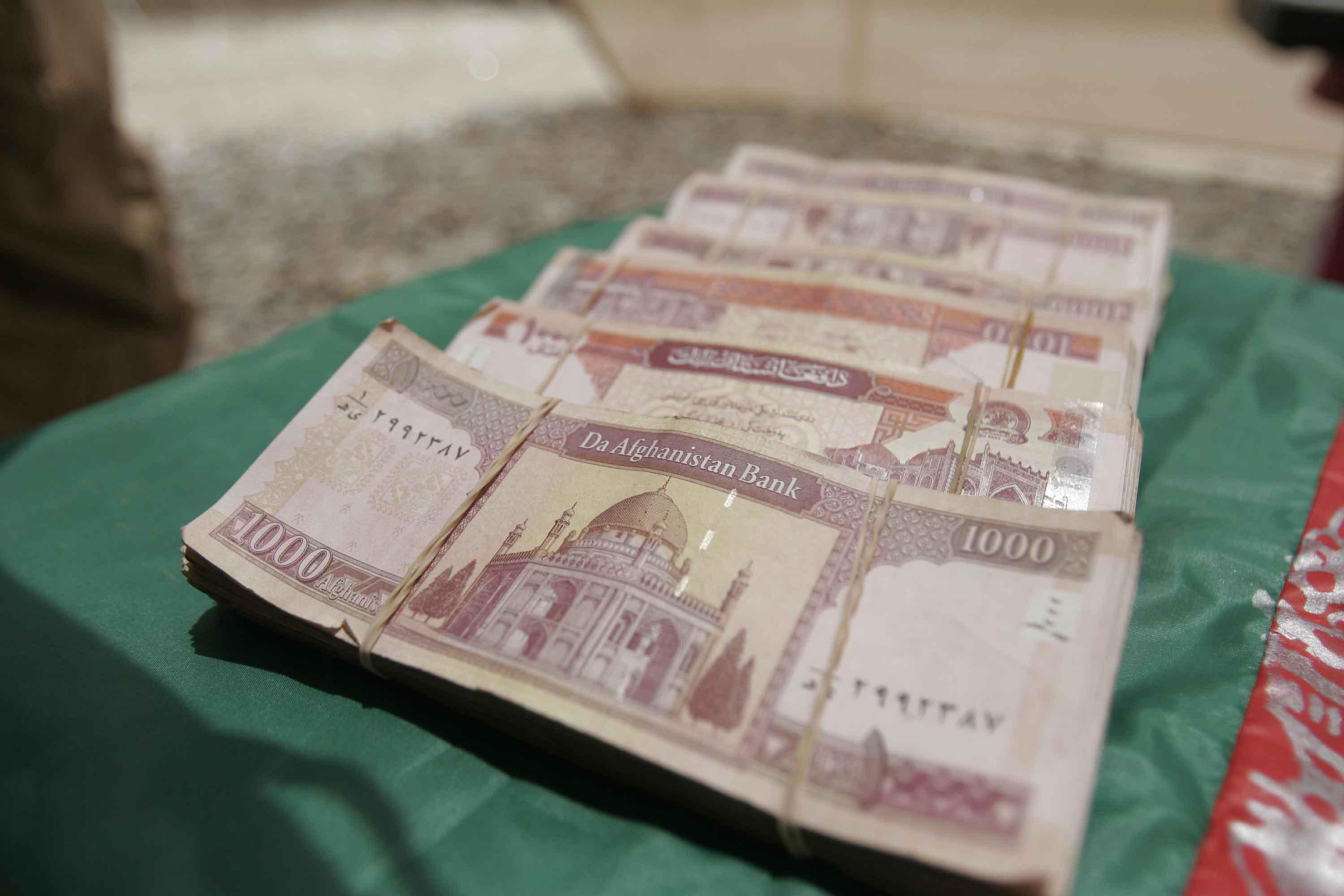
The Marine Corps infantry model is different. In operations in the Helmand Province, the Marines were described at times as being in “full bore reloading” mode. Over 400 hard core Taliban fighters were killed in and around Garmser. But then they didn’t leave. They sat with laptop PCs running EXCEL, logged and computed the losses and local worth of all of the things destroyed, and then paid cash to the people of Garmser.
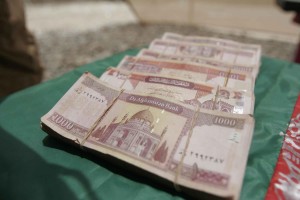
Cash, all nicely set out in a tent, with carpeted entrance, inviting the tribal elders and heads of household to come in and collect the money for the broken windows, doors, etc. Then the Marines supplied security to the area to keep the Taliban out. Sure, the 24th MEU had to leave and unfortunately, the British apparently could not hold the terrain.
But this serves as a picture of how it’s done. Exum is smart enough to know this. Killing high value targets, according to our contacts, has led to the vicious cycle where Taliban operations stand down for a couple of weeks for them to sort out who their next mid-level commander is, several weeks or months of Taliban violence after they do, then raids take this man out, and so on the stupid procedure goes. The procedure is a loser.
So why did the SOF command stop the raids for a couple of weeks? What will they do after a couple of weeks? Will the raids start over? If so, why did they stop? There isn’t anything wrong with raids as long as it is against the right targets, but expecting them all to be done by SOF without the presence there the next morning is absurd strategy. It may make for good movies and cloak and dagger talk about who Exum calls the “cool kids,” but it makes for a bad campaign.
In the end, there is a stark difference between counterterrorism and counterinsurgency. One is performed by police, U.S., Interpol, and so forth, through banking, intelligence agencies, and diplomatic contacts. The other is performed by the Army and Marine Corps infantry. Or at least, it is by the Marines, and should be by the Army.
**** UPDATE ****
Michael Yon posts a provocative piece today concerning a number of things, including whether we will abandon Iraq, but also including his current take on Afghanistan and training of the Afghan Army. Please read the entire piece, but take particular note of this one paragraph.
I’ve asked many key officers why we are not using our Special Forces (specifically Green Berets) in a more robust fashion to train Afghan forces. The stock answers coming from the Green Beret world – from ranking officers anyway – is that they are taking a serious role in training Afghan forces. But the words are inconsistent with my observations. The reality is that the Green Berets – the only outfit in the U.S. military who are so excellently suited to put the Afghan army into hyperdrive – are mostly operating with small groups of Afghans doing what appears to be Colorado mule deer hunts in the mountains of Afghanistan. Special Forces A-teams are particularly well suited to train large numbers of people, but are not doing so.
Ahem, like I was saying …