
Time Slams the V-22 Osprey
BY Herschel Smith 16 years, 6 months ago
Osprey V-22 flies off the coast of North Carolina
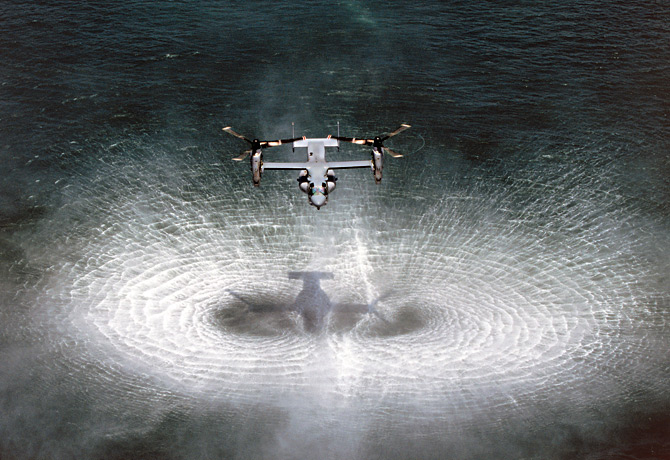
On September 20, 2007, in V-22 Osprey Deploys, I linked a Marine Corps Times article on the Osprey deploying. Actually, much earlier, on one of my many trips to Jacksonville, N.C. and Camp Lejeune, I had considered contacting the Osprey program manager for an article on the (at that time) soon-to-be-deployed aircraft, and perhaps catch a ride on one of them. I regret not having taken advantage of the proximity to this aircraft to get a ride in one, but perhaps I would not have been allowed to anyway.
Around the time that I published this little article, W. Thomas Smith, Jr., published on the Osprey at The Tank, and then it took literally days for main stream media outlets to pick up on the story. It is with some humor that I read the subsequent reports. Thomas Smith and I published on this well before any other outlets. Milblogs beat them to the punch.
Time has an article entitled V-22 Osprey: A Flying Shame that slams the V-22.
Now the aircraft that flies like an airplane but takes off and lands like a chopper is about to make its combat debut in Iraq. It has been a long, strange trip: the V‑22 has been 25 years in development, more than twice as long as the Apollo program that put men on the moon. V‑22 crashes have claimed the lives of 30 men — 10 times the lunar program’s toll — all before the plane has seen combat. The Pentagon has put $20 billion into the Osprey and expects to spend an additional $35 billion before the program is finished. In exchange, the Marines, Navy and Air Force will get 458 aircraft, averaging $119 million per copy.
The saga of the V-22 — the battles over its future on Capitol Hill, a performance record that is spotty at best, a long determined quest by the Marines to get what they wanted — demonstrates how Washington works (or, rather, doesn’t). It exposes the compromises that are made when narrow interests collide with common sense. It is a tale that shows how the system fails at its most significant task, by placing in jeopardy those we count on to protect us. For even at a stratospheric price, the V-22 is going into combat shorthanded. As a result of decisions the Marine Corps made over the past decade, the aircraft lacks a heavy-duty, forward-mounted machine gun to lay down suppressing fire against forces that will surely try to shoot it down. And if the plane’s two engines are disabled by enemy fire or mechanical trouble while it’s hovering, the V‑22 lacks a helicopter’s ability to coast roughly to the ground — something that often saved lives in Vietnam. In 2002 the Marines abandoned the requirement that the planes be capable of autorotating (as the maneuver is called), with unpowered but spinning helicopter blades slowly letting the aircraft land safely. That decision, a top Pentagon aviation consultant wrote in a confidential 2003 report obtained by Time, is “unconscionable” for a wartime aircraft. “When everything goes wrong, as it often does in a combat environment,” he said, “autorotation is all a helicopter pilot has to save his and his passengers’ lives.”
There is much more at the link above. The trouble with this article, though, is that it is old news. It simply rehashes known and tired information to make a new opinion piece. The better approach would have been to plan a true investigative article by following the V-22 to the Anbar province, board the aircraft along with the Marines, and write stories from Iraq about its failure or success. I would do it (i.e., go to Iraq and get the story). As I said in my first article, the proof of the aircraft will be in its deployment. Advocates and critics alike should wait for the data. It will succeed or fail, and no article can change the field data.
I am ambivalent at this moment. I love the A-10. I believe that helicopters are dangerous and always have been, lumbering through the battle space while vulnerable to fire (it isn’t by accident that the helicopter in Vietnam was called a “flying coffin”). The Osprey has its advantages (speed, altitude) and its disadvantages (it needs a secure landing zone, which means that helicopters will probably not go away in the near future).
The fact that the Osprey program was problematic and expensive is old news. Predictions of failure in deployment are premature. The goal should be to avoid sensationalism and get the real story.






On September 29, 2007 at 5:24 am, GI said:
Herschel,
You should no better than to expect the media to wait for data before making sensational headlines.